Shrub and Vegetation Removal: Costs and Process
By Housey · Last reviewed 9th of May 2026
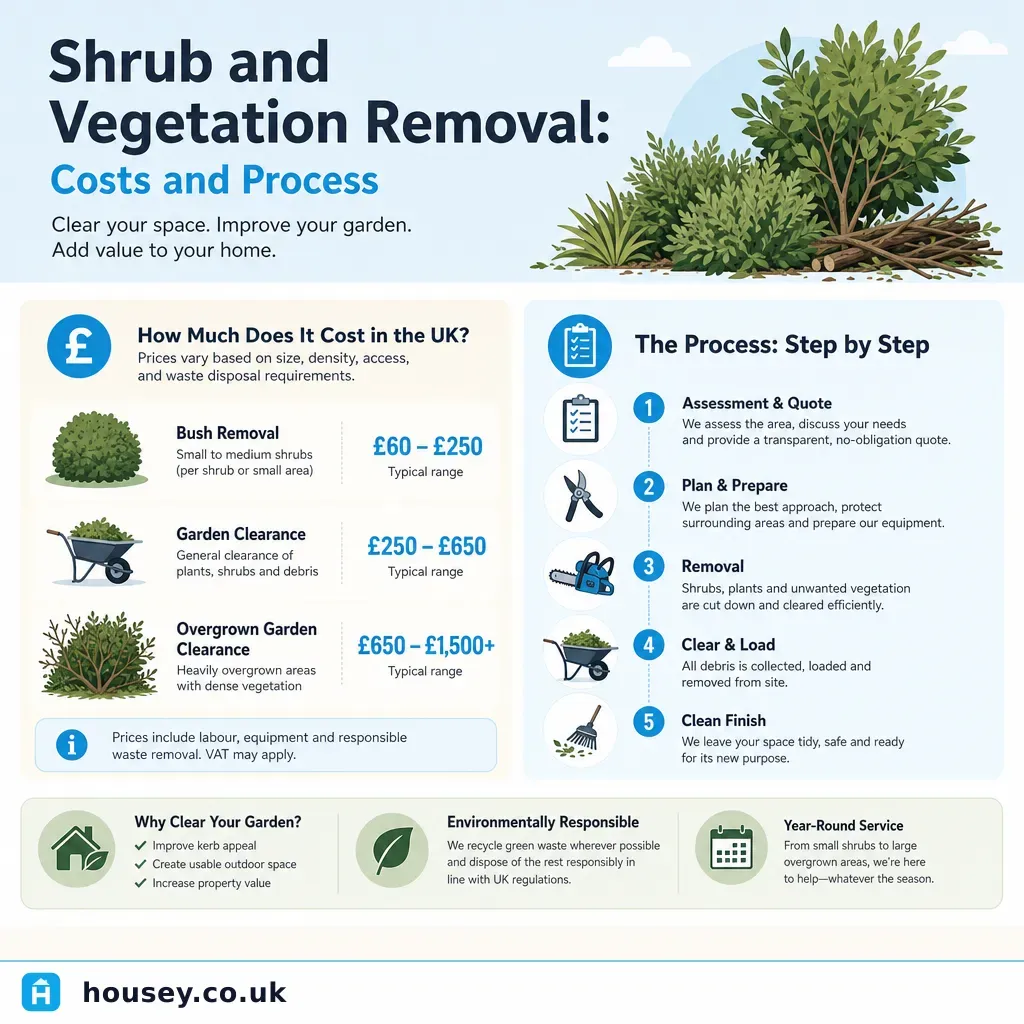
Shrub and Vegetation Removal: Costs and Process
Vegetation clearance is one of the most common reasons UK homeowners call in a professional — whether preparing land for an extension, reclaiming an overgrown garden, or clearing a boundary ahead of new planting. The scope can range from removing a few established shrubs to clearing a heavily vegetated plot, and the costs and methods vary significantly depending on what is being removed and how waste will be handled.
Key points
- Invasive non-native species such as Japanese knotweed, giant hogweed, and Himalayan balsam are classified as controlled waste under the Environmental Protection Act 1990 and cannot be placed in ordinary green waste collections.
- The Hedgerow Regulations 1997 protect certain rural hedgerows in England and Wales — you may need to notify your local planning authority before removing a qualifying hedgerow.
- Stump grinding is usually quoted separately at approximately £100–£300 per stump (indicative UK costs, last reviewed 2026-05-09); always confirm whether stump removal is included in a clearance quote.
- Green waste midi skip hire typically costs £150–£350 (indicative UK costs, last reviewed 2026-05-09); some councils offer garden waste collection for approximately £40–£70 per year.
- Working at height above 2m on vegetation or trees is subject to the Work at Height Regulations 2005 — only competent, appropriately insured contractors should carry out this work.
What does shrub and vegetation removal involve?
The scope of a clearance job determines both the method and the overall cost. Removing a few overgrown shrubs with shallow root systems can often be done with hand tools and a single van load of green waste. More complex sites require mechanical equipment, specialist disposal, and regulatory checks before work starts.
Typical stages of a clearance job:
- Site assessment — the contractor identifies species, access constraints, root systems, and proximity to utilities or structures.
- Regulatory checks — for hedgerows, protected trees, invasive species, or listed buildings, relevant rules must be confirmed before removal begins.
- Cutting and extraction — shrubs are cut back, root systems excavated or ground out, and material separated for chipping, composting, or specialist disposal.
- Waste removal — green waste is taken off-site for recycling or composting; invasive species must go to a licensed disposal facility.
- Site preparation (if required) — levelling, topsoil treatment, or seeding if the cleared area is to be replanted or built upon.
Which professional do you need?
Situation | Recommended professional | Why |
|---|---|---|
Single shrubs or small bushes, no stump | Landscaper | Straightforward extraction; no specialist equipment needed |
Large established shrubs or deep root systems | Landscaper or tree surgeon | May require mechanical extraction or stump grinder |
Trees or branches above 2m | Qualified tree surgeon (arborist) | Working at height, chainsaw use, insurance requirements |
Japanese knotweed or invasive species | Specialist invasive plant contractor | Controlled waste regulations; multi-year treatment plans required |
Hedgerow removal on rural site | Landscaper, with planning authority check first | Hedgerow Regulations 1997 may require prior notification |
Full site clearance for construction | Groundworks or site clearance contractor | Volume, access, and earthworks requirements |
How much does vegetation removal cost in the UK?
Costs depend on the volume and species of vegetation, site access, distance to disposal facilities, and whether stumps require grinding. The following figures are indicative only.
Indicative UK costs, last reviewed 2026-05-09:
Job type | Typical cost range |
|---|---|
Single established shrub (no stump) | £50–£150 |
Single shrub with stump grinding | £150–£400 |
Small garden clearance (up to 50m²) | £200–£500 |
Medium garden clearance (50–150m²) | £400–£900 |
Large or heavily overgrown plot | £800–£2,500+ |
Japanese knotweed treatment programme | £1,000–£4,000+ (multi-year) |
Green waste midi skip hire | £150–£350 |
Costs vary by region, with London and the South East typically at the higher end. Always request itemised quotes that specify waste disposal, stump removal, and any site reinstatement separately.
Homeowner checklist before requesting quotes
Red flags when choosing a contractor
- Quoting without a site visit, particularly for large clearances or suspected invasive species — an accurate quote requires a visual inspection of the material and access conditions.
- No mention of waste disposal in the quote: green waste disposal is a meaningful cost element and should be itemised, not bundled vaguely into the total.
- Offers to burn green waste on-site in an urban or suburban area — domestic bonfires can constitute a statutory nuisance under the Environmental Protection Act 1990, and controlled waste including invasive species cannot legally be burned.
- No public liability insurance — clearance work near structures, utilities, or neighbouring properties requires adequate coverage; ask to see the certificate.
- A single-visit treatment offered for Japanese knotweed — effective control requires a multi-season herbicide programme, and the guarantee must be in a form that UK mortgage lenders will accept.
When to get professional help
Most vegetation clearance beyond hand-pulling soft growth or cutting back light annual growth should involve a professional. Seek qualified help if:
- Removal involves trees or large shrubs requiring chainsaw work or work at height above 2m.
- You suspect Japanese knotweed, giant hogweed, or another Schedule 9 species under the Wildlife and Countryside Act 1981 is present on the site.
- The site is adjacent to a watercourse — invasive species can spread via waterways, and Environment Agency guidance on containment applies.
- Trees may be protected by a Tree Preservation Order or are within a Conservation Area, where removal requires consent from the local planning authority.
- The clearance is part of a pre-construction phase where planning or building control obligations are relevant to what is removed.
How Housey can help
Housey connects you with qualified tree surgeons and landscapers who can assess your site and provide itemised quotes for clearance work. Describe your project, compare credentials and prices from local contractors, and request quotes before committing to any work.
Frequently asked questions
Do I need permission to remove shrubs or a hedge from my garden?
Generally, no planning permission is needed to remove shrubs in your own garden. However, if a hedge qualifies as a protected hedgerow under the Hedgerow Regulations 1997 — typically rural hedges on or adjacent to agricultural land — you must notify your local planning authority and wait for a response before removal. Trees subject to a Tree Preservation Order require a separate application. Check with your local council if you are uncertain about any boundary feature.
How is Japanese knotweed legally disposed of?
Japanese knotweed is classified as controlled waste under the Environmental Protection Act 1990. It cannot be placed in household or garden waste collections, composted on-site, or burned. Licensed waste carriers must transport it to a permitted facility. Alternatively, a multi-season herbicide treatment programme — typically two to three growing seasons — can be used; the programme should come with a guarantee acceptable to mortgage lenders.
Can I burn garden waste from a clearance job?
You can have a domestic bonfire in most residential settings if it does not cause a statutory nuisance, but local authorities can act under the Environmental Protection Act 1990. Controlled waste — including Japanese knotweed and other invasive species — must not be burned. For significant clearance volumes, skip hire or a licensed green waste contractor is the compliant and practical solution.
What qualifications should a tree surgeon hold for clearance work?
For any chainsaw work or work at height, check that the contractor holds an NPTC (Lantra Awards) chainsaw certificate appropriate to the tasks involved. For aerial work, a climbing and aerial rescue qualification is standard. Any contractor working on your property should hold public liability insurance of at least £1–2 million. Membership of the Arboricultural Association is a useful indicator of professional standards.
Sources and further reading
- Hedgerow Regulations 1997 — legislation.gov.uk
- Prevent the spread of invasive non-native plants — GOV.UK
- Work at Height Regulations 2005 — Health and Safety Executive
- Tree Preservation Orders and protected trees — GOV.UK
- Wildlife and Countryside Act 1981 — Schedule 9 — legislation.gov.uk
Useful next reads
 Improvement & Build
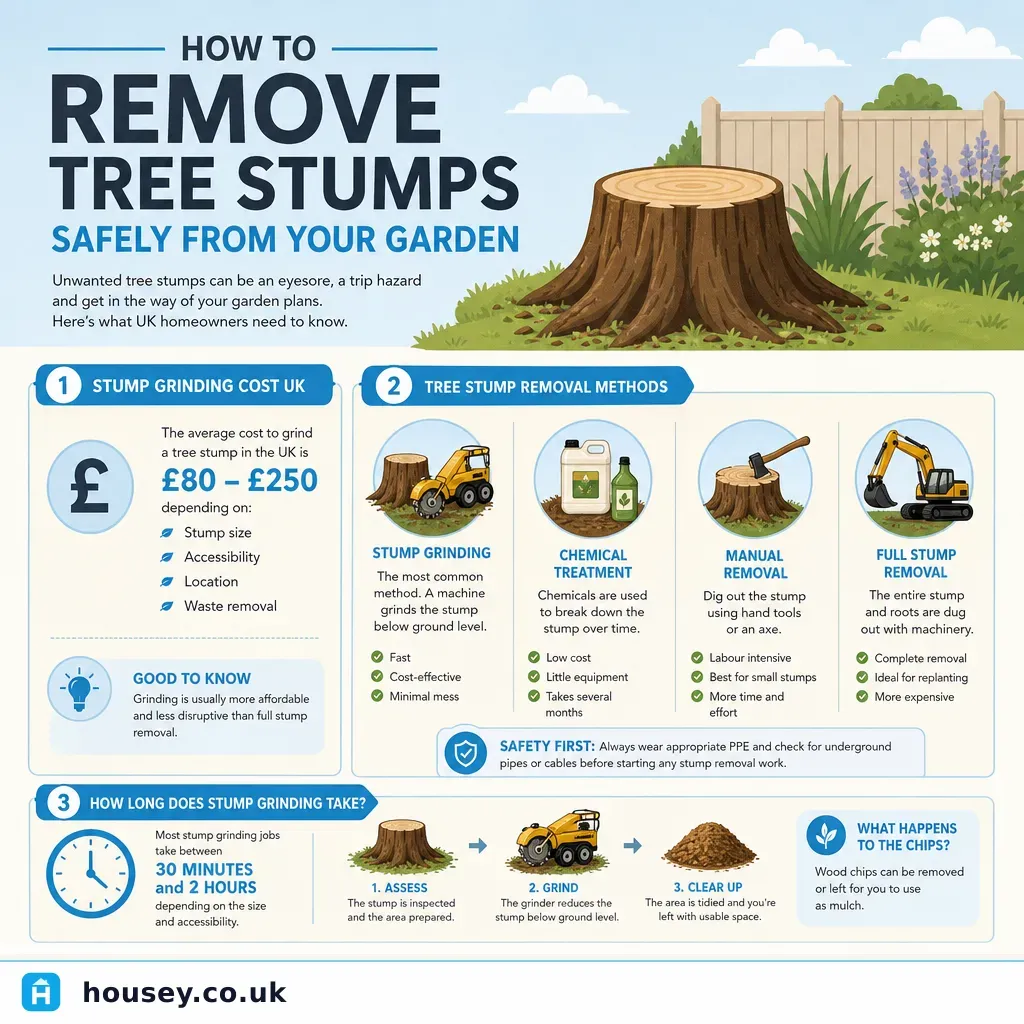
How to Remove Tree Stumps Safely from Your Garden
Tree stump removal in the UK typically involves stump grinding, chemical treatment, or manual excavation.
 Improvement & Build
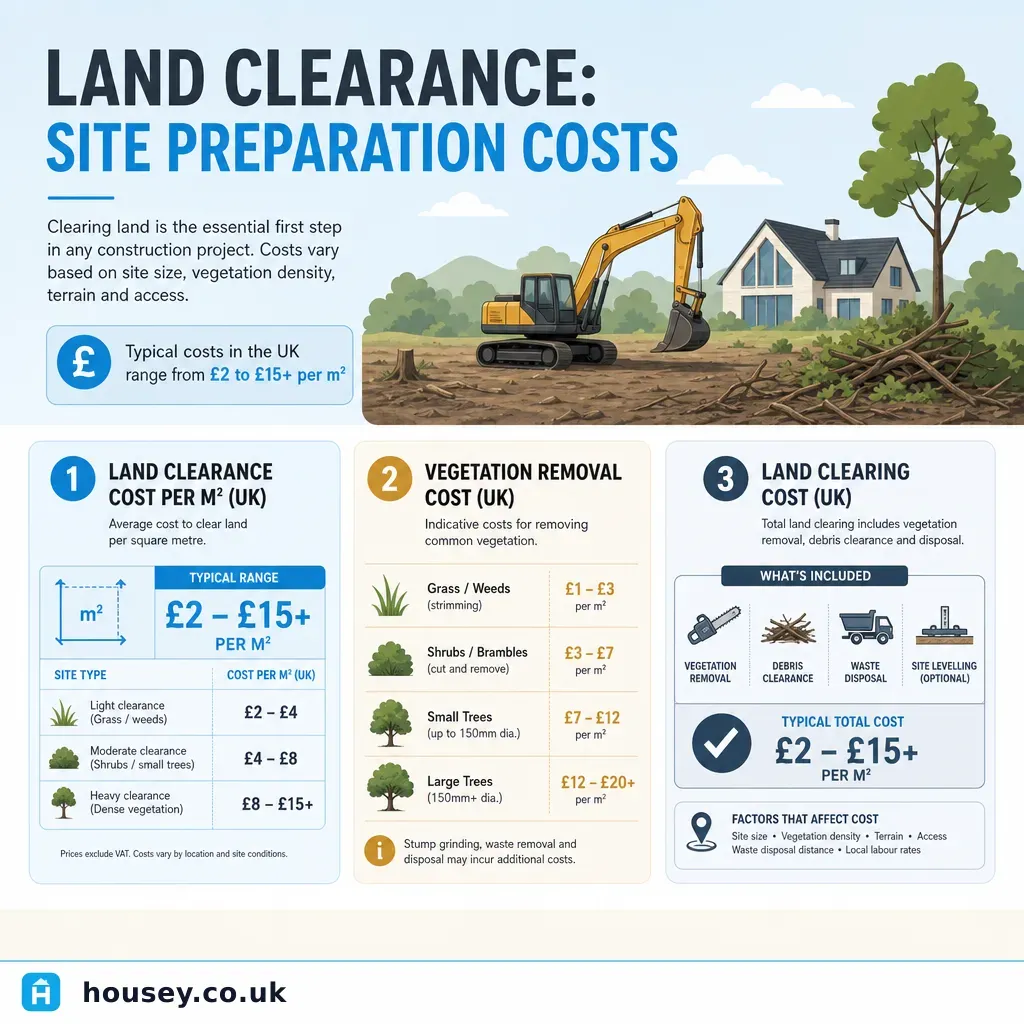
Land Clearance: Site Preparation Costs
Land clearance and site preparation costs in the UK vary widely depending on site size, vegetation density, access, and whether structures need demolishing.
 Improvement & Build
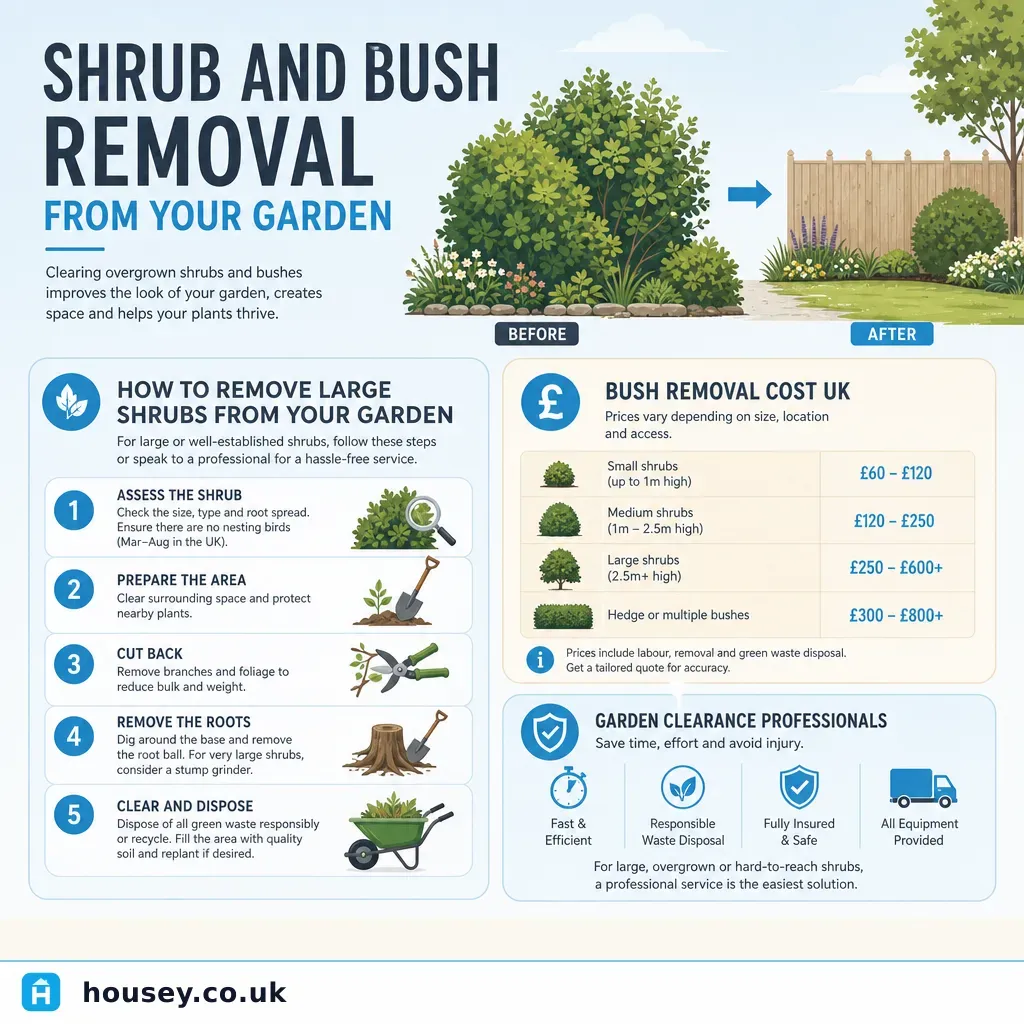
Shrub And Bush Removal From Your Garden
Shrub and bush removal ranges from a DIY afternoon's work to a professional job needing a mini-digger or stump grinder.
 Improvement & Build
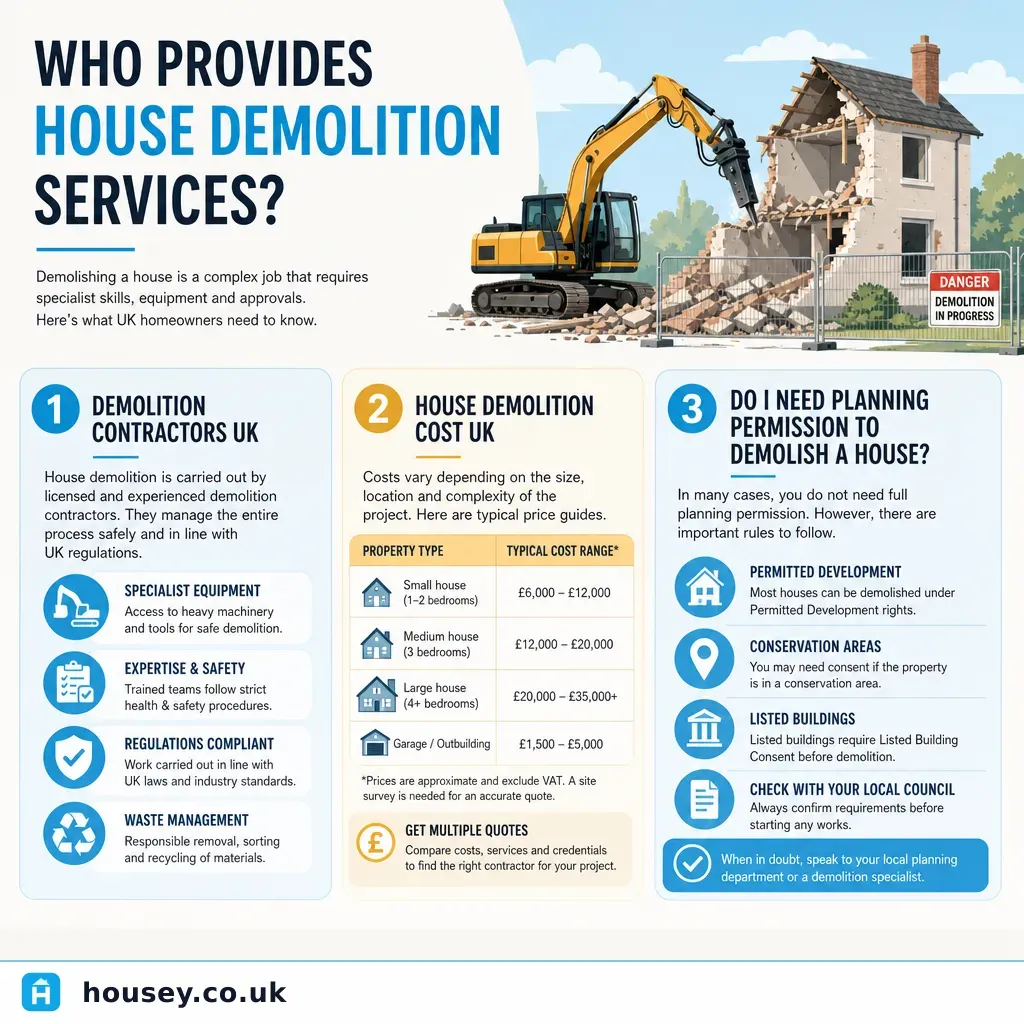
Who Provides House Demolition Services
House demolition in the UK is carried out by specialist demolition contractors, often members of the National Federation of Demolition Contractors (NFDC).
 Improvement & Build
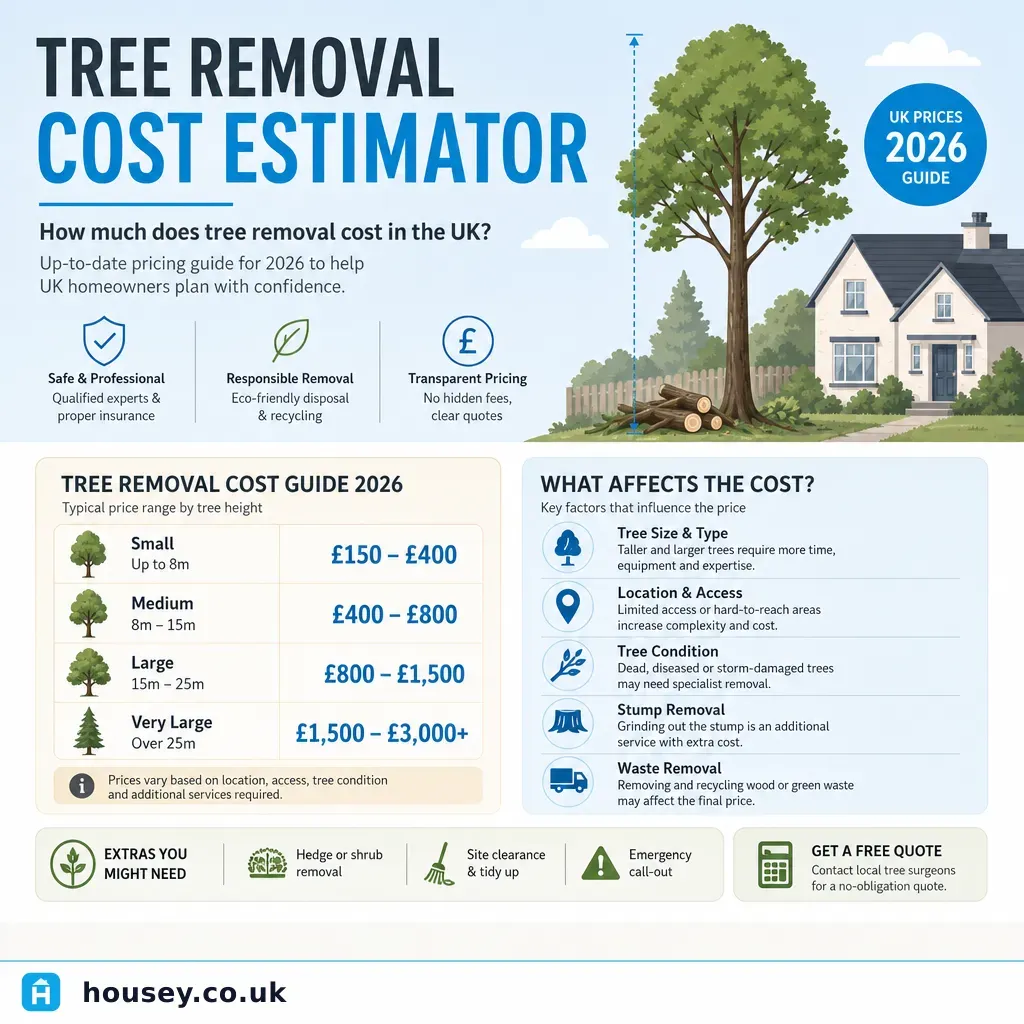
Tree Removal Cost Estimator
Tree removal in the UK costs roughly £150 to £5,000 or more, depending on the tree's height, species, access conditions, and whether stump removal is needed.