DIY Conveyancing: Self-Representation in Property Transactions
By Housey · Last reviewed 25th of May 2026

DIY Conveyancing: Self-Representation in Property Transactions
The question of whether to handle your own property transaction typically surfaces when a buyer or seller sees a conveyancing quote and wonders whether the process is manageable without instructing a solicitor or licensed conveyancer. In England and Wales, self-conveyancing is permitted — but it is rarely straightforward, and mortgage lending requirements make it impossible for most buyers. Understanding what the process involves, and where the risks concentrate, is essential before deciding whether to proceed without professional legal representation.
Key points
- There is no legal requirement in England and Wales to instruct a solicitor or conveyancer — private individuals may represent themselves, subject to lender requirements.
- If you are purchasing with a mortgage, your lender will almost always require a qualified legal representative to act on their behalf, effectively ruling out full self-conveyancing for mortgage buyers.
- HM Land Registry accepts applications from private individuals; forms AP1, TR1, and OC1 are publicly available, but errors in the Transfer deed or registration application can cause rejection or create title defects.
- SDLT (Stamp Duty Land Tax) returns must be submitted to HMRC within 14 days of completion — incorrect returns can attract penalties, and several relief categories (first-time buyer, multiple dwellings) have specific qualifying conditions.
- A solicitor or licensed conveyancer carries professional indemnity insurance; in a DIY transaction, any mistake is the buyer's or seller's own liability.
What does DIY conveyancing involve?
Conveyancing is the legal process of transferring property ownership. A typical freehold sale or purchase in England and Wales involves at least 10 to 15 distinct tasks:
- Title investigation: reviewing official copy entries from HM Land Registry (form OC1) to confirm the seller holds good, unencumbered title.
- Pre-contract enquiries: raising questions on disputes, boundaries, planning history, and services using the standard TA6 Property Information Form and TA10 Fittings and Contents Form.
- Searches: local authority, drainage, and environmental searches — typically costing £250–£450 depending on the local authority area.
- Drafting or approving the Transfer deed: TR1 for transfer of a whole registered title; TP1 for part of a title.
- Exchange of contracts: both parties exchange signed contract copies, making the transaction legally binding and fixing the completion date.
- Completion and registration: funds transfer, the SDLT return is submitted to HMRC (deadline: 14 days after completion), and an application is lodged at HM Land Registry for registration of the new owner.
Each step has prescribed time limits and associated legal forms. Errors in any of them can delay or derail the transaction.
When is self-conveyancing a realistic option?
Which approach fits your situation?
- Choose self-conveyancing only if: you are a cash buyer with no mortgage lender involved, the property is registered freehold, there are no unusual title issues, no disputes, no tenants, no shared access arrangements, and you have the time to read and understand legal documents carefully.
- Instruct a solicitor or licensed conveyancer if: you are using a mortgage, the property is leasehold, it is a new build, there is a related simultaneous purchase or sale, it is a listed building or conservation area property, or there are any signs of title complications.
- Seek specialist legal advice if: the title shows restrictive covenants of uncertain scope, boundary disputes, missing historic deeds, or there is any suggestion of past planning breaches or unauthorised works.
- Check with HM Land Registry if you are unsure whether the title is registered — unregistered land requires additional work tracing title through original deeds and is not suitable for self-conveyancing.
Situation | Self-conveyancing viable? | Main reason |
|---|---|---|
Cash purchase, registered freehold, no chain | Possible with care | No lender requirement; simpler transaction |
Mortgage purchase, any property type | No | Lender requires own legal representation |
Leasehold flat, any finance method | Not recommended | Lease review, service charge history, and ground rent checks are complex |
New build, any finance method | Not recommended | Developer solicitors drive the process; exchange deadlines are tight |
Property with title issues or disputes | No | Risk of defective title passing to buyer |
Simultaneous sale and purchase | Not recommended | Exchange coordination across two transactions is high-risk |
What are the risks of self-conveyancing?
Defective title: An error in the Transfer deed, or failure to identify a restrictive covenant or overriding interest, can result in defective title. Correcting this post-registration is expensive and may require an indemnity policy or court application.
Missed search results: Local authority, drainage, and environmental searches surface issues not visible on physical inspection — proximity to a landfill, a proposed road scheme, an unregistered sewer crossing the garden, or chancel repair liability. Missing or misreading a search can affect future insurability and sale prospects.
SDLT errors: An incorrect SDLT return submitted to HMRC can result in penalties and interest. First-time buyer relief, multiple dwellings relief, and mixed-use rates each have specific qualifying conditions set out in the Finance Act 2003 and subsequent Finance Acts.
Registration failure: HM Land Registry may reject an application if forms contain errors, required signatures are missing, or supporting documents are incomplete. This creates a gap in title protection until the error is resolved.
No professional indemnity cover: If a solicitor or licensed conveyancer makes an error, you have recourse under their professional indemnity insurance. In a DIY transaction, all risk sits with the parties themselves.
Red flags — do not proceed without a professional
Stop and instruct a qualified professional if any of the following apply:
- The title register shows any restriction requiring a solicitor's certificate on the disposition (common on Help to Buy properties, for example).
- The property is leasehold with fewer than 80 years remaining on the lease.
- Any form of mortgage or secured lending is involved.
- There is a notice or caution registered against the title at HM Land Registry.
- The seller's solicitor declines to correspond with an unrepresented buyer.
- There are missing documents in the title chain, or the title is wholly or partly unregistered.
- The property has been extended or altered without clear building regulations completion certificates.
- Any party in the transaction is acting via a power of attorney.
Important limitations
This article provides general information about the conveyancing process in England and Wales. It is not legal advice. Property law, land registration, and tax rules are complex and transaction-specific. The position differs in Scotland (Registers of Scotland, Law Society of Scotland) and Northern Ireland. Any decision to proceed without a qualified legal professional should be made with full awareness of the risks involved. A solicitor regulated by the Solicitors Regulation Authority (SRA) or a licensed conveyancer regulated by the Council for Licensed Conveyancers (CLC) should be consulted if you are uncertain about any aspect of your transaction.
What to ask a qualified professional
If you are considering self-conveyancing, or want to understand the specific risks in your transaction before deciding, ask a conveyancer:
- What specific title or search issues are present in this transaction that I should know about?
- Would you offer a limited retainer — document review only — rather than full conduct of the matter?
- Are there any restrictions on the title that would require a solicitor's certificate?
- What searches would you recommend for this specific property and area?
- What SDLT applies to my purchase, and are any reliefs available?
- How does my lender's dual representation requirement affect my options?
- What are the most common errors made by unrepresented parties in the Transfer deed?
When to get professional help
If any of the red flags above apply, instruct a regulated professional before taking any further steps. A conveyancing error is typically far more expensive to correct than the original fee saving, and some defects — particularly title defects — can affect a property's mortgageability and future saleability for years. Look for a solicitor regulated by the SRA or a licensed conveyancer regulated by the CLC.
How Housey can help
For the vast majority of property transactions, professional conveyancing is the right choice. Housey can connect you with regulated conveyancing solicitors and licensed conveyancers who can provide quotes for your specific purchase or sale, whether freehold or leasehold, and whether you are buying, selling, or both.
Frequently asked questions
Can I do my own conveyancing in England and Wales?
Yes — there is no legal prohibition on a private individual handling their own conveyancing in England and Wales. However, if you are purchasing with a mortgage, the lender will require a qualified legal representative to act on their behalf, effectively preventing full self-conveyancing. The most viable scenario for DIY is a straightforward cash purchase of a registered freehold property with no title complications or chain.
Will HM Land Registry deal with unrepresented buyers and sellers?
Yes. HM Land Registry accepts registration applications from private individuals. Their practice guides, forms (including AP1, TR1, and OC1), and guidance notes are publicly available on GOV.UK. However, HM Land Registry cannot advise whether an application is correct or complete — they will process or reject what is submitted, and errors in the Transfer deed are the applicant's responsibility.
How much does professional conveyancing typically cost?
Indicative UK costs, last reviewed 2026-05-25. For a straightforward freehold purchase, legal fees typically range from approximately £800 to £2,000 plus disbursements including searches, Land Registry fees, and SDLT where applicable. Leasehold and new build transactions attract higher fees due to additional complexity. Request itemised quotes from at least three regulated providers before instructing.
Is self-conveyancing different in Scotland?
Yes. Scottish property law differs significantly from English and Welsh law. Conveyancing in Scotland is governed by the Land Registration etc. (Scotland) Act 2012, with title registered at Registers of Scotland. The offer and missives system used in Scotland is materially different from the exchange of contracts process in England and Wales. The Law Society of Scotland sets the framework for Scottish conveyancing practice.
Sources and further reading
- Registering land or property with Land Registry — HM Land Registry / GOV.UK
- Stamp Duty Land Tax guidance — HMRC / GOV.UK
- Land Registration Act 2002 — legislation.gov.uk
- Council for Licensed Conveyancers — CLC
- Find a solicitor — Solicitors Regulation Authority
Useful next reads
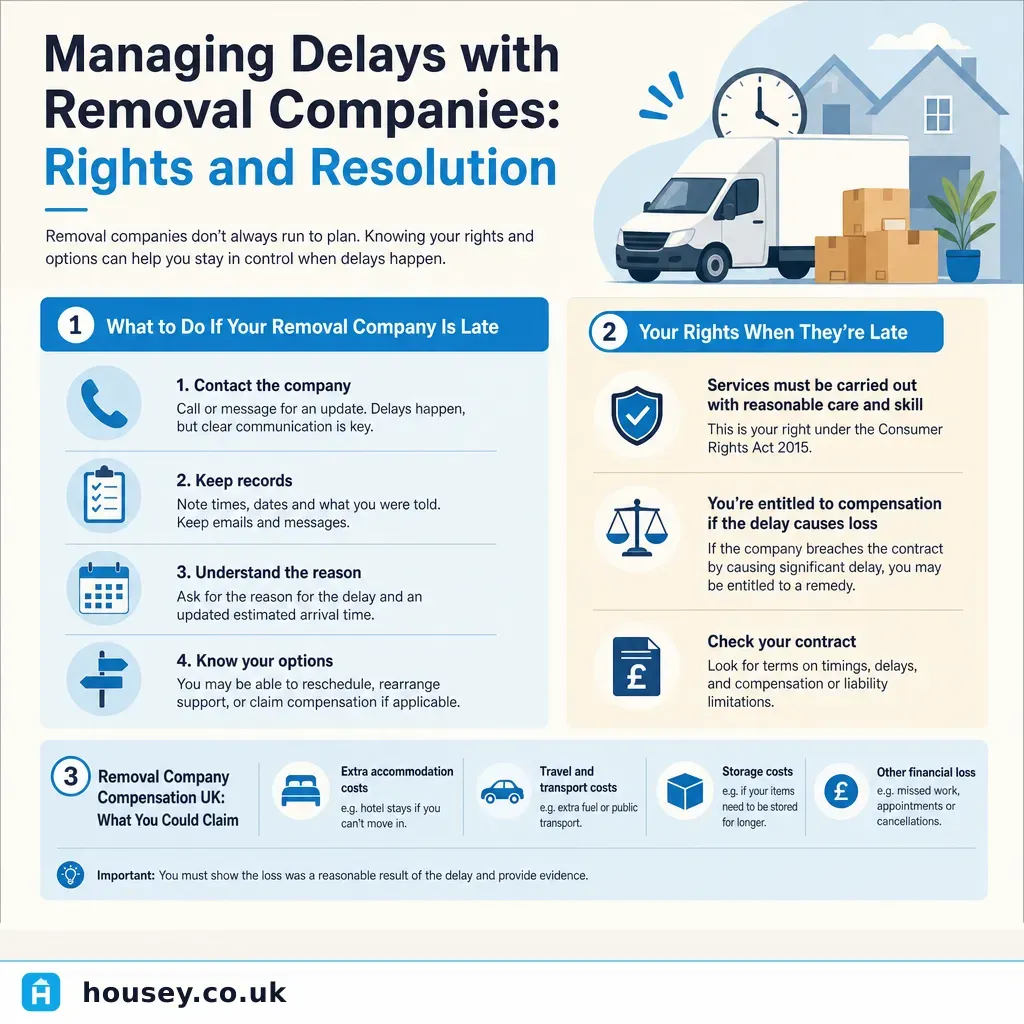 Buying & Moving
Managing Delays with Removal Companies: Rights and Resolution
If a removal company is late, your rights depend on your contract and whether the company is BAR-registered.
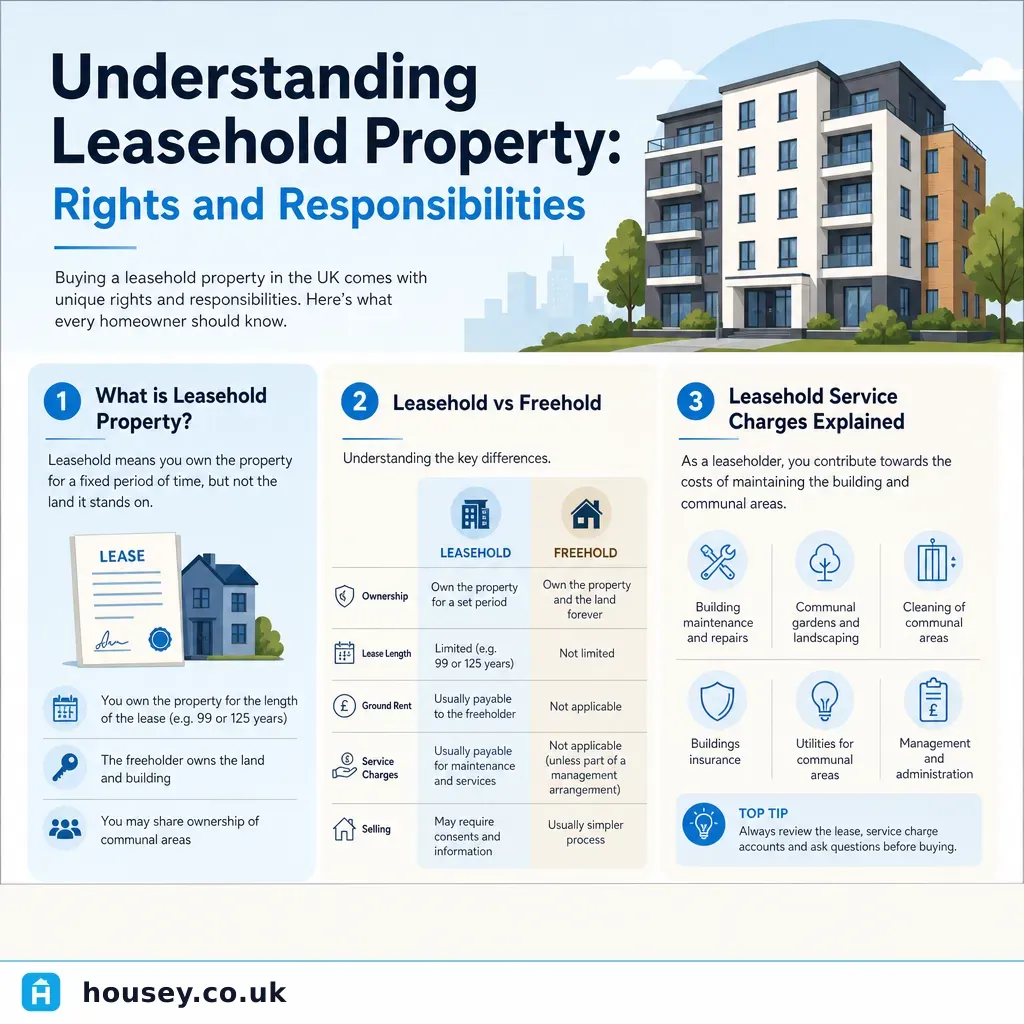 Buying & Moving
Understanding Leasehold Property: Rights and Responsibilities
Leasehold means you own a time-limited interest in a property while the freeholder owns the land and building.
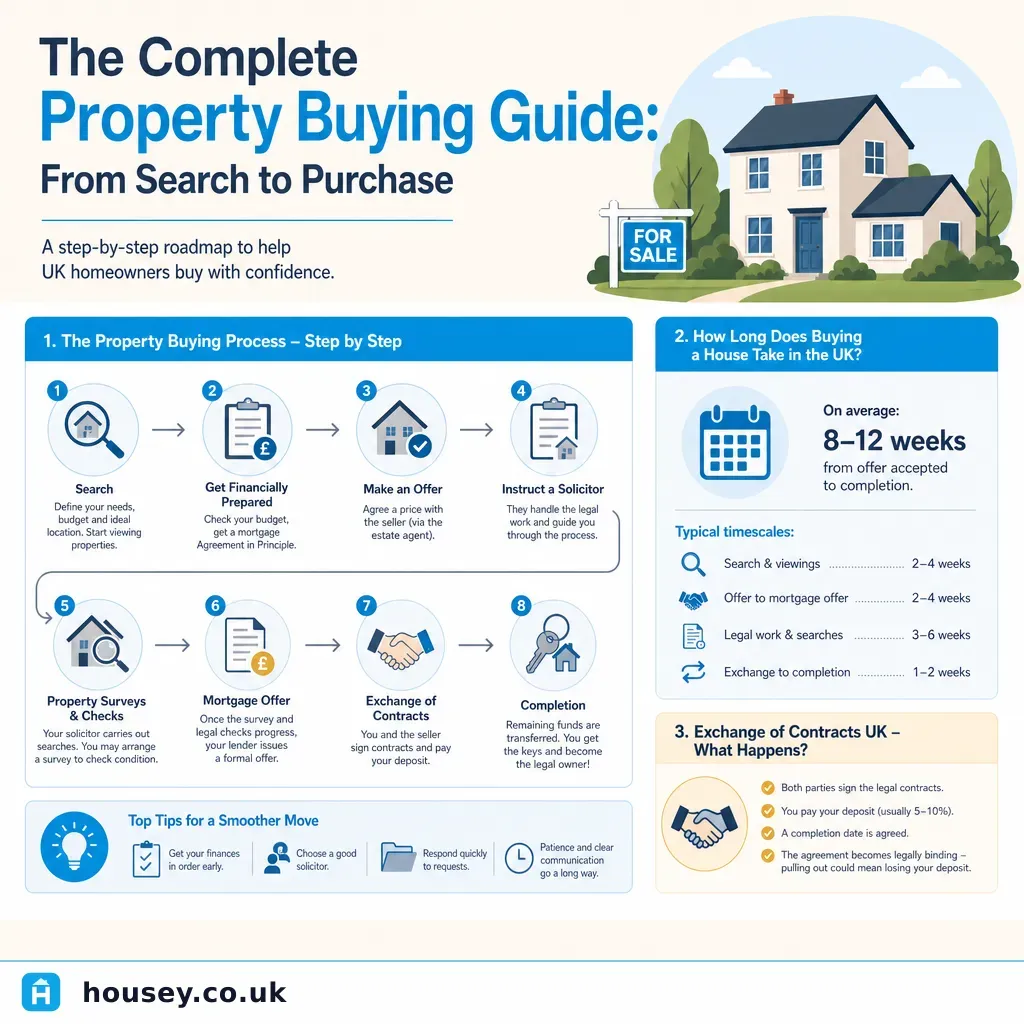 Buying & Moving
The Complete Property Buying Guide: From Search to Purchase
Buying a property in England and Wales typically takes 3–6 months from accepted offer to completion.
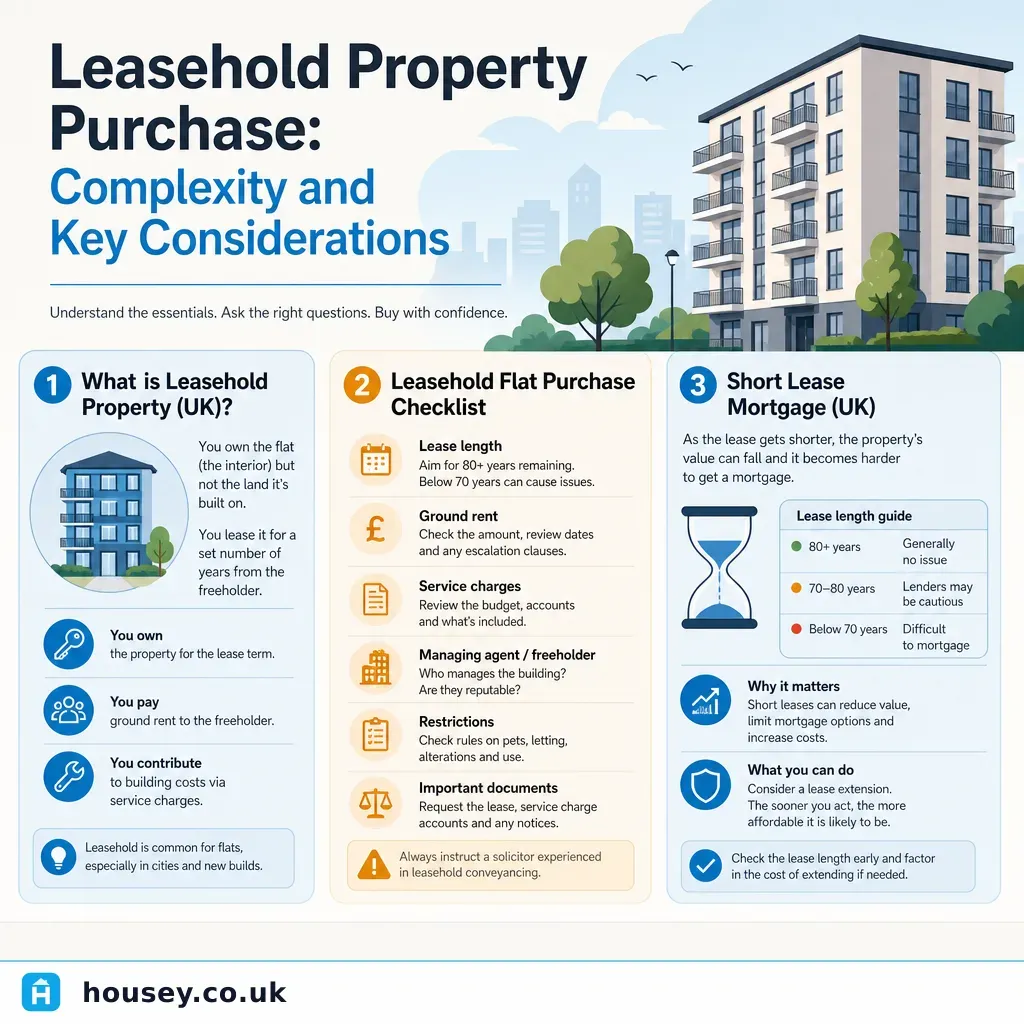 Buying & Moving
Leasehold Property Purchase: Complexity and Key Considerations
Buying a leasehold property means purchasing the right to occupy for a fixed term rather than owning the land outright.
 Buying & Moving
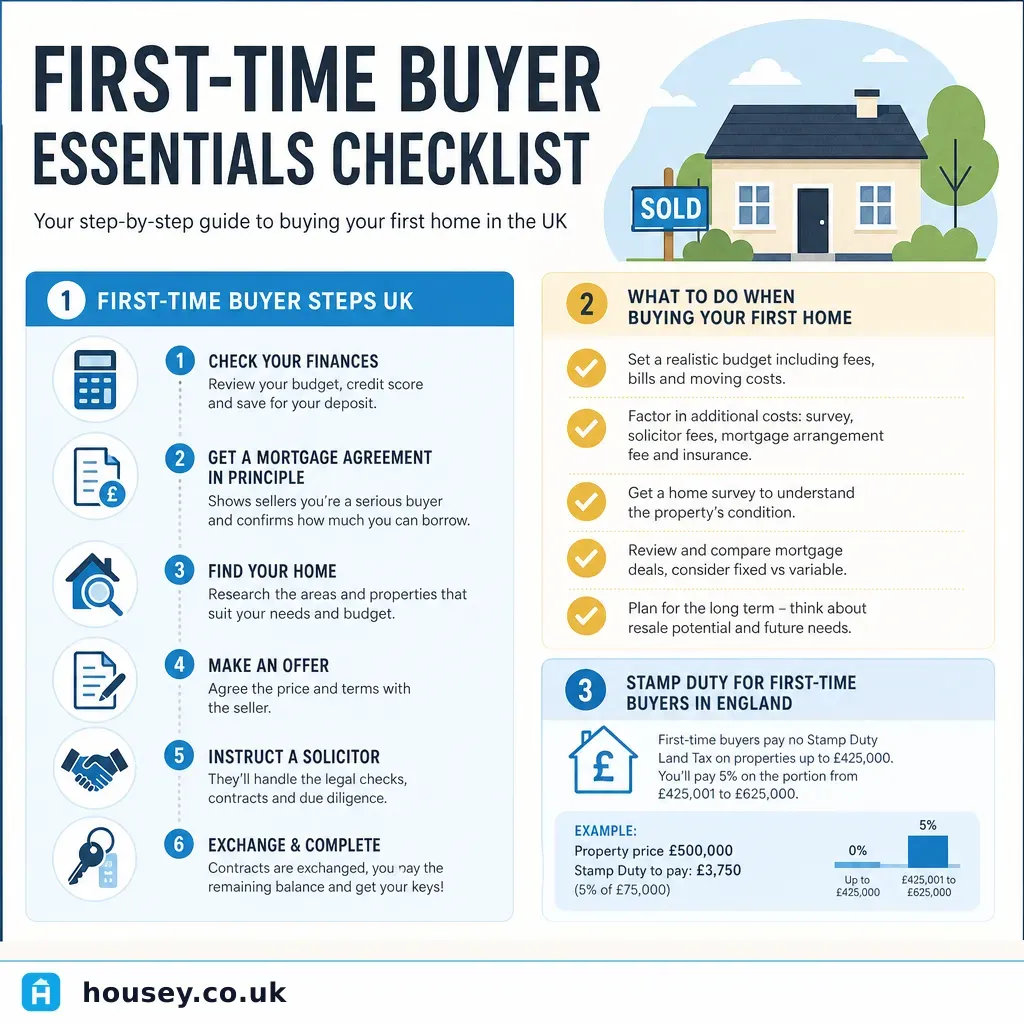
First-Time Buyer Essentials Checklist
Buying your first home involves obtaining a mortgage in principle, making an offer, instructing a solicitor, arranging a survey, and exchanging contracts before completion.