Does Your Conveyancing Solicitor Need to Be Local?
By Housey · Last reviewed 25th of May 2026

Does Your Conveyancing Solicitor Need to Be Local?
The question often arises when a buyer spots a cheaper quote from a firm based several hundred miles away, or when a seller is steered by an estate agent toward their in-house preferred practice. For buyers using a mortgage, lender panel requirements add another dimension — and for those purchasing leasehold properties, familiarity with a specific estate or freeholder can matter more than it does on a standard freehold sale. Understanding when geography genuinely matters helps you choose the right firm rather than simply the nearest one.
Key points
- There is no legal requirement in England and Wales for your conveyancing solicitor to be based near the property or your home address.
- All practising conveyancing solicitors must be authorised by the Solicitors Regulation Authority (SRA); licensed conveyancers are regulated by the Council for Licensed Conveyancers (CLC).
- HM Land Registry is centralised and processes title registration applications from any SRA- or CLC-authorised firm across England and Wales.
- Leasehold transactions, complex title issues, or properties with layered local planning histories may benefit from a solicitor with experience of that specific area or estate.
- Mortgage lenders maintain approved solicitor panels based on quality and compliance criteria, not geography — confirm panel membership before instructing any firm.
Does solicitor location affect your conveyancing legally?
No. In England and Wales, property law is national — governed by the Land Registration Act 2002, the Law of Property Act 1925, and associated regulations — none of which require the solicitor, buyer, or seller to be located near the property. HM Land Registry is centralised and accepts applications from any authorised firm anywhere in England and Wales.
The practical reality has shifted significantly in recent years. Most conveyancing correspondence now takes place via email, secure client portals, and post. Physical meetings — once standard for document signing — are largely replaced by video calls and witnessed electronic signatures, options that became well-established from 2020 onwards.
When local knowledge genuinely matters
While geography is rarely a legal or procedural barrier, there are specific situations where a locally experienced solicitor adds tangible value:
- Leasehold properties with complex management structures — a solicitor who regularly handles transactions in a particular block or estate may resolve management company queries and service charge disputes faster.
- Properties with active or recent planning histories — a firm familiar with a specific local authority area may recognise recurring issues, though any thorough conveyancer should investigate planning matters regardless of location.
- New-build estates with developer-specific conditions — solicitors who have handled multiple sales on the same development already know the standard restrictive covenants and estate management charges.
- Rural properties with access rights or agricultural restrictions — rights of way, common land, and agricultural tenancy law can have regional nuances where local familiarity is an advantage.
Local vs remote conveyancing: comparison and decision guide
Factor | Local high-street solicitor | Remote or online conveyancing firm |
|---|---|---|
In-person meetings | Usually available | Rare; video calls offered |
Local market knowledge | Potentially stronger | Depends on individual case handler |
Typical cost | Often higher | Often lower; fixed fees common |
Speed | Variable | Variable; high-volume firms may carry larger caseloads |
Communication style | Office hours, telephone-focused | Email and portal; response times vary |
Lender panel membership | Check before instructing | Most larger firms are on major lender panels |
Best for | Complex leasehold, rural, and development transactions | Straightforward freehold purchases, remortgages |
Indicative comparison. Individual solicitor quality varies significantly regardless of firm type or location.
Which option should you choose?
- Choose a local high-street solicitor if your transaction involves a complex leasehold structure, a property with unusual local planning history, or you prefer face-to-face contact at key stages.
- Choose a remote or online solicitor if your purchase is a straightforward freehold, you are comfortable managing communication digitally, and you want to compare fixed-fee quotes across a wider market.
- Verify lender panel membership first — if you have a mortgage, your lender requires a solicitor on their approved panel; using a non-panel firm typically means paying for two sets of legal work.
- Ask who handles your file day-to-day — a recognised firm can still assign your case to a junior fee-earner; ask for the name, qualification, and experience of the individual responsible.
- Seek a specialist if the property involves unusual title issues (flying freehold, shared drives, absent freeholder), agricultural land, or listed building status.
What to ask before instructing any conveyancing solicitor
- Are you authorised by the SRA or CLC, and what is your registration number?
- Are you on my mortgage lender's approved panel?
- Who will handle my file day-to-day, and what is their qualification and experience level?
- What does your quote include, and what disbursements will be charged separately — searches, Land Registry fees, Stamp Duty Land Tax submission?
- How do you communicate progress updates, and what is your expected response time for client queries?
- Is VAT included in the quoted figure?
- Have you handled transactions on this type of property or estate before?
Important limitations
This article provides general information about conveyancing practice in England and Wales as of May 2026. Lender panel requirements, SRA guidance, and best practice can change. Property transactions involve significant legal and financial commitments. Instruct a qualified, SRA- or CLC-regulated professional to act on your specific transaction. Nothing in this article constitutes legal advice.
When this becomes urgent
Instruct a solicitor as early as possible — ideally before or immediately after an offer is accepted — and treat the following as requiring prompt action:
- You are approaching exchange of contracts and have not yet instructed a firm.
- Your preferred firm is not on your mortgage lender's panel and you need to identify an alternative quickly to avoid delaying exchange.
- The property is leasehold with unresolved service charge, ground rent, or enfranchisement issues requiring immediate legal assessment.
What to ask a qualified professional
Before instructing, ask any prospective conveyancing solicitor:
- Are you authorised by the SRA or CLC, and can I verify your registration?
- Are you on my lender's approved panel?
- Who will be responsible for my file, and what is their experience with this type of transaction?
- What is the total likely cost including disbursements and VAT?
- What could delay the transaction, and how do you typically handle those situations?
- How do you handle transactions where title or leasehold issues arise mid-process?
When to get professional help
Conveyancing always requires a qualified, regulated professional. Seek specialist advice if:
- The property has an absent freeholder, disputed service charges, or an unresolved lease extension.
- There are existing planning enforcement notices, boundary disputes, or title defects.
- The transaction involves a trust, tenants in common arrangement, or a Help to Buy equity loan.
- The property is listed, in a conservation area, or subject to agricultural restrictions.
How Housey can help
Housey connects buyers and sellers with vetted conveyancing solicitors who can handle your transaction wherever the property is located. Compare quotes from regulated firms through our conveyancing service to find the right firm for your circumstances.
Frequently asked questions
Can I use a solicitor based in a different city from the property I am buying?
Yes. There is no legal requirement for your solicitor to be based near the property. HM Land Registry accepts applications from any SRA- or CLC-authorised firm in England and Wales. Most conveyancing correspondence is now handled digitally, making location largely irrelevant to the legal process.
Do I need a local solicitor if the property is leasehold?
Not necessarily, but it can help. A solicitor experienced with the specific estate, freeholder, or managing agent may handle queries more efficiently, but any thorough conveyancer should investigate leasehold issues regardless of location. Ask prospective firms whether they have handled similar transactions on that type of estate before committing.
What is a panel solicitor, and does location affect panel membership?
Mortgage lenders maintain approved lists of solicitors who can act on their behalf in a transaction. Panel membership is based on quality and compliance criteria, not geography. Confirm your lender's panel requirements before instructing any firm to avoid ending up with two separate legal teams and two sets of fees.
Is online conveyancing slower than using a local solicitor?
Not inherently. Speed depends on caseload, individual case handler experience, and how quickly the other side's solicitor acts — not on physical location. Ask any firm about their current average transaction times and how queries are handled before instructing.
Sources and further reading
- GOV.UK: buying or selling your home — GOV.UK
- Solicitors Regulation Authority: find a solicitor — Solicitors Regulation Authority
- Council for Licensed Conveyancers: choosing a conveyancer — Council for Licensed Conveyancers
- HM Land Registry: registering land or property — GOV.UK / HM Land Registry
Useful next reads
 Buying & Moving
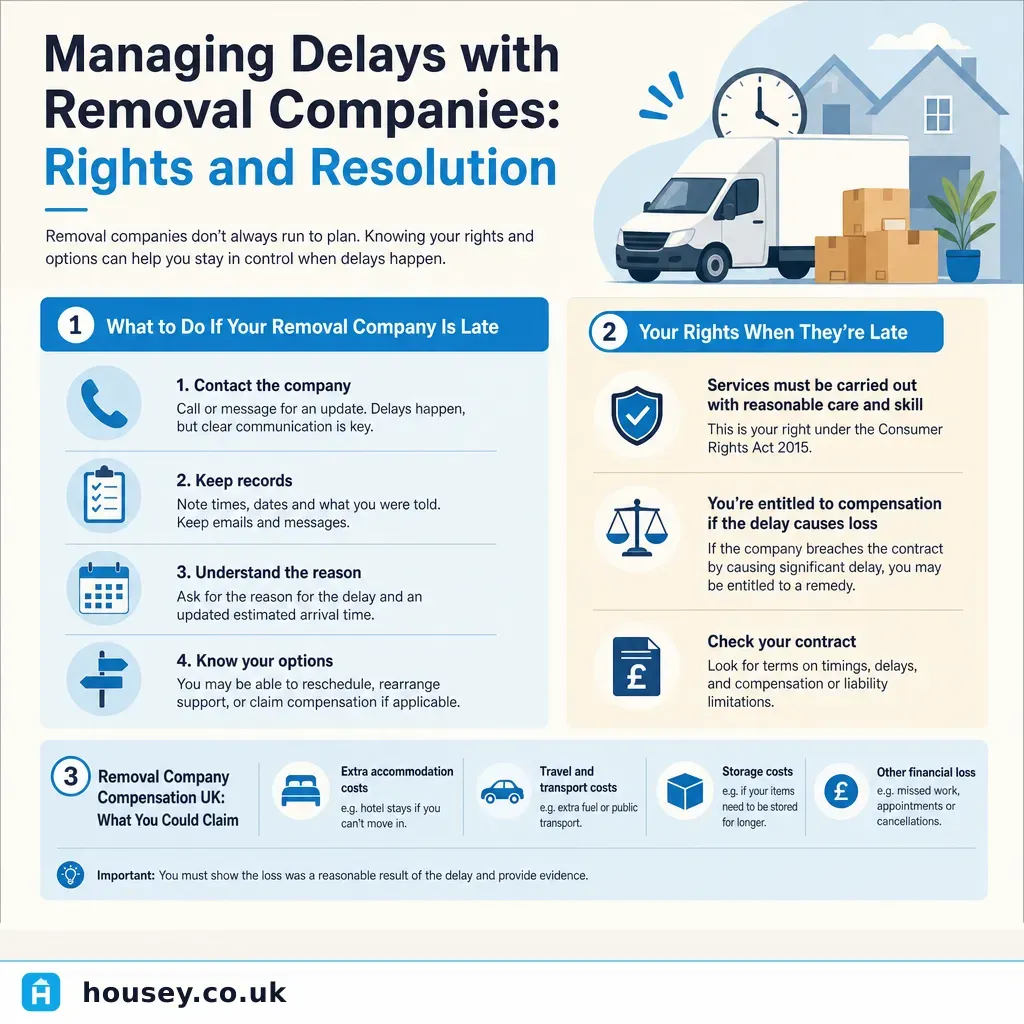
Managing Delays with Removal Companies: Rights and Resolution
If a removal company is late, your rights depend on your contract and whether the company is BAR-registered.
 Buying & Moving
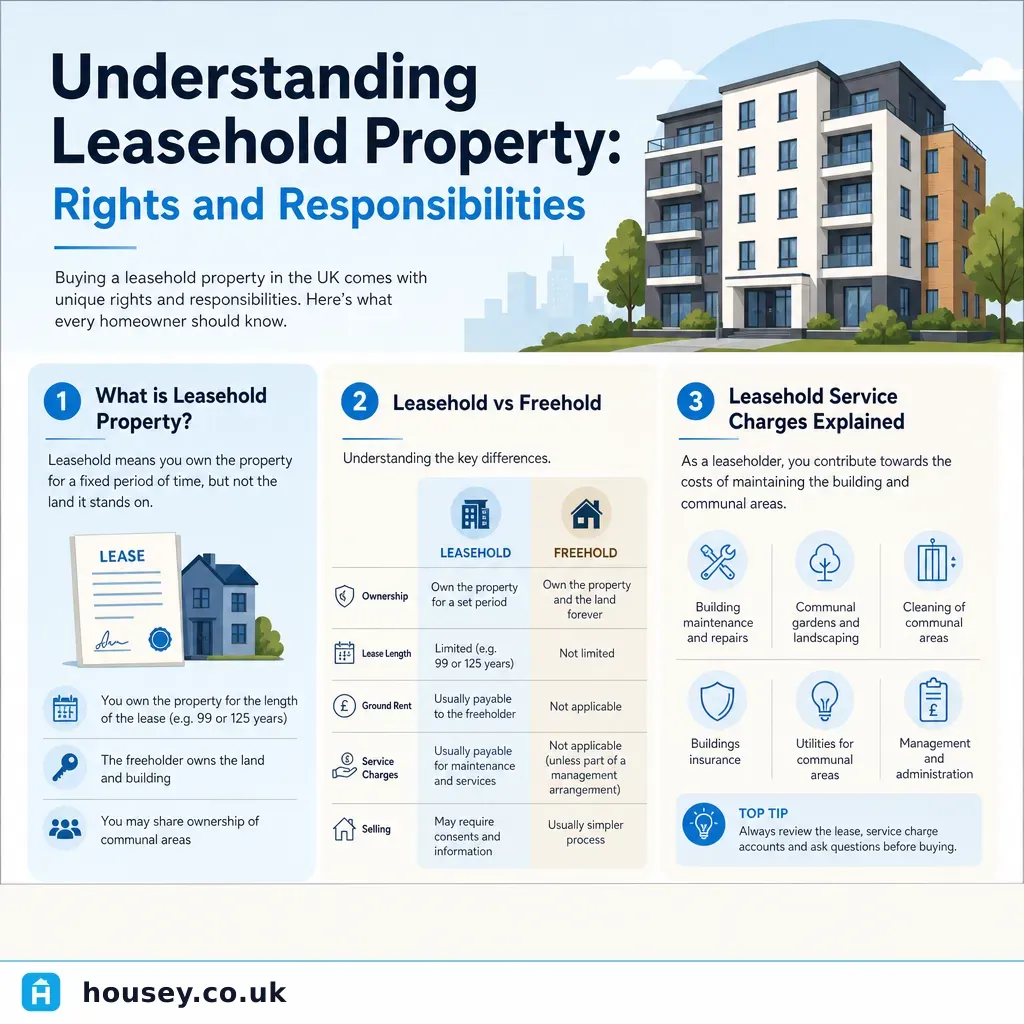
Understanding Leasehold Property: Rights and Responsibilities
Leasehold means you own a time-limited interest in a property while the freeholder owns the land and building.
 Buying & Moving
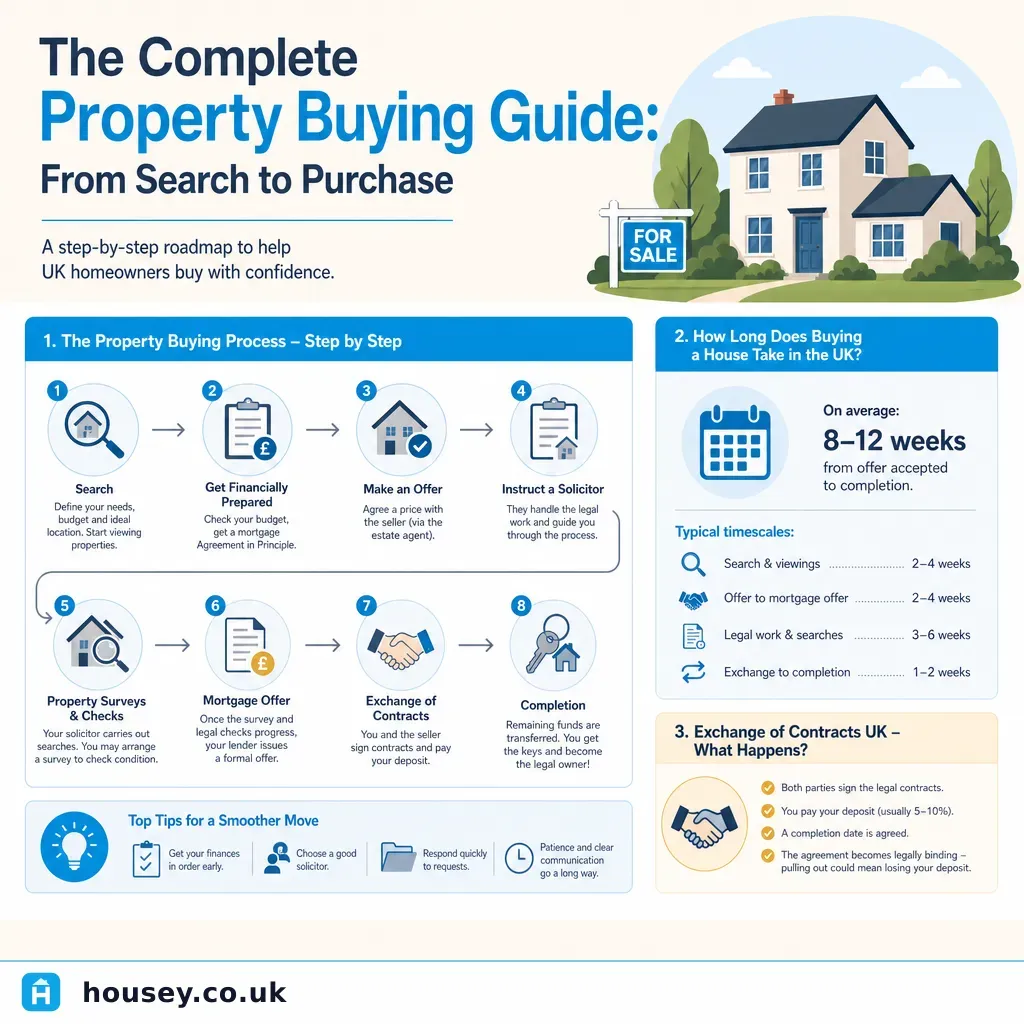
The Complete Property Buying Guide: From Search to Purchase
Buying a property in England and Wales typically takes 3–6 months from accepted offer to completion.
 Buying & Moving
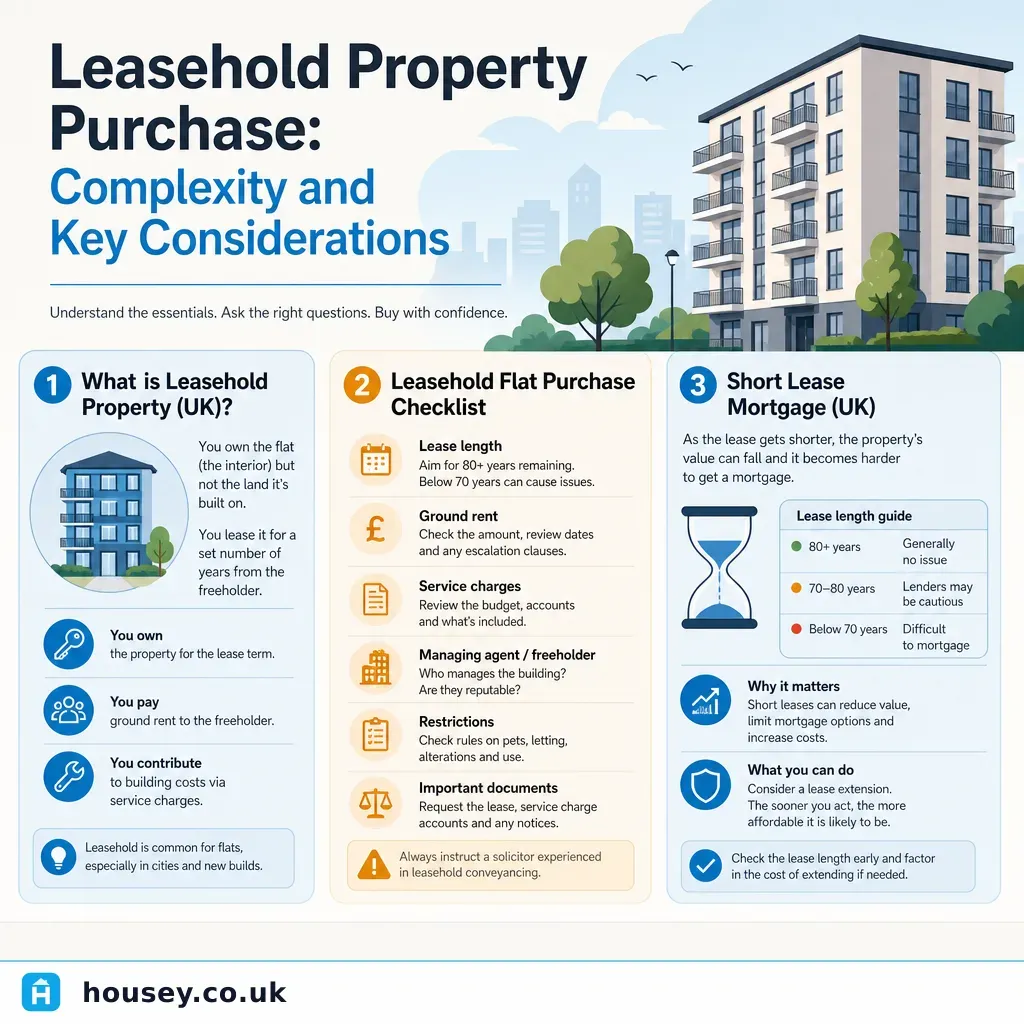
Leasehold Property Purchase: Complexity and Key Considerations
Buying a leasehold property means purchasing the right to occupy for a fixed term rather than owning the land outright.
 Buying & Moving
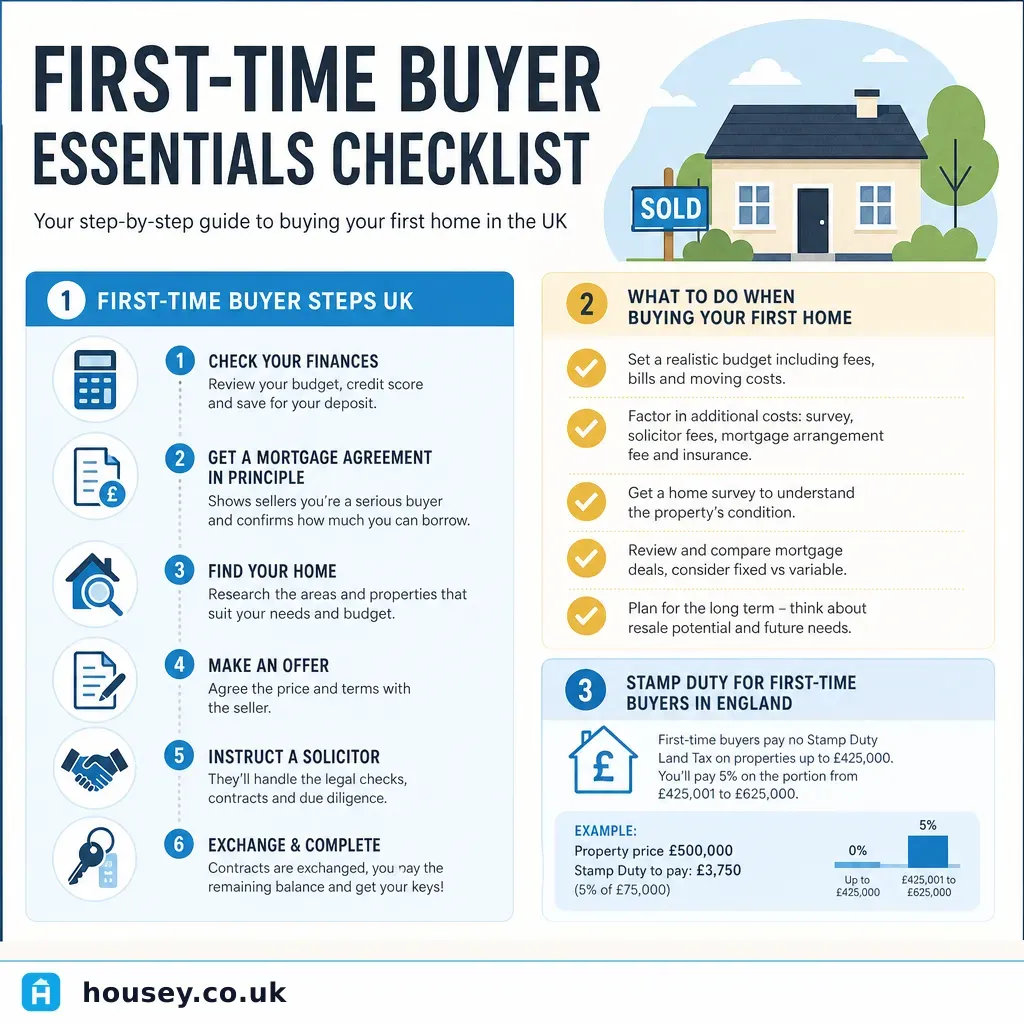
First-Time Buyer Essentials Checklist
Buying your first home involves obtaining a mortgage in principle, making an offer, instructing a solicitor, arranging a survey, and exchanging contracts before completion.