Downsizing Your Home: Strategic Planning and Practical Steps
By Housey · Last reviewed 25th of May 2026
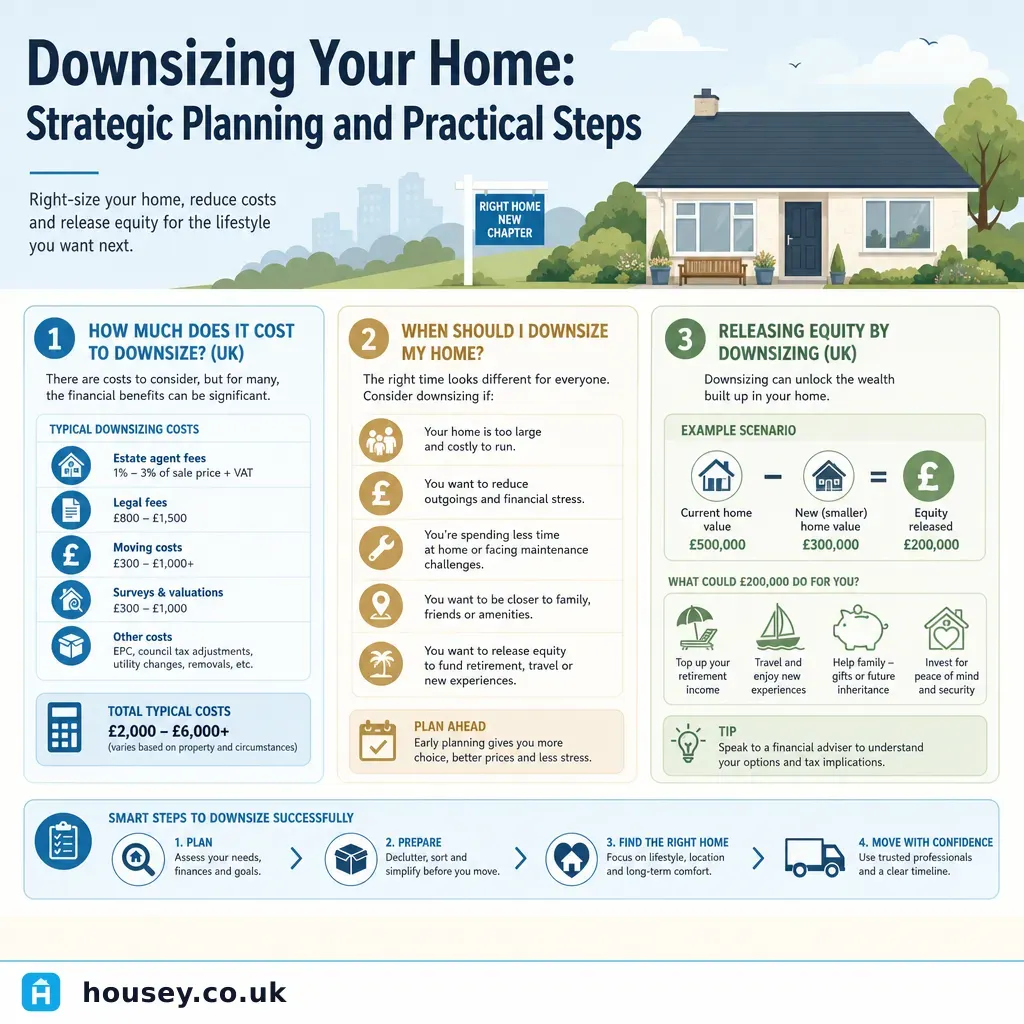
Downsizing Your Home: Strategic Planning and Practical Steps
Moving to a smaller property is a significant financial and practical decision that UK homeowners typically face when children leave home, retirement approaches, or running costs become unsustainable. Whether you are a 1960s detached owner considering a retirement flat or a family in a Victorian semi looking to release equity, the process involves far more than simply choosing a smaller address. Stamp duty thresholds, chain complexity, leasehold considerations, and transaction costs all influence whether the move delivers the financial and lifestyle benefits you expect.
Key points
- Stamp Duty Land Tax (SDLT) applies in England on main residence purchases above £125,000 (as of May 2026); Scotland uses Land and Buildings Transaction Tax (LBTT) and Wales uses Land Transaction Tax (LTT) — each has different nil-rate thresholds, so check current rates on GOV.UK and the Welsh Revenue Authority.
- Estate agents typically charge 0.9%–3% of the sale price plus VAT; fixed-fee online agents charge from approximately £500–£1,500 plus VAT (Indicative UK costs, last reviewed 2026-05-25).
- Conveyancing for a combined sale and purchase typically costs £1,500–£3,000 in solicitor fees, plus disbursements including Land Registry fees and local authority searches (Indicative UK costs, last reviewed 2026-05-25).
- If you own a leasehold property, check the lease length before marketing — fewer than 70 years remaining can make it harder for buyers to secure a mortgage on the property.
- Energy Performance Certificates (EPCs) are legally required before marketing a property for sale; a valid EPC must be made available to any prospective buyer within 7 days of a request.
Is downsizing financially worthwhile?
The financial case for downsizing depends on the gap between your current property's value and the cost of your target home, minus the transaction costs of both moves. Many homeowners underestimate what those costs amount to.
On a £400,000 sale and a £250,000 purchase in England, a rough cost breakdown might look like this:
Cost item | Approximate range |
|---|---|
Estate agent fee (1.5% of sale price) | £6,000 |
Conveyancing (sale and purchase combined) | £2,000–£3,000 |
SDLT on £250,000 purchase | £2,500 |
Surveyor's fees | £400–£700 |
Removals | £800–£2,000 |
EPC (if renewal needed) | £60–£120 |
Total indicative costs | £12,000–£15,000+ |
Indicative UK costs, last reviewed 2026-05-25. Costs vary significantly by region, property value, and complexity.
This means clearing at least £12,000–£15,000 in transaction costs before you see any net equity released. For properties with a smaller price gap, downsizing may yield less equity than expected.
When does downsizing make sense?
Not every homeowner should downsize, and timing matters considerably. Use this decision framework to assess your situation:
Consider downsizing now if:
- Children have left home and two or more bedrooms are consistently unused.
- Annual running costs — mortgage, heating, maintenance — clearly exceed what a smaller property would require.
- You want to release equity to fund retirement, support family, or reduce financial pressure.
- Mobility or accessibility needs are better met by a ground-floor flat or bungalow.
Wait or consider alternatives if:
- Your property is mid-renovation — completing works first often increases the sale price.
- The equity gap between your current and target home is small once transaction costs are deducted.
- The Rent a Room scheme allows you to earn up to £7,500 per year tax-free from a lodger, reducing financial pressure without a move.
- You are likely to need the space again within five years due to returning adult children or caring responsibilities.
Seek professional advice before proceeding if:
- The property is held in trust or forms part of an estate.
- The property is leasehold with a short lease or complex service charges.
- You are considering the move as part of a divorce or financial settlement.
- You are over 55 and evaluating equity release as an alternative to a full sale.
What type of smaller property suits you?
Choosing between a smaller house, a bungalow, a retirement flat, or a leasehold apartment involves trade-offs beyond square footage.
Property type | Key advantages | Watch out for |
|---|---|---|
Smaller freehold house | Full ownership, no service charges, garden possible | Council tax reduction may be modest |
Bungalow | Single-storey, accessible, good resale demand | Premium price per sq ft; limited availability |
Leasehold retirement flat | Age-restricted community, concierge, lower maintenance | Service charges, event fees, resale restrictions |
Standard leasehold flat | Well-located, lower purchase price | Ground rent, service charges, lease length |
New-build (house or flat) | EPC-efficient, NHBC Buildmark 10-year warranty | Part-exchange valuations may undervalue your home |
Preparing your current property for sale
Before instructing an estate agent, work through this pre-sale checklist:
Managing the chain and timeline
Downsizing typically means being both a seller and a buyer, placing you inside a property chain. The average time from offer accepted to completion in England and Wales is approximately 14–16 weeks, though chains involving multiple parties can extend considerably.
- Sell first and rent short-term before purchasing — this makes you a chain-free buyer, which sellers and their agents often prefer.
- If buying a new-build, explore part-exchange schemes, which can remove the chain on your side entirely.
- Instruct a proactive conveyancing solicitor who chases progress actively rather than waiting for updates from other parties.
When to get professional help
- If your property is leasehold with fewer than 80 years remaining, speak to a solicitor about lease extension before marketing — extending after exchange adds time and cost.
- If you are over 55 and evaluating equity release rather than a full sale, consult an adviser regulated by the Financial Conduct Authority (FCA).
- If you are unsure about your property's current market value, commission a RICS-registered independent valuation rather than relying solely on estate agent estimates.
- If the move has pension, savings, or inheritance tax implications, consult a regulated independent financial adviser before proceeding.
How Housey can help
Housey connects homeowners with regulated professionals at every stage of the downsizing process. Whether you need a professional property valuation to understand your equity position before going to market or a conveyancing solicitor for your sale and purchase to handle the legal work efficiently, you can compare quotes from local specialists through Housey.
Frequently asked questions
Do I pay Stamp Duty Land Tax when downsizing?
Yes — SDLT applies to your purchase price, not your sale. On a £250,000 purchase in England you would pay £2,500 (2% on the £125,001 to £250,000 portion). Scotland and Wales have equivalent taxes with different thresholds. No specific SDLT relief exists for downsizers, though the higher additional-dwelling rates do not apply if you are replacing a main residence.
Can I downsize if I still have a mortgage?
Yes, but you will need to either redeem the existing mortgage from the sale proceeds or port it to the new property if your lender permits. Not all mortgages are portable, and lenders will reassess affordability. Check portability terms and any early repayment charges with your lender before instructing solicitors.
How long does the downsizing process typically take?
From instructing estate agents to completion, most moves take 4 to 6 months, though chain complexity, survey findings, and solicitor workloads can extend this. Selling first and renting briefly — making yourself a chain-free buyer — can significantly reduce total timescales and gives you stronger negotiating power with sellers.
What should I do with belongings that will not fit in the smaller property?
Many downsizers use self-storage during the transition to sort through possessions at their own pace. Specialist house-clearance companies operate across the UK for larger volumes. Items can also be sold through auction, online platforms, or car boot sales, or donated to charity or gifted to family members.
Sources and further reading
- Stamp Duty Land Tax: overview — GOV.UK
- Energy Performance Certificates — GOV.UK
- Rent a Room Scheme — GOV.UK
- RICS Home Survey Standard — RICS
Useful next reads
 Buying & Moving
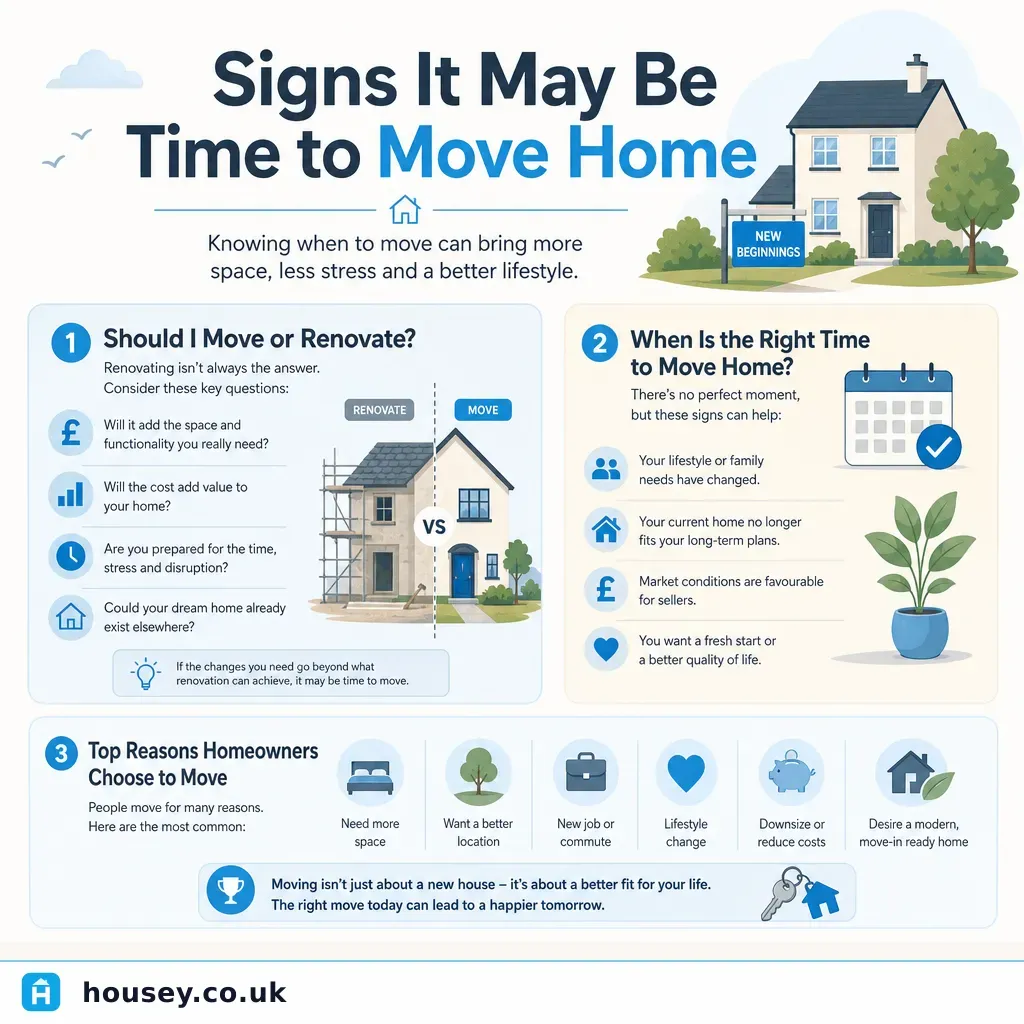
Signs It May Be Time to Move Home
Common signs it may be time to move home include running out of space, needing to be closer to schools or work, significant life changes such as a growing family or relationship breakdown, or finding that your current home can no longer be cost-effectively adapted to your needs.
 Buying & Moving
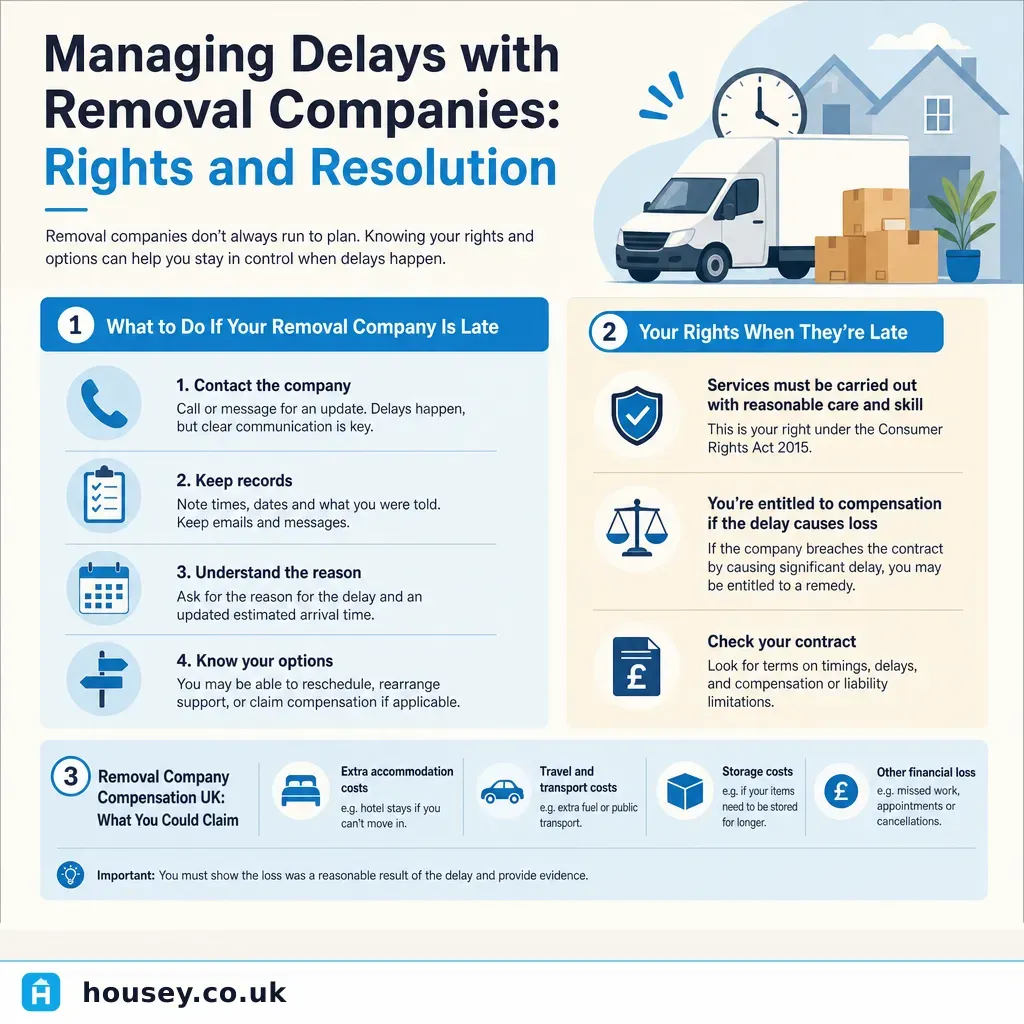
Managing Delays with Removal Companies: Rights and Resolution
If a removal company is late, your rights depend on your contract and whether the company is BAR-registered.
 Buying & Moving
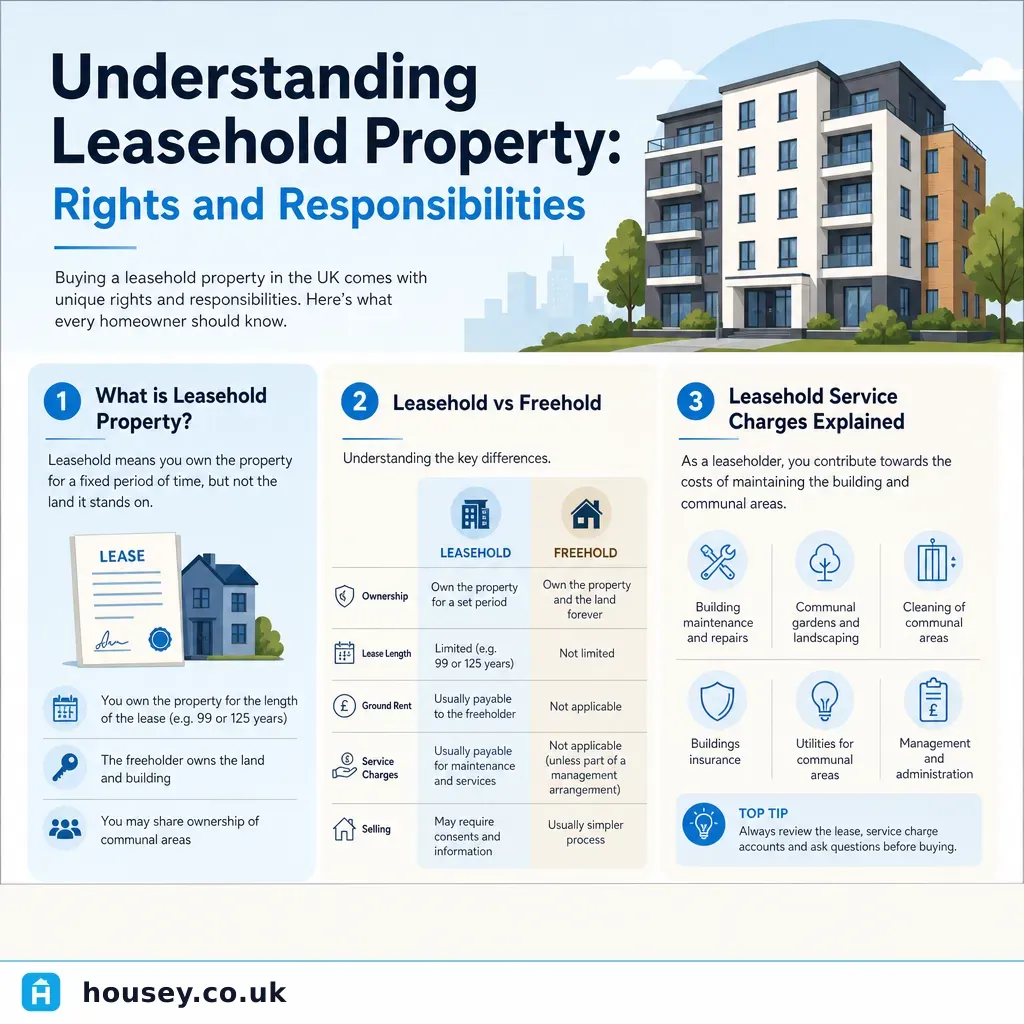
Understanding Leasehold Property: Rights and Responsibilities
Leasehold means you own a time-limited interest in a property while the freeholder owns the land and building.
 Buying & Moving
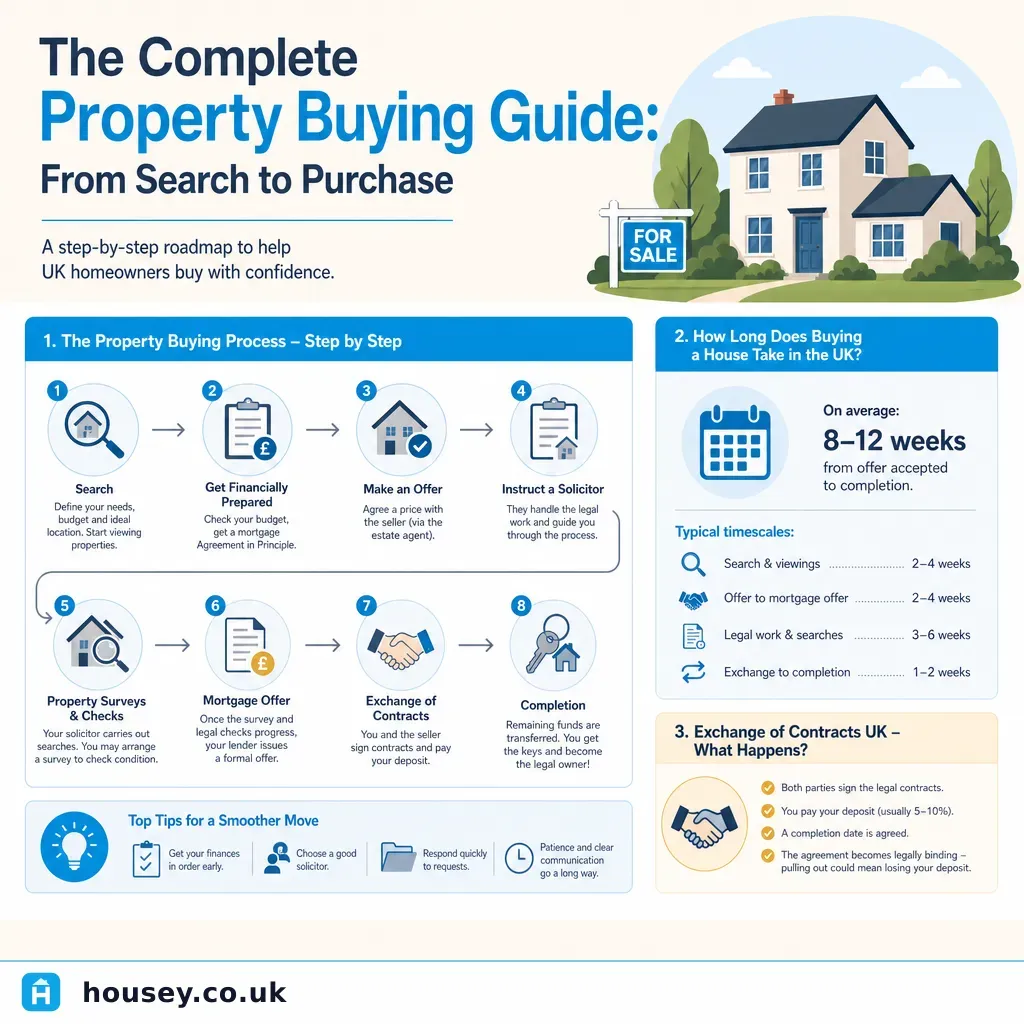
The Complete Property Buying Guide: From Search to Purchase
Buying a property in England and Wales typically takes 3–6 months from accepted offer to completion.
 Buying & Moving
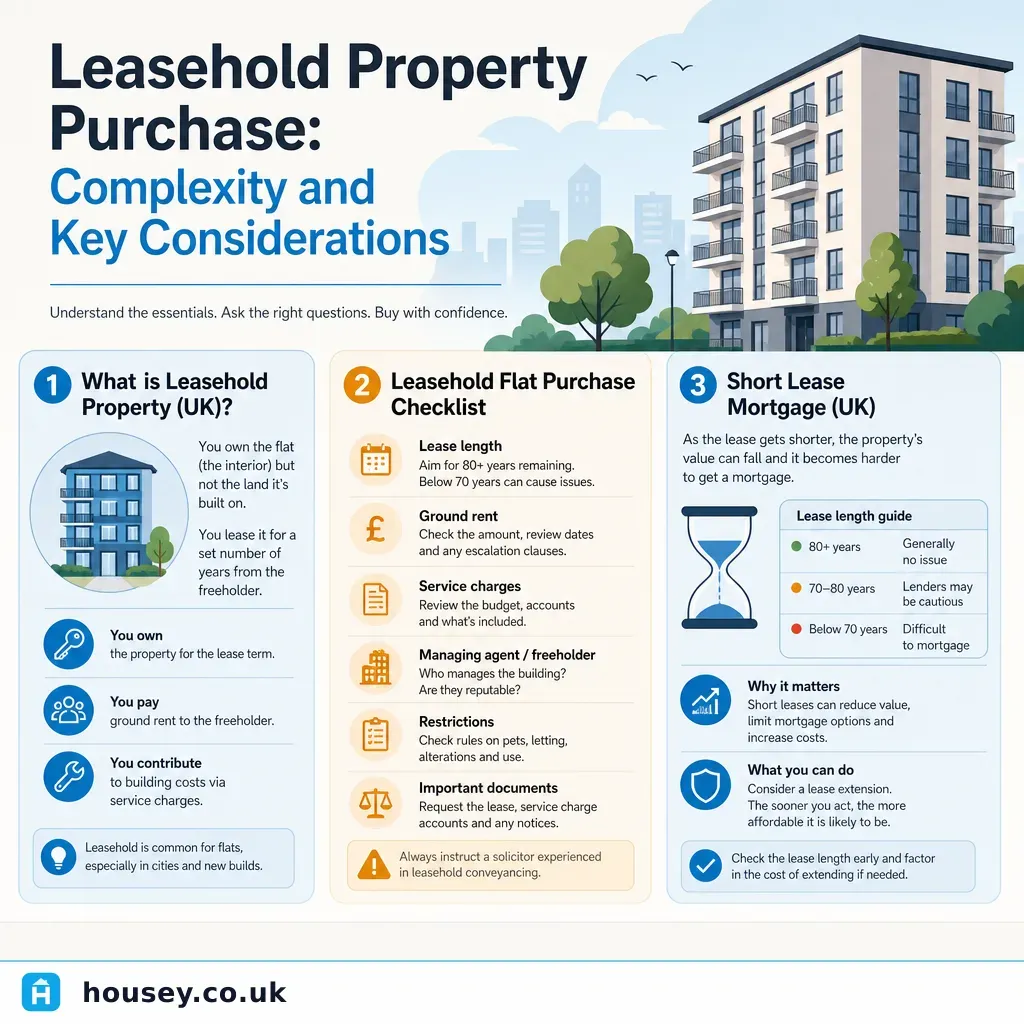
Leasehold Property Purchase: Complexity and Key Considerations
Buying a leasehold property means purchasing the right to occupy for a fixed term rather than owning the land outright.