Electric Radiator Installation and Heating System Costs
By Housey · Last reviewed 6th of May 2026
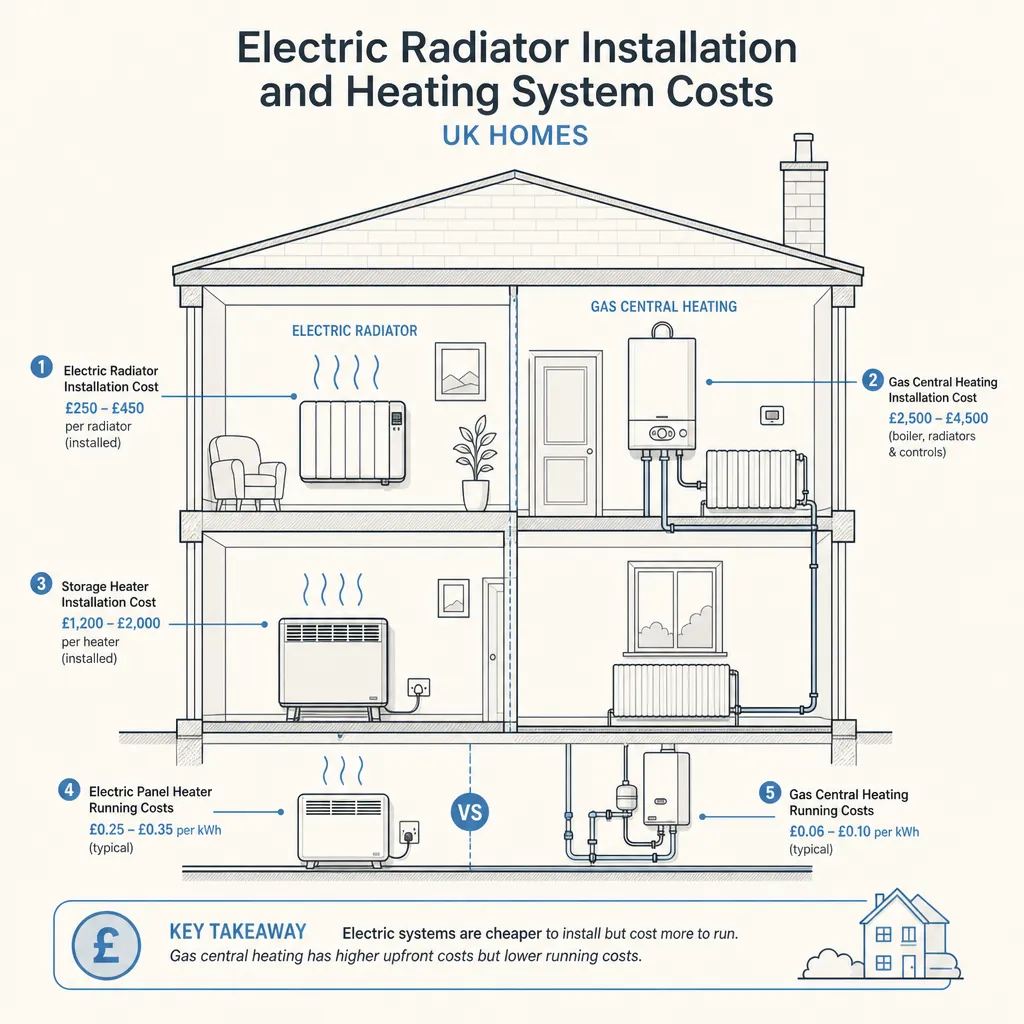
Electric Radiator Installation and Heating System Costs
More UK homeowners are considering electric radiators — whether as a whole-home heating solution for properties without a gas connection, as supplementary heat in an extension or loft conversion, or as part of a longer-term move towards all-electric living. The question of cost spans both upfront installation and ongoing running costs, and the right answer depends heavily on radiator type, property insulation, and the electricity tariff in use.
Key points
- Electric radiators require no boiler, flue, or wet pipework — each unit heats independently and can be controlled individually or via a central smart thermostat.
- Plug-in electric radiators require no formal installation; hardwired models require a Part P-qualified electrician and trigger Building Regulations notification in England and Wales under Approved Document P.
- Electricity costs approximately 24–28p per kWh under the Ofgem price cap as of early 2026: a 1.5kW radiator running for two hours uses 3kWh and costs around 72–84p.
- Storage heaters charge overnight on cheaper off-peak tariffs (Economy 7 or Economy 10) and release heat during the day, offering lower running costs for eligible households.
- NICEIC- or NAPIT-registered electricians are the appropriate professionals for all hardwired electric radiator circuits, including new consumer unit connections.
Types of Electric Radiator
Panel heaters
The simplest and most affordable option. A 1kW panel heater costs £50–£200 as a unit; plug-in models need no professional installation. They heat a room quickly but retain no warmth once switched off, so running costs rise if no thermostat is used.
Electric radiators with thermal mass
These store heat in a fluid-filled core or ceramic element and release it gradually. Unit costs run £150–£600. Many models include digital thermostats, open-window detection, and adaptive start functions that meaningfully improve efficiency in practice.
Storage heaters
Storage heaters charge overnight on cheaper off-peak electricity and release heat during the day. They suit properties on Economy 7 or Economy 10 tariffs. Unit costs: £200–£800. Installation requires a qualified electrician, as most storage heaters are hardwired.
Infrared panels
Infrared panels heat objects and surfaces rather than air, making them effective in well-insulated rooms. Typically ceiling- or wall-mounted. Unit costs: £100–£500, plus installation by an electrician.
Comparison: Electric Radiator Types
Type | Heat retention | Best for | Typical unit cost | Running cost profile |
|---|---|---|---|---|
Panel heater | None — instant on/off | Small rooms, occasional use | £50–£200 | Higher without thermostat control |
Thermal-mass radiator | Moderate | Living rooms, bedrooms, whole-home heating | £150–£600 | Lower with smart controls |
Storage heater | High — stores overnight | Flats and properties on E7/E10 tariffs | £200–£800 | Lowest on off-peak tariff |
Infrared panel | None — directional warmth | Well-insulated rooms, bathrooms, outbuildings | £100–£500 | Efficient if used directionally |
Installation Costs
Costs depend on whether the unit is plug-in or hardwired, and whether a new circuit is needed:
- Plug-in radiators: no electrician required; cost is the unit price only.
- Hardwired single radiator on an existing spur: £80–£200 labour, assuming an accessible circuit is close by.
- New dedicated circuit from consumer unit: £250–£600 per circuit, depending on cable run length and whether the consumer unit has spare capacity.
- Whole-home electric heating system: £2,000–£6,000+ installed, covering multiple radiators, wiring, and controls for a typical three-bedroom property.
Indicative UK costs, last reviewed 2026-05-06. Obtain at least three quotes; costs vary by property size, existing wiring layout, and regional labour rates.
Part P Building Regulations
In England and Wales, hardwired electrical installation work in dwellings is notifiable under Part P of the Building Regulations. The work must either be:
- Carried out by a competent person registered with a government-authorised scheme — NICEIC, NAPIT, or ELECSA — who self-certifies the work, or
- Notified to building control via a building notice before work starts, with the installation subsequently inspected.
Plug-in models do not trigger Part P. Bathroom installations have additional requirements under IET Wiring Regulations (BS 7671), with specific IP-rating and installation zone rules that apply regardless of supply method.
Worked Example: Running Costs for a Three-Bedroom Home
A typical three-bedroom UK home with six electric radiators averaging 1.5kW each:
- Total maximum load: 9kW
- Estimated winter use: approximately 6 hours per day at part load (thermostats reduce actual runtime)
- Estimated daily consumption: 30–40kWh
- Cost at 26p/kWh: approximately £8–£10 per day, or £240–£300 per month in peak winter
Key levers that reduce actual running costs:
- Smart thermostats with 24/7 programming and individual zone control
- Economy 7 or Economy 10 tariff, particularly for storage heaters
- Good loft, wall, and floor insulation — reducing heat demand is more effective than optimising the heating system alone
- Correct radiator sizing — oversized units cycle inefficiently and can cause overheating
Electric Radiators vs Gas Central Heating
Factor | Electric radiators | Gas central heating |
|---|---|---|
Installation cost | Low to moderate — no boiler or pipework | High — boiler, pipework, and radiators |
Running cost | Higher at current UK tariffs | Lower at current gas prices |
Zonal control | Excellent — each radiator independent | Requires smart TRVs or zone valves |
Safety | No combustion; no carbon monoxide risk | Requires annual Gas Safe registered service |
Retrofit suitability | Good — no pipework disruption | Disruptive to install in existing properties |
Direct CO2 emissions | Zero | Yes — combustion of natural gas |
Future proofing | Benefits from grid decarbonisation over time | Exposure to fossil fuel price volatility |
Electric heating becomes more cost-competitive as the UK grid decarbonises and as time-of-use tariffs become more widely available. For properties without a gas connection — rural homes, conversions, outbuildings — electric heating is often the most straightforward all-electric option.
Decision Tree: Is Electric Heating Right for Your Property?
- Choose electric radiators if your property has no gas connection, is well-insulated, is a flat or small conversion, or needs supplementary heating in a new room.
- Choose storage heaters if you are on or can switch to an Economy 7 or Economy 10 tariff and are comfortable managing how heat is released during the day.
- Consider a heat pump if you are planning a full whole-home retrofit — heat pumps deliver significantly lower running costs than direct electric heating at similar conditions.
- Keep gas central heating if your existing system is recent, the property is on mains gas, and you have no near-term whole-home retrofit plans.
- Ask a qualified electrician or retrofit assessor if you are replacing a gas system entirely — load calculations and a possible consumer unit upgrade will almost certainly be needed.
What to Ask Before Accepting a Quote
- Does the quote cover the unit, installation labour, and any consumer unit work required?
- Is the electrician NICEIC- or NAPIT-registered and able to self-certify the work under Part P?
- What thermostat and controls are included — will they integrate with your existing smart home system?
- Is VAT included in the quoted price?
- What warranty does the unit carry, and who handles claims — the manufacturer or the installer?
- Can the electrician advise on the most appropriate electricity tariff for the system specified?
When to Get Professional Help
Hardwired electric radiators must be installed by a qualified electrician. Seek professional advice if:
- You are replacing a gas central heating system entirely — this requires load calculations and may require a consumer unit upgrade
- Your consumer unit is old, lacks spare capacity, or was installed before 2016 without full RCD protection
- You are installing heating in a bathroom, where IET Wiring Regulations (BS 7671) specify installation zones and minimum IP ratings
- You are unsure whether your property's existing wiring can safely support the additional electrical load
How Housey Can Help
Housey helps UK homeowners request and compare quotes from qualified electricians and heating installers. Whether you are adding a single electric radiator to an extension or planning a whole-home electric heating system, Housey can connect you with relevant registered professionals in your area.
Frequently asked questions
Can I install a hardwired electric radiator myself?
Plug-in models can be positioned and used without professional involvement. Hardwired models must be connected by a qualified electrician registered under a Part P competent-person scheme such as NICEIC or NAPIT. Attempting hardwired installation yourself risks failing Building Regulations, invalidating home insurance, and creating a fire or electric shock hazard.
How much does it cost to run an electric radiator per hour in the UK?
At approximately 24–28p per kWh under the Ofgem price cap (early 2026), a 1kW electric radiator costs around 24–28p per hour at full output. A 2kW model costs approximately 48–56p per hour. In practice, a thermostat prevents the radiator from running at full power continuously, so actual hourly cost is lower.
Are electric radiators cheaper to install than a gas boiler system?
Yes, significantly. A gas boiler system including installation, pipework, and radiators typically costs £3,000–£7,000 or more. Electric radiators avoid the boiler, flue, and wet pipework entirely, reducing installation cost substantially — though ongoing running costs at current UK tariffs are generally higher for direct electric heating than for gas.
Do electric radiators work with smart home systems?
Many modern electric radiators are compatible with Google Home, Amazon Alexa, and Apple HomeKit via Wi-Fi or dedicated apps. Some models integrate with Hive, Nest, or tado° thermostats. Confirm compatibility with your specific platform before purchasing, as integration capability varies by manufacturer and model.
Will switching to electric radiators reduce my carbon footprint?
Electric radiators produce no direct combustion emissions. Their whole-life carbon footprint depends on the carbon intensity of the electricity supply. As the UK grid decarbonises, the carbon impact of electric heating falls over time — unlike gas central heating, which produces CO2 from combustion regardless of boiler efficiency.
Sources and further reading
- Ofgem energy price cap: what you pay — Ofgem
- Approved Document P: Electrical safety in dwellings — GOV.UK
- Find a registered electrician — NICEIC
- Electric heating advice — Energy Saving Trust
- IET Wiring Regulations (BS 7671) — IET
Useful next reads
 Energy & Retrofit
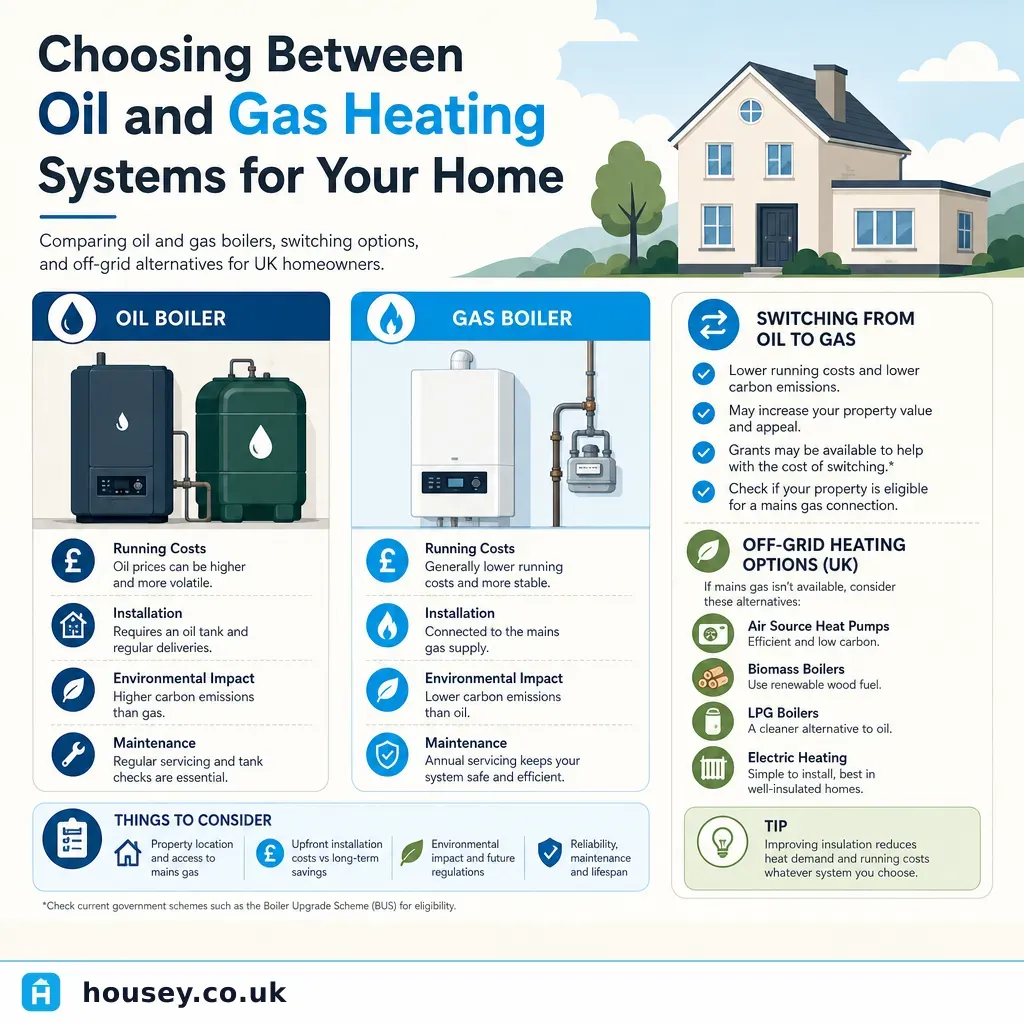
Choosing Between Oil and Gas Heating Systems for Your Home
Oil central heating suits rural UK properties without mains gas access, while gas remains the default for connected homes.
 Energy & Retrofit
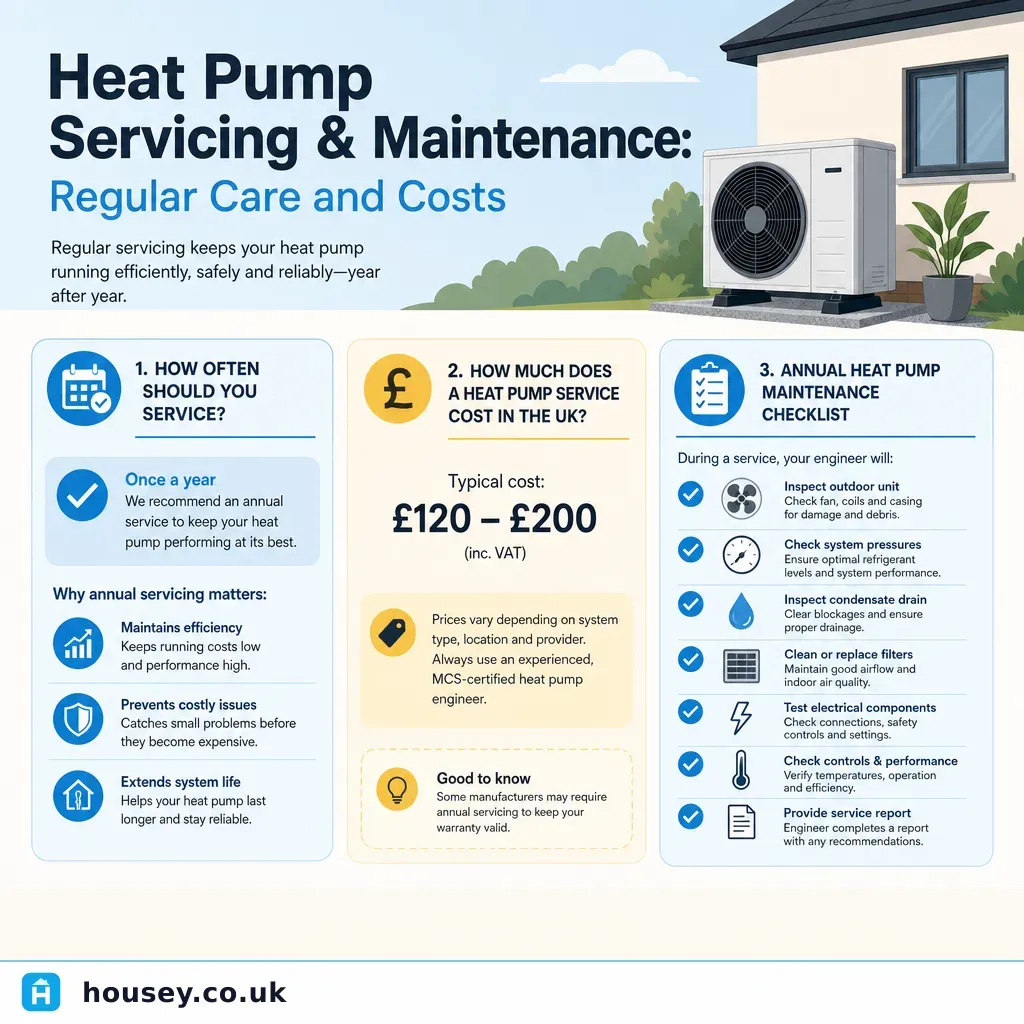
Heat Pump Servicing and Maintenance: Regular Care and Costs
Heat pumps should be serviced by a qualified engineer once a year; most manufacturers require this to keep the warranty valid.
 Energy & Retrofit
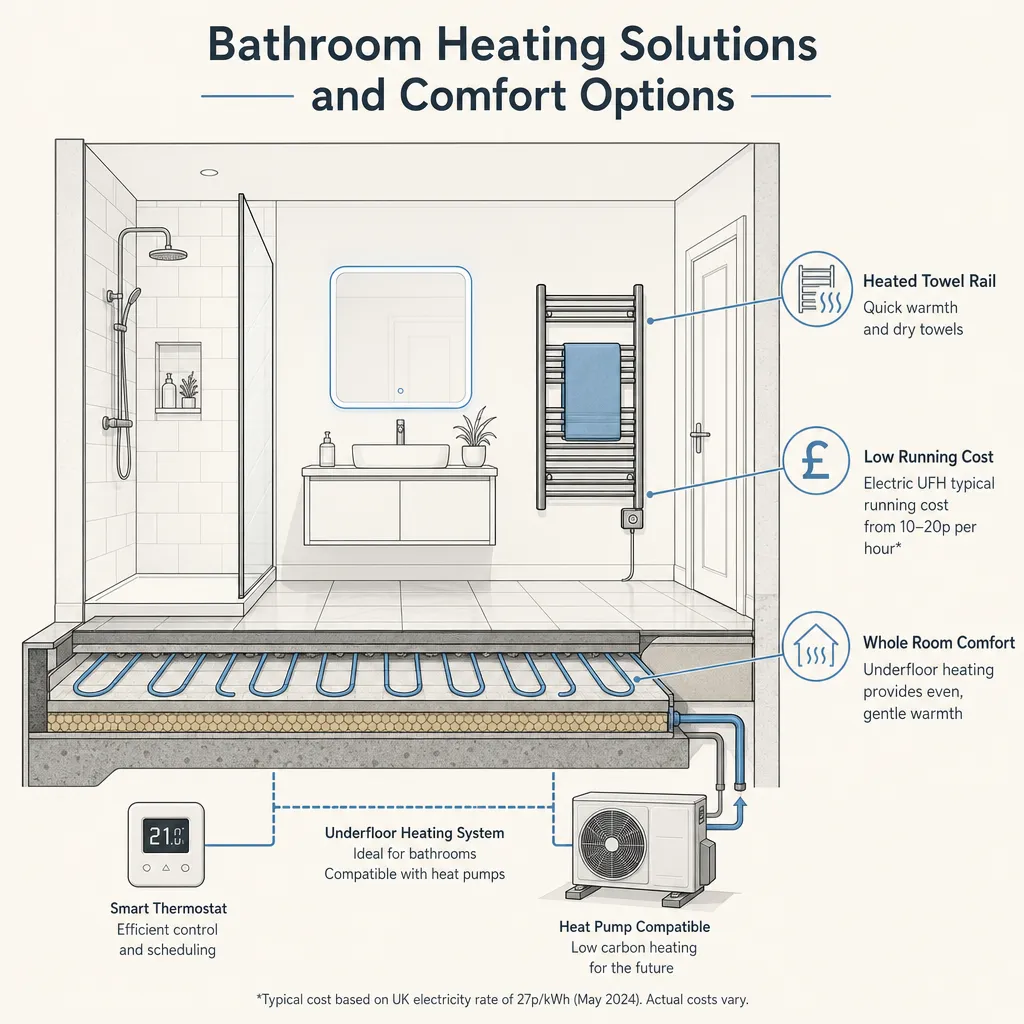
Bathroom Heating Solutions and Comfort Options
UK bathrooms can be heated using electric towel rails, wet radiators on the central heating circuit, electric or wet underfloor heating, or infrared panels.
 Energy & Retrofit
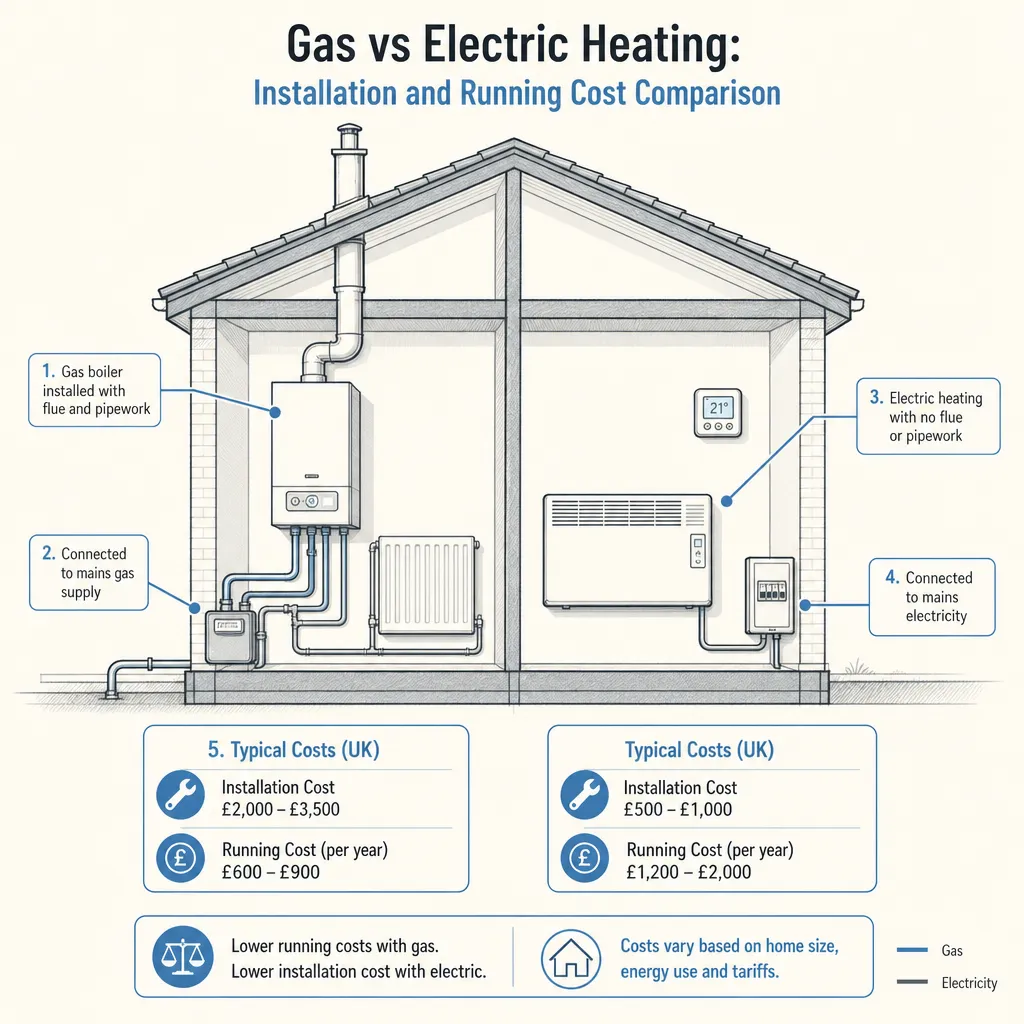
Gas vs Electric Heating: Installation and Running Cost Comparison
Gas central heating usually has lower running costs per kWh than direct electric heating in the UK, though heat pumps can change that equation.
 Energy & Retrofit
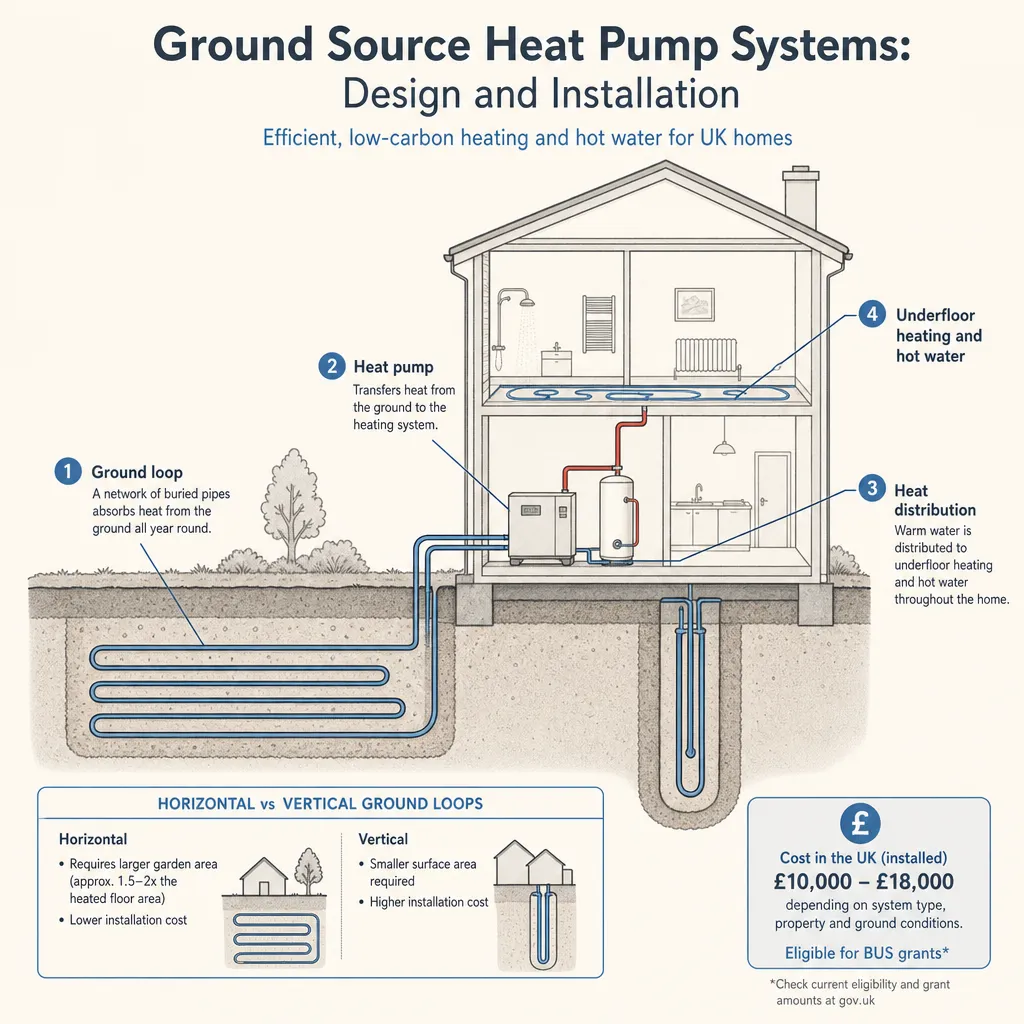
Ground Source Heat Pump Systems: Design and Installation
Ground source heat pumps extract heat from the earth through buried loops or boreholes, then upgrade it for space heating and hot water.