Estimating Concrete Quantities for Construction Projects
By Housey · Last reviewed 10th of May 2026
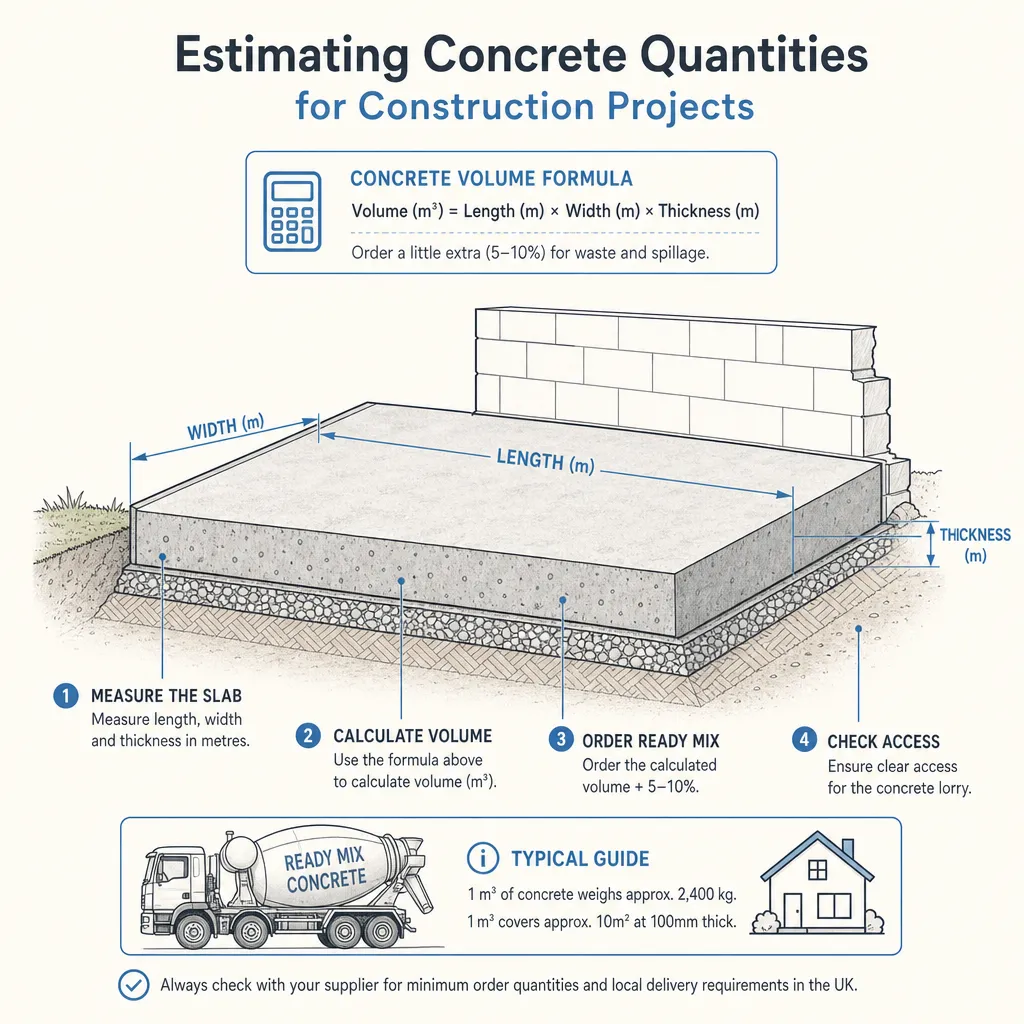
Estimating Concrete Quantities for Construction Projects
Whether you are laying a garden path, constructing a garage slab, or preparing strip foundations for a rear extension, getting the concrete quantity right is one of the more consequential material calculations in any construction project. Order too much and you face disposal costs and wasted expenditure; order too little and you risk a cold joint — the structural weak point created when fresh concrete is poured onto a section that has already begun to set.
Key points
- Concrete volume is calculated as length (m) × width (m) × depth (m), giving a result in cubic metres (m³)
- Always add a 5–10% wastage allowance on top of the theoretical volume — uneven sub-base, formwork flex, and spillage typically account for this margin
- Domestic slabs are commonly specified as C25 or C30; structural foundations usually require C30 or above — always confirm the mix specification with your structural engineer or building control officer
- Ready-mix drum trucks typically deliver a minimum of 6 m³; volumetric mixer trucks can supply from approximately 0.5 m³, making them practical for smaller domestic pours
- Indicative UK ready-mix concrete costs range from approximately £100–£160 per m³ excluding delivery and VAT (last reviewed 2026-05-10) — prices vary significantly by region, mix strength, and proximity to the batching plant
How to calculate concrete volume
The formula is straightforward for regular rectangular shapes:
Volume (m³) = Length (m) × Width (m) × Depth (m)
Example — shed base: A 4 m × 3 m base at 100 mm (0.1 m) depth: 4 × 3 × 0.1 = 1.2 m³
Add 7.5% wastage: 1.2 × 1.075 = 1.29 m³ — in practice, order 1.3 m³.
Irregular and stepped areas
For L-shaped slabs or stepped footings, divide the area into individual rectangles, calculate each volume separately, and sum them. Do not average out irregular shapes — the resulting error is almost always an underestimate.
For strip foundations:
Volume = Total strip length × Strip width × Strip depth
Width and depth come from the structural engineer's specification — typically 600 mm wide × 250–450 mm deep for a single-storey extension on average ground conditions, though this varies by soil type and imposed load.
Circular elements — pad foundations and sonotubes
Volume = π × radius² × depth
Example — 300 mm diameter pad, 600 mm deep: π × 0.15² × 0.6 = 0.042 m³ per pad. Multiple pad foundations are usually ordered together as a single pour.
Concrete mix specifications
Mix designation | Typical UK application | Suitable for structural elements? | Notes |
|---|---|---|---|
C20 | Blinding layers, mass fill, non-structural infill | No | Used below strip foundations as a levelling blinding layer |
C25 | Domestic floor slabs, garden bases, footpaths | Lightly loaded only | Suitable for shed bases, patios, and non-load-bearing garden structures |
C30 | Foundation strips and pads, driveways, garage slabs | Yes (most domestic) | Standard for domestic structural elements subject to building control |
C35 | Retaining walls, structural beams, pile caps | Yes | Specified for durability in wet or freeze-thaw exposed conditions |
C40 | Heavily loaded foundations, commercial structural elements | Yes | Rarely required in standard domestic residential construction |
Mix designations follow BS 8500 (Concrete — Complementary British Standard to BS EN 206). Always confirm the required specification with your structural engineer or building control officer — do not select a mix grade based on cost alone.
Ready-mix vs volumetric vs site-mixed
Option | Best for | Not ideal for | Typical minimum order | Key risk |
|---|---|---|---|---|
Ready-mix drum truck | Large pours ≥ 4 m³; fast projects; consistent mix quality | Small jobs; sites with restricted access | Typically 6 m³ | Surplus concrete wasted if over-ordered; wait-time charges apply |
Volumetric mixer (on-site mix) | Jobs 0.5–5 m³; phased pours; uncertain final volumes | Very remote sites; highly specialist admixture mixes | From ~0.5 m³ | Marginally higher per-m³ cost than drum; mix proportions must be specified clearly |
Site-mixed (paddle or drum mixer) | Very small volumes; isolated post bases; minor repairs | Structural pours; consistent large volumes | No minimum | Labour-intensive; harder to achieve consistent quality; not appropriate for structural elements |
Worked UK property scenario
Project: Rear single-storey extension, 1930s semi-detached, East Midlands Foundation type: Strip foundation, 600 mm wide × 350 mm deep Total strip length: 14.4 m (three sides of a 4 m × 3 m footprint, excluding the existing rear wall)
Calculation: 14.4 m × 0.6 m × 0.35 m = 3.02 m³ Add 8% wastage: 3.02 × 1.08 = 3.26 m³ — order 3.3 m³
Decision: 3.3 m³ is above most volumetric truck minimums but below the typical 6 m³ drum minimum. A volumetric mixer is the most cost-effective and flexible option for this project. The structural engineer specified C30 with a water-cement ratio not exceeding 0.55 for durability in local ground conditions.
The above is illustrative only. Always confirm your specification with your structural engineer or building control officer before pouring.
What to check before ordering concrete
When to get professional help
For domestic garden slabs and small bases up to approximately 3–4 m³, a competent experienced groundworker can advise on practical quantities and assist with mix selection. Always involve a professional when:
- Any foundation concrete is required for a structural element such as an extension, habitable outbuilding, or retaining wall — the mix specification must come from a structural engineer or be approved by building control
- Pouring near existing foundations, drainage runs, or buried utilities
- Ground conditions are unusual — shrinkable clay, filled land, high water table, or suspected contamination
- The project requires specialist admixtures such as retarders, accelerators, plasticisers, or fibre reinforcement
- A build cost estimating professional can reduce overordering risk by producing a full material schedule before ordering begins
How Housey can help
Getting concrete specification and quantity right from the outset avoids costly errors and structural risk. Housey connects you with experienced groundworkers who can advise on practical pour volumes, build cost estimating professionals who produce full material schedules, and civil engineers for complex foundations or specialist concrete design requirements.
Frequently asked questions
How do I convert cubic metres of concrete to bags of cement?
For a site-mixed C20-equivalent concrete using a 1:2:4 mix by volume, approximately 6–7 bags of 25 kg cement are needed per cubic metre of finished concrete. This applies only to minor non-structural pours such as fence post bases or step repairs. Site-mixed concrete is not appropriate for structural elements subject to building control approval.
What happens if I run out of concrete during a pour?
If a pour is interrupted and the first section begins to set before the next delivery arrives, the interface becomes a cold joint — a plane of weakness where the bond between the two pours is significantly reduced. For structural elements this is a serious defect that may require the affected section to be cut out and re-poured. Always add a wastage margin to avoid this risk.
Can I return or re-use leftover ready-mix concrete?
Fresh concrete must typically be discharged within 90 minutes of batching for standard mixes in moderate temperatures. Remaining material in a drum truck is the supplier's responsibility to dispose of. Small site surpluses can fill post holes or minor surface details, but adding water to slow-setting concrete is not acceptable — it significantly weakens the final mix.
Does my concrete pour need to be formally tested?
For most domestic projects, concrete is not tested on site. For projects subject to building control sign-off, your inspector may request the delivery ticket confirming the grade and batch plant. For commercial or civil engineering work, BS EN 12350 specifies slump tests and cube sampling to verify the delivered mix meets specification.
Sources and further reading
- Concrete specification and mix guidance — The Concrete Centre
- BS 8500: Concrete — Complementary British Standard to BS EN 206 — BSI (British Standards Institution)
- Building regulations technical guidance — GOV.UK
- Quantity surveying and cost management guidance — RICS
Useful next reads
 Planning & Pre-Build
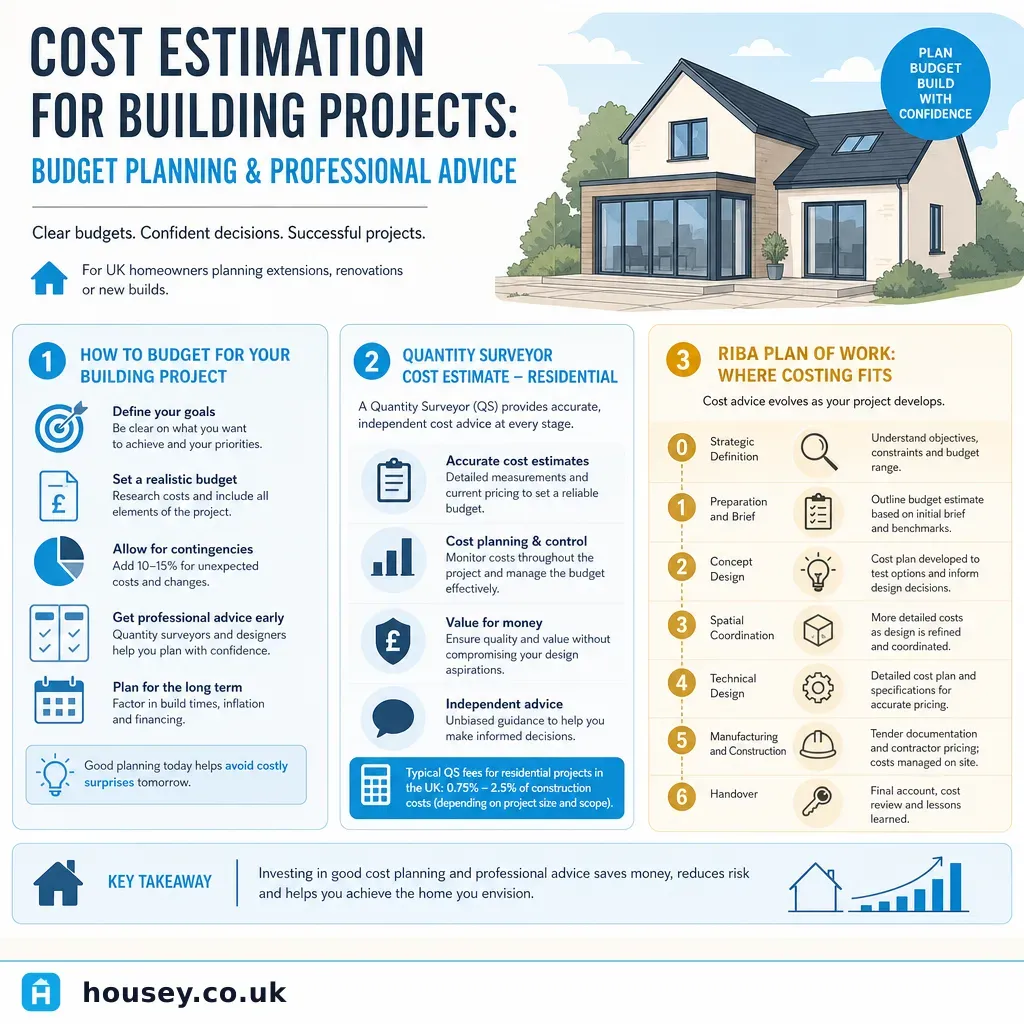
Cost Estimation for Building Projects: Budget Planning and Professional Advice
Build cost estimation involves calculating likely expenditure across design, materials, labour, fees, and contingency before committing to a project.
 Planning & Pre-Build
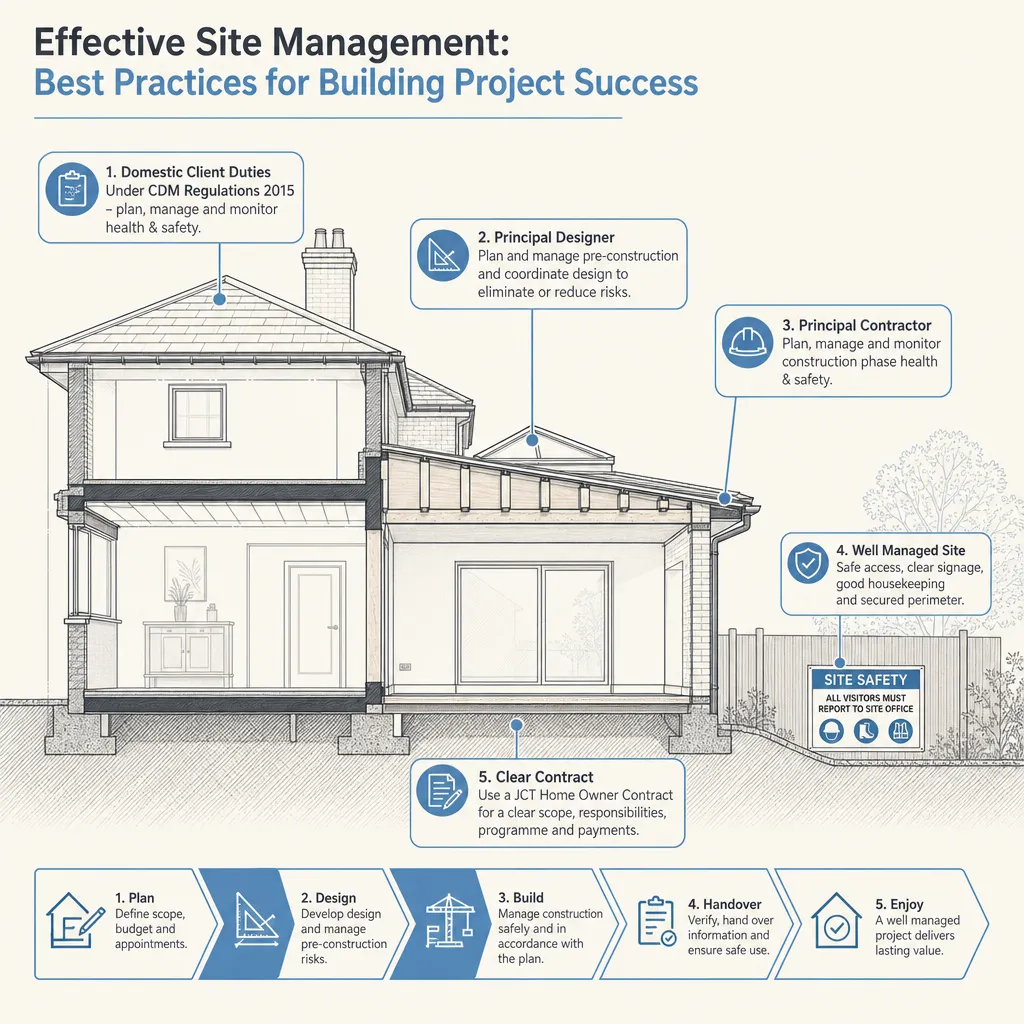
Effective Site Management: Best Practices for Building Project Success
Effective site management on a UK building project requires a clear programme, written contracts, CDM Regulations compliance, and proactive coordination between the principal contractor and all trades.
 Planning & Pre-Build
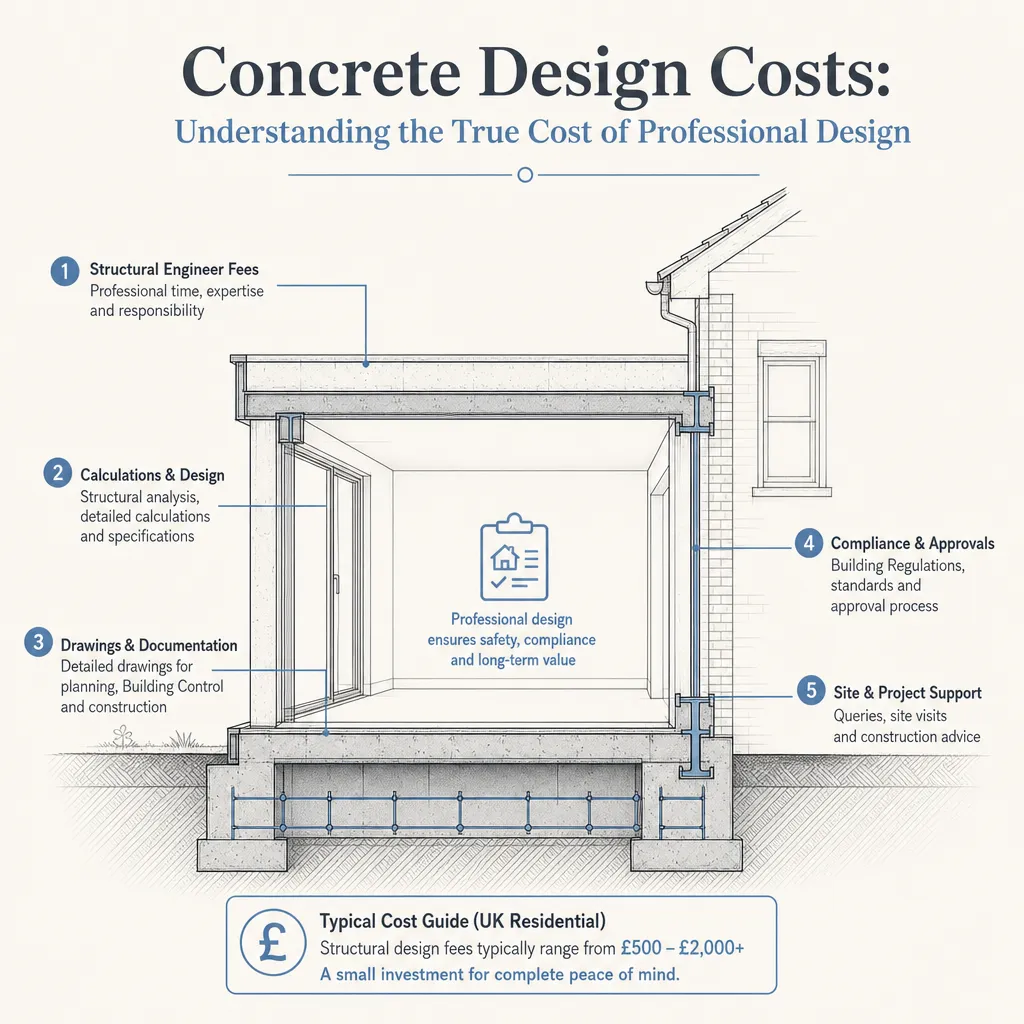
Concrete Design Costs: Understanding the True Cost of Professional Design
Professional design fees in the UK typically range from 5–12% of construction cost, or £500–£5,000+ as a fixed fee depending on scope and complexity.
 Planning & Pre-Build
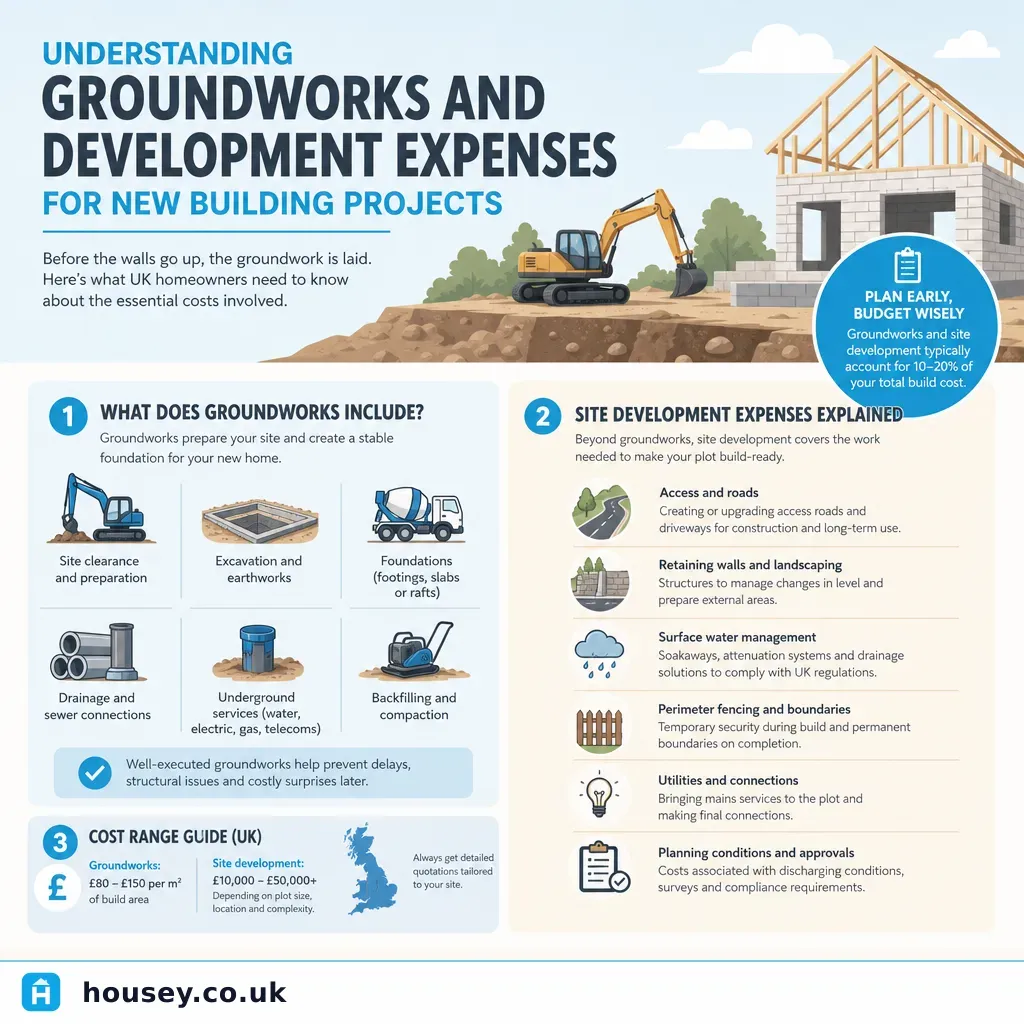
Understanding Groundworks and Development Expenses for New Building Projects
Groundworks cover all below-ground site preparation — excavation, drainage, foundations, and service connections — that must be completed before superstructure construction begins.
 Planning & Pre-Build
Changes to Loft Conversion Rules: Permitted Development and Planning Updates
In England, most loft conversions on standard houses qualify as Permitted Development under Class B of the GPDO 2015, allowing up to 40 cubic metres (terraced) or 50 cubic metres (detached or semi-detached) without a planning application — if conditions are met.