Effective Site Management: Best Practices for Building Project Success
By Housey · Last reviewed 31st of May 2026
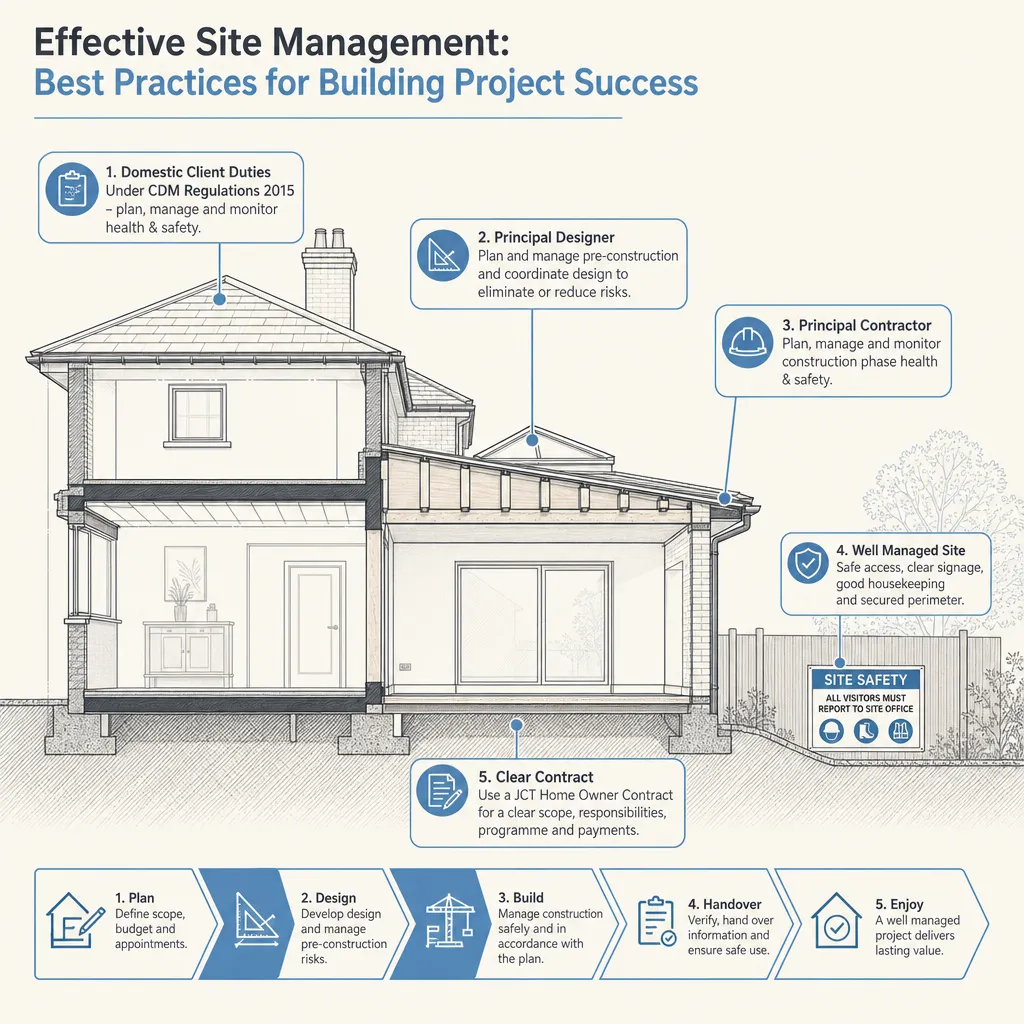
Effective Site Management: Best Practices for Building Project Success
Whether you are commissioning a kitchen extension on a 1930s semi or managing a full loft conversion on a Victorian terrace, the way a building site is organised and managed determines whether the project finishes on time, within budget, and to the quality you expect. For UK homeowners, understanding how good site management operates — and what to look for in the person responsible — can prevent the disputes, delays, and cost overruns that make home improvement projects so commonly stressful.
Key points
- Under the CDM Regulations 2015, any domestic project involving more than one contractor requires the homeowner (as client) to appoint a Principal Designer and a Principal Contractor in writing before work starts; failure to do so means those legal duties default to the homeowner.
- A written contract — such as the JCT Homeowner/Occupier Contract — should be in place before significant works begin, defining programme, payment stages, variation procedures, and dispute resolution mechanisms.
- The Principal Contractor must produce a Construction Phase Plan before work starts, covering health and safety arrangements, emergency procedures, and the sequencing of high-risk activities on site.
- Retaining 5–10% of the contract sum as retention until a defects liability period expires — typically 12 months after practical completion — is standard practice in UK construction contracts and incentivises snagging completion.
- Building control inspections must be booked at defined hold points — foundation excavation, damp-proof course, structural frame, drainage test, and completion — and missed notifications can require expensive opening-up of covered work.
What does a site manager actually do?
A site manager — sometimes called a site foreman, or on larger projects a project manager — is responsible for the day-to-day running of the building site. Their work spans five core areas:
Programme management: maintaining a realistic build sequence — groundworks before drainage, drainage before slab, framing before first-fix services — and identifying risks before they cause delays.
Quality control: verifying that materials match the specification, workmanship meets contract standards, and key structural stages are signed off before being concealed by subsequent trades.
Health and safety: ensuring the Construction Phase Plan is followed, appropriate PPE is worn, scaffold is inspected at required intervals, and incidents are reported under RIDDOR 2013.
Subcontractor coordination: managing trade interfaces so that electricians run cables after plastering, insulation is installed before airtightness testing, and specialist subcontractors are booked with sufficient lead time.
Communication: providing regular written progress updates, flagging variations immediately, and maintaining a contemporaneous site diary as a record of decisions and instructions.
Decision tree: do you need a professional site manager?
- Use a professional project manager or principal contractor if the project involves structural work, multiple trades, or a programme longer than six weeks.
- The main contractor may provide site management on single-contract projects — for example, a house extension with one main builder who subcontracts trades — but verify they have dedicated resource to manage this role alongside the physical works.
- Appoint a separate project manager if you are procuring multiple contractors independently (groundworker, structural engineer, main builder, and M&E contractor engaged separately) — without coordination, trade interfaces become the homeowner's problem.
- Check CDM compliance if there is more than one contractor on site at any time: a Principal Designer and Principal Contractor must be appointed in writing before work starts.
- Consider a clerk of works or independent site inspector if using a design-and-build contractor and wanting quality assurance without taking on daily management responsibilities yourself.
What to ask before hiring a site manager or principal contractor
- What experience do they have managing projects of this type and scale in the UK?
- Are they or their company registered with a recognised scheme such as CHAS, SafeContractor, Constructionline, or NHBC?
- Who will be the named site manager on your project, and how many other sites will that person run simultaneously?
- Can they provide a detailed programme broken down by stage, with milestones and identified dependencies?
- How do they manage variations — will changes be confirmed in writing with revised cost and time implications before work proceeds?
- How do they approach building control inspections — do they notify the building control officer and accompany them on site at each hold point?
- What subcontractor quality assurance procedures do they follow for specialist trades such as steelwork, roofing, or mechanical and electrical?
- What progress reporting will you receive, and at what frequency?
Comparison: project delivery approaches for UK homeowners
Approach | Best for | Not ideal for | Homeowner oversight required | Main risk |
|---|---|---|---|---|
Main contractor (traditional) | Extensions, loft conversions, renovations | Very large or highly specialist projects | Low — single point of contact | Contractor quality; limited design control |
Design-and-build | Speed, defined budget, single contract | Bespoke design or clients with strong aesthetic preferences | Low to medium | Design quality may be value-engineered |
Self-managed (separate trades) | Maximum cost control on simple projects | Complex multi-trade or structural projects | High — homeowner acts as de facto PM | Trade interfaces; CDM duties fall to homeowner |
Professional project manager + separate trades | Complex projects or time-poor clients | Simple single-trade works | Low — PM handles day-to-day | PM fees add to total project cost |
Building control and programme coordination
Building control inspections are mandatory at defined stages, and a site manager who misses a notification risks the building control officer requiring intrusive investigation of covered work — or, in serious cases, declaring work non-compliant.
Typical hold points requiring building control notification include:
- Foundation excavation — before concreting commences
- Oversite concrete — before damp-proof membrane is laid
- Damp-proof course — before framing above DPC level
- Structural frame — before cladding or external envelope is applied
- Drainage — before backfilling of trenches
- Completion inspection — before occupation of the new space
For projects subject to the Building Safety Act 2022 Gateway process, regulatory approval must be obtained at each Gateway stage before work can lawfully proceed — the programme must be built around these approvals from the outset, not retrofitted to them.
Common causes of site management failure — and how to avoid them
Problem | Underlying cause | How to avoid it |
|---|---|---|
Programme delay | Trades booked without confirmed availability | Confirm subcontractor start dates before signing the main contract |
Variation disputes | Verbal change instructions accepted | All variations confirmed in writing before work proceeds |
Defects concealed in structure | Work covered before inspection | Agree a hold-point schedule; book building control at required stages |
Cost overrun | Insufficient contingency for existing buildings | Budget 10–15% contingency on works within existing structures |
CDM non-compliance | Client unaware of statutory duties | Take early professional advice; appoint Principal Designer before design work begins |
When to get professional help
Site management problems that warrant independent professional assessment include:
- The contractor cannot or will not produce a written programme.
- Work is proceeding without building control notifications or inspections at required stages.
- You suspect materials have been substituted for alternatives without your knowledge or approval.
- The project is more than 10% over budget or four weeks behind programme with no credible recovery plan in writing.
- A dispute has arisen over the scope, valuation, or authorisation of variations.
- A health and safety incident has occurred on site.
A RICS-accredited building surveyor or a specialist construction lawyer can provide independent assessment and, where necessary, expert evidence in adjudication or litigation proceedings.
How Housey can help
Housey connects UK homeowners with experienced project managers who can take end-to-end responsibility for site coordination, contractor procurement, CDM compliance, and quality assurance. Whether you are planning a project with home extension builders or exploring options with loft conversion companies, Housey can match you with vetted professionals who understand the full complexity of delivering UK construction projects on time and to budget.
Frequently asked questions
Who is responsible for CDM compliance on a domestic project?
Under the CDM Regulations 2015, domestic client duties transfer to the contractor when a single contractor is appointed. Where more than one contractor is involved, a Principal Designer and Principal Contractor must be formally appointed in writing. If no appointment is made, the duties revert to the homeowner, who may face enforcement action from the HSE.
Do I need a JCT contract for a home extension?
You do not have to use a JCT contract, but a written contract is strongly advisable for any project over a few thousand pounds. The JCT Homeowner/Occupier Contract is a relatively simple form designed for domestic projects. Without a written contract, disputes about scope, variations, payment stages, and defects are significantly harder and more expensive to resolve.
How do I handle a contractor who is behind programme?
Confirm the delay in writing and request a recovery plan with revised milestones. Establish whether the delay is at the contractor's risk (insufficient resources, poor sequencing) or results from events outside their control. JCT contracts contain mechanisms for extensions of time and liquidated damages — but these only work when a written programme and signed contract are in place.
What is a defects liability period?
A defects liability period — called a rectification period in JCT contracts — is typically 12 months after practical completion, during which the contractor must remedy defects attributable to their workmanship or materials. Retention withheld from the contract sum is usually released at the end of this period, incentivising the contractor to complete all snagging items.
Sources and further reading
Useful next reads
 Planning & Pre-Build
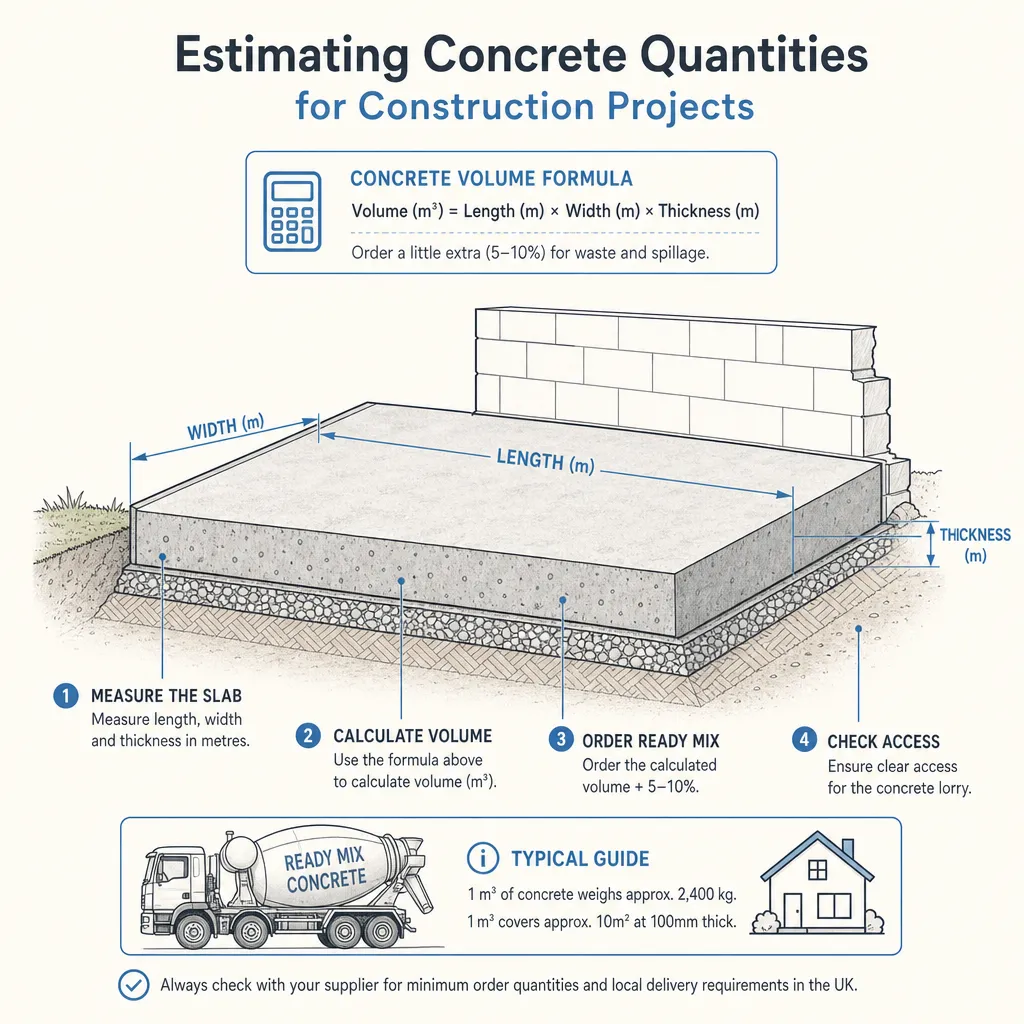
Estimating Concrete Quantities for Construction Projects
To estimate concrete quantities, calculate the volume in cubic metres (length × width × depth), then add a 5–10% wastage allowance.
 Planning & Pre-Build
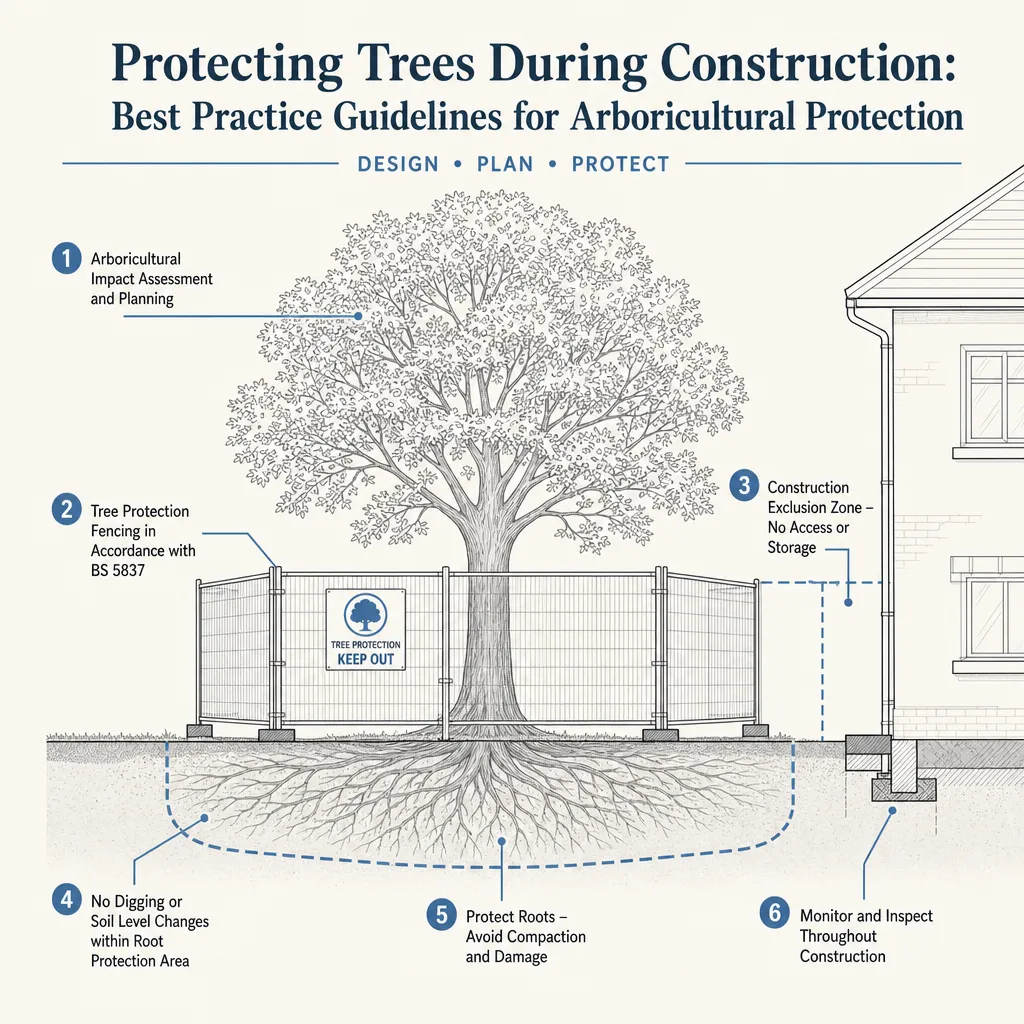
Protecting Trees During Construction: Best Practice Guidelines for Arboricultural Protection
Protecting trees on or near a construction site requires establishing Tree Protection Zones to BS 5837:2012 before any work starts.
 Planning & Pre-Build
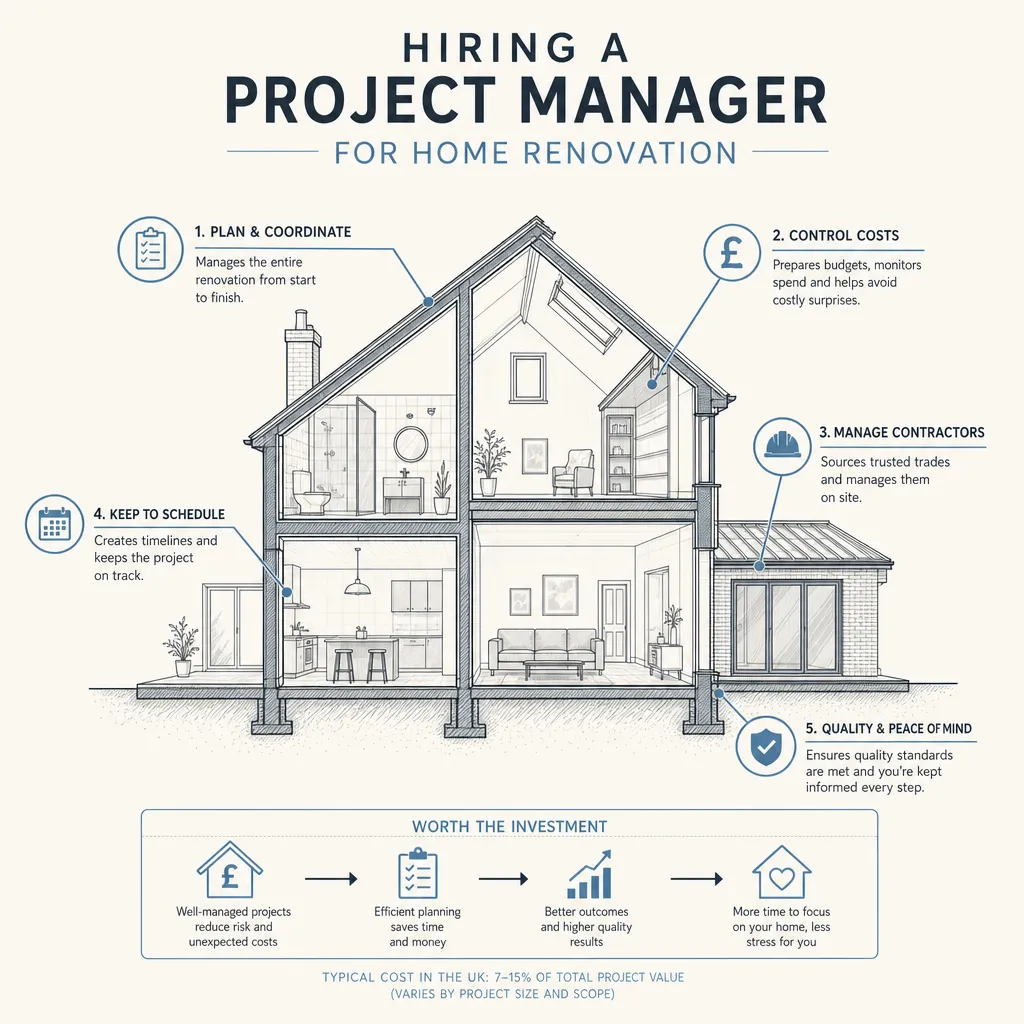
Hiring a Project Manager for Home Renovation
A project manager for home renovation coordinates contractors, manages programme and budget, and oversees quality and building control liaison on your behalf.
 Planning & Pre-Build
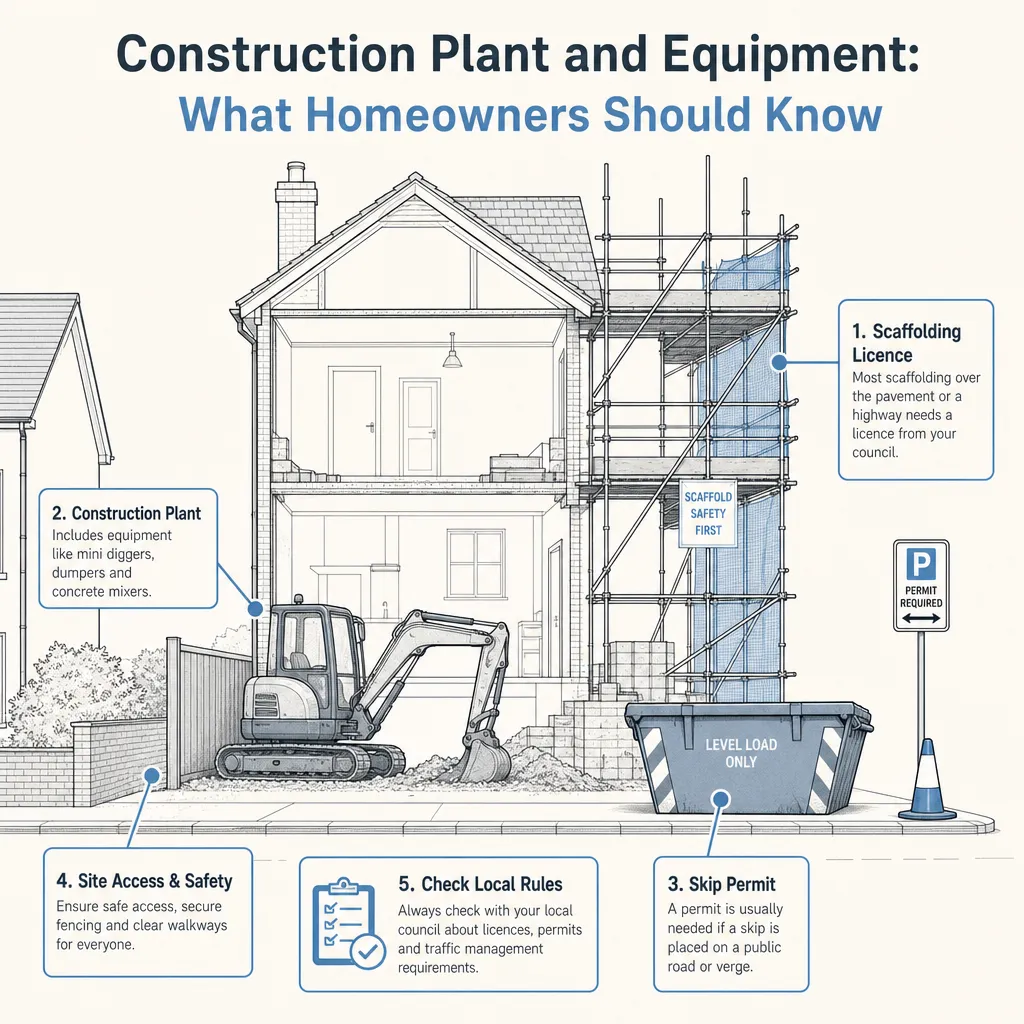
Construction Plant and Equipment: What Homeowners Should Know
Construction plant covers scaffolding, skips, excavators, cranes, and other site machinery.
 Planning & Pre-Build
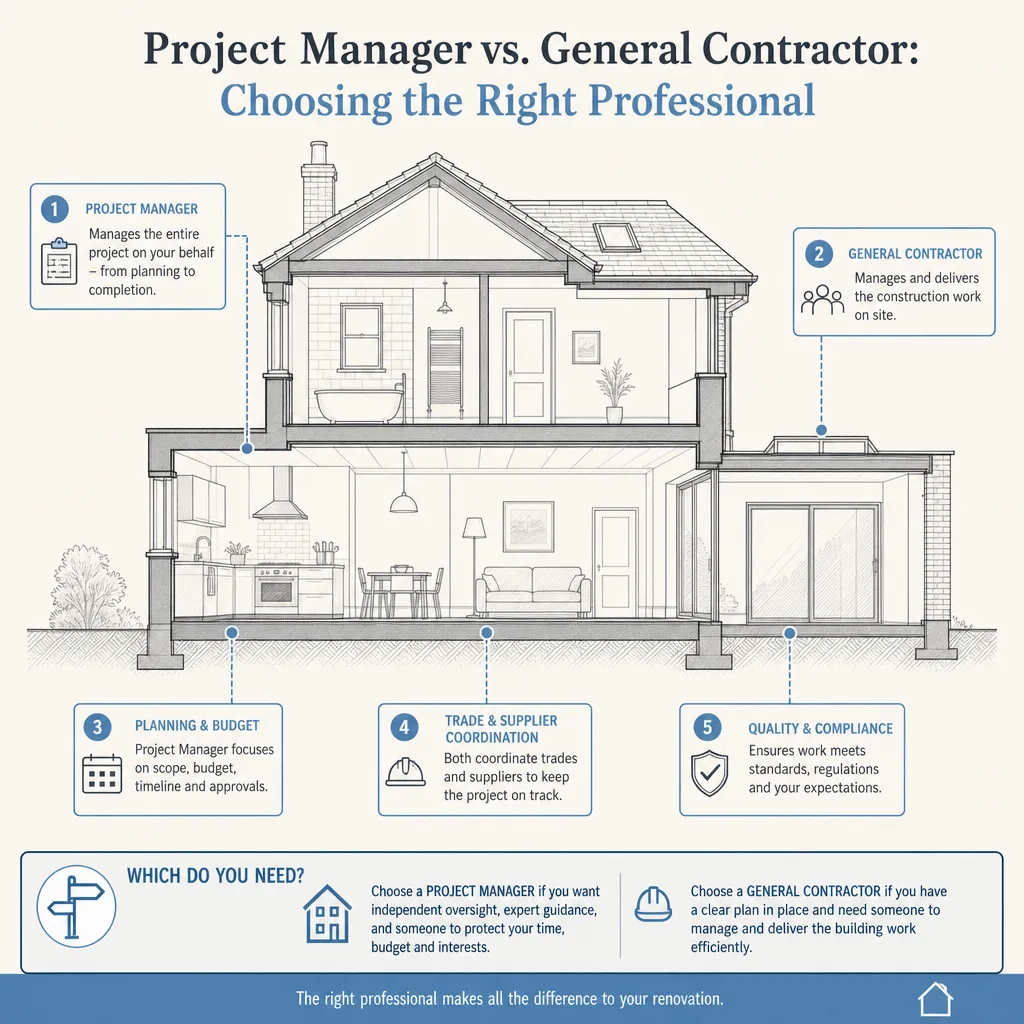
Project Manager vs. General Contractor: Choosing the Right Professional
A project manager works on your behalf to oversee programme, costs, and contractor performance — they do not carry out building work themselves.