Understanding Extended Mortgage Term Options and Long-Term Implications
By Housey · Last reviewed 30th of May 2026
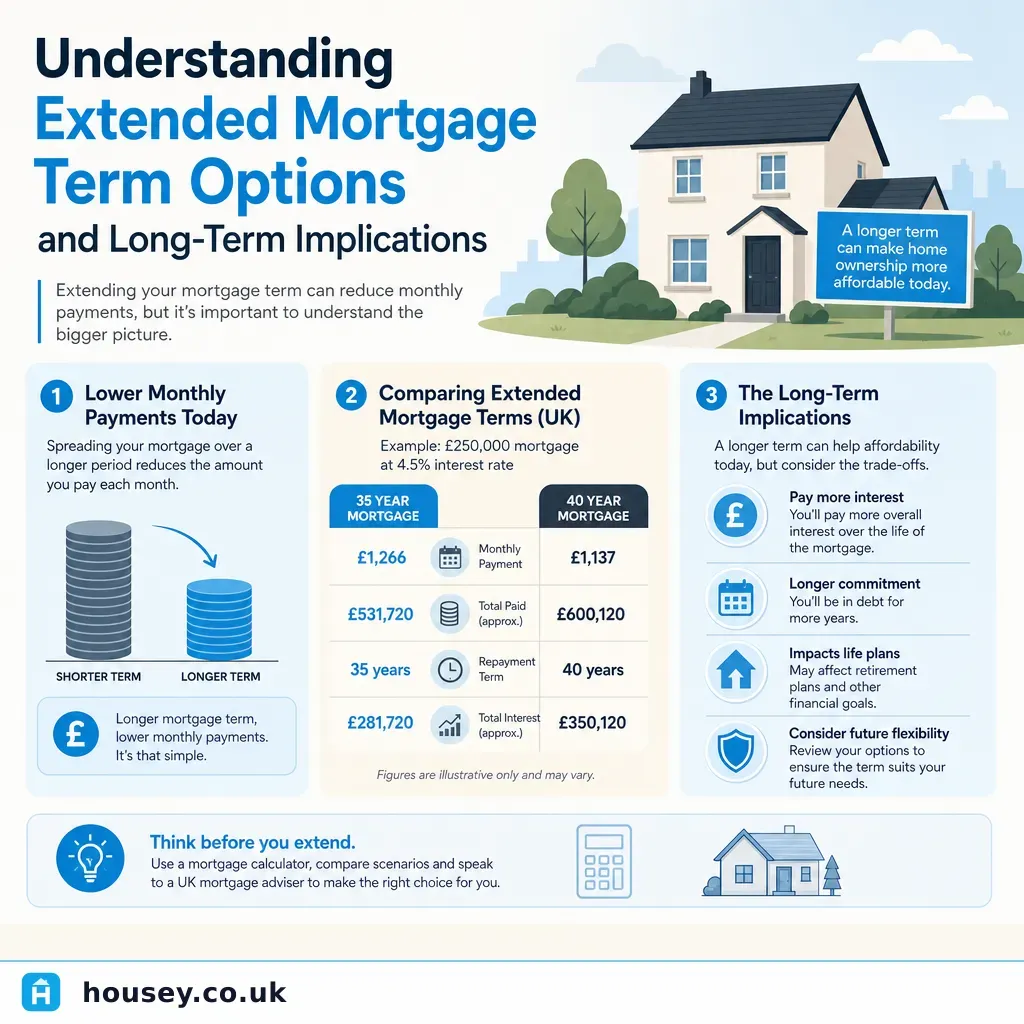
Understanding Extended Mortgage Term Options and Long-Term Implications
Mortgage term length is one of the most consequential decisions made during the property purchase process, yet it is rarely scrutinised as carefully as interest rates or deposit size. Many UK buyers — particularly first-time purchasers facing stretched affordability in high-value markets — are now routinely offered terms of 30, 35, or even 40 years. The financial implications of that choice compound quietly over decades, making it important to understand both the short-term relief and the long-term cost before signing.
Key points
- UK lenders now commonly offer mortgage terms up to 40 years; most high-street products cap lending at age 70–75 at the end of the term, though some specialist lenders extend to 80 or 85.
- A longer term reduces monthly repayments but substantially increases total interest paid — on a £208,000 mortgage at 4.5%, the gap between a 20-year and 40-year term exceeds £133,000 in additional interest.
- The FCA's Mortgage and Home Finance Conduct of Business (MCOB) rules require lenders to assess affordability for the full term, including projected retirement income where the term runs past expected working age.
- Most standard UK residential mortgages allow overpayments of 10% of the outstanding balance per year without triggering an early repayment charge (ERC) — using this can substantially shorten the effective term.
- A mortgage term extension is a regulated financial transaction; seek advice from an FCA-authorised, whole-of-market mortgage broker before committing to, or extending, any term beyond 25 years.
What is an extended mortgage term?
A standard UK residential mortgage has historically been 25 years. An extended term — broadly any term beyond 25 years — has become significantly more common as house prices have risen faster than incomes across much of England, Scotland, and Wales. By stretching the repayment period, monthly payments fall, which can bring a purchase within reach under the FCA's affordability stress tests.
The trade-off is straightforward but easy to underestimate: a longer term means interest accumulates for more years on the outstanding capital, and the total cost of borrowing rises sharply.
How terms compare: worked UK scenario
Consider a borrower purchasing a 1990s semi-detached home in the East Midlands at £260,000 with a £52,000 deposit (20%), leaving a mortgage of £208,000 at a fixed rate of 4.5%:
Mortgage term | Monthly repayment | Total interest paid | Total cost of mortgage |
|---|---|---|---|
20 years | £1,316 | £108,000 | £316,000 |
25 years | £1,156 | £139,000 | £347,000 |
30 years | £1,054 | £171,000 | £379,000 |
35 years | £985 | £205,000 | £413,000 |
40 years | £935 | £241,000 | £449,000 |
Indicative UK calculations, last reviewed 2026-05-30. Actual figures depend on rate, lender, and repayment structure. Rates are illustrative only.
The gap between the 20-year and 40-year total interest on this loan exceeds £133,000 — more than 60% of the original amount borrowed.
Maximum age limits and lender policies
Most UK high-street lenders impose a maximum age at mortgage end of between 70 and 75. Some specialist lenders and building societies extend this to 80 or 85, particularly for borrowers with pension income. The practical effect: a 30-year-old buyer can typically access a 40-year term on most standard products, while a 45-year-old may find the same lender caps them at 25–30 years.
Under FCA MCOB rules, lenders must consider projected retirement income as part of their affordability checks. Where the mortgage term runs past the borrower's expected retirement age, the lender must satisfy itself that pension or other post-retirement income can sustain the repayments.
Which term length suits which situation?
- Choose a shorter term (20–25 years) if monthly affordability is comfortable, you want to build equity faster, and you plan to hold the property long-term.
- Choose a mid-range term (25–30 years) if you are balancing affordability with long-term cost and expect income to grow — many first-time buyers refinance to a shorter term at product renewal.
- Consider an extended term (30–40 years) only if monthly affordability is the binding constraint at purchase, and you plan to make regular overpayments to reduce the effective term.
- Ask a whole-of-market mortgage broker if the term would extend past your expected retirement age, if you are self-employed, or if your income is variable or non-standard.
- Check overpayment allowances first — most lenders allow 10% of the outstanding balance per year penalty-free; consistent overpaying can shorten a 35-year term by several years.
Overpayments and term flexibility
An extended term need not mean paying interest for 35 or 40 years. Most UK standard residential mortgages allow overpayments of up to 10% of the outstanding balance each year without triggering an early repayment charge. Making regular overpayments reduces the outstanding principal, which lowers the interest charged in subsequent months and shortens the effective term without requiring a formal application.
Some lenders also permit term reduction at remortgage or product transfer without a full new application. Always confirm the specific overpayment terms in your mortgage offer document before making additional payments, and note that the allowance typically resets each calendar year.
Homeowner checklist: reviewing a long mortgage term
Before accepting or extending a term beyond 25 years, work through these questions:
When to get professional help
Extended mortgage terms are a standard product feature, but seek independent financial advice before proceeding if:
- The term extends past your expected retirement date.
- You are self-employed or have non-standard income, as lenders apply different affordability approaches to these cases.
- You are considering extending an existing mortgage mid-term — this resets the amortisation clock and may increase total interest substantially even if the monthly payment falls.
- You are a landlord seeking a buy-to-let mortgage with an extended term, where rental income coverage calculations differ from residential products.
- You have an interest-only element — extending a term on an interest-only product does not reduce the capital balance.
Verify any broker's FCA authorisation on the FCA Financial Services Register before instructing.
How Housey can help
Before committing to a mortgage of any length, understanding a property's true market value and condition is essential context for deciding how much to borrow and over what period. A professional valuation survey provides independent evidence of the property's worth and can surface defects that affect long-term value — information that matters whether you are choosing a 20-year or a 40-year term.
Frequently asked questions
Can I extend my existing mortgage term to reduce monthly payments?
Yes, in most cases. Contact your lender and request a term extension — this is usually possible on a product transfer without a full remortgage. The lender will reassess affordability for the new term. Be aware that extending the term increases total interest paid, even if monthly costs fall. Seek independent mortgage advice before making this change.
Does a longer mortgage term affect my credit score?
The mortgage itself appears on your credit file, but the term length does not directly affect your credit score. What matters is whether repayments are made on time. Lenders may also note the outstanding balance and remaining term when assessing future borrowing capacity for new credit applications.
What is the maximum mortgage term available in the UK?
Most mainstream UK lenders offer up to 35 years. Some specialist and mutual lenders offer 40 years, subject to the borrower's age at the end of the term not exceeding their maximum — typically 70 to 85 depending on the lender and product. Terms beyond 40 years are rare in the mainstream residential market.
Is it better to take a shorter term or extend and overpay?
Taking a shorter term commits you to the higher payment — useful for discipline, but less flexible if income changes. An extended term with disciplined overpayments offers more flexibility, though only if overpayments are actually made consistently. Speak to a whole-of-market mortgage broker about which structure suits your income stability and financial goals.
Sources and further reading
- FCA Mortgage and Home Finance: Conduct of Business sourcebook (MCOB) — Financial Conduct Authority
- FCA Financial Services Register — Financial Conduct Authority
- Mortgage Lenders and Administrators Statistics — UK Finance
- MoneyHelper: Mortgage types explained — Money and Pensions Service
Useful next reads
 Buying & Moving
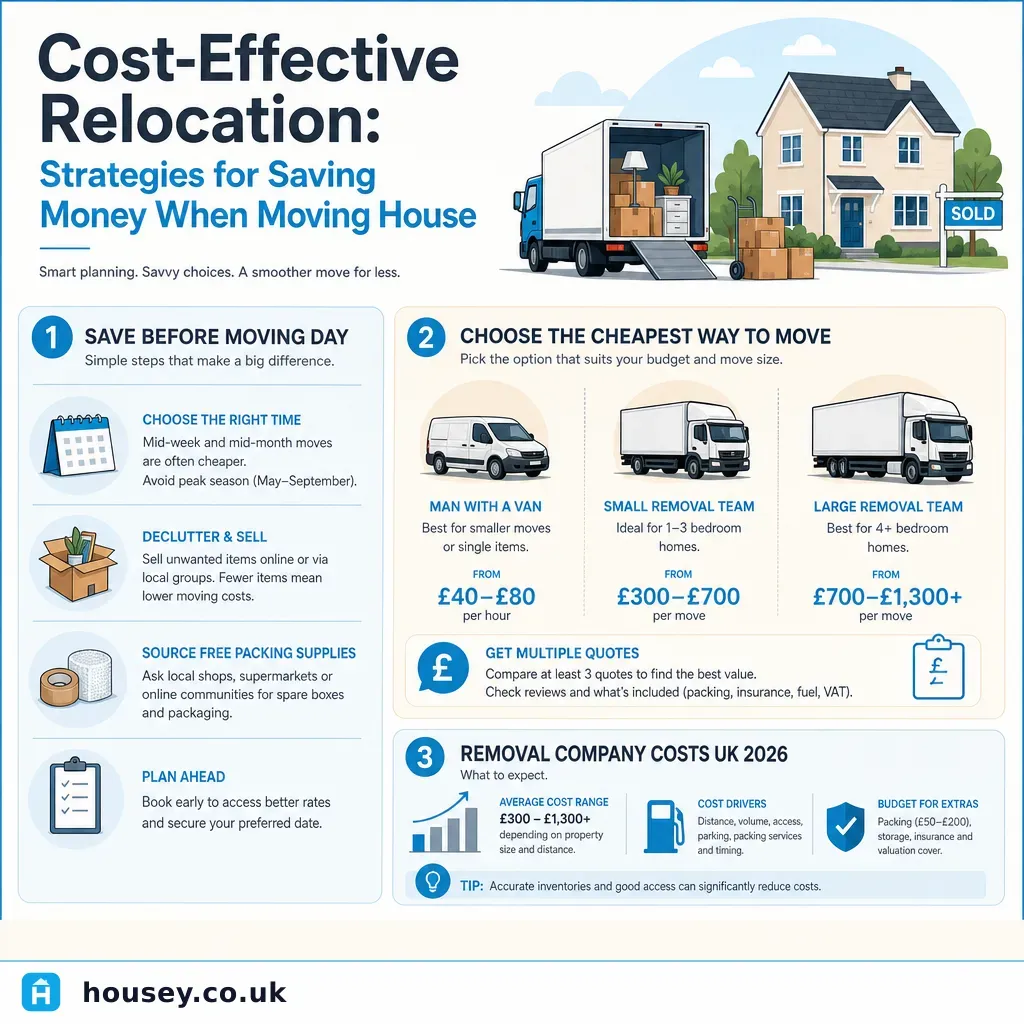
Cost-Effective Relocation: Strategies for Saving Money When Moving House
Moving house in the UK involves costs well beyond the removal van — stamp duty, conveyancing, surveys, and storage all add up.
 Buying & Moving
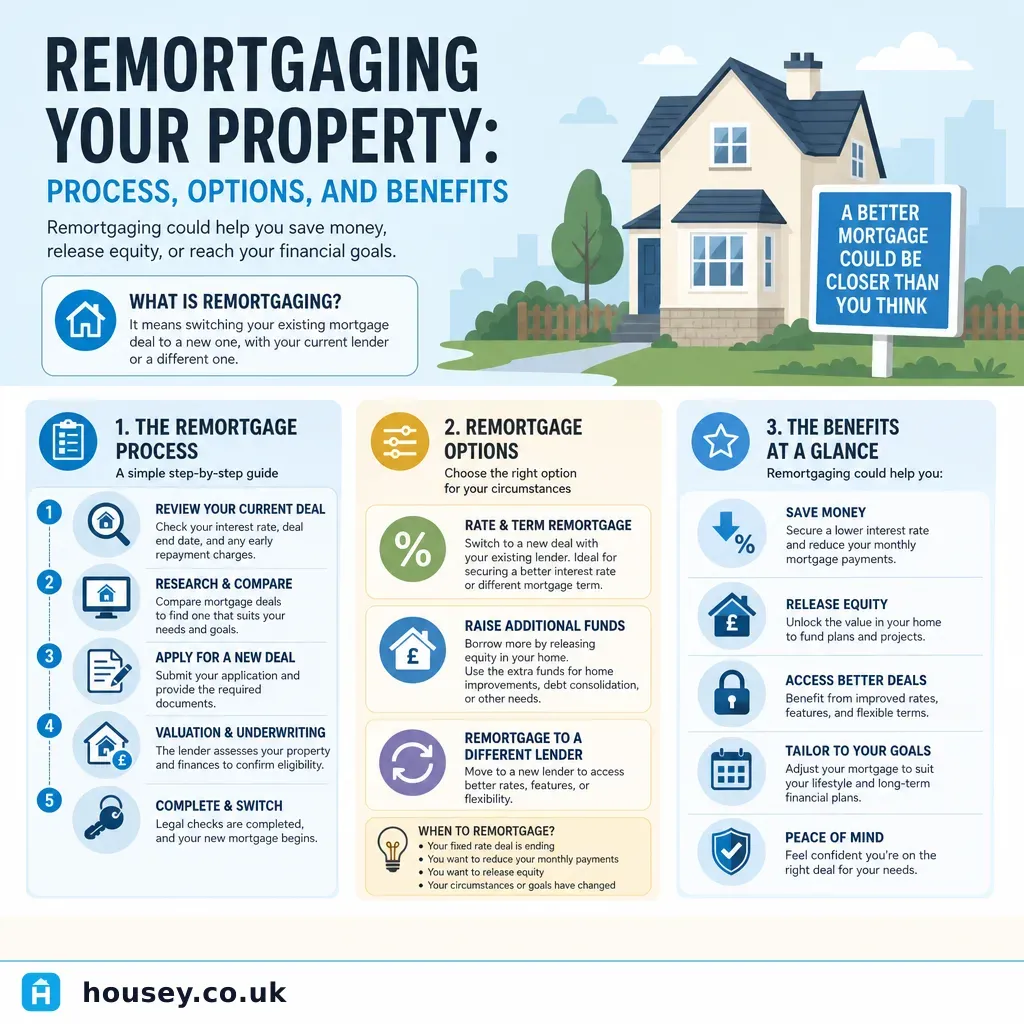
Remortgaging Your Property: Process, Options, and Benefits
Remortgaging means switching your mortgage to a new deal, either with your current lender or a new one.
 Buying & Moving
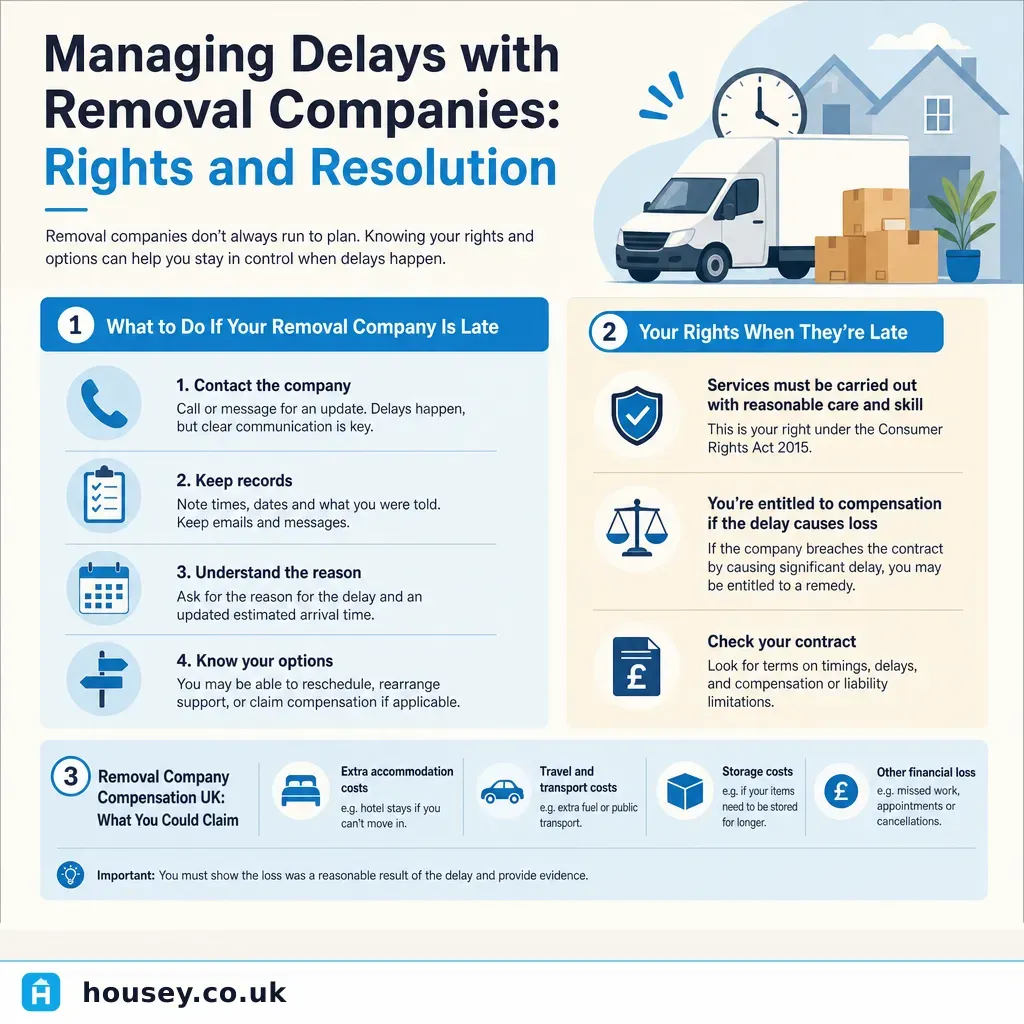
Managing Delays with Removal Companies: Rights and Resolution
If a removal company is late, your rights depend on your contract and whether the company is BAR-registered.
 Buying & Moving
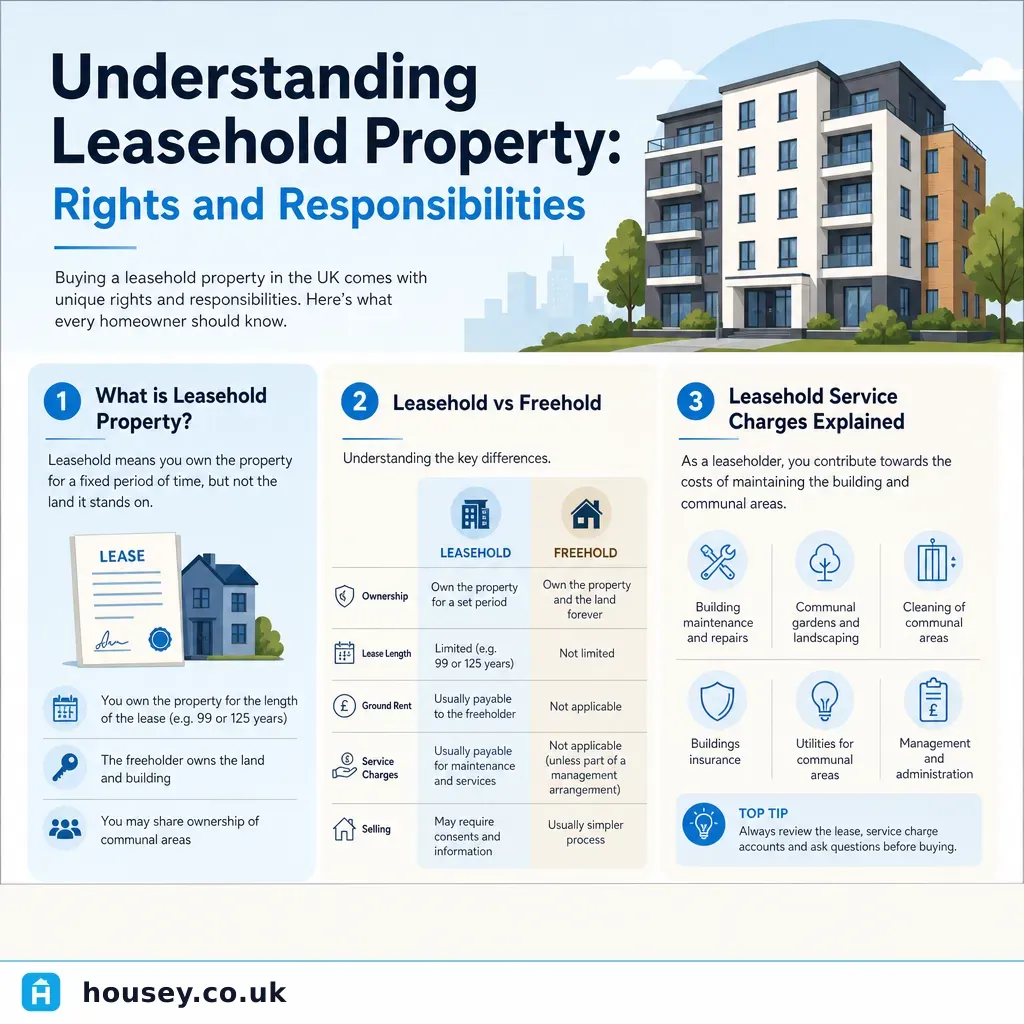
Understanding Leasehold Property: Rights and Responsibilities
Leasehold means you own a time-limited interest in a property while the freeholder owns the land and building.
 Buying & Moving
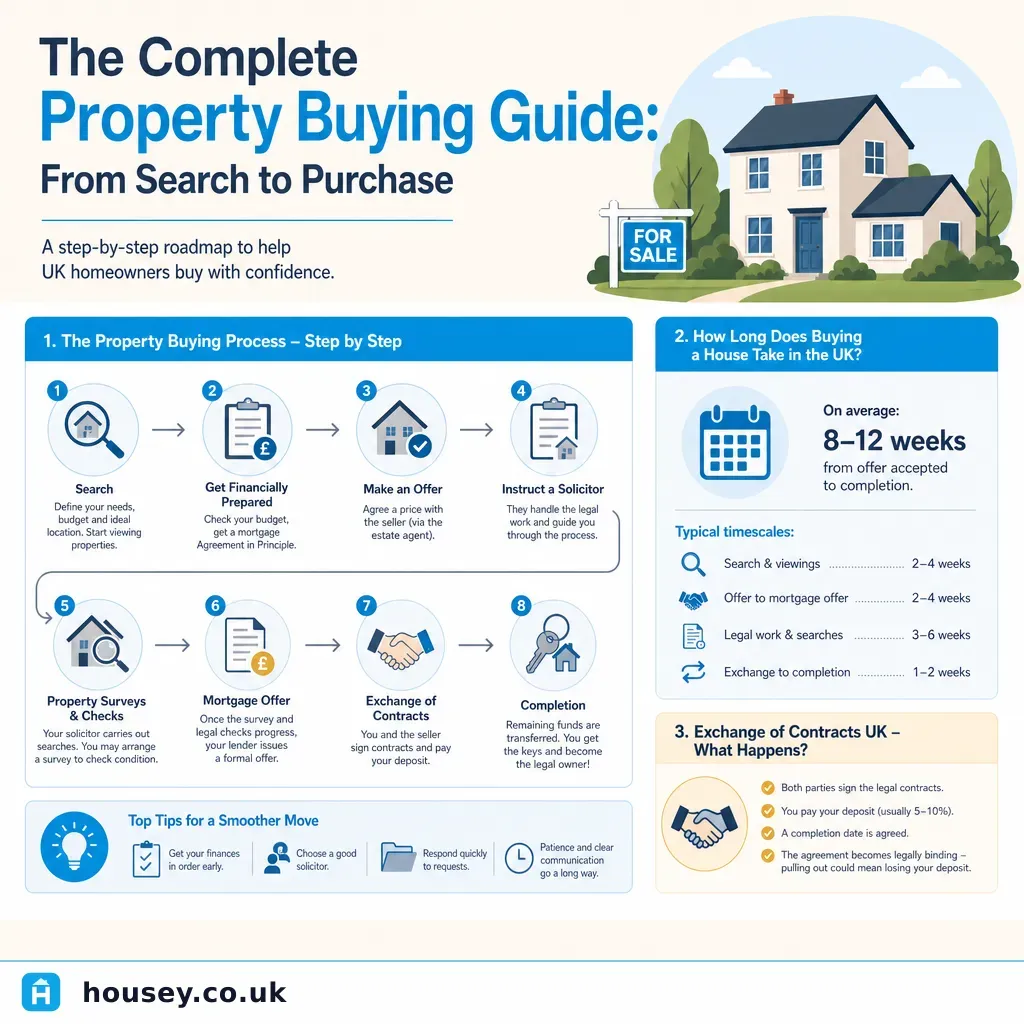
The Complete Property Buying Guide: From Search to Purchase
Buying a property in England and Wales typically takes 3–6 months from accepted offer to completion.