Exterior Door Lock Types and Security Options
By Housey · Last reviewed 11th of May 2026
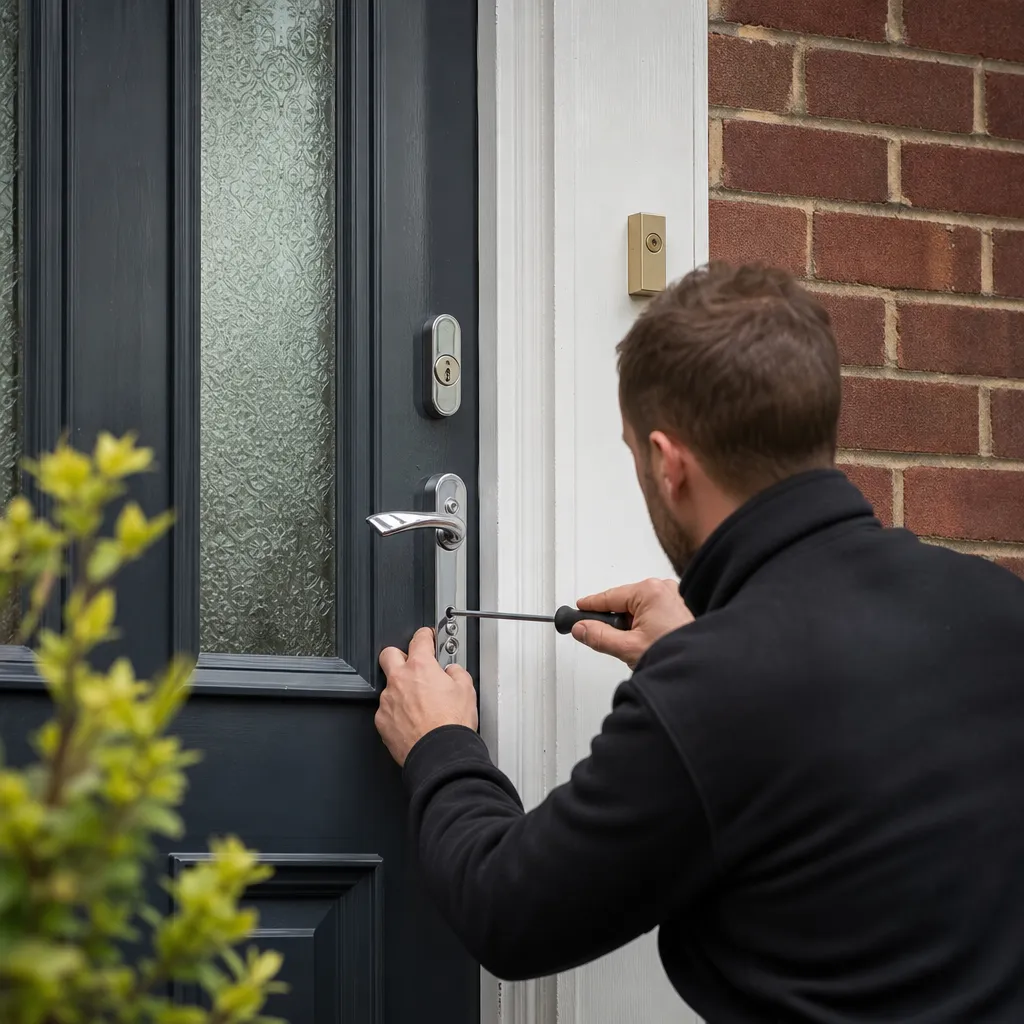
Exterior Door Lock Types and Security Options
Exterior door security is one of the first things many UK homeowners revisit after a break-in nearby, when renewing home insurance, or when replacing an ageing door. The lock you choose affects both your insurer's requirements and the practical resistance your door offers against forced entry — and the two do not always overlap in obvious ways. Door technology has moved on significantly: the standard euro cylinder fitted to most uPVC doors a decade ago offers far less protection than the anti-snap alternatives now widely available.
Key points
- BS 3621:2007 is the British Standard for thief-resistant locks specified by most UK home insurers; look for the BSI Kitemark on the lock body or packaging.
- Multipoint locking systems — standard on most uPVC and composite doors — engage at three or more points along the door frame, significantly reducing the risk of the door being forced at a single weak point.
- Euro cylinder locks vary enormously in quality; a TS007 3-star rated or Sold Secure Diamond cylinder resists snapping, picking, and drilling far better than an unrated budget alternative.
- A rim latch used alone is not considered sufficient by most insurers; a five-lever mortice deadlock to BS 3621 is usually required on timber front and back doors.
- PAS 24:2016 is the British Standard for complete door sets (door, frame, glazing, and hardware as a system) and is frequently specified for new-build and replacement door installations.
What are the main types of exterior door lock?
Several distinct lock mechanisms are used on UK exterior doors, each suited to different door types and security requirements.
Mortice deadlock
A mortice lock sits inside — or morticed into — the door leaf itself. A five-lever mortice deadlock to BS 3621 is the standard recommended by police and insurers for timber front and back doors. When the correct key is used, a hardened steel bolt shoots into the striking plate on the door frame. The five-lever design makes it significantly more difficult to pick than three-lever alternatives, and the bolt cannot be retracted without the key.
Rim lock (night latch)
A rim lock, or night latch, is surface-mounted on the inside face of the door and operated by a Yale-style key from outside. The door closes and latches automatically, which is convenient. A basic spring latch offers little resistance to forcing; a rim deadlock (where a key is needed to open from both sides) is more secure. Most insurers still require a mortice deadlock as a second lock on timber doors.
Euro cylinder lock
The euro cylinder — also called a euro profile cylinder — is the oval barrel lock used in virtually all uPVC, aluminium, and composite doors, and in many modern timber doors with multipoint mechanisms. Quality varies enormously. Cheap cylinders can be snapped in seconds using tools widely available online, allowing the mechanism to be turned without a key — a technique known as cylinder snapping. Look for cylinders rated to TS007 3-star or certified Sold Secure Diamond, which include anti-snap, anti-pick, and anti-drill protection.
Multipoint locking system
Modern uPVC and composite doors almost always incorporate a multipoint lock: a single handle-and-key operation that simultaneously drives bolts, hooks, and rollers into the door frame at three or more points. This distributes force across the frame and makes brute-force entry far harder than a single-bolt lock. The quality of the euro cylinder fitted into the multipoint mechanism remains the primary vulnerability — upgrading the cylinder is usually the most cost-effective security improvement available.
Smart and electronic locks
Smart locks replace or supplement the mechanical cylinder with keypad entry, fingerprint recognition, or smartphone control. They are increasingly popular but introduce additional considerations: battery life, connectivity resilience, and compatibility with your existing door type and multipoint mechanism. Some insurers require confirmation that any digital lock is backed by a mechanical deadlock.
How do security ratings work?
UK door locks and cylinders are assessed against several independently verified standards.
Standard | What it covers | What to look for |
|---|---|---|
BS 3621:2007 | Mortice and rim deadlocks — resistance to picking, drilling, and key duplication | BSI Kitemark on the lock body |
TS007 1-star to 3-star | Euro cylinders — 3-star is the most resistant to snapping, picking, and drilling | Labelled on packaging; 3-star preferred |
Sold Secure Diamond | Independent attack-tested locks, cylinders, and padlocks | Sold Secure Diamond label |
PAS 24:2016 | Complete door sets as a system — door, frame, glazing, and hardware | Often required for new-build and replacement door sets |
Police forces and insurers operating the Secured by Design scheme recommend doors and windows that meet PAS 24 or the enhanced STS 204 standard. If you are installing a new door or replacement frame, asking whether the product carries Secured by Design accreditation is a useful starting point.
Which lock type suits which door?
Door type | Typical lock mechanism | Key upgrade to consider |
|---|---|---|
Timber front door | Five-lever mortice deadlock + rim latch | Ensure mortice lock is BS 3621; consider upgrading rim latch to a rim deadlock |
uPVC door | Multipoint locking system with euro cylinder | Replace standard cylinder with a TS007 3-star anti-snap cylinder |
Composite door | Multipoint system with euro or oval cylinder | Check cylinder rating; high-quality composites often include 3-star cylinders as standard |
Aluminium door | Multipoint system | Verify cylinder grade; frame strength varies by product |
French doors / patio doors | Multipoint locks plus top and bottom bolts | Ensure bolts engage reinforced strike plates in both sill and head frame |
Garage side door | Often a single-cylinder lock — frequently overlooked | Upgrade to a BS 3621 mortice lock; consider also securing the internal door between garage and house |
How to upgrade your door security
A useful starting point is checking what your insurer specifies in your policy documents — many policies list minimum lock standards. Beyond that:
- Replace the euro cylinder. Swapping a standard cylinder for a TS007 3-star anti-snap cylinder typically costs £20–£60 for the part and is often a straightforward DIY task. Measure the old cylinder's dimensions (the distance from the centre retaining screw to each end) before purchasing a replacement. Indicative UK costs, last reviewed 2026-05-11. Costs vary by brand, installer, and region.
- Upgrade mortice locks. If your timber door has a three-lever mortice lock, replacing it with a five-lever BS 3621 lock is worthwhile. This requires cutting a larger mortice pocket and is generally better handled by a locksmith or joiner.
- Fit hinge bolts. On timber doors, hinge bolts locate into the frame when the door is closed, preventing the door from being levered even if the hinges are attacked.
- Improve the strike plate. A long-reach box strike plate secured with 75 mm screws penetrating the structural element behind the frame is significantly stronger than a standard shallow strike plate.
- Consider a door chain or door bar. Useful when you are at home and want to open the door without fully unlocking it — not a substitute for a quality lock.
What to ask before accepting a quote
If you are hiring a locksmith or door installer to upgrade your locks:
- What lock or cylinder standard does the product meet — BS 3621, TS007 3-star, or Sold Secure Diamond?
- Is the replacement cylinder the correct length for my door thickness?
- Are you a member of a recognised body, such as the Master Locksmiths Association?
- What does the price include — parts, labour, and any frame repairs?
- What warranty will I receive on parts and labour?
- Is the product compatible with my home insurer's requirements?
- Is VAT included in the quote?
When to get professional help
Most euro cylinder replacements are within the range of a competent DIYer. Call a qualified locksmith or registered door installer if:
- The door or frame is damaged or warped and the lock no longer operates smoothly.
- You want to install a multipoint mechanism where none currently exists.
- You have been locked out — do not attempt to force the door yourself.
- You are replacing the entire door set and want a PAS 24-compliant installation.
- The door is a period timber door and you are uncertain about the suitability of a given lock.
How Housey can help
If you need a new door installed to current security standards, or want an existing door professionally assessed, Housey connects you with vetted window and door installers who can advise on lock types, PAS 24 compliance, and Secured by Design products.
Frequently asked questions
Does my home insurer require a specific type of lock?
Most UK home insurers specify a minimum lock standard for front and back doors — commonly a five-lever mortice deadlock to BS 3621 on timber doors, or a multipoint lock with an anti-snap euro cylinder on uPVC and composite doors. Check your policy schedule or call your insurer before replacing locks to confirm your cover remains valid.
Can I replace a euro cylinder myself?
On most uPVC and composite doors, replacing a euro cylinder is straightforward: remove one central retaining screw, turn the key slightly to release the cam, and slide out the old cylinder. Reverse the process to fit the new one. Always measure the old cylinder's dimensions — the distance from the centre screw hole to each end — before buying a replacement.
What is cylinder snapping?
Cylinder snapping involves breaking off the exposed part of a euro cylinder using a screwdriver or similar tool, then turning the exposed cam without a key. Standard budget cylinders snap easily. Anti-snap cylinders feature a sacrificial break point that severs the outer section while leaving the internal locking mechanism intact and inoperable, preventing forced entry.
Are smart locks as secure as traditional locks?
Smart locks can be as secure as mechanical alternatives, depending on the product's physical resistance rating and whether the electronics can be bypassed. Key considerations are battery reliability, compatibility with your existing door mechanism, and whether your insurer accepts the lock type. Check manufacturer security certifications and confirm with your insurer before fitting a smart lock as your sole exterior lock.
Sources and further reading
- Secured by Design — Doors guidance — Police Crime Prevention Initiatives
- Sold Secure — product search — Sold Secure
- Master Locksmiths Association — find a locksmith — Master Locksmiths Association
- BSI — BS 3621:2007 — British Standards Institution
Useful next reads
 Improvement & Build
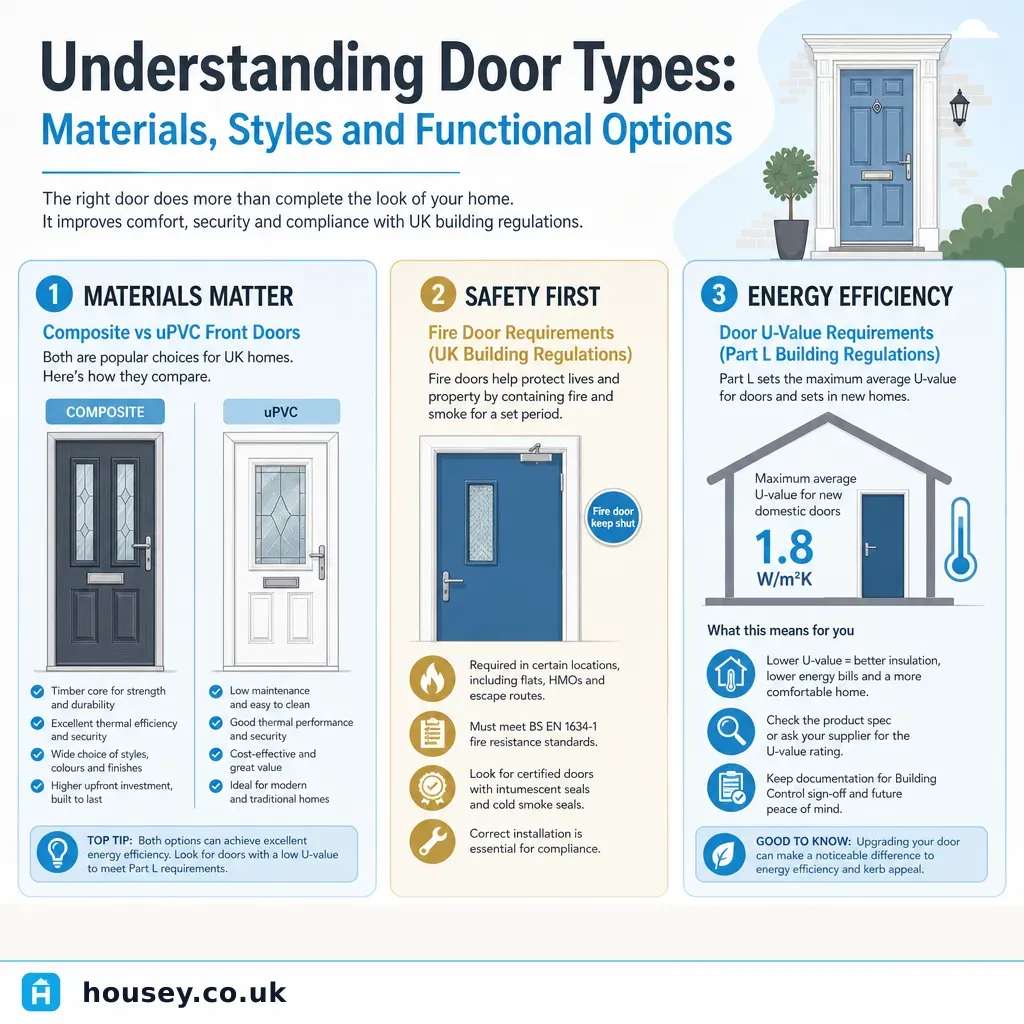
Understanding Door Types: Materials, Styles and Functional Options
Doors are available in timber, uPVC, aluminium, steel, and composite materials, each suited to different budgets, locations, and performance requirements.
 Improvement & Build
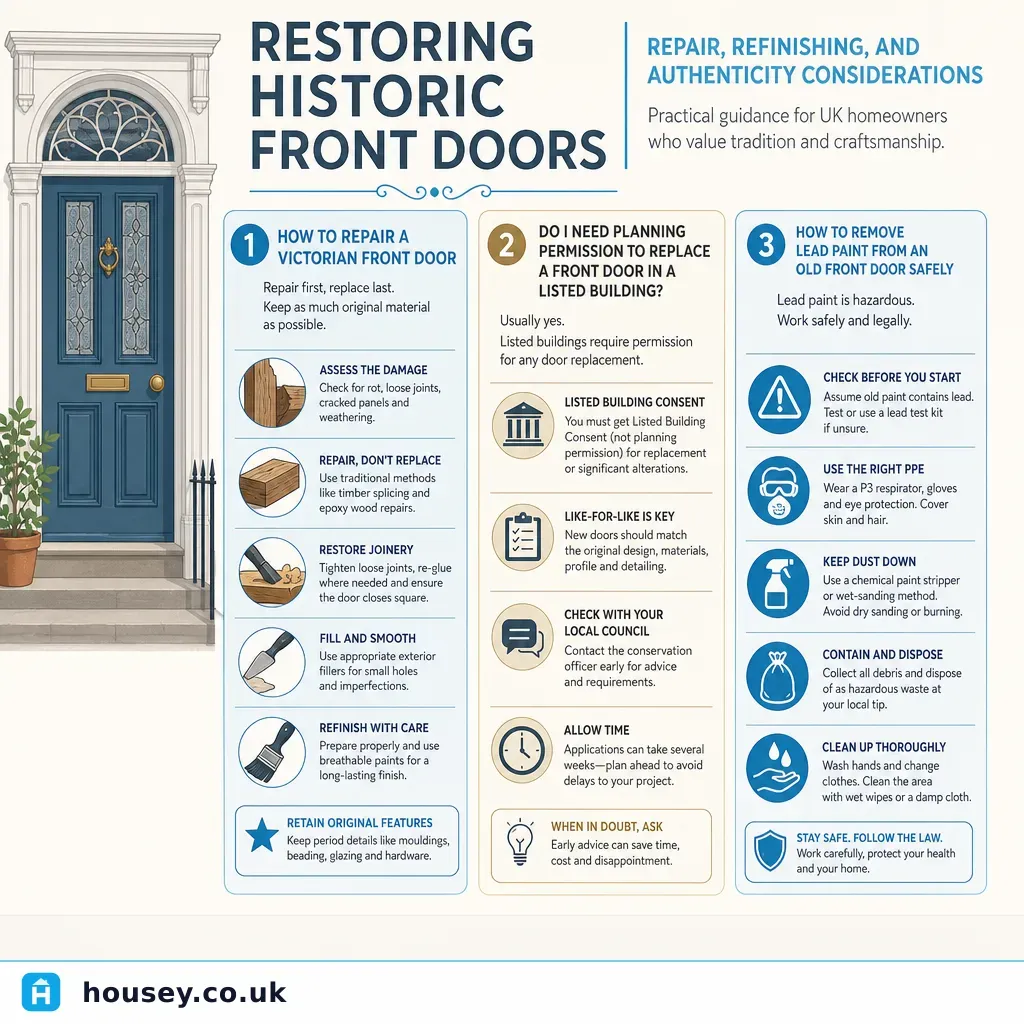
Restoring Historic Front Doors: Repair, Refinishing, and Authenticity Considerations
Historic front doors in good structural condition are almost always worth repairing rather than replacing.
 Improvement & Build
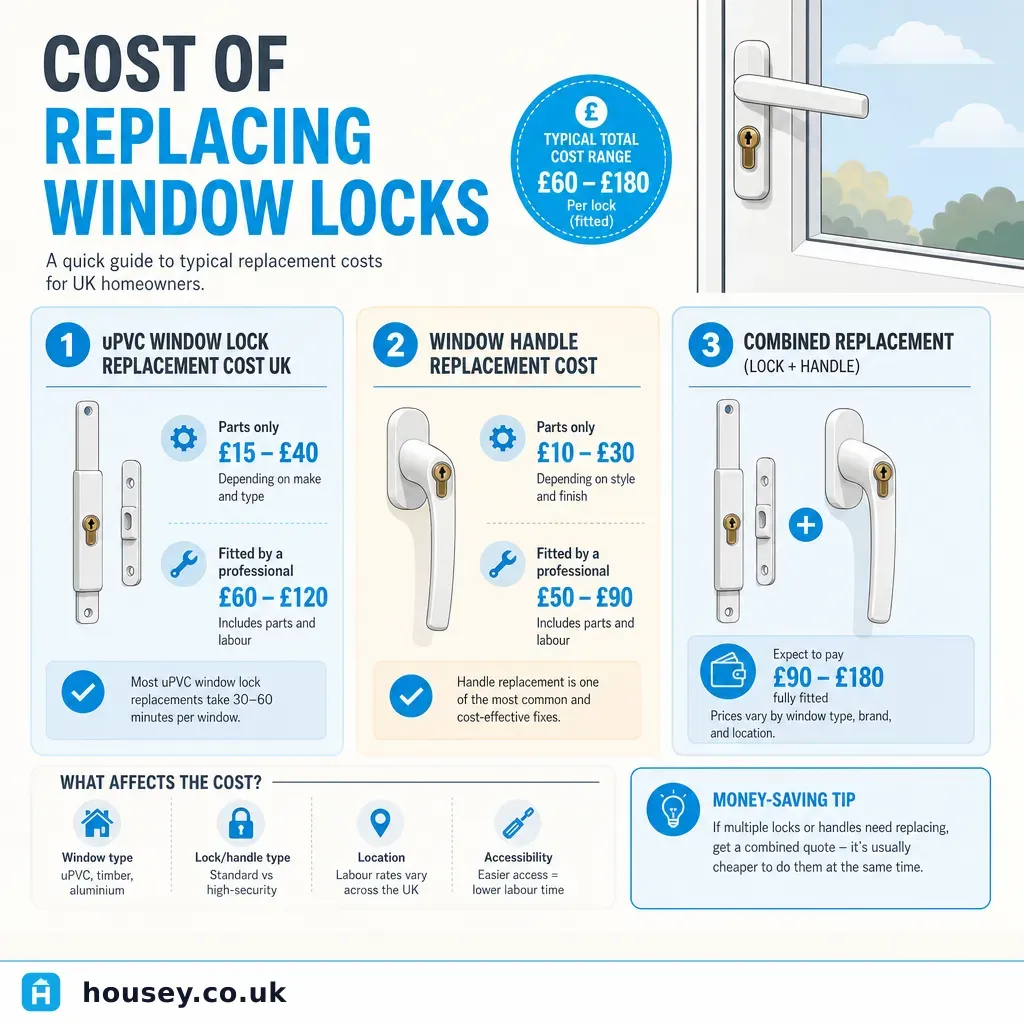
Cost of replacing window locks
Window lock replacement costs depend on the lock type.
 Improvement & Build
Aluminium Windows: Benefits, Specifications, and Installation Costs
Aluminium windows typically cost £600–£1,800 per window installed in the UK, depending on size and specification.
 Improvement & Build
Egress Window Repair and Installation
An egress window is a window large enough to serve as an emergency escape route from a habitable room.