Restoring Historic Front Doors: Repair, Refinishing, and Authenticity Considerations
By Housey · Last reviewed 18th of May 2026
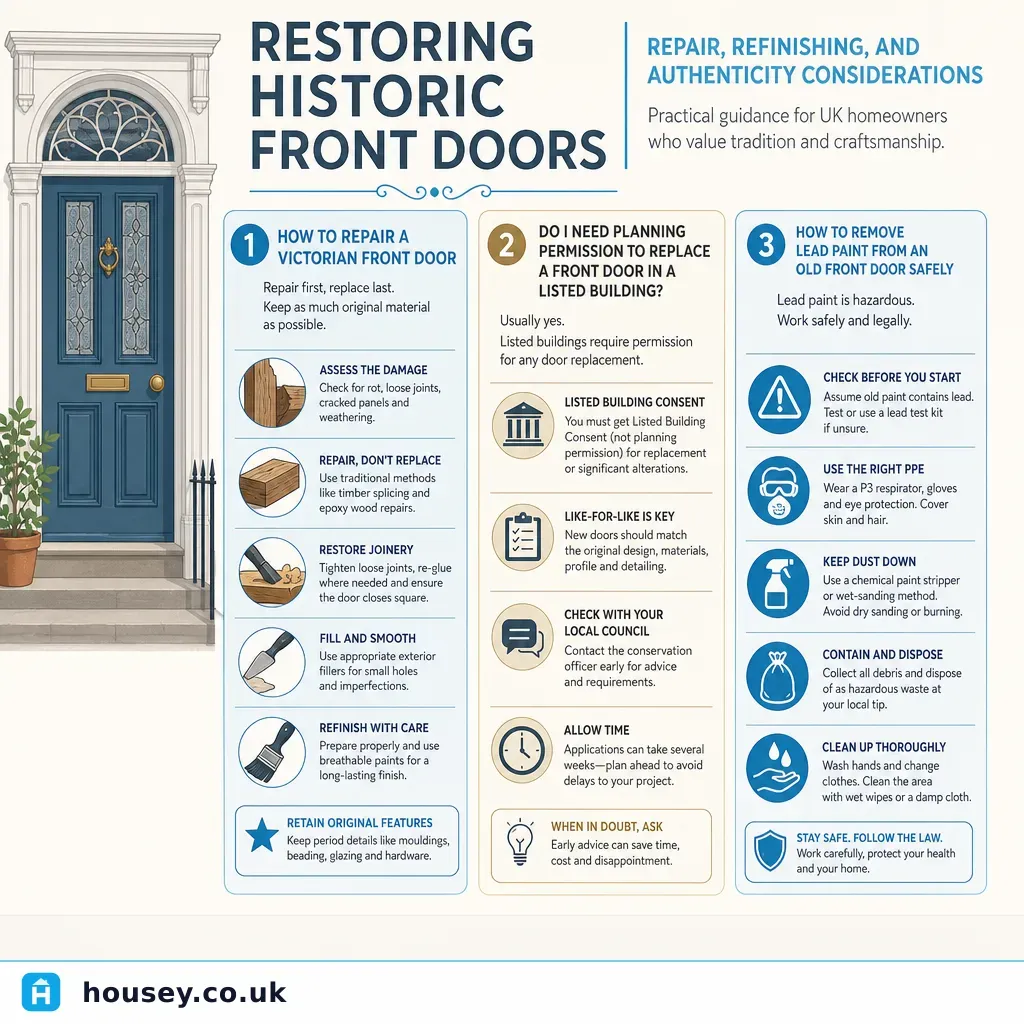
Restoring Historic Front Doors: Repair, Refinishing, and Authenticity Considerations
Your front door is often the first feature a buyer, neighbour, or planning officer notices about your home. For owners of Victorian terraces, Georgian townhouses, Edwardian semis, and other period properties, the original front door is a significant part of the building's character — one that decades of repainting, weathering, or ill-judged replacements may have obscured or damaged. The decision of whether to repair, refinish, or replace an original door is shaped by the timber's condition, the property's planning designation, and the heritage value of any original ironmongery and glazing.
Key points
- Listed buildings and some conservation area properties require consent before altering, removing, or replacing a front door — even a like-for-like replacement may need local planning authority approval.
- Most pre-1960s front doors were painted with lead-based paints; disturbance and removal must follow HSE guidance on working with lead paint safely.
- Draught-proofing strips and brush seals installed around the door frame can cut heat loss measurably without altering the door's appearance.
- Original ironmongery — letterboxes, knockers, numerals, and knobs — carries heritage value; retain originals or source period-accurate reproductions where items are missing.
- Like-for-like timber repairs using the same species (usually softwood pine for Victorian and Edwardian doors) are almost always preferable to patch repairs with incompatible materials.
Does your door need consent before you start?
Planning permission and listed building consent rules vary significantly depending on your property's designation and local conservation area policies.
Listed buildings: Any alteration to a listed building's external appearance — including repainting in a new colour or replacing glazing — technically requires listed building consent from your local planning authority. Replacing or significantly altering a front door almost always falls within this requirement. Contact your local authority's conservation officer before doing anything beyond routine maintenance.
Conservation areas: Permitted development rights for front doors in conservation areas are restricted. Many local authorities have Article 4 Directions that remove the right to replace doors or windows without permission. Check your local planning authority's Article 4 Direction register before starting work.
Standard period properties: If your home is in neither a listed building designation nor a conservation area, you can usually carry out repairs and refinishing without planning consent. However, if you are making structural changes to the door opening itself, you may need building regulations approval.
The Planning Portal's householder application guidance explains when changes to doors fall within or outside permitted development.
Assessing the door before you decide
Not every weathered or peeling historic door needs replacing. Careful assessment often reveals that the underlying timber is structurally sound.
Inspection checklist
Before deciding on a repair or refinishing approach, work through this checklist:
Repair, replace, or replicate?
Situation | Recommended approach | Notes |
|---|---|---|
Structurally sound timber, surface deterioration only | Repair and refinish | Strip, prime, repaint; address draught-proofing |
Isolated rot in one rail or stile | Splice repair with like-for-like timber | Use marine-grade epoxy consolidant for small voids |
More than 50% of the door is rotten or irreparable | Commission a reproduction | Specialist joiners can replicate original panel profiles |
Door is a later replacement (hollow-core, UPVC) | Replace with period-accurate door | Off-the-shelf Victorian and Edwardian panel doors are widely available |
Listed building with original door | Repair and retain | Replacing an original listed door may be refused listed building consent |
Stripping, priming, and painting
Paint removal on pre-1960s front doors carries a risk of lead paint exposure. The HSE's guidance on working with lead paint states that sanding, scraping, or heat-stripping lead-painted surfaces should only be done with appropriate respiratory protection, and waste must be disposed of as hazardous material. If you are unsure whether your door's existing paint contains lead, low-cost lead test kits are available from builders' merchants; a positive result should prompt professional removal.
Once the door is stripped to bare timber:
- Allow the timber to dry fully before priming — moisture in the wood causes premature paint failure.
- Apply a preservative primer to any bare softwood, paying particular attention to end grain at the top and bottom rails.
- Use an oil-based undercoat and topcoat for authentic appearance and durability on softwood.
- Apply a minimum of two topcoats, sanding lightly between coats.
- In conservation areas, colour choice may be guided by local character appraisals or design codes — check with your conservation officer.
Draught-proofing and weatherproofing without compromising character
Historic front doors were rarely designed to modern energy performance standards. Simple weatherstripping can make a significant difference without altering the door's appearance.
- Brush strips on the frame: Compressible brush-seal draught excluders fit into a routed rebate in the door stop and are largely invisible when the door is closed.
- Threshold strips: A surface-mounted threshold seal or rebated hardwood sill with weatherbar addresses one of the most draughty areas.
- Letterbox draught excluders: A period-accurate internal brush plate behind the letterbox slot is effective and inexpensive.
- Glazing putty: Freshly applied linseed oil putty around period glazing seals a common point of heat and draught loss.
The Energy Saving Trust estimates that draught-proofing doors and windows can save £45–£65 per year on heating bills (figures current at time of publication; check the Energy Saving Trust website for the latest estimates).
Red flags that mean get professional help
- Spreading rot: Any crumbling, powdery, or orange-peel-textured timber decay may indicate dry rot (Serpula lacrymans), which can spread into adjacent structure.
- Confirmed or suspected lead paint: Do not sand or heat-strip without containment; professional abatement is recommended.
- Frame or lintel movement: If the door opening itself has shifted, a structural assessment may be needed before rehanging.
- Listed building uncertainty: If you are unsure of your consent obligations, seek written advice from your conservation officer before instructing anyone.
- Security concerns: A heritage-appearance door can be fitted with modern multi-point locking — a specialist joiner can advise on discreet upgrades.
When to get professional help
A joiner with demonstrable experience in period timber work is worth the additional cost over a general handyman for anything beyond basic stripping and repainting. Specialist heritage joiners can splice-repair rotten rails, replicate moulding profiles, and overhaul original ironmongery. If your door is in a listed building or conservation area, consult your local authority conservation officer before instructing anyone — this avoids enforcement risk and may unlock grant funding through local heritage schemes.
Call a professional if:
- Active rot has spread beyond the door into the frame or surrounding masonry.
- Lead paint needs stripping from a large surface area.
- You want to upgrade security without compromising the door's external appearance.
- The door frame or lintel shows signs of movement that may indicate subsidence.
How Housey can help
Housey connects homeowners with vetted window and door installers who have experience working on period properties — whether you need a specialist joiner to repair and refinish an original Victorian door or a supplier to commission a period-accurate reproduction.
Frequently asked questions
Do I need planning permission to repaint my listed building's front door a different colour?
Repainting a listed building's front door in a different colour technically constitutes an alteration to the building's appearance and may require listed building consent. Repainting in the same colour as part of routine maintenance is generally acceptable, but confirm with your local authority's conservation officer before making any colour change to avoid an enforcement notice.
Can I replace the glass in a historic front door?
Yes, but the approach matters. On non-listed properties, standard or obscure glass can usually be replaced without permission. On listed buildings, any change to glazing — even replacing cracked original glass — may require listed building consent. Slim double-glazed units approved for heritage use are available but must be agreed with the conservation officer before installation.
How do I tell if my front door has lead paint?
Low-cost lead test swabs are available from builders' merchants and some DIY stores. A positive result means the paint should be treated as hazardous: do not sand or heat-strip without appropriate protective equipment and waste containment. The HSE publishes guidance on working safely with lead paint. When in doubt, commission a professional survey before stripping.
What timber species should I use for repairs to a Victorian front door?
Most Victorian and Edwardian front doors were made from European or North American softwood — typically pine or Douglas fir. Use the same species for any splice repairs to ensure matching movement characteristics and paint absorption. Avoid mixing hardwood patches into a softwood door, as differential movement causes joint failure over time.
How long should a refinished front door last before it needs repainting?
With proper preparation, primer, undercoat, and two oil-based topcoats, a well-maintained front door on an exposed elevation can last five to seven years before repainting is needed. North-facing or porch-sheltered doors may last longer. The most important annual maintenance task is checking and resealing the top and bottom rail end grain.
Sources and further reading
- Householder application guidance: doors — Planning Portal
- Technical advice on historic buildings — Historic England
- Working with lead paint — Health and Safety Executive
- Draught-proofing — Energy Saving Trust
- Listed buildings — GOV.UK
Useful next reads
 Improvement & Build
Exterior Door Lock Types and Security Options
UK exterior doors use several lock types: five-lever mortice deadlocks, euro cylinder locks, rim latches, and multipoint locking systems.
 Improvement & Build
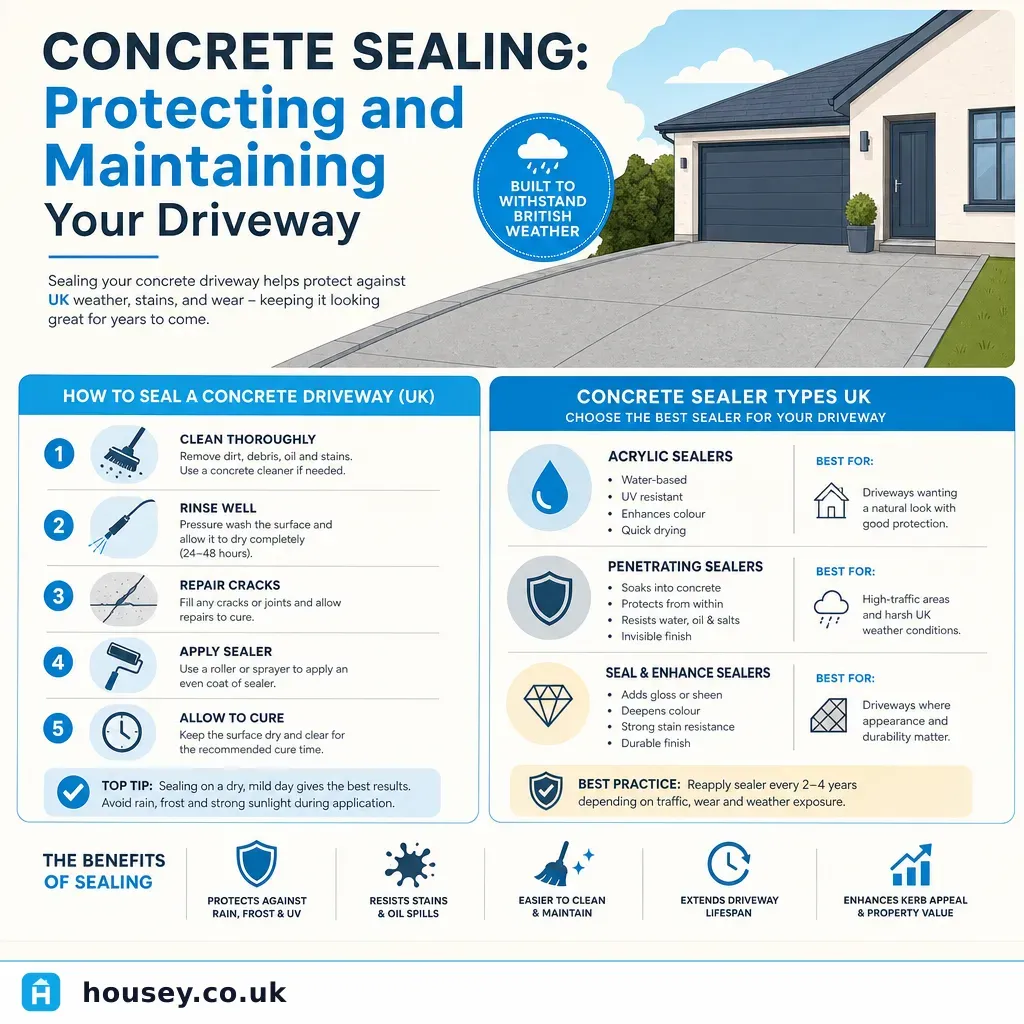
Concrete Sealing: Protecting and Maintaining Your Driveway
Sealing a concrete driveway protects against water ingress, freeze-thaw damage, oil stains, and surface wear.
 Improvement & Build
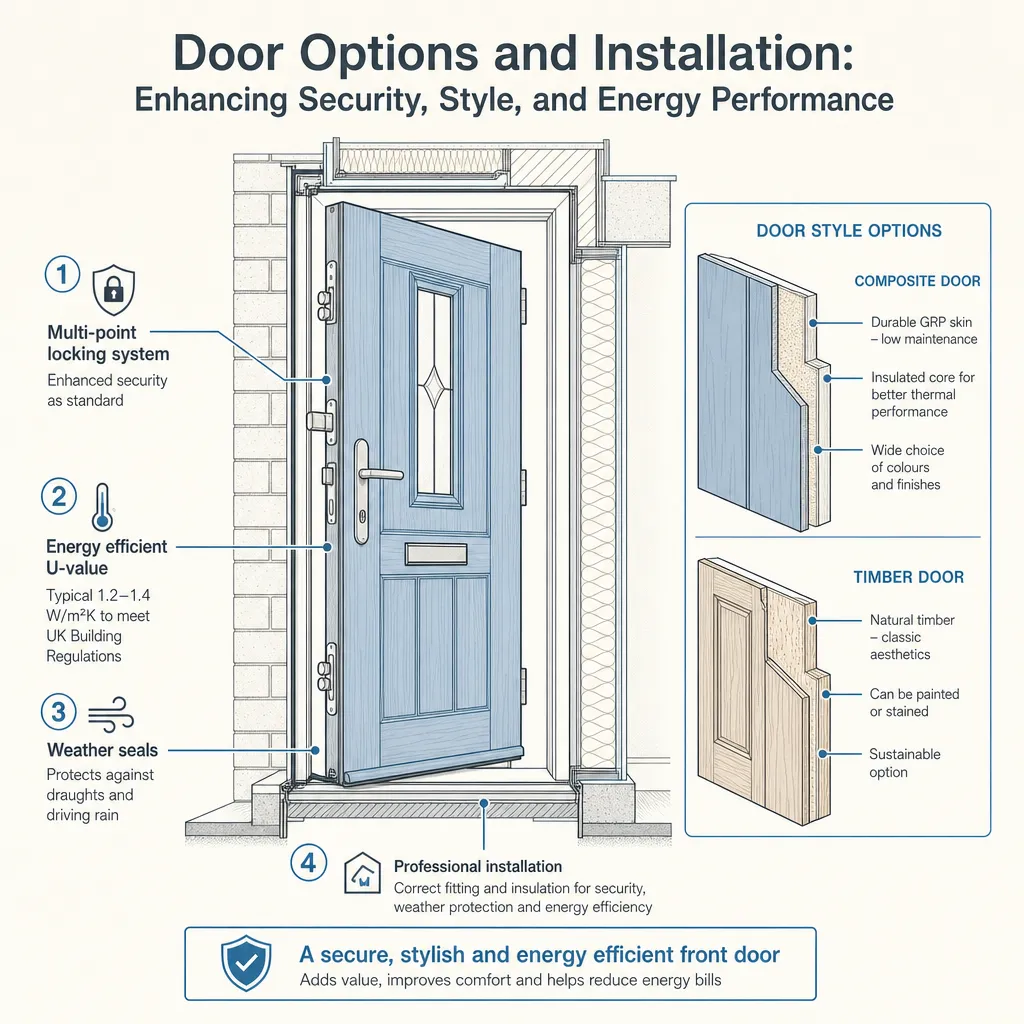
Door Options and Installation: Enhancing Security, Style, and Energy Performance
Choosing a new external door involves balancing security ratings, thermal performance, and style.
 Improvement & Build
Patio Door Types and Styles for Home Extensions
For most UK home extensions, sliding doors suit openings up to 3.
 Improvement & Build
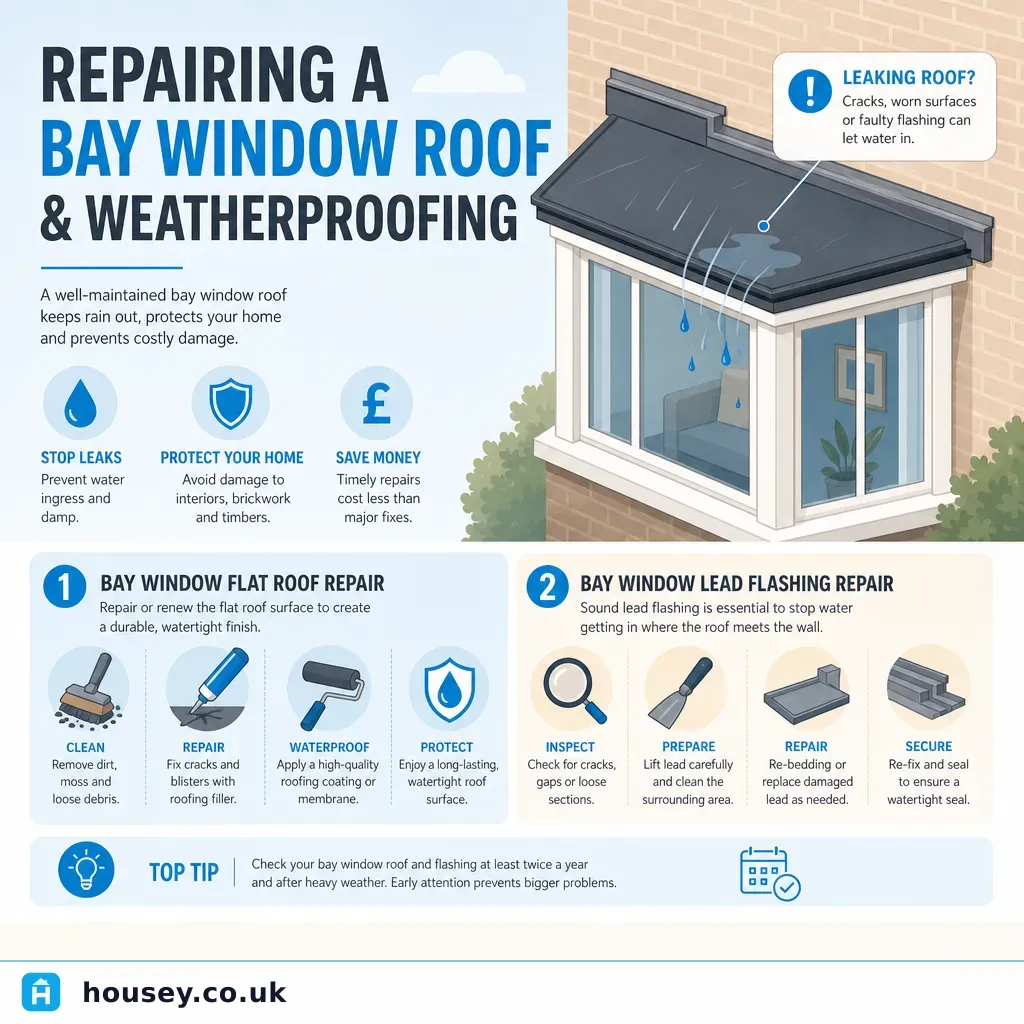
Repairing a Bay Window Roof and Weatherproofing
A bay window roof typically uses felt, lead, or EPDM rubber as its waterproof covering.