Egress Window Repair and Installation
By Housey · Last reviewed 11th of May 2026
Egress Window Repair and Installation
Understanding when you need an egress window — and ensuring it is correctly installed — is most relevant when you are converting a basement into habitable accommodation, carrying out a loft conversion, or replacing a bedroom window in a property where that window forms the only practical escape route. UK Building Regulations set clear minimum dimensions for escape windows in these situations, and getting the specification wrong can cause problems at the building control stage or, more seriously, leave occupants unable to escape in a fire.
Key points
- Building Regulations Approved Document B (Volume 1, dwellings) requires escape windows in sleeping rooms where occupants cannot escape via an alternative protected route.
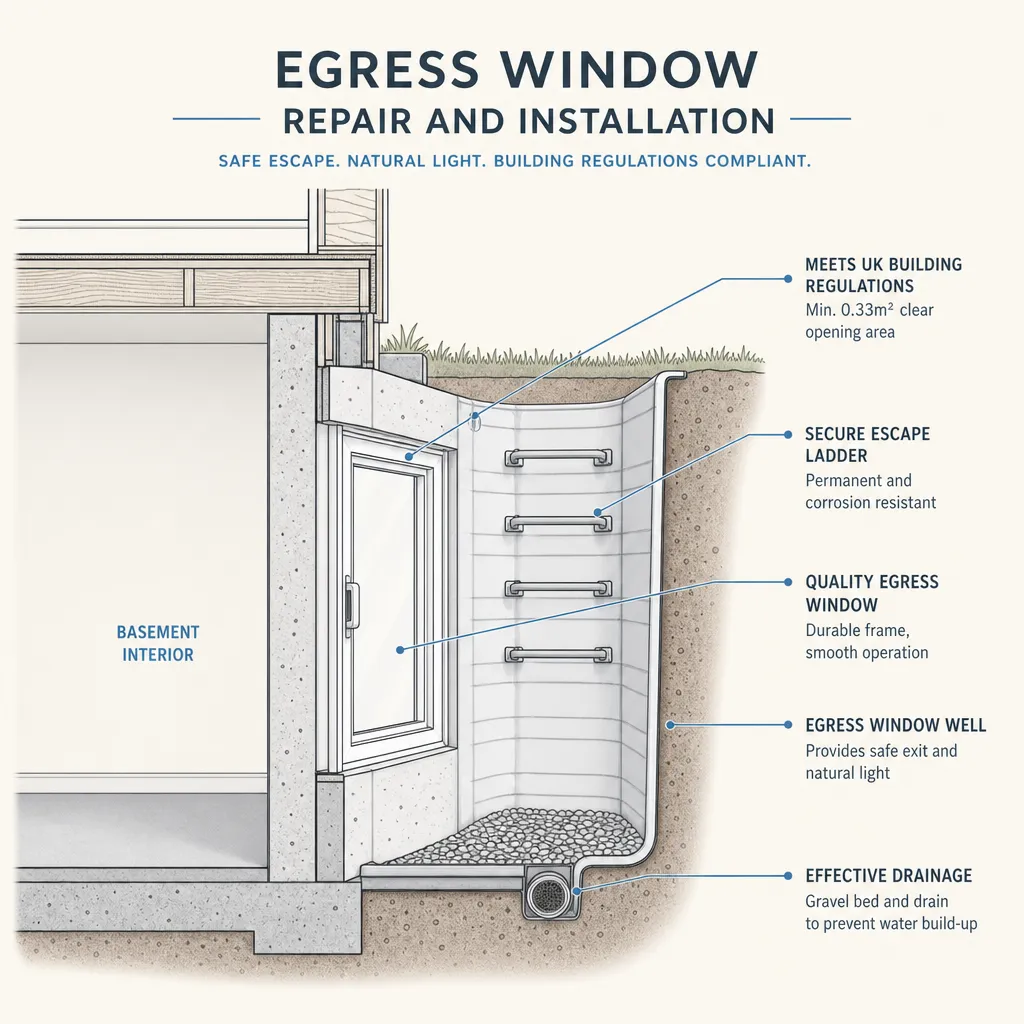
- The minimum clear opening for a UK escape window is 0.33 m², with at least 450 mm height and 450 mm width, positioned no more than 1,100 mm above finished floor level.
- Basement conversions creating new sleeping accommodation typically require an egress window opening onto a lightwell, or an alternative protected escape stairway.
- FENSA-registered and CERTASS-registered installers can self-certify replacement window installations as compliant with Building Regulations — no separate building control application is needed.
- Lightwells (window wells) for below-ground egress windows must be large enough for a person to climb out and must be drained to prevent water ingress.
What is an egress window?
An egress window is a window whose clear opening is large enough to serve as an emergency escape route. Approved Document B of the Building Regulations uses the term "escape window", but egress window, safety window, and emergency exit window all refer to the same principle: a window that occupants can climb through to reach safety, or through which firefighters can rescue them.
Egress windows are most commonly discussed in relation to:
- Ground-floor and above-ground bedroom windows where there is no alternative protected stair or corridor escape route.
- Basement habitable rooms, particularly where a conversion creates a sleeping room below ground level.
- Loft conversions, where the escape strategy depends on the compliance route chosen under Approved Document B.
When do UK Building Regulations require an egress window?
Approved Document B (Volume 1) requires that every habitable sleeping room at ground-floor level or above should have at least one window meeting the escape window specification — unless a protected stairway gives direct access to the outside.
For basement sleeping rooms, the requirement is stricter. Where occupants cannot escape directly into a protected hallway leading outside, an egress window opening onto a lightwell is typically required. Some designs use an alternative protected stairway instead, but this adds complexity and cost.
For loft conversions, the escape route strategy must be agreed with building control at design stage. An escape window at roof level may be specified, or a protected stairway route to the front door may suffice. Clarify this with your local building control body or an approved inspector before committing to a design.
Egress window dimensions: what Approved Document B requires
Under Approved Document B, an escape window must provide a clear opening — measured as the usable space once the sash or casement is fully open — meeting all of the following:
- Minimum clear area: 0.33 m²
- Minimum height: 450 mm
- Minimum width: 450 mm
- Maximum sill height: 1,100 mm above finished floor level
The clear opening is the usable space with the frame fully open, not the overall window frame size. A window that looks large enough in the brochure may not meet the 0.33 m² clear opening once the frame is deducted. Ask your installer to confirm the clear-opening figures in writing before ordering.
Basement egress windows and lightwells
Installing an egress window below ground level requires external excavation to create a lightwell. The lightwell must be:
- Large enough for a person to climb out — typically at least 600 mm clear depth from the wall face, and wide enough to give clear access alongside the open window.
- Drained to prevent water pooling and potential flooding back into the basement.
- Accessible: if a security grille is fitted, it must be openable from inside without a key.
Cutting through a foundation wall requires a structural engineer to check the effect on the wall, and building control will want to see the structural design before work starts. The civil works, structural check, and window installation are often managed as a package by a specialist basement conversion contractor.
Egress window types: which works best?
Window type | Clear opening | Suitability for egress | Key consideration |
|---|---|---|---|
Casement (side-hung) | Good — full sash opens | Suitable for most situations | Check hinge projection does not reduce usable width |
Tilt-and-turn | Excellent — full turn gives maximum opening | Well suited to basements and upper floors | Confirm turn mode meets 0.33 m² clear opening |
Sash (sliding) | Moderate — only half opens at once | May qualify in larger sizes | Verify half-open area meets minimum dimensions |
Fixed light | None | Not suitable as sole egress window | May form part of a wider escape strategy |
Roof window (Velux-style) | Varies by model | Used in some loft escape routes | Must be certified as escape-route compliant by manufacturer |
Egress window repair: when to act
An existing egress window may need repair if:
- The frame is rotting, cracked, or warped to the point that it compromises the window's integrity.
- The opening mechanism has failed, preventing the window from opening fully — a safety issue that should be treated as urgent if the room is in use as a bedroom.
- Glazing is broken, creating a security or weather-tightness problem.
- A previous replacement window no longer meets current escape window dimensions.
Minor repairs such as replacing a hinge, lock, or draught seal can usually be carried out by a qualified joiner or window repair specialist. If the frame itself needs replacing, the new window must comply with current Building Regulations — use a FENSA or CERTASS registered installer for self-certification.
What to ask before accepting a quote
- Does the replacement window meet Approved Document B escape window requirements — specifically the 0.33 m² clear opening, 450 mm minimum height, and 450 mm minimum width?
- Are you FENSA or CERTASS registered, and will you self-certify the installation?
- If a lightwell is required, who designs and builds it, and is a structural engineer's sign-off included?
- Does the glazing specification also meet Part L thermal performance requirements?
- Is VAT included in the quoted price?
- What warranty is provided on the frame, glazing, and opening mechanism?
- What happens if access reveals additional structural work is needed?
When to get professional help
Egress window installation in a sleeping room almost always requires a qualified, registered installer — this is not a suitable DIY project where the window forms the primary escape route. Seek professional help if:
- You are creating a new opening in a structural wall (requires a structural engineer and building control approval).
- The installation is part of a basement or loft conversion subject to full building control.
- The existing escape window has failed and the room is currently in use as a bedroom — treat this as urgent.
- The property is listed or in a conservation area, where planning consent may be needed before any alterations.
How Housey can help
Housey connects homeowners with qualified window and door installers who can assess your current windows, confirm whether they meet Approved Document B escape requirements, and supply and fit replacement or new egress windows with full self-certification. Compare quotes and check credentials before instructing anyone.
Frequently asked questions
Do I need planning permission to install an egress window?
Replacing a window in an existing opening usually falls within permitted development rights and does not require planning permission. However, creating a new opening in an external wall, or altering a window in a listed building or conservation area, may require prior planning approval. Always check with your local planning authority before starting work.
Can a sash window be used as an egress window?
Possibly, but a single-hung sash window opens only half its glazed area. If that half-open area provides at least 0.33 m² clear opening with a minimum of 450 mm height and 450 mm width, it can qualify. Many standard sash windows fall short — ask your installer to confirm the clear-opening dimensions in writing before ordering.
What does a FENSA certificate confirm?
A FENSA certificate confirms that a replacement window installation has been self-certified as compliant with Building Regulations by a registered installer. The registration is automatically notified to the local authority. Keep your certificate — you will need to produce it when selling the property, and mortgage lenders may request it.
How long does egress window installation take?
A straightforward single-window replacement in an existing opening typically takes half a day to a full day. Where a new structural opening or basement lightwell is needed, the civil and structural work can add several additional days. Your installer should be able to give a programme once they have assessed the existing opening.
Sources and further reading
- Approved Document B (Fire Safety): Volume 1 — Dwellings — GOV.UK / MHCLG
- FENSA: Window and door glazing certification — FENSA
- CERTASS: Building Regulations compliance for fenestration — CERTASS
- Approved Document L: Conservation of fuel and power — GOV.UK / MHCLG
Useful next reads
 Improvement & Build
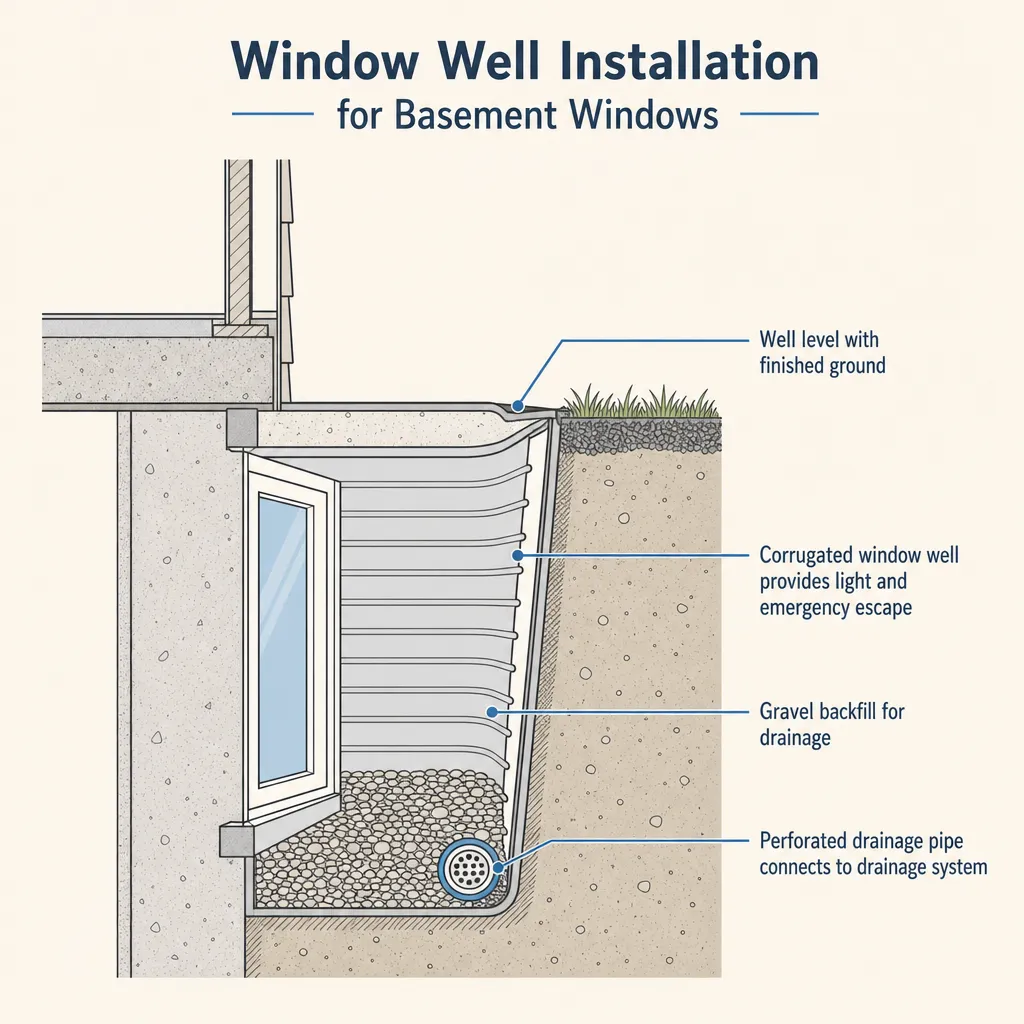
Window Well Installation for Basement Windows
Window wells (areaways) are excavated structures outside basement walls that allow natural light and ventilation into below-ground rooms.
 Improvement & Build
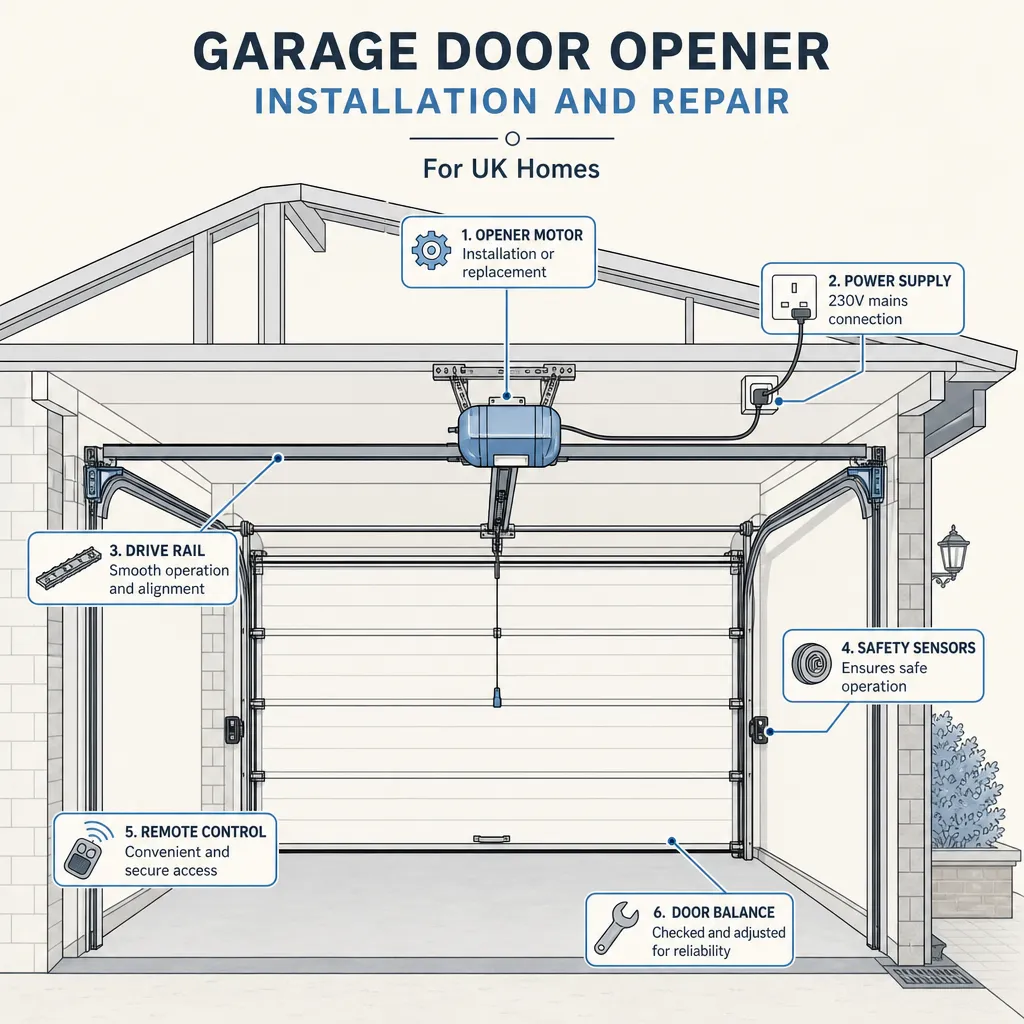
Garage Door Opener Installation and Repair
A garage door opener automates raising and lowering a garage door via an electric motor, drive rail, and remote or keypad control.
 Improvement & Build
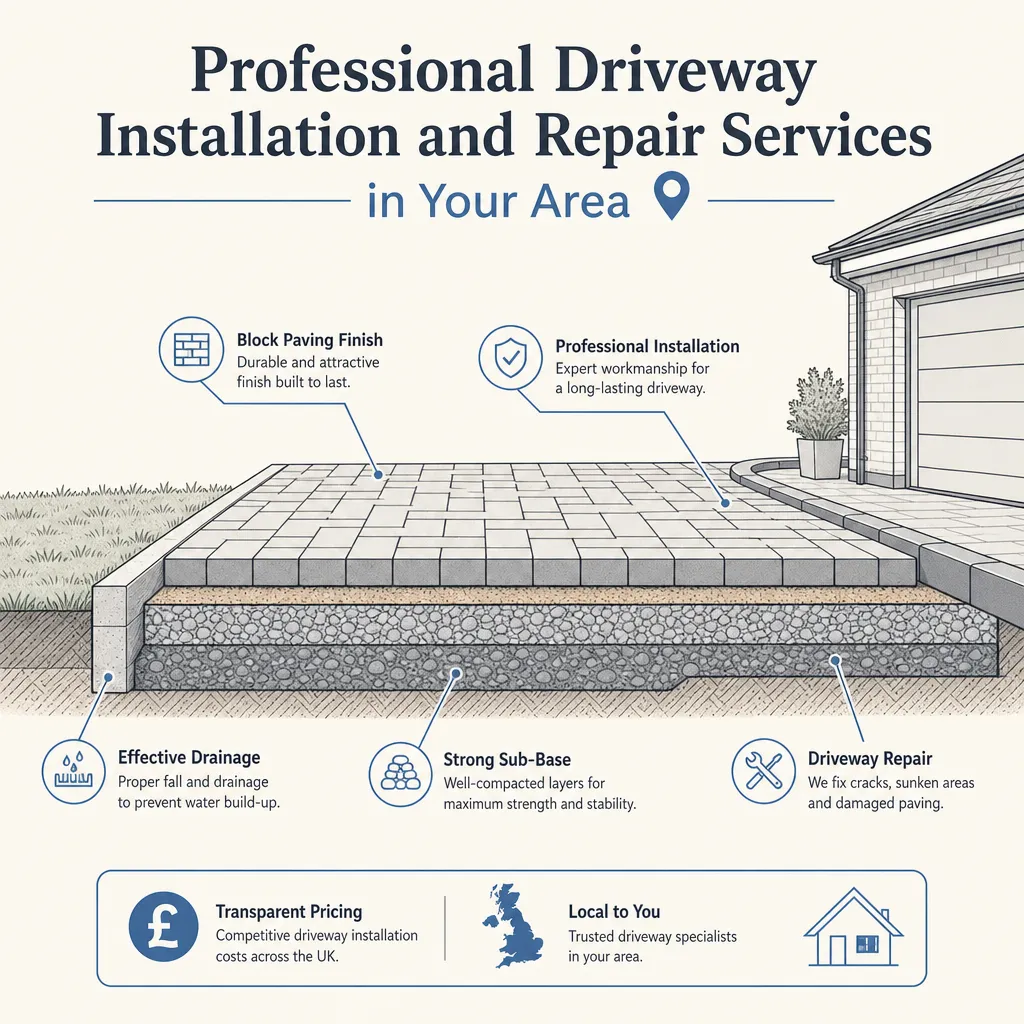
Professional Driveway Installation and Repair Services in Your Area
Driveway installation in the UK involves choosing a surface material — block paving, tarmac, resin, or gravel — and ensuring it meets drainage requirements.
 Improvement & Build
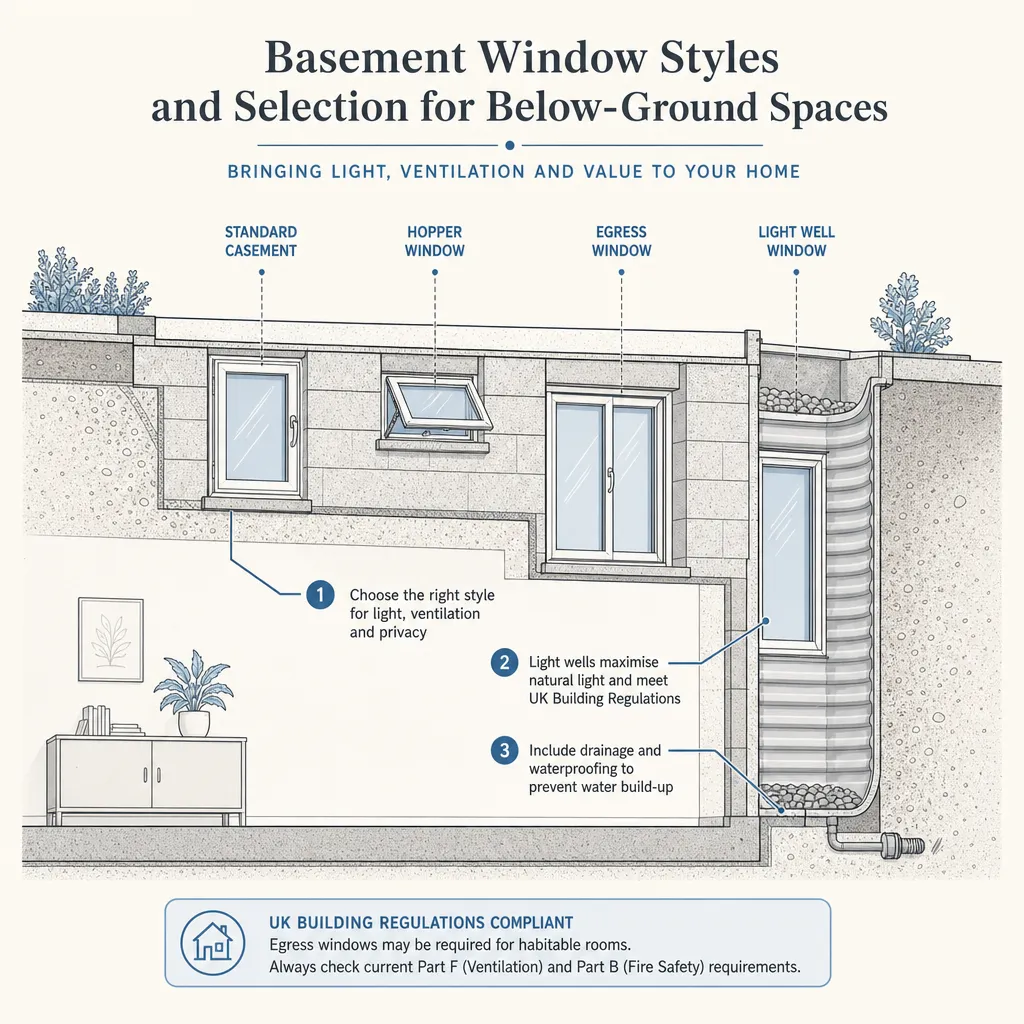
Basement Window Styles and Selection for Below-Ground Spaces
Basement windows in UK homes need to withstand water pressure, provide ventilation under Building Regulations Part F, and meet fall-protection requirements under Part K.
 Improvement & Build
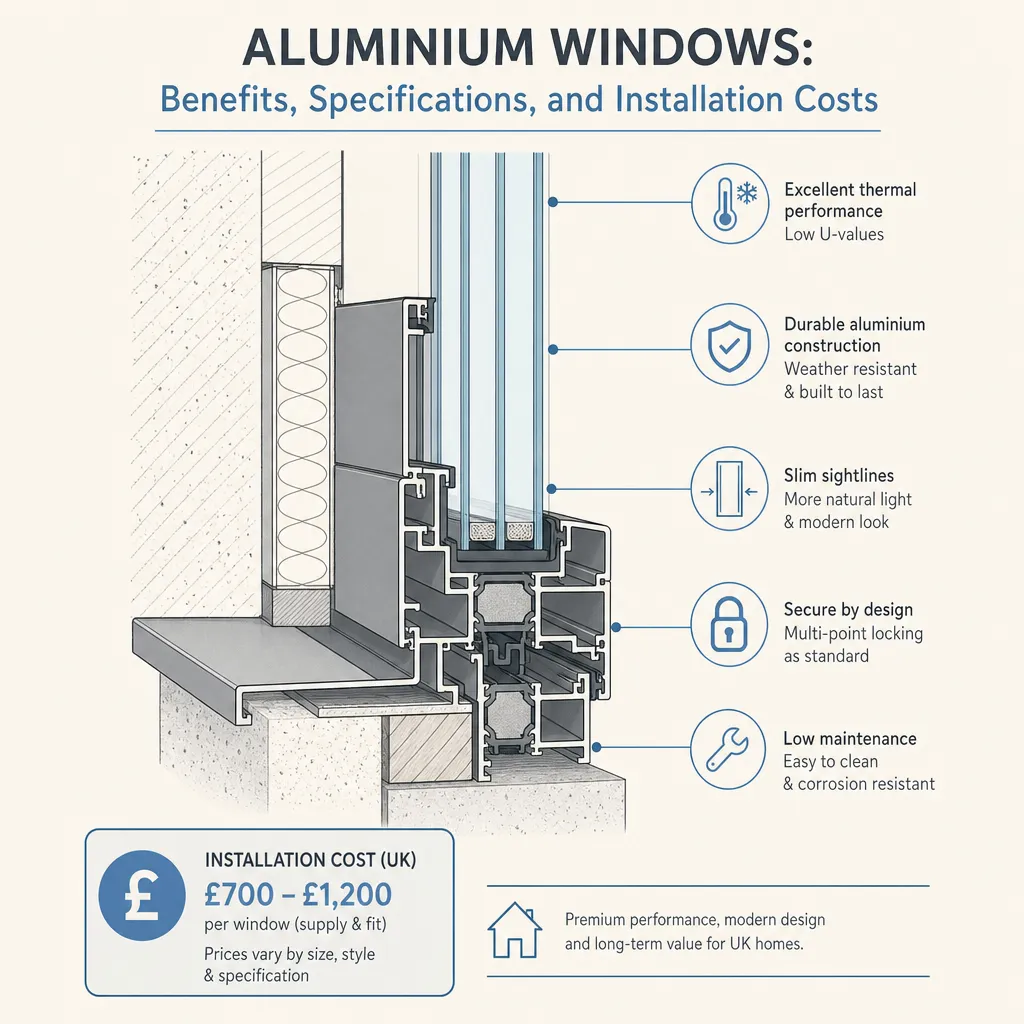
Aluminium Windows: Benefits, Specifications, and Installation Costs
Aluminium windows typically cost £600–£1,800 per window installed in the UK, depending on size and specification.