Fascia, Soffit and Guttering Replacement Costs
By Housey · Last reviewed 6th of May 2026
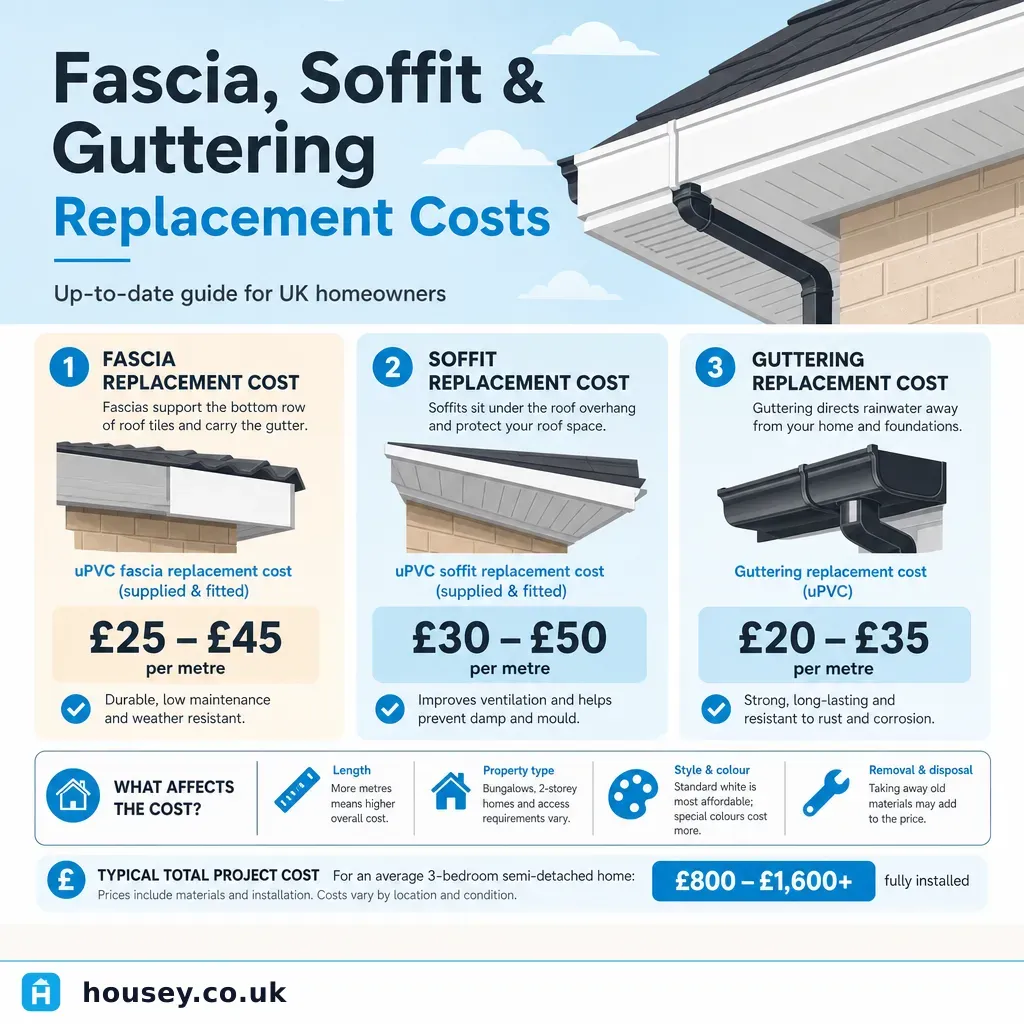
Fascia, Soffit and Guttering Replacement Costs
Fascia boards, soffits, and guttering are easy to overlook until water starts finding its way into the roof space or running down the external walls. For most UK homeowners, the question arises when existing materials rot, crack, or sag — often spotted by a roofer called out for something else, or noticed after a particularly wet winter. Replacing them promptly protects the roof structure, walls, and ceilings from water damage that can cost many times more to repair than the roofline work itself.
Key points
- Typical UK cost to replace fascia, soffit, and guttering on a semi-detached house is approximately £1,200–£2,500 using uPVC; detached houses and those with complex rooflines cost more — indicative figures only.
- uPVC is the most common replacement material and is largely maintenance-free; timber is more common on listed buildings or in conservation areas, where the local planning authority may require like-for-like replacement.
- Guttering is typically priced per linear metre installed; indicative rates range from £20–£55 per metre depending on profile and material.
- All work at height must comply with the Work at Height Regulations 2005 — do not attempt to replace roofline components yourself from ladders or tower scaffolds without proper training.
- If the existing soffit may contain asbestos (possible in properties built or modified before 1985), do not disturb it — arrange an asbestos survey before any roofline work begins.
What do fascias, soffits, and gutters do?
These three elements form the weatherproofing trim at the edge of a pitched roof:
- Fascia board: the vertical board fixed to the ends of the roof rafters, to which the guttering is attached.
- Soffit: the board closing the gap under the eaves between the fascia and the external wall; may be vented to allow air circulation in the roof void.
- Guttering: the channel that collects rainwater running off the roof and directs it to a downpipe and then to a drain or soakaway.
When any one of these fails, the effects spread quickly: blocked or leaking gutters cause damp to walls below; failed fascias allow water into rafter ends; unvented or blocked soffits can contribute to roof void condensation and timber decay.
How much does fascia, soffit, and guttering replacement cost?
Costs depend on the size of the property, the linear metres of guttering and eaves, access requirements, and the materials chosen.
Property type | Indicative total cost (uPVC, 2026) |
|---|---|
Mid-terrace house (2 bed) | £700–£1,400 |
Semi-detached house (3 bed) | £1,200–£2,500 |
Detached house (4 bed) | £2,000–£4,500 |
Bungalow (typical) | £900–£2,000 |
Complex roofline (hips, bays, dormers) | Add 20–40% to above |
Indicative UK costs, last reviewed 2026-05-06. Prices include materials and installation but exclude scaffold where required. Obtain at least three quotes for your specific property.
Cost per linear metre
Individual elements are typically priced by the metre:
Component | Indicative installed cost per metre |
|---|---|
uPVC half-round guttering | £20–£45 |
uPVC ogee-profile guttering | £25–£55 |
uPVC fascia board | £20–£40 |
uPVC soffit board | £15–£35 |
Timber fascia (painted) | £30–£60 |
Downpipe (uPVC, per metre) | £15–£30 |
Indicative UK costs, last reviewed 2026-05-06.
What affects the price?
- Access requirements: if scaffolding is needed, expect to add £500–£1,500 or more depending on height and the length of run required.
- Rafter condition: rotten rafter ends must be cut back and repaired before new fascia is fixed — this adds labour and materials cost.
- Existing material removal: stripping old timber, felt-backed boards, or asbestos-based soffits adds cost; asbestos soffits require specialist removal.
- Roofline complexity: simple rectangular plans cost less; properties with hips, valleys, bay windows, and dormers cost more.
- Material specification: heritage profiles, cast-iron-effect guttering, or powder-coated aluminium all cost more than standard uPVC.
uPVC vs timber: which should you choose?
| uPVC | Timber |
|---|---|---|
Upfront cost | Lower | Higher |
Maintenance | Minimal (wipe clean) | Painting every 5–8 years |
Typical lifespan | 20–40 years | 30+ years if well maintained |
Heritage suitability | Often not appropriate for listed or conservation area properties | Usually required or preferred |
Colour options | Wide (factory-finished) | Any paint colour |
Planning restrictions | Check with LPA if listed or in conservation area | Rarely restricted |
If your property is in a conservation area or is listed, check with your local planning authority before replacing timber fascia and soffits with uPVC — some authorities require like-for-like replacement on visible elevations.
Red flags: when replacement is urgent
Replace fascia, soffits, or guttering promptly if you notice:
- Visible rot or splitting in timber fascia or soffit boards
- Guttering pulling away from the fascia or visibly sagging between brackets
- Staining or algae on external walls below the gutterline — a sign of persistent overflow or leaking joints
- Damp patches on interior ceilings near the eaves
- Plant or moss growth in gutters — blocks outlets and causes overflow
- Daylight visible in the roof void through gaps at the eaves
Homeowner checklist: before accepting a quote
Use this checklist when comparing quotes from contractors:
What to ask before hiring a roofer or fascia installer
- How many years have you been installing fascia and guttering systems, and can you provide local references?
- Do you use the manufacturer's own fitting systems and accessories, or generic fixings?
- What happens if you find asbestos in the existing soffits — are you equipped to handle this, or will work need to pause for a specialist?
- Will you clear guttering debris and remove all old materials from site on completion?
- Do you carry any work out from ladders only — and if so, at what maximum working height?
When to get professional help
Fascia, soffit, and guttering replacement is a routine trade job, but seek a professional assessment if:
- You suspect the existing soffit contains asbestos (common in pre-1985 properties). Do not disturb the material — arrange an asbestos survey before any roofline work begins.
- The roof structure is visibly deteriorating at the eaves, which may indicate wider structural or damp issues requiring investigation.
- Water damage has penetrated the roof space and you are unsure of the extent.
- The property is listed or in a conservation area and you need guidance on appropriate materials and whether consent is required.
How Housey can help
Housey connects you with qualified roofers and roofline installers across the UK who can assess your property, advise on the right materials, and provide itemised quotes. Getting at least three quotes is advisable — prices for the same job can vary by 30–50% depending on a contractor's overheads and current availability.
Frequently asked questions
How long does fascia, soffit, and guttering replacement take?
For a typical semi-detached house, the work usually takes one to two days. Larger detached properties with complex rooflines may take two to four days. Properties where scaffold needs to be erected, or where rafter repairs are identified on site, will take longer. Your contractor should provide an estimated programme when quoting so you can plan access accordingly.
Can I replace guttering without replacing the fascia?
Yes, if the fascia is in sound condition. Guttering can be replaced independently. However, if the fascia is soft, cracked, or showing signs of rot, replacing both at the same time is usually more cost-effective — labour costs are shared and scaffold, if required, is erected once rather than twice. A contractor can assess the fascia condition when quoting.
Does fascia and soffit replacement require planning permission?
Like-for-like replacement generally does not require planning permission and is treated as routine maintenance. However, if your property is listed or in a conservation area, replacing timber with uPVC or changing the profile or colour may need approval from the local planning authority. Check before work begins if there is any doubt about your property's designation.
How often should guttering be cleaned?
Most UK homes benefit from guttering cleaned at least once a year, ideally in late autumn after leaf fall. Properties near deciduous trees may need cleaning twice yearly. Regular clearing prevents blockages that cause persistent overflow and consequent damp to external walls, which is far more expensive to repair than the cleaning itself.
Is there VAT on fascia and guttering replacement?
Standard rate VAT at 20% applies to most fascia and guttering replacement work on existing residential properties. The 5% reduced rate does not typically apply to straightforward repair and replacement jobs. Always check with your contractor whether their quote is inclusive or exclusive of VAT before comparing prices from different installers.
Sources and further reading
- Work at Height Regulations 2005 — Health and Safety Executive
- Planning permission: conservation areas — GOV.UK
- Buildings and construction (VAT Notice 708) — HMRC
Useful next reads
 Improvement & Build
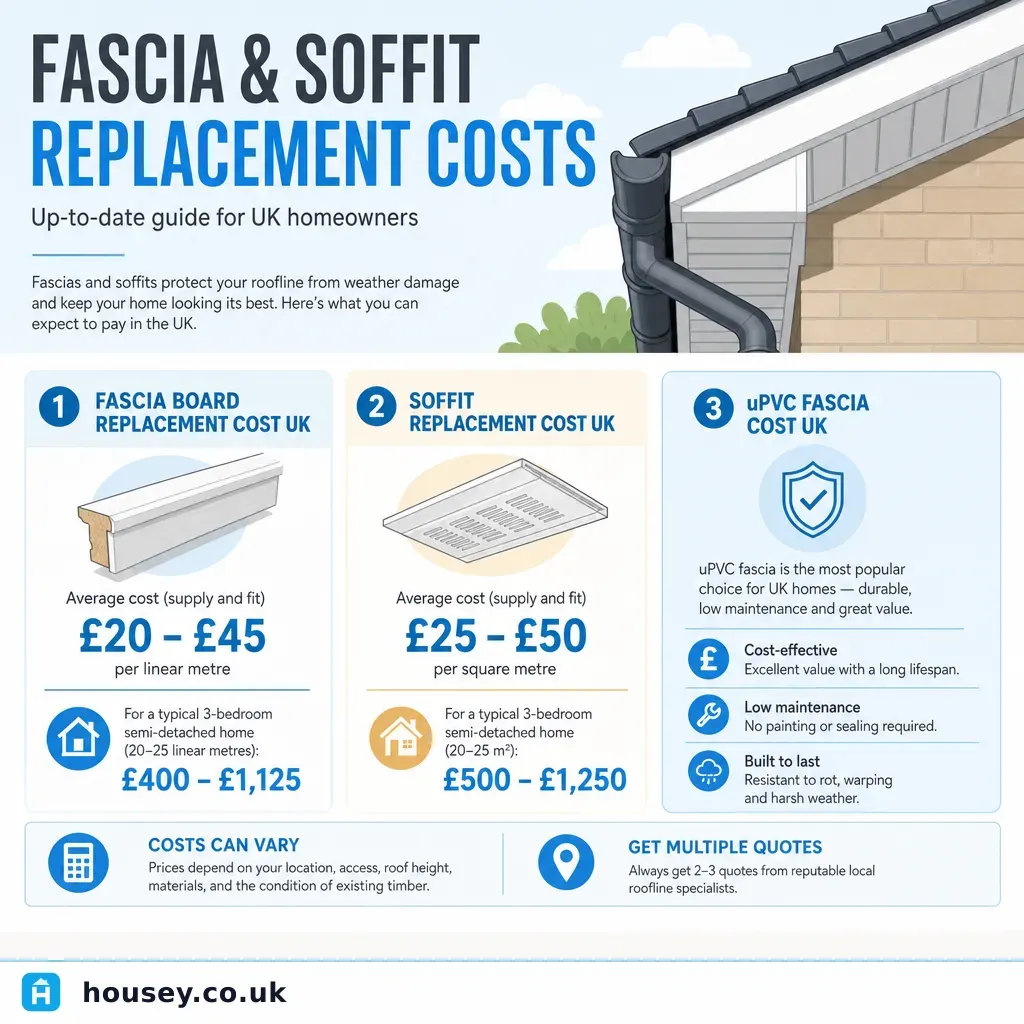
Fascia and Soffit Replacement Costs
Fascia and soffit replacement for a semi-detached house in the UK typically costs £1,800–£4,500 for uPVC boards and new guttering.
 Improvement & Build
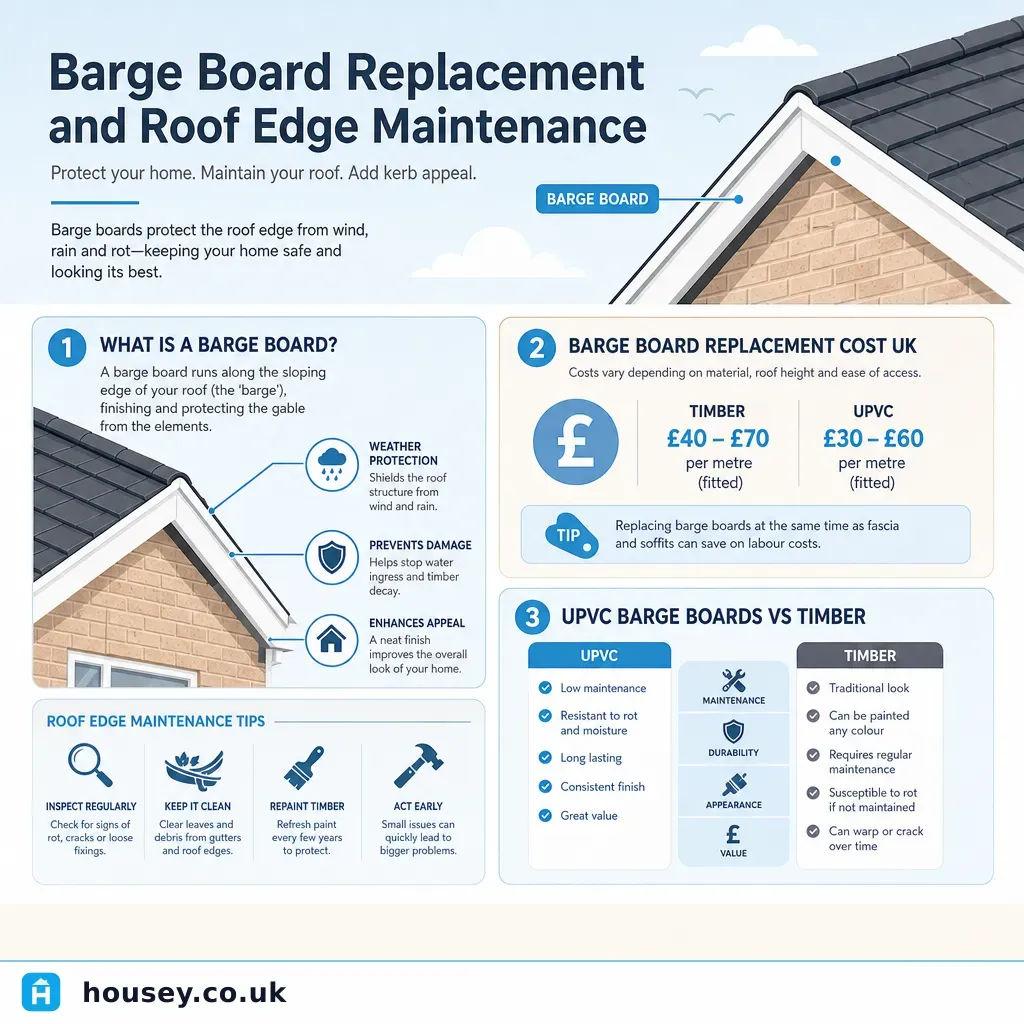
Barge Board Replacement and Roof Edge Maintenance
Barge boards sit at the gable end of a pitched roof and protect the verge from wind-driven rain.
 Improvement & Build
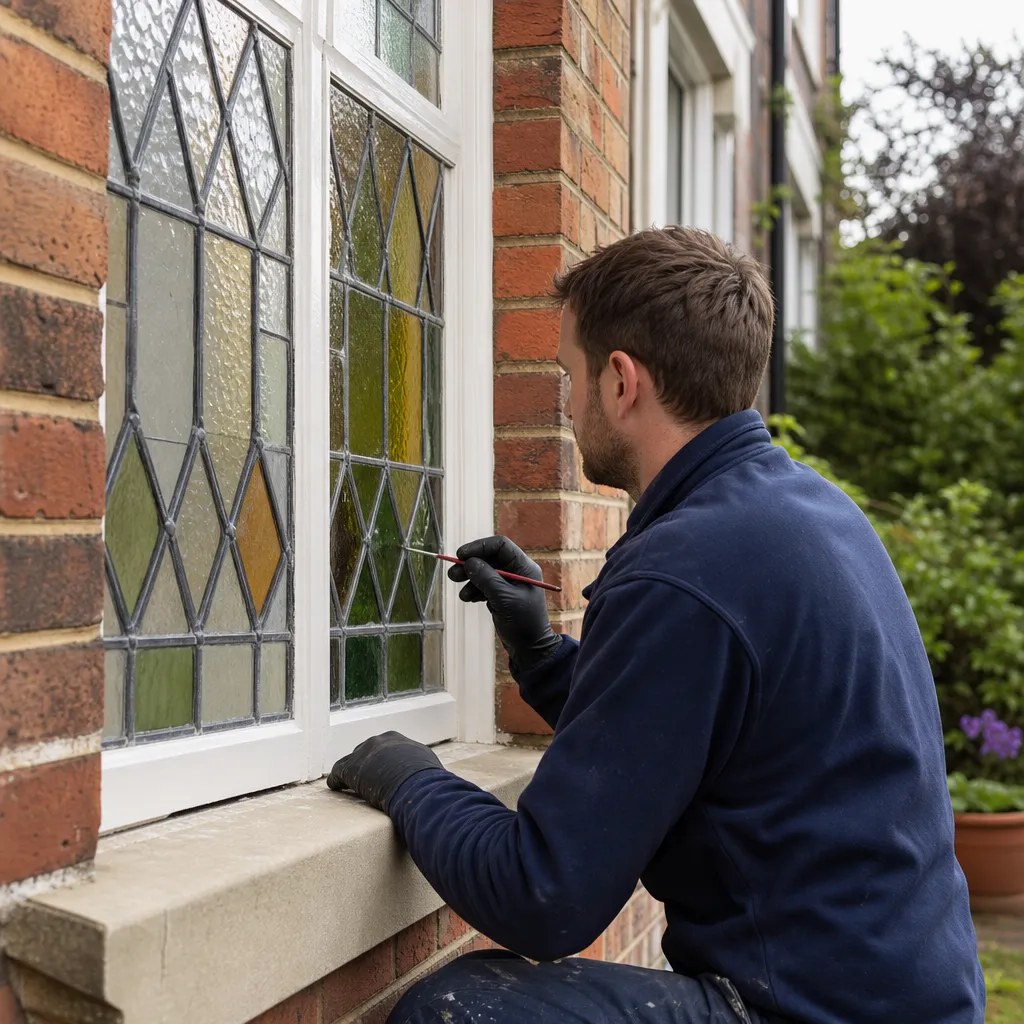
Sealing and Maintaining Historic Leaded Glass Windows: Preservation and Performance
Leaded glass windows are maintained using traditional linseed oil cement — not silicone or modern sealants, which prevent natural movement in the lead came.
 Improvement & Build
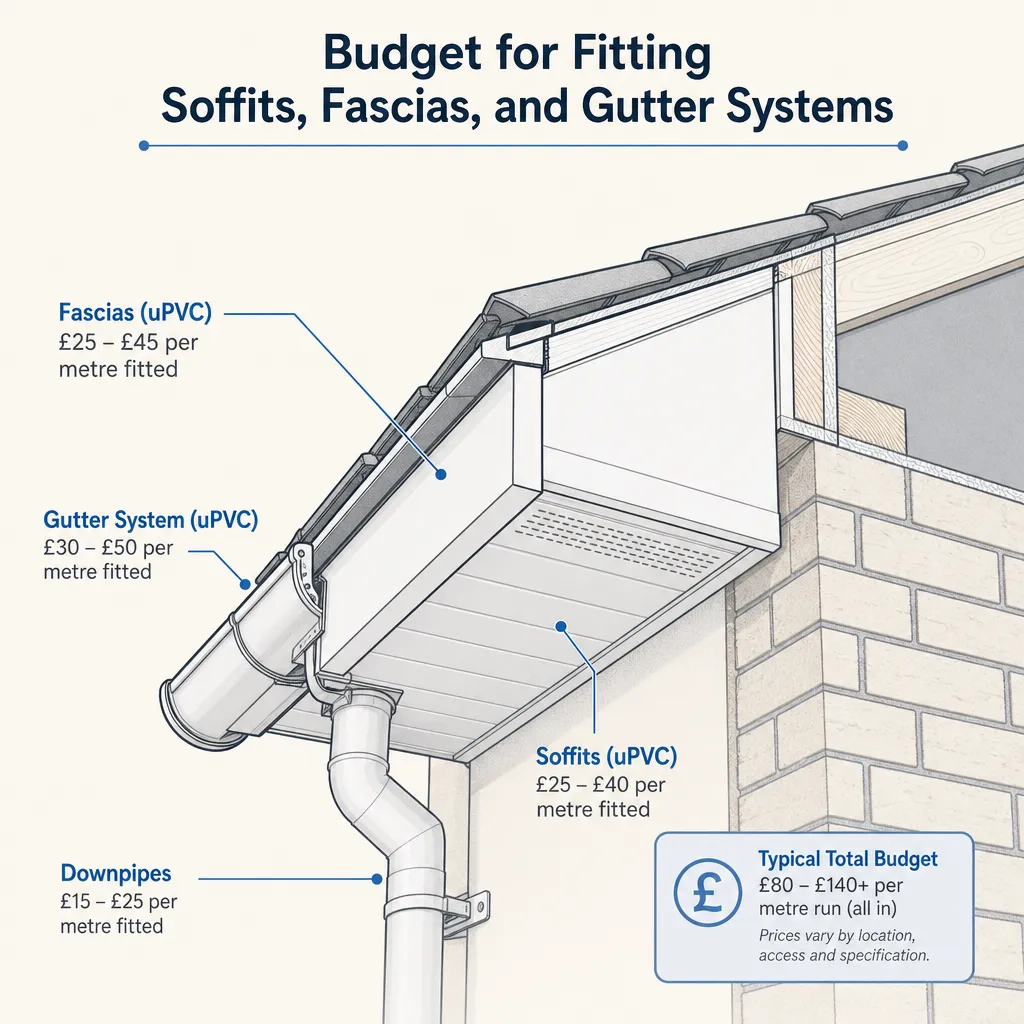
Budget for Fitting Soffits, Fascias, and Gutter Systems
Replacing soffits, fascias, and gutters on a typical UK semi-detached house costs roughly £1,500–£3,500 for uPVC, depending on property size, access, and material choice.
 Improvement & Build
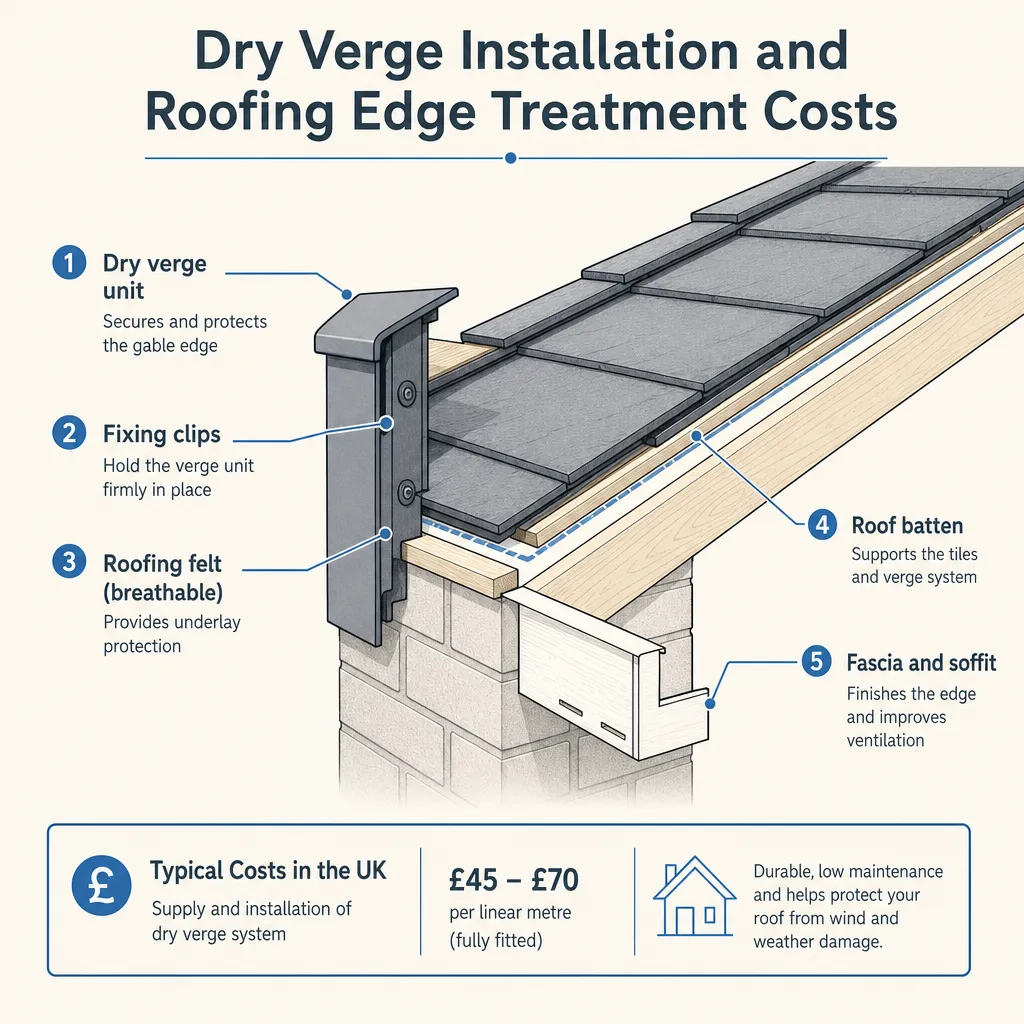
Dry Verge Installation and Roofing Edge Treatment Costs
A dry verge system replaces mortar bedding along the gable edge of a pitched roof with interlocking uPVC or aluminium units.