Finding the Best Keyless Door Locks for Your Home
By Housey · Last reviewed 11th of May 2026
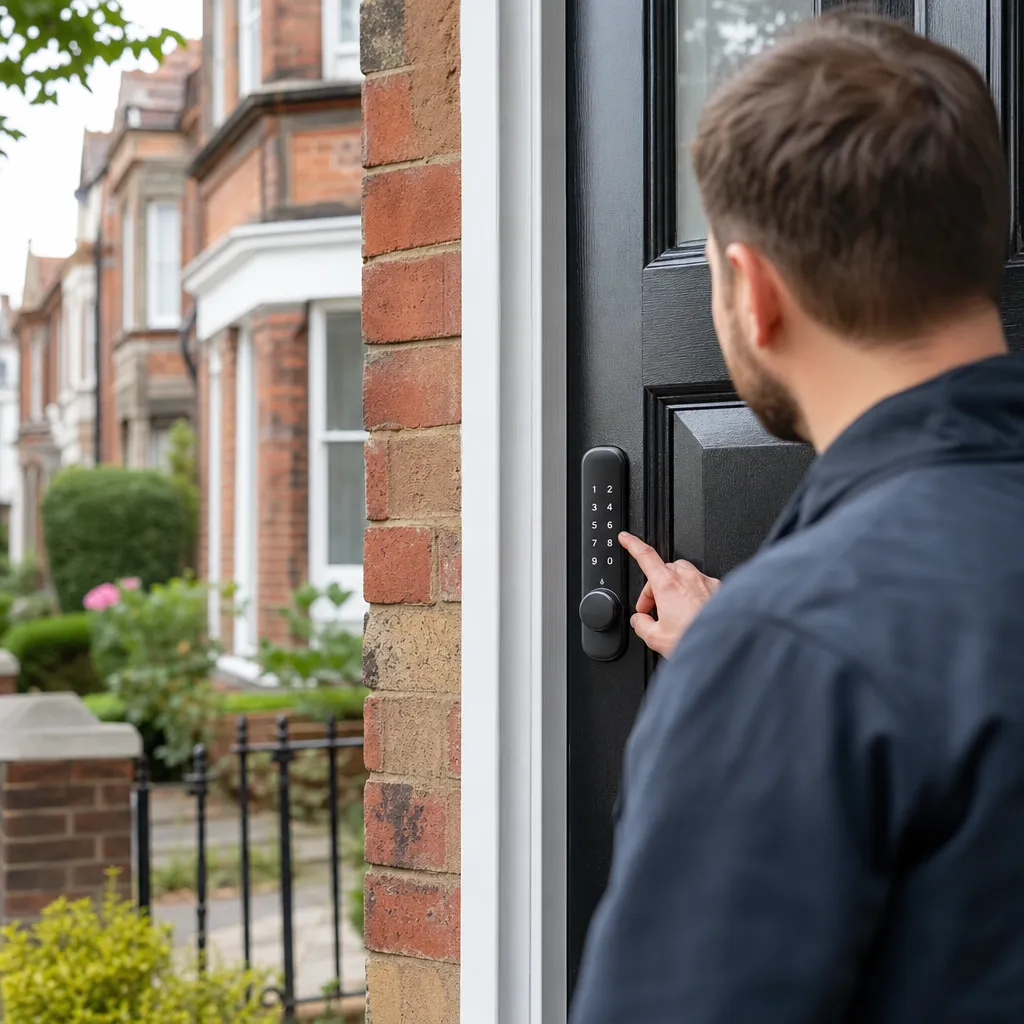
Finding the Best Keyless Door Locks for Your Home
Keyless entry locks — whether operated by keypad, fingerprint, smartphone app, or key fob — have moved firmly into the mainstream UK market. Homeowners most often consider them during a door replacement, after losing keys, or when improving security ahead of letting or selling. The challenge is navigating a crowded market where security standards, insurance compatibility, and smart-home integration all vary considerably between products.
Key points
- BS 3621:2007+A2:2012 is the BSI standard for thief-resistant lock assemblies; many UK home insurers require locks meeting this standard on external doors and may decline claims if non-compliant locks are fitted at the time of a break-in.
- Sold Secure Diamond and Gold ratings confirm a lock has been independently tested against physical attack — these are the key marks to check on any keyless lock you consider for an external door.
- Secured by Design — the police's flagship crime prevention initiative — approves specific lock products; choosing an approved product may support an insurance claim and is worth verifying before purchase.
- Most keyless locks run on AA or AAA batteries with a typical lifespan of 6–12 months; reputable models include a low-battery warning and a mechanical key override for emergencies.
- Cylinder type matters: most UK external doors use a euro cylinder, but some use oval cylinders or traditional night-latch mechanisms — confirm your door's cylinder type before ordering any smart lock.
What types of keyless lock are available?
Keyless entry locks fall broadly into four categories. Understanding the differences helps you match the product to your door, your household, and your insurer's requirements.
Lock type | Best for | Not ideal for | Security standard to check | Typical price range |
|---|---|---|---|---|
Keypad (PIN entry) | Households sharing access with cleaners or guests, short-term rentals | People who may forget PINs; locations where shoulder-surfing is a risk | Sold Secure Gold or Diamond, BS 3621 equivalent | £80–£350 |
Fingerprint (biometric) | Quick single-user or family entry | Older users whose prints may not register reliably; wet or cold conditions | Sold Secure rating | £150–£500 |
Smartphone app / Bluetooth | Tech-savvy households wanting remote access and entry audit logs | Properties with poor phone signal; anyone without a compatible smartphone | Sold Secure Diamond, Secured by Design where available | £200–£600 |
Key fob / RFID card | Rental properties, HMOs, multiple users | Fobs can be lost, copied, or forgotten | Sold Secure rating | £100–£400 |
Indicative UK costs, last reviewed 2026-05-11. Prices vary by brand, cylinder compatibility, and whether professional installation is included. Always obtain multiple quotes.
Insurance: the critical check before you buy
Before selecting any keyless lock, contact your home insurer. Key questions to raise:
- Does the lock need to meet BS 3621 or a Sold Secure Gold or Diamond rating for your policy to remain valid on external doors?
- Is this specific product type on an approved list, or are there restrictions on smart lock technology in your policy?
- Will fitting a keyless lock affect your contents or buildings insurance premium?
Some insurers are flexible; others have specific requirements written into policy terms. Fitting a lock that does not meet your policy's security conditions could invalidate a burglary claim regardless of the lock's technical sophistication.
Which type should you choose?
- Choose a keypad lock if you let your property short-term, share access regularly with cleaners or tradespeople, or want to eliminate the need to carry keys altogether.
- Choose a fingerprint lock if speed of entry is the priority and all regular household members have reliably registerable prints.
- Choose a smartphone or Bluetooth lock if you want remote access, audit logs of who entered and when, and integration with a wider smart home system.
- Choose a key fob or RFID lock if you manage a rental property or HMO and need to issue and revoke access without rekeying the door.
- Ask a locksmith or security specialist if your door is composite, has a timber frame in a conservation area, or uses an unusual cylinder — compatibility between smart locks and existing door hardware is not always straightforward.
- Check the Sold Secure or Secured by Design product databases if your insurer or a local Secured by Design scheme requires a specifically approved product.
Door compatibility: what to check before ordering
Most UK external doors use a euro cylinder — the standard oval-profile cylinder operated by a flat key. Smart locks that replace or supplement the euro cylinder are usually straightforward to fit. However:
- Multipoint locking doors (common on uPVC and composite doors) may require a smart lock designed to operate the handle mechanism, not only the cylinder — not all products accommodate this architecture.
- Timber mortice deadlocks (common in Victorian and Edwardian properties) use a different mechanism to euro cylinders; look for a smart lock conversion kit compatible with your mortice case, or consult a locksmith before buying.
- Rental properties and HMOs: some HMO licences specify lock standards such as BS 8220 or equivalent — check your licence conditions before changing any lock on a licensable property.
What to ask before accepting a quote or buying
- Which cylinder type does this lock replace or work with, and is it confirmed compatible with my specific door model?
- Does the lock carry a Sold Secure Gold or Diamond rating, or a Secured by Design approval?
- What is the battery life, and is there a mechanical key backup if the battery fails completely?
- How is a low-battery warning delivered — LED indicator, app push notification, or audible alert?
- What data does the lock or its associated app collect, and where is that data stored and processed?
- What warranty does the manufacturer offer, and for how long is it valid?
- Has my insurer confirmed in writing that this lock type is acceptable under my current policy?
When to get professional help
Fitting a keyless lock that replaces a standard euro cylinder is within reach of a confident DIYer using basic tools. Professional help is advisable when:
- Your door has a multipoint locking system and you are unsure whether the chosen lock is compatible with the handle mechanism.
- You are fitting locks across a rental property or HMO and need documented compliance with licence conditions.
- The door frame, keep plate, or door leaf is damaged — a high-quality lock in a weak frame or poorly fitting door offers limited real-world security.
- You want the lock integrated into a wider smart home or security alarm system.
A locksmith registered with the Master Locksmiths Association (MLA) can advise on compatibility, compliance, and the quality of the finished installation.
How Housey can help
If you are replacing a door alongside upgrading to keyless entry, a qualified window and door installer can advise on door systems with integrated locking solutions and ensure the full assembly — door, frame, and hardware — meets current security standards. Use Housey to find vetted window and door installers in your area.
Frequently asked questions
Are smart locks as secure as traditional locks?
A smart lock carrying a Sold Secure Diamond or Secured by Design rating has been independently tested against physical attack and can be as secure as a well-specified traditional lock. Key risk factors include choosing an unrated product, poor installation, a weak door frame, or a compromised app account with inadequate password protection.
Can keyless locks be hacked?
Bluetooth and Wi-Fi locks are theoretically vulnerable to digital attacks, though reputable manufacturers use AES encryption to reduce this risk. Physical attack — such as cylinder snapping — remains the more common real-world threat. Look for anti-snap, anti-pick, and anti-drill cylinder ratings alongside the electronic security specification when comparing products.
Do I need a locksmith to fit a keyless lock?
Not always. Many keyless locks that replace a euro cylinder can be fitted with basic tools in 20–30 minutes. However, if your door has a multipoint locking system, an unusual mechanism, or if you are unsure about compatibility, a qualified locksmith will save time and ensure the installation is secure and insurance-compliant.
Will a keyless lock work during a power cut?
Most keyless locks are battery-powered and operate independently of mains electricity, so they continue to function during a power cut. Some smart lock hub features — such as remote app control — require Wi-Fi, but the physical locking function will still operate locally via keypad, fingerprint, or Bluetooth.
Sources and further reading
- Sold Secure — product ratings database — Sold Secure
- Secured by Design — approved products search — Police Crime Prevention Initiatives
- BSI — BS 3621 thief-resistant lock assemblies — BSI Group
- Master Locksmiths Association — find a locksmith — Master Locksmiths Association
- GOV.UK — HMO licence conditions — GOV.UK
Useful next reads
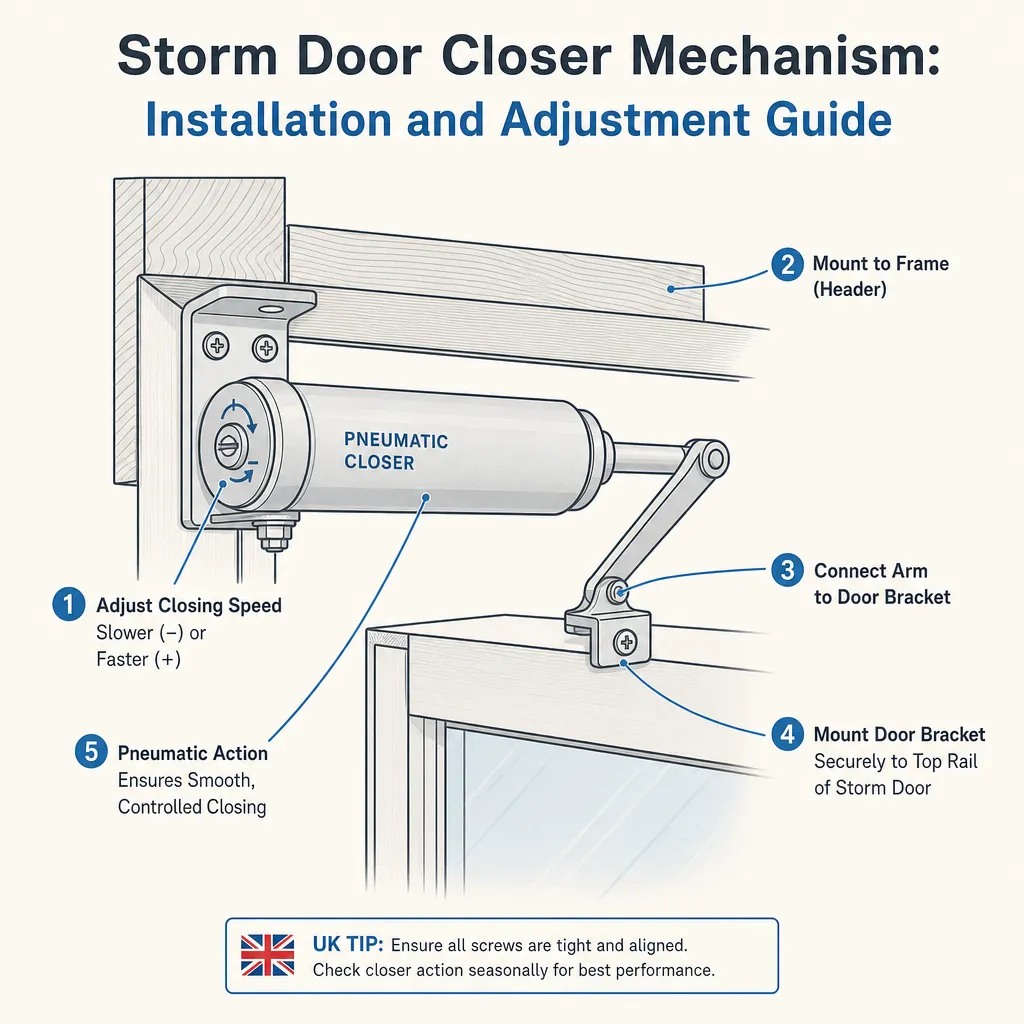 Improvement & Build
Storm Door Closer Mechanism: Installation and Adjustment Guide
Storm door closers are adjusted via a small screw at the end of the cylinder — clockwise slows the door, anticlockwise speeds it up.
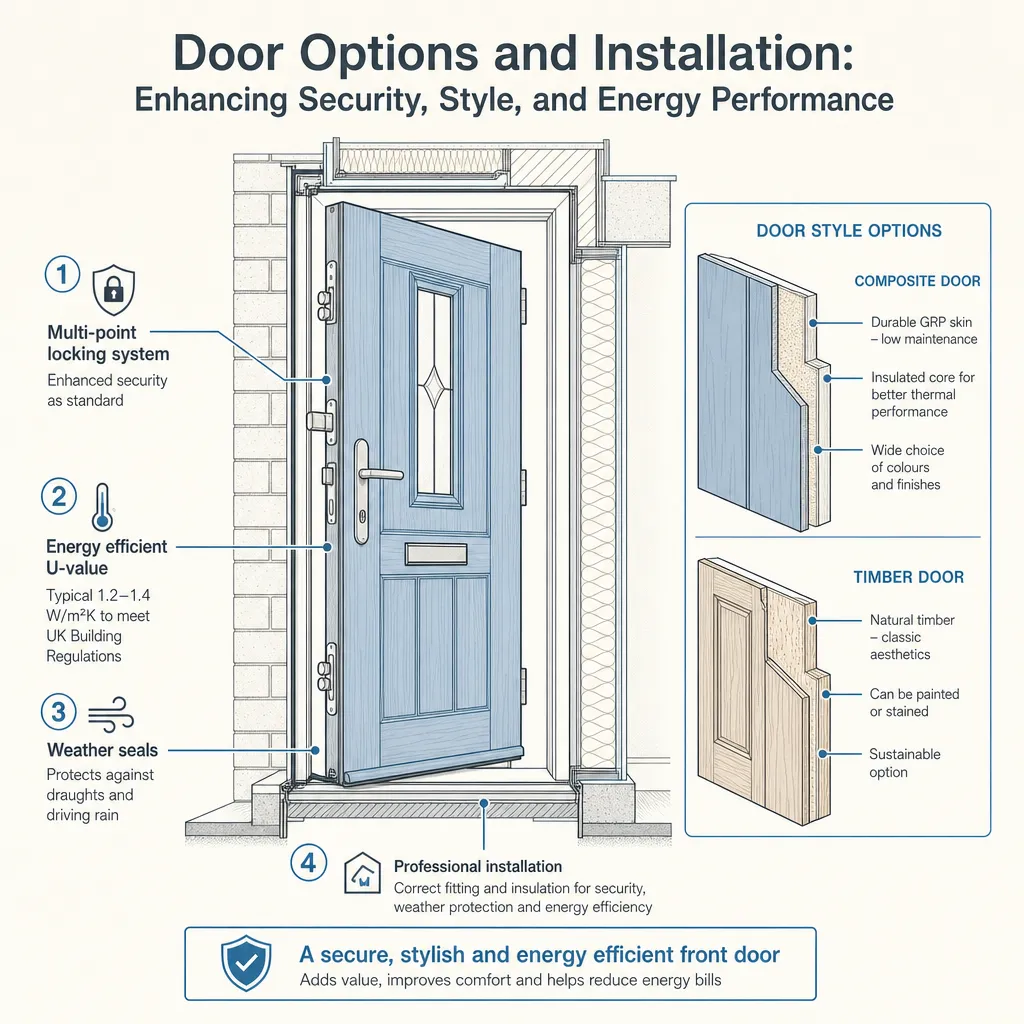 Improvement & Build
Door Options and Installation: Enhancing Security, Style, and Energy Performance
Choosing a new external door involves balancing security ratings, thermal performance, and style.
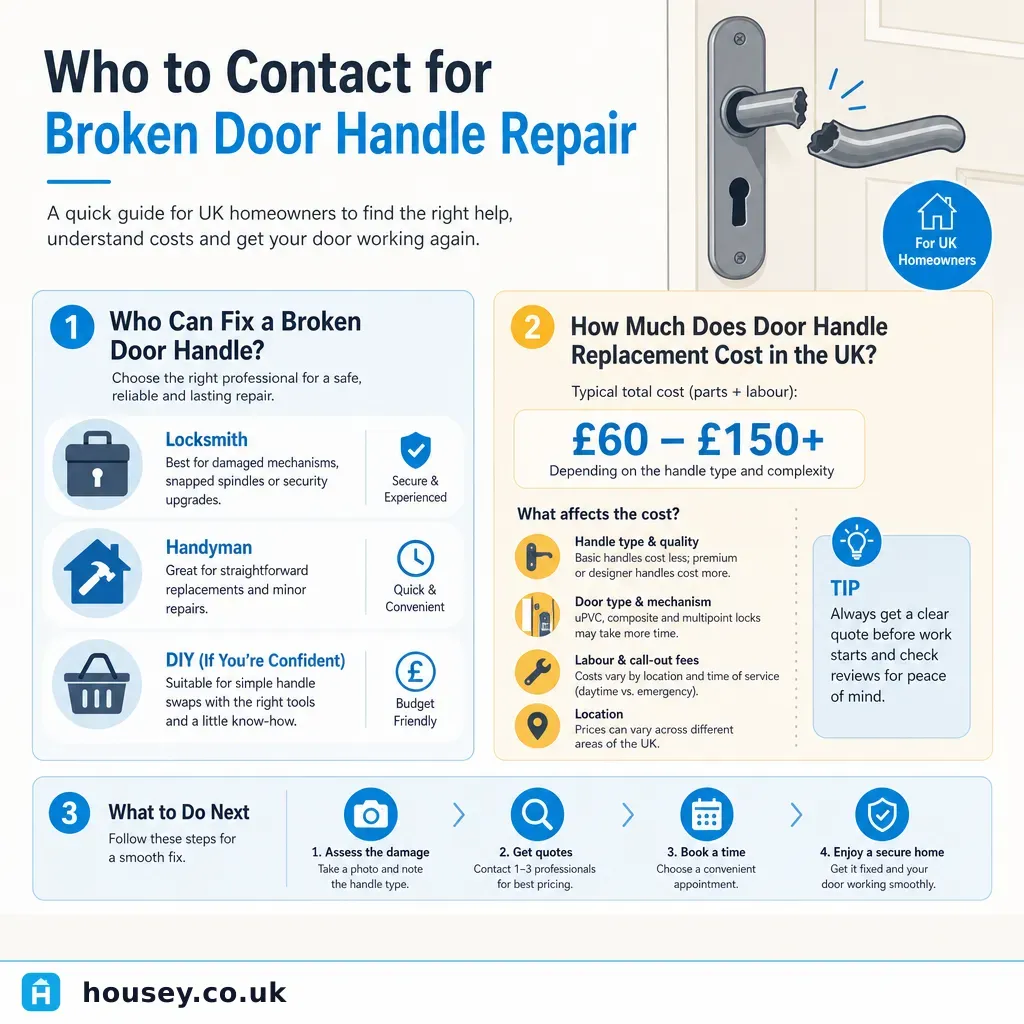 Improvement & Build
Who to Contact for Broken Door Handle Repair
For a broken door handle, a general handyperson can handle most internal timber door repairs, while a joiner or locksmith is better suited to external doors, particularly if the lock mechanism is affected.
 Improvement & Build
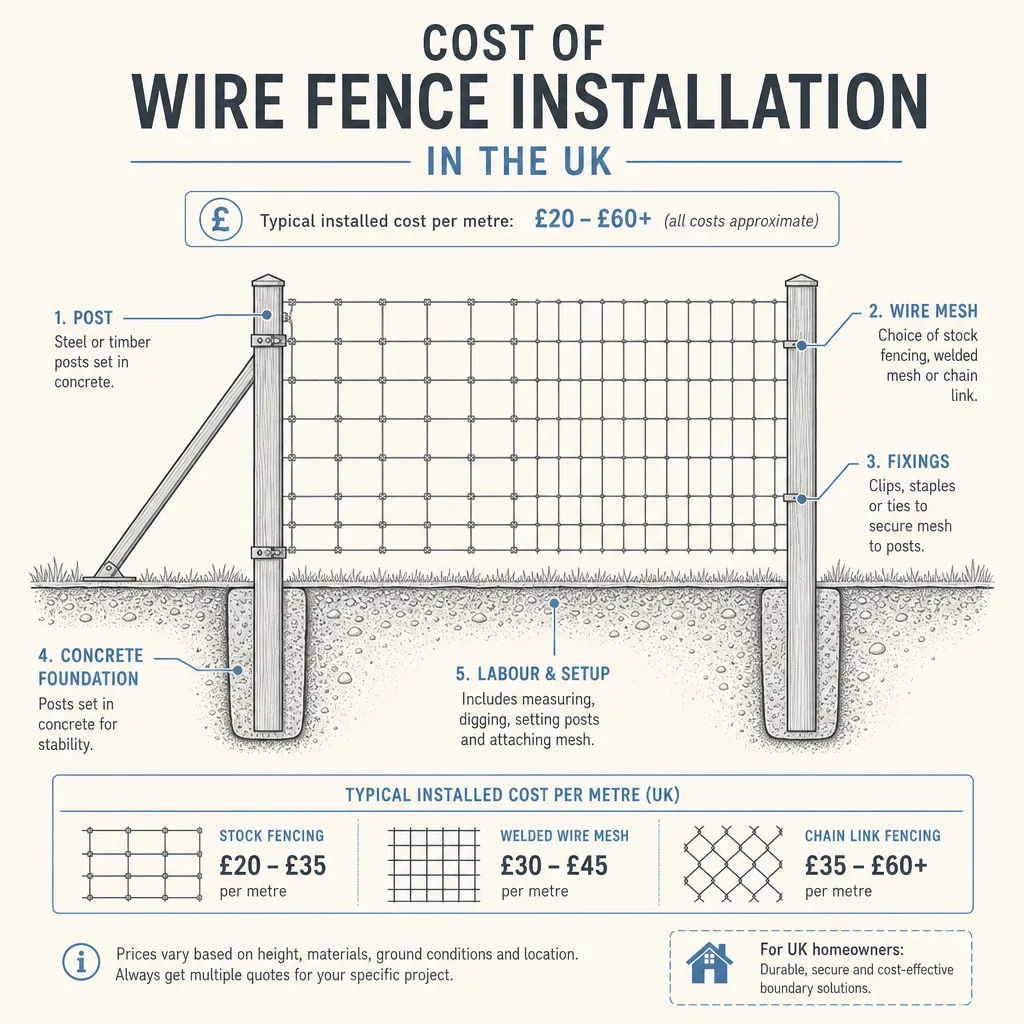
Cost of Wire Fence Installation in the UK
Wire fence installation in the UK typically costs £8–18 per metre for stock fencing, £15–35 per metre for chain-link, and £20–45 per metre for welded wire mesh panels, all installed.
 Improvement & Build
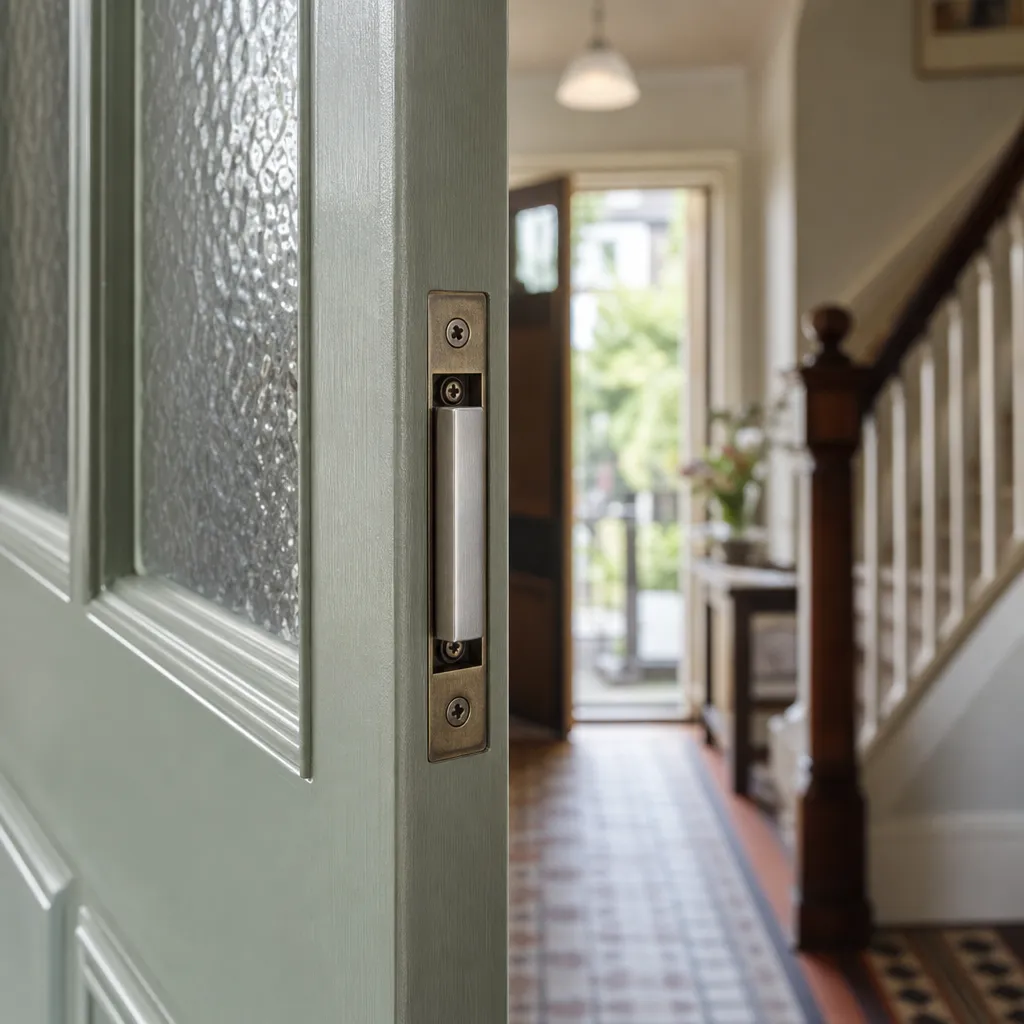
Retractable Door Latches: Function and Purpose Explained
A retractable door latch uses a spring-loaded bolt that is pushed inward by the angled face of the striker plate as the door closes, then springs forward into the keep to hold the door shut.