Door Options and Installation: Enhancing Security, Style, and Energy Performance
By Housey · Last reviewed 19th of May 2026
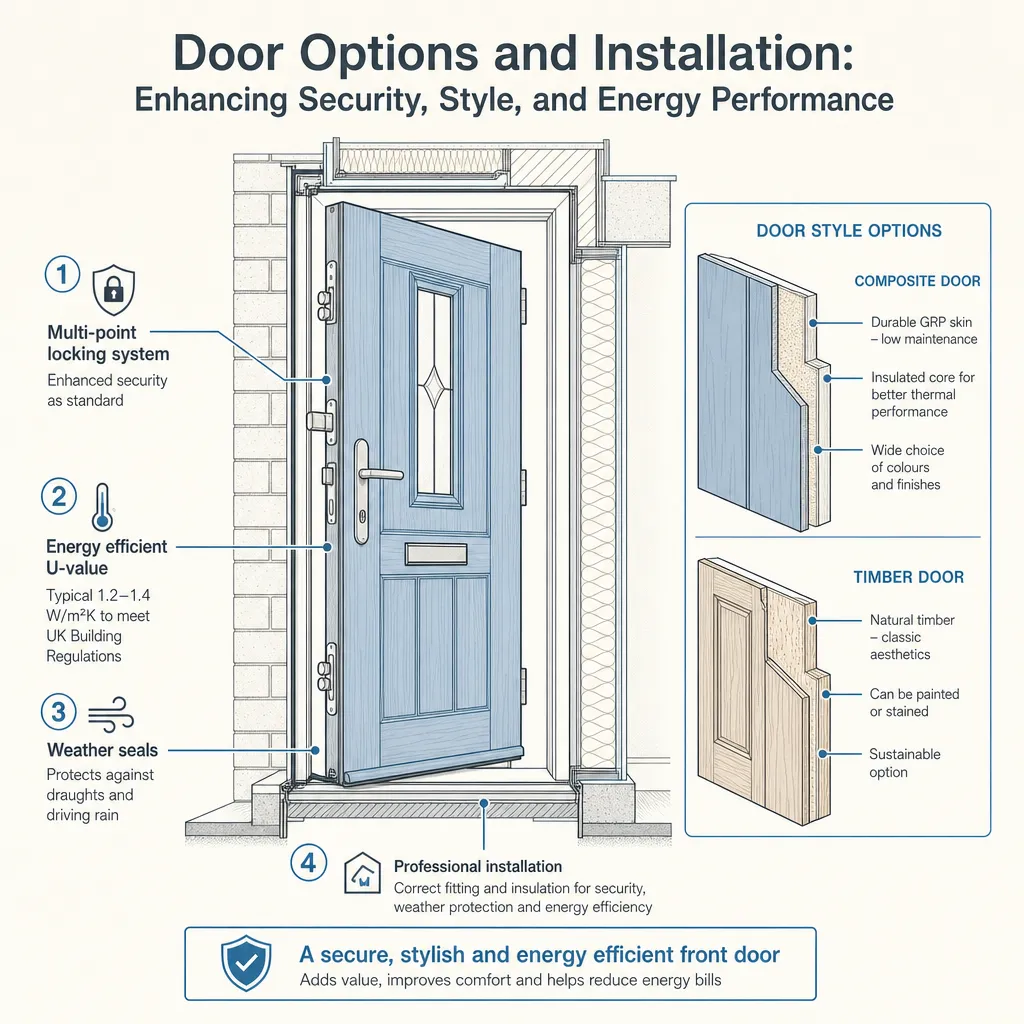
Door Options and Installation: Enhancing Security, Style, and Energy Performance
Choosing a new front, back, or side door is a practical decision with real consequences for your home's security, heat retention, and appearance. For many UK homeowners, a door replacement coincides with a broader project — a kitchen extension, loft conversion, or energy retrofit — where specifying the right door early avoids costly retrofitting later. Getting the combination of material, security rating, and thermal specification right from the outset saves time and ensures compliance with Building Regulations.
Key points
- External door replacements in England and Wales must comply with Building Regulations Part L — the minimum whole-door U-value for a replacement external door is 1.4 W/m²K.
- Composite doors typically offer the best combination of thermal performance, security, and low maintenance for standard UK residential use, with quality products achieving U-values of 0.8–1.2 W/m²K.
- Security-rated doorsets should carry PAS 24:2022 accreditation — the standard tests the whole assembly (frame, glazing, locks, and hinges), not just the lock cylinder.
- Building Regulations Part Q requires PAS 24-compliant doorsets in new dwellings and material changes of use in England.
- Listed buildings and properties in conservation areas may require Listed Building Consent or prior approval before replacing any external door — check with your local planning authority before ordering.
Which door material should you choose?
The material of your door significantly affects security, thermal efficiency, maintenance requirements, and aesthetics. The four main external door materials in UK homes are composite, timber, uPVC, and aluminium.
Material | Best for | Not ideal for | Typical U-value | Security potential |
|---|---|---|---|---|
Composite | Low maintenance, good thermal performance, wide style range | Period properties where an authentic timber appearance is essential | 0.8–1.2 W/m²K | High — most reach PAS 24:2022 as standard |
Timber | Period properties, listed buildings, bespoke joinery | High-humidity locations without a maintenance commitment | 1.2–2.0 W/m²K (insulated core improves this significantly) | Good with quality multi-point locking hardware |
uPVC | Budget-conscious replacements on standard residential properties | Contemporary or architectural aesthetics | 1.2–1.8 W/m²K | Good — multi-point locking is standard |
Aluminium | Contemporary homes, slim profiles, large glazed panels | Budget constraints — typically more expensive than uPVC | 1.0–1.6 W/m²K (thermally broken frame required) | Good with quality hardware |
Indicative UK performance figures, last reviewed 2026-05-19. U-values depend on door construction, core insulation, and glazing specification.
Security: what to look for
A door's security performance depends on more than the lock. The whole assembly — frame, hardware, hinges, and any glazing — needs to work together to resist attack.
Key security standards
- PAS 24:2022 — Enhanced security performance for doorsets. Tests simulate attack attempts on the full door assembly and are required by Part Q of Building Regulations in new dwellings in England.
- Secured by Design — a police-backed initiative; products carrying the SBD logo have met PAS 24 or equivalent and passed independent third-party testing.
- TS 007:2014 3-star cylinders — the highest rating under the Diamond Secure standard; recommended by Sold Secure and frequently cited by home insurers as a minimum requirement.
Checklist: what to check before buying a new door
- Does the doorset carry PAS 24:2022 or Secured by Design accreditation?
- Is the lock cylinder rated TS 007:2014 (3-star), or at minimum 1-star with anti-snap features?
- Does the cylinder have anti-snap, anti-pick, and anti-drill protection?
- Does the door have multi-point locking engaging at three or more points in the frame?
- Are hinges security-rated or door-side concealed?
- If glazed, is the glazing laminated or otherwise attack-resistant?
- Does the frame specification include reinforced locking point reinforcement?
Energy performance: meeting Building Regulations Part L
When you replace an external door in England or Wales, Building Regulations Part L applies. The requirement is that the replacement door achieves a whole-door U-value no worse than 1.4 W/m²K.
A FENSA-registered or CERTASS-registered installer can self-certify that the installation meets Part L, issuing a compliance certificate on completion. This documentation is important for the future sale of the property — conveyancers will ask for it.
If you are undertaking a deep retrofit (for example, targeting PAS 2035 compliance or EnerPHit standard), aim for a door U-value of 0.8 W/m²K or better — achievable with high-performance composite or triple-glazed timber or aluminium doorsets.
Style and planning considerations
Matching door style to your property era
- Victorian and Edwardian terraces — four- or six-panel doors, often with a fan light above; timber or high-quality composite with a convincing timber effect. Check for conservation area designation before ordering.
- 1930s semi-detached and detached — timber-effect composite with a simple glazed panel; warm tones complement inter-war architectural details.
- Post-war and 1960s–1980s properties — uPVC has dominated since the 1980s but is now frequently upgraded to composite for better thermal and security performance.
- Contemporary new-builds — flush composite or aluminium suits clean architectural lines; full-height glazed side panels increasingly common in this sector.
Planning permission
Replacing an external door is usually permitted development in England — planning permission is not normally required, provided the property is not in a conservation area, AONB, national park, or World Heritage Site, and is not listed. In conservation areas, some replacements may require prior notification or full planning permission. Always confirm with your local planning authority before proceeding, particularly if matching original materials is a condition of the designation.
Which door type should you choose?
- Choose composite if you want low maintenance, strong security, and good thermal performance for most standard UK residential properties.
- Choose timber if your property is listed, in a conservation area, or you want genuine period character — but allow for an ongoing maintenance programme.
- Choose uPVC if budget is the primary constraint and a contemporary look is not a priority.
- Choose aluminium if you have a contemporary property, require a slim-profile glazed door, or want a large glazed side panel alongside the door.
- Ask your local planning authority if you are unsure whether your property is listed, in a conservation area, or subject to other designations.
- Use a FENSA or CERTASS registered installer to confirm Part L compliance and receive a self-certification certificate on completion.
When to get professional help
Most external door replacements are straightforward when carried out by a competent specialist installer. Engage a qualified professional — and potentially seek additional advice — if:
- The installation involves widening or creating a new structural opening, which requires building regulations approval and likely a structural engineer's specification.
- The property is listed or in a conservation area, where incorrect materials or methods could breach planning conditions.
- The door is fire-rated (for example, on an escape route or between an integral garage and living space) — fire door installation has specific competency requirements.
- You need a Part L compliance certificate — only a FENSA or CERTASS registered installer can self-certify.
How Housey can help
Housey connects you with vetted window and door installers who can advise on door specifications, provide competitive quotes, and — where registered with FENSA or CERTASS — self-certify Building Regulations compliance on completion.
Frequently asked questions
Do I need building regulations approval to replace my front door?
In most cases, replacing an external door requires compliance with Building Regulations Part L (thermal performance) but does not require a formal building control application if the installer is FENSA or CERTASS registered — they can self-certify. If the installation involves structural alterations to the opening, a full building regulations application will be needed.
What does PAS 24 mean for a front door?
PAS 24:2022 is the British Standard for enhanced security performance of door assemblies. It requires the whole door unit — frame, glazing, locks, and hinges — to resist a simulated attack. Most reputable composite door manufacturers supply PAS 24-compliant doorsets as standard, and it is required by Part Q of Building Regulations in new dwellings.
What is a good U-value for a front door?
Building Regulations in England and Wales require replacement external doors to achieve a maximum whole-door U-value of 1.4 W/m²K. A quality composite door typically achieves 0.8–1.2 W/m²K. For deep retrofit projects targeting PAS 2035 compliance or EnerPHit standard, aim for 0.8 W/m²K or lower.
Will I receive a FENSA certificate when my door is replaced?
If your door includes glazing and is installed by a FENSA-registered company, you should receive a FENSA certificate confirming compliance with Building Regulations. CERTASS-registered installers issue an equivalent document. Keep this certificate carefully — conveyancers will ask for it when you sell the property.
Sources and further reading
- Building Regulations Approved Document L: Conservation of fuel and power — GOV.UK
- Building Regulations Approved Document Q: Security — GOV.UK
- Secured by Design — Police-backed security accreditation scheme for doors and windows
- FENSA scheme information — Government-authorised self-certification scheme for replacement windows and doors
Useful next reads
 Improvement & Build
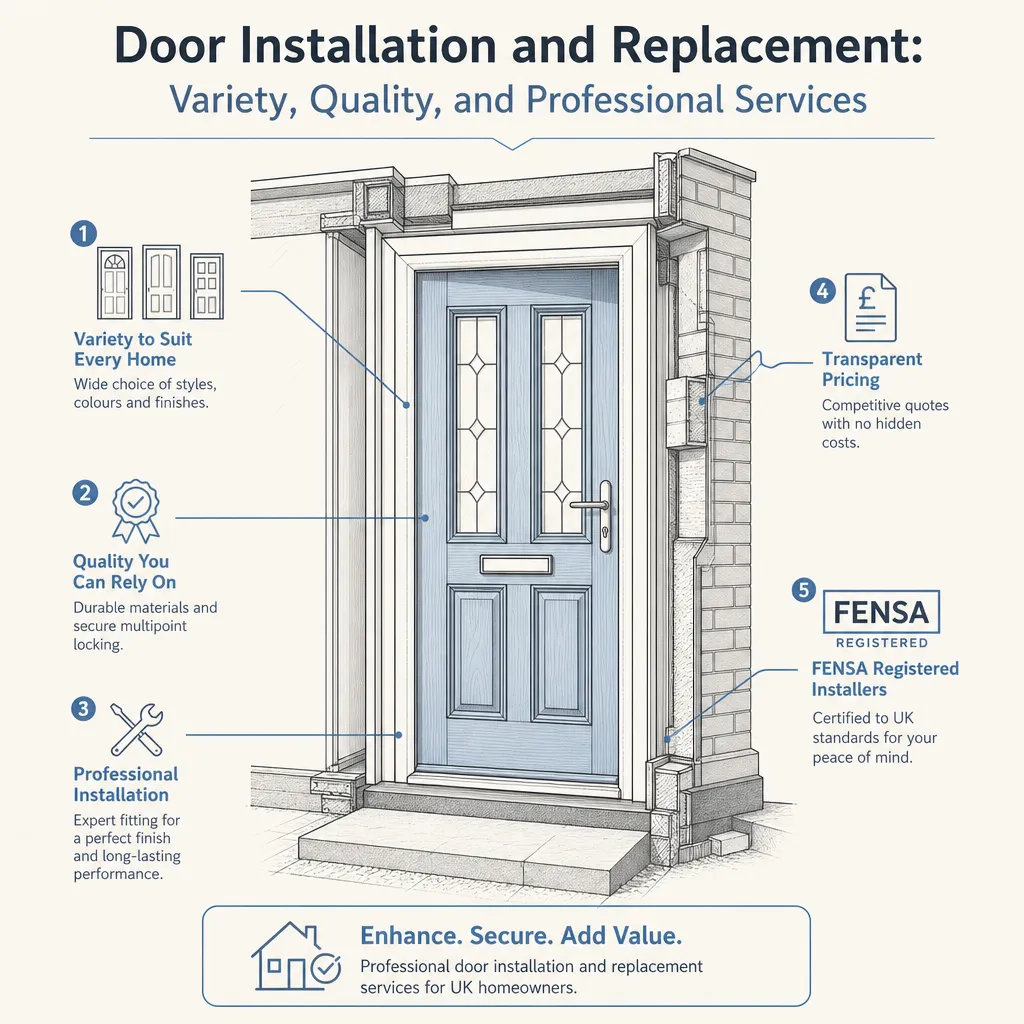
Door Installation and Replacement: Variety, Quality, and Professional Services
Door installation in UK homes ranges from straightforward interior hanging, which requires few regulations, to external replacements subject to Building Regulations Part L.
 Improvement & Build
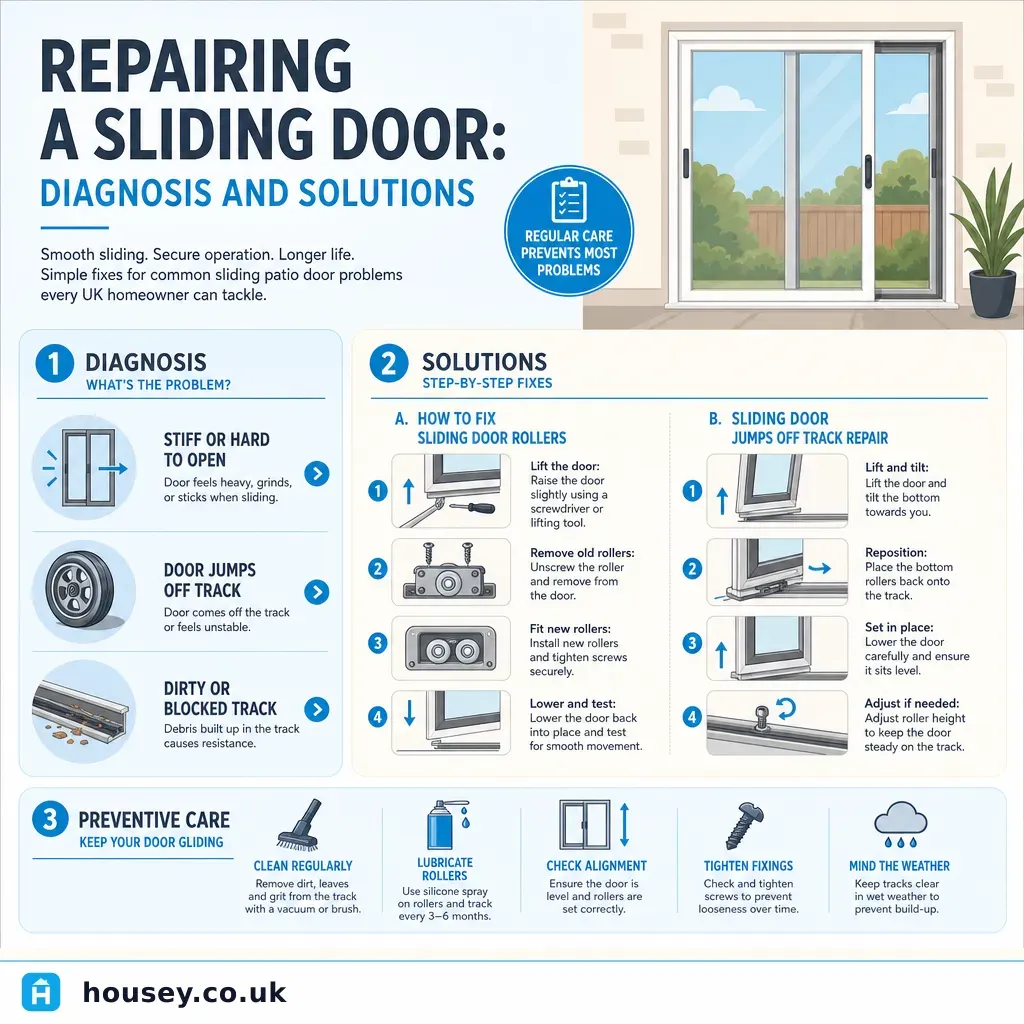
Repairing a Sliding Door: Diagnosis and Solutions
Most sliding door problems — stiffness, jumping off track, or draughts — are caused by dirty tracks, worn rollers, or misaligned guides.
 Improvement & Build
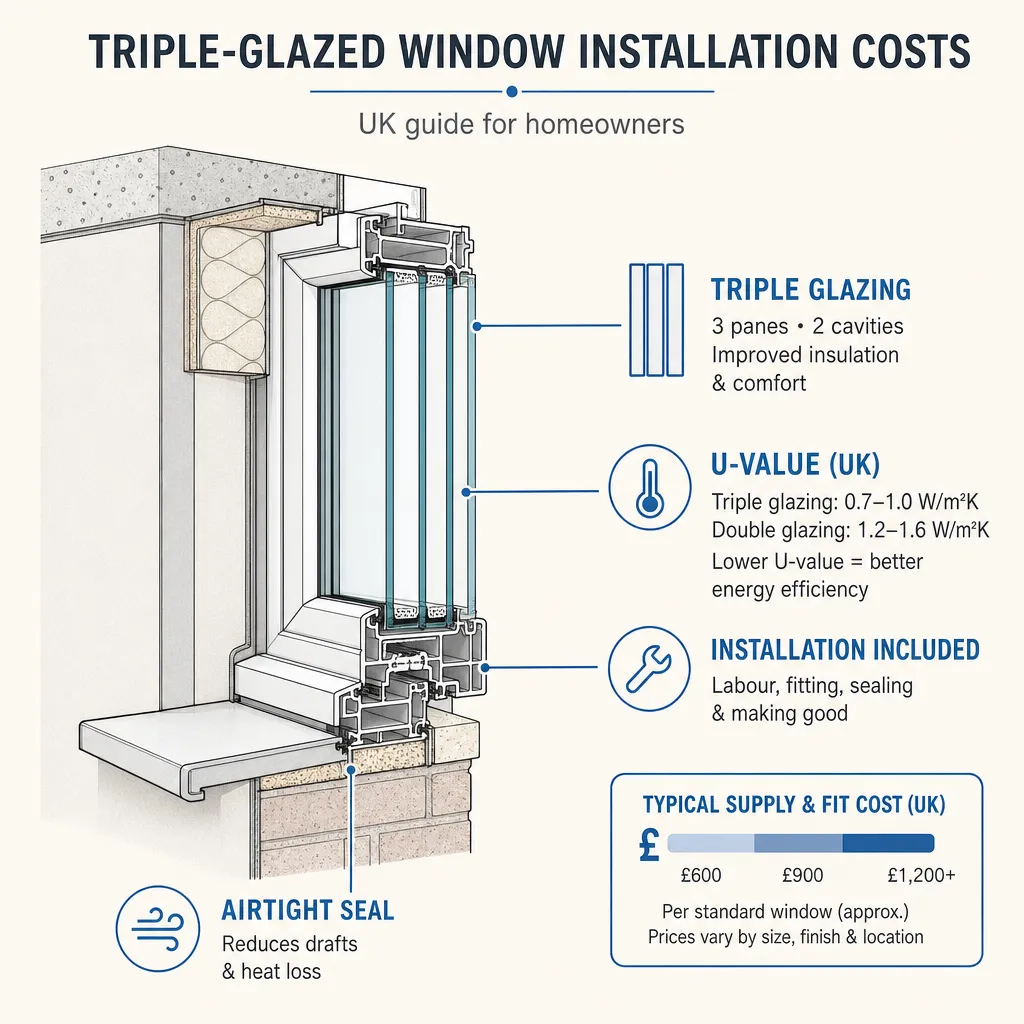
Triple-Glazed Window Installation Costs
Triple-glazed window installation in the UK typically costs £800–£1,800 per window, depending on size, frame material, and glazing specification.
 Improvement & Build
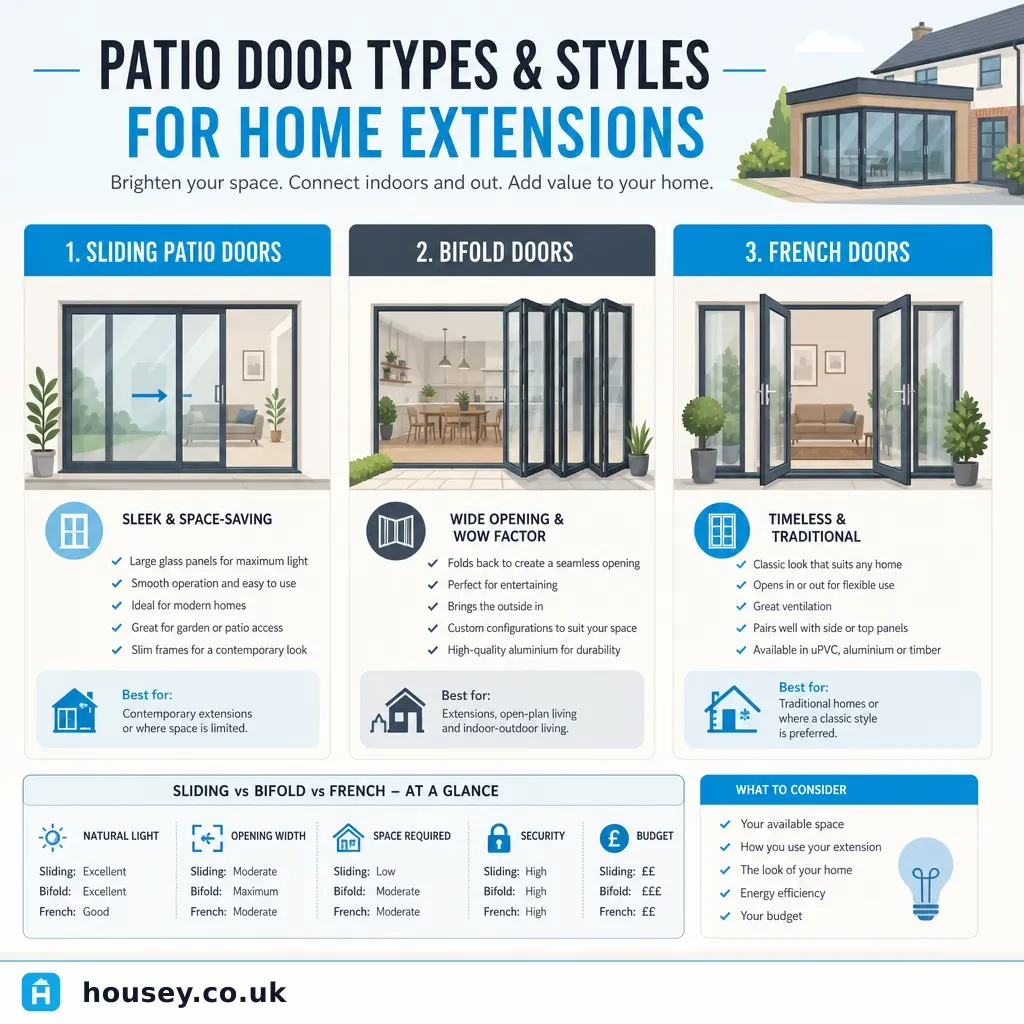
Patio Door Types and Styles for Home Extensions
For most UK home extensions, sliding doors suit openings up to 3.
 Improvement & Build
Guide to Replacing Timber Sash Windows with Authentic Restoration
Restoring a timber sash window typically costs £150–£400 per window; full replacement costs £800–£2,500.