Retractable Door Latches: Function and Purpose Explained
By Housey · Last reviewed 11th of May 2026
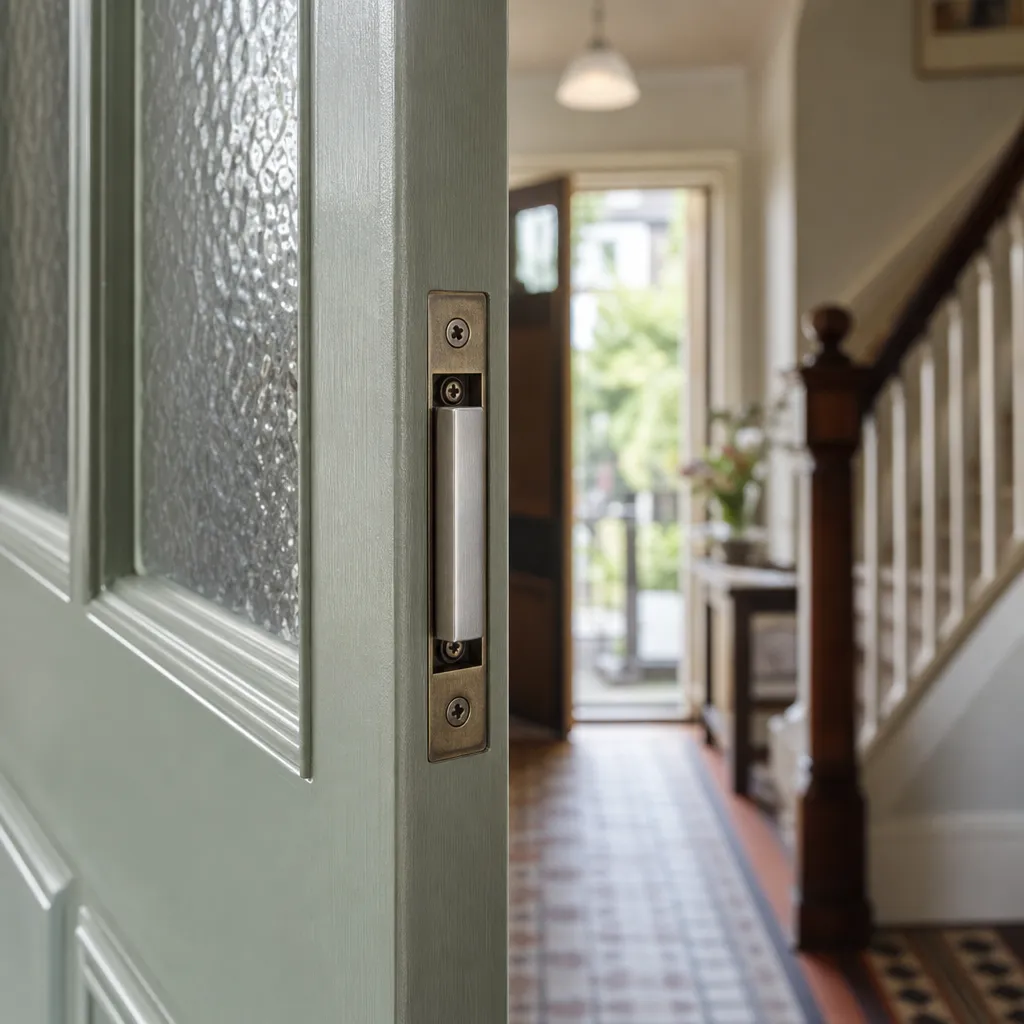
Retractable Door Latches: Function and Purpose Explained
The question of how a door latch works typically surfaces when one fails — a bolt that won't spring back, a door that won't latch at all, or a handle that takes too much force to turn. Whether you're replacing a worn-out latch on an interior door in a 1930s semi or specifying hardware for a new build, understanding how retractable latches function helps you choose the right type, get the sizing correct, and spot a fault before it becomes a security or convenience problem.
Key points
- Standard tubular spring latches are available in 64 mm and 76 mm case lengths; backsets (spindle-to-door-edge distance) are standardised at 44 mm and 57 mm in UK door sets.
- The angled (bevelled) face of the bolt is compressed by the striker plate as the door closes; the internal spring returns it to the extended position once the bolt aligns with the keep opening.
- A deadlatch adds a small deadlocking plunger that, when depressed by the striker plate at full close, prevents the main bolt being pushed back — protecting against shimming attacks without a key.
- BS EN 12209 is the harmonised European standard for mechanical locks, latches, and locking plates, specifying minimum strength, durability, and operation-cycle performance.
- Roller-catch latches use a spring-loaded roller instead of a bolt and provide no security whatsoever; they are suitable only for cupboard and wardrobe doors where hold is the sole requirement.
How a retractable latch bolt works
A retractable door latch — most commonly the tubular or cylindrical spring latch — relies on three components working in sequence:
- The bolt: a shaped piece of hardened steel with an angled leading face and a square trailing face.
- The spring mechanism: a compression spring inside the latch case that keeps the bolt in the extended position by default.
- The keep (striker plate): a metal plate recessed into or surface-mounted on the door frame, with a hole or recess into which the bolt enters.
When the door swings closed, the angled face of the bolt contacts the lip of the striker plate and is pushed inward against the spring. As the door reaches the fully closed position, the bolt aligns with the hole in the keep and the spring pushes it forward, holding the door shut. Operating the lever handle rotates the spindle, which retracts the bolt to allow opening.
The direction of the bevel matters for door swing. Most latches are reversible — the bolt can be removed and flipped to suit left-hand or right-hand hung doors. Check before fitting.
Main types of retractable door latch
Type | How it retracts | Typical use | Security notes |
|---|---|---|---|
Tubular spring latch | Spring-loaded bolt retracts via handle or door contact | Interior doors, light exterior doors | Low — bolt can be shimmed without operating the handle |
Deadlatch (nightlatch) | Spring latch plus a deadlocking plunger | Front doors, Yale-style rim locks | Moderate — plunger blocks shimming when door is fully shut |
Roller catch | Spring-loaded roller compresses into a keep | Cabinet, wardrobe, and internal doors | None — no bolt, no lock |
Magnetic latch | Magnetic force holds the door; no moving bolt | Cabinet and wardrobe doors | None |
Rebated latch | Tubular latch with a stepped faceplate | Doors with a rebated (stepped) meeting edge | Same as tubular spring latch |
For external doors, a spring latch alone rarely provides adequate security. A multi-point locking system or a separate mortice deadlock is normally combined with it. UPVC and composite doors typically use multi-point locks that incorporate a retractable latch alongside hook bolts that engage the frame on key-turn.
Choosing the right latch size
Getting the latch size wrong is a common source of problems. Three measurements govern fit:
Backset: The distance from the edge of the door face to the centre of the spindle hole. Standard UK sizes are 44 mm and 57 mm. Measure the existing latch before ordering — the two are not interchangeable.
Case length: 64 mm suits most internal doors; 76 mm is used on heavier doors or where a longer bolt throw is specified.
Faceplate width: 19 mm (standard) or 25 mm (wide). The faceplate must sit flush within the door-edge mortice without proud edges.
If replacing an existing latch, note the markings on the faceplate or take the old unit to a hardware merchant — many branded latches state the backset and case length on the body.
Which professional do you need?
Most latch replacements are a straightforward DIY task requiring only a screwdriver and, occasionally, a chisel to adjust the mortice. Some situations require a tradesperson:
Situation | Appropriate professional |
|---|---|
Replacing a latch on an FD30 or FD60 fire door in a rented property | Qualified joiner — incorrect hardware voids the door's fire resistance rating |
Latch failure on an access-controlled door in a communal entrance | Locksmith or access-control specialist |
Multi-point locking system failure on a UPVC or composite door | UPVC specialist or locksmith |
Front door with damaged or split frame affecting bolt engagement | Carpenter or joiner |
Red flags that suggest a deeper problem
- Bolt retracts but won't stay open: the return spring has failed — replace the latch unit rather than forcing it.
- Door rattles despite the latch engaging: the keep is worn or the door has dropped on its hinges; check hinge screws before replacing the latch.
- Bolt engages but the door won't close flush: the keep needs repositioning, or the door has warped; a joiner can advise whether the door or the frame is the cause.
- Handle is stiff or jams during operation: the spindle may be bent or the latch follower worn; repeated forcing will accelerate the damage.
- Bolt does not retract when the handle is turned: the spring-follower connection has failed — replace the latch rather than continuing to operate it.
When to get professional help
Most tubular latch replacements are within DIY capability for any reasonably confident homeowner. Call a locksmith or joiner if:
- The door is fire-rated (FD30 or FD60) — an incorrect latch choice or poor fitting can void the door's fire resistance rating and create a compliance issue in rented property.
- You cannot identify the correct replacement for a multi-point locking system.
- The door frame is damaged and the keep cannot be realigned correctly.
- The property is tenanted — landlords have obligations around door security and fire door maintenance under housing health and safety regulations.
How Housey can help
If a failing latch is part of a wider door or joinery problem — or if you need a qualified joiner or locksmith for fire door work or multi-point locking system replacement — Housey can connect you with vetted tradespeople across the UK who can assess, advise, and quote.
Frequently asked questions
What is the difference between a door latch and a door lock?
A latch holds a door closed using a spring-loaded bolt operated by a handle; no key is needed. A lock adds a key-operated mechanism — either a separate deadbolt or a key-turn function built into the latch body. Most external doors in UK homes use both: a latch for everyday convenience and a mortice deadlock or multi-point lock for security.
Can I fit any latch to any door?
Not directly. The latch backset, case length, and faceplate dimensions must match the existing mortice in the door edge. Fire doors require tested, CE-marked hardware that is compatible with the specific door leaf and frame assembly. Always confirm the backset — typically 44 mm or 57 mm in UK doors — before ordering a replacement.
How long should a door latch last?
Latches tested to BS EN 12209 are rated for a minimum of 200,000 operating cycles. In a busy household, a front door latch may reach that figure in 5–10 years; interior door latches typically last 15–20 years or more. Stiff operation, slow bolt return, or audible grinding are early signs of wear.
Why does my door latch click but the door swings open?
The bolt is likely not entering the keep deeply enough to hold the door closed. Common causes include a loose or shifted striker plate, a door that has dropped on its hinges, or a worn bolt with reduced projection. Checking and adjusting the hinge screws, or repositioning the keep slightly, usually resolves the problem without replacing the latch.
Sources and further reading
- BS EN 12209 — Mechanical locks, latches, and locking plates — BSI Group
- Fire door hardware guidance — Firesafe.org.uk
- Renting out a property: safety responsibilities — GOV.UK
Useful next reads
 Improvement & Build
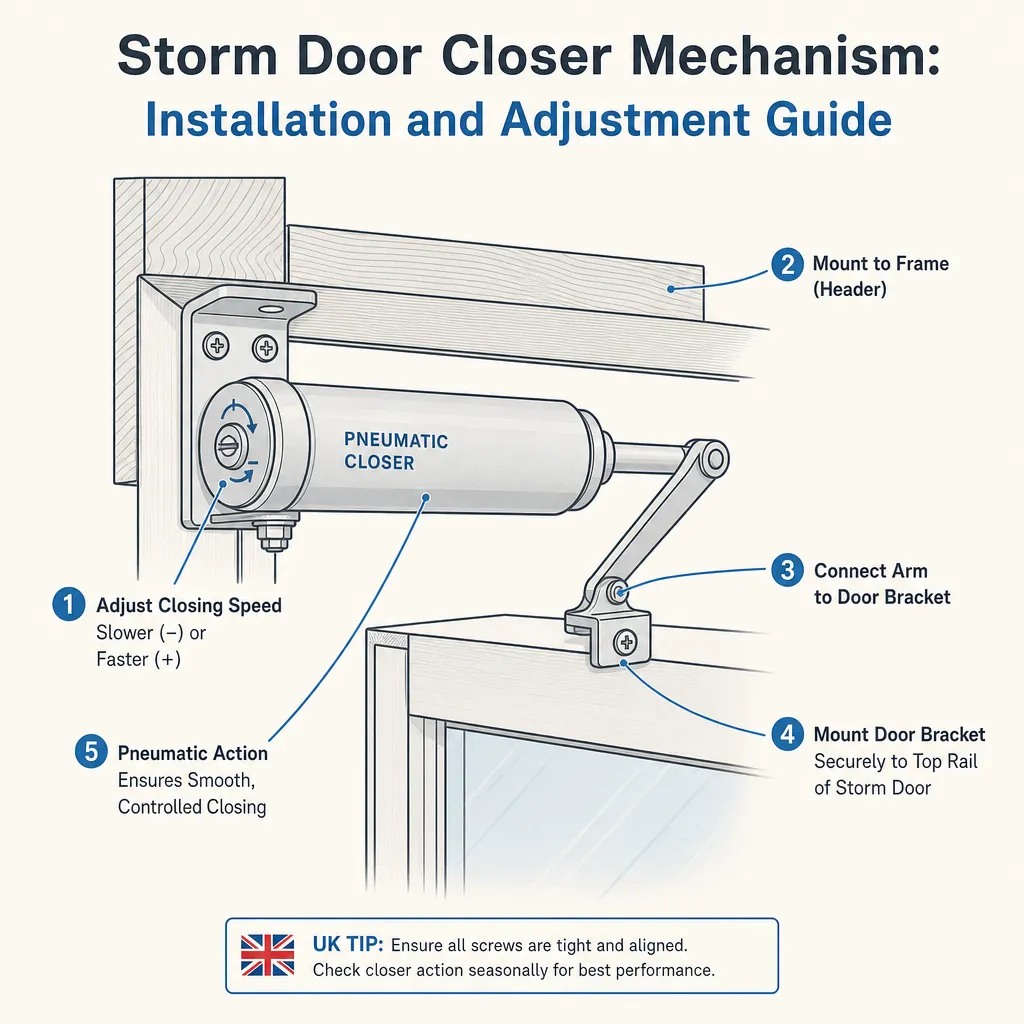
Storm Door Closer Mechanism: Installation and Adjustment Guide
Storm door closers are adjusted via a small screw at the end of the cylinder — clockwise slows the door, anticlockwise speeds it up.
 Improvement & Build
Who to Contact for Broken Door Handle Repair
For a broken door handle, a general handyperson can handle most internal timber door repairs, while a joiner or locksmith is better suited to external doors, particularly if the lock mechanism is affected.
 Improvement & Build
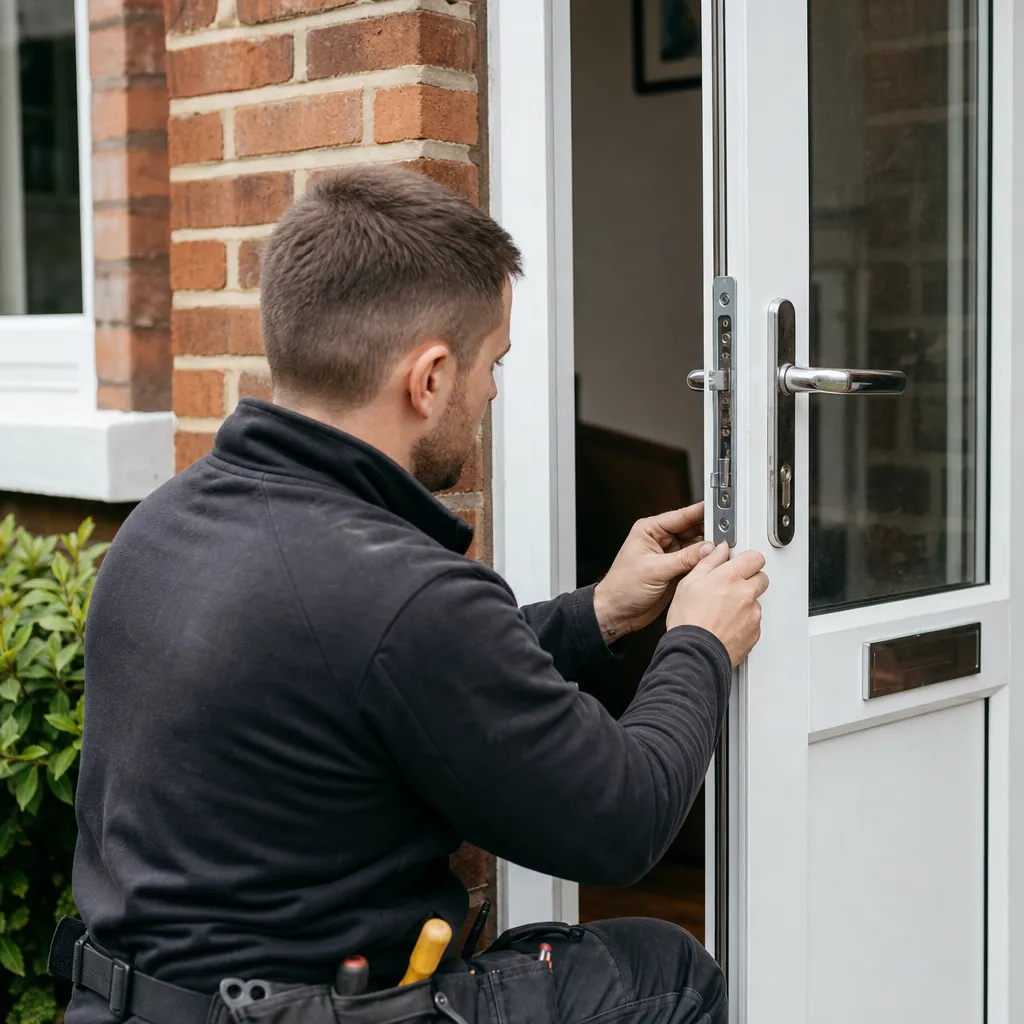
Repairing a Broken uPVC Door Lock: Replacement and Solutions
A broken uPVC door lock usually needs a new cylinder, a replacement multipoint mechanism, or both.
 Improvement & Build
Finding the Best Keyless Door Locks for Your Home
The right keyless door lock for a UK home depends on your door type, how many people need access, and your insurer's security requirements.
 Improvement & Build
Garage Door Hardware: Spring Types and Selection Guide
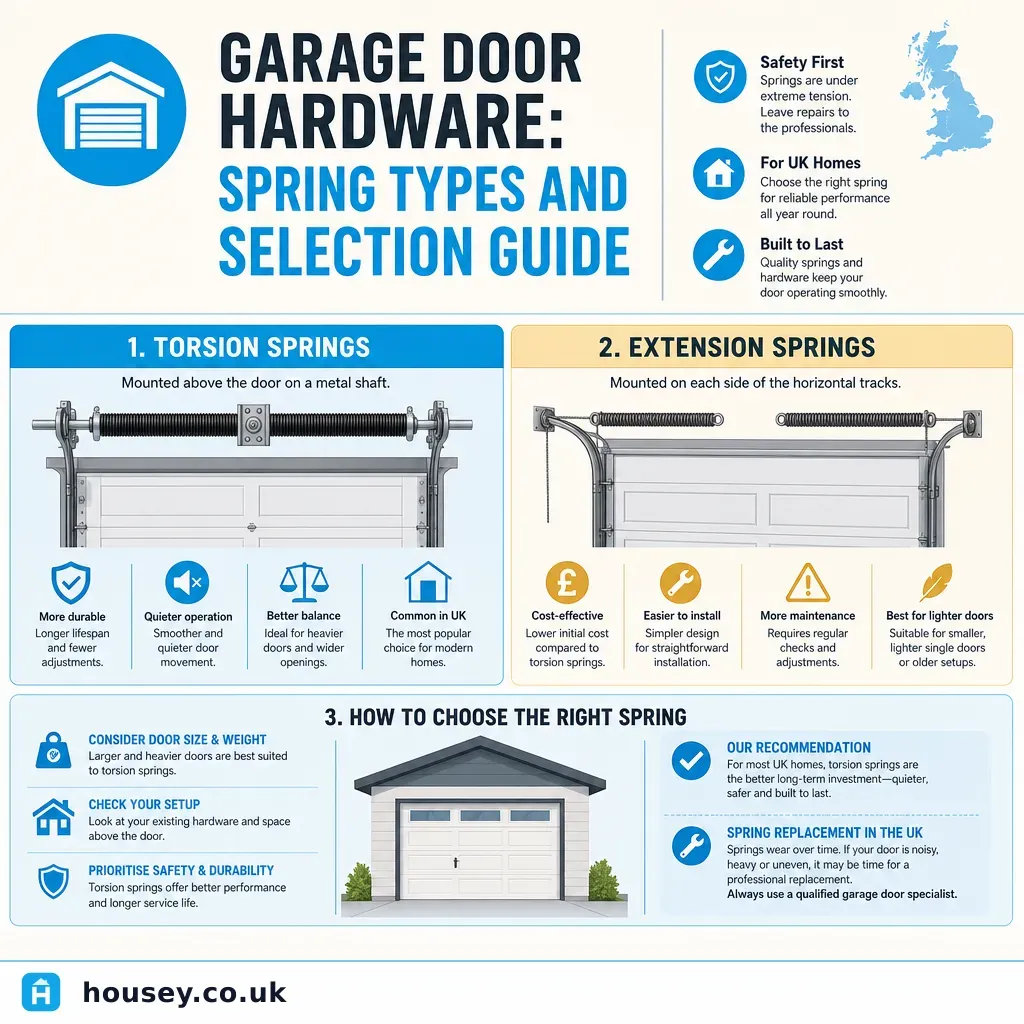
UK garage doors use either torsion springs, mounted on a shaft above the door opening, or extension springs running along the side tracks.