Finding the Right Property to Suit Your Needs and Lifestyle
By Housey · Last reviewed 7th of May 2026
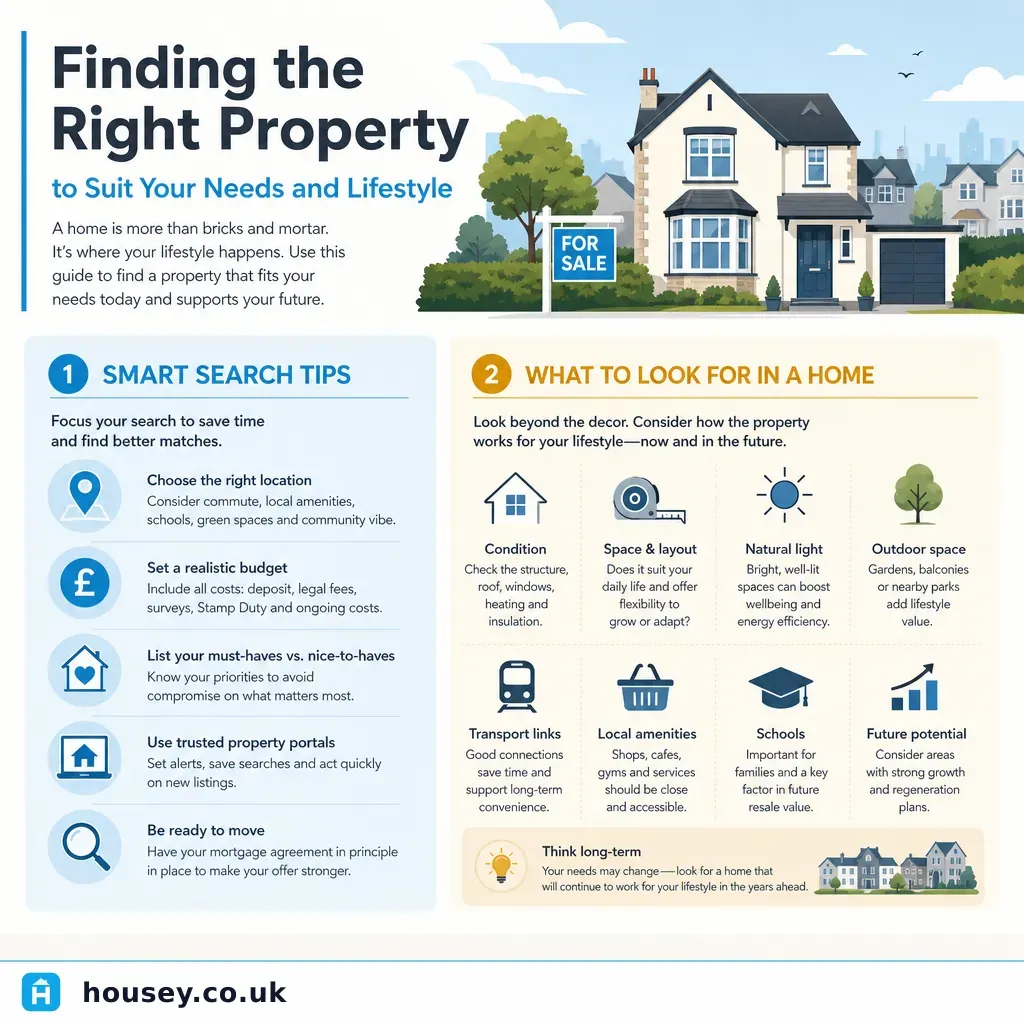
Finding the Right Property to Suit Your Needs and Lifestyle
Questions about what you actually need from a home tend to surface at the point of commitment — when an offer is imminent, a chain is forming, or a mortgage in principle is about to expire. Most buyers in England and Wales spend months browsing portals before refining what they genuinely require, and the gap between "would be nice" and "essential" can cost significant money if it is only resolved after exchange. Getting the brief right early makes every subsequent step — surveys, conveyancing, and negotiation — more targeted and less stressful.
Key points
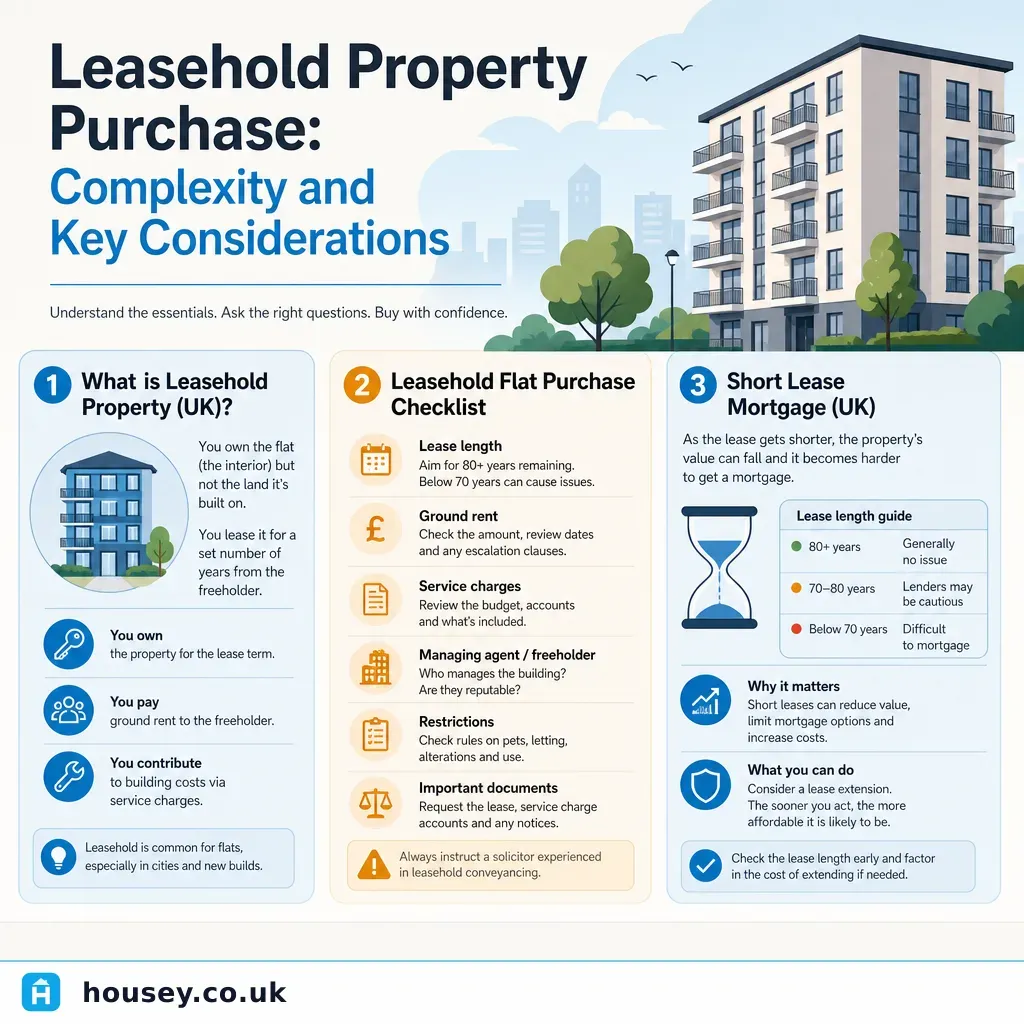
- Leasehold properties in England and Wales carry service charge and ground rent obligations; service charges for flats typically run between £1,000 and £2,500 per year, and a lease below 80 years remaining at purchase significantly raises the cost of extension and can restrict mortgage options.
- School catchment boundaries can change annually — verify with the local authority admissions team directly rather than relying on estate agent descriptions or Ofsted ratings alone.
- Energy Performance Certificate (EPC) ratings increasingly affect mortgage terms; some lenders' green mortgage products require a minimum band C, and the government has proposed that rented properties in England must reach band C from 2028.
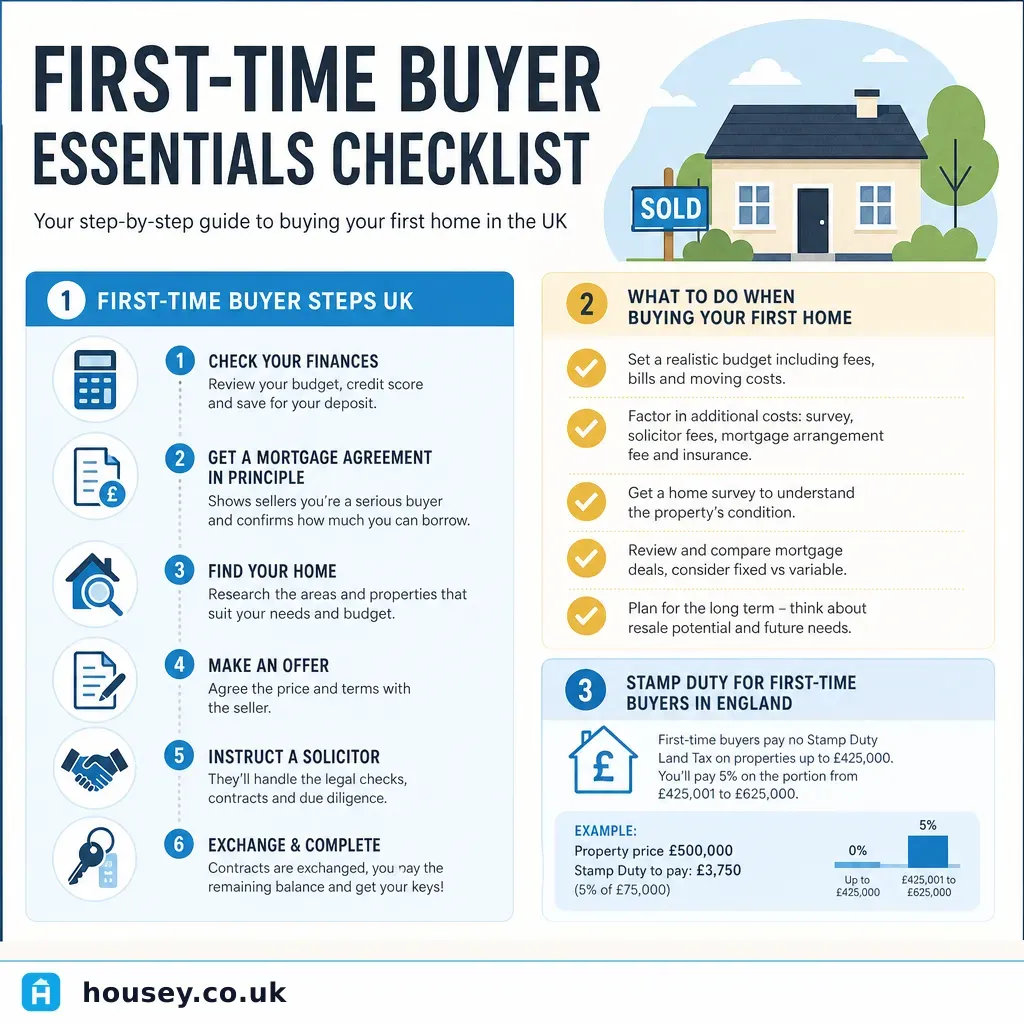
- Stamp Duty Land Tax (SDLT) in England applies above £250,000 for existing homeowners; first-time buyer relief applies on purchases up to £500,000 — different rates apply in Scotland (Land and Buildings Transaction Tax) and Wales (Land Transaction Tax).
- Listed buildings — Grade I, Grade II*, and Grade II in England — carry statutory restrictions on alterations, extensions, and many internal works under the Planning (Listed Buildings and Conservation Areas) Act 1990; carrying out unauthorised works is a criminal offence.
Separating needs, preferences, and deal-breakers
Most buyers approach a property search with a loosely combined list of requirements. A practical method is to divide everything into three categories before registering with agents or setting portal alerts:
Category | Examples | Why it matters |
|---|---|---|
Non-negotiable | Bedroom count, maximum commute time, ground-floor access, school catchment | These constrain every shortlist decision; pay no attention to properties that fail here |
Strong preference | Garden size, off-street parking, south-facing aspect, period features | Worth paying more for, but you may compromise under the right conditions |
Nice-to-have | Double garage, home office outbuilding, en-suite to every bedroom | Should not drive the purchase decision or override non-negotiables |
Working through this exercise honestly — ideally before viewing anything — helps prevent emotional decision-making when a photogenic but impractical property appears.
Which property type suits your situation?
Use this as a starting point. Rules vary by location, property condition, and individual circumstances; always take independent legal and survey advice before proceeding.
- Choose a freehold house if you want full ownership of the structure and land, plan to extend or alter the property, and prefer predictable outgoings with no service charges or ground rent.
- Choose a leasehold flat where location or price point makes it the practical option — but check the lease length (aim for 80+ years remaining), the last three years of service charge accounts, and whether any major works are planned or under way.
- Consider a share-of-freehold flat if you want leasehold convenience with more collective control over building management; joint freeholders can extend leases and manage maintenance decisions together.
- Consider a new-build if minimising early maintenance spend is a priority; verify the developer's structural warranty (typically NHBC Buildmark or similar), budget for snagging, and be aware that new-build properties sometimes carry a premium over nearby resale values.
- Ask a conveyancer or chartered surveyor before proceeding if the property is listed, has a short or unusual lease, sits in a conservation area, or shows visible signs of structural defects.
Location factors UK buyers often underweight
Flood risk: Check the Environment Agency's flood map for planning (England), or the equivalent tools from NatureScot (Scotland) or Natural Resources Wales. Properties in Flood Zone 3 may face higher home insurance premiums or difficulty obtaining cover at any price.
Transport and commute: Journey times shown on property portals are typically best-case, off-peak estimates. Drive, cycle, or take public transport at the time you would actually travel before committing.
Broadband and mobile connectivity: Ofcom's address-level coverage checker gives a realistic picture of available broadband technologies and indoor mobile signal. In rural areas and some older buildings, fibre availability and mobile signal strength can materially affect working-from-home viability and future resale value.
Local planning context: Search the local authority's planning portal for applications near the property. A pleasant open field behind the garden may have outline planning permission for residential development. Allocated housing sites in the local plan can also affect character and amenity over a five to ten-year horizon.
Viewing checklist
Use this checklist consistently across every viewing to build a comparable record.
Understanding tenure and property history before making an offer
Leasehold specifics: Ask for the lease length, current ground rent and any review mechanism, and the last three years of service charge accounts. A lease below 80 years remaining at the point of purchase triggers the marriage value calculation in England and Wales, which substantially increases the cost of a formal lease extension under the Leasehold Reform, Housing and Urban Development Act 1993. A specialist solicitor can advise on statutory rights.
Planning history: Most local authority planning portals are searchable by address and show all applications back to digitisation. Previous refusals, enforcement notices, or permitted development certificates all affect what you can and cannot do with the property after purchase.
Registered title: HM Land Registry title registers are publicly searchable at £3 per title. They confirm the registered owner, any charges such as mortgages, restrictive covenants, and easements — all of which pass to a buyer on completion.
When to get professional help
A solicitor or licensed conveyancer is required for every property purchase in England and Wales. Beyond conveyancing, consider the following:
- A RICS Level 2 Home Survey for most conventional properties in reasonable condition built after 1900.
- A RICS Level 3 Building Survey for older, larger, significantly altered, or visibly defective properties, or any property where you plan substantial works.
- A structural engineer if you see cracks wider than approximately 5mm, stepped cracking through brickwork, or bowing in walls — signs that a general survey may identify as a concern but not fully diagnose.
- A leasehold specialist solicitor if the remaining lease is under 90 years, the ground rent doubles at intervals, or the service charge accounts show large unexplained reserves or scheduled major works.
Red flags that should prompt specialist input before you proceed:
- Cracks wider than 5mm or stepped cracking running diagonally through brickwork or masonry.
- Persistent damp in multiple rooms, especially if accompanied by visible mould or tide marks at high level.
- A consumer unit (fuse box) that appears very old or contains no residual current devices (RCDs).
- Extensions, loft conversions, or outbuildings that appear to have no planning permission or building regulations completion certificate.
- A lease below 80 years with a ground rent that doubles at set intervals.
How Housey can help
Once you have identified a property and are preparing to make an offer, Housey can connect you with RICS-qualified surveyors for a valuation survey to confirm the property is worth what you are being asked to pay. If you are selling, professional property photography and floorplans can help your listing stand out and accurately represent the space to prospective buyers.
Frequently asked questions
Should I prioritise location or property size when buying in the UK?
Location is generally harder and more expensive to change than a property's internal configuration. A smaller home in a well-connected, good-catchment area often holds its value better than a larger one in a less desirable location. That said, if minimum bedroom count is a genuine non-negotiable — for a growing family, for instance — both criteria need to be met simultaneously rather than traded off.
What is the difference between freehold and leasehold in England and Wales?
Freehold means you own the property and the land it stands on outright, with no time limit and no ongoing lease obligations. Leasehold means you own the right to occupy for a defined term — common for flats. Leasehold properties carry service charges, ground rent, and management obligations. A lease below 80 years at purchase significantly increases the cost of extending it and can affect mortgage availability.
How do I check a school catchment area before buying?
Contact the admissions team at your local authority directly and ask for the current catchment map for the schools you are interested in. Catchment boundaries can change from one academic year to the next in response to demand and new housing. Estate agent descriptions and property portal data are not always current. The local authority's own admissions information, published annually, is the most reliable source.
What should I know before buying a listed building?
Listed buildings in England (Grade I, II*, and II) are subject to statutory controls under the Planning (Listed Buildings and Conservation Areas) Act 1990. Any works that affect the character of the building — including many internal alterations — require listed building consent from the local planning authority. Failing to obtain consent is a criminal offence and can affect insurance, remortgaging, and future sale. A specialist solicitor and RICS Level 3 survey are advisable before proceeding.
How does an EPC rating affect my purchase?
An Energy Performance Certificate rating affects running costs, mortgage terms, and — for buy-to-let purchasers — future lettability. Some lenders offer preferential rates on properties with a band C rating or above. The government has proposed that rental properties in England must meet band C from 2028. A low rating (D–G) may indicate a need for retrofit investment and should be factored into your offer and budget.
Sources and further reading
- Search for land and property information — HM Land Registry / GOV.UK
- Flood map for planning — Environment Agency
- Stamp Duty Land Tax: overview — HMRC / GOV.UK
- Planning (Listed Buildings and Conservation Areas) Act 1990 — legislation.gov.uk
- Leasehold Reform, Housing and Urban Development Act 1993 — legislation.gov.uk
- Ofcom Connected Nations coverage checker — Ofcom
Useful next reads
 Buying & Moving
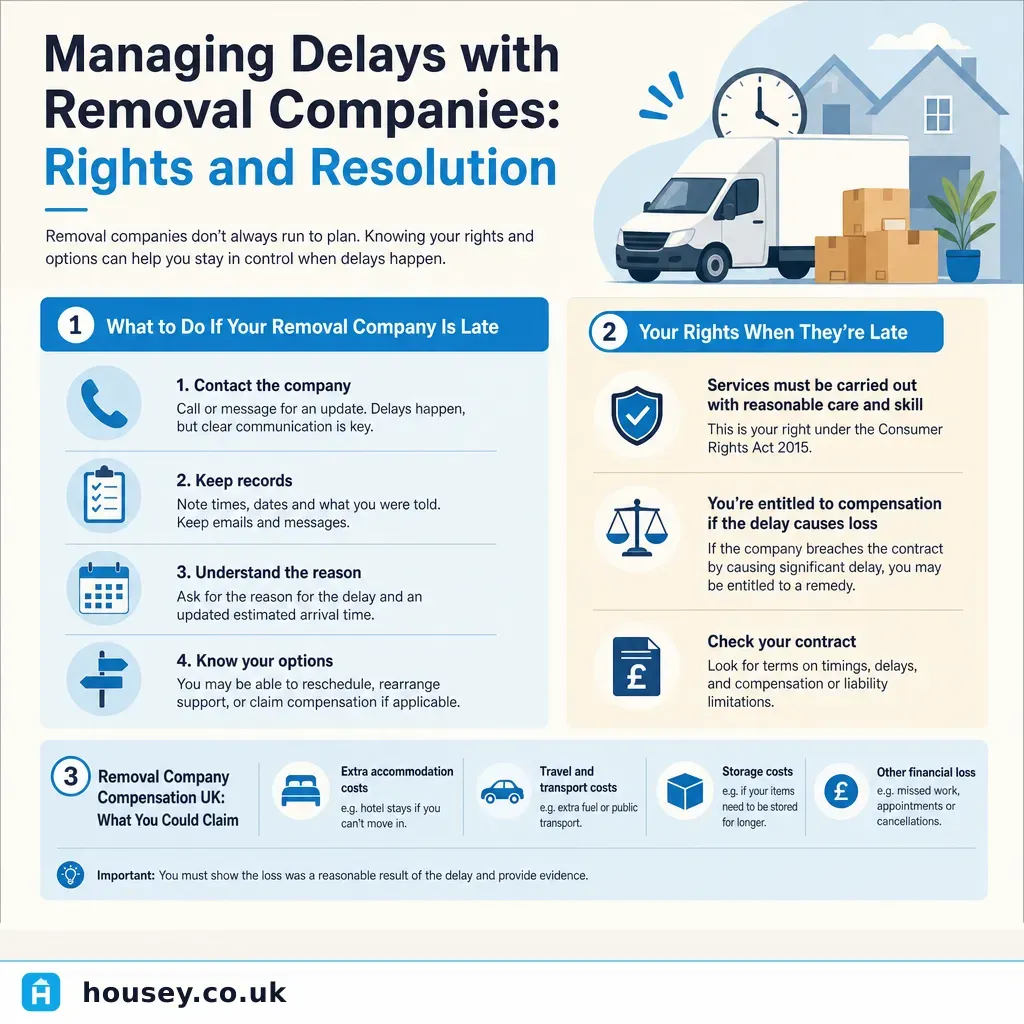
Managing Delays with Removal Companies: Rights and Resolution
If a removal company is late, your rights depend on your contract and whether the company is BAR-registered.
 Buying & Moving
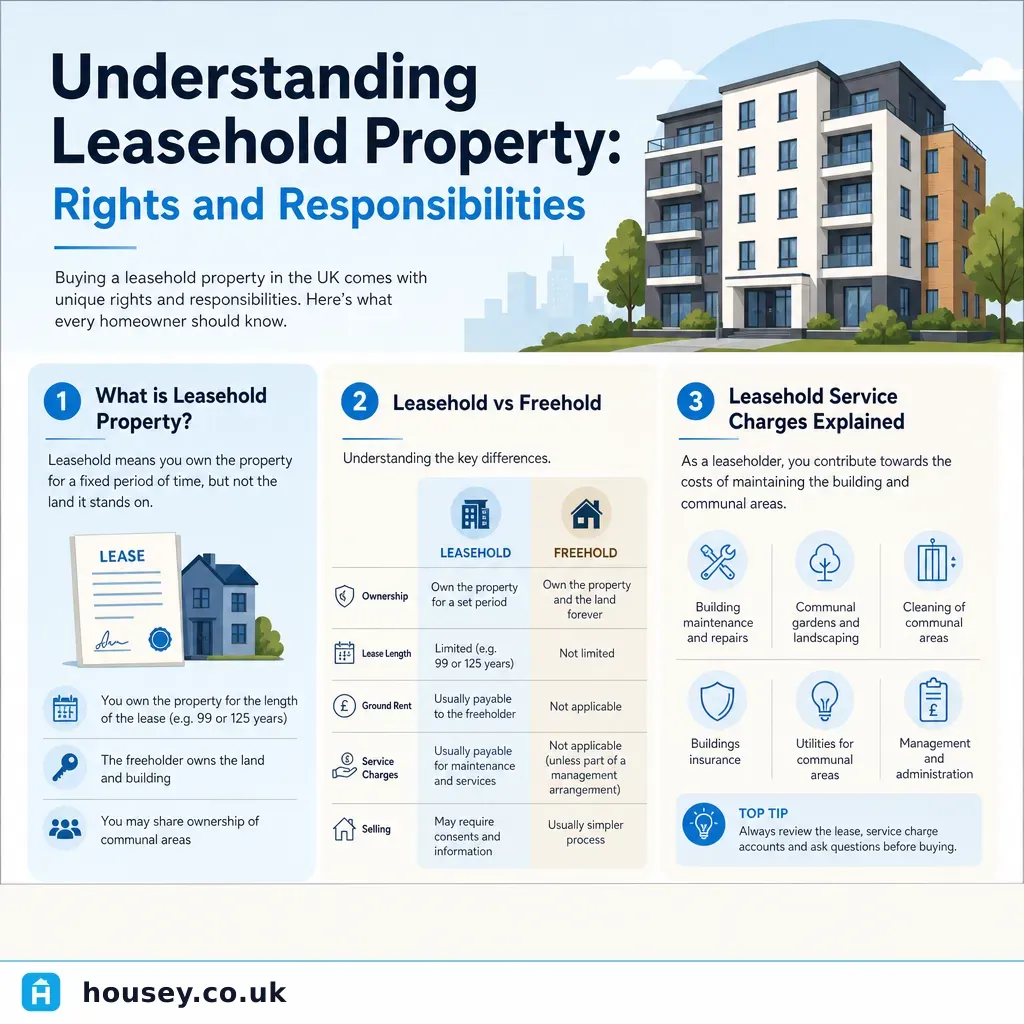
Understanding Leasehold Property: Rights and Responsibilities
Leasehold means you own a time-limited interest in a property while the freeholder owns the land and building.
 Buying & Moving
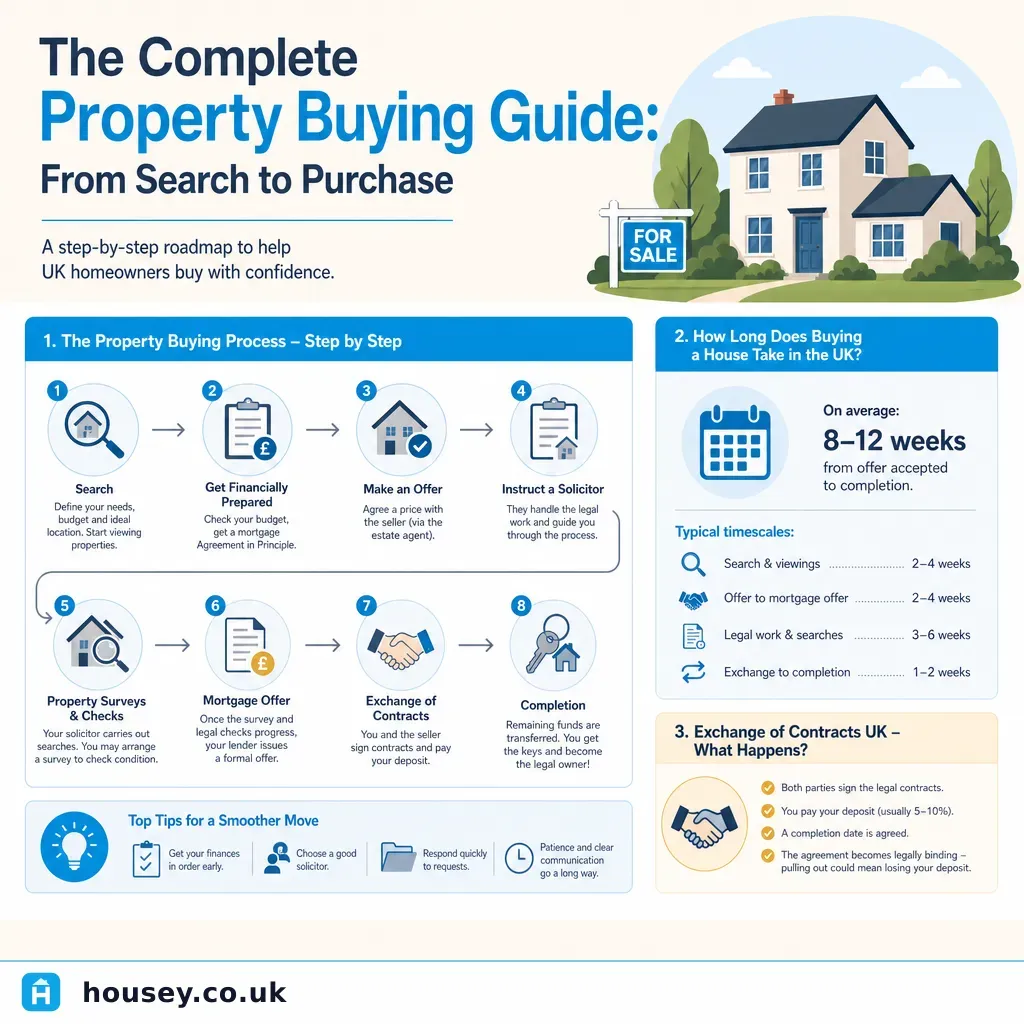
The Complete Property Buying Guide: From Search to Purchase
Buying a property in England and Wales typically takes 3–6 months from accepted offer to completion.
 Buying & Moving
Leasehold Property Purchase: Complexity and Key Considerations
Buying a leasehold property means purchasing the right to occupy for a fixed term rather than owning the land outright.
 Buying & Moving
First-Time Buyer Essentials Checklist
Buying your first home involves obtaining a mortgage in principle, making an offer, instructing a solicitor, arranging a survey, and exchanging contracts before completion.