Garage Door Hardware: Spring Types and Selection Guide
By Housey · Last reviewed 26th of May 2026
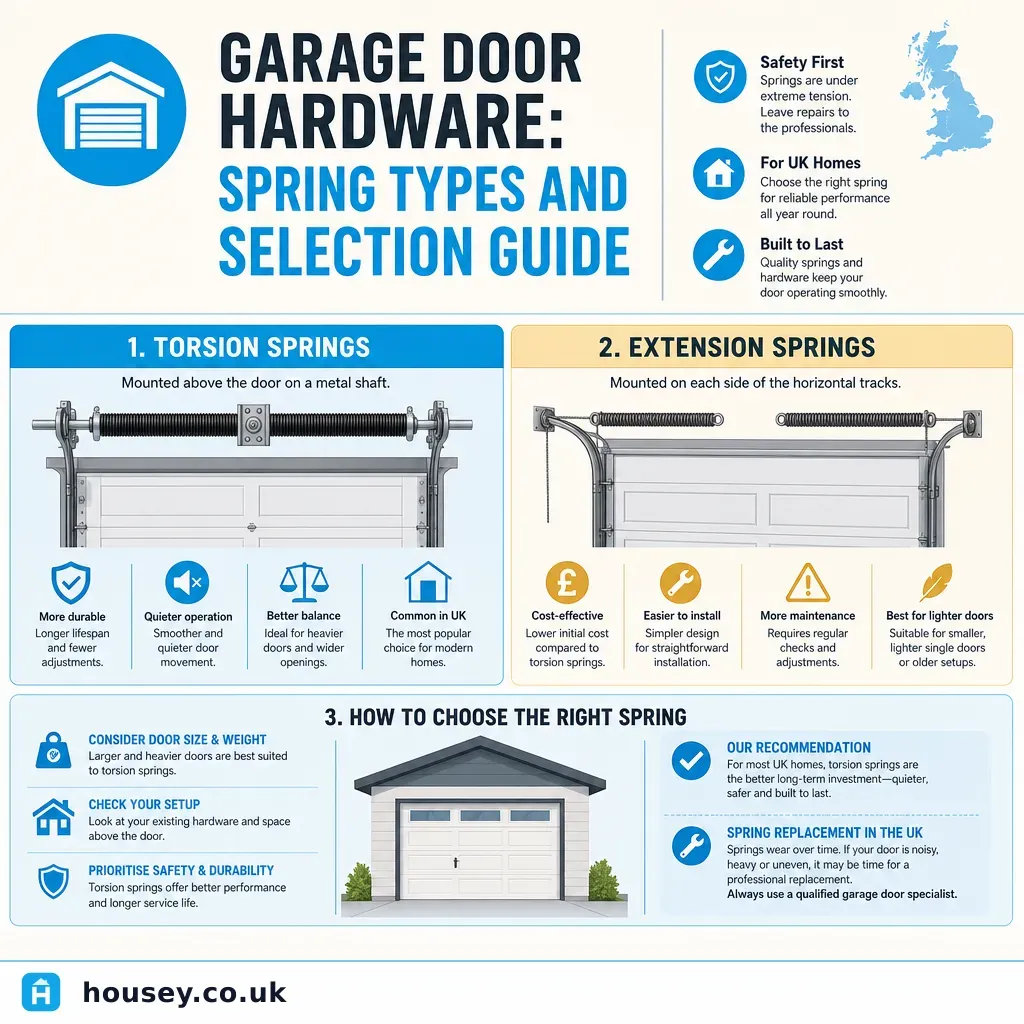
Garage Door Hardware: Spring Types and Selection Guide
A garage door spring failure often happens without warning — a loud crack, a door that will not open, or a cable that has slipped its drum. Spring systems are among the most mechanically stressed components in any domestic property, cycling thousands of times over their service life. Understanding which spring type your door uses, when replacement is due, and what to specify helps homeowners brief a competent contractor and avoid costly mismatches.
Key points
- Domestic garage doors in the UK use one of two spring systems: torsion springs (mounted on a shaft above the door opening) or extension springs (mounted along the horizontal side tracks).
- The Door and Hardware Federation (DHF) recommends that spring replacement is carried out by a trained, competent operative — torsion springs store significant mechanical energy and can cause serious injury if released without the correct technique and tools.
- Spring selection depends on door type (up-and-over, sectional, roller), door weight, and cycle-life rating — a spring rated for 10,000 cycles lasts roughly 7–14 years depending on daily use frequency.
- EN 13241, the harmonised standard for industrial and garage doors, informs the safety and performance requirements that compliant spring hardware must meet in the UK.
- When one spring in a paired system fails, both springs should usually be replaced simultaneously — the surviving spring has logged the same number of cycles and is typically close to end-of-life.
How garage door springs work
All counterbalanced garage doors rely on spring tension to offset the weight of the door, making it practical to lift manually or with an electric operator. Without functioning springs, a standard sectional or up-and-over door can weigh 40–80 kg — far beyond what an operator motor or a person can safely manage alone.
Two fundamentally different spring geometries achieve this counterbalance:
Torsion springs wind and unwind around a central steel shaft mounted horizontally above the door opening. As the door closes and descends, the spring winds up, storing energy; as the door opens, it unwinds and assists the lift. Force is applied evenly across the width of the door via cables attached to drums at each end of the shaft.
Extension springs stretch along the upper horizontal portion of each side track. They are connected to the door via pulleys and cables. As the door descends, the springs extend and store energy; as it opens, they contract and pull the door upward. Each spring acts independently on its side of the door.
Torsion vs extension springs: a comparison
Feature | Torsion spring | Extension spring |
|---|---|---|
Mounting position | Horizontal shaft above door opening | Along upper horizontal side tracks |
Typical door types | Sectional, modern up-and-over | Older canopy-lift, lighter up-and-over |
Typical cycle life | 10,000–25,000 cycles | 7,000–10,000 cycles |
Indicative replacement cost | £150–£350 installed | £80–£200 installed |
DIY risk | Very high — requires winding bars and training | High — safety cable must be retained during removal |
Balance control | Precise via winding adjustment | Dependent on matching spring-pair specification |
Required safety addition | N/A | Safety cables threaded through each spring (EN 13241 requirement) |
Indicative UK costs, last reviewed 2026-05-26. Costs vary by door size, weight, and contractor.
Choosing the right spring specification
Spring selection is governed by three variables that a competent installer will measure before quoting:
- Door weight — measured accurately with the spring fully detached. This determines the correct wire diameter, inside diameter, and spring length.
- Door height — affects the number of turns required in a torsion spring and the extension length needed in a stretch spring.
- Cycle-life rating — standard domestic springs are usually rated for 10,000 cycles. High-cycle upgrades (25,000 or more cycles) cost more upfront but reduce replacement frequency in high-use households. A household opening and closing the garage twice daily completes roughly 730 cycles per year.
Using an incorrectly specified spring causes premature wear, imbalanced door travel, cable drum damage, or — in the worst case — a door that drops unexpectedly when the spring fails.
Red flags: signs your springs need attention
- The door only opens part-way before stalling or reversing on the operator
- The automated operator is straining audibly or repeatedly tripping its overload protection
- Visible gaps, separation, or cracking in any coil of an extension spring
- Rust, corrosion, or discolouration on the torsion shaft, cable drums, or spring coils
- The door descends unevenly — one side drops noticeably faster than the other
- You are operating the door on the surviving spring after one has already broken
What to ask before accepting a quote
When briefing a garage door contractor:
- What spring type and specification do you propose, and how is it matched to the measured door weight?
- What is the cycle-life rating of the replacement springs?
- Will you replace both springs simultaneously, even if only one has failed?
- Are safety cables included in the quote for extension spring systems?
- What warranty covers parts and labour?
- Are you a member of the Door and Hardware Federation or a recognised trade body?
- Will you adjust cable tension and test door balance before signing off the job?
When to get professional help
Spring replacement on any counterbalanced door system involves components under significant stored mechanical energy. Releasing a torsion spring without the correct winding bars and technique can result in serious injury. Extension spring removal carries similar risks if the safety cable is not properly managed.
Do not attempt to adjust, wind, or replace garage door springs without formal training. Contact a qualified garage door contractor if:
- A spring has broken or a cable has snapped
- The door is sticking, dropping, or travelling unevenly
- The automated opener is working unusually hard or repeatedly faulting
- The door will not release in manual operation or the emergency cord is stuck
How Housey can help
If your garage door spring system has failed or you are upgrading as part of a wider project, Housey can connect you with local contractors. Our garage conversion specialists can also advise on full garage upgrade and conversion works where the door system forms part of a larger renovation or access redesign.
Frequently asked questions
How long do garage door springs last in UK homes?
Standard domestic garage door springs are rated for approximately 10,000 cycles. With average use of two open/close cycles per day, that equates to roughly 13–14 years. Households with higher daily use may find springs last 7–10 years. High-cycle upgrade springs rated to 25,000 or more cycles are available at a higher upfront cost.
Can I replace a garage door spring myself?
This is strongly discouraged for torsion springs, which require specialist winding tools and training to replace safely. Extension springs carry similar risks if the safety cable is not properly managed during removal. The Door and Hardware Federation recommends use of a trained, competent operative for all spring replacement work.
Why has my garage door spring broken?
The most common causes are metal fatigue at the end of cycle life, corrosion from moisture or road salt exposure, temperature cycling in unheated garages, and incorrect spring specification from a previous replacement. Periodic lubrication of spring coils with a silicone or lithium-based spray can slow corrosion-related wear.
Do I need to replace both springs at the same time?
Usually yes. Paired spring systems wear at the same rate — replacing only the broken spring leaves the surviving spring close to end-of-life, and a second failure often follows within months. Replacing both at once reduces call-out costs and ensures matched spring performance across the door.
Sources and further reading
- EN 13241:2003+A2:2016 — Industrial, commercial and garage doors — BSI
- Door and Hardware Federation — garage door guidance — Door and Hardware Federation
- Work equipment and machinery safety — Health and Safety Executive
Useful next reads
 Improvement & Build
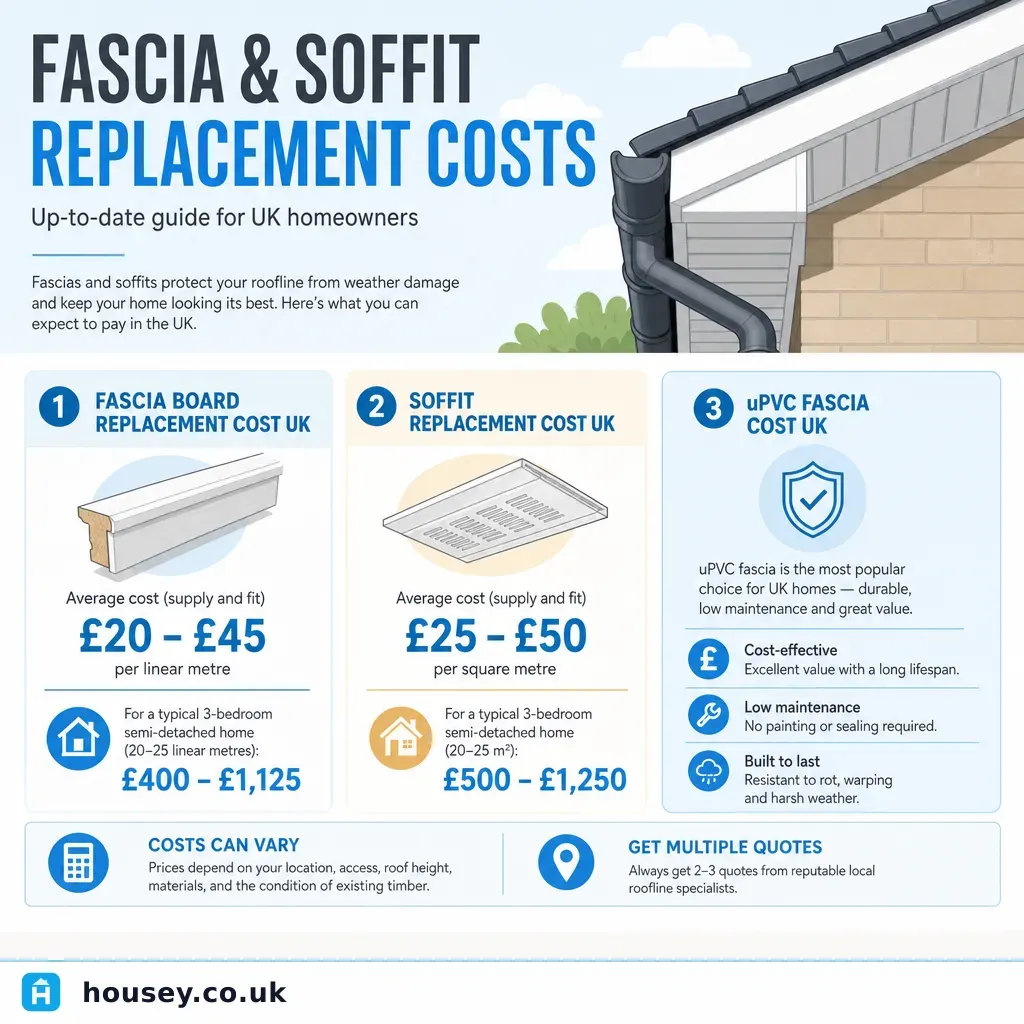
Fascia and Soffit Replacement Costs
Fascia and soffit replacement for a semi-detached house in the UK typically costs £1,800–£4,500 for uPVC boards and new guttering.
 Improvement & Build
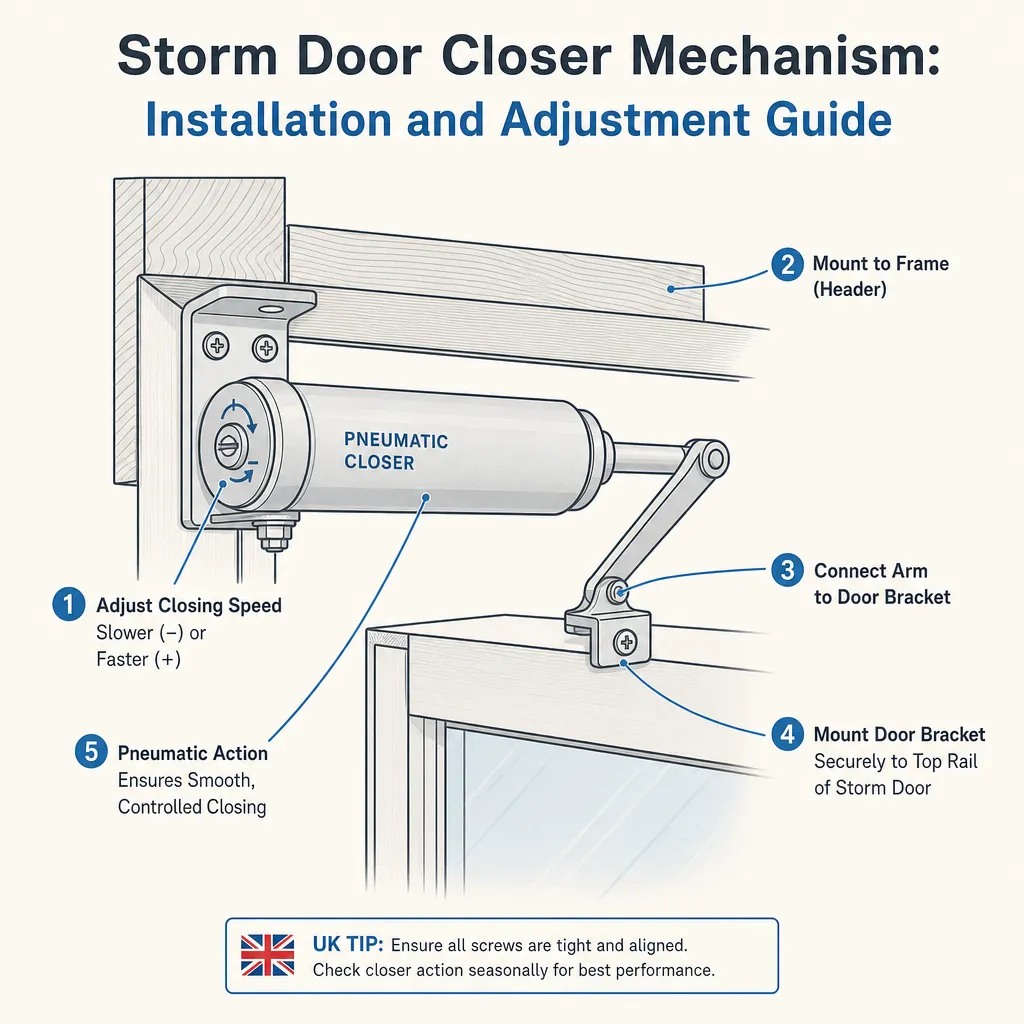
Storm Door Closer Mechanism: Installation and Adjustment Guide
Storm door closers are adjusted via a small screw at the end of the cylinder — clockwise slows the door, anticlockwise speeds it up.
 Improvement & Build
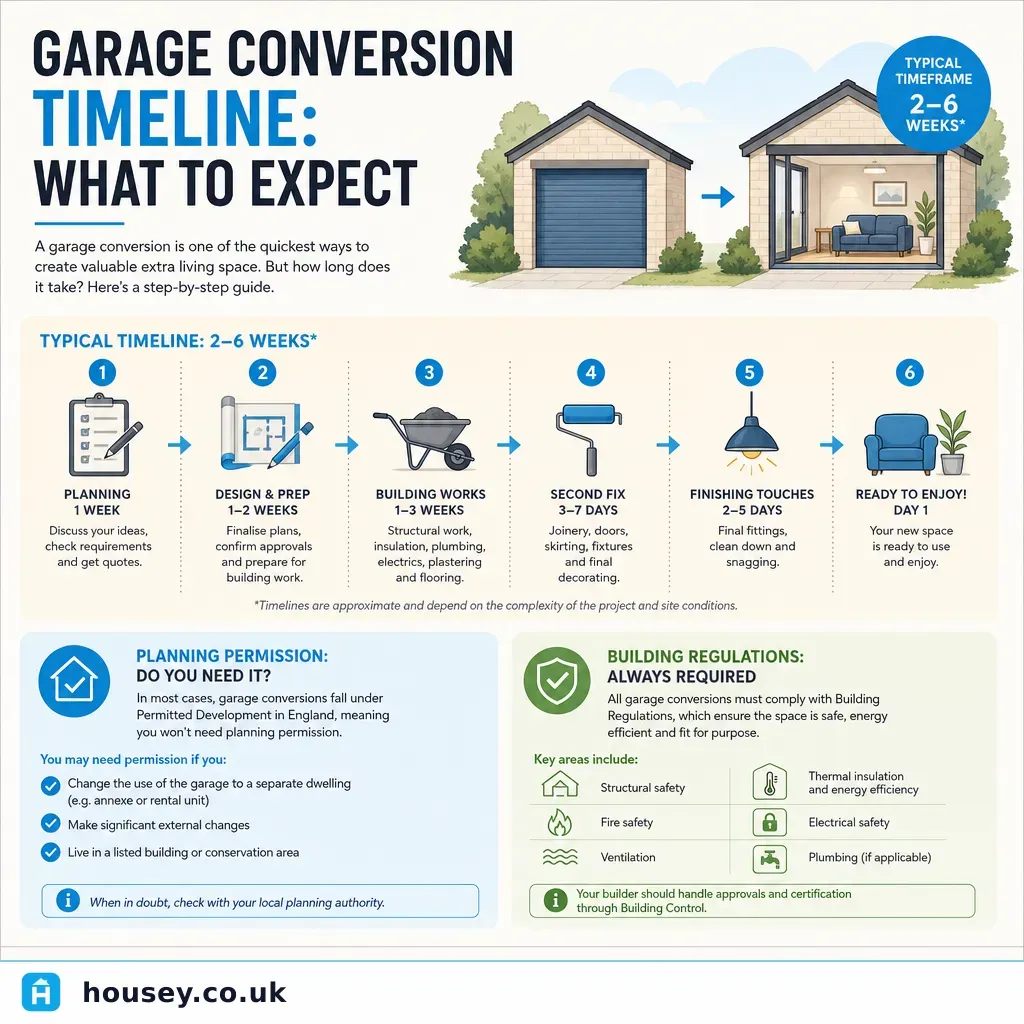
Garage Conversion Timeline: What to Expect
A straightforward attached garage conversion in England usually takes 4–8 weeks of construction, plus pre-start time for building control approval (5 working days for Full Plans).
 Improvement & Build
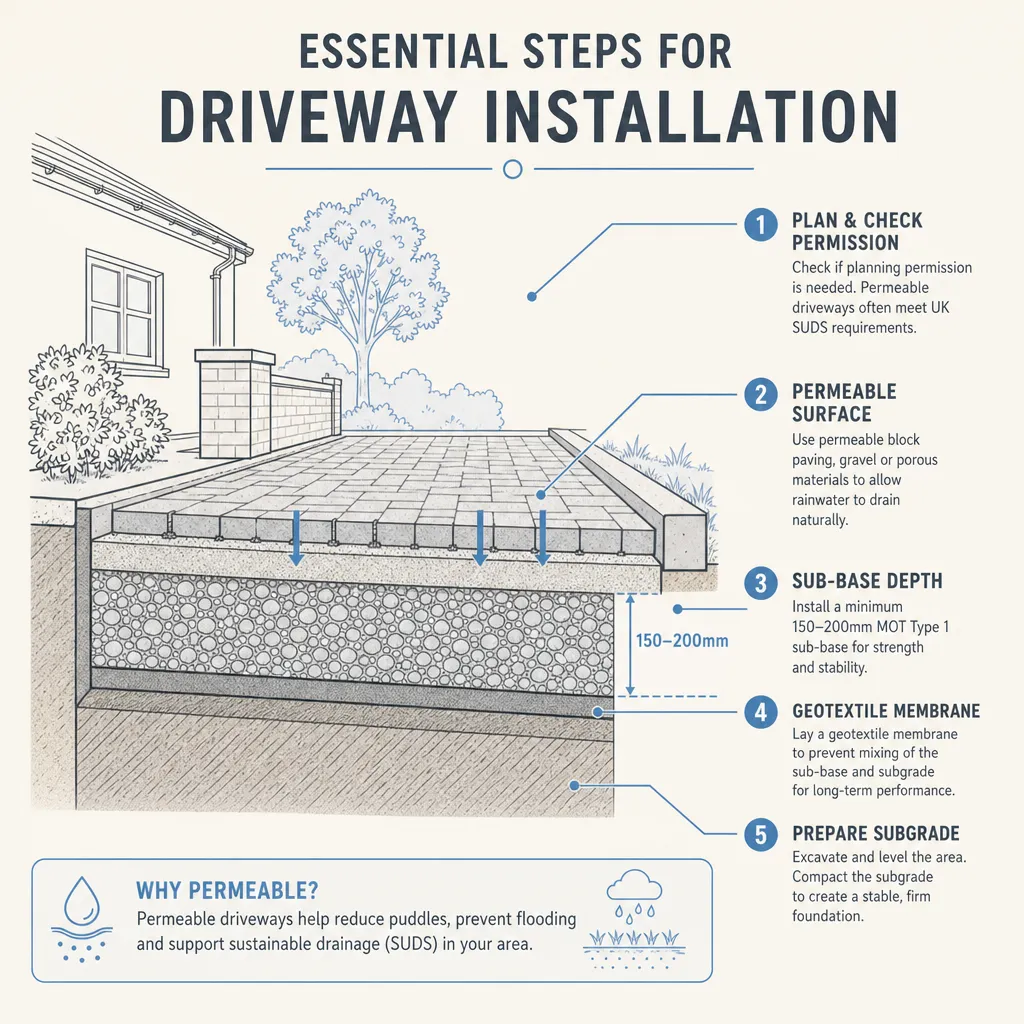
Essential Steps for Driveway Installation
Installing a driveway in England requires planning permission only when using an impermeable surface (standard tarmac, concrete, or block paving) on a front garden area over 5 m².
 Improvement & Build
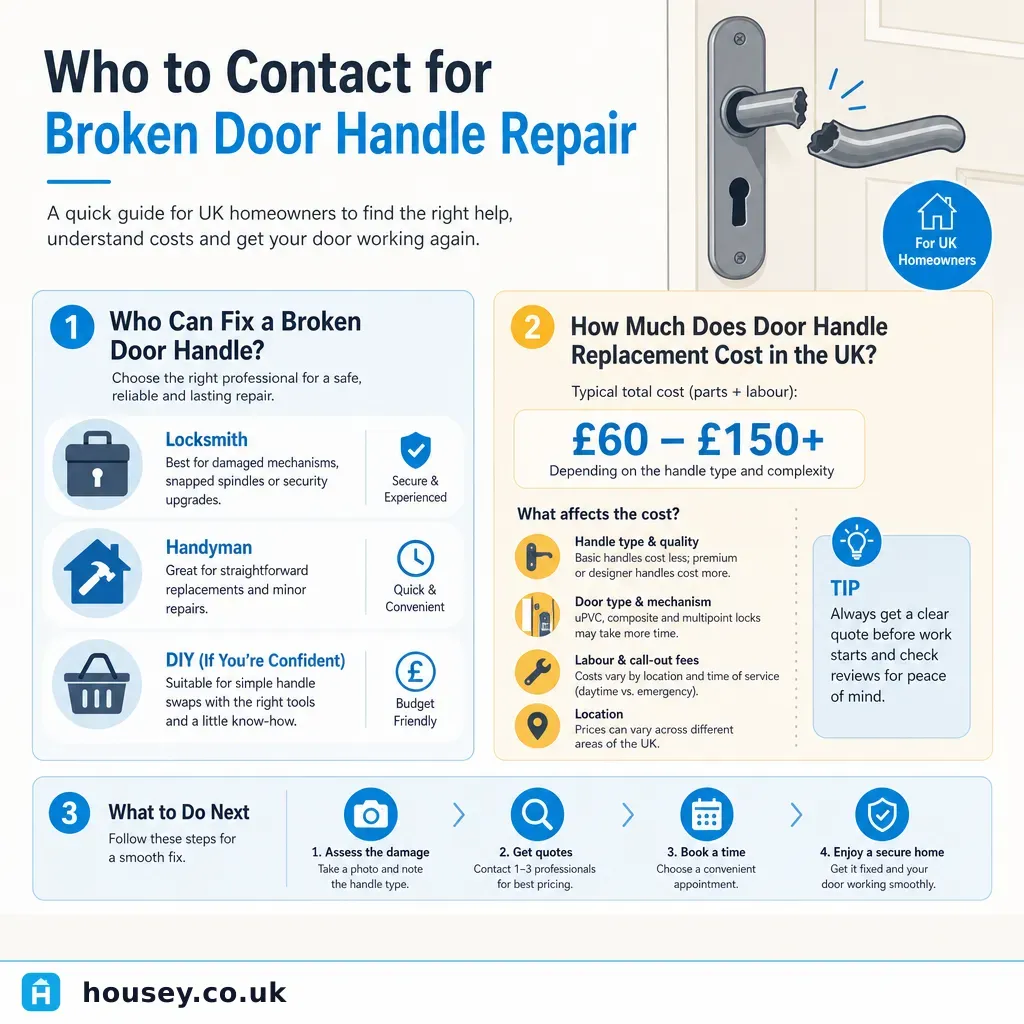
Who to Contact for Broken Door Handle Repair
For a broken door handle, a general handyperson can handle most internal timber door repairs, while a joiner or locksmith is better suited to external doors, particularly if the lock mechanism is affected.