Essential Steps for Driveway Installation
By Housey · Last reviewed 19th of May 2026
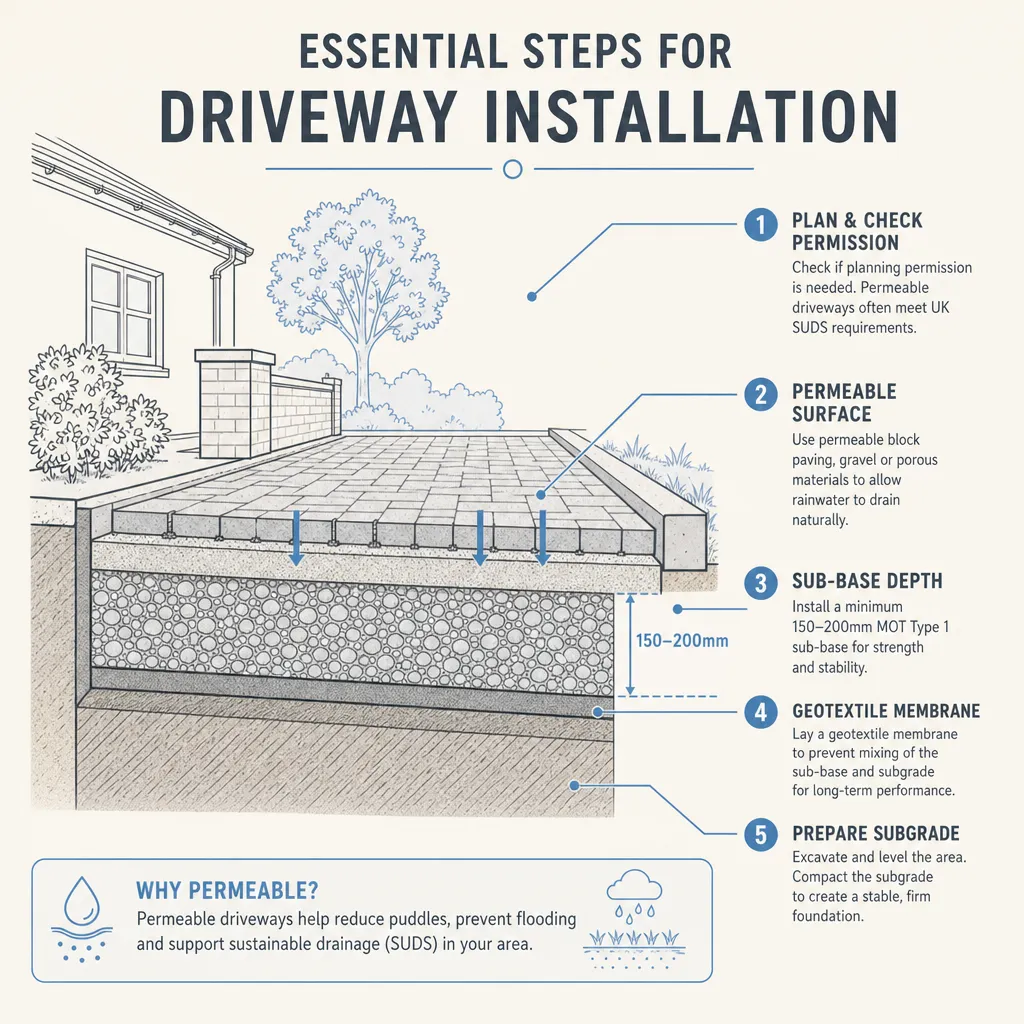
Essential Steps for Driveway Installation
A new driveway is one of the most visible improvements a UK homeowner can make — and one of the most technically demanding to get right. Poor sub-base preparation, inadequate drainage, and the wrong choice of surface material are the most common causes of premature failure: cracking, rutting, and surface water pooling that appear within a few years of installation. Understanding the key steps before instructing a contractor will help you assess quotes accurately and avoid the most costly mistakes.
Key points
- In England, front garden driveways using impermeable materials (standard tarmac, concrete, or conventional block paving) over 5 m² require planning permission; permeable surfaces such as gravel, resin-bound aggregate, and permeable block paving do not.
- A minimum sub-base depth of 100–150 mm of well-compacted Type 1 MOT aggregate is typically required for a domestic driveway; greater depth is needed on clay soils, in frost-prone locations, or where heavy vehicles will use the surface.
- Surface water from a new driveway must drain within the property boundary — discharging onto the public highway is unlawful under the Highways Act 1980.
- Crossing or lowering the public footpath to access the road requires a dropped kerb, which needs separate approval from the local highway authority and is not covered by a planning application.
- Any electric vehicle charging point installed on a driveway requires the electrical installation to be certified under Building Regulations Part P by a registered competent person (NICEIC or NAPIT registered).
Do I need planning permission for a driveway?
The rules in England depend on the surface material and the location of the driveway. The relevant restrictions sit within Schedule 2 of the Town and Country Planning (General Permitted Development) (England) Order 2015.
Decision tree: planning permission for a front driveway in England
- No planning permission needed if the surface is permeable — including gravel, permeable block paving, resin-bound aggregate on a permeable sub-base, or any surface that drains to a soakaway or planted area within the property boundary.
- Planning permission required if the surface is impermeable (standard block paving, tarmac, concrete) and the total front garden area being hard-surfaced exceeds 5 m².
- Check with your local planning authority if the property is in a conservation area or subject to an Article 4 Direction — additional restrictions may apply even for permeable surfaces.
- Apply for planning permission if you are using impermeable materials on a front garden area over 5 m² — householder driveway applications are typically straightforward and decided within eight weeks.
Rear and side driveways not visible from a highway are generally not subject to the same front-garden drainage rules, but check local authority guidance. Rules differ in Scotland, Wales, and Northern Ireland.
Driveway materials: a comparison
Material | Typical installed cost (per m²) | Durability | Maintenance | Planning position (front, England) |
|---|---|---|---|---|
Gravel | £20–£50 | Moderate | Low (raking, occasional top-up) | Permeable — no PP needed |
Resin-bound aggregate | £50–£80 | High | Low | Permeable — no PP needed |
Permeable block paving | £50–£90 | High | Low–moderate | Permeable — no PP needed |
Standard block paving | £45–£80 | High | Moderate | Impermeable — PP required if >5 m² |
Tarmac / asphalt | £30–£55 | High | Low (reseal every 5–10 years) | Impermeable — PP required if >5 m² |
Concrete | £40–£65 | Very high | Low | Impermeable — PP required if >5 m² |
Pattern-imprinted concrete | £60–£90 | High | Low–moderate | Impermeable — PP required if >5 m² |
Indicative UK costs, last reviewed 2026-05-19. Prices vary by region, access, ground conditions, and specification. Obtain at least three quotes.
Sub-base preparation: why it determines durability
The sub-base is the most structurally important element of a driveway. A poorly prepared sub-base is the leading cause of surface failure, regardless of the quality of the material laid on top. The typical construction sequence for a domestic driveway:
- Excavate to the correct formation level — typically 200–350 mm below the finished surface depending on surface type and ground conditions.
- Install edge restraints (concrete haunching or proprietary edging) before the sub-base is laid.
- Compact the formation with a vibrating plate or roller; replace any soft spots or clay pockets with granular fill.
- Lay and compact Type 1 MOT aggregate in maximum 150 mm layers, achieving the specified total depth.
- Lay the bedding course — sharp sand for block paving, or a bound base course for tarmac and concrete.
- Lay the surface and compact in accordance with the material specification.
- Joint filling and final compaction for block paving; specified curing time for concrete and resin-bound systems.
On clay soils or poorly draining sites, a geotextile membrane between the formation and sub-base will help prevent clay migration into the aggregate. Where the water table is high or surface water runoff is a concern, drainage should be incorporated at the design stage — retrofitting a soakaway or channel drain after the surface is laid is significantly more expensive.
Managing drainage
Surface water from a new driveway must not drain onto the public highway or neighbouring land. The main options are:
- Permeable surface: water passes through the surface and sub-base material into a soakaway or the ground beneath.
- Linear channel drain: a drainage channel running across the driveway, connected to a soakaway or surface water drain.
- Soakaway: a rubble-filled pit or proprietary crate system that receives collected water and allows it to percolate into the ground. Siting and sizing should be calculated to avoid undermining foundations or boundary structures.
- Surface water drain connection: if a surface water drain is available and the local authority permits connection, collected water can be directed to it.
Connecting surface water drainage to the foul sewer is unlawful under the Building Act 1984 and Water Industry Act 1991. A groundworker with drainage experience can advise on the most appropriate solution for your site conditions.
What to ask before accepting a quote
Before signing a contract with a driveway installer, ask the following:
- What depth will be excavated, and what sub-base specification and compaction method will you use?
- Will edge restraints be installed before the sub-base is laid?
- How will surface water drainage be managed, and what drainage system is included in the quoted price?
- Is the proposed surface material permeable or impermeable, and have you confirmed the planning permission position for my specific property?
- If a dropped kerb is required, is the highway authority application and kerb-lowering work included in the quote?
- Are you registered with a relevant trade body — for example, the Marshalls Register, the British Association of Landscape Industries (BALI), or CHAS?
- What is the payment schedule, and what warranty do you provide on materials and workmanship?
- Is VAT included in the quoted price?
When to get professional help
Most driveway projects are carried out directly by specialist contractors without independent professional input. Consider seeking additional advice if:
- The driveway involves significant changes to existing drainage or a connection to a public sewer — speak to a groundworker with drainage expertise.
- The property is in a conservation area or subject to planning conditions restricting hard standing.
- Ground conditions are poor, there is evidence of subsidence or significant tree roots, or the driveway is close to the house foundations or a boundary wall.
- A dropped kerb is required and the highway authority's technical requirements are unclear.
How Housey can help
Getting the sub-base right and managing drainage properly are what separate a driveway that lasts twenty years from one that needs relaying in five. Housey connects you with vetted driveway installers who can specify the right construction method and surface for your site, as well as groundworkers for sites with drainage challenges. Use Housey to request and compare quotes with a clear specification before any work starts.
Frequently asked questions
How long does a driveway installation take?
Most domestic driveway replacements take between two and five days, depending on size, surface type, and whether drainage works or a dropped kerb are needed. Concrete and resin-bound surfaces require a curing period before use — typically twenty-four to forty-eight hours for light traffic. Where planning permission is required, allow up to eight weeks for the decision before starting work.
Can I install a driveway myself?
Sub-base preparation and block paving are within reach of experienced DIYers for small areas, but correct compaction equipment is essential and rarely available without hire. Any connection to a drainage system or a dropped kerb installation must be carried out by a qualified contractor with highway authority approval. Poorly compacted sub-bases typically fail within three to five years and void workmanship warranties.
How long should a new driveway last?
A correctly specified and installed driveway with a well-compacted Type 1 MOT sub-base should last twenty to thirty years with routine maintenance. Tarmac may need resealing every five to ten years. Block paving can be lifted, re-levelled, and re-laid relatively easily if localised settlement occurs, making it more forgiving over the long term than poured concrete.
Will a new driveway affect my home insurance?
A new driveway does not generally require notification to your buildings insurer unless significant groundworks are carried out close to the foundations, or the property is in a flood-risk area. It is good practice to notify your insurer when any major works take place. If the driveway includes a new drainage connection, your insurer may want details of the works.
Sources and further reading
- Planning Portal: hard standings and driveways — Planning Portal
- GOV.UK: planning permission in England and Wales — GOV.UK
- Building Act 1984 — legislation.gov.uk
- Highways Act 1980 — legislation.gov.uk
- Water Industry Act 1991 — legislation.gov.uk
Useful next reads
 Improvement & Build
Preparing Walls for Patching: Surface Preparation Best Practice
Durable wall patching starts with removing all loose material, cutting back to a clean and stable edge, cleaning the substrate, and priming with a construction-grade PVA bonding agent before applying any filler or plaster.
 Improvement & Build
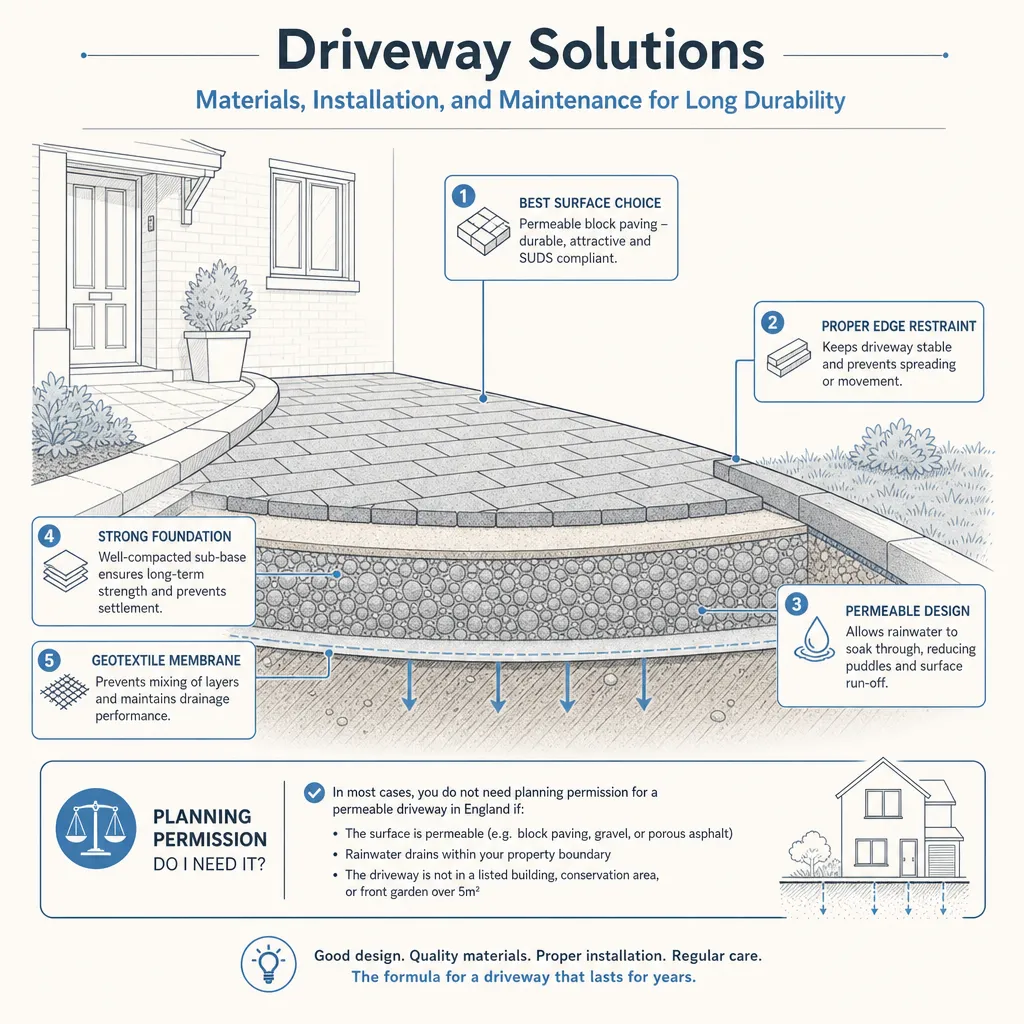
Driveway Solutions: Materials, Installation, and Maintenance for Long Durability
In England, driveways over 5 square metres need planning permission unless they use a permeable surface or drain to a lawn or border.
 Improvement & Build
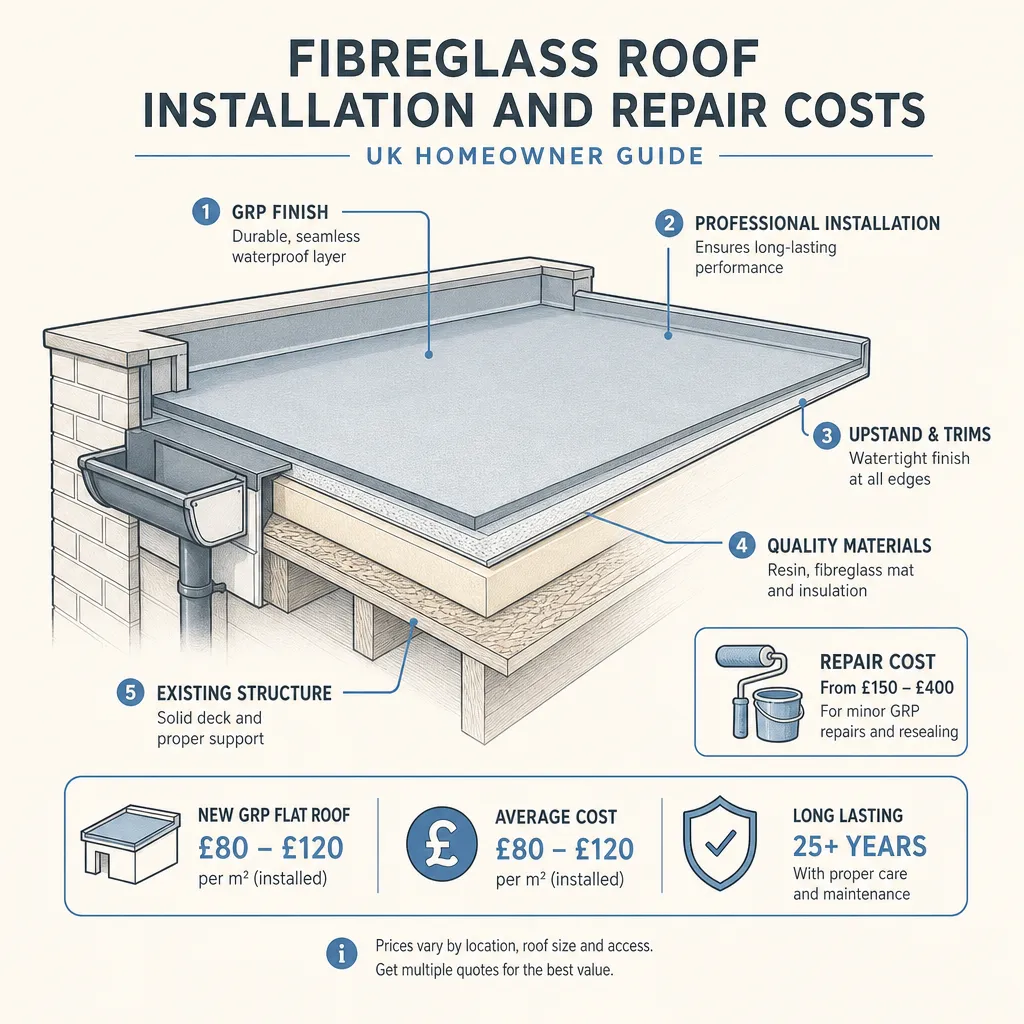
Fibreglass Roof Installation and Repair Costs
A fibreglass (GRP) flat roof costs approximately £70–£110 per square metre installed in the UK, with a typical 15 m² garage roof costing £1,200–£2,000.
 Improvement & Build
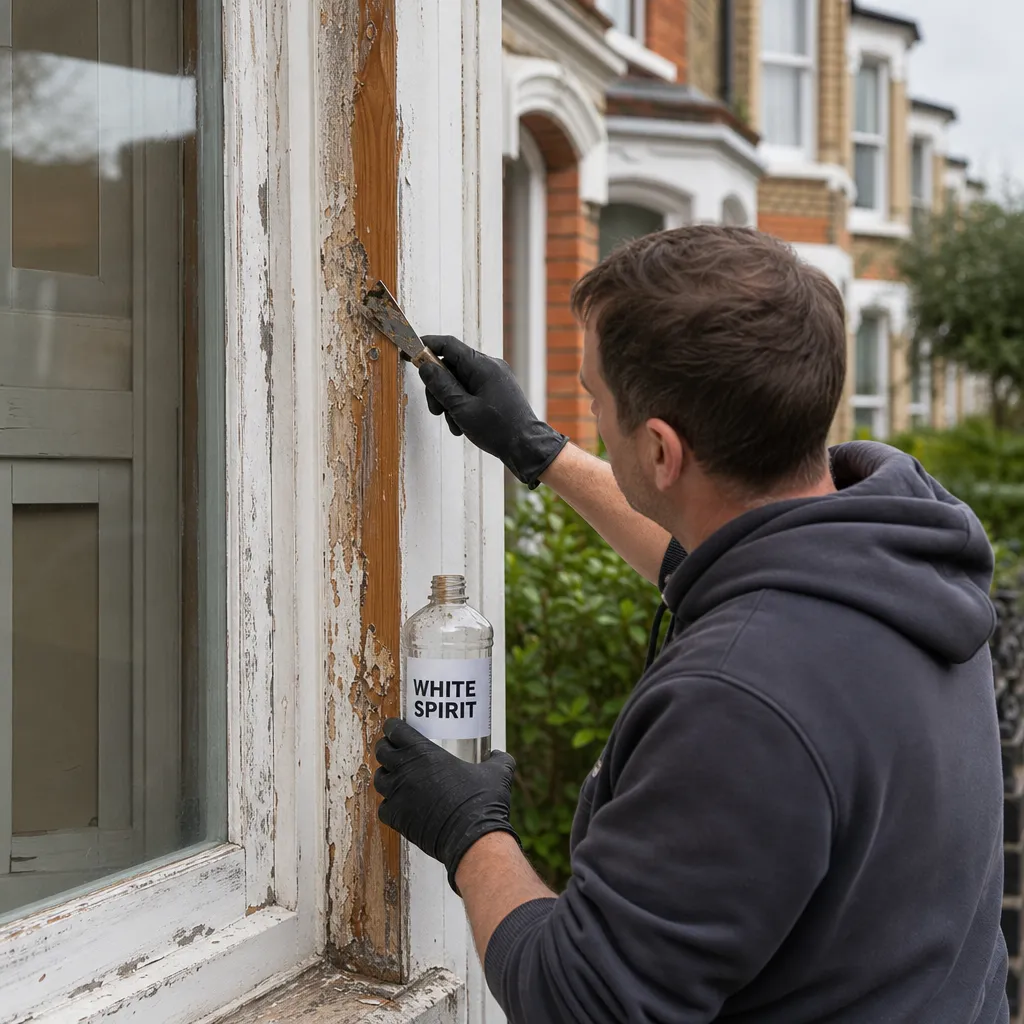
Paint Removal with White Spirit: Effectiveness and Application
White spirit dissolves uncured, freshly applied oil-based paints and is useful for cleaning brushes and removing fresh drips, but has very limited effect on fully dried or cured paint films.
 Improvement & Build
Plastering Over Existing Paint and Wallpaper: Surface Prep and Technique
Whether you can plaster over existing paint or wallpaper depends on surface condition and adhesion.