Garage Conversion Timeline: What to Expect
By Housey · Last reviewed 11th of May 2026
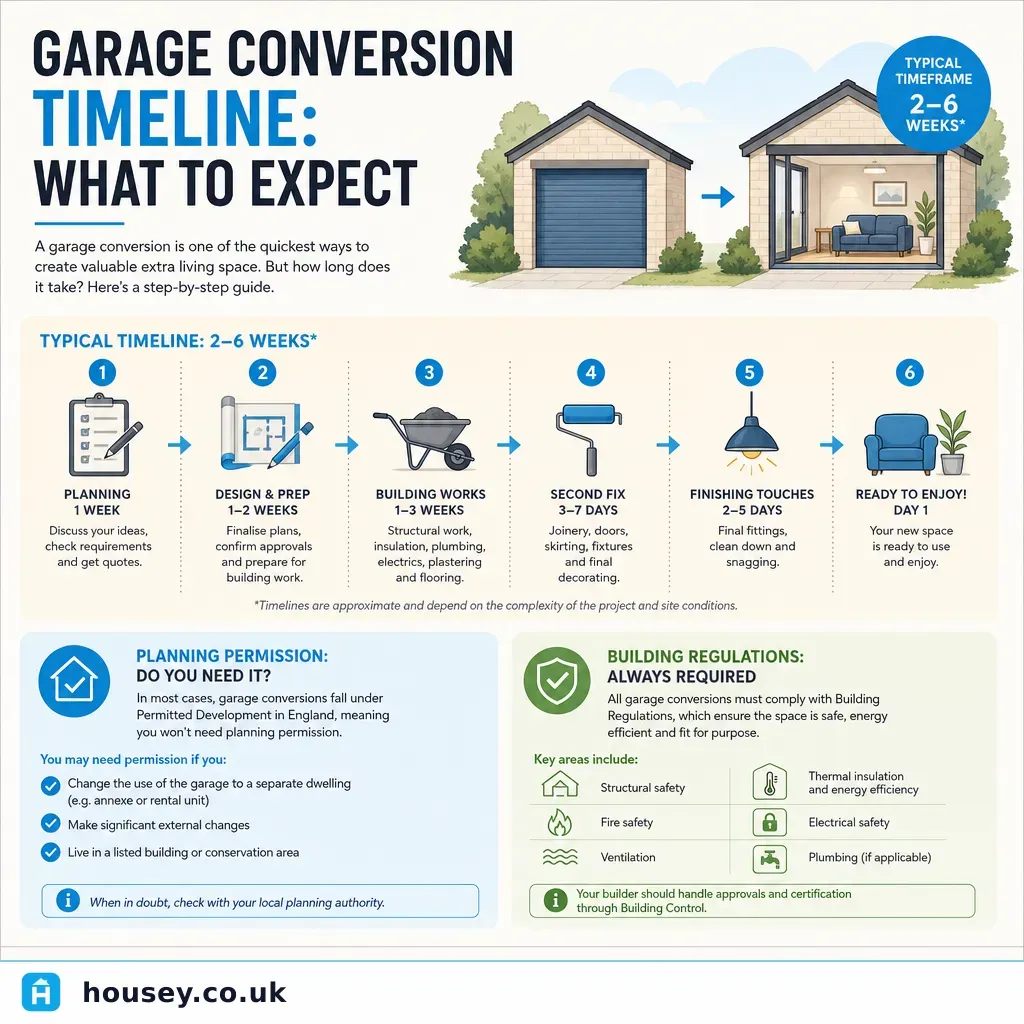
Garage Conversion Timeline: What to Expect
A garage conversion is one of the more cost-effective ways to add usable floor space to a house, but the project rarely progresses in a straight line. Planning requirements, building control approvals, and the condition of the existing structure can all affect how long the work takes — sometimes significantly. Understanding the typical sequence of stages helps you plan around the disruption and set realistic expectations with contractors.
Key points
- A straightforward attached garage conversion in England typically takes 4–8 weeks of construction once all approvals are in place.
- Most garage conversions do not need planning permission under Permitted Development rights, but building control approval is almost always required.
- Building control applications take 5 working days for a Full Plans approval; work can begin after 2 working days' notice under a Building Notice approach, with inspections during the build.
- If planning permission is required — for example, converting a detached garage into a separate dwelling — allow at least 8 weeks for a standard local authority decision.
- The garage floor typically sits below the damp-proof course (DPC) level of the main house; resolving this properly adds time and must be factored into the programme.
Does your conversion need planning permission?
Most garage conversions — converting an integral or attached garage into living space within the existing footprint — do not require planning permission in England under Permitted Development rights. However, planning permission is usually needed if:
- You are converting a detached garage into a separate dwelling (for example, a garden annexe or a flat to let independently).
- The property is in a conservation area and the conversion involves external changes visible from the highway.
- The property is a listed building.
- The local authority has removed Permitted Development rights via an Article 4 Direction.
- You are changing the use from residential garage to a home-based commercial premises.
Always confirm Permitted Development status with your local planning authority before starting. The Planning Portal guidance on garages provides a useful starting reference, but the definitive answer lies with your council.
The garage conversion timeline: stage by stage
Stage | Typical duration | Notes |
|---|---|---|
Feasibility and obtaining quotes | 1–3 weeks | Site visits from at least two contractors; structural assessment if required |
Building control application | 5 working days (Full Plans) or 2 working days (Building Notice) | Full Plans gives written approval before starting; Building Notice allows earlier start |
Planning permission (if needed) | 8 weeks (standard decision) | Add to programme if Permitted Development does not apply |
Structural work (RSJ or beam, foundations check) | 1–3 days | Only if load-bearing changes are needed; most conversions are within the existing shell |
Damp-proofing and floor build-up | 1–3 days | Garage floor typically sits below DPC; requires new DPC, insulated screed, or floating floor |
Wall and ceiling insulation | 2–3 days | Must meet Part L requirements |
Stud walls and plasterboard | 3–7 days | Depends on new room layout and number of partitions |
First-fix electrics and plumbing | 2–5 days | Electricians must hold Part P competence (NICEIC or NAPIT registered) |
Plastering | 2–4 days | Drying time: typically 7–14 days before decoration |
Second-fix electrics and joinery | 1–3 days | Sockets, lights, door furniture |
Floor finish | 1–3 days | Tiles, engineered wood, or carpet |
Decoration and snagging | 2–5 days |
|
Building control final inspection | 1 visit after completion | Certificate issued if compliant |
Total construction phase (attached or integral garage, no structural complications): typically 4–8 weeks on site. Allow additional time for plaster drying and trade availability. Projects involving structural work, drainage diversions, or party wall matters will take longer.
What can extend the timeline?
Several factors regularly extend garage conversions beyond initial estimates:
Damp and floor level: Garage floors are often 100–150 mm below the DPC of the main house. Resolving this — via a new DPC membrane, insulated floating floor, or poured screed with insulation — takes time and must be allowed to cure fully before finishes go down.
Structural work: If the garage door opening is wide and no lintel exists, or you want an open connection between the new room and the rest of the house, structural metalwork (an RSJ or steel beam) may be needed. This requires a structural engineer's design and dedicated building control sign-off.
Party wall implications: If the garage shares a wall with a neighbouring property, the Party Wall etc. Act 1996 may apply. Party wall notices must be served at least two months before structural work starts — adding 8–12 weeks to the pre-start programme in the absence of prompt written consent from the neighbour.
Utility diversions: If gas, electricity, or water services run through the garage, these may need to be redirected before internal work can proceed — each requiring a qualified tradesperson and potentially further building control notification.
Planning delays: If planning permission is required and the application attracts objections or requests for further information, the standard 8-week determination period can extend.
Decision guide: Full Plans vs Building Notice
- Choose Full Plans if the project involves structural work, you want certainty before starting, or the conversion will be financed or insured in a way that requires approved drawings. You receive written approval before any work begins.
- Choose a Building Notice if the project is straightforward (no structural changes, no drainage alterations), you want to start work quickly, and you are comfortable with inspections taking place during the build rather than working from pre-approved drawings.
- Ask your building control body — local authority building control (LABC) or an Approved Inspector — which route they recommend for your specific project. Not all projects suit the Building Notice route.
Homeowner checklist: before your garage conversion starts
When to get professional help
Most garage conversions are within the capability of a competent general builder, but some situations call for specialist input:
- Structural engineer: required if load-bearing walls are being altered, a new beam is needed over the garage door opening, or there is any doubt about existing foundations.
- Party wall surveyor: required if a shared wall is involved and the neighbour does not provide written consent within 14 days of the notice.
- Planning consultant: helpful if the conversion is for a separate annexe, the property is in a conservation area, or Permitted Development rights have been removed.
- NICEIC or NAPIT registered electrician: required for any new circuits under Part P of the Building Regulations.
How Housey can help
Housey connects homeowners with vetted garage conversion specialists who can assess your specific garage, advise on planning and building control requirements, and provide a clear project timeline. For more complex projects, experienced project managers can coordinate trades, manage the building control process, and help keep your conversion on schedule.
Frequently asked questions
Do I need building regulations approval for a garage conversion?
Almost certainly, yes. Converting a garage into habitable space triggers Building Regulations requirements in England covering structure, insulation (Part L), fire safety, ventilation, and electrical installation (Part P). The only exception would be a very minor change of use with no structural, thermal, or electrical alterations — in practice, this is rare. Contact your local authority building control or an Approved Inspector to confirm before starting work.
Will a garage conversion add value to my property?
It can, but the uplift depends on your local market and how well the conversion is executed. In areas where off-street parking is highly valued, removing garage space may reduce saleability even if floor area increases. In areas where additional bedroom or living space is the priority, a quality conversion can add meaningful value. A local RICS-regulated surveyor or estate agent can give you a realistic view before you commit.
What is the difference between an integral and an attached garage?
An integral garage is built within the footprint of the main house — the rooms above form part of the property's existing structure. An attached garage sits alongside the house, sharing one wall, but typically has its own roof. Both can usually be converted under Permitted Development. An integral conversion is often more structurally straightforward as the ceiling joists may already support the floor above.
Can I convert my garage into a separate flat or annexe to let out?
This is a change of use and almost certainly requires planning permission, regardless of the size of the conversion. Creating a separate dwelling with its own independent access and facilities is treated as a new residential unit. Permitted Development rights do not cover this use. Contact your local planning authority before proceeding, and consider whether any change of use also affects your mortgage terms.
Sources and further reading
- Garages — planning guidance — Planning Portal
- Building regulations approval — GOV.UK
- Planning permission in England and Wales — GOV.UK
- Party Wall etc. Act 1996 — legislation.gov.uk
- Local Authority Building Control guidance — LABC
Useful next reads
 Improvement & Build
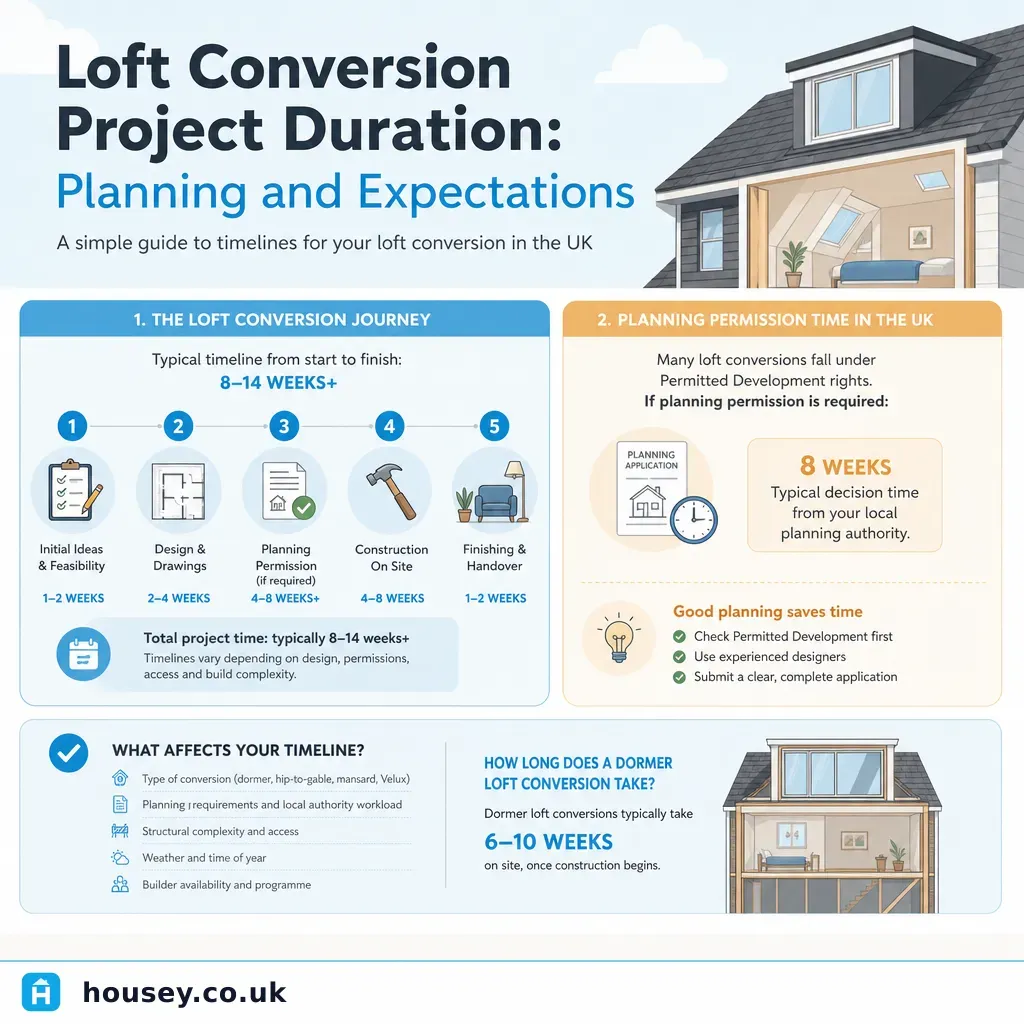
Loft Conversion Project Duration: Planning and Expectations
A loft conversion in the UK typically takes 4 to 16 weeks of on-site construction depending on the type.
 Improvement & Build
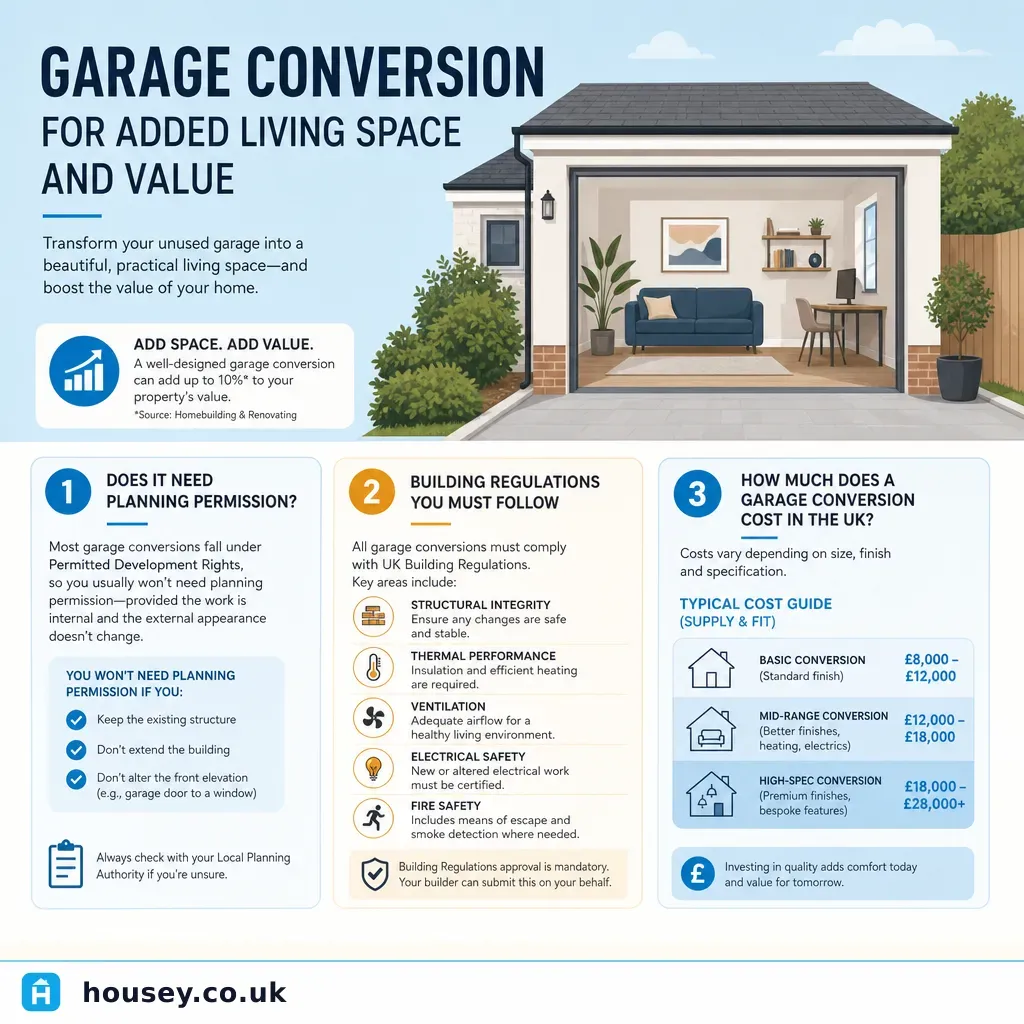
Garage Conversion for Added Living Space and Value
A garage conversion in England typically falls within permitted development and does not need a planning application, provided the property is a standard dwellinghouse with no restricting planning conditions.
 Improvement & Build
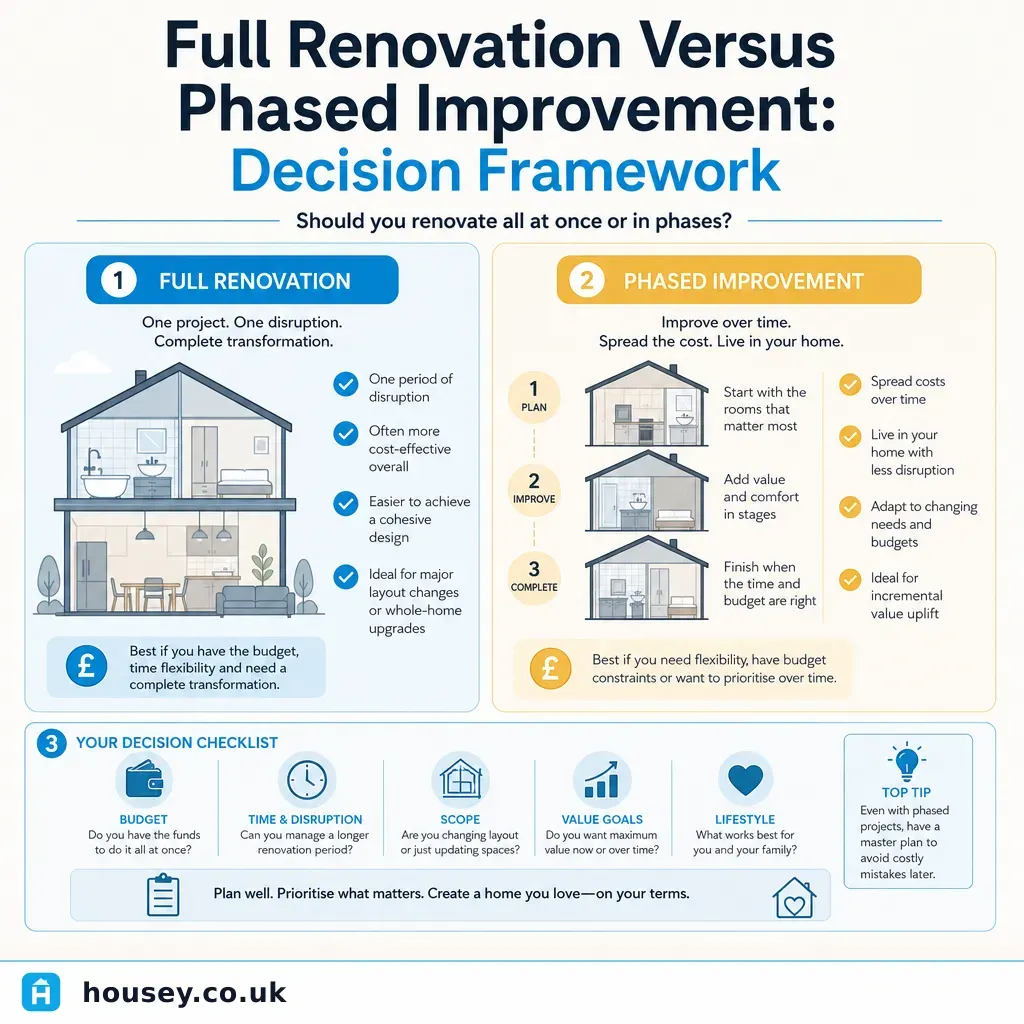
Full Renovation Versus Phased Improvement: Decision Framework
A full renovation suits properties needing comprehensive structural, thermal, or layout changes where repeated disruption would cost more than doing everything once.
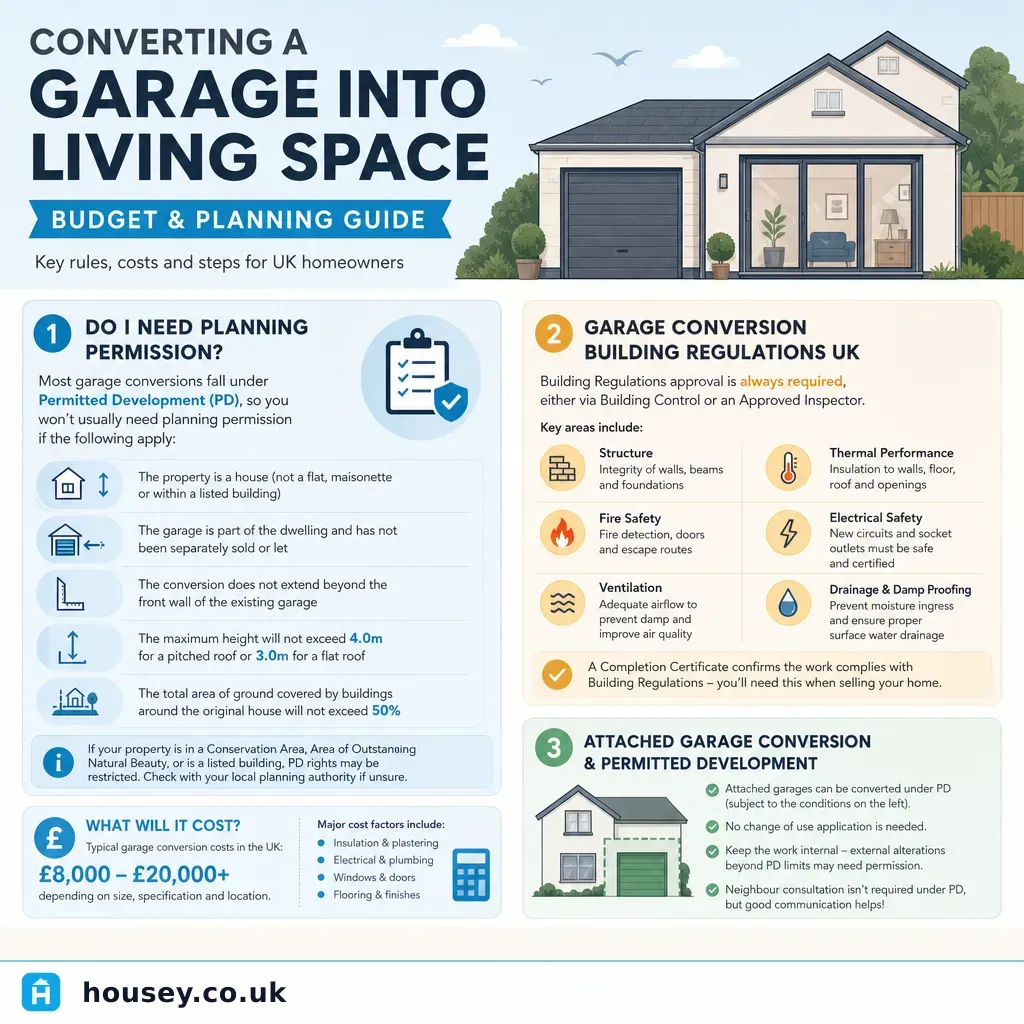 Improvement & Build
Converting a Garage into Living Space: Budget and Planning Guide
A single-garage conversion typically costs £8,000–£20,000 in the UK.
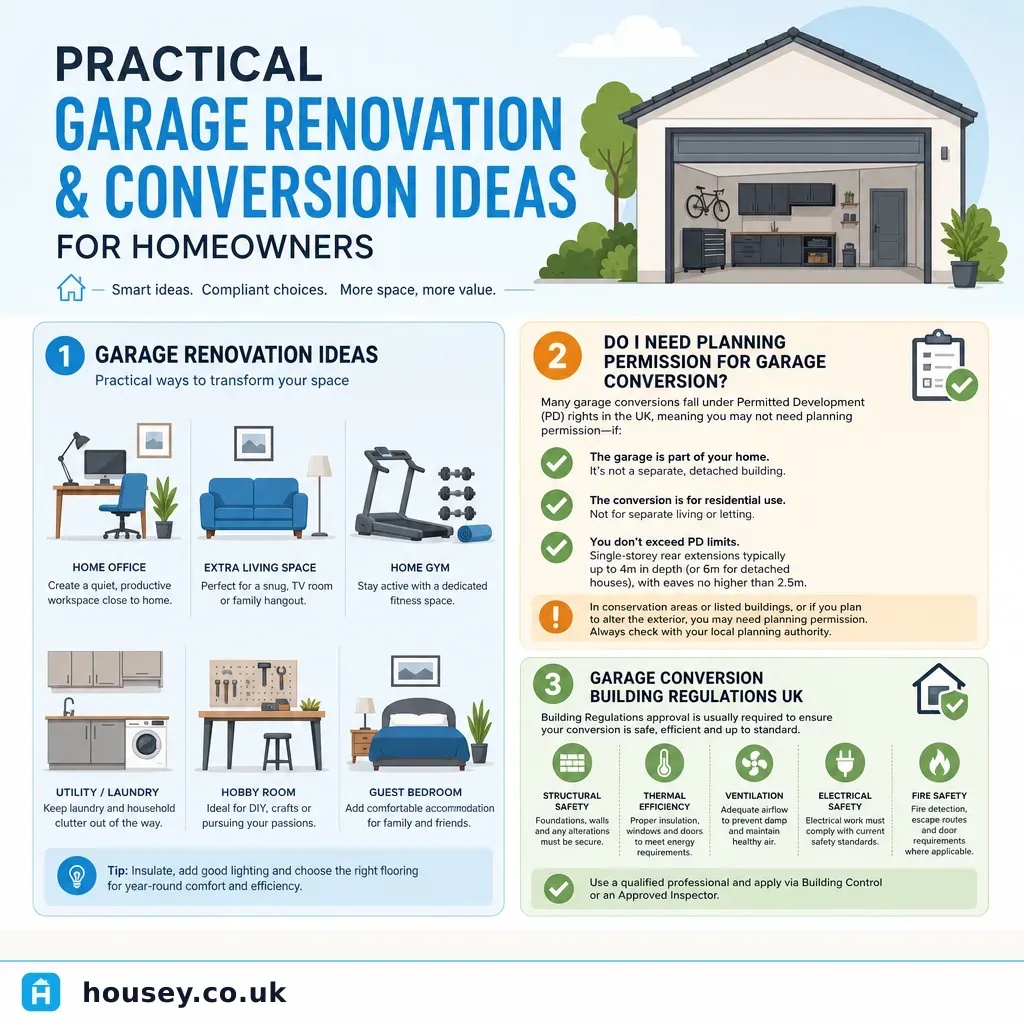 Improvement & Build
Practical Garage Renovation and Conversion Ideas for Homeowners
A full garage conversion to habitable use almost always requires Building Regulations approval in the UK, even if planning permission is not needed.