Garden Services: Professional Care, Design, and Improvement Options
By Housey · Last reviewed 19th of May 2026
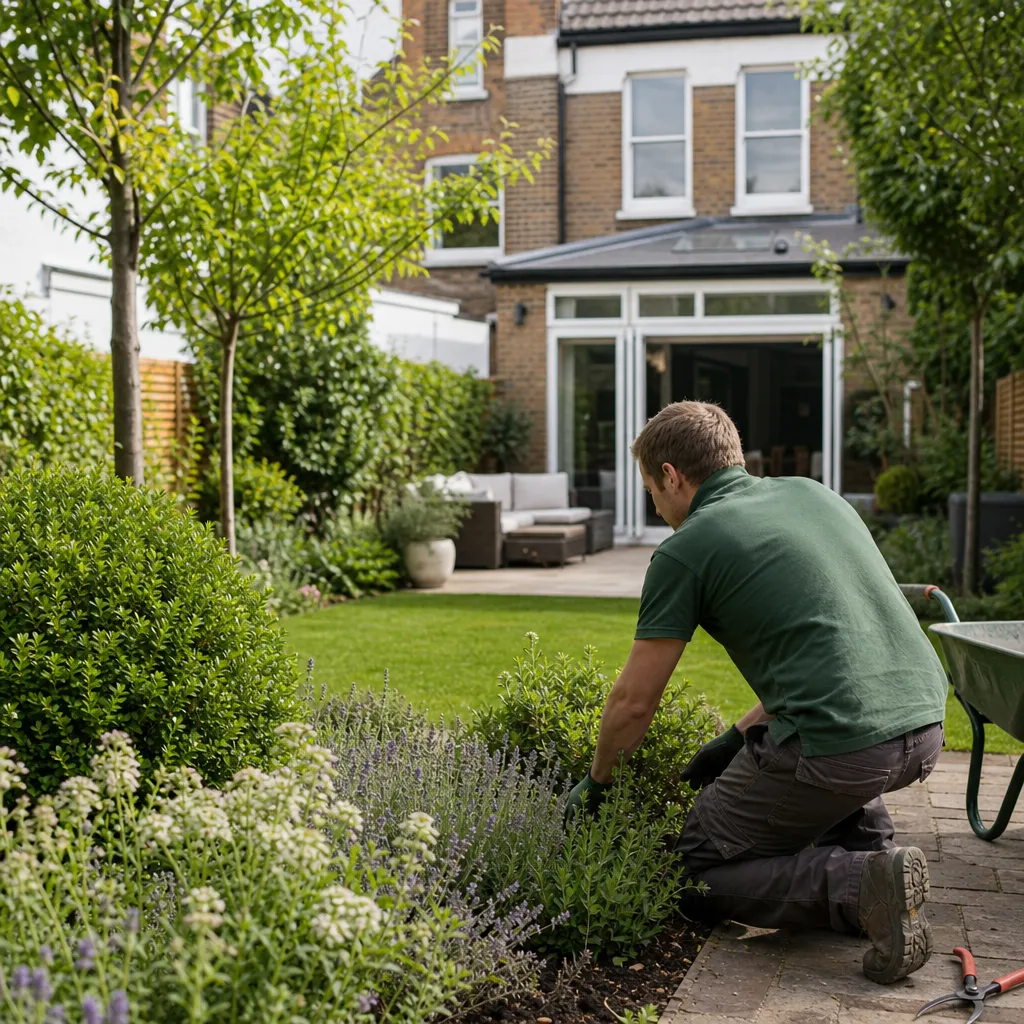
Garden Services: Professional Care, Design, and Improvement Options
Whether you've just moved into a property with an overgrown plot, are planning a major outdoor renovation, or simply want reliable ongoing maintenance, the UK garden services market offers a wide range of specialist professionals. The challenge for many homeowners is matching the right service type — and the right professional — to the actual job at hand.
Key points
- Garden maintenance (mowing, pruning, weeding, feeding) is typically provided by a gardener or horticulturalist, not a landscaper.
- Hard landscaping — patios, decking, retaining walls, and drainage works — is the domain of a landscaper; larger schemes may require building regulations approval depending on drainage impact.
- Garden design is a distinct professional discipline; look for membership of the Society of Garden Designers (SGD) or British Association of Landscape Industries (BALI) as a quality marker.
- Trees protected by a Tree Preservation Order (TPO), or trees in a conservation area with a trunk diameter over 75mm at 1.5m height, require local authority notification or consent before any pruning or felling.
- Garden structures — sheds, outbuildings, pergolas — must comply with permitted development limits under the Town and Country Planning (General Permitted Development) (England) Order 2015 or equivalent devolved rules.
What do garden services include?
UK garden services broadly fall into three tiers:
Routine maintenance covers the ongoing tasks that keep a garden healthy and presentable: lawn mowing, hedge trimming, weeding, seasonal planting, leaf clearance, and basic pruning. This work is usually carried out by a gardener on a weekly, fortnightly, or seasonal basis.
Hard landscaping and construction involves the physical redesign or construction of outdoor spaces: laying patios, decking, pathways, retaining walls, raised beds, drainage systems, and water features. A landscaper handles this type of work, often working from drawings supplied by a garden designer or from a client brief.
Garden design is a professional service that produces detailed plans, planting schemes, and specifications before any physical work begins. A qualified garden designer considers site conditions, soil, aspect, drainage, and client lifestyle before producing drawings that a landscaper can build from.
Specialist services — arboriculture (tree surgery), irrigation systems, outdoor lighting, and ecological surveys — are separate disciplines requiring distinct qualifications or accreditations.
Gardener, landscaper, or garden designer: which do you need?
Service | Best for | Not ideal for | Typical professional | Key credential |
|---|---|---|---|---|
Gardener / horticulturalist | Ongoing maintenance, seasonal planting, pruning, lawn care | Major construction, design, drainage | Gardener, horticulturalist | RHS qualification, Lantra membership |
Landscaper | Patios, decking, walls, drainage, construction | Detailed planting design, tree surgery | Landscaper, landscape contractor | BALI registered member |
Garden designer | Full design brief, planting plans, layout drawings | Ongoing maintenance, construction | Garden designer | SGD member, RHS-qualified designer |
Arborist / tree surgeon | Tree pruning, felling, crown reduction, TPO work | General garden care | Arborist | Arboricultural Association approved |
Decision tree: choosing the right service
- Choose a gardener if you need regular upkeep, seasonal tidying, or basic pruning.
- Choose a landscaper if you are planning construction: a patio, driveway, raised beds, or drainage works.
- Choose a garden designer first if you have a large plot, a complex brief, or an unclear vision — the designer's drawings will help landscapers quote accurately and reduce costly changes mid-project.
- Instruct an arborist for any significant tree work, and check whether a TPO or conservation area restriction applies before commissioning any felling or major pruning.
- Contact your local planning authority if you are unsure whether a proposed garden structure or boundary wall needs planning permission.
How much do professional garden services cost?
Indicative UK costs, last reviewed 2026-05-19. Figures are broad ranges — actual quotes will vary by region, property size, and specification. Always obtain at least three written quotes.
- Routine gardening: £25–£60 per hour, or £150–£400 for a monthly maintenance contract on an average garden.
- Patio or decking installation: £700–£2,500+ depending on materials, size, and groundwork required.
- Garden design (full design brief): £500–£5,000+ depending on designer seniority and garden complexity.
- Tree surgery: £200–£1,500+ per tree depending on species, size, access, and work required.
Regional pricing varies considerably — costs in London and the South East are generally higher than elsewhere in the country. Trade bodies such as BALI and the Royal Horticultural Society publish guidance on what to expect from professional services.
What to prepare before getting quotes
A clear brief saves time and helps contractors price accurately. Before contacting professionals, prepare the following:
Document and information checklist
When to get professional help
Most garden maintenance is low risk, but some situations call for a qualified professional rather than a general handyperson:
- Tree work above 2m height: working at height is governed by the Work at Height Regulations 2005; instructing an accredited arborist reduces risk significantly.
- Suspected TPO or conservation area restriction: acting without consent can result in enforcement action and fines; confirm with your local planning authority first.
- Drainage affecting a neighbouring property or a public sewer: unapproved drainage works can breach building regulations; consult a drainage contractor and potentially building control.
- Listed building or conservation area structures: additional consent may be required beyond standard permitted development rights.
- Contaminated ground: if your site has industrial history, commission a ground investigation before landscaping.
How Housey can help
Housey connects you with vetted landscapers and garden designers across the UK. Submit a brief, receive competitive quotes, and compare professionals with verified reviews — without cold calls or guesswork.
Frequently asked questions
Do I need planning permission to landscape my garden in the UK?
Most routine landscaping — patios, decking, lawns, and planting — falls under permitted development and does not require planning permission. However, structures such as sheds or outbuildings may be restricted if they exceed certain heights or cover a proportion of your plot. Walls, fences, and gates at the front of a property are also subject to height limits. Check the GOV.UK planning portal or contact your local planning authority if you are unsure.
How do I find a trustworthy landscaper or garden designer?
Look for BALI-registered contractors for landscaping and SGD-affiliated or RHS-qualified professionals for garden design. Ask for references from similar completed projects, confirm public liability insurance, and obtain at least three written quotes before instructing. Checking reviews on a verified platform adds an additional layer of assurance.
What is the difference between hard and soft landscaping?
Hard landscaping refers to constructed, non-living elements: paving, decking, walls, fencing, water features, and drainage. Soft landscaping refers to planting — lawn, trees, shrubs, perennials, and bulbs. Some contractors offer both; others specialise in one discipline. Clarify the scope before signing a contract to avoid gaps in responsibility.
Can a garden designer also carry out the landscaping build?
Some garden designers are also qualified to oversee or carry out construction, but many work solely on design and hand over drawings to a separate landscape contractor. Clarify this at the outset and confirm who is responsible for project management and quality sign-off during the build phase.
Sources and further reading
Useful next reads
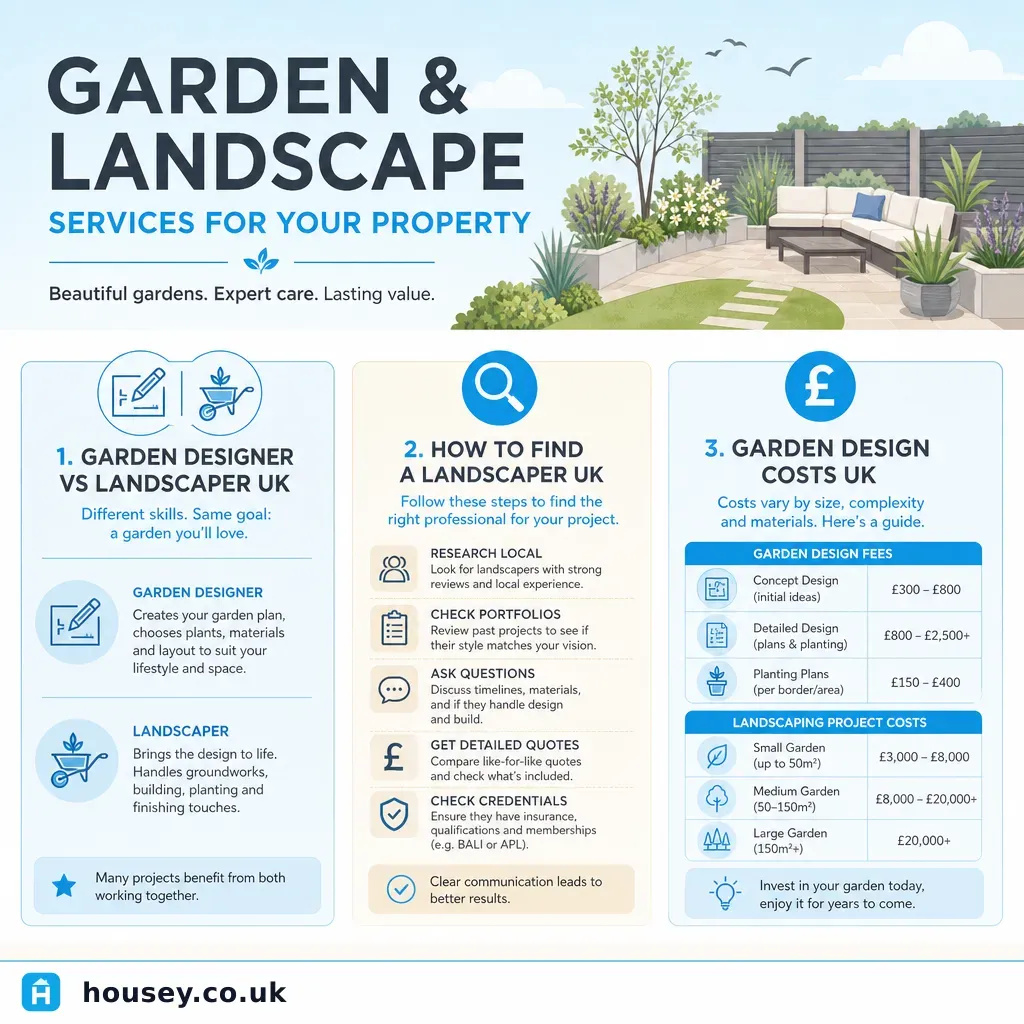 Improvement & Build
Garden and Landscape Services for Your Property
Garden designers and landscapers both improve outdoor spaces but offer different services.
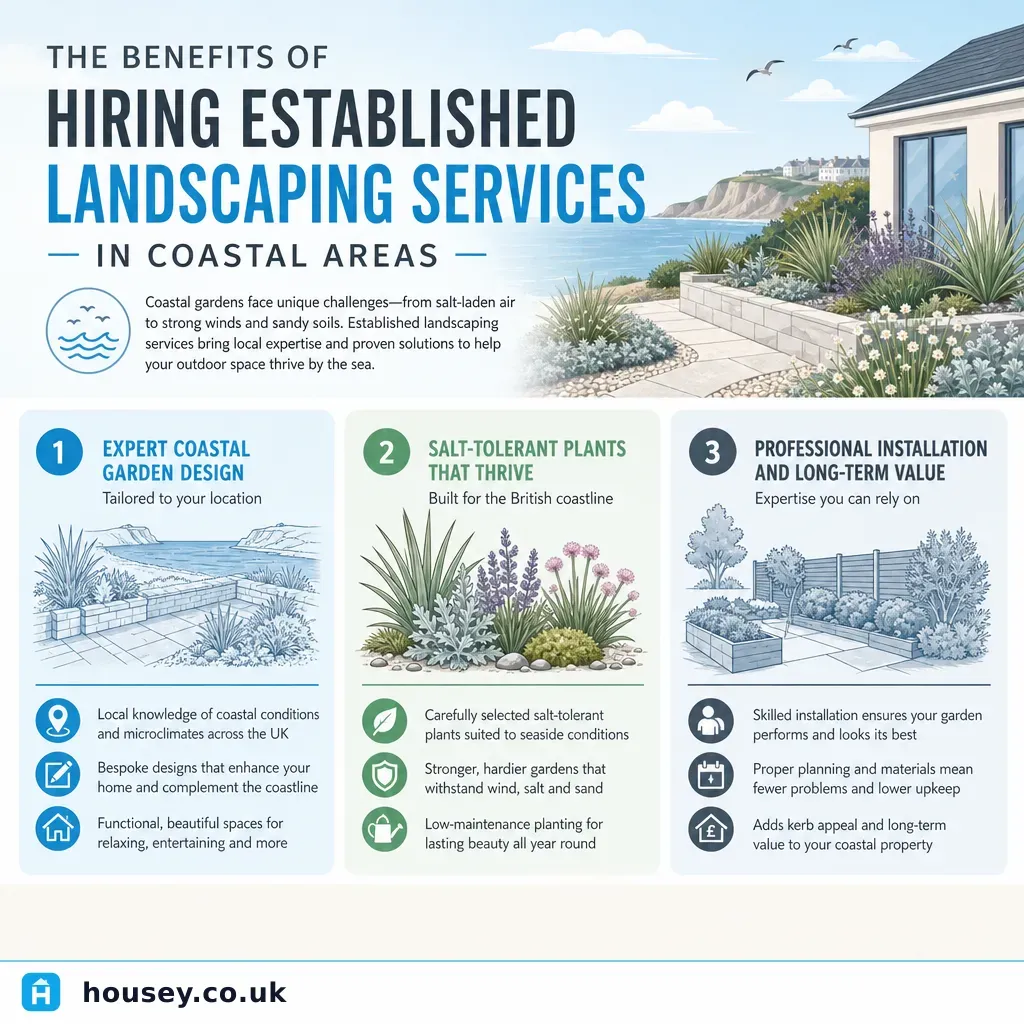 Improvement & Build
Benefits of Hiring Established Landscaping Services in Coastal Areas
Established landscaping contractors in coastal areas understand salt spray exposure, prevailing wind patterns, and local planning restrictions that inland firms often overlook.
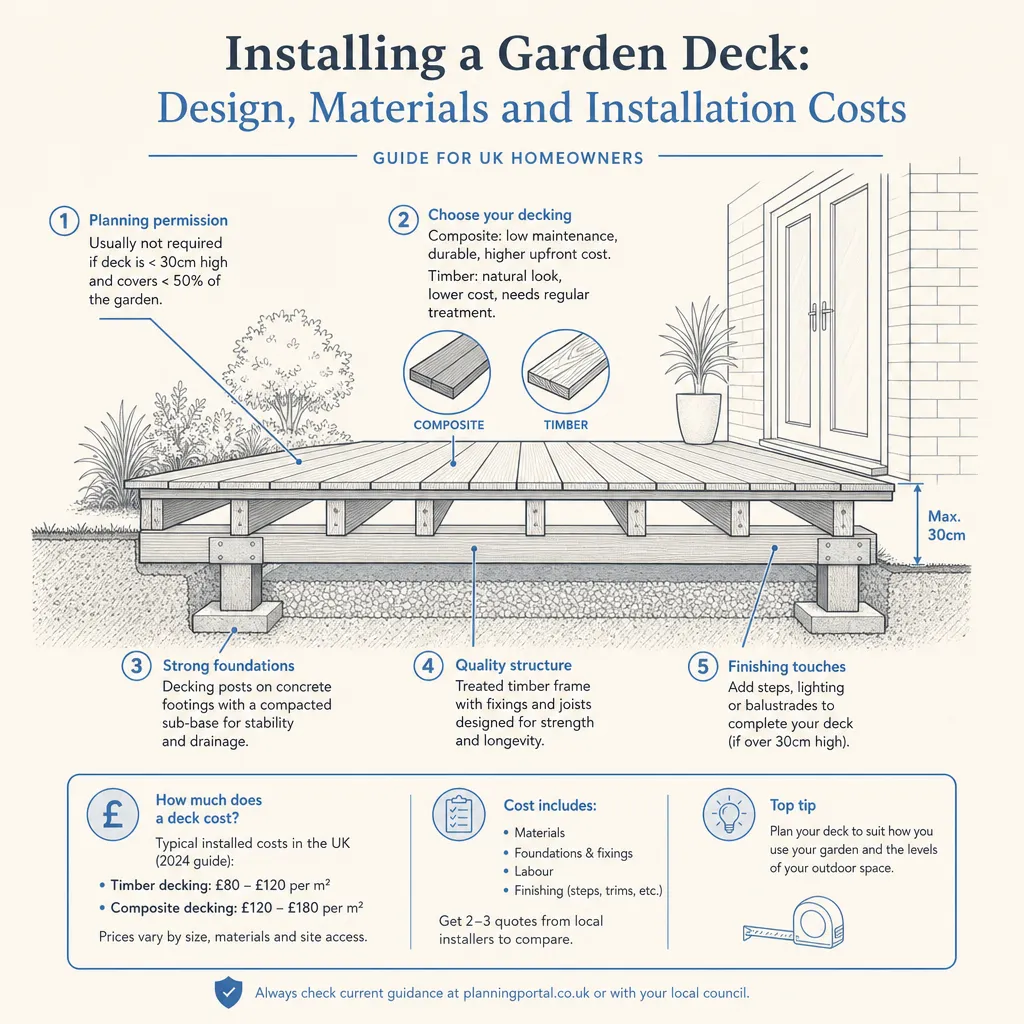 Improvement & Build
Installing a Garden Deck: Design, Materials and Installation Costs
Garden decking costs £80–250 per m² installed in the UK depending on material — softwood is cheapest, composite the most durable.
 Improvement & Build
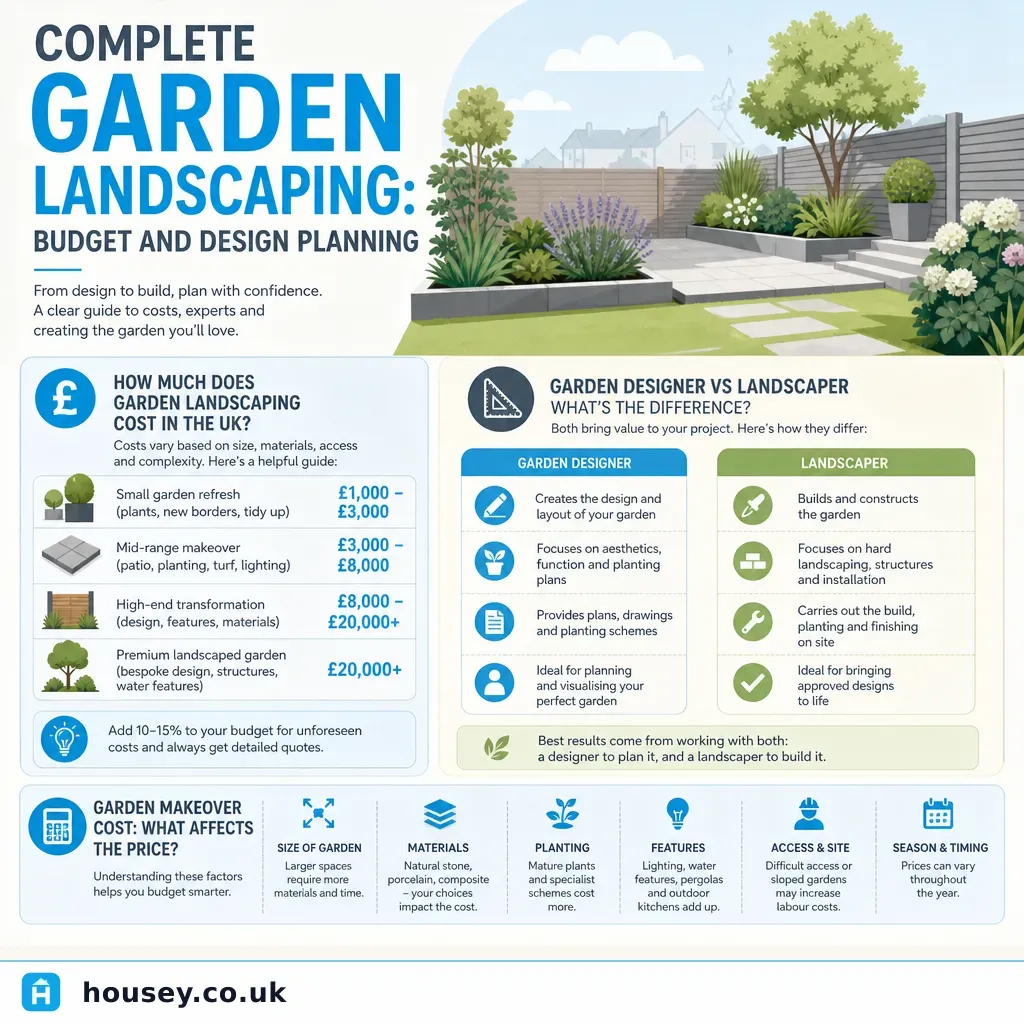
Complete Garden Landscaping: Budget and Design Planning
A mid-range garden landscaping project in the UK typically costs £75–£200 per square metre, covering design, hard landscaping, and planting.
 Improvement & Build
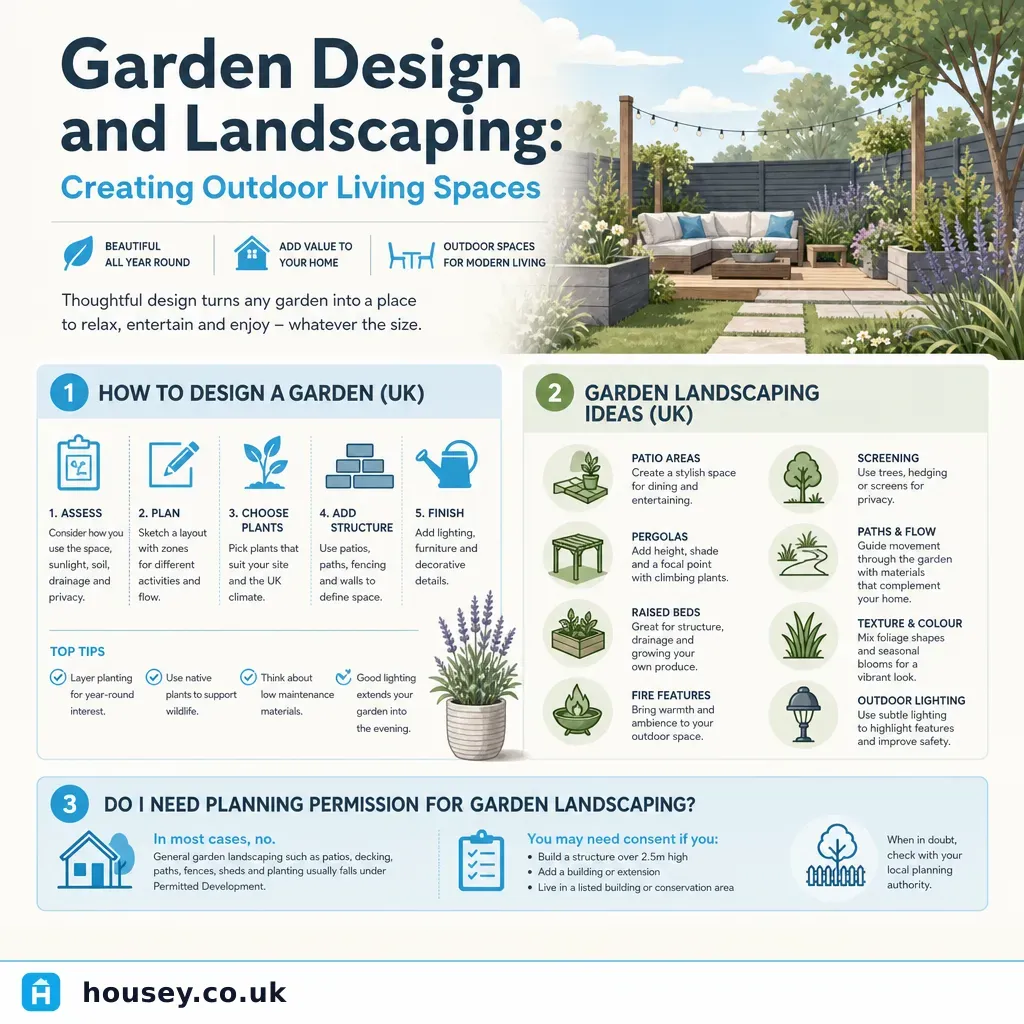
Garden Design and Landscaping: Creating Outdoor Living Spaces
Garden design creates functional outdoor living spaces through a combination of hard landscaping such as paving and decking, soft landscaping including planting and lawns, and structures such as pergolas or raised beds.