Garden Design and Landscaping: Creating Outdoor Living Spaces
By Housey · Last reviewed 18th of May 2026
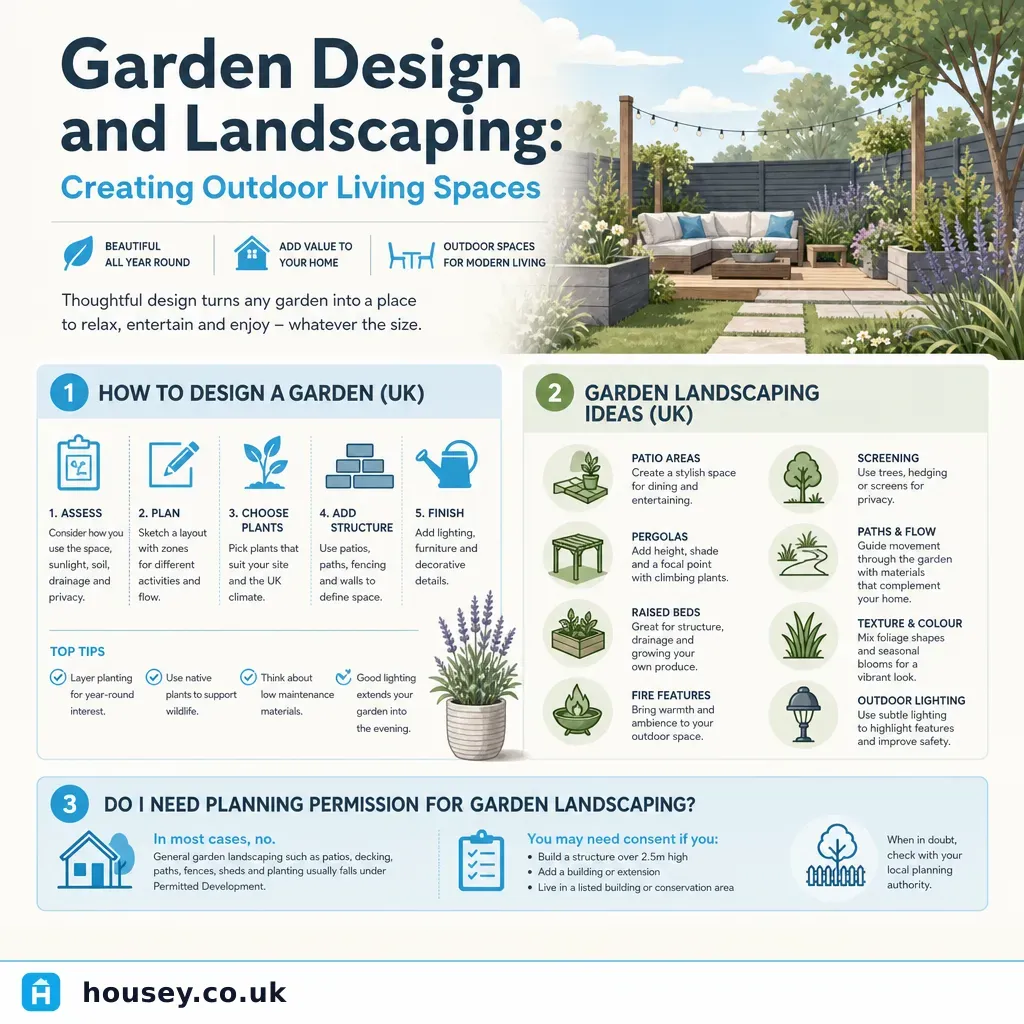
Garden Design and Landscaping: Creating Outdoor Living Spaces
A well-planned garden transforms how a household uses its home throughout the year, adding usable space, improving wellbeing, and often contributing to property value. For UK homeowners, the possibilities range from a simple patio and planting scheme to a fully redesigned space with structures, water features, and productive growing areas — but the decisions made early will shape what is achievable within your budget and the constraints of your site.
Key points
- Front garden hard surfacing over 5m² must use permeable materials or discharge to a soakaway under Class F of the General Permitted Development Order; otherwise a planning application is required.
- Outbuildings in the rear garden are permitted development provided no more than 50% of the original curtilage is covered; single-storey rear outbuildings must be under 4m high (dual-pitched roof) or 3m otherwise.
- Trees with a Tree Preservation Order (TPO) cannot be felled or significantly pruned without consent from the local planning authority.
- The Society of Garden Designers (SGD) formally assesses its members; membership indicates a professionally qualified designer rather than simply a self-employed gardener.
- In conservation areas and for listed properties, works that would normally fall within permitted development may require prior approval or listed building consent.
What does a garden designer do?
A garden designer creates a concept and detailed plan for your outdoor space, typically covering:
- Hard landscaping (paving, decking, walls, paths, steps)
- Soft landscaping (planting schemes, lawns, beds, hedges)
- Structures (pergolas, garden rooms, raised beds, play areas)
- Water features and drainage
- Outdoor lighting and irrigation
A full-service designer usually begins with a site survey and client brief, produces concept drawings and mood boards, then develops detailed planting plans and construction drawings that a landscaper can build from. Not every designer offers the full service — many homeowners commission design-only work and manage contractors independently. Agree the scope of service clearly before signing any agreement.
Planning permission and regulations for garden works
What usually does not need planning permission
In England, most work within the rear and side garden of a dwelling falls under permitted development under the General Permitted Development Order (GPDO). Common exempt works include patios, decking under 0.3m above ground, most planting, lawns, and garden structures within the permitted dimensional limits.
What may need planning permission
- Front garden hard surfacing over 5m²: must use permeable materials or include drainage to a soakaway; otherwise a full planning application is required (GPDO Part 1, Class F).
- Outbuildings exceeding height or coverage limits: check the GPDO rules carefully before beginning work.
- Works in conservation areas or on listed buildings: may require prior approval or listed building consent even for works that would ordinarily be permitted development.
- Significant earthworks or drainage changes: may need consultation with the local authority, particularly where sustainable drainage system (SuDS) requirements apply to larger schemes.
- In Wales and Scotland: planning rules differ from those in England — check the relevant national planning guidance before starting work.
Choosing between a garden designer and a landscaper
Professional | Best for | Not ideal for | Typical deliverable |
|---|---|---|---|
Garden designer (SGD or LI accredited) | New designs, complex planting schemes, projects needing a coherent vision | Straightforward installation of an existing plan | Scaled plans, planting lists, construction specifications |
Landscaper | Physical construction: paving, decking, walls, drainage, turf laying | Detailed design advice, complex planting schemes | Completed physical works |
Design-and-build company | Single point of responsibility for design and construction | Projects where independent design oversight is a priority | Combined plans and completed works |
Arborist | Tree work, TPO assessments, root zone guidance | Hard landscaping, planting design | Tree reports and safe tree surgery |
Which option should you choose?
- Choose a garden designer only if you want a detailed design to tender to multiple landscapers for competitive quotes.
- Choose a landscaper only if you have a clear plan already and simply need the physical work carried out.
- Choose a design-and-build company if you prefer a single point of contact and are comfortable with that arrangement.
- Consult an SGD-accredited designer if the project is planting-led or you want formal accreditation assurance.
- Instruct an arborist first if the garden has significant trees — check for Tree Preservation Orders before any root zone or crown work begins.
- Check with your local planning authority if you are in a conservation area, have a listed property, or are planning front-garden hard surfacing.
Garden design checklist before briefing a professional
Work through these questions before meeting a designer or landscaper to save time and sharpen your brief:
What to ask before accepting a quote
- Is VAT included, and what are the payment stages?
- Who will carry out the physical work — the company's own team or subcontractors?
- What qualifications or accreditations does the designer or landscaper hold?
- Can you provide references or photographs from comparable projects?
- What specification of materials does the quote assume, and what alternatives are available?
- What happens if unforeseen ground conditions — buried rubble, deep tree roots, drainage problems — are discovered during works?
- What is the estimated programme, and what site disruption should I expect?
When to get professional help
Garden design and landscaping is generally low risk, but professional guidance adds real value when:
- The project involves changes to ground levels, retaining walls, or drainage — these can affect neighbouring properties and shared infrastructure.
- There are mature trees on site — an arborist's report is essential before any root zone or crown work.
- You are in a conservation area or own a listed property, where permitted development rights may be restricted.
- The project is significant in scale or budget — an independent designer reduces the risk of specification disputes and contractor errors.
- You want productive growing areas, a greenhouse, or complex planting — a horticulturally trained designer adds meaningful value here.
How Housey can help
Housey connects UK homeowners with vetted garden designers and landscapers across the country. Submit your brief and compare quotes from local professionals — whether you need design-only support, a full build, or something in between.
Frequently asked questions
Do I need planning permission for a garden deck?
Usually not, provided the decking is in the rear or side garden of a dwelling house, is no more than 0.3m above ground level, and the combined area of decking and outbuildings does not exceed 50% of the garden. Conservation areas and listed buildings may have additional restrictions — check with your local planning authority before starting work.
How much does garden landscaping cost in the UK?
Costs vary significantly by scope, materials, and location. A modest patio and lawn project might cost £5,000–£12,000, while a full garden redesign with hard landscaping, planting, structures, and irrigation can run to £30,000 or more. Indicative UK figures, last reviewed 2026-05-18. Obtain at least three written quotes before committing to any contractor.
What is the difference between a garden designer and a landscape architect?
A garden designer typically focuses on domestic residential gardens, often with a strong planting emphasis. A landscape architect, accredited by the Landscape Institute, works across a wider range including public realm, urban design, and larger developments. Both are suitable for residential projects — the choice usually depends on project scale, scope, and approach preference.
Can I cut down a tree in my garden without permission?
Not always. Trees with a Tree Preservation Order cannot be felled or significantly pruned without consent from the local planning authority. Trees in conservation areas are also protected under separate provisions. Before any significant tree work, check your local authority's planning portal for Tree Preservation Orders and consult a qualified arborist for advice.
Sources and further reading
- Permitted development rights for householders: technical guidance — GOV.UK
- Society of Garden Designers — find a designer — Society of Garden Designers
- Landscape Institute — find a landscape architect — Landscape Institute
- Paving your front garden — GOV.UK
- Tree Preservation Orders and trees in conservation areas — GOV.UK
Useful next reads
 Improvement & Build
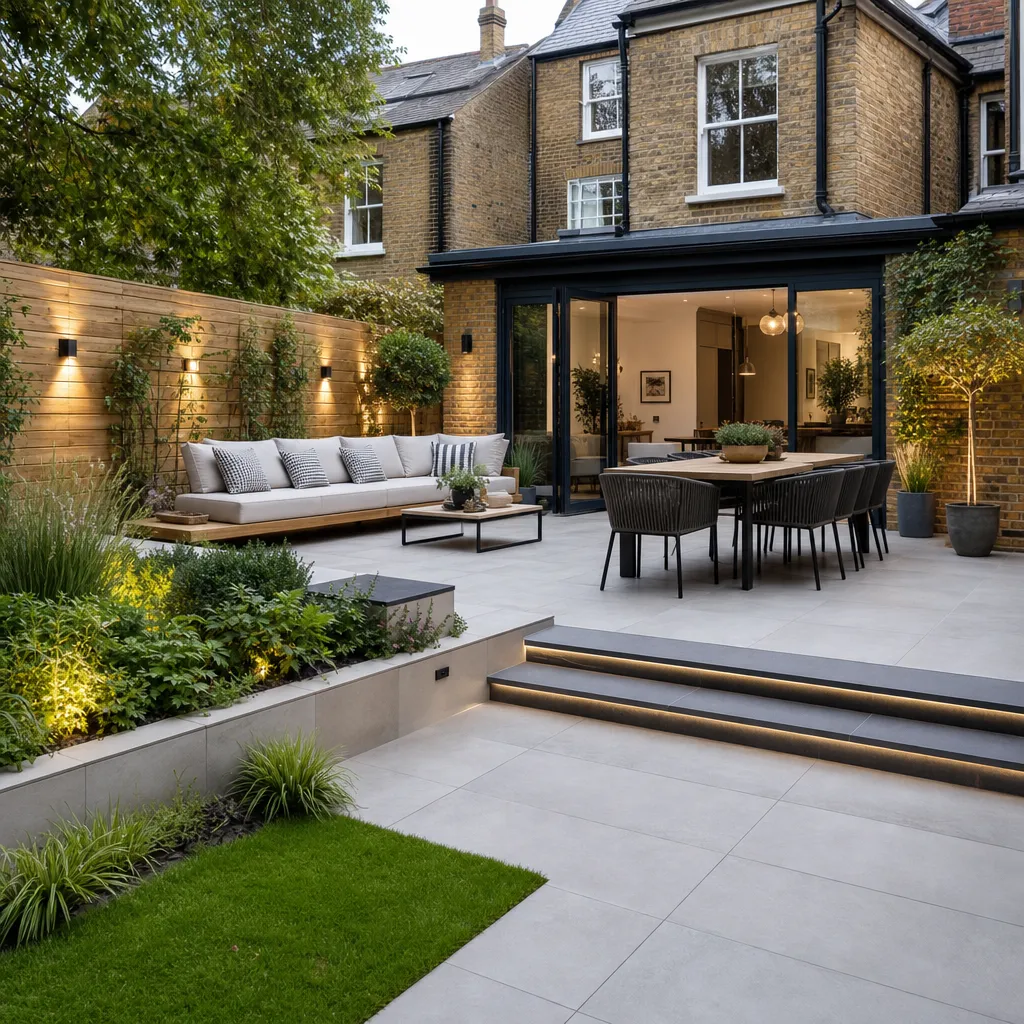
Creating Functional and Attractive Outdoor Entertainment Areas
A well-planned outdoor entertainment area combines a level surface — patio, decking, or gravel — shelter or shade, appropriate lighting, and power access if needed.
 Improvement & Build
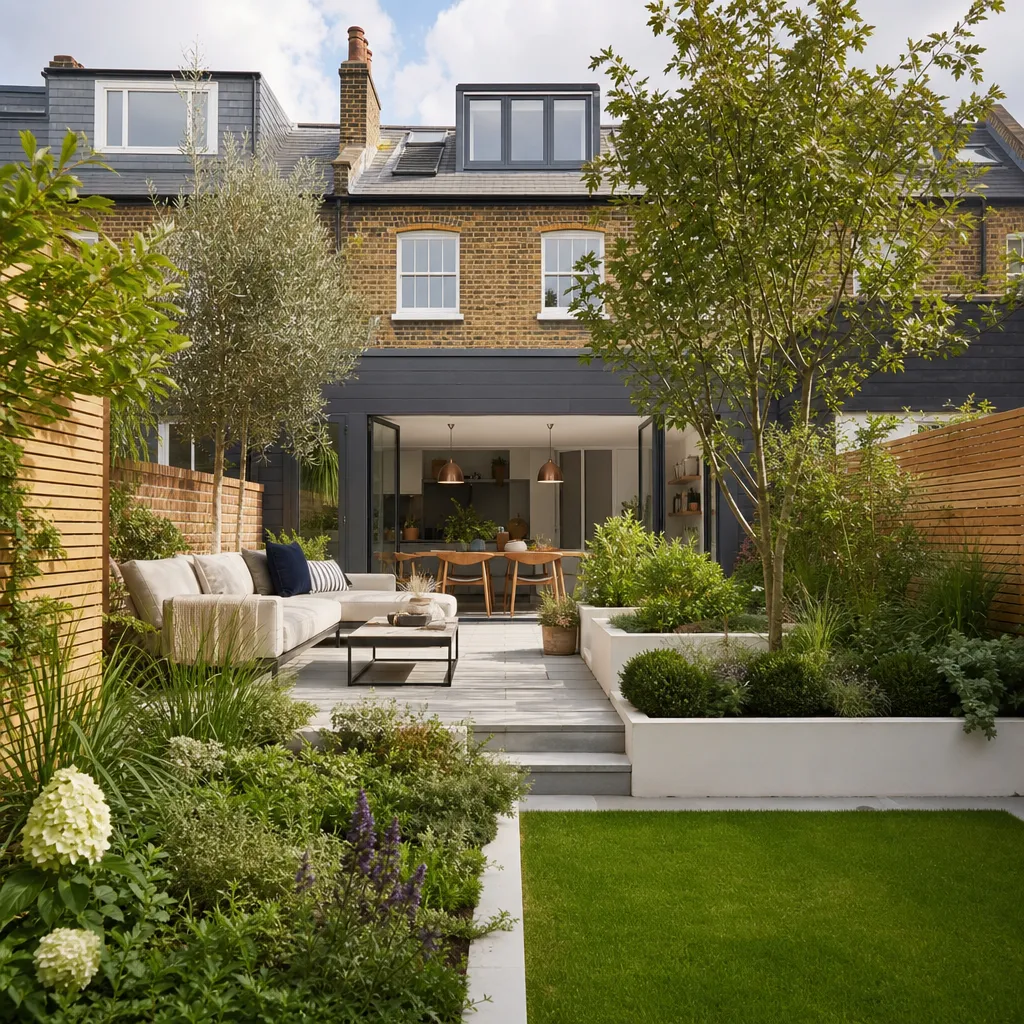
Seasonal Garden Transformations and Outdoor Design Ideas
A successful garden transformation in the UK works with the seasons rather than against them — establishing structure and hard landscaping in autumn or winter, planting in spring, and enjoying the results through summer.
 Improvement & Build
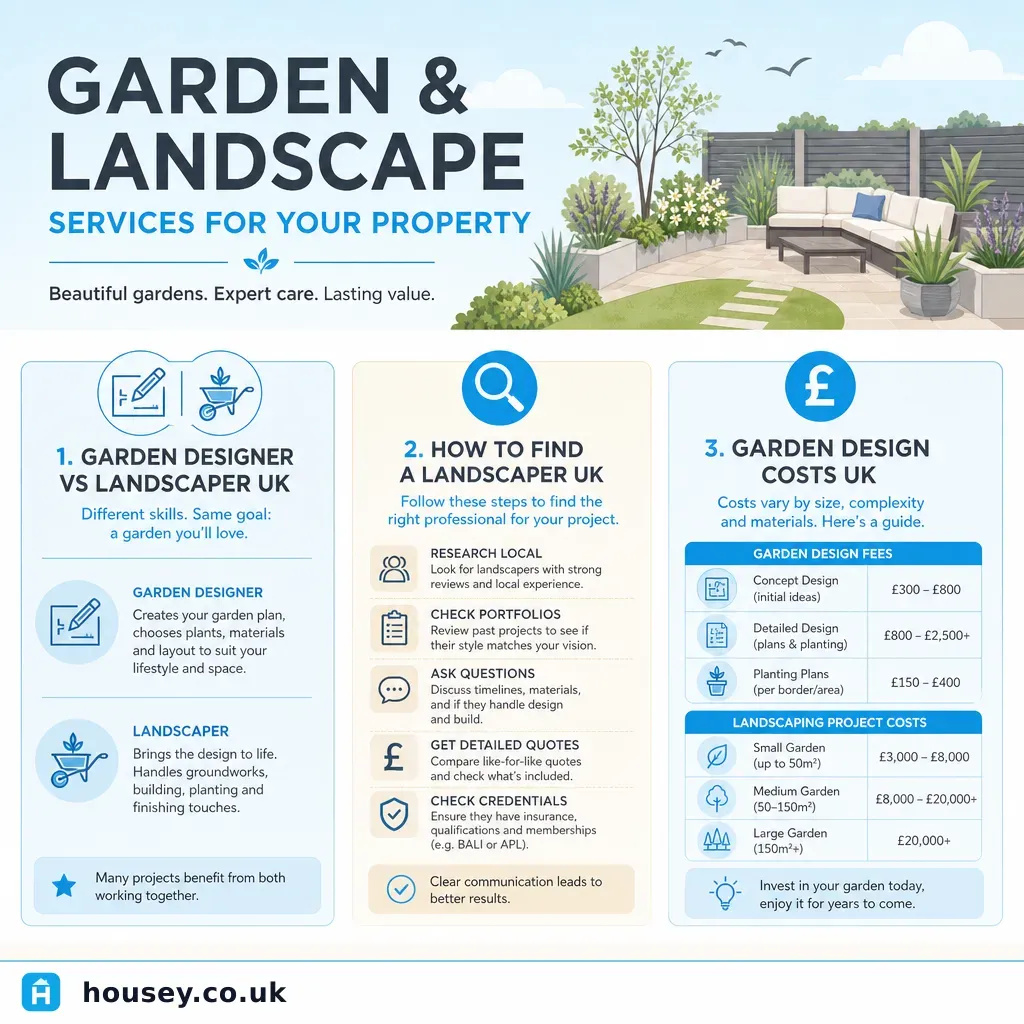
Garden and Landscape Services for Your Property
Garden designers and landscapers both improve outdoor spaces but offer different services.
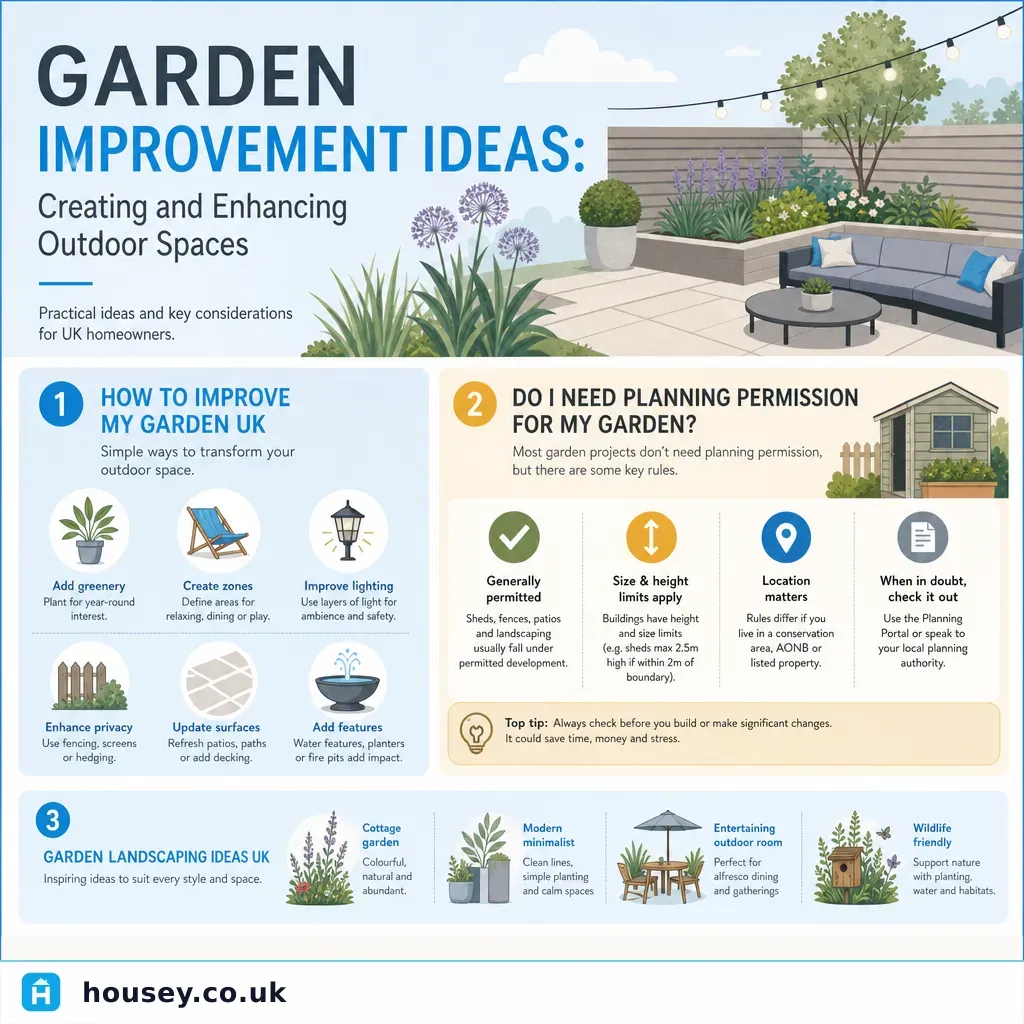 Improvement & Build
Garden Improvement Ideas: Creating and Enhancing Outdoor Spaces
Improving your garden in the UK usually starts with a clear plan covering hard landscaping, soft planting, and any structural elements.
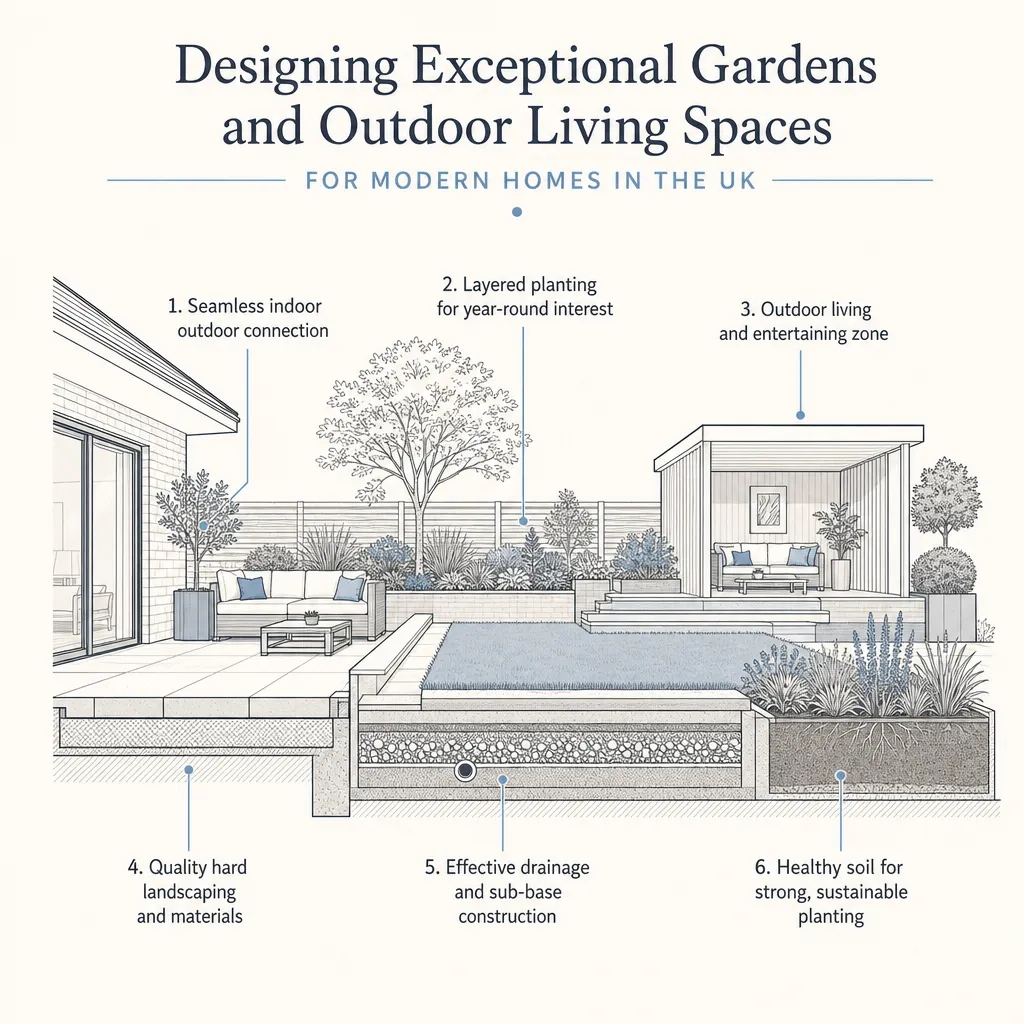 Improvement & Build
Designing Exceptional Gardens and Outdoor Living Spaces for Modern Homes
A well-designed garden blends practical zones — seating, lawn, planting, and hard landscaping — with your household's needs.