Installing a Garden Deck: Design, Materials and Installation Costs
By Housey · Last reviewed 7th of May 2026
Installing a Garden Deck: Design, Materials and Installation Costs
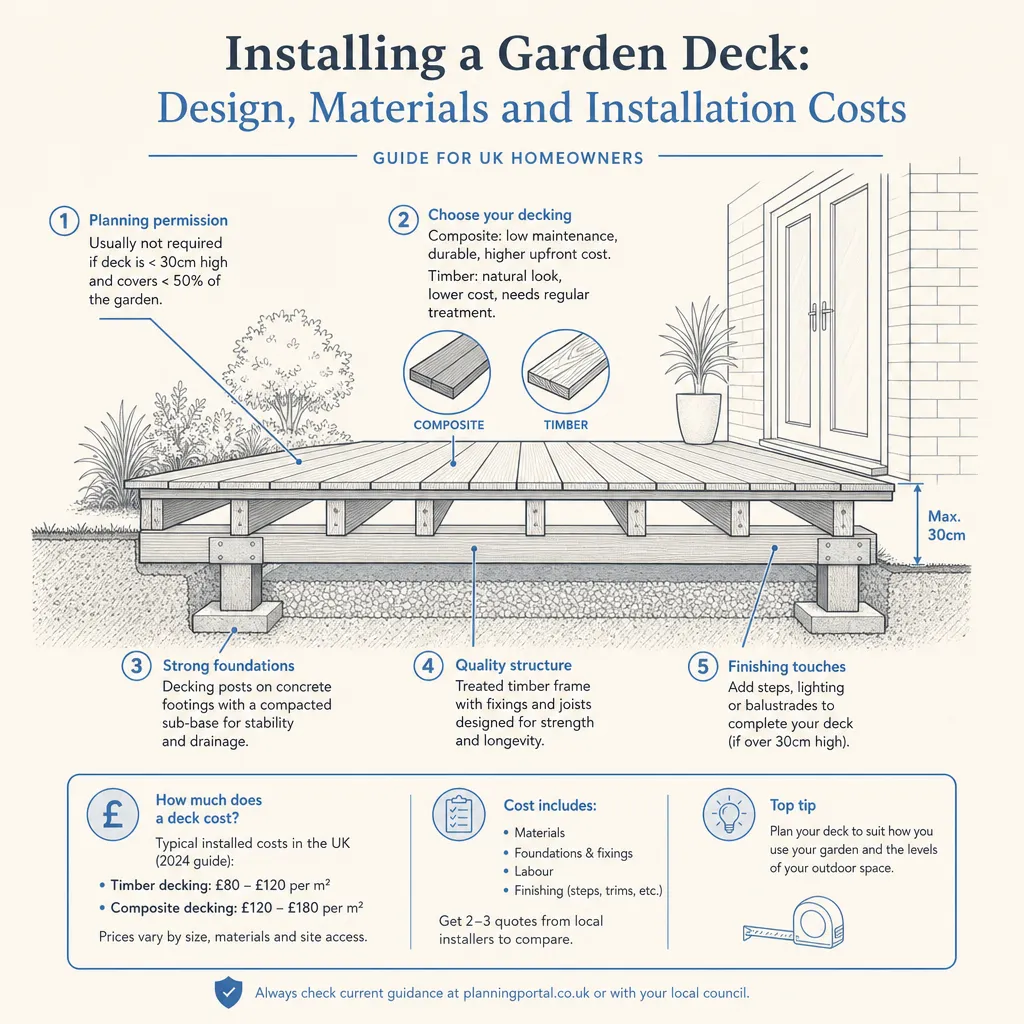
Decisions about garden decking often arise when homeowners want to extend usable outdoor living space, level off a sloping plot, or create a defined entertaining area alongside the house. The choice of material, subframe specification, and installer affects upfront cost, maintenance obligations, and whether the structure requires planning permission or building regulations approval. Getting the design right before work starts prevents expensive remediation and ensures the deck performs well in the UK's frequently wet climate.
Key points
- Decking under 300mm above ground level and covering less than 50% of the garden usually falls within permitted development rights — conservation areas, listed buildings, and some Article 4 directions are exceptions.
- Decks over 300mm above ground may require building regulations approval for structural stability; confirm requirements with your local authority building control before work begins.
- Pressure-treated softwood (graded C16 or C24) is the most budget-friendly structural option; composite boards cost more upfront but eliminate annual oiling and significantly reduce rot risk.
- All decking timber should meet Use Class UC3b as a minimum for near-ground outdoor exposure, or UC4 where posts or bearers contact the ground directly.
- Inadequate joist spacing, undersized subframe timbers, and poor drainage beneath the boards are the most common causes of premature deck failure in UK gardens.
Does garden decking need planning permission?
In most cases, garden decking does not need planning permission if it meets the permitted development criteria set out in the Town and Country Planning (General Permitted Development) (England) Order 2015:
- The decking (and any existing garden buildings combined) covers less than 50% of the total garden area.
- No part of the deck is more than 300mm above ground level.
- The property is not a listed building.
- The deck is not within the curtilage of a conservation area, or — if it is — it sits more than 20 metres from a highway.
If your deck exceeds any of these thresholds, a householder planning application is likely required. Some local authorities also apply Article 4 directions that remove permitted development rights in specific streets or areas. Separate rules apply in Scotland, Wales, and Northern Ireland — check with your local planning authority (LPA) before instructing any contractor.
Building regulations are a separate consideration from planning permission. Decks over 300mm above ground level, or those attached to the house in a way that could affect structural integrity or means of escape from habitable rooms, may require building regulations approval. Your local authority building control team can confirm this before work begins.
Which decking material should you choose?
The three main decking materials used in UK residential gardens each have distinct cost, maintenance, and longevity profiles.
Material | Typical installed cost per m² | Maintenance | Lifespan | Best for |
|---|---|---|---|---|
Pressure-treated softwood | £80–130 | Annual clean and periodic oiling | 10–20 years | Budget builds, painted or stained finishes |
Hardwood (ipe, oak, iroko) | £130–220 | Annual oiling | 20–30+ years | Premium natural look, high-traffic areas |
Composite (e.g. Trex, Millboard) | £150–250 | Occasional wash | 25–30+ years | Low maintenance, consistent colour retention |
Indicative UK costs, last reviewed 2026-05-07. Costs vary by region, site access, and subframe complexity.
Pressure-treated softwood (typically Scots pine or spruce) is widely available and cost-effective. Look for timber pre-treated to Use Class UC3b as a minimum for near-ground outdoor exposure, or UC4 where posts contact the ground. Cheaper softwood without adequate treatment or properly specified joists can deteriorate within five to seven years.
Hardwood (ipe, oak, iroko) offers excellent natural durability and a premium finish. Ask for FSC (Forest Stewardship Council) or PEFC certification as evidence of sustainable sourcing — request this in writing before purchase.
Composite boards are manufactured from a mix of wood fibre and recycled plastic. They resist rot, splinters, and colour fading better than natural timber but cost more initially. Quality varies significantly between manufacturers; ask for independent test data on slip resistance when wet and on thermal expansion before committing to a product.
What affects the cost of a garden deck?
Several factors influence the final installed price beyond material choice alone:
- Subframe specification: A deck over a level, well-drained surface costs less than one requiring concrete footings, steel posts, or groundworks to bridge an uneven or waterlogged garden.
- Size and shape: Rectangular decks are cheaper to build than multi-level or curved designs with angled boards and mitred corners.
- Site access: Restricted rear garden access increases labour time and may complicate material delivery.
- Fixings and finishing: Concealed fixings, stainless steel screws, and integrated lighting or balustrades add cost but improve durability and the finished appearance.
- Steps and balustrades: Required wherever there is a level change. Balustrades must meet BS 6180:2011 requirements for barriers in and about buildings when the deck is over 300mm above ground.
Decision tree: which deck type suits your situation?
- Choose pressure-treated softwood if budget is the primary concern and you are willing to carry out or arrange annual cleaning and treatment.
- Choose hardwood if you prefer a natural finish, plan to leave the timber to silver naturally over time, and want a longer-lasting material without composite aesthetics.
- Choose composite if low maintenance over a 25–30 year period matters more than initial outlay, or if the garden is shaded and prone to moisture retention.
- Consult a landscaper or groundworker if the garden slopes significantly, the soil is waterlogged, or you need a raised deck with concrete footings — these conditions add structural complexity beyond a standard flat installation.
- Check with your local planning authority if the deck will be over 300mm in height, will cover more than 50% of the garden, or if your property is listed, in a conservation area, or subject to an Article 4 direction.
Homeowner checklist before work starts
When to get professional help
Most residential decks are installed by landscapers or specialist decking contractors without requiring an architect or structural engineer. However, professional input is worth seeking if:
- The deck will be raised more than 600mm above ground, significantly increasing structural and safety requirements.
- You plan to attach the deck to the house via a ledger board — this affects the external wall and may require building regulations sign-off regardless of height.
- Ground conditions are poor (waterlogged, filled ground, or near established tree roots) and the appropriate foundation type is unclear.
- Your property is listed, sits in a conservation area, or you are uncertain whether your permitted development rights have already been used by previous works.
How Housey can help
If you are ready to get quotes for your garden deck, Housey can connect you with vetted landscapers covering your area. For design-led projects where layout, levels, and planting integration matter, our garden designers can help you develop a brief and specification before approaching a contractor. If your site requires significant groundworks, concrete footings, or drainage improvement, groundworkers can handle these as part of the same project.
Frequently asked questions
Do I need planning permission for a raised garden deck in the UK?
Not necessarily, but raised decks are more likely to exceed the 300mm height threshold that triggers planning permission under permitted development rules. Decking under 300mm high covering less than 50% of the garden usually does not need consent. Conservation areas, listed buildings, and Article 4 direction areas have additional restrictions — always confirm with your local planning authority before instructing any contractor.
How long does garden decking last?
Lifespan depends on material and maintenance. Pressure-treated softwood typically lasts 10–20 years with annual care; hardwood 20–30 years or more; composite boards 25–30 years with minimal maintenance. Premature failure usually results from poor drainage beneath the deck, undersized subframe timbers, or inadequate timber treatment grade rather than material quality alone.
Is composite decking worth the extra cost?
For shaded or damp gardens, or where low maintenance over a 25-year period is the priority, composite decking often provides better long-term value despite higher upfront costs. In sunny, well-drained gardens with an owner prepared to maintain natural timber, quality hardwood may be equally cost-effective over 20 years. Consider total ownership cost — cleaning products, oiling, and eventual board replacement — not purchase price alone.
Does garden decking need building regulations approval?
Decks over 300mm above ground level may require building regulations approval, particularly where they affect the structural integrity of the house or escape routes from habitable rooms. A deck attached to the house via a ledger board may also trigger building regulations regardless of height. Consult your local authority building control team or an approved inspector before work begins if either scenario applies.
Sources and further reading
- Decking — Permitted Development for Householders — Planning Portal
- Building Regulations Approval — GOV.UK
- Treated Timber Use Classes — Wood Protection Association
- FSC UK — Responsible Forestry Certification — FSC UK
- BS 6180:2011 — Barriers in and About Buildings — BSI Group
Useful next reads
 Improvement & Build
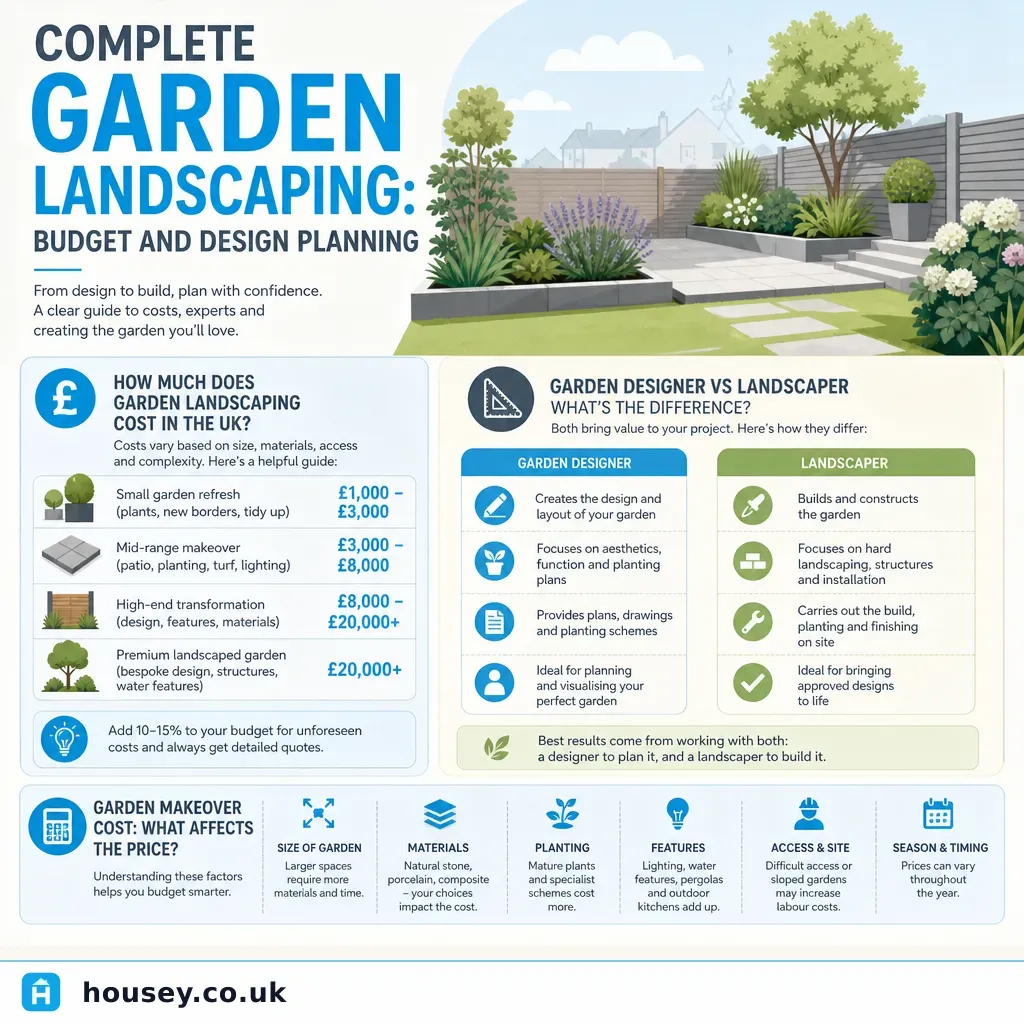
Complete Garden Landscaping: Budget and Design Planning
A mid-range garden landscaping project in the UK typically costs £75–£200 per square metre, covering design, hard landscaping, and planting.
 Improvement & Build
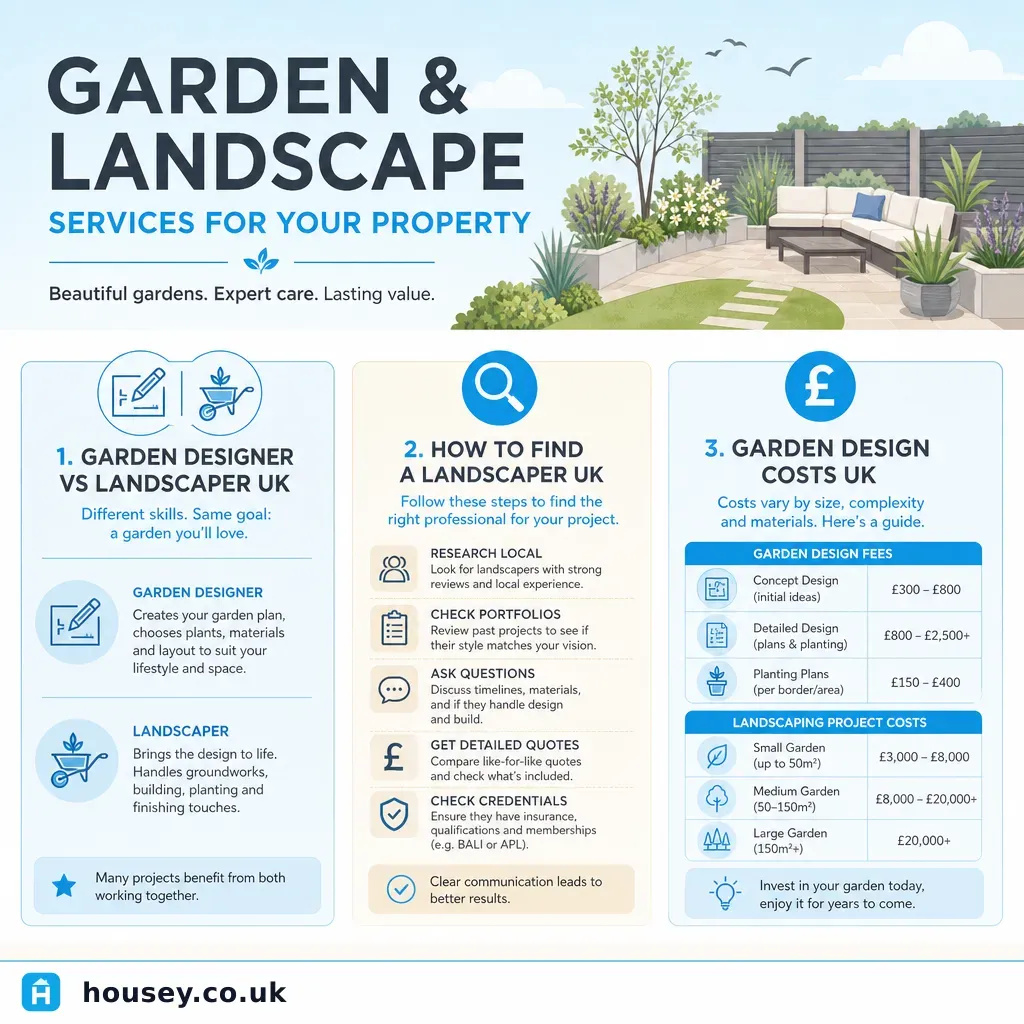
Garden and Landscape Services for Your Property
Garden designers and landscapers both improve outdoor spaces but offer different services.
 Improvement & Build
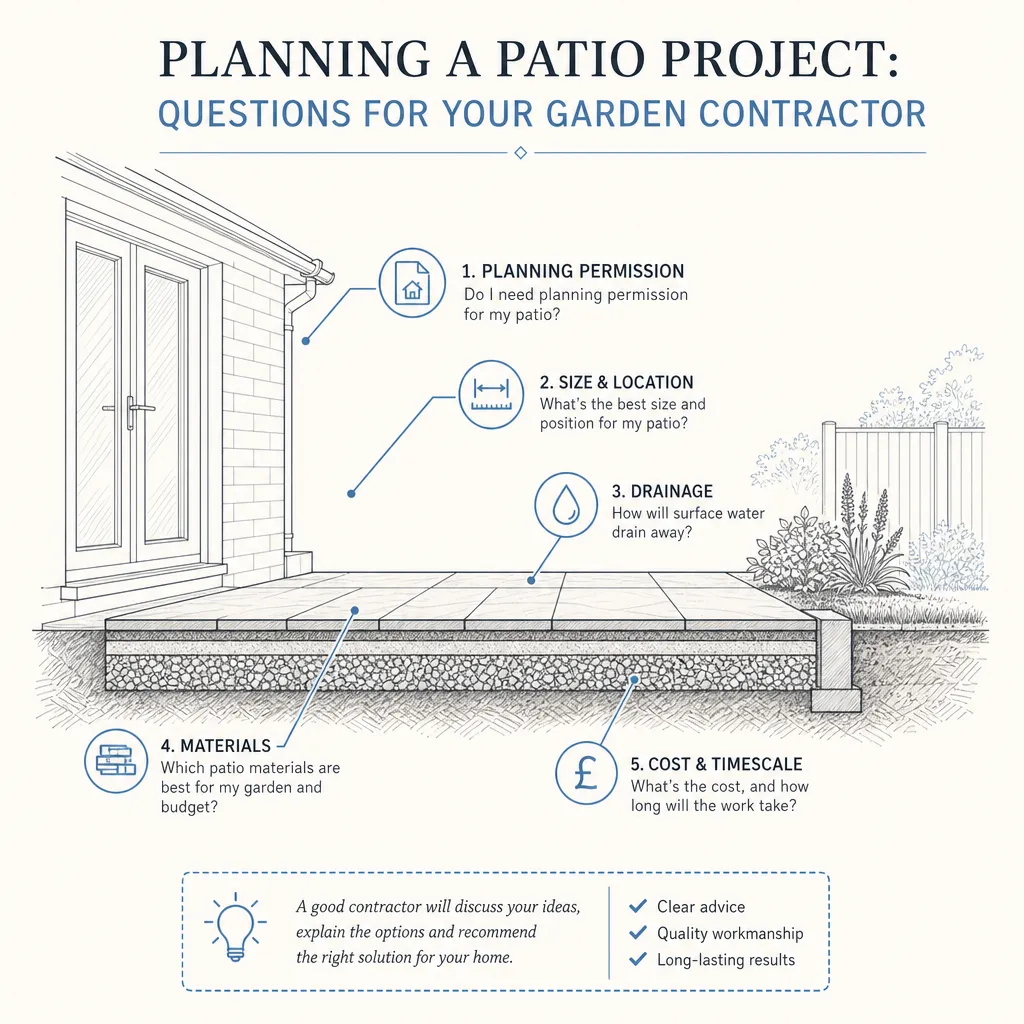
Planning a Patio Project: Questions for Your Garden Contractor
When planning a patio, ask your contractor about sub-base depth, bedding method, drainage gradient (typically 1:60 away from the house), and the frost-resistance rating of the paving.
 Improvement & Build
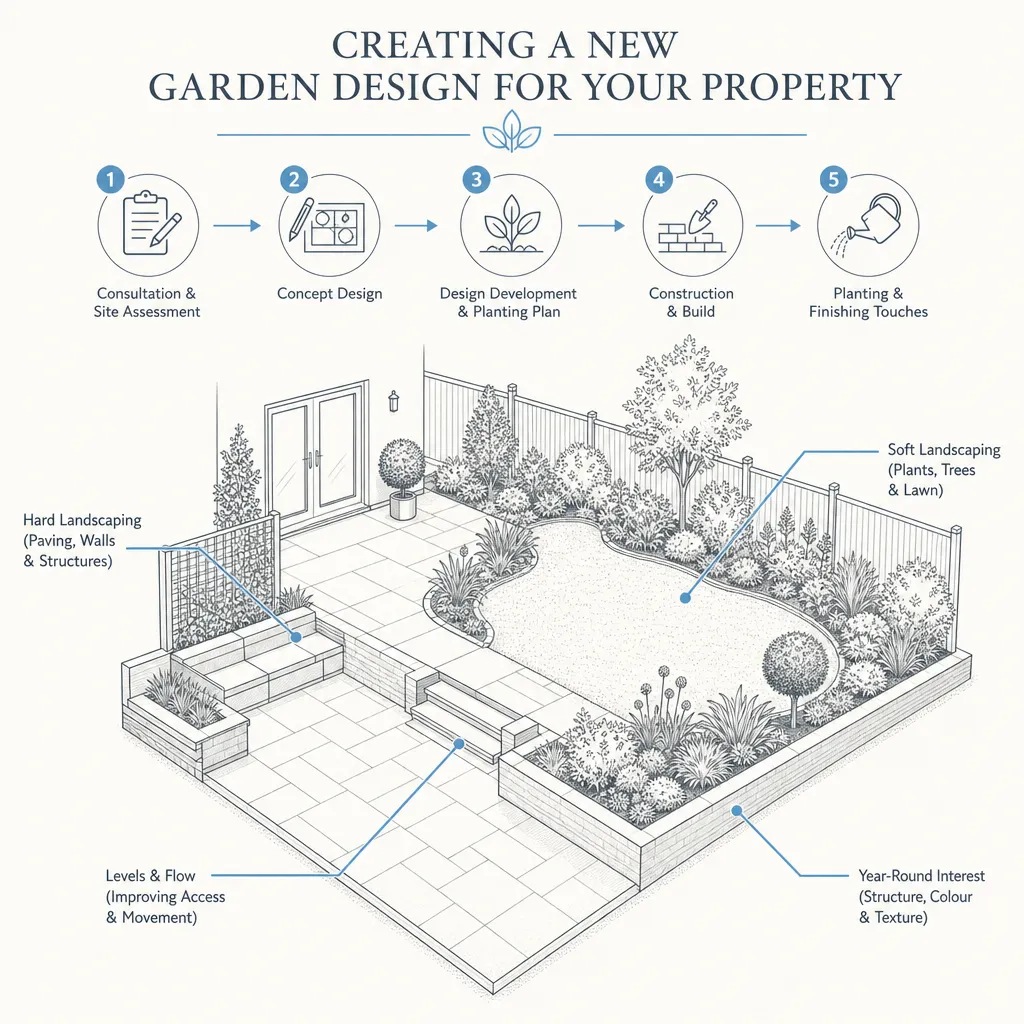
Creating a New Garden Design for Your Property
Creating a new garden design involves assessing your space, setting a realistic budget, deciding on hard and soft landscaping, and choosing a planting scheme suited to your soil and aspect.
 Improvement & Build
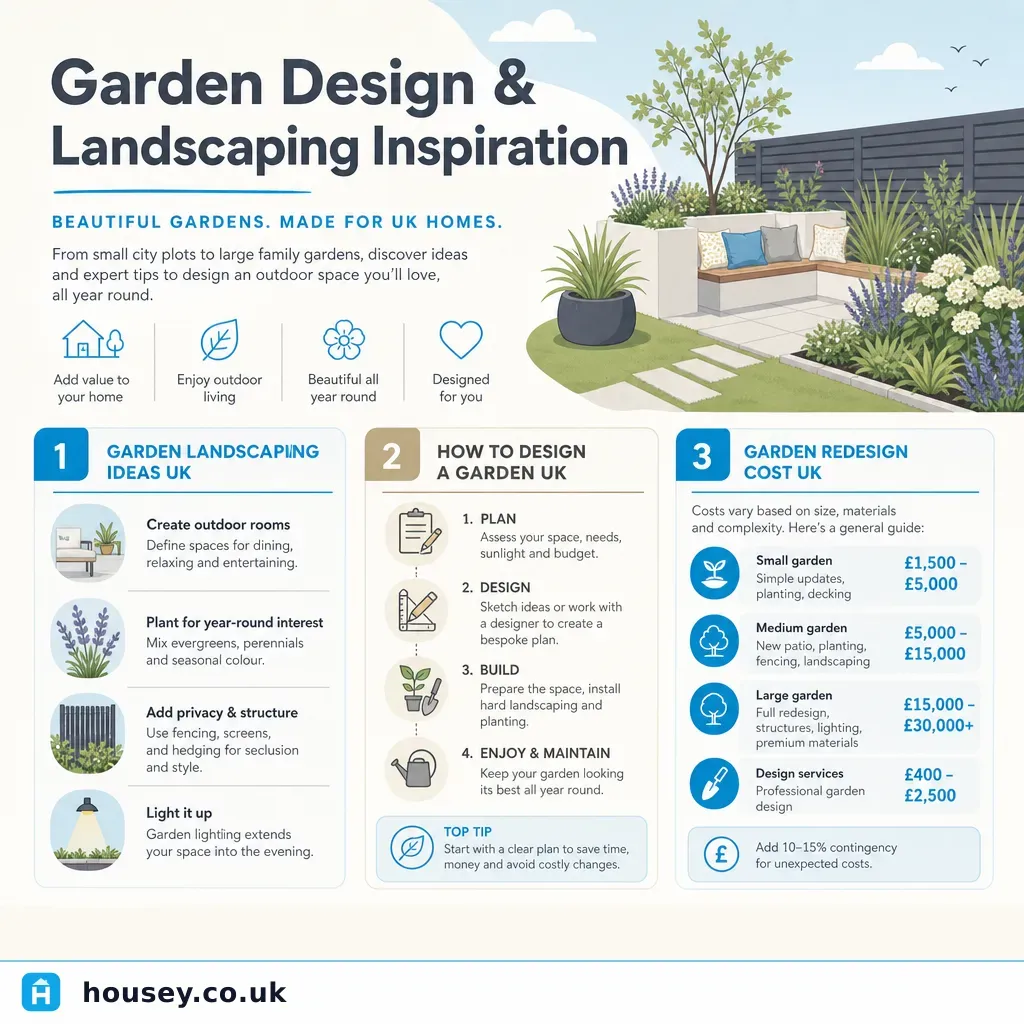
Garden Design and Landscaping Inspiration
Effective garden design starts with assessing your aspect, soil type, and existing features before commissioning any planting or hard landscaping.