Retaining Wall Installation: Cost, Design and Maintenance
By Housey · Last reviewed 1st of June 2026
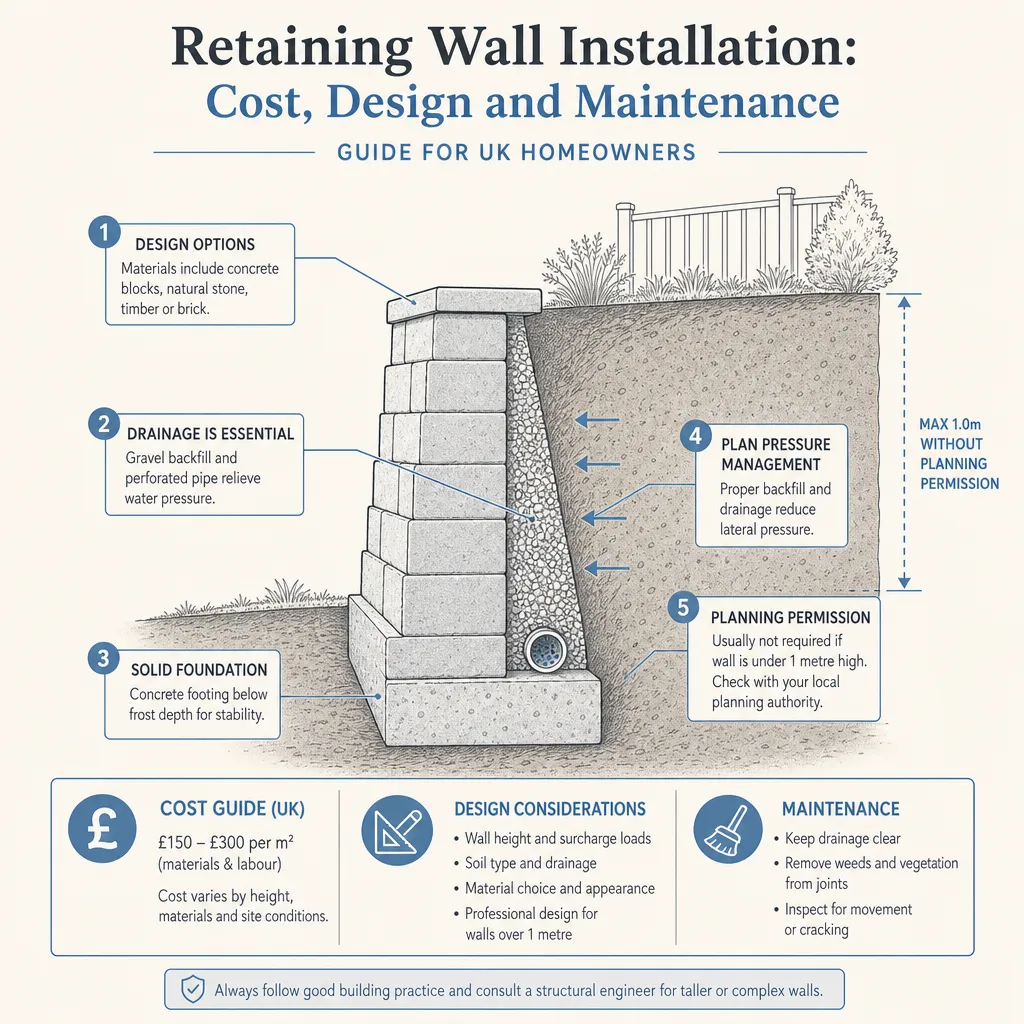
Retaining Wall Installation: Cost, Design and Maintenance
Retaining walls come into consideration whenever a plot, garden, or driveway involves a significant change in ground level — whether you are terracing a sloped rear garden in a 1930s semi, preventing soil encroachment on a path in a Victorian terrace, or stabilising a cut-and-fill driveway. The decision is often prompted by soil erosion, an existing wall beginning to lean, or a landscaping redesign. Getting the design and drainage right from the outset costs far less than remedying a failed wall later.
Key points
- Retaining walls adjacent to a highway must not exceed 1 metre under permitted development (Schedule 2, Part 2, Town and Country Planning (General Permitted Development) (England) Order 2015); elsewhere the limit is 2 metres.
- Hydrostatic water pressure behind an impermeable wall is the most common cause of retaining wall failure — drainage is not optional.
- Indicative installed costs for a concrete block wall run from £200–£350 per linear metre; reinforced and engineered walls can reach £600–£1,500+ per linear metre. Indicative UK costs, last reviewed 2026-06-01.
- The Party Wall etc. Act 1996 may apply if excavation for a new wall falls within 3–6 metres of a neighbouring structure.
- Walls retaining over 1.5 metres of soil, or supporting surcharge loads such as vehicles or structures above, should be designed by a structural or civil engineer.
Types of retaining wall: which is right for your site?
The right material and construction method depends on retained soil height, ground conditions, groundwater, aesthetics, and budget.
Wall type | Best for | Not ideal for | Typical lifespan | Main risk if wrong |
|---|---|---|---|---|
Concrete block (gravity) | Low-to-medium walls under 1.2m | High-load or tall walls | 30–50+ years | Fails without drainage |
Brick (solid or cavity) | Period gardens, front boundaries | High groundwater sites | 40–80 years | Mortar failure; needs DPC |
Treated timber sleepers | Informal gardens, walls under 0.8m | High moisture, heavy loads | 10–25 years | Rot at ground level |
Gabion baskets | Steep banks, drainage-heavy sites | Small residential gardens | 30–50+ years | Low risk — free-draining by design |
Natural stone (dry-stone) | Rural, cottage, heritage gardens | Steep load-bearing walls | 50–100+ years | Skilled labour required |
Reinforced concrete (cantilevered) | Walls over 1.5m, heavy surcharge | Domestic low-height situations | 50–80+ years | Engineer input required |
Planning permission and building regulations
Most low garden retaining walls fall under permitted development, but there are important exceptions.
Under Schedule 2, Part 2 of the Town and Country Planning (General Permitted Development) (England) Order 2015, a wall can be erected without planning permission if:
- It is not adjacent to a highway and does not exceed 2 metres in height; or
- It is adjacent to a highway and does not exceed 1 metre.
Walls in conservation areas, Areas of Outstanding Natural Beauty (AONBs), or subject to an Article 4 direction may have reduced or removed permitted development rights. Check with your local planning authority (LPA) before starting work. Rules differ in Scotland, Wales, and Northern Ireland.
Building regulations under Approved Document A (Structure) may apply to load-bearing retaining walls or those affecting structural stability. For walls retaining over 1 metre of soil — particularly where loads from structures, driveways, or public footpaths act above — seek professional advice before construction begins.
Drainage: the most important design decision
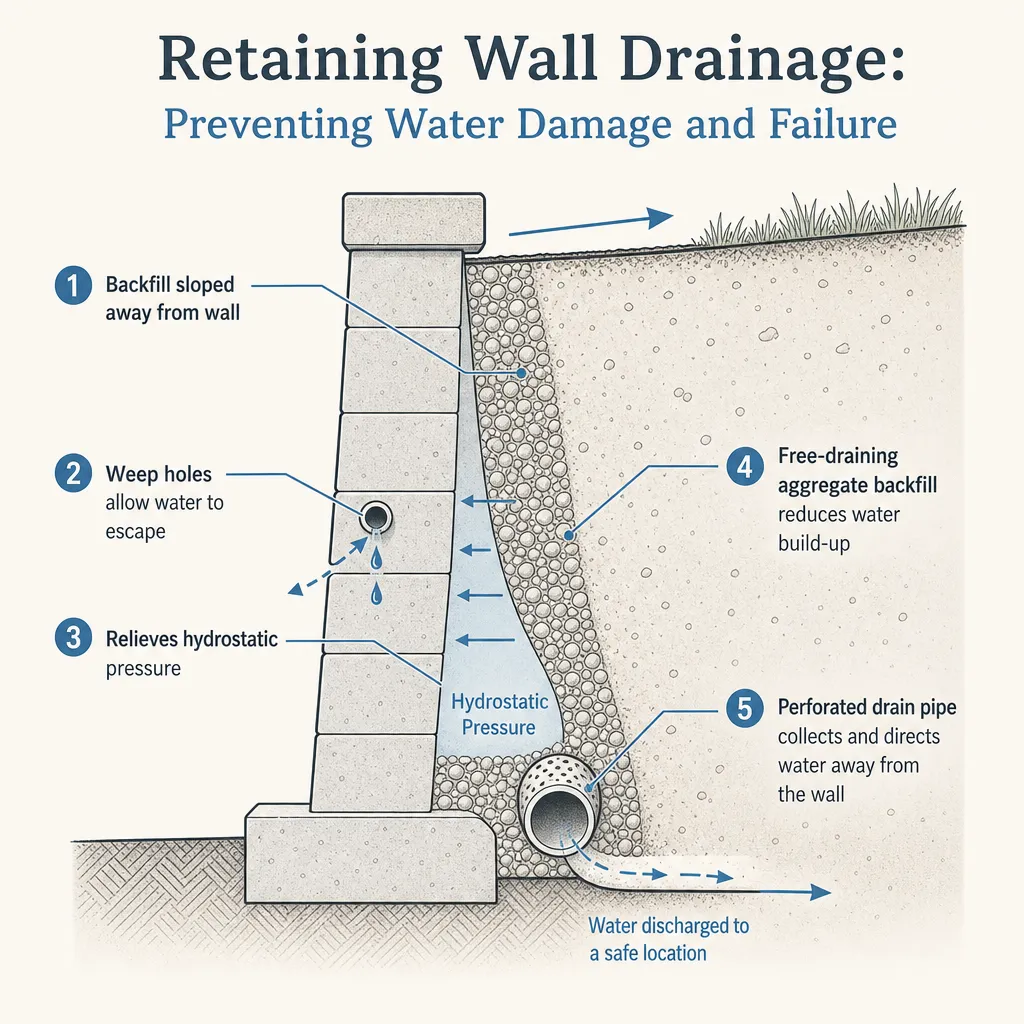
Hydrostatic pressure — water building up in saturated soil behind a wall — is the primary cause of retaining wall bulging, leaning, and collapse. Every retaining wall needs a drainage strategy before the first block is laid.
Standard drainage provisions for residential retaining walls:
- Weep holes: gaps at the base of the wall (typically 75–100mm diameter at 900mm–1.8m centres) allowing water to escape through the face.
- Granular backfill: free-draining aggregate (typically 20mm clean stone, minimum 300mm wide) placed immediately behind the wall instead of retained soil.
- Perforated pipe drain: a slotted pipe in the granular fill at wall-base level, connecting to a surface water gully or soakaway.
- Geotextile membrane: separates granular fill from native clay or soil, preventing fines migration clogging the drainage layer over time.
Omitting drainage to reduce upfront cost is the single most common mistake in domestic retaining wall construction. A wall that fails due to water pressure typically requires complete demolition and rebuilding.
Indicative costs
All figures are indicative UK costs, last reviewed 2026-06-01. Costs vary significantly by region, access, ground conditions, and specification. Obtain at least three written quotes.
Wall type | Indicative installed cost per linear metre |
|---|---|
Treated timber sleepers (up to 0.8m) | £120–£250 |
Concrete block, plain finish (up to 1.2m) | £200–£350 |
Brick-faced block wall (up to 1m) | £280–£450 |
Gabion baskets (0.5–1.5m) | £150–£300 |
Natural stone, dry-stone (up to 1m) | £300–£600+ |
Reinforced concrete, engineered (over 1.5m) | £600–£1,500+ |
Additional cost items to budget for: concrete strip foundation (confirm whether included in contractor quotes), structural engineer fees (£500–£2,000 for a domestic wall design), building control fees if applicable, and coping stones or rendering.
A worked UK property scenario
A homeowner in a 1970s semi-detached house in Surrey has a rear garden that drops approximately 1.2 metres from the back of the house to a neighbour's fence. Surface water pools against the house wall after heavy rain. They want to terrace the garden into two usable levels.
What the project involves:
- An 8-metre-long concrete block retaining wall, approximately 1 metre high, with a 200mm wide mass concrete strip foundation.
- A 300mm granular drainage layer (20mm clean stone) behind the wall, with a perforated pipe draining to an existing surface water gully.
- Weep holes at 1.2-metre centres.
- The wall is not adjacent to a highway and is under 2 metres — permitted development applies; no planning application required.
- No building control notification required for a private garden wall at this height with no structural surcharge above.
Indicative total cost: £2,000–£3,500 for supply and installation by a groundworker. Indicative UK costs, last reviewed 2026-06-01. Quotes vary.
Maintenance checklist
Once built, a retaining wall needs periodic inspection to remain safe and functional:
- Annually: clear weep holes of debris, plant growth, and soil blockages.
- Annually: walk the full wall length looking for lean, bowing, or new cracking.
- Every 2–3 years: repoint brickwork or mortared stone where mortar is missing or crumbling.
- Every 2–3 years: treat timber sleepers at ground level with approved wood preservative.
- After heavy rain: inspect the base and face of the wall for erosion, water pooling, or settlement.
- Ongoing: remove invasive tree roots and climbing plants whose roots can penetrate mortar joints or undermine foundations.
Red flags: when to call a professional
Stop monitoring and instruct a structural or civil engineer if you observe any of the following:
- The wall is leaning away from the retained soil or shows visible bowing in a panel.
- Horizontal cracks running along the face of a block or concrete wall — these indicate lateral stress and possible imminent failure.
- Cracking in adjacent surfaces such as paths, driveways, or floors above the wall that are dropping or tilting.
- Water is emerging from the wall face rather than through the weep holes — drainage has likely failed.
- The wall is over 1.5 metres high and shows any sign of movement.
- Planned excavation is within 3–6 metres of a neighbouring structure — the Party Wall etc. Act 1996 may apply.
When to get professional help
A competent groundworker can design and build most domestic retaining walls under 1 metre. For walls over 1 metre retaining height — or where vehicles, buildings, or other loads act on the soil above the wall — involve a structural or civil engineer before construction begins. If an existing wall shows any red flags listed above, commission a professional structural assessment rather than attempting repair without a diagnosis.
How Housey can help
Housey connects homeowners with qualified local groundworkers for standard garden retaining walls, and with experienced civil engineers for complex or engineered solutions. Describe your project and receive quotes from vetted local professionals.
Frequently asked questions
Does a retaining wall need planning permission?
Most domestic garden retaining walls are permitted development in England. Adjacent to a highway, the limit is 1 metre without planning permission; elsewhere it is 2 metres. Conservation areas, AONBs, and Article 4 directions can remove these rights. Always verify with your local planning authority before starting. Rules differ in Scotland, Wales, and Northern Ireland.
How long does a retaining wall last?
Lifespan depends on material and drainage quality. Well-built brick or concrete block walls with proper drainage typically last 40–80 years. Treated timber sleepers usually last 10–25 years. Dry-stone walls can last a century or more when maintained. Poor drainage is the most common cause of premature failure regardless of material choice.
What drainage do I need behind a retaining wall?
At minimum: weep holes at 0.9–1.8 metre intervals and a free-draining granular backfill layer at least 300mm wide. For larger walls or high-groundwater sites, add a perforated pipe drain at the base of the granular layer connected to a surface water drain or soakaway. A geotextile membrane between fill and native soil will extend the life of the drainage layer.
Can I build a retaining wall myself?
A small wall under 0.6 metres using timber sleepers or concrete blocks can be a competent DIY project — provided drainage is installed correctly. Taller walls, walls close to neighbouring structures or boundaries, or walls on poor ground should be designed and built by a qualified groundworker or structural engineer.
Sources and further reading
- Approved Document A: Structure — HM Government
- Town and Country Planning (General Permitted Development) (England) Order 2015, Schedule 2 Part 2 — legislation.gov.uk
- Party Wall etc. Act 1996 — legislation.gov.uk
- Planning Portal: Fences, gates and garden walls — Planning Portal
Useful next reads
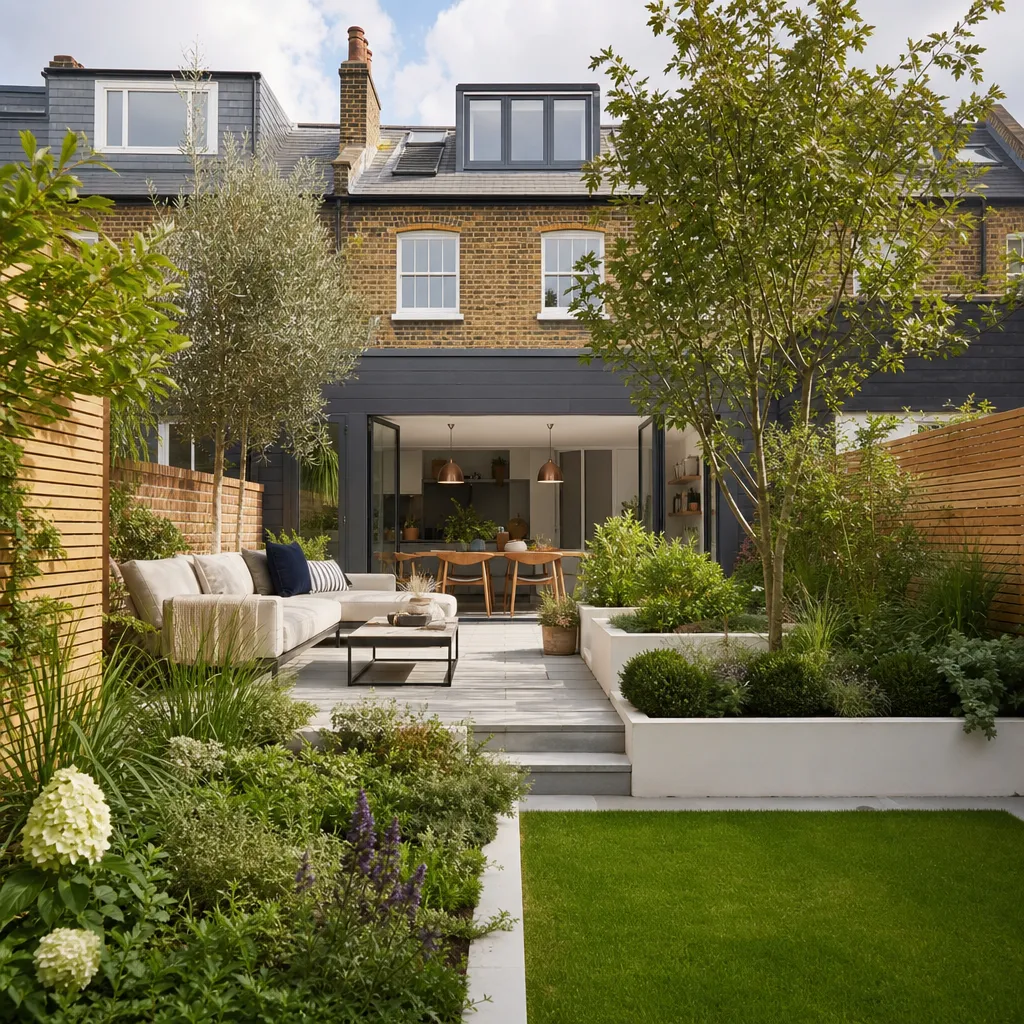 Improvement & Build
Seasonal Garden Transformations and Outdoor Design Ideas
A successful garden transformation in the UK works with the seasons rather than against them — establishing structure and hard landscaping in autumn or winter, planting in spring, and enjoying the results through summer.
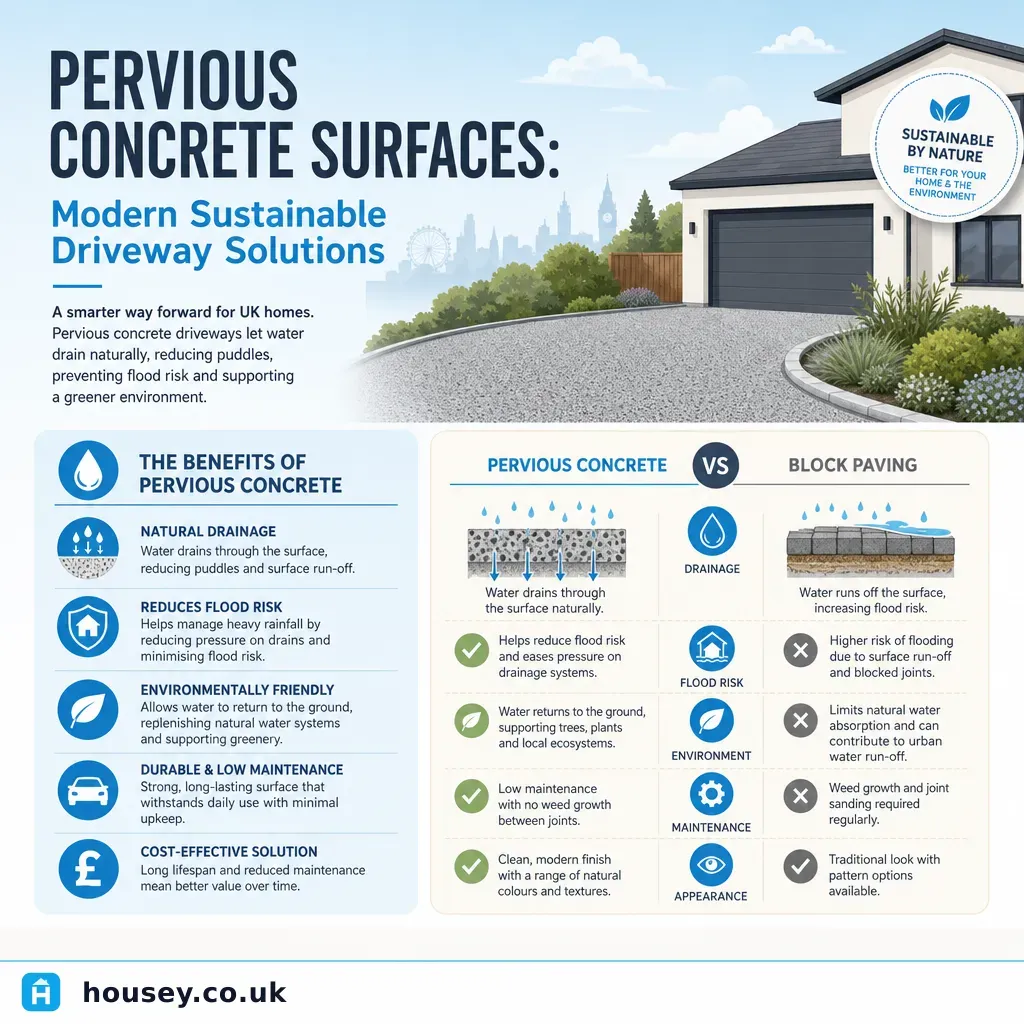 Improvement & Build
Pervious Concrete Surfaces: Modern Sustainable Driveway Solutions
Pervious concrete (also called porous or no-fines concrete) is a specialist concrete mix with large voids that allow rainwater to pass through the surface and into the sub-base below.
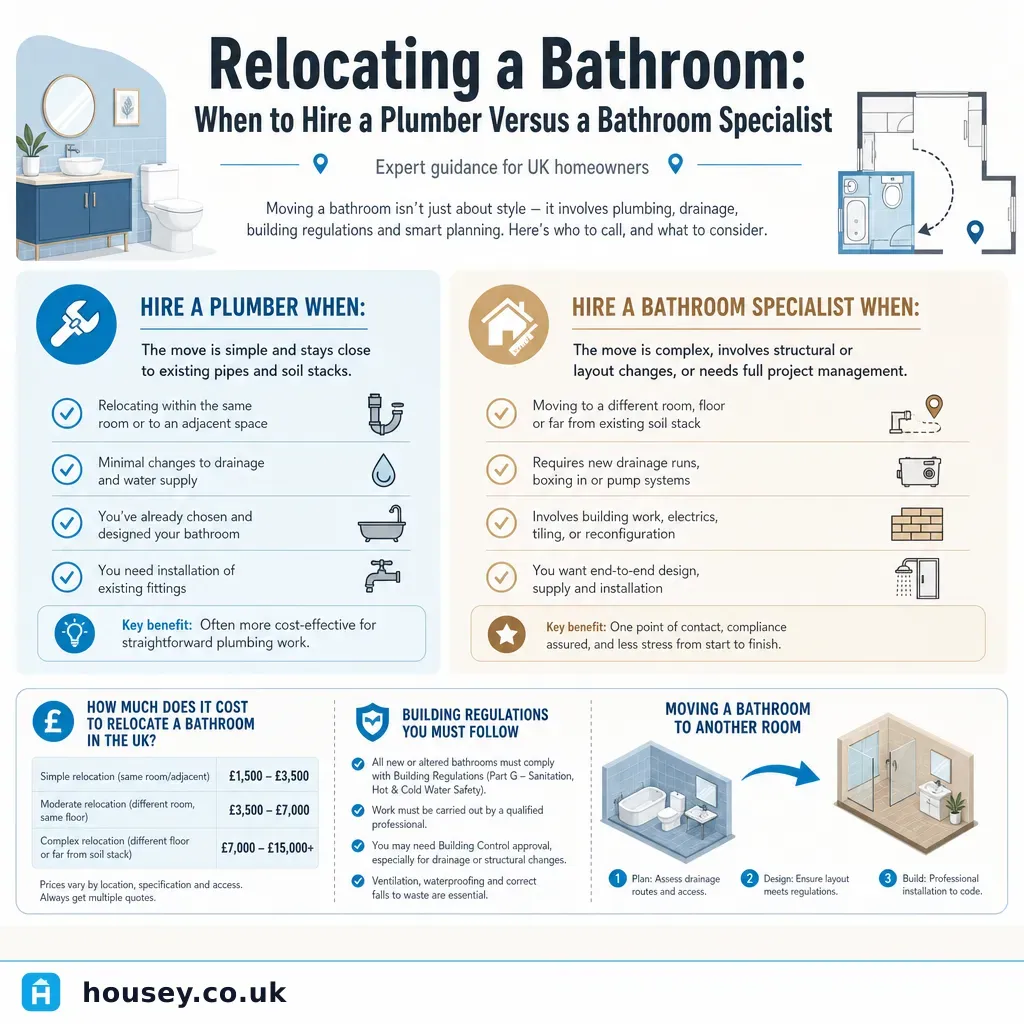 Improvement & Build
Relocating a Bathroom: When to Hire a Plumber Versus a Bathroom Specialist
Relocating a bathroom usually requires both a qualified plumber for pipework and drainage and other specialist trades for electrics, tiling, and finishes.
 Improvement & Build
Designing Garden Irrigation Around Trees and Landscaping Elements
Design irrigation around trees by respecting the root protection area defined under BS 5837:2012, using drip or leaky pipe delivery rather than spray heads, and putting the tree zone on its own circuit.
 Improvement & Build
Retaining Wall Drainage: Preventing Water Damage and Failure
Retaining wall drainage fails when hydrostatic pressure builds behind the structure due to poor drainage layers, blocked weep holes, or impermeable backfill.