When to Engage a Structural Engineer During Home Purchase
By Housey · Last reviewed 25th of May 2026
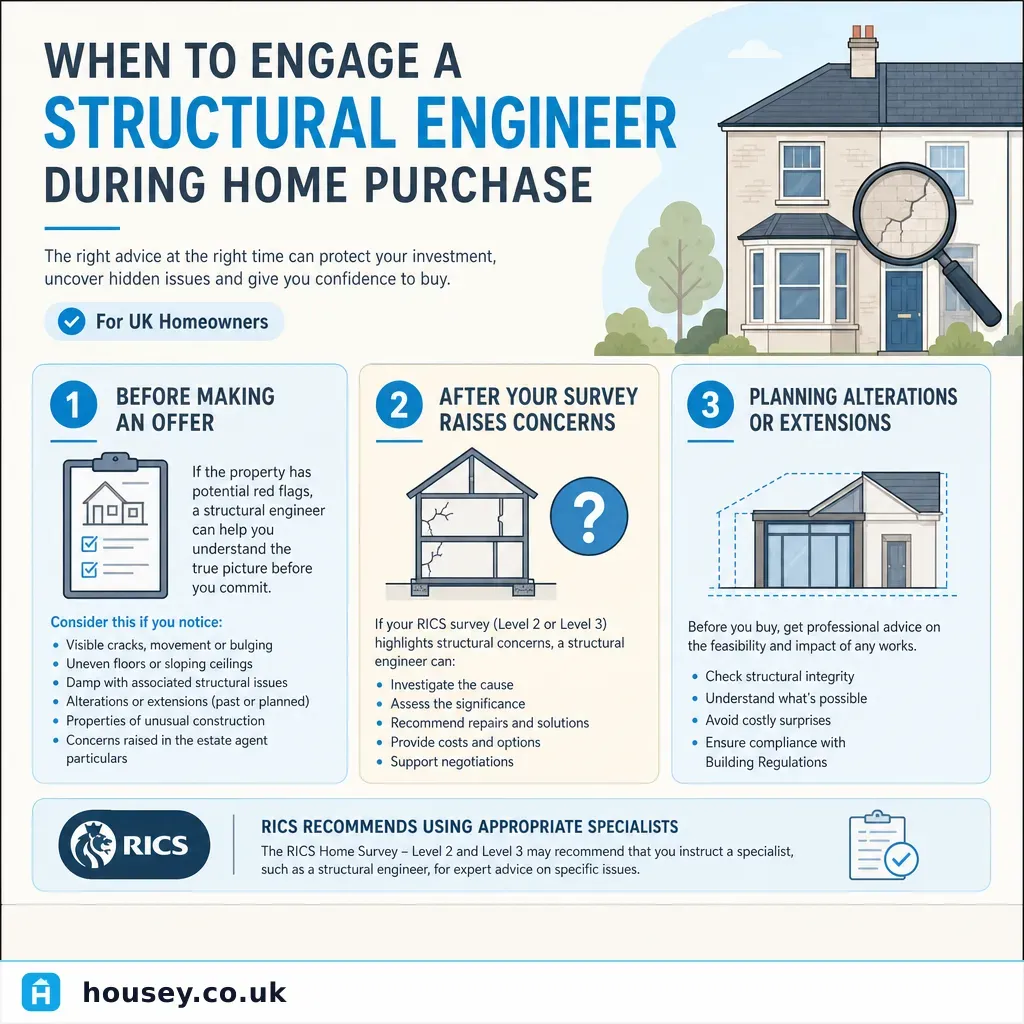
When to Engage a Structural Engineer During Home Purchase
The period between having an offer accepted and exchanging contracts is when structural concerns should be identified and assessed — not after you own the property. A standard home survey flags potential issues, but it does not provide the engineering diagnosis that a structural engineer can offer. For buyers looking at older properties, homes with visible cracks, or buildings with a history of subsidence, knowing when to request a structural assessment can be the difference between a sound investment and a costly post-completion surprise.
Key points
- A RICS Level 3 Building Survey is the most detailed general survey available but is not an engineering assessment; if it flags suspected movement or significant cracking, a structural engineer's inspection is typically the recommended next step.
- The RICS HomeBuyer Survey (Level 2) uses a traffic-light condition rating system (ratings 1–3); a condition rating 3 on any structural element warrants further specialist investigation before exchange of contracts.
- Properties built before 1919 are significantly more likely to contain solid-wall construction, original materials, and historic alterations that increase the risk of structural defects compared with post-war housing.
- A structural engineer's report is not routinely required by mortgage lenders, but lenders may withhold funds if a valuation report identifies a structural risk they consider unacceptable without further investigation.
- Structural engineers should hold IStructE (Institution of Structural Engineers) or ICE (Institution of Civil Engineers) membership; always verify Chartered Engineer (CEng) status before instructing for complex structural assessments.
What a structural engineer's assessment covers
A structural engineer inspects a property with a specific engineering focus that differs from a general home survey. Their assessment typically examines:
- Load-bearing walls, columns, lintels, and beams
- Foundation type and condition, including visible indications of differential settlement or heave
- Crack patterns — type (stepped, vertical, horizontal, diagonal), width, and probable cause
- Roof structure: rafters, purlins, ridge board, and any signs of spread or sagging
- Floor structures: joists, beams, and visible deflection
- Evidence of previous structural repairs, underpinning, or alterations to load-bearing elements
The output is a written report with an engineering opinion on the cause and severity of any issues identified, and usually a recommendation for remediation, monitoring, or further investigation such as drain surveys or trial pits.
Red flags that suggest you need a structural engineer
The following observations in a home survey report — or visible during your own viewings — are commonly cited as reasons to request a specialist structural assessment before exchange:
- Diagonal or stepped cracking through brickwork, particularly wider than 5 mm or running from the corners of windows and doors
- Horizontal cracking in mortar courses, which may indicate wall tie failure in cavity-wall properties (common in homes built between the 1920s and 1980s)
- Leaning or bulging walls, particularly on gable ends or where extensions join the main structure
- Uneven or sloping floors, especially in older properties where floor joists may have decayed or been cut to accommodate alterations
- Previous subsidence noted in the seller's Property Information Form (TA6) or disclosed by the seller
- Near large trees or in shrinkable clay areas — surveyors may flag subsidence risk based on proximity to mature trees on clay soils
- A RICS condition rating 3 on any structural element in a Level 2 or Level 3 survey report
- Evidence of historic repairs or alterations not documented, including removed walls, new beams, or patched brickwork
Decision tree: do you need a structural engineer before exchange?
- Yes, instruct a structural engineer if your home survey returns a condition rating 3 on any structural element, the surveyor recommends specialist investigation, or you can see cracks wider than approximately 5 mm at viewing.
- Consider a structural engineer if the property is pre-1919, solid-wall, has had extensions or conversions, is close to large trees, or is in an area of shrinkable clay (much of London, the Midlands, and parts of the South East).
- Your standard survey may be sufficient if the property is a conventional post-1945 build in good condition, with no visible cracking or movement and a clean survey report.
- Check the TA6 Property Information Form for disclosure of previous subsidence, structural works, or underpinning — any disclosure should prompt specialist investigation.
- Ask your conveyancing solicitor to review survey findings alongside the property title and any insurance or covenant history before advising whether to proceed, negotiate, or request further reports.
Negotiating on survey findings
A structural engineer's report that identifies significant issues does not automatically mean you should withdraw from a purchase. In many cases, buyers use the report to:
- Negotiate a reduction in the asking price to reflect the cost of remediation
- Request the seller carries out repairs or underpinning before exchange
- Obtain a structural warranty or insurance-backed guarantee as a condition of sale
The key is to have a clearly costed remediation recommendation from the structural engineer before entering any price renegotiation. An engineer who can specify the repair method and provide an indicative cost range is far more useful in negotiation than a report that identifies concerns without quantifying them.
Important limitations
This article provides general information for UK homebuyers considering whether to seek a structural engineer's assessment. It does not constitute engineering or legal advice. Structural conditions vary significantly between individual properties, and only a qualified engineer who has inspected the specific property can give a reliable opinion on the nature, severity, or cost of any structural issue. Mortgage lending requirements, seller disclosure obligations, and remediation standards may also vary. Always seek professional advice before making financial decisions based on structural findings.
When this becomes urgent
Act promptly if any of the following apply:
- A survey report specifically recommends further structural investigation and you are approaching your exchange deadline
- You observe actively widening cracks at viewing or between visits
- A home survey returns a condition rating 3 on the roof structure, walls, or foundations
- The seller's TA6 form discloses previous subsidence, flooding, or structural works
- Your mortgage lender's valuation has flagged a structural concern and withheld funds subject to a satisfactory engineer's report
In these situations, allow sufficient time before exchange to instruct an engineer, receive the report, and take solicitor advice on the findings.
What to ask a qualified professional
Before instructing a structural engineer during a property purchase, ask:
- Are you a Chartered Member of IStructE (MIStructE) or a Chartered Civil Engineer (MICE), and do you hold Chartered Engineer (CEng) status?
- Do you carry professional indemnity insurance, and for what limit?
- Have you inspected properties of this age and construction type before?
- What will your report specifically cover — foundations, cracks, roof structure, and floor structure?
- What is your typical turnaround from inspection to report? (Important if exchange is imminent.)
- If further investigation is recommended — trial pits, drain CCTV survey, or crack monitoring — can you arrange or advise on that?
- Will your report provide a clear recommendation on structural soundness and an indication of remediation cost?
When to get professional help
A structural engineer should be instructed — not an online assessment or a general builder's opinion — whenever a home survey flags structural concerns, you can see significant cracking at viewing, or the property has a history of subsidence, underpinning, or structural repairs. The combination of a RICS survey and a structural engineer's report for specific concerns gives the most complete picture before exchange.
How Housey can help
Housey can connect you with vetted professionals through our structural surveys service. If a surveyor's report has raised concerns, our structural engineering service can help you obtain a specialist assessment before exchange. You can also find RICS-qualified surveyors through RICS Home Surveys for Level 2 and Level 3 assessments.
Frequently asked questions
Does a standard RICS survey include a structural engineer's opinion?
No. A RICS Level 2 or Level 3 survey is carried out by a chartered surveyor, not a structural engineer. Surveyors identify visible defects and rate their severity, and will typically recommend further specialist investigation when structural concerns are present — but they do not provide engineering calculations or formal structural engineering opinions.
How much does a structural engineer's report cost when buying a house?
A residential structural inspection and written report typically costs £300–£600 for a standard assessment (Indicative UK costs, last reviewed 2026-05-25 — obtain your own quotes as fees vary by property size, region, and scope). More complex inspections involving multiple defects, trial pits, or specialist ground investigations will cost more. VAT is normally charged at the standard rate.
Can a structural report delay exchange?
Instructing an engineer, receiving the inspection, and obtaining a written report typically takes one to two weeks. Notify your solicitor and estate agent as soon as you decide to instruct so everyone is aware of the potential timeline. Where possible, instruct promptly after receiving a survey that recommends further investigation — do not leave it until the week before your agreed exchange date.
Is a structural engineer's report required by my mortgage lender?
Not automatically. Mortgage lenders commission their own valuation survey, which is not the same as a structural assessment. However, if the lender's valuation identifies a structural risk, they may require a satisfactory structural engineer's report before releasing mortgage funds. Your solicitor will advise you if this condition is attached to your mortgage offer.
Sources and further reading
- RICS Home Survey Standard — RICS: Home Survey Level 1, 2, and 3 standards and condition ratings
- Institution of Structural Engineers (IStructE) — IStructE: professional standards and member verification
- TA6 Property Information Form guidance — GOV.UK: seller disclosure obligations
- Property surveys and valuations — Citizens Advice: independent guidance on survey types
- HM Land Registry — GOV.UK: property title and register information
Useful next reads
 Buying & Moving
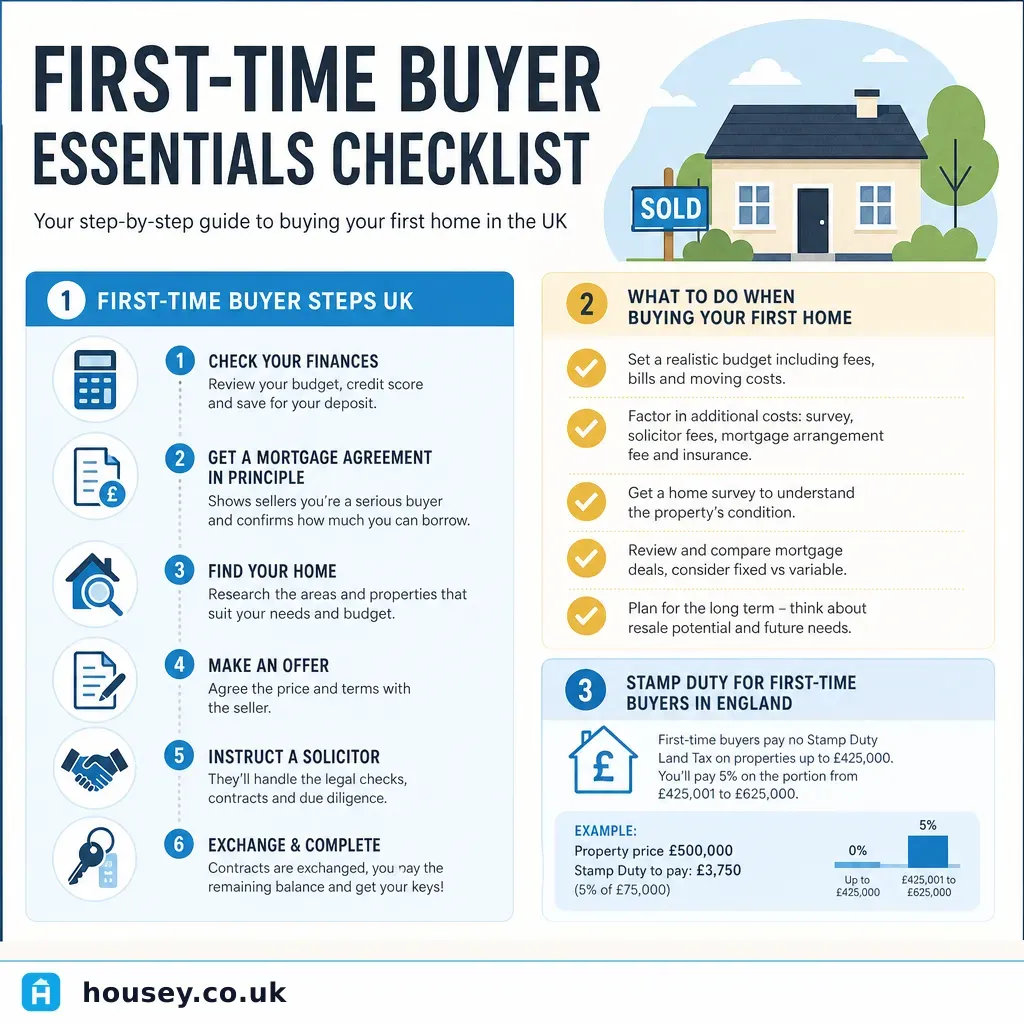
First-Time Buyer Essentials Checklist
Buying your first home involves obtaining a mortgage in principle, making an offer, instructing a solicitor, arranging a survey, and exchanging contracts before completion.
 Buying & Moving
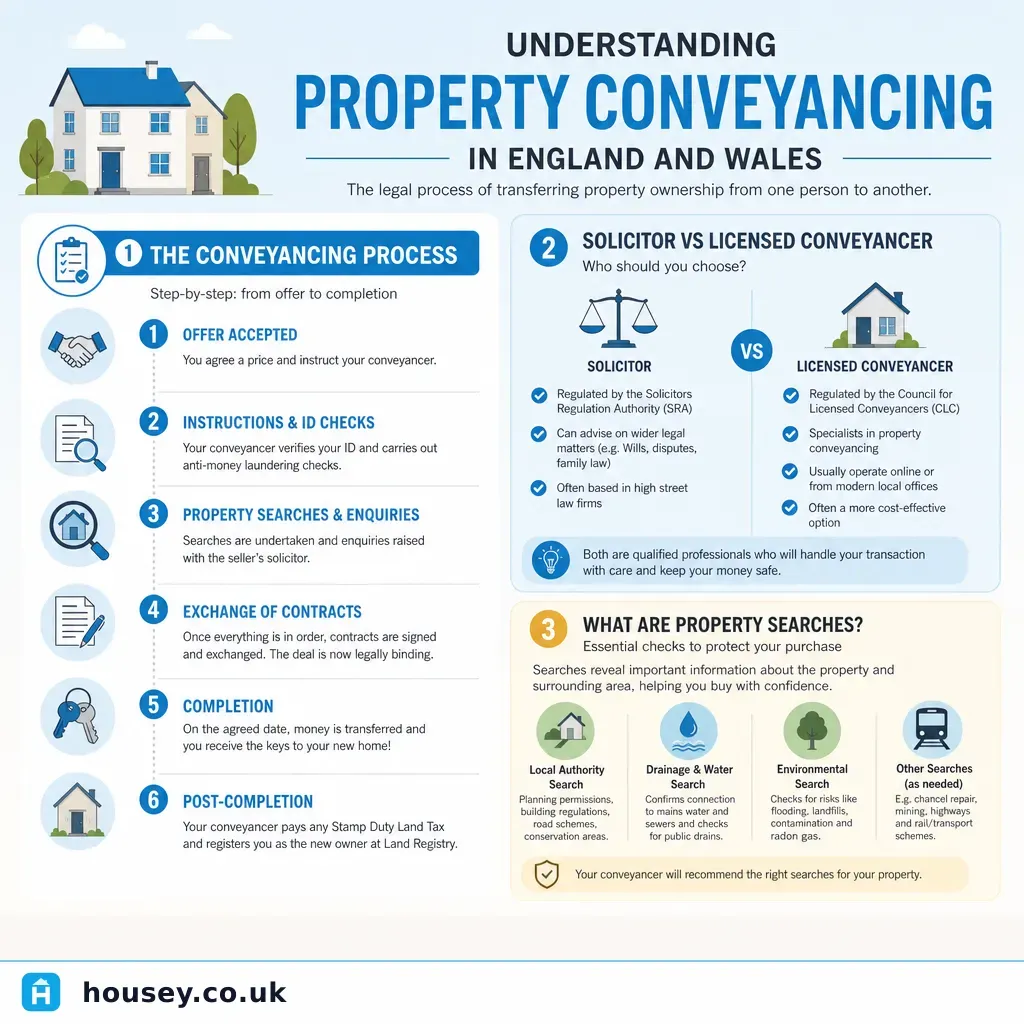
Understanding Property Conveyancing in England and Wales
Conveyancing is the legal process of transferring property ownership in England and Wales.
 Buying & Moving
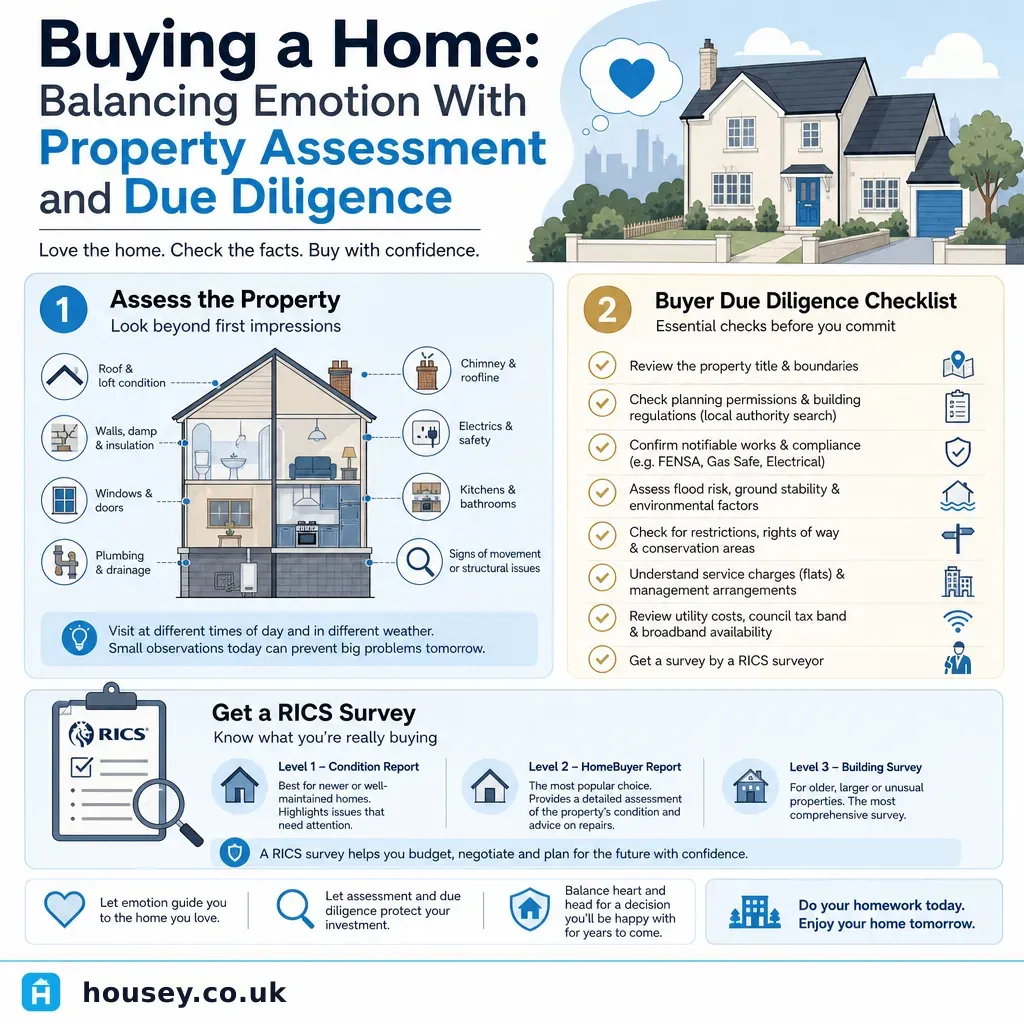
Buying a Home: Balancing Emotion With Property Assessment and Due Diligence
It's natural to feel strongly about a property, but buying decisions should be supported by a formal survey, proper searches, and independent legal advice.
 Buying & Moving
First-Time Buyer Essentials: Your Complete Guide to Purchasing Property
Buying your first UK home involves six key stages: securing a mortgage Agreement in Principle, making an offer, instructing a solicitor, commissioning an independent RICS survey, exchanging contracts (the legally binding point), and completing.
 Buying & Moving
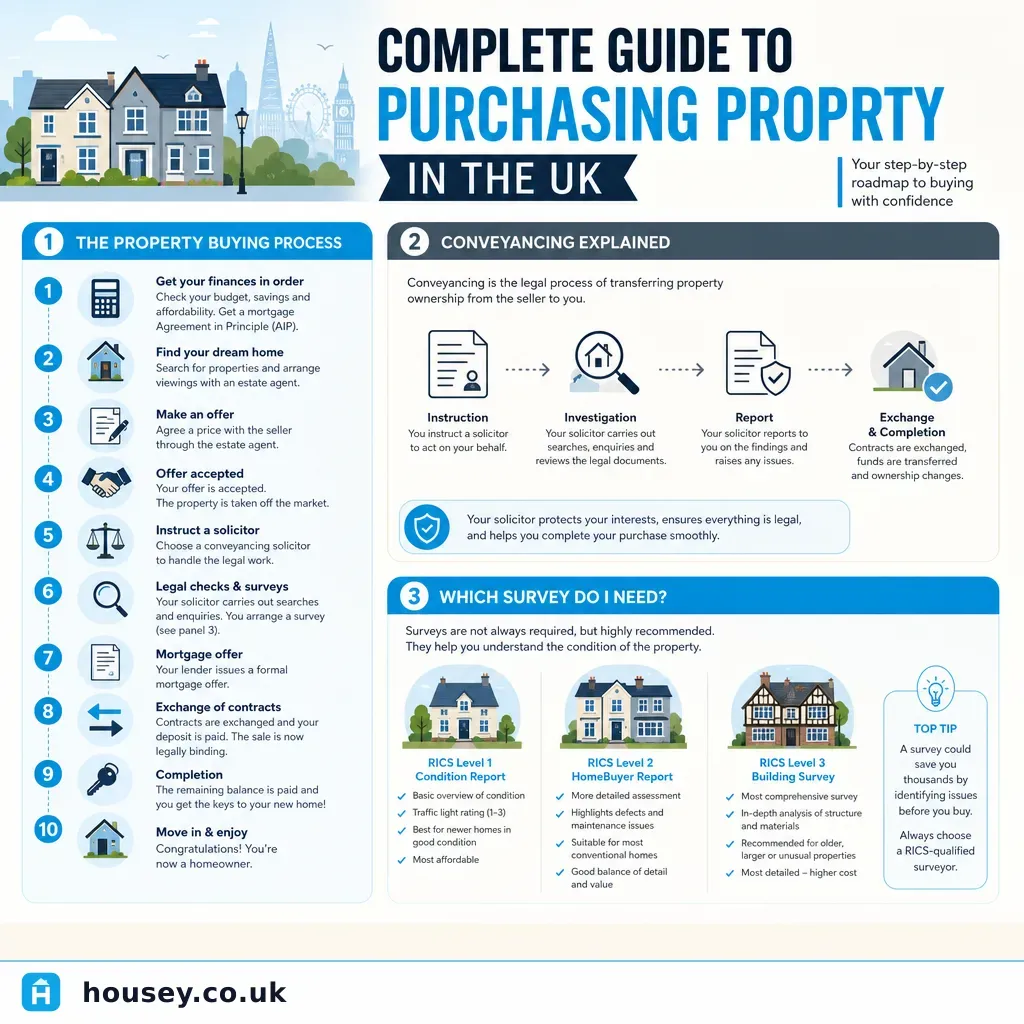
Complete Guide to Purchasing Property in the UK
Buying property in England and Wales typically takes 12 to 16 weeks from offer acceptance to completion.