Moving to a Larger Property: Planning and Process
By Housey · Last reviewed 25th of May 2026
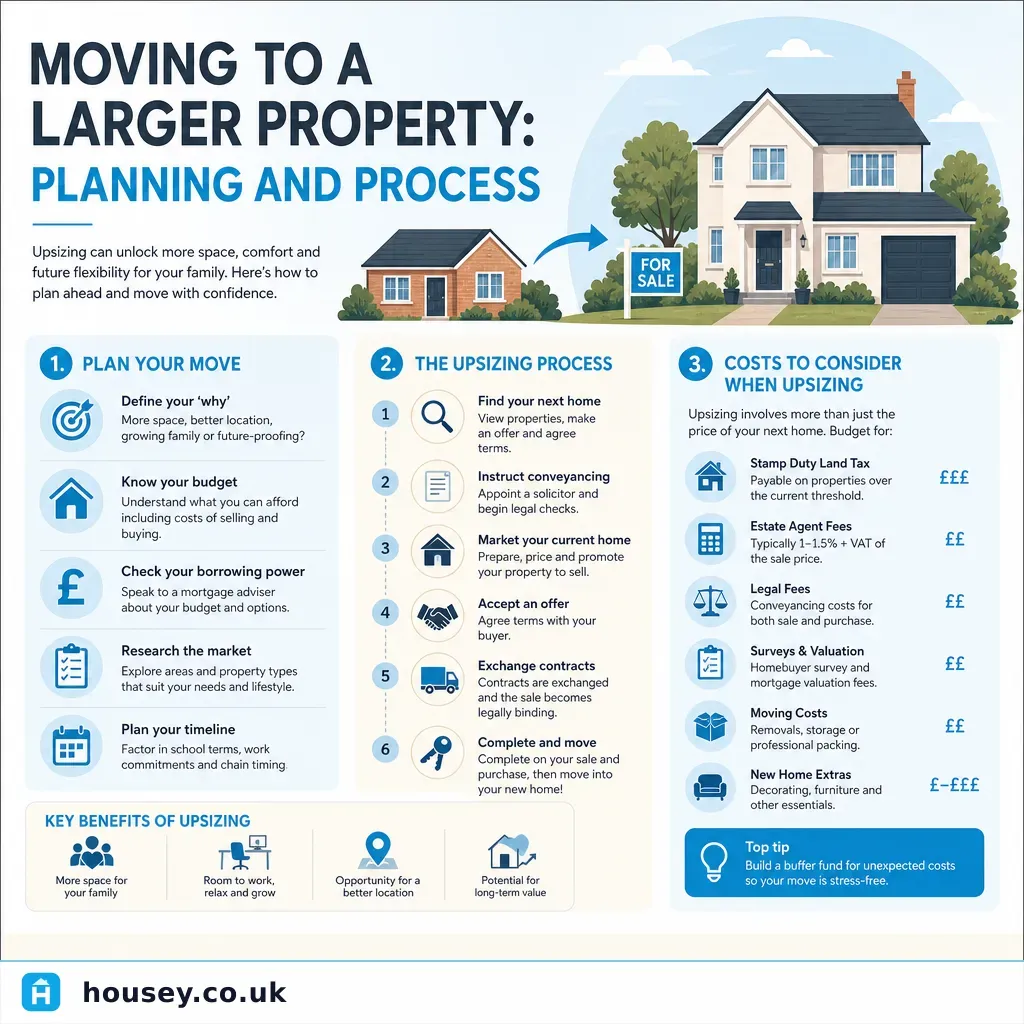
Moving to a Larger Property: Planning and Process
Moving up the property ladder typically happens when a growing household needs more space, a change of location, or access to better school catchments. The process involves two linked transactions — selling your current home and purchasing a new one — each with its own legal, financial, and practical steps that must be coordinated carefully to avoid abortive costs or a broken chain.
Key points
- Stamp Duty Land Tax (SDLT) applies to residential purchases in England on a tiered basis; the 5% rate applies to the portion of the purchase price between £250,001 and £925,000 (as of April 2025, following the end of the temporary nil-rate threshold extension).
- Most mortgage lenders require a lender's valuation before issuing a formal mortgage offer; this is separate from — and typically less detailed than — a RICS home survey commissioned independently by the buyer.
- Estate agents in England and Wales are not required to hold professional qualifications; choose a firm registered with The Property Ombudsman or an NAEA Propertymark member.
- An Energy Performance Certificate (EPC) rated E or above is a legal requirement before marketing a residential property for sale in England, Wales, and Scotland.
- In England and Wales, exchange of contracts is the point at which the transaction becomes legally binding; completion is when funds transfer and keys change hands — the two events can be days or weeks apart.
Should you sell first or buy first?
This is the central timing decision for anyone upsizing. Each approach carries different risks.
Sell first: You know exactly what equity and budget you have before searching. The risk is a gap between your sale completing and finding a suitable purchase — you may need temporary accommodation or storage.
Buy first: You avoid being pressured to accept a lower offer, but may need bridging finance if your sale completes after your purchase. You would carry two mortgages temporarily.
Simultaneous exchange and completion: The most common approach for upsizers in a chain. Both transactions are synchronised so you move out of one property and into another on the same day.
Decision guide
- Choose sell first if your budget is tight, you need certainty on the equity figure, or the market is slow and you are concerned about overpricing.
- Choose buy first only if you have sufficient savings or a pre-agreed bridging facility and strong evidence your current home will sell quickly.
- Use simultaneous exchange when you have found a buyer and have agreed on a property to purchase — this is the standard approach that most solicitors will coordinate.
- Speak to an independent mortgage broker if you are considering bridging finance — rates and terms vary considerably and bridging is typically a short-term product lasting 6–12 months.
- Check with your existing lender if your current mortgage has early repayment charges that could affect your timing choices.
Understanding the costs of upsizing
Moving to a larger home involves more than the purchase price. The table below outlines the main costs to budget for.
Cost item | What it covers | Indicative range |
|---|---|---|
Stamp Duty Land Tax (England) | Tax on purchase price — tiered bands | Varies; use the GOV.UK SDLT calculator |
Estate agent fee on your sale | Marketing, viewings, negotiation | 1–3% of sale price + VAT |
Conveyancing (sale + purchase combined) | Searches, contracts, title transfer | £1,500–£3,500 + disbursements |
RICS Level 2 or Level 3 survey | Condition assessment on your purchase | £400–£1,000+ depending on property type |
Mortgage product fee | Arrangement fee for new mortgage | £0–£2,000 (sometimes added to the loan) |
Removals | Professional packing and transport | £800–£3,000+ depending on volume and distance |
EPC (if needed for your sale) | Required before marketing if current certificate has expired | £60–£120 |
Indicative UK costs, last reviewed 2026-05-25. Costs vary significantly by region, property value, and provider. Always obtain multiple quotes.
Note: Scotland uses Land and Buildings Transaction Tax (LBTT) instead of SDLT; Wales uses Land Transaction Tax (LTT). Thresholds and rates differ — check Revenue Scotland or the Welsh Revenue Authority for current figures.
The conveyancing process for a simultaneous sale and purchase
When upsizing, your conveyancer handles two sets of legal work: acting on your sale and acting on your purchase. Some firms offer a combined fee; others charge separately.
Your conveyancer will:
- Carry out title searches on your purchase (local authority, drainage, environmental, chancel repair)
- Review title deeds and any leasehold documentation on the property you are buying
- Investigate and respond to enquiries raised on your own title by the buyer's solicitor
- Obtain redemption figures for your existing mortgage
- Coordinate with all solicitors in the chain to agree exchange and completion dates
- Report to your new mortgage lender on the property
Leasehold properties: If you are buying a leasehold flat as your upsized property, your conveyancer must review the lease length, service charge accounts, ground rent terms, and management company documentation. Short leases (below 80 years) can make mortgage lending difficult and are a frequent cause of transaction delays.
What a valuation survey covers
Mortgage lenders commission their own valuation to protect their lending security — this is not a survey carried out in your interest as a buyer. If you are buying an older, larger, altered, or unusual property, commission a RICS Level 2 or Level 3 survey in addition to the lender's valuation.
A RICS Level 3 Building Survey is particularly relevant if:
- The property is pre-1919 or has solid walls
- There are visible signs of damp, cracking, or past alterations
- The property has had extensions or a loft conversion
- You want a detailed assessment of all accessible elements
A RICS Level 2 Home Survey is typically suited to conventional properties in reasonable condition built after around 1945.
Managing a property chain
Most upsizers become part of a chain — a sequence of linked buyers and sellers whose transactions must all complete in order. Chains commonly involve three to eight or more parties.
Common reasons chains slow down or collapse:
- A buyer's survey reveals significant defects, leading to price renegotiation
- A lender's down-valuation reduces the agreed loan amount
- Slow solicitor searches or incomplete documentation from any party
- A buyer or seller withdrawing before exchange
- Probate or planning issues on a property within the chain
Practical steps to protect your position:
- Instruct a conveyancer as early as possible — ideally before your offer is accepted
- Have your mortgage agreement in principle in place before making an offer
- Ensure your EPC is current and your title documents are readily available
- Ask your conveyancer for regular written progress updates
Important limitations
This article provides general information about upsizing in England, Wales, and Scotland. Stamp duty thresholds, LBTT bands, and LTT rates can change — always verify current rates on GOV.UK, Revenue Scotland, or the Welsh Revenue Authority before exchange. The conveyancing process varies by tenure (freehold, leasehold, commonhold) and specific title circumstances. A qualified solicitor or licensed conveyancer should advise on your transaction.
What to ask a qualified professional
Before instructing a conveyancer:
- What is your total fee, including all disbursements and VAT?
- Will you be acting on both my sale and purchase, and is there any conflict of interest I should be aware of?
- How do you communicate progress — and what is your typical response time to queries?
- Have you handled leasehold purchases or complex chains in this area before?
- What factors are most likely to cause a delay on a transaction like mine?
Before instructing an estate agent:
- What is your commission rate and what does it include?
- What is your typical time to sale in the current market?
- Are you a member of The Property Ombudsman or NAEA Propertymark?
When to get professional help
A conveyancer is a legal necessity for both your sale and purchase — this is not a process you can manage without qualified representation. Seek specialist advice if:
- You are considering bridging finance — speak to an independent mortgage broker
- The property you are buying is leasehold with a lease below 90 years
- You are buying a listed building or a property in a conservation area
- Your existing mortgage has early repayment charges that affect your timing decisions
- A survey reveals structural defects that may affect the purchase price or mortgageability
How Housey can help
Housey connects you with vetted solicitors for your residential conveyancing needs, covering both your sale and purchase. You can also compare quotes from qualified surveyors offering property valuation surveys to support your decision before exchange.
Frequently asked questions
How long does moving to a larger property usually take?
A simultaneous sale and purchase in England typically takes 12–20 weeks from offer acceptance to completion, though chains involving multiple parties or leasehold properties often take longer. Scotland operates under a different legal system with broadly similar timescales, but the legally binding point comes earlier — at conclusion of missives rather than exchange of contracts.
Do I pay Stamp Duty Land Tax when upsizing?
Yes. SDLT applies to the purchase price of your new property in England above the nil-rate threshold. For standard residential buyers the 5% rate applies to the portion between £250,001 and £925,000 as of April 2025. Use the GOV.UK SDLT calculator for an accurate figure. Different taxes apply in Scotland (LBTT) and Wales (LTT) — check the relevant revenue authority for current rates.
Can I port my existing mortgage when upsizing?
Porting transfers your existing mortgage product to a new property, preserving your current interest rate and avoiding early repayment charges. Whether it is possible depends on your lender's criteria, the new property's value, and whether any additional borrowing fits within the ported product's limits. Not all mortgages are portable — check your terms and speak to an independent mortgage broker before proceeding.
What happens if our property chain falls through?
If a party withdraws before exchange in England and Wales, the chain may collapse and you lose costs already incurred — survey fees, legal fees, and mortgage valuation charges. There is no legal liability before exchange. Scotland's missives system provides earlier legal certainty. A proactive solicitor who flags risks early helps you make informed decisions before committing significant expenditure.
Sources and further reading
- Stamp Duty Land Tax: residential property rates — GOV.UK
- Land and Buildings Transaction Tax — Revenue Scotland
- Land Transaction Tax: a guide — Welsh Revenue Authority
- Buying or selling your home — GOV.UK
- RICS Home Survey Standard — RICS
Useful next reads
 Buying & Moving
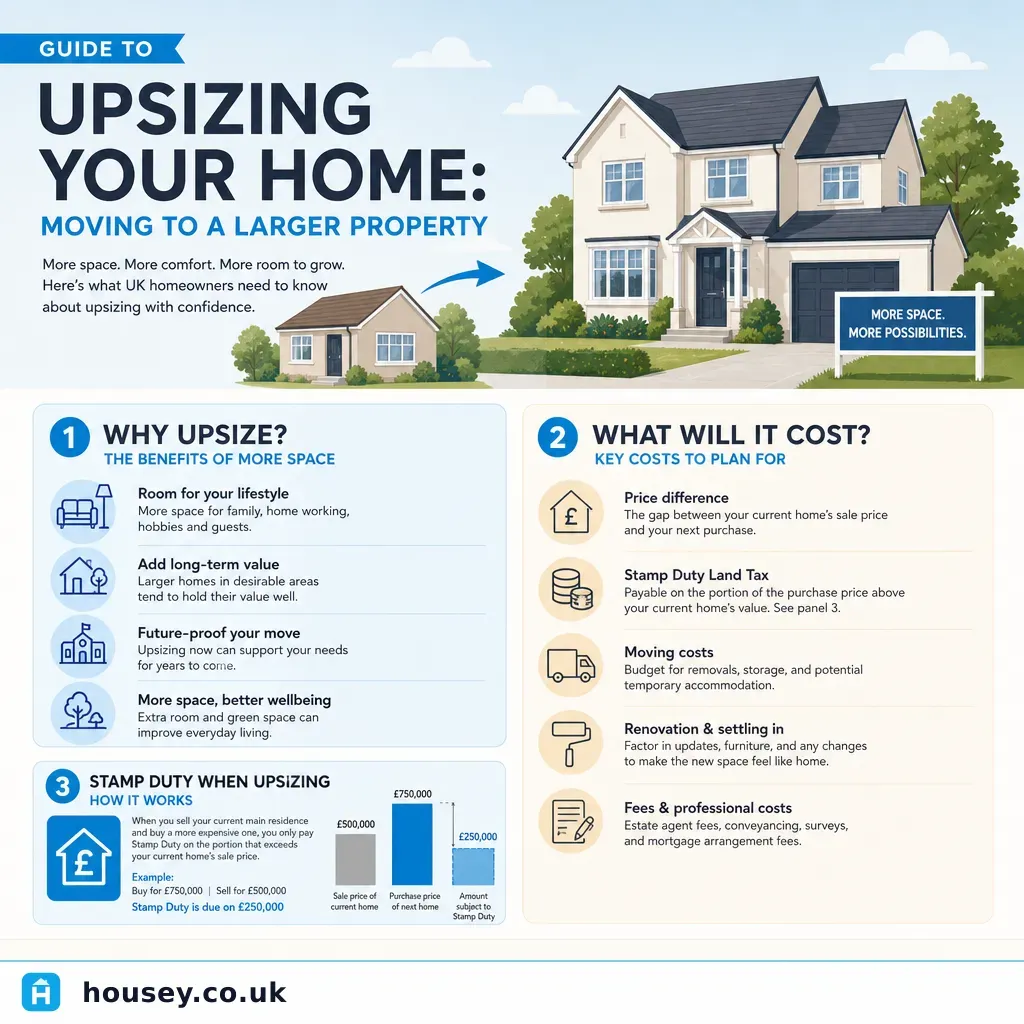
Guide to Upsizing Your Home: Moving to a Larger Property
Upsizing involves selling your current home and buying a larger one, often within a property chain.
 Buying & Moving
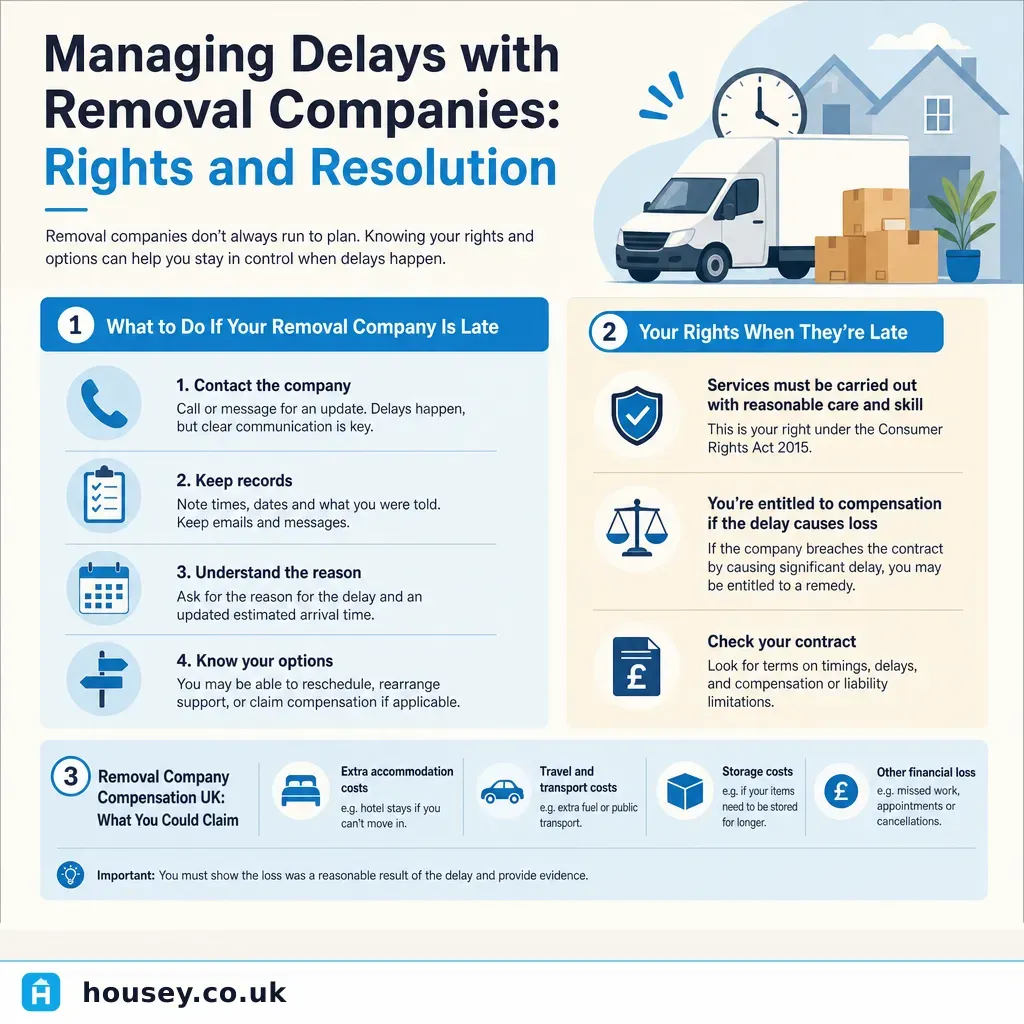
Managing Delays with Removal Companies: Rights and Resolution
If a removal company is late, your rights depend on your contract and whether the company is BAR-registered.
 Buying & Moving
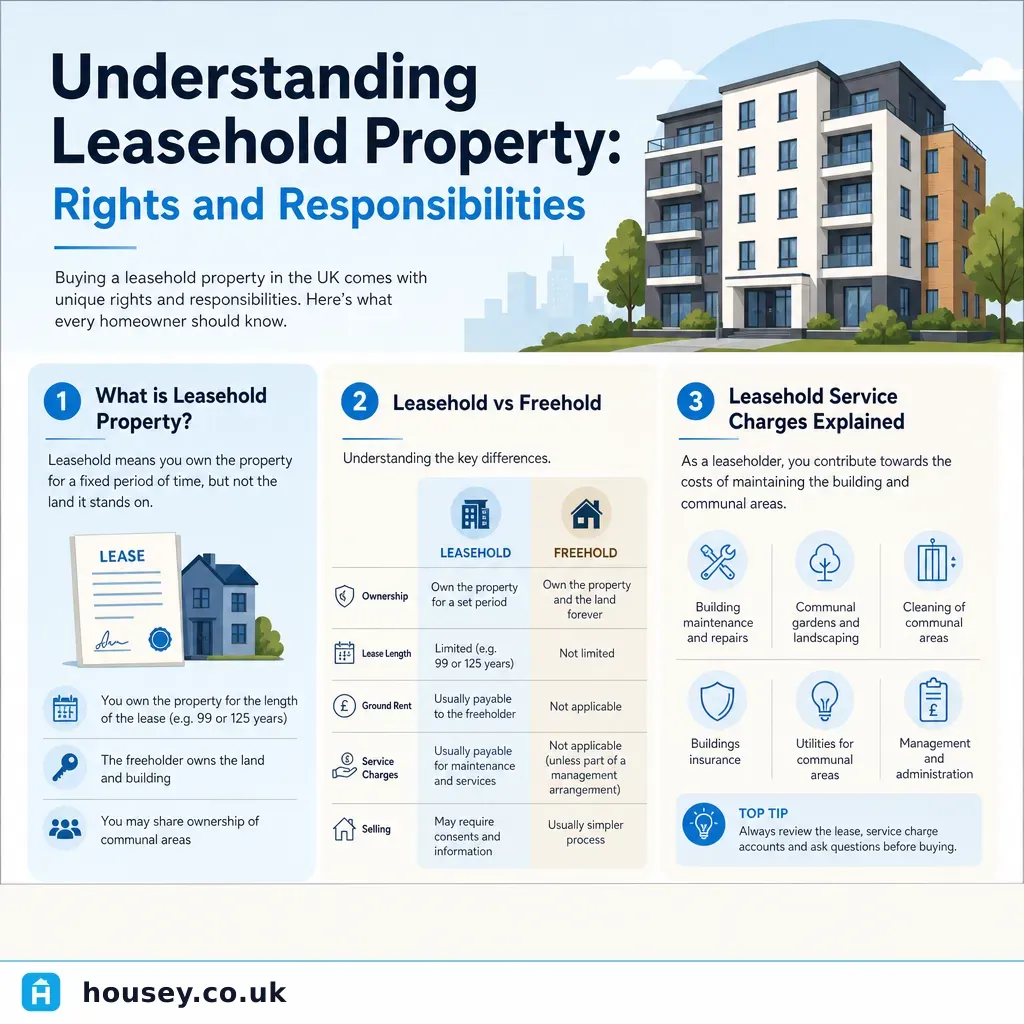
Understanding Leasehold Property: Rights and Responsibilities
Leasehold means you own a time-limited interest in a property while the freeholder owns the land and building.
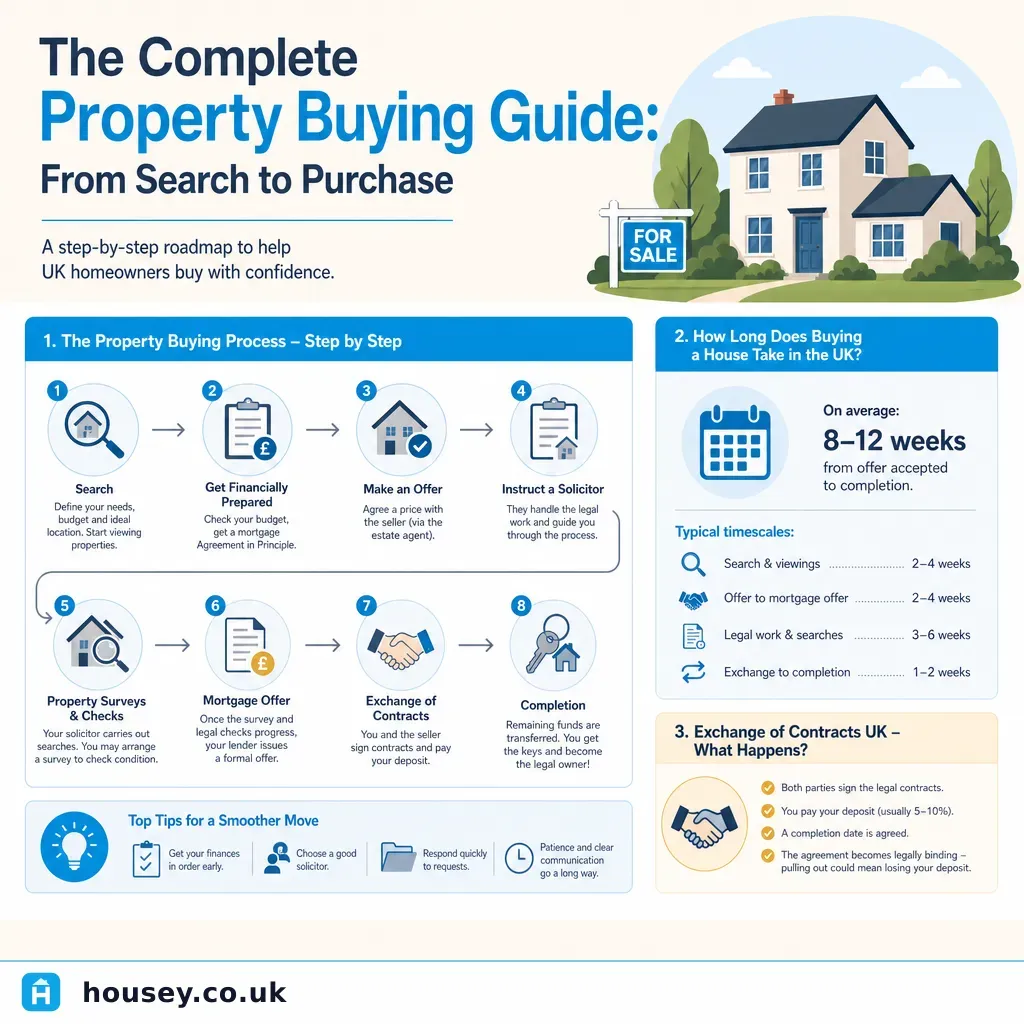 Buying & Moving
The Complete Property Buying Guide: From Search to Purchase
Buying a property in England and Wales typically takes 3–6 months from accepted offer to completion.
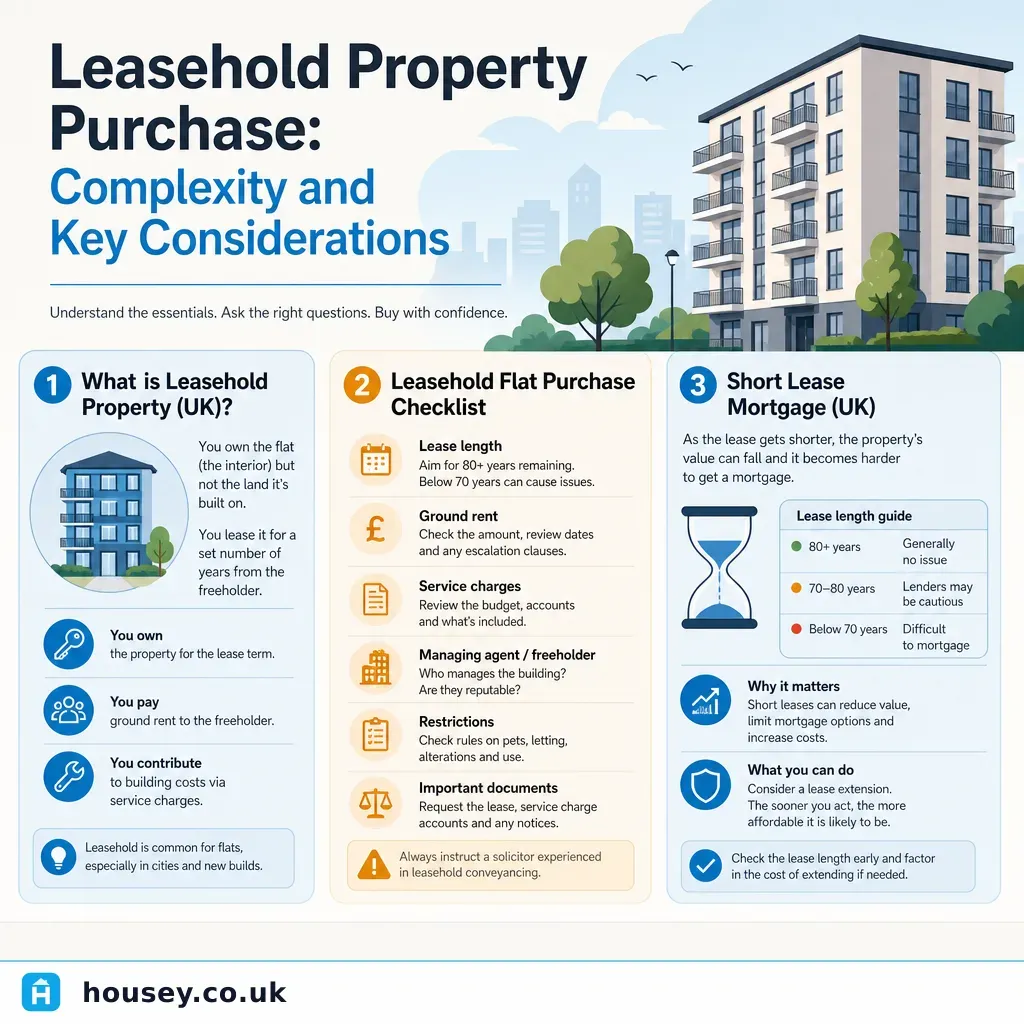 Buying & Moving
Leasehold Property Purchase: Complexity and Key Considerations
Buying a leasehold property means purchasing the right to occupy for a fixed term rather than owning the land outright.