Reducing Heating Costs Through Property Energy Efficiency
By Housey · Last reviewed 30th of May 2026
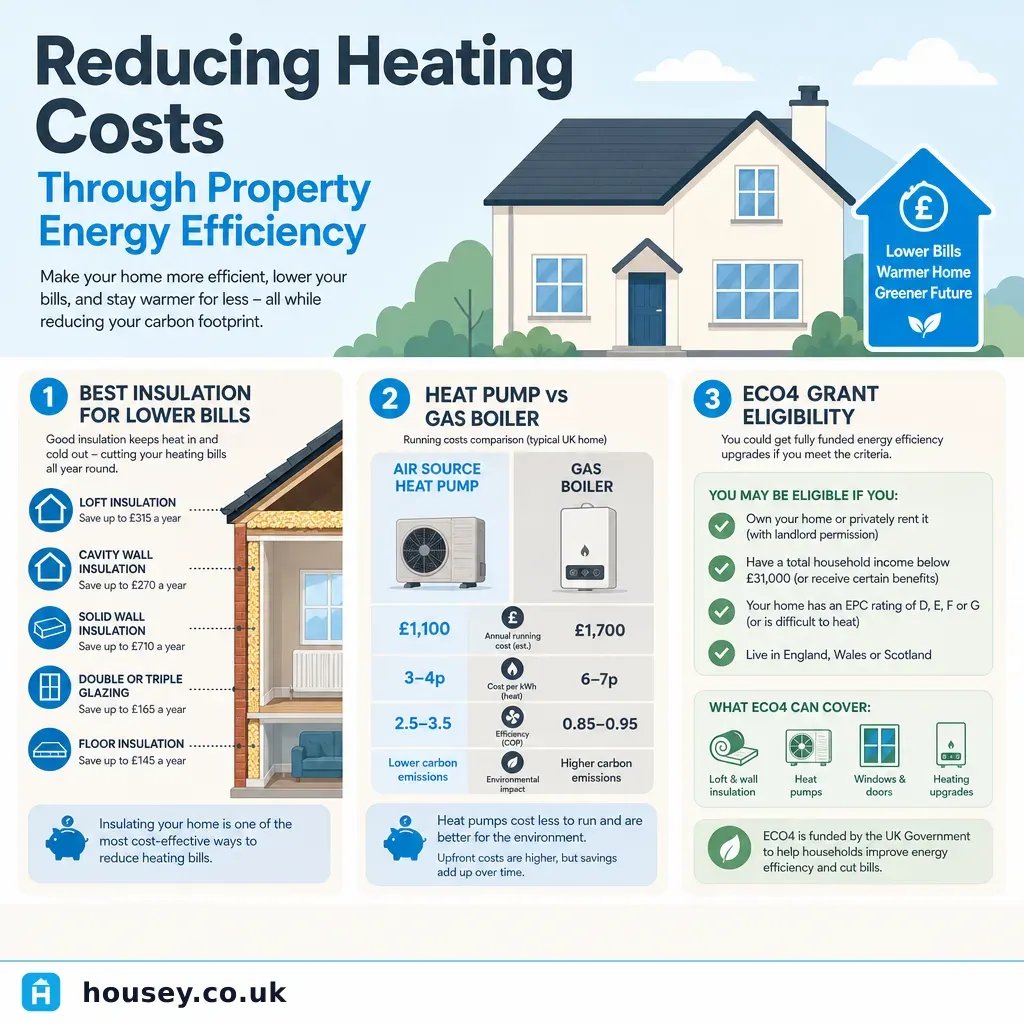
Reducing Heating Costs Through Property Energy Efficiency
Heating accounts for around 61% of the average UK home's total energy use, according to the Energy Saving Trust, and with energy prices substantially above pre-2021 levels, improving a property's thermal performance is one of the most cost-effective actions a homeowner can take. The right sequence of measures — and the right professional assessment — depends heavily on the age, construction, and current condition of the property. Getting this wrong can introduce new moisture and ventilation problems rather than simply cutting running costs.
Key points
- UK homes lose around 30–35% of their heat through external walls and a further 20–25% through uninsulated roofs, according to Energy Saving Trust indicative figures.
- Part L of the Building Regulations sets minimum energy performance standards for replacement building elements in existing dwellings, including boilers, windows, and insulation specifications.
- The Boiler Upgrade Scheme offers a grant of £7,500 for air source heat pump installations in England and Wales, subject to eligibility and installation by an MCS-accredited contractor.
- PAS 2035:2023 is the publicly available specification governing whole-house retrofit; compliance is mandatory for projects funded under ECO4 and the Great British Insulation Scheme.
- Heat pump performance — measured by Coefficient of Performance (COP), typically 2.5–3.5 for air source units — only justifies the switch from gas in homes with good insulation and correctly sized heat emitters.
Where heat is lost in a typical UK home
Before committing to any upgrade, understanding where heat is actually escaping helps prioritise spending.
Heat loss route | Approximate share | Common measure |
|---|---|---|
External walls | 30–35% | Cavity wall insulation, external wall insulation (EWI), or internal wall insulation (IWI) |
Roof and loft | 20–25% | Loft insulation (minimum 270 mm mineral wool) or flat-roof insulation |
Windows and doors | 15–20% | Double or triple glazing; draught-proofing |
Floor | 10–15% | Underfloor insulation; draught-proofing at skirting boards |
Air infiltration | 10–15% | Controlled draught-proofing; mechanical ventilation with heat recovery (MVHR) |
Hot water system | 5–10% | Pipe lagging; insulated hot water cylinder jacket |
Source: Energy Saving Trust indicative proportions. Figures vary by property type, age, and existing measures.
Solid-wall homes — Victorian terraces, Edwardian semis, and most pre-1920 houses — cannot receive cavity wall insulation. They require either EWI (applied externally) or IWI (applied to inner surfaces), both of which carry higher upfront costs and require careful assessment for moisture and ventilation risk.
Which measures make sense for your property?
Decision guide
- Choose loft insulation first if your loft is accessible and existing insulation is absent or below 100 mm. It typically offers one of the fastest payback periods of any retrofit measure.
- Choose cavity wall insulation if your home was built after approximately 1920 and has an unfilled cavity (a surveyor or installer can confirm). Indicative UK cost: £500–£1,500 depending on house size. Indicative UK costs, last reviewed 2026-05-30.
- Choose external or internal wall insulation if you have solid walls — but engage a Retrofit Assessor and Coordinator under PAS 2035:2023 first to identify moisture, ventilation, and structural implications.
- Choose a heat pump assessment if your home already has good insulation, you are replacing a failing boiler, and you have outdoor space for a unit. An MCS-accredited installer must carry out a heat loss calculation to BS EN 12831 before sizing.
- Choose a whole-house retrofit plan if you want to address multiple measures in the correct sequence. This requires a Retrofit Assessment and an overseeing Retrofit Coordinator under PAS 2035:2023.
- Ask an energy-efficiency consultant if you are unsure what your current EPC rating means, which measures have already been installed, or what grants you may be eligible for.
Heating system options compared
Heating system | Best for | Not ideal for | Key requirement |
|---|---|---|---|
Gas condensing combi boiler | Gas-connected, well-sealed homes | Off-gas-grid properties; long-term decarbonisation goals | Gas Safe registered installer; annual service |
Air source heat pump (ASHP) | Well-insulated homes; off-gas-grid | Poor insulation; very small outdoor space | MCS-accredited installer; BS EN 12831 heat loss calculation |
Ground source heat pump (GSHP) | Large gardens; high efficiency target | Urban or small plots | MCS installer; ground survey |
Upgraded electric storage heaters | Off-gas-grid; lower upfront cost | High-consumption households | Suitable off-peak electricity tariff |
Biomass boiler | Rural properties; large fuel storage space | Urban or restricted air quality zones | HETAS installer; fuel delivery logistics |
Indicative UK costs, last reviewed 2026-05-30. Running costs depend heavily on prevailing energy tariffs.
Available grants and funding in 2026
- ECO4 (Energy Company Obligation, Phase 4): fully or partly funded insulation, heating, and heat pump upgrades for eligible low-income and fuel-poor households in England, Scotland, and Wales. Delivered through energy suppliers and approved contractors. Check eligibility via GOV.UK.
- Great British Insulation Scheme (GBIS): targeted single insulation measures for mid-income households in EPC bands D–G. Check availability with energy suppliers.
- Boiler Upgrade Scheme (BUS): £7,500 grant towards an air source or ground source heat pump in England and Wales, replacing a fossil fuel system. Must be installed by an MCS-accredited contractor. Check current availability at GOV.UK.
Grant schemes are reviewed and revised periodically. Confirm current eligibility criteria and grant amounts via GOV.UK or the Energy Saving Trust before building grant income into your budget.
Moisture and ventilation: managing the retrofit risk
Insulating and draught-proofing a property reduces air infiltration. Without adequate ventilation, this raises indoor humidity and can cause condensation, mould growth, and structural moisture damage — particularly in solid-wall or older homes that previously relied on draughts for background ventilation.
PAS 2035:2023 requires a ventilation assessment for all medium and complex retrofit projects. Before installing IWI or significantly reducing air infiltration, a qualified professional should assess:
- Background ventilation provision (trickle vents, passive vents, or mechanical systems).
- Bathroom and kitchen extract ventilation capacity.
- Any existing moisture ingress from outside — damp-proof course condition, pointing defects, roof integrity.
Do not seal a property heavily without addressing ventilation. The resulting moisture risk can cause damage that outweighs the energy savings.
Important limitations
This article provides general guidance on energy efficiency options for UK homeowners. Actual savings depend on property size, construction, occupancy, fuel tariffs, and installation quality. Heat pump sizing and retrofit moisture risk require professional assessment of your individual property. Grant availability, Building Regulations standards, and MCS requirements change — always verify current requirements via GOV.UK or a qualified installer. Nothing in this article guarantees energy savings or the suitability of any specific measure for your home.
When this becomes urgent
Act promptly if:
- You notice persistent condensation, damp patches, or mould growth — address the root cause before adding any insulation.
- Your boiler is failing and you are considering a heat pump: the Boiler Upgrade Scheme requires an MCS-accredited installer and may have waiting times for available slots.
- You are letting a property: minimum EPC Band E applies to most tenancies in England and Wales, with further tightening expected under proposed EPC reforms — check your obligations with an energy assessor.
What to ask a qualified professional
Before instructing an energy assessor, retrofit coordinator, or heat pump installer:
- What is my current SAP score and EPC band, and which single measure would improve it most cost-effectively?
- Is my property suitable for cavity wall insulation, or do I have solid walls — and if so, which insulation type is more appropriate given moisture risk?
- What ventilation provision will be needed if I improve airtightness?
- What heat loss calculation have you carried out, and what unit size does my property require?
- Are you MCS-accredited (for heat pumps) or TrustMark-registered for retrofit work?
- Which current grants am I eligible for, and can you assist with the application process?
- What is the realistic payback period at current energy tariff rates?
When to get professional help
Always seek professional advice before:
- Installing solid wall insulation of any kind (external or internal).
- Replacing your primary heating system with a heat pump or other significant change.
- Undertaking a whole-house retrofit affecting multiple building elements.
- Applying for ECO4, GBIS, or Boiler Upgrade Scheme funding — approved installer requirements apply.
- Dealing with persistent damp or mould — resolve root causes before adding insulation.
How Housey can help
Housey connects homeowners with qualified energy-efficiency consultants for independent advice, heat pump surveyors who carry out BS EN 12831 heat loss calculations, and retrofit assessors accredited under PAS 2035 — so you can compare quotes from vetted professionals before committing to any works.
Frequently asked questions
Will insulating my home definitely reduce my heating bills?
Insulation reduces heat loss and lowers demand on your heating system, but actual savings depend on fuel prices, occupancy patterns, and installation quality. Energy Saving Trust modelling suggests loft insulation in an uninsulated semi-detached home can save approximately £150–£300 per year. Indicative UK costs, last reviewed 2026-05-30. A qualified energy assessor can provide a property-specific estimate based on your current SAP score and construction type.
Do I need planning permission to install external wall insulation?
In many cases EWI falls within permitted development for houses not in conservation areas and not listed. However, if your property is listed, in a conservation area, or the cladding materially changes the building's appearance, planning permission may be required. Always check with your local planning authority before commissioning work, as rules vary by location and property history.
Is a heat pump suitable for a Victorian terraced house?
It can work, but solid-wall Victorian properties typically have higher heat loss, requiring a larger and more costly unit. Most successful heat pump retrofits in older homes follow significant insulation improvements. A thorough heat loss survey to BS EN 12831 by an MCS-accredited installer is essential before any sizing or purchasing decisions are made — do not rely on rule-of-thumb estimates.
What is PAS 2035 and do I need to follow it?
PAS 2035:2023 is the national standard for whole-house retrofit in England, Scotland, and Wales. It is mandatory for projects funded under ECO4 and the Great British Insulation Scheme, requiring a qualified Retrofit Assessor and Coordinator. Privately funded works are not legally required to follow it, but its approach to moisture, ventilation, and sequencing is strongly advisable for any significant whole-house improvement project.
Sources and further reading
- Energy Saving Trust — insulation guidance — Energy Saving Trust
- Boiler Upgrade Scheme — GOV.UK
- Energy Company Obligation (ECO4) — GOV.UK
- Great British Insulation Scheme — GOV.UK
- Approved Document L — Conservation of fuel and power — GOV.UK
- MCS — Microgeneration Certification Scheme — MCS
- PAS 2035:2023 overview — BSI Group
Useful next reads
 Energy & Retrofit
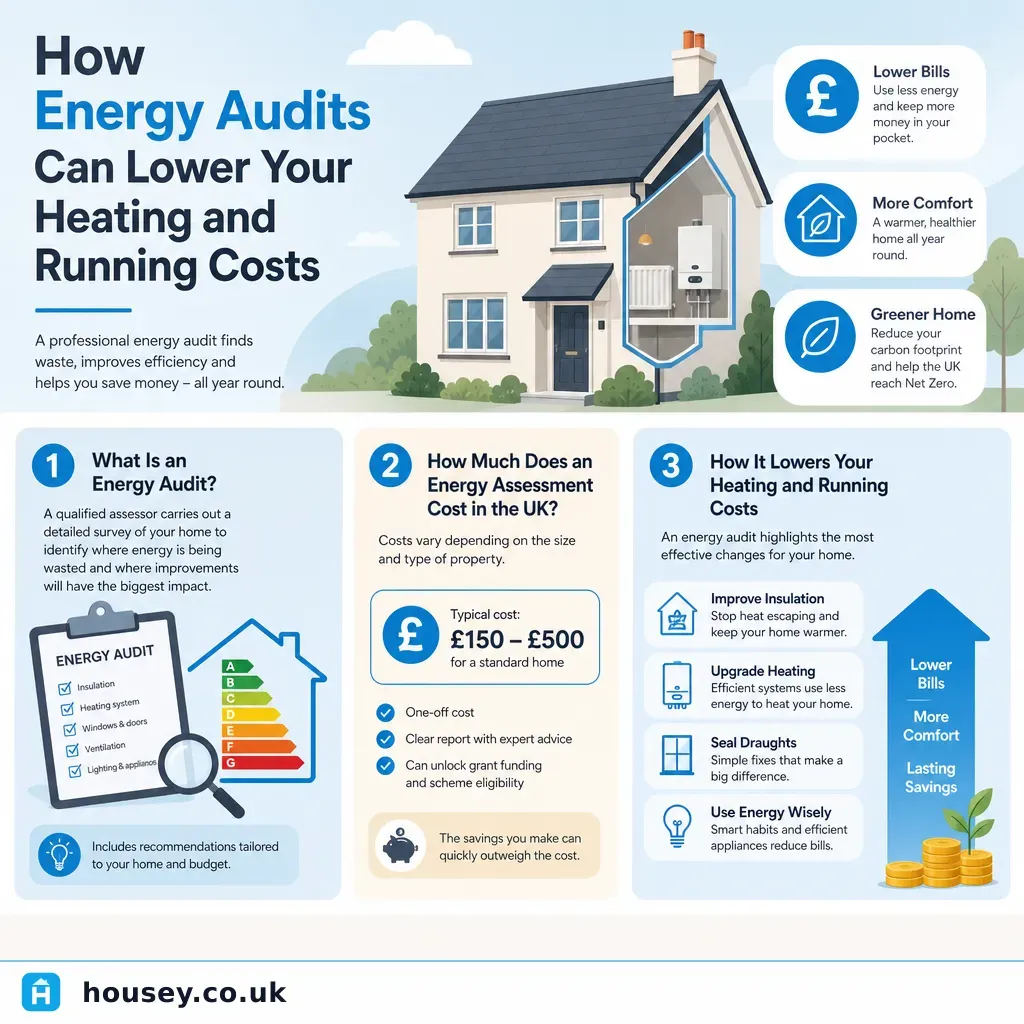
How Energy Audits Can Lower Your Heating and Running Costs
A home energy audit is a detailed inspection of your property's insulation, heating system, glazing, and ventilation to identify where energy is lost and recommend improvements.
 Energy & Retrofit
The Rise of Green-Rated Homes: Energy Efficiency, Sustainability, and Long-Term Property Value
Homes with higher EPC ratings typically sell faster and can command a premium of up to 10% over equivalent lower-rated properties.
 Energy & Retrofit
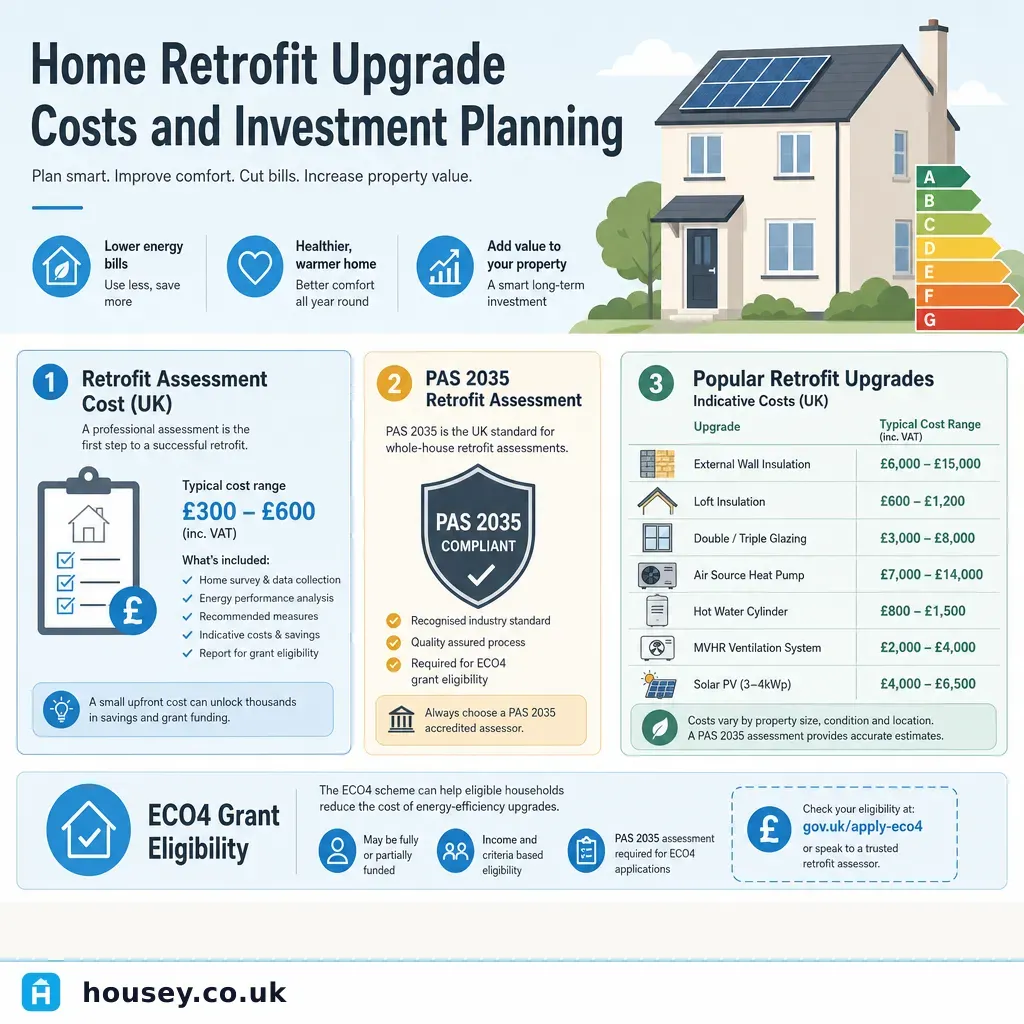
Home Retrofit Upgrade Costs and Investment Planning
Home retrofit costs in the UK vary widely by property size, construction type, and measures chosen.
 Energy & Retrofit
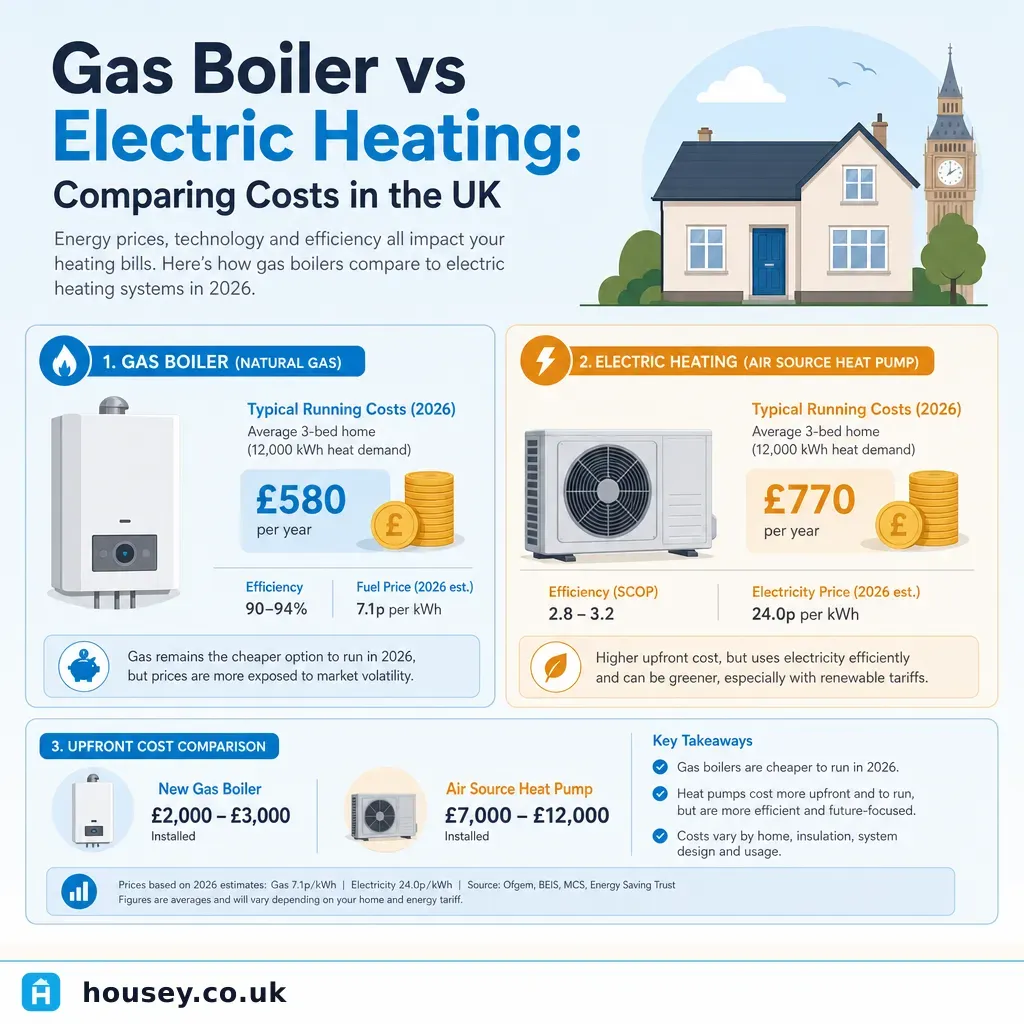
Gas Boiler vs Electric Heating: Comparing Costs in the UK
Gas boilers currently cost around 6.
 Energy & Retrofit
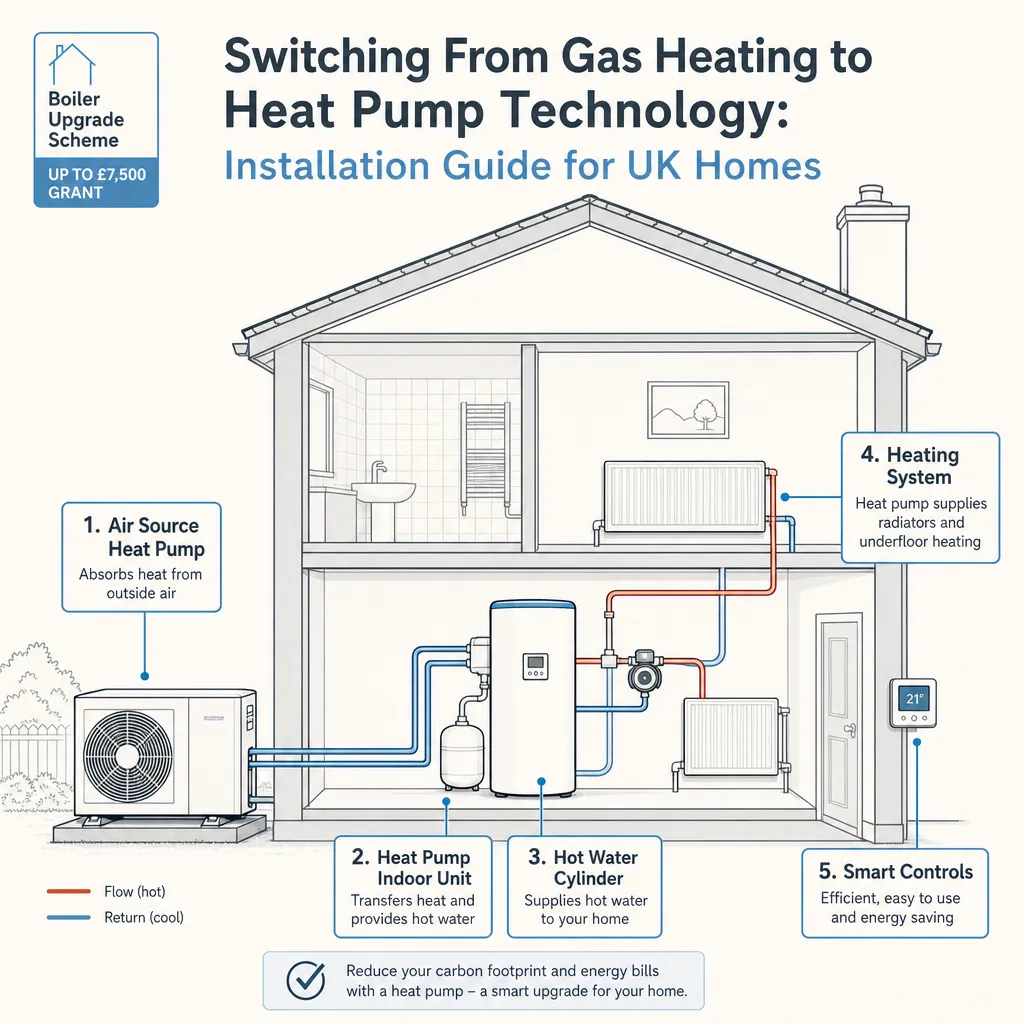
Switching From Gas Heating to Heat Pump Technology: Installation Guide
Switching from gas to a heat pump requires a heat loss calculation, correctly sized equipment, and often radiator upgrades before installation.