Diagnosing and Resolving Central Heating System Failures
By Housey · Last reviewed 11th of May 2026
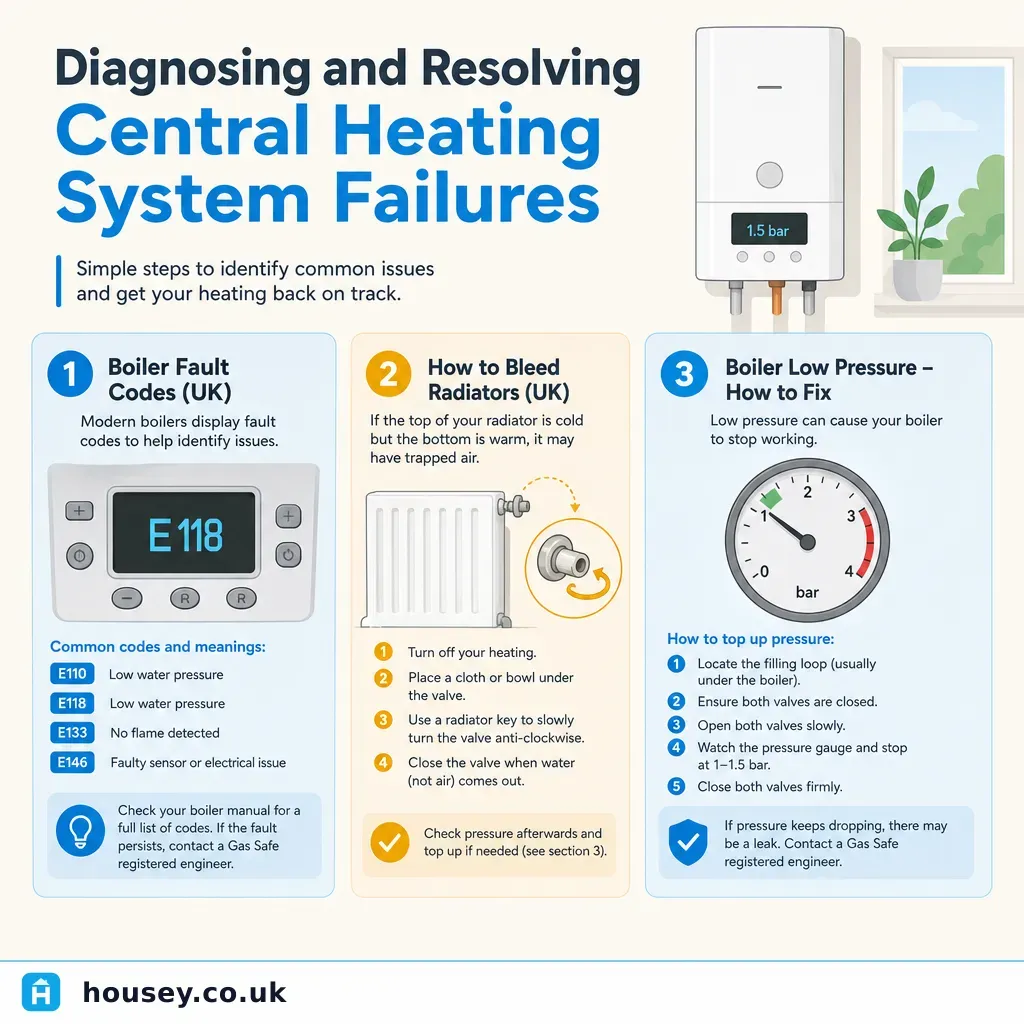
Diagnosing and Resolving Central Heating System Failures
A central heating system that stops working unexpectedly — particularly in autumn or winter — can range from a minor inconvenience to a genuine welfare concern, especially in homes with elderly residents or young children. Many faults have straightforward explanations that homeowners can investigate safely, but others involve gas appliances, pressurised systems, or carbon monoxide risk, where professional attention is essential. Knowing the difference can save time and money and, in some cases, prevents a dangerous situation from worsening.
Key points
- Gas boiler repair and servicing must be carried out by a Gas Safe registered engineer under the Gas Safety (Installation and Use) Regulations 1998; an unregistered person working on a gas appliance commits a criminal offence.
- Carbon monoxide (CO) is odourless and colourless — a working CO alarm is strongly recommended on each floor and is a legal requirement in rental properties in England under the Smoke and Carbon Monoxide Alarm (Amendment) Regulations 2022.
- Homeowners can safely bleed radiators, check programmer and thermostat settings, and top up boiler pressure to the range stated in the manufacturer's manual (typically 1–1.5 bar cold).
- A power flush to remove sludge and corrosion from the circuit typically costs £300–£600 depending on system size (Indicative UK costs, last reviewed 2026-05-11).
- Boilers in England installed since April 2018 must meet the Boiler Plus standard, requiring a minimum ErP A-rating efficiency; if your boiler is over 15 years old and repeatedly failing, replacement may be more cost-effective than continued repair.
What are the most common causes of central heating failure?
Central heating failures usually fall into one of five categories:
- Boiler lockout — the boiler has detected a fault and shut itself down. A fault code will appear on the display.
- Pressure loss — a sealed system has dropped below its operating range, preventing the boiler from firing.
- Circulation problems — the pump, diverter valve, or pipework is not moving water around the system correctly.
- Controls or thermostat fault — the programmer, room thermostat, or thermostatic radiator valves (TRVs) are not calling for heat correctly.
- Sludge and scale build-up — corrosion deposits restrict water flow, creating cold spots in radiators and reducing overall efficiency.
A useful first step is to identify whether the problem affects the whole system or only part of it. A single cold radiator points to a different cause than a boiler that produces no heat at all.
Fault diagnosis: what homeowners can check
Step 1 — Check the boiler display. Most modern boilers show a fault code on lockout. Note the code and check the manufacturer's manual. Common codes relate to ignition failure, low pressure, or overheating.
Step 2 — Check boiler pressure. Look at the pressure gauge. For most sealed systems the correct cold pressure is 1–1.5 bar. Below 1 bar, re-pressurise via the filling loop (a flexible connector usually located under the boiler). If pressure drops repeatedly, there may be a system leak.
Step 3 — Check controls. Confirm the programmer is set to heating-on and the room thermostat is set above the current room temperature. Check that TRVs on radiators are open and not turned to the frost symbol.
Step 4 — Bleed radiators. If radiators are hot at the bottom but cold at the top, trapped air is likely. Use a bleed key at the top of each affected radiator until water, not air, emerges. Re-check boiler pressure afterwards.
Step 5 — Reset the boiler (once). If the boiler is locked out with no gas- or combustion-related code, a single reset using the reset button may clear the fault. If the fault returns, arrange a Gas Safe engineer inspection rather than continuing to reset.
Which fault do you have — and who fixes it?
- Boiler shows a gas, combustion, or heat exchanger fault code → Do not attempt repair. Call a Gas Safe registered engineer.
- No fault code, no heat → Check programmer settings, thermostat temperature, and TRV positions first.
- Boiler pressure below 1 bar, no visible leak → Re-pressurise via the filling loop following the manufacturer's instructions.
- Boiler pressure keeps dropping after re-pressurising → Likely a system leak; call a Gas Safe engineer.
- Radiators cold at the top, warm at the bottom → Bleed the radiators; the cause is trapped air.
- Radiators cold at the bottom, warm at the top → Likely sludge or magnetite; arrange a heating engineer assessment for a power flush.
- CO alarm sounding → Leave the building immediately, leave doors open, and call the Gas Safe Emergency Helpline on 0800 408 5500.
- Smell of gas → Leave immediately and call the National Gas Emergency Service on 0800 111 999.
Fault-to-fix reference
Symptom | Likely cause | Who can fix it |
|---|---|---|
Boiler lockout with fault code | Ignition failure, gas supply, sensor or combustion fault | Gas Safe registered engineer |
No heat, no fault code | Programmer or thermostat settings | Homeowner (settings check first) |
Low boiler pressure, no visible leak | Air ingress or minor system loss | Homeowner (top up); Gas Safe if pressure keeps dropping |
Radiators cold at top | Trapped air | Homeowner (bleed radiators) |
Radiators cold at bottom | Sludge or magnetite build-up | Heating engineer (power flush assessment) |
Single cold radiator | Stuck TRV, flow imbalance | Homeowner (check TRV); heating engineer if persists |
Banging or kettling noise from boiler | Limescale on heat exchanger | Heating engineer |
Yellow or orange boiler flame | Incomplete combustion — CO risk | Leave building; Gas Safe engineer |
CO alarm sounding | Possible carbon monoxide | Leave immediately; Gas Safe 0800 408 5500 |
When to get professional help
Some central heating faults are entirely safe for homeowners to investigate; others are life-threatening if approached without the correct qualifications. Stop your investigation and call a Gas Safe registered engineer immediately if:
- The CO alarm sounds — leave the building, leave doors open, do not re-enter until a Gas Safe engineer has attended.
- You can smell gas — leave immediately and call the National Gas Emergency Service on 0800 111 999.
- The boiler flame is yellow or orange rather than blue, or there is visible soot or staining around the boiler casing.
- Boiler pressure keeps dropping despite repeated re-pressurising — this suggests a leak in the system.
- The fault code refers to a gas valve, heat exchanger, flue, or combustion sensor.
- The boiler is over 15 years old and faults are recurring.
Never attempt to repair or dismantle a gas boiler yourself. Doing so is illegal unless you are Gas Safe registered and creates serious risk of gas leaks, explosion, or carbon monoxide poisoning.
What to expect from a Gas Safe engineer visit
A Gas Safe engineer attending for fault diagnosis will typically:
- Check gas pressure at the meter and appliance inlet.
- Inspect the flue for blockages or damage.
- Take combustion analyser readings.
- Check the heat exchanger, main burner, and ignition.
- Test the pump, diverter valve, and expansion vessel charge pressure.
- Advise on repair versus replacement, including parts availability for older boilers.
Diagnostic visit costs typically range from £60–£120 plus parts (Indicative UK costs, last reviewed 2026-05-11). Many home-emergency or boiler-cover policies include callouts.
Considering alternatives to boiler repair
If your boiler is ageing or repeatedly failing, it may be worth exploring alternatives before committing to another repair:
- New gas condensing boiler: Must meet Boiler Plus standards in England — ErP A-rating, load or weather compensation, and smart controls.
- Air source heat pump: Suitable for well-insulated homes with adequate radiator sizing or underfloor heating; requires a heat pump survey to assess compatibility.
- Hybrid heat pump: Pairs a heat pump with an existing or new boiler, reducing gas consumption without a full system change.
A heat pump survey can help you understand whether your home is ready for a low-carbon alternative before you invest further in boiler repairs.
Important limitations
This article provides general guidance to help UK homeowners identify common, non-gas-related central heating faults. It is not a substitute for professional diagnosis. Gas appliances, carbon monoxide hazards, and pressurised heating systems carry real safety risks. Always use a Gas Safe registered engineer for any work on gas appliances, gas pipework, or related components. Costs and fault causes vary by boiler make, system age, and property type. Rules and regulations may also vary in Scotland, Wales, and Northern Ireland.
What to ask a qualified professional
Before instructing a Gas Safe engineer or heating contractor:
- Can I see your Gas Safe registration card, or can I verify your registration number on the Gas Safe Register website?
- What does the diagnostic visit cost, and is that fee credited against any repair work?
- What is your assessment of the fault, and which parts are likely to be needed?
- Is repair economical given the boiler's age, efficiency, and parts availability?
- If you recommend replacement, what specification of boiler or heat pump would you install, and why?
- Will the completed work carry a guarantee, and for how long?
- Will you issue a Gas Safety Certificate (CP12) confirming the appliance is safe after the work is complete?
- Is the system water quality adequate, or would you recommend a chemical inhibitor top-up or power flush?
How Housey can help
If your heating system is approaching the end of its useful life or you want a qualified view on its current safety, Housey can connect you with certified professionals. Arrange a gas safety certificate to get an independent assessment of your gas appliances, or book a heat pump survey to explore whether a low-carbon heating system is a viable alternative for your home.
Frequently asked questions
My boiler shows a fault code — what should I do first?
Note the code, then check your boiler manual or the manufacturer's website. Many codes relate to low water pressure, which you can resolve yourself by re-pressurising via the filling loop. Others indicate ignition failure or combustion issues — these require a Gas Safe registered engineer. If the fault returns after a reset, do not continue resetting; arrange a professional inspection.
How often should I have my boiler serviced?
Annual servicing is recommended by all major boiler manufacturers and is typically a condition of warranty. A Gas Safe registered engineer carries out the service, checking combustion efficiency, inspecting the heat exchanger, and testing the flue. Annual servicing also identifies developing faults before they cause a breakdown, potentially saving on more costly repairs later.
Can I bleed radiators myself?
Yes — bleeding radiators is a straightforward task. Turn the heating on, identify radiators that are cold at the top, then use a radiator bleed key to open the bleed valve until water, not air, flows out. Close the valve, then check the boiler pressure gauge and re-pressurise via the filling loop if it has dropped below 1 bar.
What is a power flush and do I need one?
A power flush uses a machine to pump water and cleaning chemicals through the heating circuit at high velocity to dislodge sludge, rust, and magnetite. Signs that suggest one may be needed include radiators cold at the bottom, kettling noises from the boiler, or discoloured system water. A heating engineer can assess whether a power flush is appropriate or whether other remediation is more suitable.
Sources and further reading
- Gas Safe Register: Find a Gas Safe Engineer — Gas Safe Register
- Gas Safety (Installation and Use) Regulations 1998 — legislation.gov.uk
- Smoke and Carbon Monoxide Alarm (Amendment) Regulations 2022 — legislation.gov.uk
- Boiler Plus: Standards for Boiler Installations in England — GOV.UK
- Energy Saving Trust: Boilers and Heating — Energy Saving Trust
Useful next reads
 Energy & Retrofit
Gas Boiler Ignition and Startup Failures: Diagnosis
When a gas boiler fails to ignite or start, common causes include a loss of gas supply, low system pressure, a faulty ignition electrode or lead, a blocked condensate pipe (in cold weather), or a safety lockout triggered by the control board.
 Energy & Retrofit
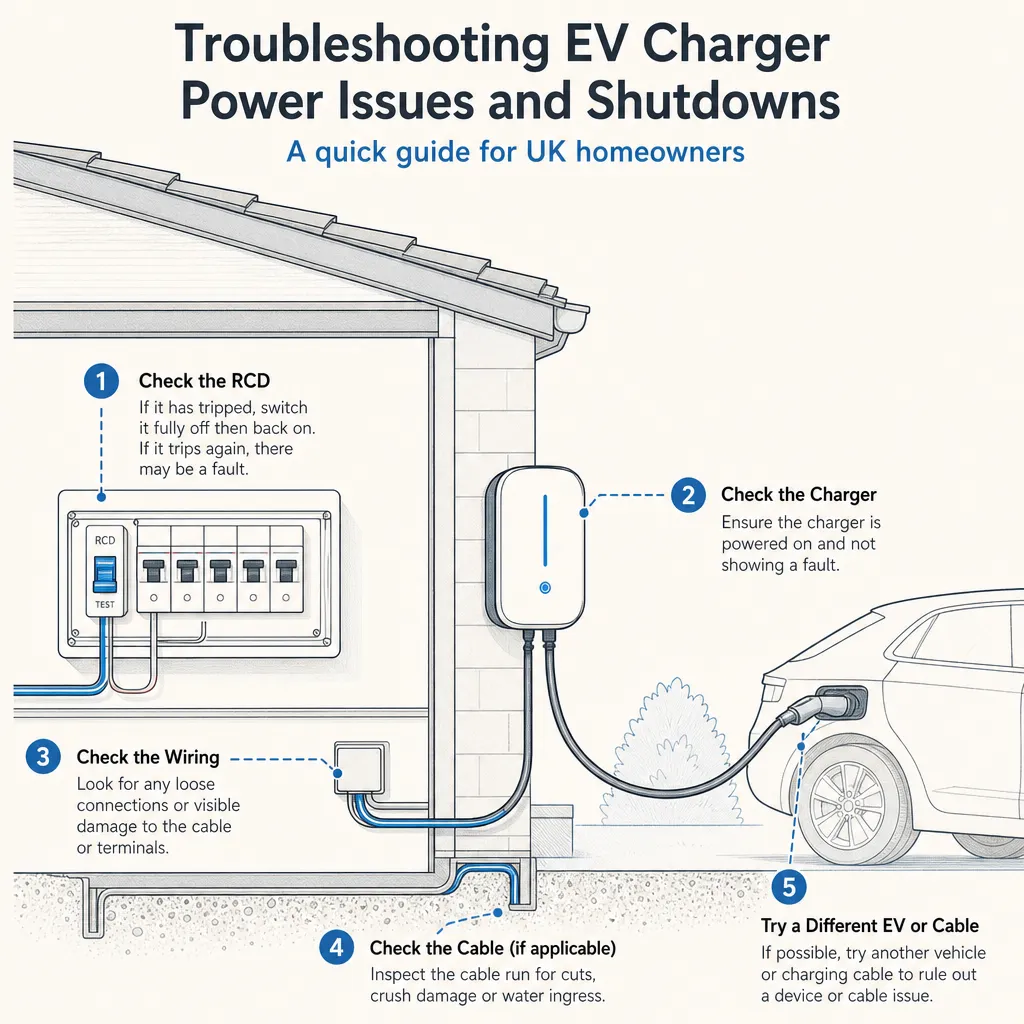
Troubleshooting EV Charger Power Issues and Shutdowns
Most home EV charger shutdowns are caused by a tripped RCD or MCB, a firmware issue, or a communication error with the vehicle.
 Energy & Retrofit
Practical Energy Saving Tips for Homeowners
Most UK households can meaningfully reduce their energy bills by making targeted changes: lowering the thermostat by 1°C, switching to LED lighting, and draught-proofing doors and windows.
 Energy & Retrofit
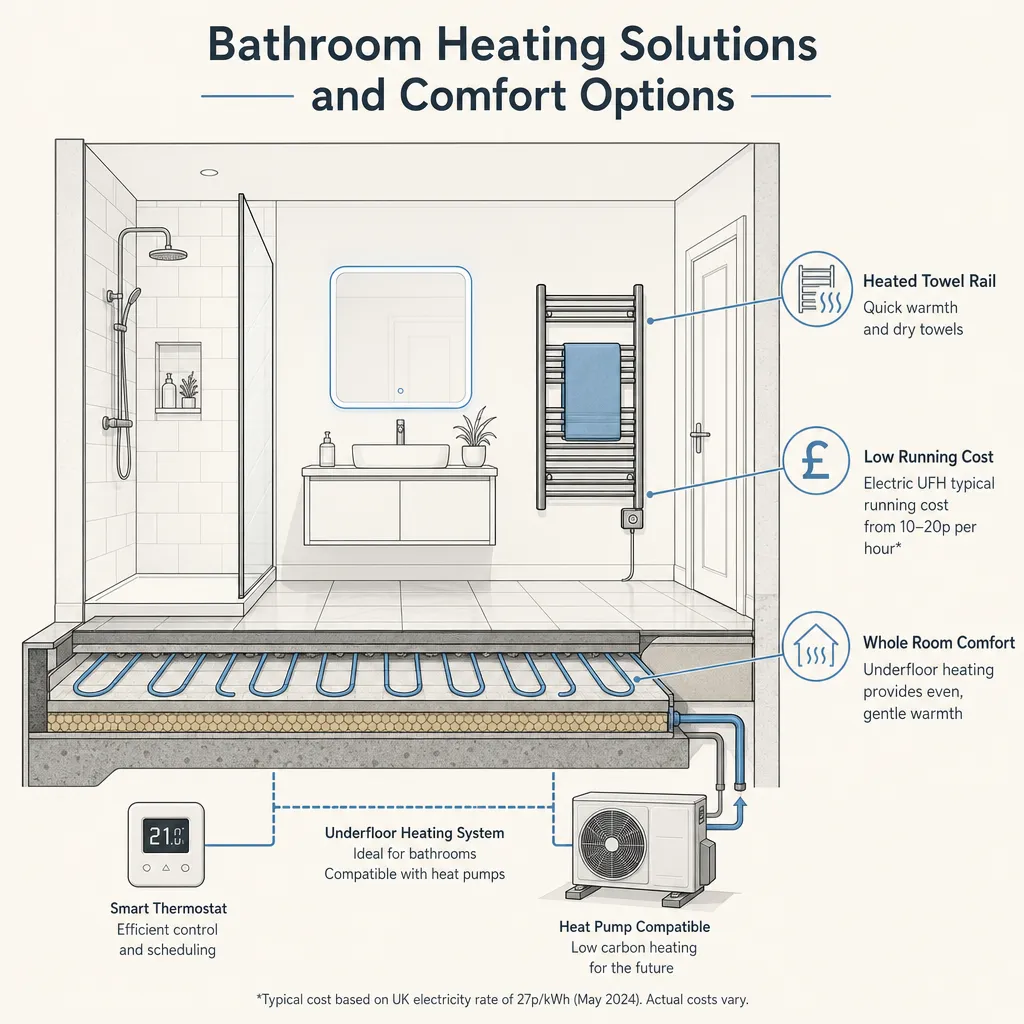
Bathroom Heating Solutions and Comfort Options
UK bathrooms can be heated using electric towel rails, wet radiators on the central heating circuit, electric or wet underfloor heating, or infrared panels.
 Energy & Retrofit
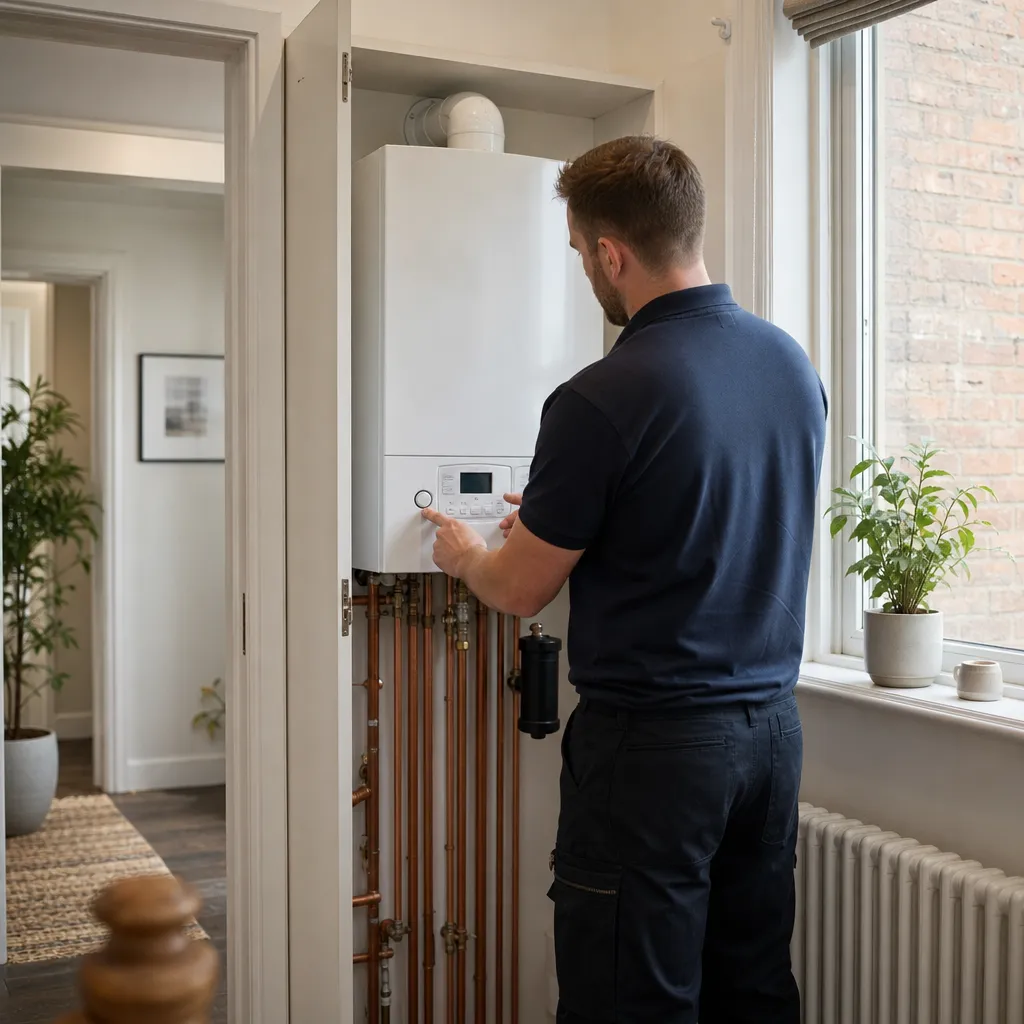
Optimising Heating Systems for Energy Efficiency
Optimising a UK heating system usually involves improving controls such as smart thermostats and thermostatic radiator valves, ensuring the boiler or heat pump is correctly sized, and upgrading radiators or pipework where needed.