Gas Boiler vs Electric Heating: Comparing Costs in the UK
By Housey · Last reviewed 8th of May 2026
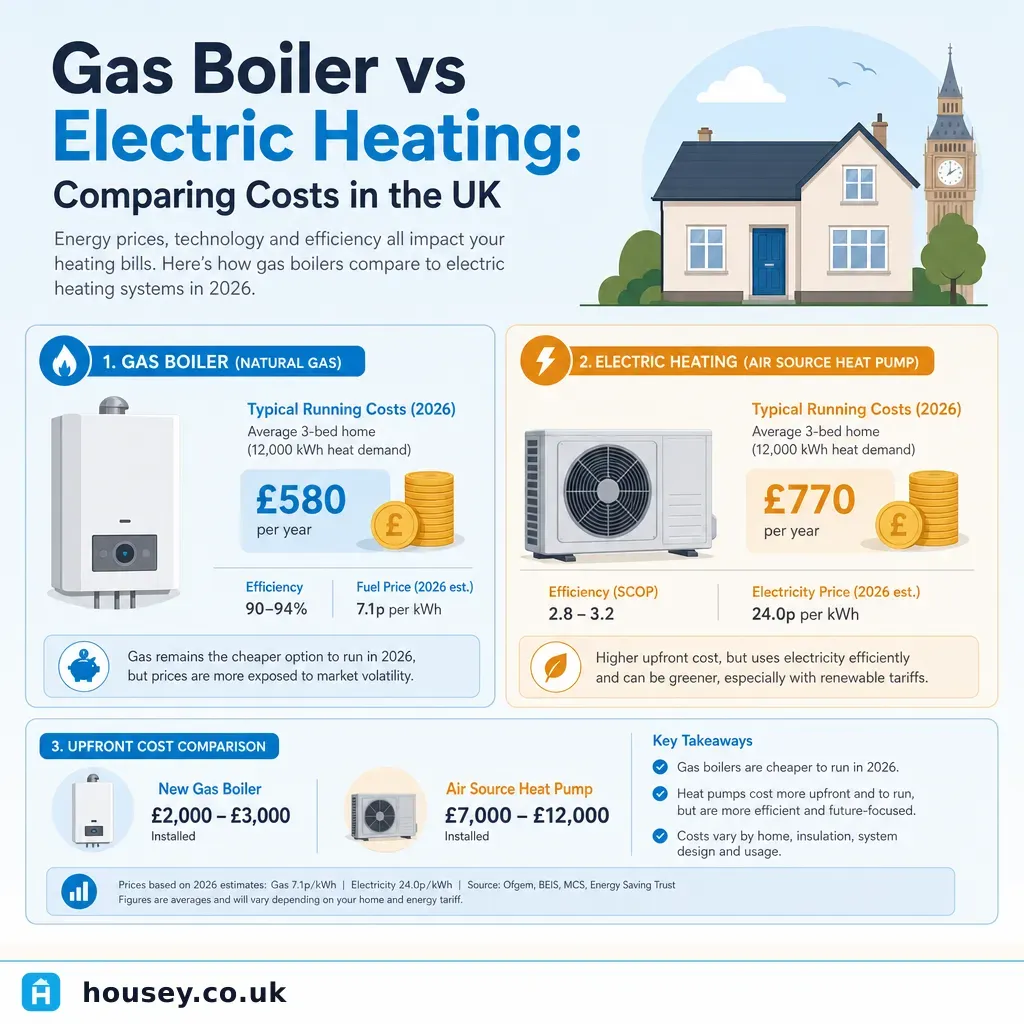
Gas Boiler vs Electric Heating: Comparing Costs in the UK
Choosing between gas central heating and electric alternatives has become one of the most consequential decisions facing UK homeowners, particularly as gas boiler installations face an uncertain regulatory future and electricity tariffs remain high. The question typically arises when a boiler fails, during a home purchase, or when a homeowner begins exploring retrofit options ahead of upcoming energy-efficiency requirements. Getting the numbers right matters: choosing the wrong system could add hundreds of pounds to annual bills or require costly remediation within a few years.
Key points
- The Ofgem Q1 2026 price cap sets electricity at approximately 24.5p/kWh and gas at approximately 6.24p/kWh — roughly a 4:1 ratio that makes electric resistance heating significantly more expensive to run per unit of heat.
- Air source heat pumps (ASHPs) achieve a Coefficient of Performance (CoP) of 2.5–4.0, meaning they deliver 2.5–4 units of heat per unit of electricity consumed, which can narrow the running cost gap with gas considerably.
- The UK government's Boiler Upgrade Scheme (BUS) offers a £7,500 grant for eligible air source heat pump installations, reducing the upfront cost barrier.
- Gas boiler installations are banned in new-build homes from 2025 under Part L of the Building Regulations; government policy aims to phase out new gas boiler sales for existing homes, though no confirmed date is in place as of May 2026.
- An MCS-certified heat pump installer or qualified energy assessor should always assess your home's insulation, radiator sizing, and hot water demand before you switch heating systems.
What does a gas boiler typically cost to run?
Gas central heating remains the most common UK home heating system. A gas combi boiler heats water on demand, while a system or heat-only boiler works with a stored hot water cylinder.
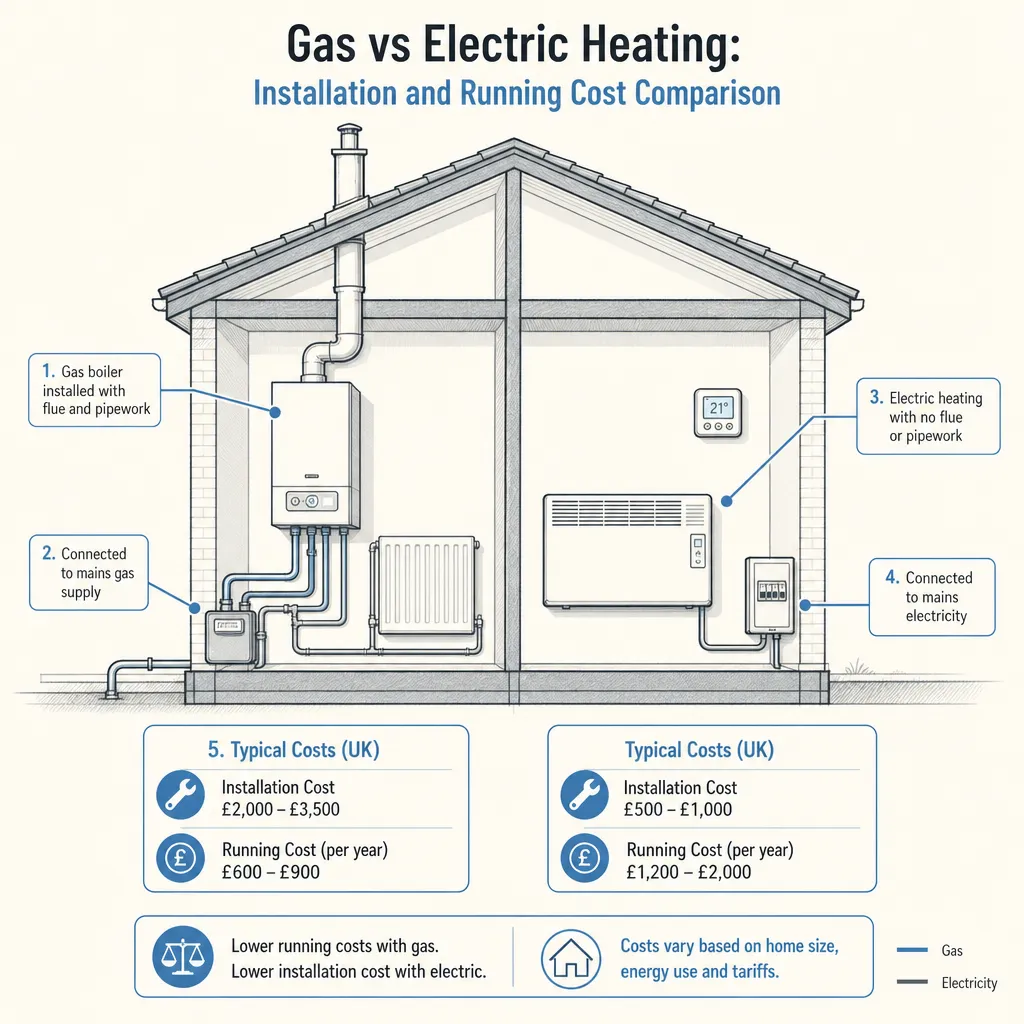
A typical semi-detached home (3 bedrooms, EPC band D) uses approximately 12,000–15,000 kWh of gas per year for heating and hot water combined. At 6.24p/kWh for gas, that equates to roughly £750–£940 per year in energy alone, before standing charges.
Indicative UK costs, last reviewed 2026-05-08. Based on Ofgem Q1 2026 price cap; actual costs vary by property, usage, and tariff.
Cost element | Indicative range |
|---|---|
New gas combi boiler (supply and install) | £2,000–£4,500 |
System boiler with hot water cylinder | £2,500–£5,000 |
Annual service contract | £80–£150/year |
Boiler breakdown cover (optional) | £100–£300/year |
Actual quotes vary by region, property, and installer. Seek at least three written quotes from Gas Safe registered engineers.
Gas boilers require annual servicing by a Gas Safe registered engineer and have a typical lifespan of 10–15 years with regular maintenance.
What does electric resistance heating cost to run?
Electric storage heaters, panel heaters, and direct electric systems are common alternatives in homes without a gas supply — particularly purpose-built flats, rural properties, and off-grid homes.
Electric resistance heating converts electricity to heat at 100% efficiency (a Coefficient of Performance of 1.0). At approximately 24.5p/kWh (Ofgem Q1 2026 price cap), this makes it roughly four times more expensive per unit of heat than gas at current tariff ratios.
For the same 3-bedroom semi using 12,000 kWh of heating energy, electric resistance heating would cost approximately £2,940 per year — compared with around £750 for gas.
This comparison shifts in a few scenarios:
- Economy 7 or Economy 10 tariffs can reduce overnight electricity costs to approximately 11–16p/kWh, which benefits storage heaters that charge during off-peak hours.
- Homes with solar PV can offset running costs significantly if heating demand can be scheduled during generation hours.
- Very well-insulated homes (EPC A or B) require far less energy input, reducing the absolute cost gap between electric and gas.
Heat pumps: a different kind of electric heating
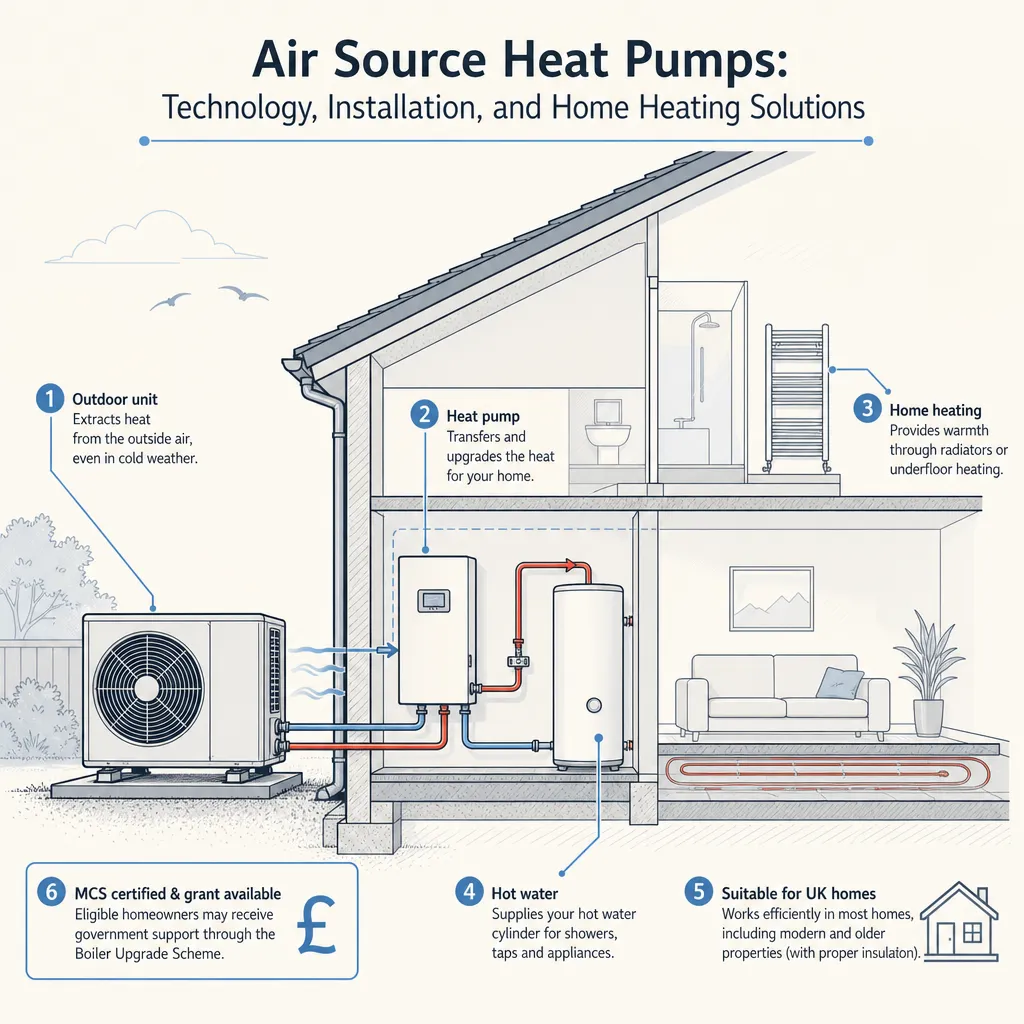
Heat pumps — particularly air source heat pumps (ASHPs) — are the UK government's primary alternative to gas boilers. Unlike resistance heaters, they move heat from outside air rather than generating it, achieving CoP values of 2.5–4.0 in typical UK conditions.
Heating system | Approximate CoP | Effective cost per kWh of heat (Q1 2026 cap) |
|---|---|---|
Gas boiler (90% efficiency) | ~0.90 | ~6.9p |
Electric resistance heater | 1.0 | ~24.5p |
Air source heat pump (seasonal average) | 2.5–3.5 | ~7–10p |
Ground source heat pump | 3.0–4.5 | ~5.5–8.2p |
Indicative UK costs, last reviewed 2026-05-08. CoP varies by outdoor temperature, flow temperature, and installation quality.
A well-designed ASHP running at a seasonal CoP of 3.0–3.5 can achieve running costs broadly comparable to gas. The exact figures depend heavily on the property's insulation level (ASHPs work best in homes rated EPC B or above), whether radiators are sized for low flow temperatures, and the electricity tariff — some suppliers offer dedicated heat pump tariffs of approximately 15–20p/kWh.
Upfront installation costs for heat pumps:
System type | Indicative installed cost (before grants) | Boiler Upgrade Scheme grant | Estimated net cost |
|---|---|---|---|
Air source heat pump | £10,000–£18,000 | £7,500 | £2,500–£10,500 |
Ground source heat pump | £15,000–£30,000 | £7,500 | £7,500–£22,500 |
Indicative UK costs, last reviewed 2026-05-08. Source: Energy Saving Trust, MCS data.
Check Boiler Upgrade Scheme eligibility via GOV.UK — the grant requires an MCS-certified installer and a valid EPC with no outstanding loft or cavity wall insulation recommendations.
Which heating system suits which property?
Use this decision guide as a starting point — always confirm the details with a qualified energy assessor or installer:
- Choose a gas boiler replacement if your home is on the gas grid, has solid-wall or poorly insulated fabric, and you need a like-for-like replacement within a short timescale.
- Consider an air source heat pump if your home is EPC C or above (or you plan to insulate first), you have outdoor space for the external unit, your radiators are oversized or upgradeable, and you are eligible for the Boiler Upgrade Scheme.
- Consider electric storage heaters if you are off the gas grid, have access to Economy 7 or Economy 10 tariffs, and cannot accommodate a heat pump installation.
- Consult an MCS-certified installer or a PAS 2035 retrofit coordinator if you are unsure about fabric-first requirements or whether your radiator system suits low-temperature heat pump operation.
Total cost of ownership
A running-cost comparison alone misses the bigger picture. Total cost of ownership should account for:
- Installation cost, including any radiator upgrades, hot water cylinder, or underfloor heating works
- Maintenance and servicing — gas boilers need annual Gas Safe servicing; heat pumps need periodic checks but typically have fewer moving parts
- System lifespan — gas boiler: approximately 10–15 years; heat pump: 20 or more years with maintenance
- Carbon cost — gas combustion produces around 0.203 kgCO2e/kWh; UK grid electricity has an average carbon intensity of approximately 0.15 kgCO2e/kWh as of 2025, projected to fall further as renewable generation increases
Environmental impact
A heat pump running at a seasonal CoP of 3.0 has an effective carbon intensity of approximately 0.05 kgCO2e/kWh of heat — significantly lower than gas. Combined with solar PV generation, effective carbon intensity for domestic heating can approach zero for significant parts of the year. The National Grid ESO publishes real-time carbon intensity data, illustrating the grid's progressive decarbonisation.
Important limitations
This article provides general cost guidance only. Running costs, CoP values, installation prices, and grant eligibility all vary by property type, location, insulation level, existing heating infrastructure, and market conditions. The Ofgem price cap changes quarterly. Boiler Upgrade Scheme terms and availability may change — always check GOV.UK for current figures.
This article is not a substitute for a professional energy assessment, a heat pump survey, or advice from a Gas Safe registered engineer. Before committing to any heating system change, commission a heat loss calculation from an MCS-certified installer or an energy-efficiency consultant.
What to ask a qualified professional
Before replacing your heating system, ask:
- What EPC band is my home, and what fabric improvements are recommended before installing a heat pump?
- What size heat pump does my property need, and what flow temperature will it operate at?
- Are my existing radiators large enough for low-temperature operation, or will they need upgrading?
- Do I need a hot water cylinder, and where will it be located?
- What is the estimated Seasonal Coefficient of Performance (SCOP) for my specific installation?
- Is my property eligible for the Boiler Upgrade Scheme, and can you handle the application process?
- Which MCS-certified engineer will carry out the work, and can you provide references from similar properties?
- What ongoing maintenance does the system require, and what are the typical annual costs?
When to get professional help
Always involve a qualified professional before replacing a gas boiler or installing a heat pump. Specific situations where professional assessment is critical:
- Your home is an older solid-wall property (pre-1920s) or poorly insulated — a fabric-first assessment is needed before any heating system is sized
- You are unsure whether a heat pump will suit your existing radiator system
- You want to model full lifecycle costs before committing to a particular system
- You are planning to combine a heating upgrade with solar PV or battery storage
An MCS-certified heat pump installer, a PAS 2035 retrofit coordinator, or an energy and sustainability compliance specialist can carry out a detailed heat loss calculation and system recommendation.
How Housey can help
If you want expert guidance on which heating system suits your home, Housey can connect you with qualified professionals. Request a heat pump survey to assess your property's suitability, or speak to an energy-efficiency consultant who can model running costs for your specific home. For broader retrofit planning, explore energy and sustainability compliance services.
Frequently asked questions
Is a heat pump cheaper to run than a gas boiler?
At Q1 2026 Ofgem price cap rates, a gas boiler produces heat at roughly 6.9p/kWh at 90% efficiency. An air source heat pump achieving a seasonal CoP of 3.0–3.5 delivers heat at approximately 7–10p/kWh of electricity — broadly comparable to gas but not consistently cheaper. The advantage grows as the grid decarbonises and dedicated heat pump tariffs become more competitive.
What grants are available for heat pumps in 2026?
The Boiler Upgrade Scheme offers £7,500 for an eligible air source heat pump, provided it is installed by an MCS-certified installer and the property has a valid EPC with no outstanding recommendations for loft or cavity wall insulation. Check GOV.UK for current eligibility criteria and whether the scheme remains open, as grant availability is subject to government funding decisions.
Can I replace a gas boiler with electric heating quickly?
You can replace a gas boiler with electric panel heaters or storage heaters relatively quickly, but running costs with direct electric resistance heating are typically much higher than gas. A heat pump installation requires more planning: an external unit, likely a hot water cylinder, potentially upgraded radiators, and Building Regulations compliance. It is not typically a same-week replacement.
Will my home need insulation upgrades before a heat pump?
Most heat pump installers and PAS 2035 retrofit coordinators recommend addressing the building fabric first — loft insulation, cavity wall insulation, and draught-proofing — before sizing a heat pump. Better insulation means a smaller heat pump, lower running costs, and better seasonal efficiency. Check your EPC for existing recommendations before instructing an installer.
Are gas boilers being phased out?
New gas boiler installations in new-build homes have been prohibited under Part L of the Building Regulations since 2025. For existing homes, government policy aims to phase out new gas boiler sales, but no confirmed final date is in place as of May 2026. Check GOV.UK for the latest position, as this policy area remains subject to change.
Sources and further reading
- Ofgem price cap information — Ofgem
- Boiler Upgrade Scheme — GOV.UK
- Heat pumps explained — Energy Saving Trust
- MCS certified installer search — MCS
- Find a Gas Safe registered engineer — Gas Safe Register
- Approved Document L: Conservation of fuel and power — GOV.UK
Useful next reads
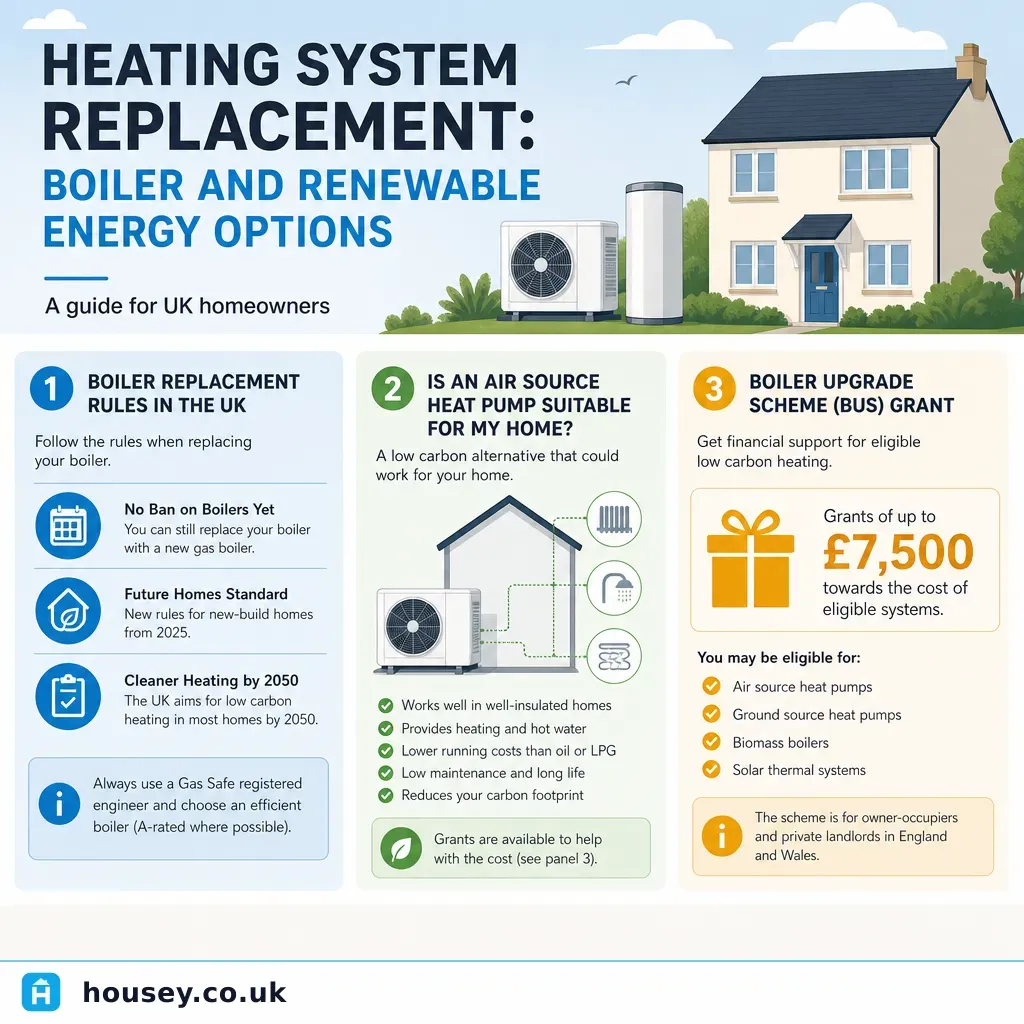 Energy & Retrofit
Heating System Replacement: Boiler and Renewable Energy Options
When replacing a heating system in the UK, a new gas boiler must comply with Boiler Plus (Part L) and be fitted by a Gas Safe registered engineer.
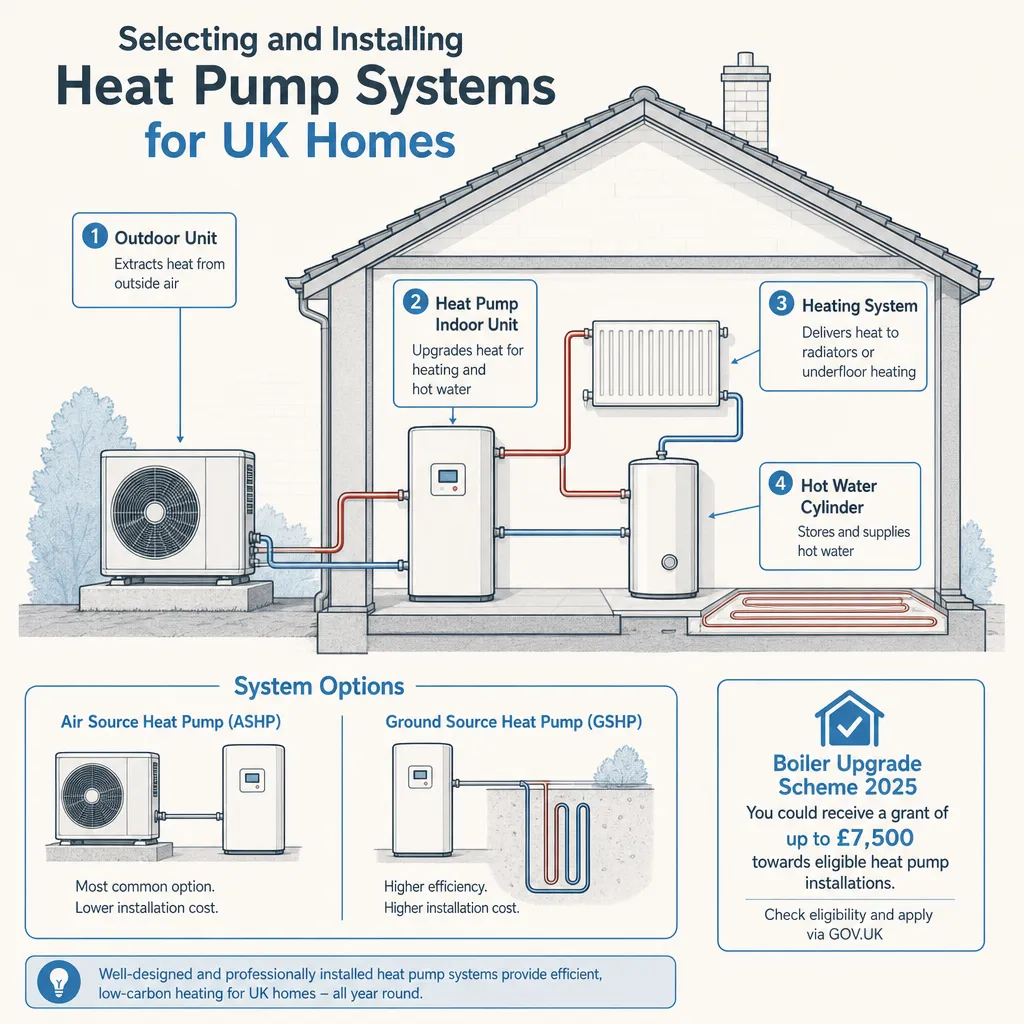 Energy & Retrofit
Selecting and Installing Heat Pump Systems for UK Homes
Selecting a heat pump for a UK home requires a site-specific heat loss calculation, an assessment of existing heat emitters, and a check on fabric insulation before any system is chosen.
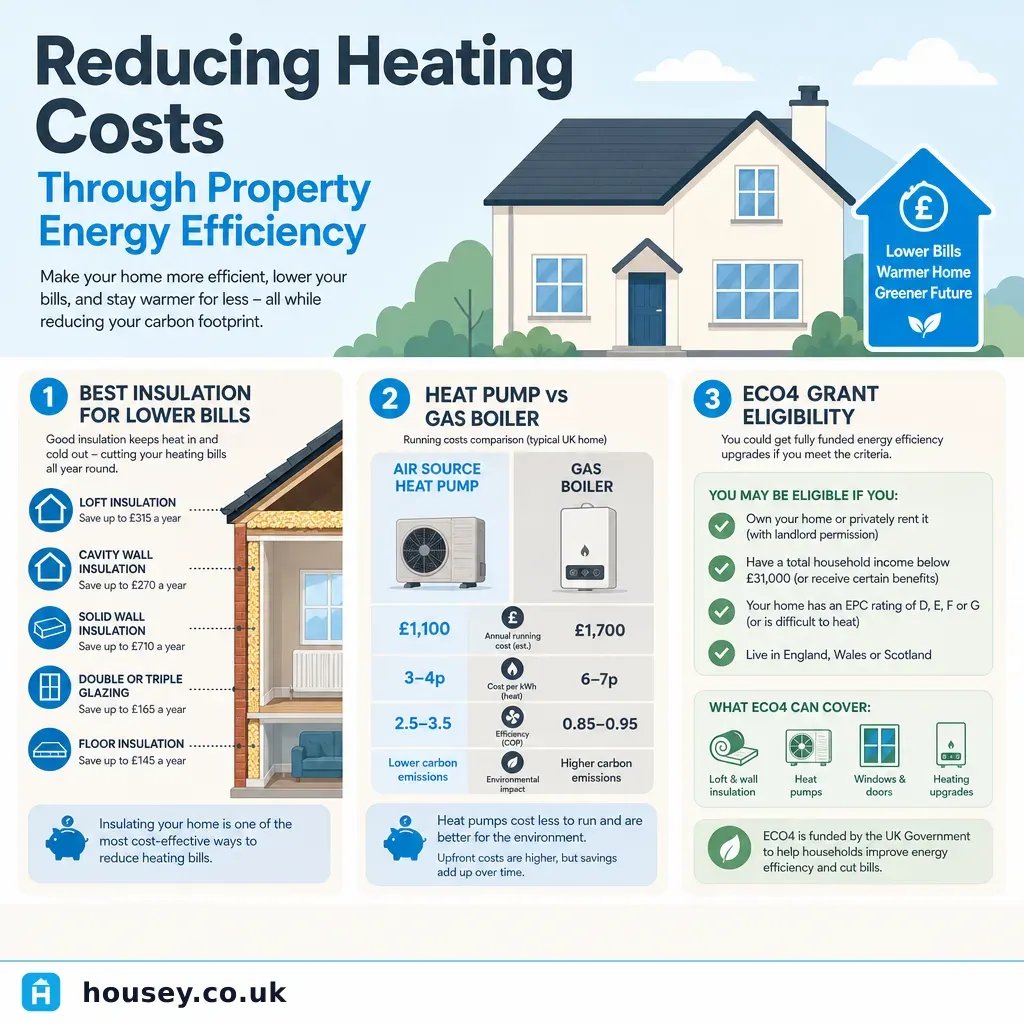 Energy & Retrofit
Reducing Heating Costs Through Property Energy Efficiency
Reducing heating costs starts with identifying where heat is lost — typically walls (30–35%), roof (20–25%), and windows.
 Energy & Retrofit
Gas vs Electric Heating: Installation and Running Cost Comparison
Gas central heating usually has lower running costs per kWh than direct electric heating in the UK, though heat pumps can change that equation.
 Energy & Retrofit
Air Source Heat Pumps: Technology, Installation, and Home Heating Solutions
An air source heat pump extracts heat from outdoor air and transfers it indoors via a refrigerant cycle, typically delivering 2.