Hedge Cutting and Trimming Services: Costs and Timing
By Housey · Last reviewed 7th of May 2026
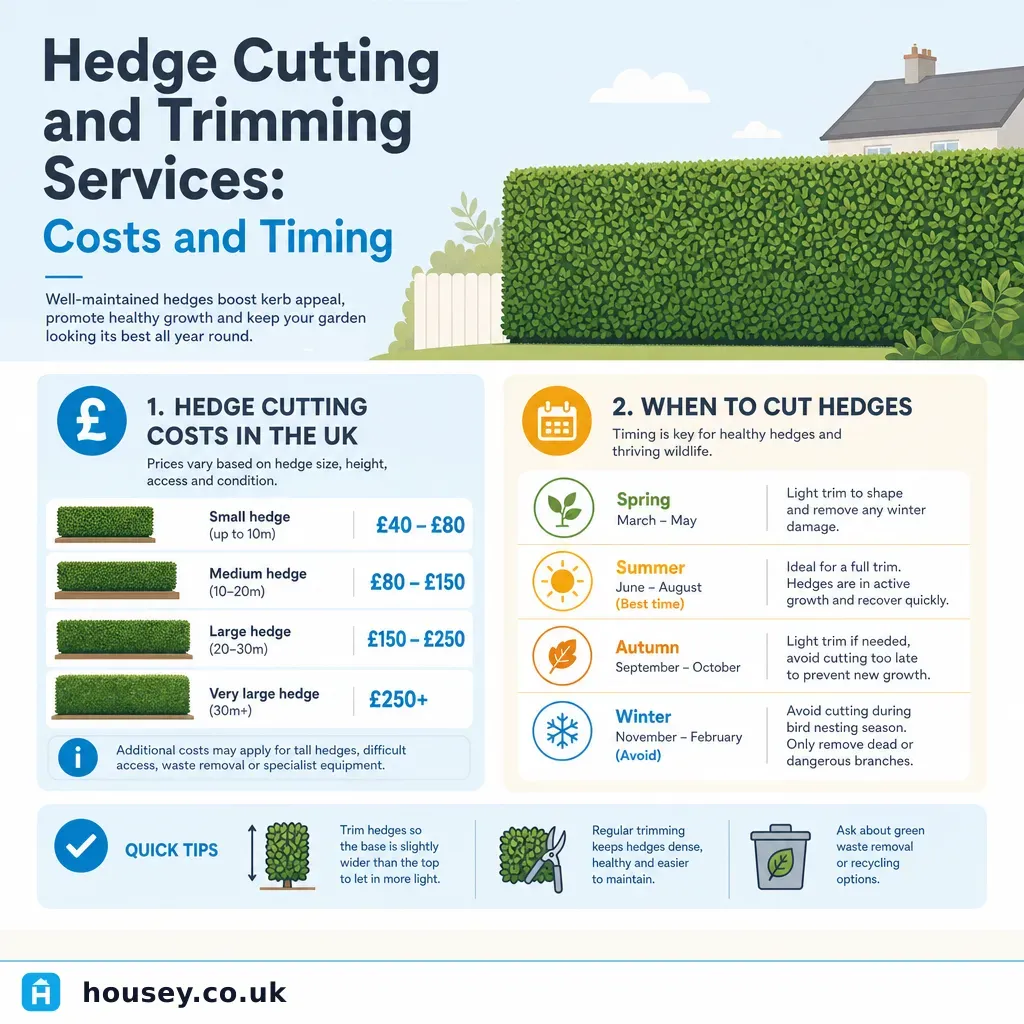
Hedge Cutting and Trimming Services: Costs and Timing
Overgrown hedges are one of the most common reasons UK homeowners call in a professional gardener or landscaper each year. Whether you've inherited an unruly leylandii boundary or want to keep a formal box parterre looking sharp, getting the timing and technique right matters — both for the plant's health and to stay on the right side of wildlife law during the nesting season. Costs and responsibilities vary more than most people expect before they request their first quote.
Key points
- The Wildlife and Countryside Act 1981 makes it an offence to intentionally damage or destroy the nest of any wild bird in use or being built; this is why most professional contractors avoid cutting hedges between March and August when nesting activity is at its peak.
- The High Hedges provisions of the Anti-social Behaviour Act 2003 (Part 8) give councils in England and Wales the power to order the reduction of a hedge that is adversely affecting a neighbour's reasonable enjoyment of their property.
- The Work at Height Regulations 2005 apply to any work where a fall could cause personal injury; hedges over 2 metres should routinely be maintained by a professional with suitable access equipment and public liability insurance.
- Formal hedges — including box, yew, and privet — typically require two to three cuts per year to maintain a crisp, well-defined outline; informal flowering hedges usually need only one cut after flowering.
- Clipping disposal is usually charged separately by contractors; skips, green-waste bags, and council garden-waste collections each carry different costs and may require advance booking.
When is the best time to cut hedges in the UK?
The safest window for most hedge cutting is late August through to February, when nesting activity is lowest. The Wildlife and Countryside Act 1981 makes it an offence to intentionally damage or destroy any wild bird's nest while it is in use or being built — this applies to hedges as much as to trees. The RSPB advises that the nesting season typically runs from March to August, though in mild years some species begin nesting in February.
A second consideration is plant health. Cutting at the wrong time can leave fresh growth vulnerable to frost damage or disease. Most formal hedges — box, yew, beech, hornbeam — respond well when cut in late summer (August to September) or late winter (February to March), outside both peak nesting activity and hard frosts.
Recommended cutting schedule by hedge species
Hedge species | Cuts per year | Best timing | Notes |
|---|---|---|---|
Box (Buxus) | 2–3 | May, August, September | Box blight risk — disinfect tools between cuts |
Yew (Taxus) | 1–2 | August–September, optionally February | Slow-growing; one annual cut often sufficient |
Privet (Ligustrum) | 2–3 | May, July, September | Fast-growing; may need more frequent trimming |
Beech (Fagus) | 1 | August | Retains leaves over winter if cut late summer |
Hornbeam (Carpinus) | 1 | August | Similar response to beech; good for formal boundaries |
Leylandii (× Cuprocyparis leylandii) | 2 | May–June and August | Never cut into old brown wood — will not regenerate |
Laurel (Prunus laurocerasus) | 1–2 | May and August | Use secateurs for clean cuts; shears cause browning |
How much does professional hedge cutting cost in the UK?
Costs vary widely based on hedge length, height, and species, your location, access difficulties, and whether clipping disposal is included.
Indicative UK costs, last reviewed 2026-05-07:
Hedge size | Approximate cost per visit | Typical frequency |
|---|---|---|
Small (up to 10 m long, under 1.5 m tall) | £50–£150 | 2–3 times per year |
Medium (10–20 m long, 1.5–2 m tall) | £150–£300 | 1–2 times per year |
Large or tall (over 20 m, or over 2 m tall) | £300–£600+ | Once per year minimum |
Costs vary by region, access, and contractor. Always request itemised quotes from at least two professionals before committing.
Key cost drivers:
- Height: Tall hedges require ladders or platform equipment, increasing time, risk, and therefore price.
- Species: Slow-growing yew is quicker to trim than fast-growing leylandii of the same dimensions.
- Access: A hedge bordering a road or with limited garden access may add to costs.
- Disposal: Clippings must go somewhere — many contractors charge separately for haulage or skip hire.
- Frequency: A regular annual or seasonal maintenance contract usually reduces the per-visit cost compared with one-off jobs.
Landscaper or tree surgeon: which professional do you need?
Most routine hedge trimming falls within the scope of a landscaper or gardening contractor. However, some situations — particularly very tall hedges, those adjacent to overhead power lines, or specimens where trees have grown into the hedge — call for a qualified tree surgeon (arborist).
- Choose a landscaper or gardening contractor if your hedge is under 3–4 metres tall, stands clear of structures and utilities, and requires routine annual or twice-yearly trimming.
- Choose a tree surgeon if the hedge exceeds 4–5 metres, is adjacent to overhead electrical cables, contains trees with significant trunk diameters, or requires crown reduction on established woody specimens.
- Check for public liability insurance regardless of which professional you use — this protects you if property is damaged during the work.
- Ask about professional memberships: Arboricultural Association approval (for tree surgeons) and Trustmark registration (for landscapers and gardeners) indicate independent vetting.
- Always get a site visit before committing: any contractor who quotes without seeing the hedge in person is guessing at the scope of work.
What to ask before accepting a quote
Before agreeing to hedge cutting work, ask your contractor:
- Is clipping removal included in the price, or charged separately?
- What equipment will you use, and do you carry public liability insurance?
- Will you check for active bird nests before cutting?
- How much will you cut back? (Specify the finished height and width you want in advance.)
- Do you charge extra for limited-access gardens or steeply sloping sites?
- Are you registered with Trustmark, the Arboricultural Association, or a similar professional body?
- Will you disinfect cutting tools between hedges if box blight or phytophthora is known to be present nearby?
- What happens if work causes unintended damage to the hedge, adjacent planting, or boundary structures?
Red flags to watch for
Be cautious if a contractor:
- Quotes without visiting or without asking about hedge dimensions, species, and access.
- Cannot provide evidence of public liability insurance when asked directly.
- Proposes cutting during March–August without mentioning a nest check.
- Gives a vague quote with no breakdown of disposal costs.
- Suggests cutting hard into old brown wood on leylandii (sections that lose green coverage will not regenerate).
- Pressures you to commit on the spot without allowing time to compare quotes.
When to get professional help
Professional hedge cutting is worth arranging whenever your hedge:
- Has grown beyond 2 metres in height, making safe ladder work necessary.
- Is adjacent to a public footpath, highway, or overhead electrical cable.
- Has not been cut in several years and requires significant reduction in a single visit.
- Is a species such as leylandii where incorrect cutting technique can cause permanent dieback.
- Has become the subject of a written complaint from a neighbour and may fall under the high hedges provisions of the Anti-social Behaviour Act 2003.
If you receive a written notice from your local council regarding a high hedge, read it carefully before doing anything — council decisions typically specify a required finished height and a compliance deadline, and cutting to the wrong height could complicate the matter further.
How Housey can help
If you need a professional to keep your hedges healthy and tidy, Housey can help you request and compare quotes from vetted local contractors. For routine trimming and maintenance, explore quotes from local landscapers; for larger boundary hedges with tree elements or working at significant height, consider requesting quotes from tree surgeons near you.
Frequently asked questions
Can I cut my neighbour's hedge if it overhangs my property?
You are entitled to cut back branches or roots that encroach onto your property up to the boundary line, but you must offer the cuttings back to your neighbour as they remain their property. You cannot cut beyond your boundary without permission. If the encroachment is causing significant damage, seek legal advice before acting unilaterally.
Is there a law against cutting hedges in summer in the UK?
There is no blanket ban on summer hedge cutting, but the Wildlife and Countryside Act 1981 makes it an offence to intentionally damage or destroy a wild bird's nest in use or being built. Many contractors check for active nests before cutting at any time of year, but the risk of finding active nests is highest from March to August.
Do I need planning permission to remove a hedge?
Most residential hedges are not protected and planning permission is not usually required to remove them. However, hedges in conservation areas, or those subject to a planning condition or Biodiversity Net Gain requirement, may require consent. Check with your local planning authority before removing any significant boundary hedge if you are unsure.
How do I find a reputable hedge cutting contractor?
Ask for proof of public liability insurance, check for Trustmark registration or Arboricultural Association membership, and request at least two itemised quotes. Ensure each quote clearly states whether clipping disposal is included. Word-of-mouth recommendations from neighbours who use a contractor regularly are a reliable starting point.
What can happen if my hedge overhangs a public footpath or highway?
If a hedge overhangs a public highway or footpath and obstructs pedestrians or drivers, the local highway authority can require the owner to cut it back. If the owner fails to comply, the authority may carry out the work and recharge the cost to the property owner. Keep boundary hedges clear of the highway to avoid enforcement action.
Sources and further reading
- Wildlife and Countryside Act 1981 — legislation.gov.uk
- High hedges: complaining to the council — GOV.UK
- Garden birds and the law — RSPB
- Work at height: guidance for employers — HSE
- Hedges: planting and maintaining — Royal Horticultural Society
Useful next reads
 Improvement & Build
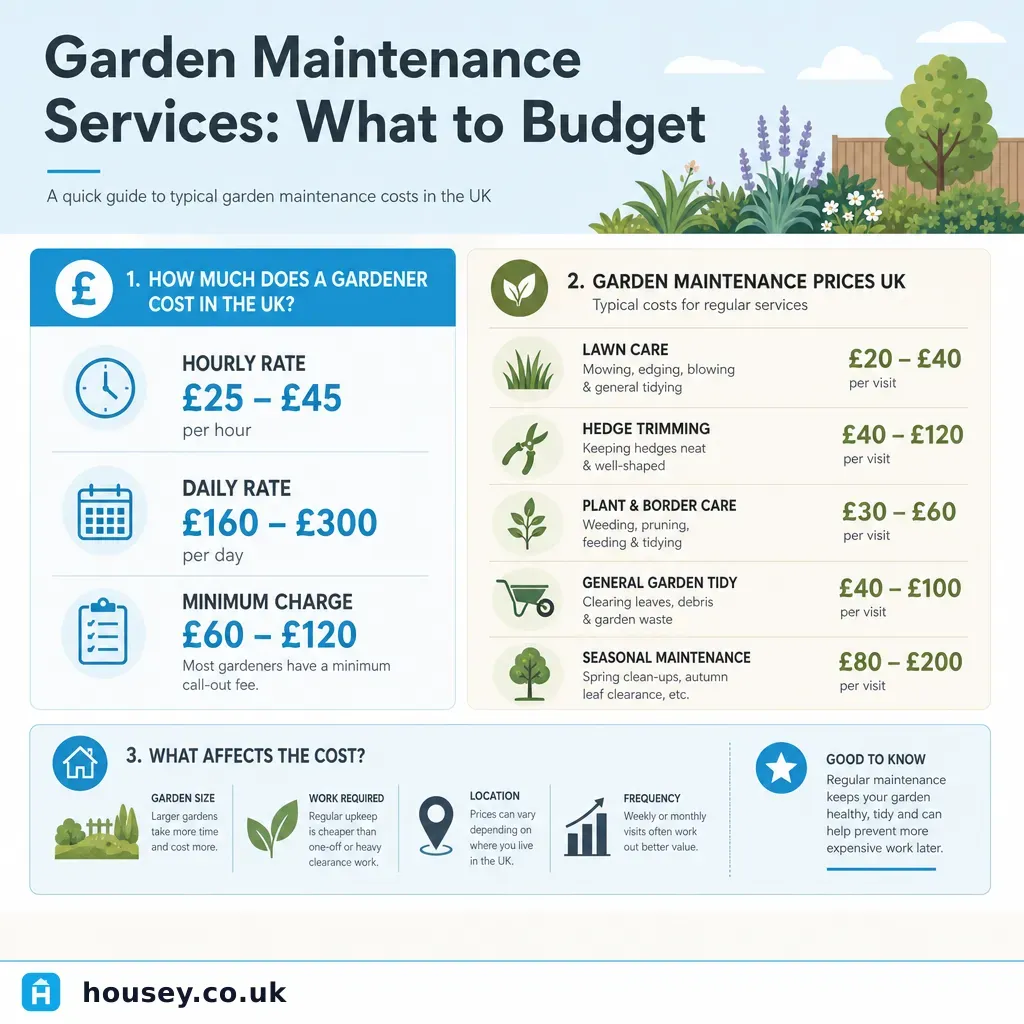
Garden Maintenance Services: What to Budget
Garden maintenance in the UK typically costs £25–£50 per hour for a general gardener, or £1,200–£3,500 per year for a regular maintenance contract covering a medium suburban garden.
 Improvement & Build
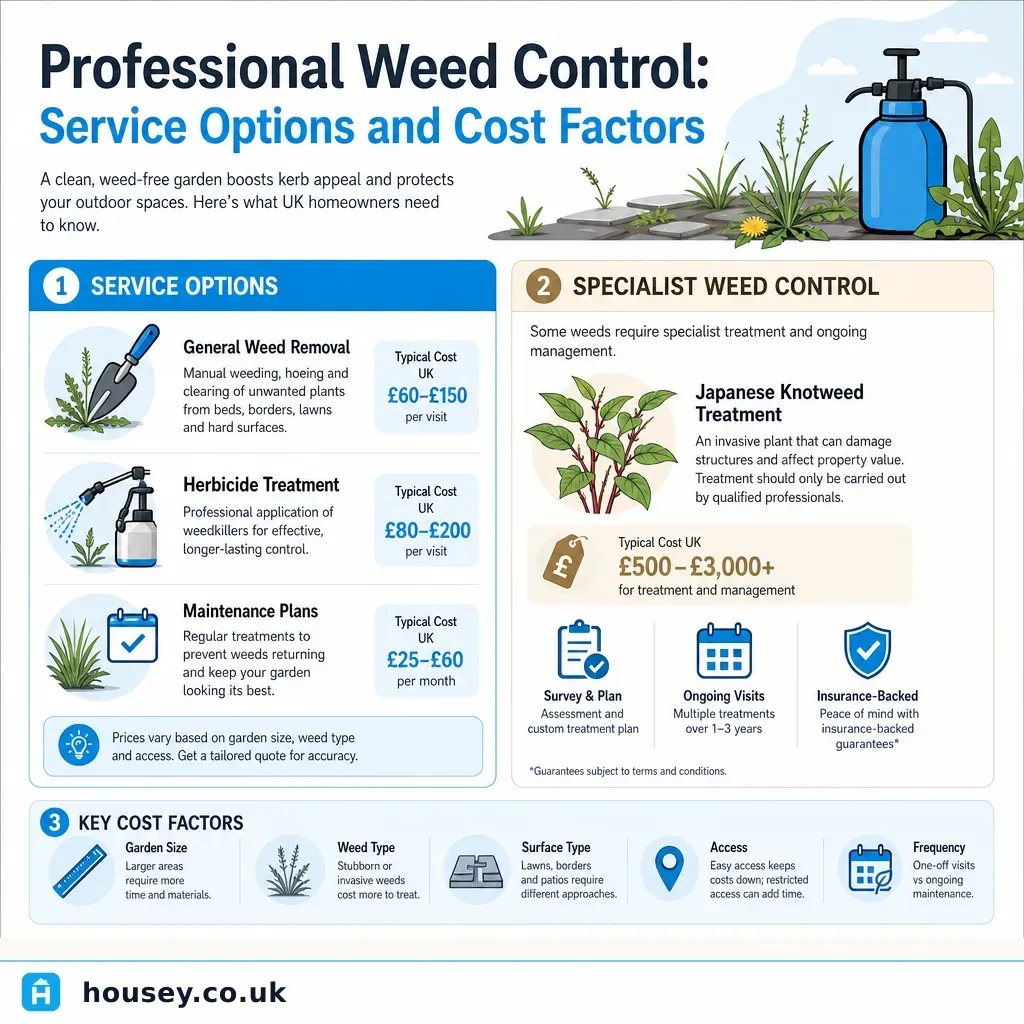
Professional Weed Control: Service Options and Cost Factors
Professional weed control in the UK typically involves herbicide treatment, manual removal, or a combination of both.
 Improvement & Build
Creating a New Garden Design for Your Property
Creating a new garden design involves assessing your space, setting a realistic budget, deciding on hard and soft landscaping, and choosing a planting scheme suited to your soil and aspect.
 Improvement & Build
Garden Pest Management: Homeowner's Essential Guide
Common UK garden pests include slugs, aphids, vine weevil, and lily beetle.
 Improvement & Build
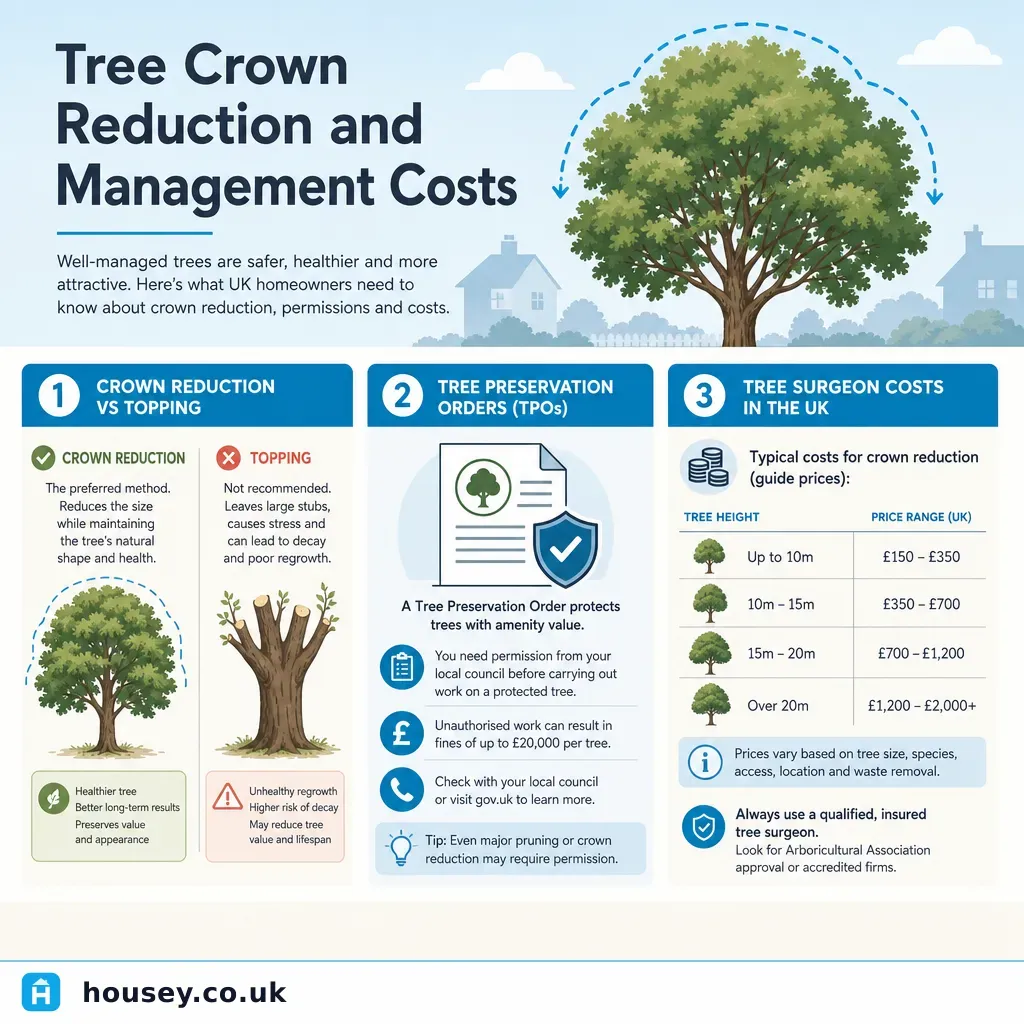
Tree Crown Reduction and Management Costs
Crown reduction reduces a tree's overall size by 15–30% while preserving its natural shape, and must follow BS 3998:2010.