Professional Weed Control: Service Options and Cost Factors
By Housey · Last reviewed 11th of May 2026
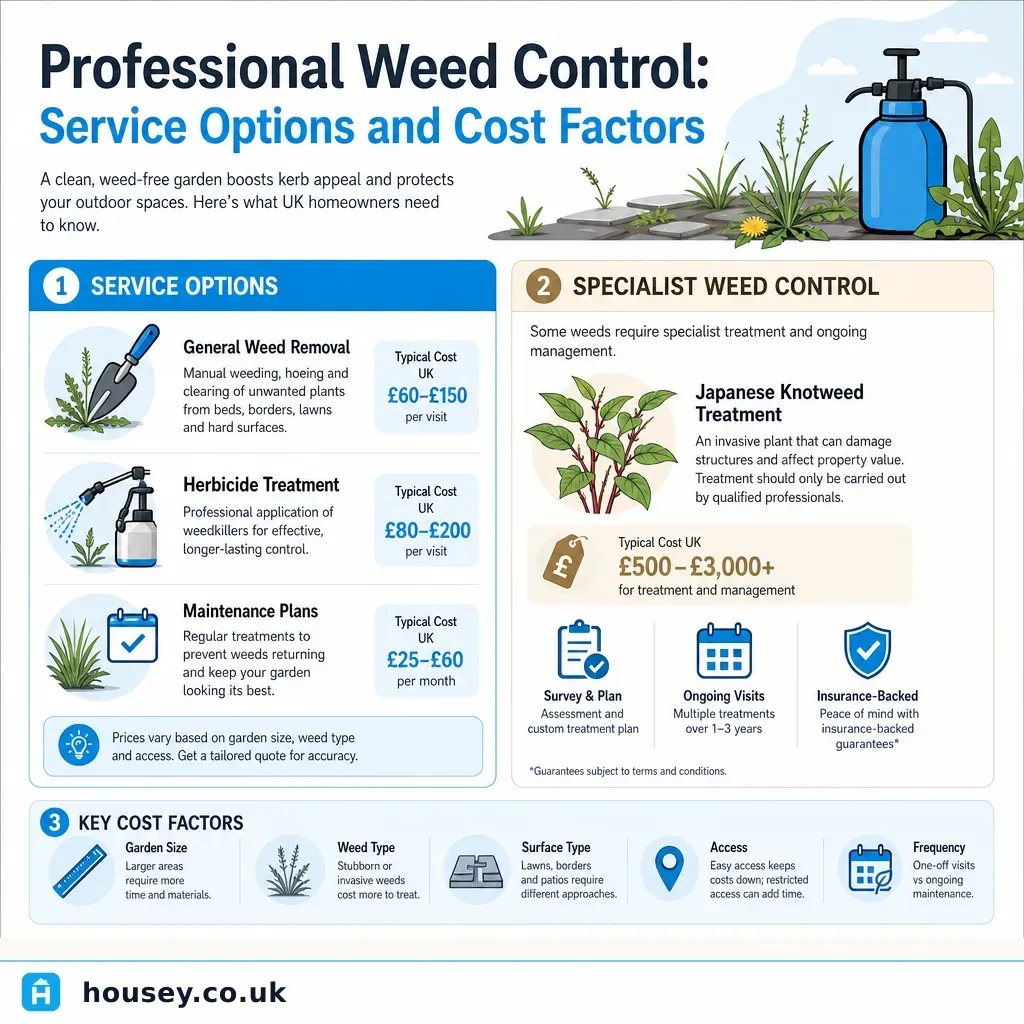
Professional Weed Control: Service Options and Cost Factors
Persistent weeds become a pressing concern when preparing a property for sale, tackling a neglected garden after a house purchase, or maintaining a plot that has got out of hand. Professional weed control services vary considerably in approach, cost, and the qualifications required — knowing what to expect before requesting quotes can save time and prevent costly mistakes.
Key points
- Japanese knotweed is classified as controlled waste under the Environmental Protection Act 1990 and must be handled and disposed of by a licensed contractor.
- Commercial herbicide application requires operators holding a PA1/PA6 certificate of competence under the Plant Protection Products (Sustainable Use) Regulations 2012.
- Most weed treatment programmes involve 2–3 visits spaced 4–6 weeks apart to catch re-growth and assess kill rate.
- Herbicide use within 6 metres of a watercourse may require prior notification to the Environment Agency under the Water Framework Directive.
- Indicative cost for a single residential garden treatment: £50–£150; a Japanese knotweed eradication programme: £1,000–£5,000+ (Indicative UK costs, last reviewed 2026-05-11).
What types of professional weed control service are available?
Service type | Best for | Not ideal for | Typical professional | Main risk if wrong |
|---|---|---|---|---|
Selective herbicide programme | Lawns with broadleaf weeds (daisies, dandelions, clover) | Areas near children's play zones or organic gardens | Landscaper or grounds maintenance contractor | Grass discolouration if a non-selective product is used |
Non-selective herbicide treatment | Hard standings, driveways, paths, fence lines | Mixed planting beds with desirable plants nearby | Landscaper with PA1/PA6 qualification | Drift damage to adjacent plants or soil contamination |
Manual removal and mulching | Beds with desirable plants, organic plots, small areas | Large areas with deep-rooted perennials | Landscaper or gardener | Regrowth if root system is not fully removed |
Japanese knotweed specialist programme | Confirmed or suspected Japanese knotweed | N/A — mandatory for this species | PCA-accredited specialist contractor | Legal, mortgage, and structural implications if untreated |
Soil sterilant treatment | Clearing waste ground, preparing new-build plots | Gardens with existing planting to retain | Grounds maintenance contractor | Long-term soil sterility prevents replanting |
How much does professional weed control cost?
Several factors affect the final quote, and a single national figure is misleading without context.
Key cost drivers:
- Garden or treatment area size — often priced per square metre or per visit
- Weed species present — invasive species attract significant additional cost
- Number of treatment visits required in the programme
- Access to the site (terraced gardens, steep slopes, gated entrances)
- Whether a follow-up guarantee or warranty is included
- Disposal of controlled waste (particularly relevant for Japanese knotweed)
Indicative UK costs, last reviewed 2026-05-11:
- Single herbicide visit, small-to-medium garden (up to 100 m²): £50–£120
- Three-visit programme, medium garden (100–300 m²): £150–£400
- Japanese knotweed treatment programme (single crown, residential): £1,000–£3,000
- Large-scale knotweed eradication or excavation: £3,000–£10,000+
Always obtain at least three written quotes and compare what each includes.
Does the contractor need to be qualified?
For any commercial application of pesticides — including herbicides — in England, Scotland, and Wales, operators must hold a valid Certificate of Competence under the Control of Pesticides Regulations 1986 (as amended) and the Plant Protection Products (Sustainable Use) Regulations 2012. The most common certificates are:
- PA1: Safe use of pesticides (core module, required alongside all others)
- PA6: Application using knapsack or vehicle-mounted sprayers
- PA2/PA4: Boom sprayers or pedestrian-operated equipment
Ask to see copies of certificates before instructing any contractor. For Japanese knotweed work, look for membership of the Property Care Association (PCA) or BASIS registration, which indicates professional competence in invasive-species management.
Japanese knotweed: why it needs a specialist
Japanese knotweed (Fallopia japonica) is listed under Schedule 9 of the Wildlife and Countryside Act 1981, making it an offence to plant or cause it to spread in the wild. Its rhizome system can extend 3 metres deep and 7 metres horizontally, penetrating hard surfaces, drainage channels, and structural foundations.
Key property implications:
- Mortgage lenders may refuse to lend on properties with untreated knotweed visible within 7 metres of a habitable structure.
- Failure to disclose known knotweed on a TA6 property information form may constitute misrepresentation.
- A management plan from a PCA-accredited specialist often satisfies lender requirements while treatment continues.
Treatment options include herbicide programmes (typically 3–5 growing seasons), excavation and licensed disposal, or root-barrier systems combined with treatment. The wrong approach can spread the rhizome and worsen the infestation.
Homeowner preparation checklist
Before a professional weed control contractor arrives:
Red flags when choosing a contractor
- No professional certification (PA1/PA6) and unwilling to provide copies on request
- No written quote specifying products and methodology
- Promising a single-visit cure for Japanese knotweed — eradication rarely occurs in fewer than three treatment seasons
- No mention of controlled waste disposal — waste must be documented and taken to a licensed facility
- No public liability insurance certificate available on request
What to ask before accepting a quote
- What herbicide products will be used, and are they approved for this setting?
- What certificates and accreditations does the operative hold?
- How many visits are included, and what triggers additional visits?
- Is VAT included in the quoted price?
- How will controlled waste be disposed of — can you provide a waste transfer note?
- Is there a guarantee or warranty if treatment is unsuccessful?
- Will I receive a written treatment report after each visit?
When to get professional help
Most established weed problems benefit from professional input, but act as a priority if:
- You suspect Japanese knotweed or giant hogweed (Heracleum mantegazzianum) — giant hogweed sap causes severe phototoxic burns and must not be touched
- Weeds have penetrated paving, drainage infrastructure, or structural elements
- You are preparing to sell and a survey has flagged weed presence
- Previous DIY treatment has failed after two full growing seasons
How Housey can help
Housey connects homeowners with vetted landscapers and garden designers in your local area. Submit a brief description of your garden and weed problem to compare quotes from up to four qualified specialists.
Frequently asked questions
How many visits does weed control usually take?
For annual weeds such as groundsel or hairy bittercress, a single treatment visit may suffice. Perennial weeds with established root systems — bindweed, couch grass, or bramble — typically require two to three visits spaced several weeks apart. Japanese knotweed treatment programmes usually run for three to five growing seasons to achieve effective long-term control.
Is professional weed control safe for pets and children?
Most professional herbicide products are safe once dry, but re-entry intervals vary by product. A responsible contractor will provide written guidance on when treated areas can safely be used again — commonly 24–48 hours. Always follow the specific guidance provided and retain any written safety information supplied.
Can I ask for organic or non-chemical methods only?
Yes. Manual removal, mulching, and flame weeding are non-chemical alternatives offered by some contractors. They are generally more labour-intensive and may cost more per visit. They are also typically less effective against deep-rooted perennials or invasive species such as Japanese knotweed, where chemical treatment or specialist excavation is usually required.
Does weed treatment near a pond require special permission?
Herbicide applications within 6 metres of a watercourse — including ponds, streams, and drainage ditches — may require prior notification to the Environment Agency and must use only products approved for near-water use. Always discuss the proximity of any water features with your contractor before work begins.
Sources and further reading
- Japanese knotweed: prevent the spread — GOV.UK
- Plant Protection Products (Sustainable Use) Regulations 2012 — legislation.gov.uk
- Wildlife and Countryside Act 1981 Schedule 9 — legislation.gov.uk
- Property Care Association: Japanese knotweed guidance — Property Care Association
- Giant hogweed: identify and report — GOV.UK
Useful next reads
 Improvement & Build
Power Seeding Your Lawn: Costs and Benefits for Garden Renovation
Power seeding uses a slit-seeding machine to cut shallow furrows into an existing lawn and deposit grass seed directly into the soil, giving far better germination rates than surface broadcasting.
 Improvement & Build
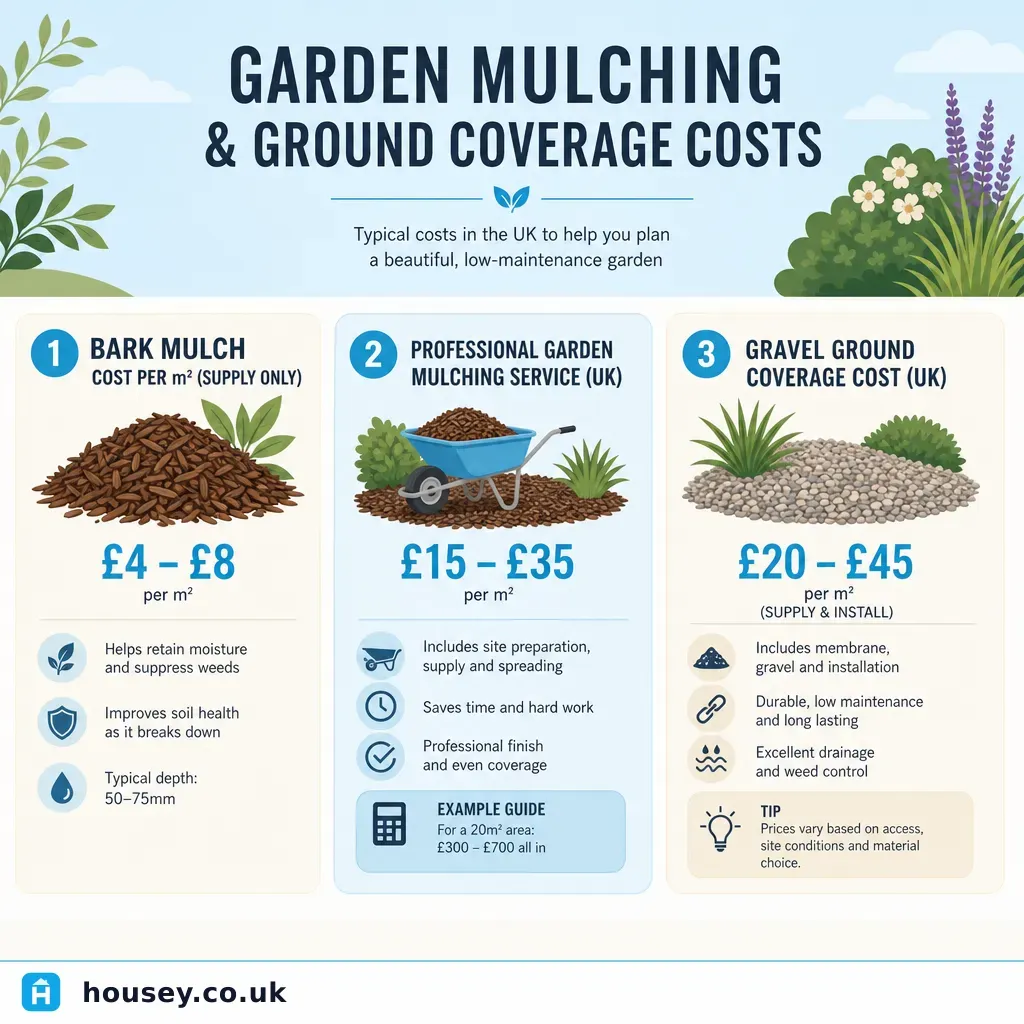
Garden Mulching and Ground Coverage Costs
Professional garden mulching typically costs £150–£600 for an average UK garden, depending on material type, area covered, and whether you hire a landscaper.
 Improvement & Build
Cobblestone and Block Driveway Installation: Costs and Design
Cobblestone and block paving driveways cost roughly £50–£200 per m² installed in the UK, depending on material and site conditions.
 Improvement & Build
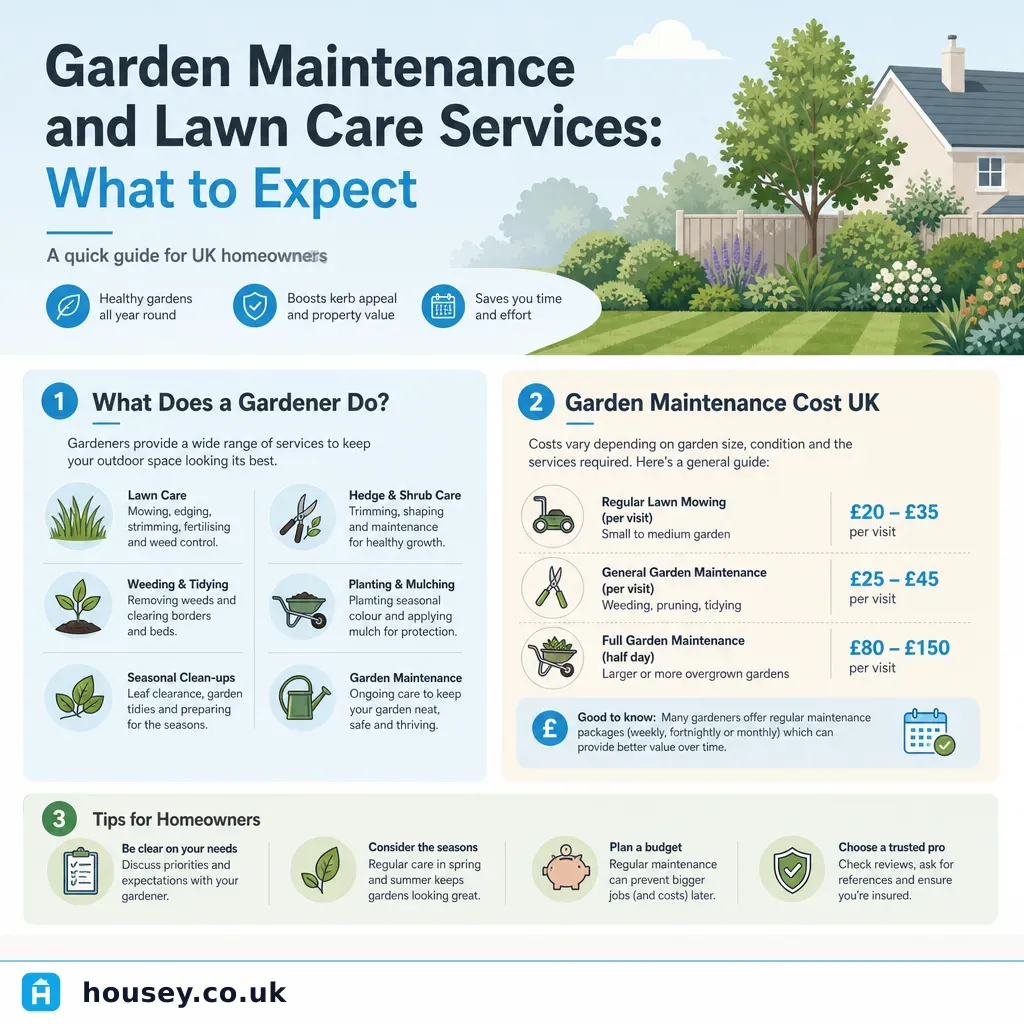
Garden Maintenance and Lawn Care Services: What to Expect
Professional garden maintenance services in the UK typically cover lawn mowing, weeding, pruning, and seasonal tasks such as scarification and hedge trimming.
 Improvement & Build
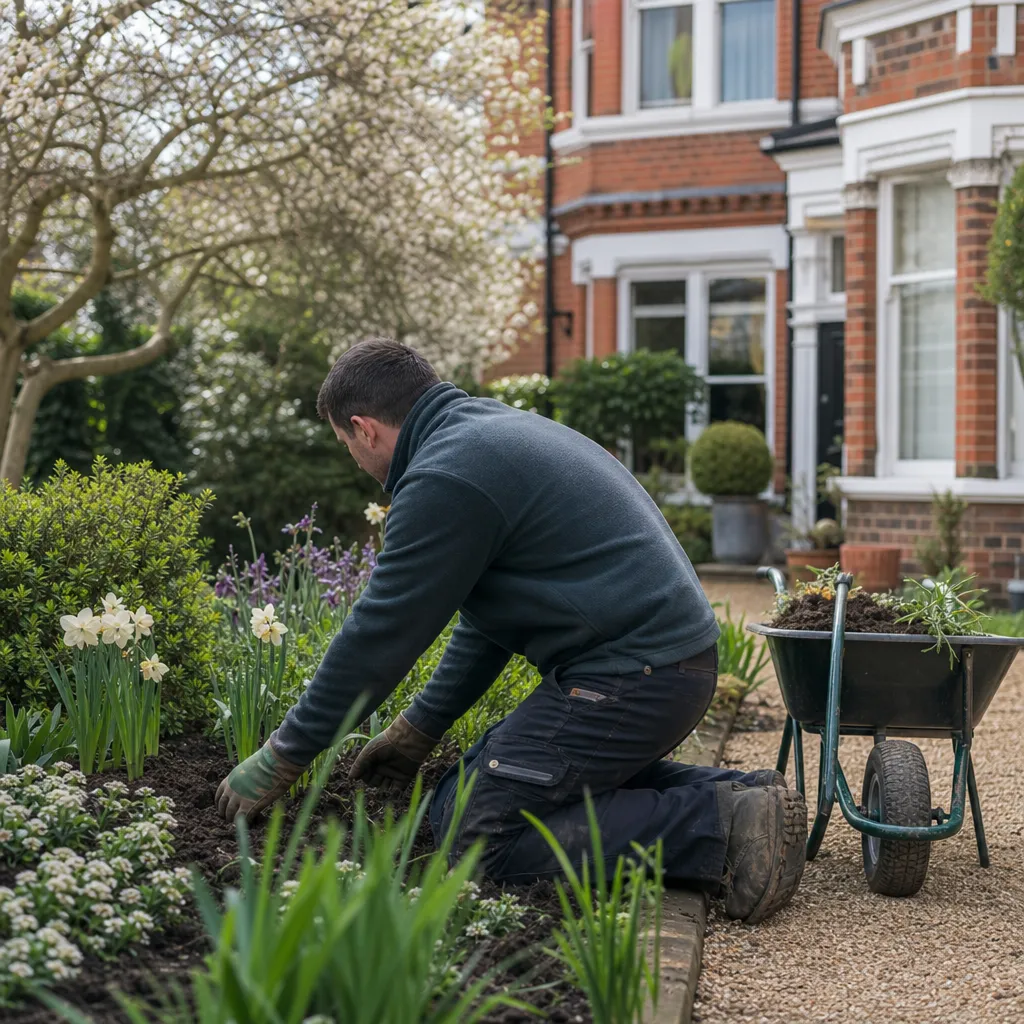
Seasonal Garden Maintenance: Spring Preparation and Planting
Spring garden maintenance in the UK runs from late February through May, with timing dictated by your location, last frost date, and soil temperature.