Creating a New Garden Design for Your Property
By Housey · Last reviewed 19th of May 2026
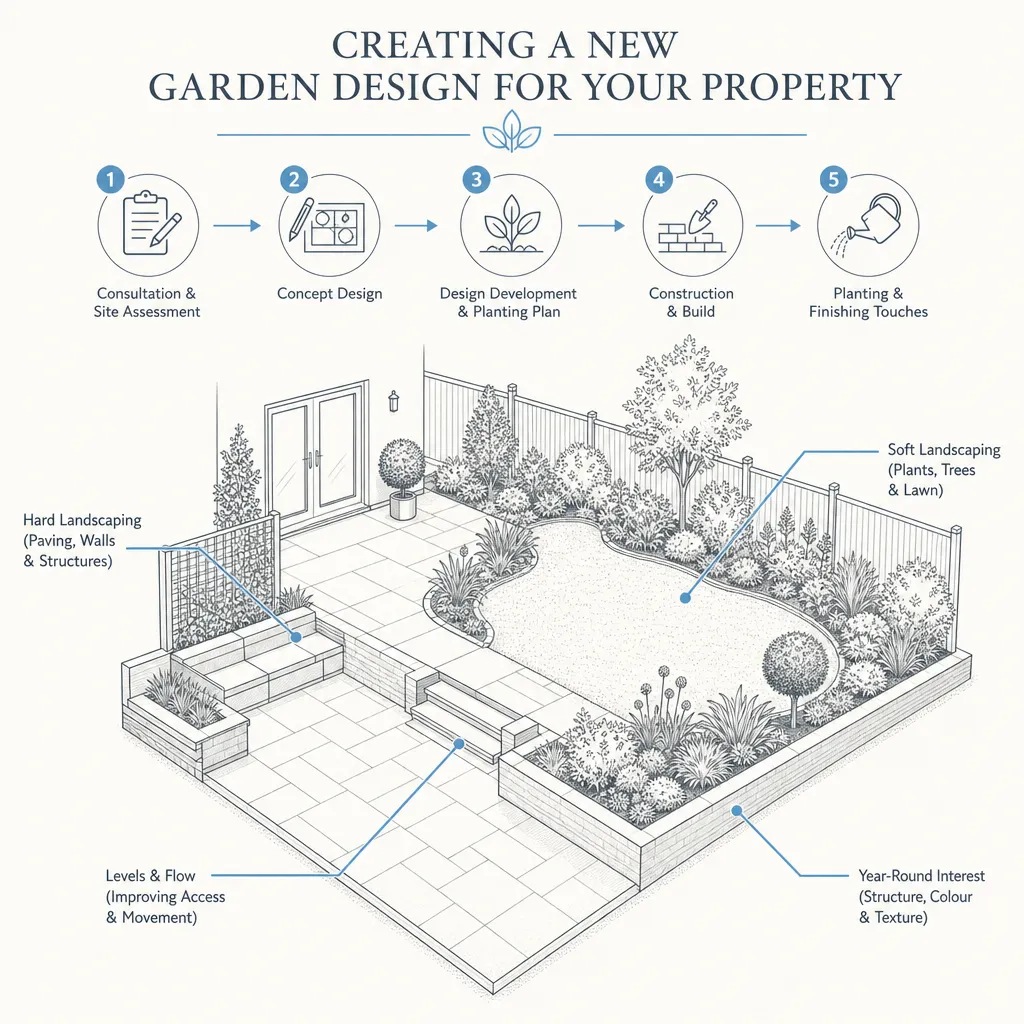
Creating a New Garden Design for Your Property
Whether you have just moved into a house with a neglected plot or outgrown a tired layout after years of living there, planning a garden redesign is one of the more rewarding home improvement projects you can undertake. The decisions you make early — about levels, drainage, materials, and planting — will shape how usable and enjoyable the space is for years to come, and can meaningfully affect your property's kerb appeal.
Key points
- Planning permission is not normally required for garden landscaping, but creating a new driveway or hard-standing over 5 m² with a non-permeable surface in England requires permission or a permeable alternative under the Highways Act 1980 as amended.
- Tree Preservation Orders (TPOs) protect individual trees or groups — cutting or pruning a TPO tree without consent from your local planning authority is a criminal offence.
- Professional garden designers typically charge £500–£3,000+ for a full design package; landscaping build costs are charged separately (Indicative UK costs, last reviewed 2026-05-19).
- Soil type (clay, sandy, chalky, loamy) and aspect (north-, south-, east- or west-facing) fundamentally determine which plants will establish and thrive long-term.
- If your project involves retaining walls above approximately 1 m, consult a structural engineer or groundworker early in the planning process.
What to assess before you start
A methodical site appraisal before contacting a designer or ordering materials saves time and avoids costly changes later. Walk the space at different times of day and note which areas receive full sun, partial shade, or deep shade. Observe where water pools after heavy rain — low spots that waterlog regularly will drive all drainage decisions.
Key questions to answer at this stage:
- What is the soil type? A jar test — mixing a small amount of soil with water and shaking vigorously — reveals clay, silt, or sandy content.
- Which direction does the main garden face?
- Are there existing trees subject to Tree Preservation Orders? Check your local planning authority's online TPO register.
- Who owns which boundaries? Your title deeds or an HM Land Registry title plan usually indicate boundary ownership.
- Is the site on a slope that will require retaining walls or stepped terracing?
Hard landscaping vs soft landscaping
Garden design divides broadly into hard landscaping (the structural elements: patios, paths, walls, steps, pergolas, and drainage) and soft landscaping (plants, lawn, hedging, trees, and planting beds). Most projects involve both, but sequencing matters — hard landscaping almost always comes first so that plant roots and lawn edges are not damaged by groundwork machinery.
Element | Type | Key consideration | Typical professional |
|---|---|---|---|
Patio or terrace | Hard | Material choice, drainage falls, proximity to damp-proof course | Landscaper or groundworker |
Paths and steps | Hard | Width, surface texture, drainage falls | Landscaper |
Retaining walls | Hard | Structural load, drainage behind wall, possible planning above 1 m | Landscaper or groundworker |
Lawn | Soft | Seed vs turf, drainage, aspect | Landscaper |
Planting beds | Soft | Soil preparation, plant selection for conditions | Garden designer or landscaper |
Pergola or garden structure | Hard | Permitted development limits apply to height and proximity to boundaries | Landscaper or builder |
Water features | Hard/soft | Water supply, power supply, wildlife consideration | Specialist landscaper |
DIY or hire a professional?
Not every garden project needs a full design team. Use this guide to decide:
- Plan and manage yourself if the project is straightforward — relaying existing paving, adding a raised bed, replanting borders — the site is level with no drainage issues, and your budget is limited.
- Hire a garden designer if the site is large or complex, you want a coherent theme across hard and soft elements, there are significant level changes, or you want a planting scheme that will perform reliably long-term.
- Hire a landscaper to carry out groundwork, paving, turfing, or construction once the design is agreed — some landscapers offer combined design-and-build packages.
- Hire a groundworker for drainage works, soil excavation, concrete bases, or retaining structures before landscaping begins.
- Consult your local planning authority if the project involves a front garden driveway, a structure over 2.5 m tall within 2 m of a boundary, or land in a conservation area.
Working with a garden designer
A professional garden designer typically follows a structured process: an initial site visit and brief; a concept design for feedback; a full design package including plan drawings, a planting list, and hard materials specification; and, in some cases, tender documents that a landscaper can quote against.
Membership of the Society of Garden Designers (SGD) indicates a designer has met defined professional standards. RHS qualifications and Landscape Institute membership are also widely recognised credentials in the UK.
What to ask before accepting a quote
- Are you a member of the Society of Garden Designers or do you hold RHS or Landscape Institute qualifications?
- What does your fee include — concept only, or full construction drawings and a planting schedule?
- Will you manage the tender process with landscapers on my behalf?
- Can you provide references from projects of a similar scale?
- What happens if the build deviates from the design?
- Is VAT included?
Planning your planting scheme
A planting scheme that performs year-round combines plants with different peak seasons. The framework uses structure plants — evergreen shrubs, topiary, and ornamental grasses — for year-round form; seasonal interest — spring bulbs, summer perennials, autumn berries, winter stems — for movement through the year; and careful soil preparation to match plants to conditions.
Key principles:
- South-facing borders suit sun-loving plants such as lavender, salvia, and agapanthus.
- North-facing borders need shade-tolerant plants such as ferns, hostas, and hellebores.
- Clay soils benefit from horticultural grit and organic matter worked in before planting.
- Sandy soils dry out quickly and need organic matter to improve moisture retention.
The RHS Plant Finder is a reliable reference for confirming hardiness ratings and preferred conditions for UK gardens.
When to get professional help
Most garden projects are low risk and can be planned with no more than a landscaper's involvement. However, seek professional advice if:
- The site has significant level changes requiring retaining structures above 0.5–1 m.
- You discover unexpected drainage problems or persistent waterlogging during initial groundwork.
- You want to remove existing trees — check for TPOs before any cutting work begins.
- Work is planned close to a neighbouring boundary, particularly where ground levels will change.
- You are in a conservation area or have a listed building — some external works may need listed building consent or conservation area consent.
How Housey can help
Housey connects you with vetted garden designers to create a full design package, experienced landscapers to carry out planting and hard landscaping, and groundworkers for drainage, excavation, and retaining structures. Submit a single project brief and receive competitive quotes from local professionals.
Frequently asked questions
Do I need planning permission for a new garden design in the UK?
Most garden landscaping does not require planning permission. However, creating a new driveway over 5 m² with a non-permeable surface in England requires permission or a permeable alternative. Works in conservation areas or on listed buildings may also need consent. Always check with your local planning authority if you are uncertain.
How much does a garden redesign cost in the UK?
A garden designer's full design package typically costs £500–£3,000 or more depending on plot size and scope. Landscaping build costs range from a few thousand pounds for a simple patio to £20,000 or more for a large complex scheme. Indicative UK costs, last reviewed 2026-05-19. Always obtain at least three detailed quotes before committing.
Should I turf or seed a new lawn?
Turf establishes faster and suits most times of year except frozen or waterlogged ground. Seed is cheaper and can produce a better long-term lawn in the right conditions, but needs 8–12 weeks to establish and requires weed suppression during that period. For high-traffic areas or where a quick result is needed, turf is usually the more practical choice.
Can I remove a tree in my garden without permission?
You can remove a tree on your own land unless it is subject to a Tree Preservation Order or sits within a conservation area, in which case you need consent from your local planning authority. Cutting a TPO tree without consent is a criminal offence. Check your council's TPO register or the GOV.UK guidance on Tree Preservation Orders before cutting any established tree.
Sources and further reading
- Planning permission for householders — GOV.UK
- Tree Preservation Orders and trees in conservation areas — GOV.UK
- RHS Plant Finder — Royal Horticultural Society
- Find a garden designer — Society of Garden Designers
Useful next reads
 Improvement & Build
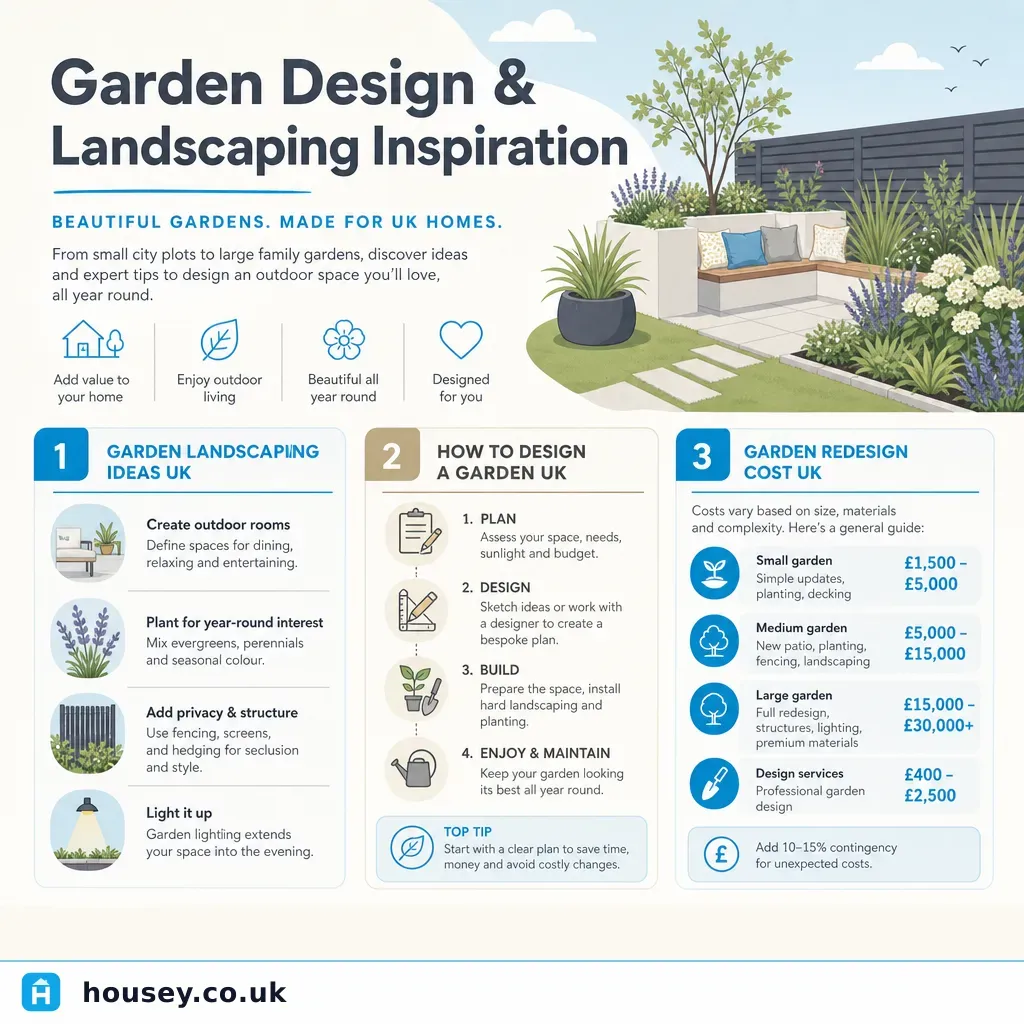
Garden Design and Landscaping Inspiration
Effective garden design starts with assessing your aspect, soil type, and existing features before commissioning any planting or hard landscaping.
 Improvement & Build
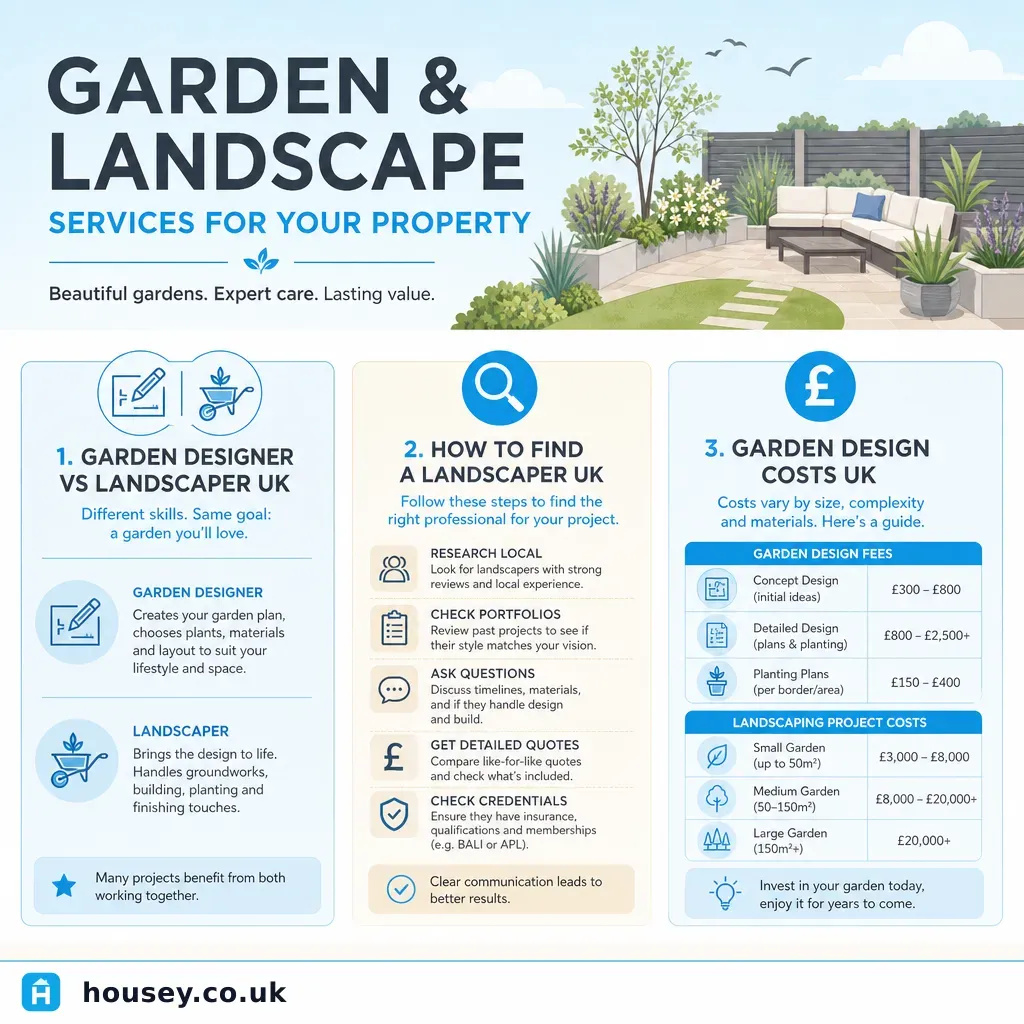
Garden and Landscape Services for Your Property
Garden designers and landscapers both improve outdoor spaces but offer different services.
 Improvement & Build
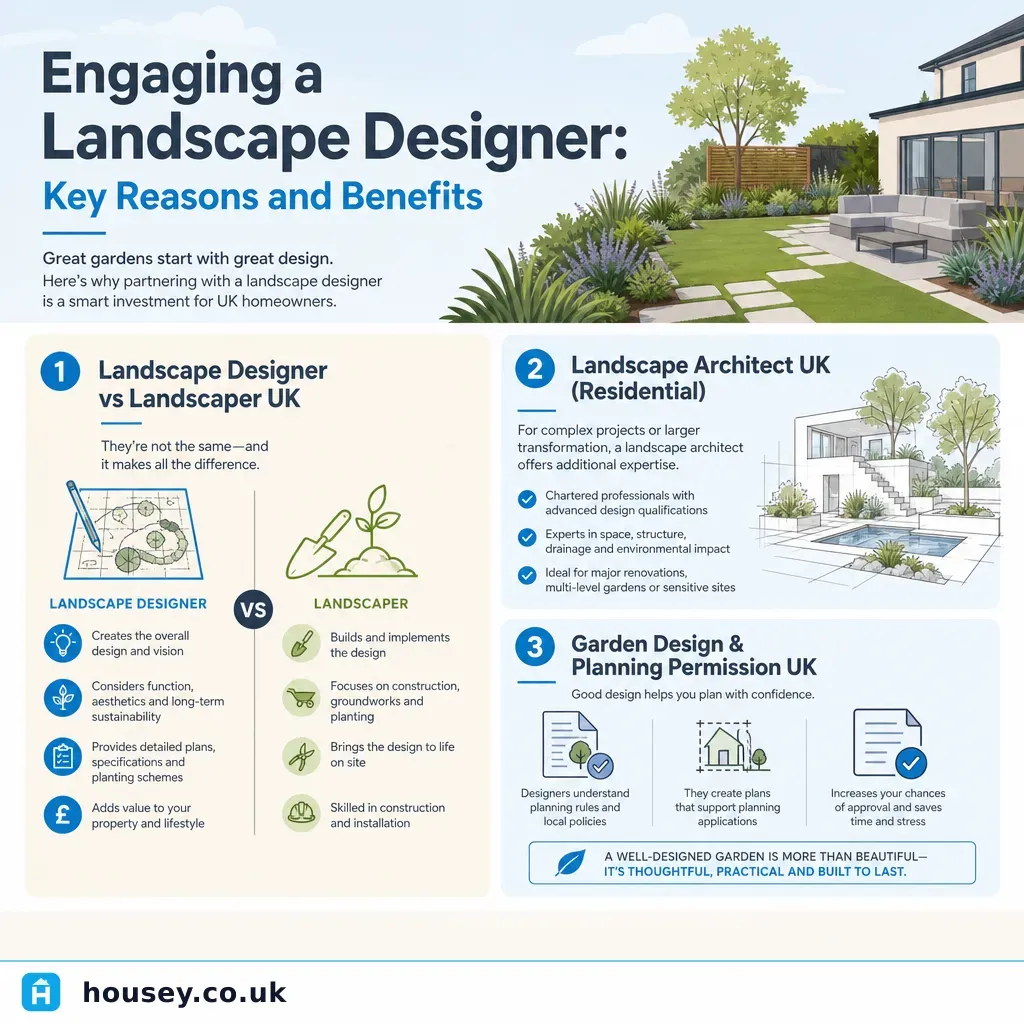
Engaging a Landscape Designer: Key Reasons and Benefits
A landscape designer assesses your site's drainage, aspect, levels, and intended use before producing drawings and specifications for a landscaper to build from.
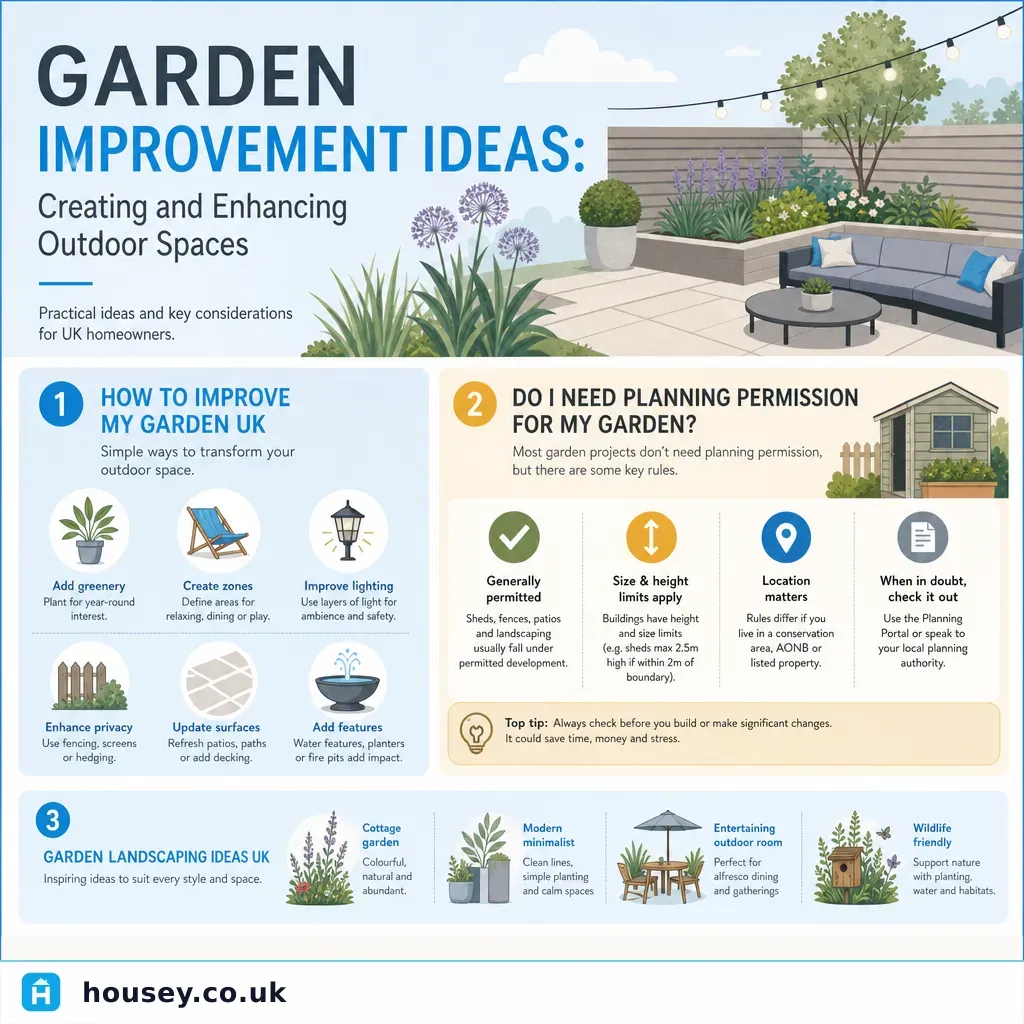 Improvement & Build
Garden Improvement Ideas: Creating and Enhancing Outdoor Spaces
Improving your garden in the UK usually starts with a clear plan covering hard landscaping, soft planting, and any structural elements.
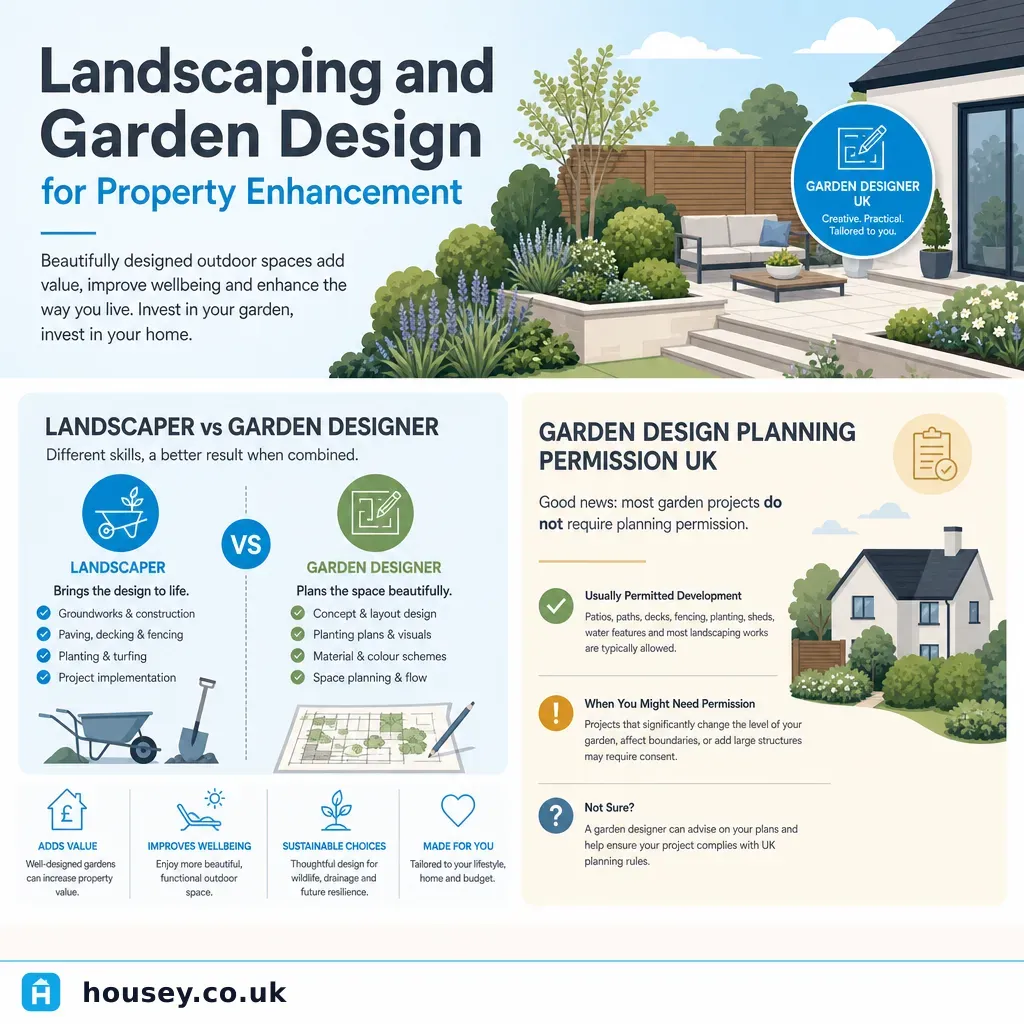 Improvement & Build
Landscaping and Garden Design for Property Enhancement
Landscaping and garden design involve planning and building outdoor spaces — from patios and raised beds to planting schemes and drainage.