Properties and Relocation Guide for the Home Counties Region
By Housey · Last reviewed 30th of May 2026
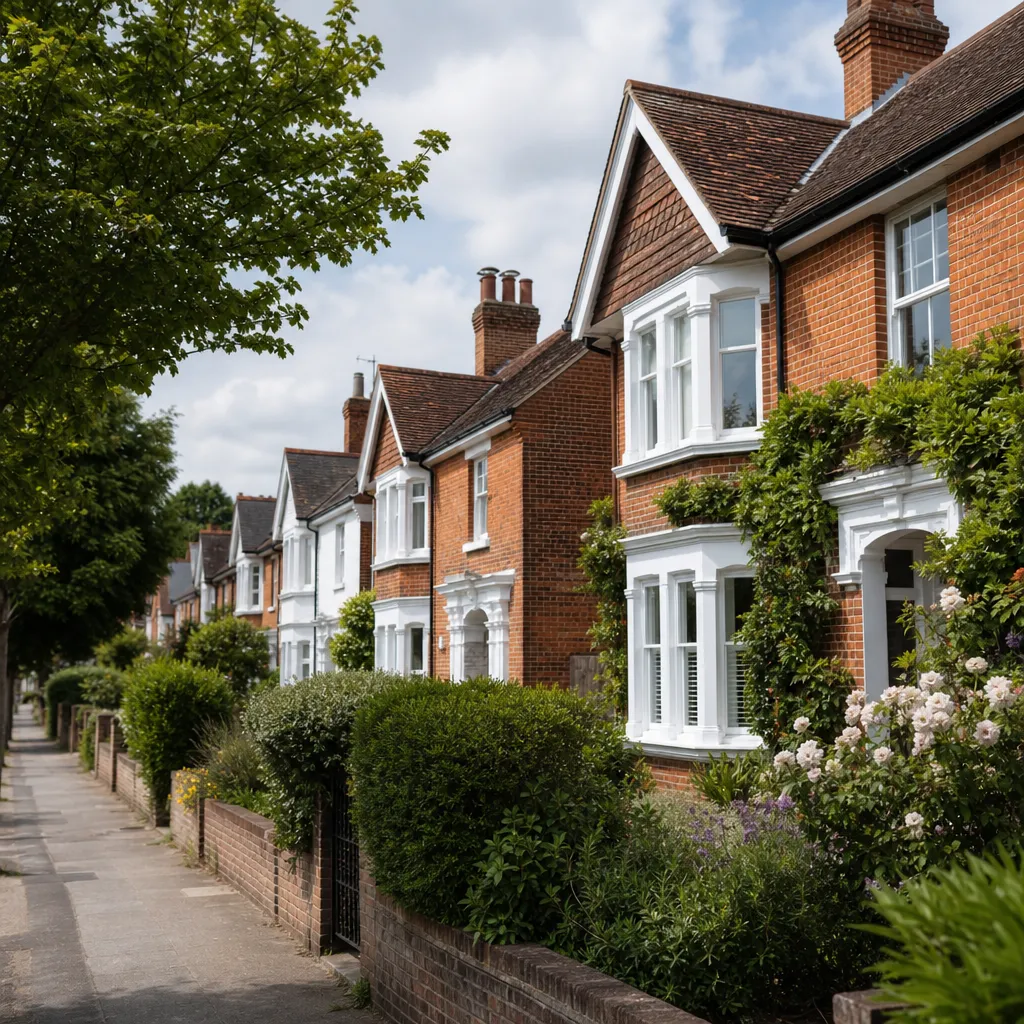
Properties and Relocation Guide for the Home Counties Region
The decision to relocate from London — or to move between Home Counties towns — rarely arrives neatly. It is usually triggered by a change in family size, a school-catchment deadline, a shift in remote-working patterns, or a budget that has simply outpaced what inner-city postcodes can offer. The Home Counties cover a vast arc of southern England with wildly different price points, commute profiles, and community characters, and choosing the wrong county can mean paying a premium for a commute that proves longer than expected or missing a grammar school intake by a postcode boundary.
Key points
- The Home Counties most commonly defined for relocation purposes cover Surrey, Hertfordshire, Kent, Essex, Berkshire, Buckinghamshire, East Sussex, and West Sussex; Oxfordshire, Hampshire, and Bedfordshire are sometimes included in broader definitions.
- Average house prices for detached homes range from approximately £290,000 in parts of Essex to over £650,000 in prime Surrey locations, based on HM Land Registry data for 2025.
- Peak-hour rail commutes to central London from major Home Counties towns typically run between 20 minutes (Elizabeth line from Slough) and 70 minutes (Kent mainline from Canterbury).
- Kent and Buckinghamshire are fully selective grammar school counties; Eleven Plus registration deadlines typically fall in the autumn of Year 5 (when a child is aged 9–10).
- Stamp Duty Land Tax (SDLT) in England applies at 5% on the portion of the purchase price between £250,001 and £925,000 — a band that covers a large proportion of Home Counties transactions.
What counts as the Home Counties?
There is no fixed statutory definition. The term originated in the nineteenth century to describe counties immediately surrounding Middlesex (now largely absorbed into Greater London), and different sources draw the boundary differently. For practical relocation purposes, the eight counties most consistently included are Surrey, Hertfordshire, Kent, Essex, Berkshire, Buckinghamshire, East Sussex, and West Sussex.
Buyers commuting to London typically focus on a corridor of 15–50 miles from the capital. Towns such as Guildford, St Albans, Chelmsford, Maidstone, Reading, and Horsham are well-established relocation destinations. More rural options in the Chilterns Area of Outstanding Natural Beauty (AONB), the Surrey Hills AONB, or the Kent Downs AONB offer a different trade-off between space, price, and connectivity.
Property prices across the Home Counties
Values differ substantially across the region. Surrey and the western counties (Berkshire and Buckinghamshire) consistently command the highest prices, reflecting proximity to London, strong transport links, and access to high-performing schools. Essex and parts of Kent offer more affordable entry points, particularly further from the M25.
County comparison
County | Typical detached price (2025 est.) | Commute to London (major towns) | Grammar schools? | Key towns |
|---|---|---|---|---|
Surrey | £650,000–£1,000,000+ | 25–50 min | No (state sector) | Guildford, Woking, Reigate, Epsom |
Hertfordshire | £450,000–£750,000 | 20–45 min | Selective pockets | St Albans, Hatfield, Stevenage, Watford |
Berkshire | £450,000–£750,000 | 25–55 min | Selective pockets | Reading, Windsor, Newbury, Maidenhead |
Buckinghamshire | £450,000–£800,000 | 35–60 min | Yes (fully selective) | Aylesbury, High Wycombe, Beaconsfield |
Kent | £350,000–£550,000 | 30–70 min | Yes (fully selective) | Tunbridge Wells, Sevenoaks, Maidstone, Canterbury |
Essex | £290,000–£500,000 | 25–60 min | Selective pockets | Chelmsford, Colchester, Brentwood, Southend |
East Sussex | £380,000–£650,000 | 50–90 min | No (state sector) | Brighton, Eastbourne, Lewes |
West Sussex | £400,000–£650,000 | 50–80 min | No (state sector) | Horsham, Chichester, Crawley |
Indicative figures based on HM Land Registry House Price Index data for 2025. Prices vary considerably within each county — verify with current sold price data and local estate agents before drawing conclusions.
Commuter connections and travel times
Transport is often the primary filter for buyers who commute regularly to London. Key rail corridors include:
- Elizabeth line (Crossrail): Serves Berkshire (Reading, Maidenhead, Slough) and south-east Essex (Shenfield, Brentwood), with frequent direct services to the City and West End. Journey times from Reading to Paddington typically run around 25–30 minutes in peak hours.
- Thameslink: Covers Hertfordshire (St Albans, Harpenden, Welwyn Garden City) and parts of Kent (Sevenoaks), with through-city stops at Farringdon, City Thameslink, and Blackfriars.
- Southern / Gatwick Express: Serves Surrey (Guildford, Reigate, Horsham) and Sussex, terminating at Victoria or London Bridge. Southern has historically faced service reliability challenges on some routes.
- South Eastern: Covers Kent mainline routes to Cannon Street and London Bridge. High-speed Javelin services from Ashford and Folkestone via Ebbsfleet can cut journey times significantly.
- Greater Anglia: Serves Essex from Liverpool Street (Chelmsford around 35 minutes; Colchester around 55 minutes).
Season ticket costs add materially to the total cost of living outside London. A Chelmsford–London season ticket, for example, costs several thousand pounds annually. Factor this into your budget modelling alongside SDLT, survey, and legal costs.
Schools and catchment areas
For families with children, school quality and catchment boundaries frequently determine which specific town — and sometimes which street — a buyer targets.
- Grammar schools in the state sector operate across Kent and Buckinghamshire (both fully selective counties) and in selective pockets of Essex (including parts of Southend and Chelmsford), Hertfordshire (Watford area), and Berkshire (Reading and Slough). Entry is by Eleven Plus examination, with county-specific registration deadlines typically in autumn of Year 5.
- Outstanding non-selective state schools are distributed throughout the region. Use Ofsted's Find an Inspection Report tool to search by postcode.
- Catchment boundaries for oversubscribed schools can shift annually as birth rates and population patterns change. Always verify admissions criteria directly with the relevant local authority — not from estate agent marketing materials, which can be out of date or inaccurate.
Which Home Counties area suits your situation?
Decision tree
- Choose Surrey if short commutes (25–40 minutes), Surrey Hills countryside access, and a wide range of established property styles are priorities — and your budget is £500,000 or above for a family home.
- Choose Hertfordshire if you want strong value relative to Surrey, Thameslink access to the City, and proximity to the Chilterns AONB.
- Choose Buckinghamshire if grammar school education is a firm priority and you can accommodate a slightly longer rail commute or a drive to a station.
- Choose Kent if lower entry prices and grammar school access in a fully selective county suit you, and you can accept that some Kent commutes to London Bridge or Cannon Street are 50–70 minutes.
- Choose Essex if budget is the primary driver and you prefer a shorter commute from Liverpool Street (Greater Anglia) or the Elizabeth line corridor.
- Consider East or West Sussex if lifestyle, coast access, and property size matter more than commute time, and remote or hybrid working is the norm.
- Ask a local estate agent and check with a conveyancing solicitor if you are torn between two areas — local search results can surface flood risk, planned development, or infrastructure issues that online research misses.
Relocation checklist for Home Counties buyers
Worked scenario: family relocating from Hackney to the Home Counties
A couple with two primary-school-aged children — one commuting to Liverpool Street, one to Waterloo — had a total budget of £550,000 including costs. Surrey was eliminated on price. Hertfordshire (St Albans via Thameslink) required a cross-London change for the Waterloo commuter, making the daily journey impractical. The shortlist became Chelmsford (Greater Anglia to Liverpool Street, around 35 minutes) and Tunbridge Wells (South Eastern to London Bridge and Charing Cross, around 55 minutes). Tunbridge Wells offered grammar school access, a larger detached house within budget, and a more established town centre. Chelmsford offered a faster commute and marginally lower prices for equivalent space. They chose Chelmsford after visiting both towns on a weekday morning to assess the reality of peak-hour conditions — and after confirming school catchment boundaries with the Essex County Council admissions team.
When to get professional help
Most Home Counties purchases are standard residential transactions, but the following situations warrant specialist input before proceeding:
- Properties in conservation areas or near listed buildings — check with the local planning authority before assuming any alterations or extensions are permitted development.
- Short leasehold flats (under 80 years remaining) — lease extension costs rise sharply below 80 years; instruct a solicitor with leasehold expertise before exchange.
- Rural properties with private drainage (septic tanks or treatment plants) or private water supplies — specialist drainage surveys are advisable.
- Properties with visible movement, damp, or non-standard construction — instruct a RICS Level 3 Building Survey rather than a Level 2.
- Any transaction where the seller's chain is complex — an experienced local conveyancing solicitor can sometimes facilitate faster chain communication.
How Housey can help
Housey connects Home Counties buyers and sellers with trusted local professionals across the region. Whether you need a conveyancing solicitor to handle local searches and the legal process, or professional property photography and floorplans to market your existing home while you search, Housey's vetted network covers Surrey, Hertfordshire, Kent, Essex, Berkshire, Buckinghamshire, and Sussex.
Frequently asked questions
Which Home Counties county generally has the lowest property prices?
Essex typically offers the most accessible entry prices among the Home Counties, particularly in towns such as Chelmsford, Braintree, and Colchester. Inland parts of Kent, away from Sevenoaks and Tunbridge Wells, also tend to be more affordable. Prices vary considerably within each county, so always verify with recent HM Land Registry sold price data for specific postcodes before drawing conclusions.
Do Home Counties properties fall under different planning rules to London?
Planning rules in England apply through the same statutory framework — the Town and Country Planning Act 1990, permitted development orders, and local development plans — but local authorities in the Home Counties can restrict permitted development in conservation areas, Areas of Outstanding Natural Beauty (such as the Surrey Hills and Chilterns), and for listed buildings. Always check with the relevant local planning authority before assuming alterations are permitted.
Are grammar schools available across all Home Counties counties?
Grammar schools in the state sector are concentrated in Kent (fully selective), Buckinghamshire (fully selective), and selective pockets of Essex, Hertfordshire, and Berkshire. Surrey, West Sussex, and East Sussex do not operate state grammar schools. Entry is by Eleven Plus examination; registration deadlines, assessment formats, and catchment criteria differ by county, so check directly with the relevant county admissions team.
What are typical conveyancing costs for a Home Counties house purchase?
Conveyancing solicitor fees for a residential purchase in England typically range from £1,000 to £2,500, excluding Stamp Duty Land Tax, search fees, and Land Registry registration fees. Leasehold, shared ownership, or Help to Buy transactions usually attract higher fees. Indicative UK costs, last reviewed 2026-05-30; always obtain at least three written quotes before instructing.
Sources and further reading
- UK House Price Index — HM Land Registry / GOV.UK
- Stamp Duty Land Tax guidance — GOV.UK
- Find an Ofsted Inspection Report — Ofsted
- National Rail journey planner — National Rail
- Ofcom Connected Nations checker — Ofcom
Useful next reads
 Buying & Moving
Moving to Harrogate: Location Guide and Property Information
Harrogate is a North Yorkshire spa town approximately 21 miles from Leeds, with direct rail links to Leeds (30–45 mins) and York.
 Buying & Moving
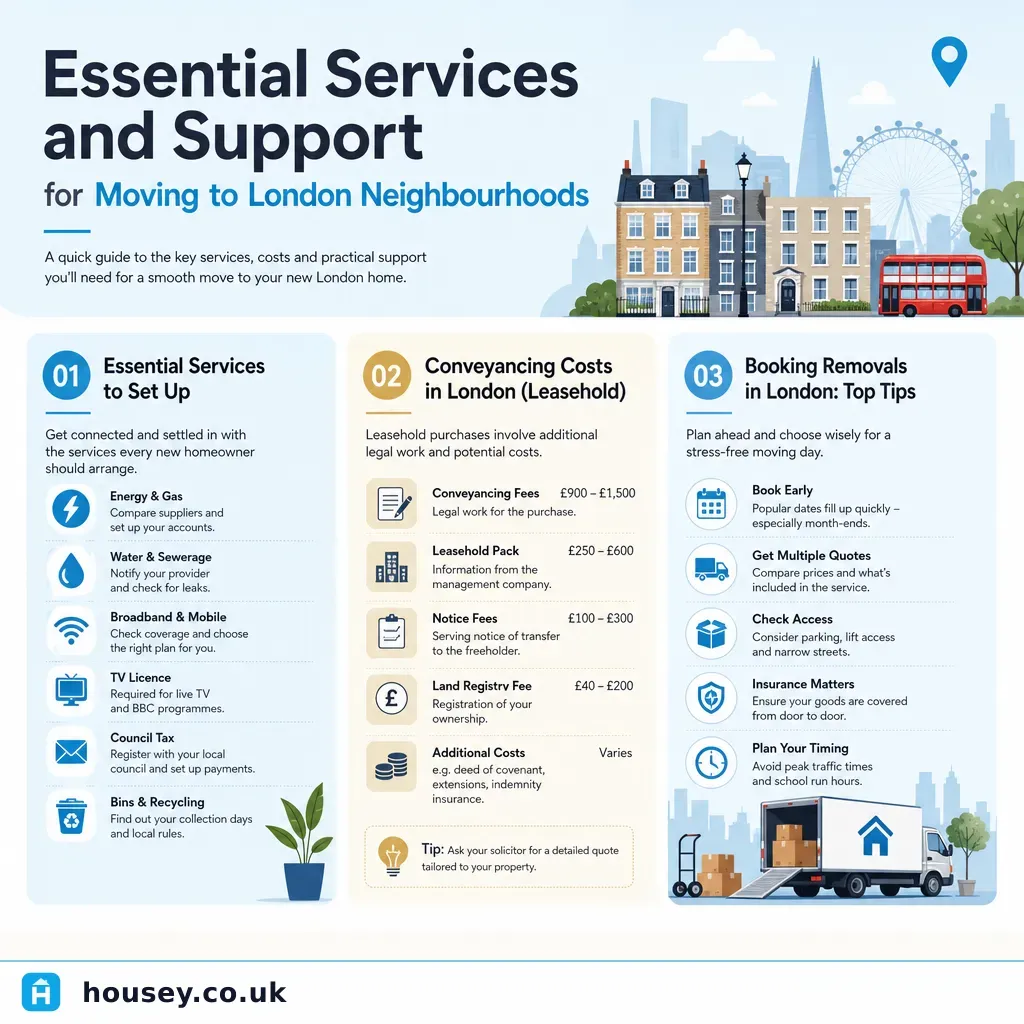
Essential Services and Support for Moving to London Neighbourhoods
Moving to London requires coordinating conveyancing, surveys, and removal logistics within tight timeframes.
 Buying & Moving
Moving to Taunton: location guide and property overview
Taunton is Somerset's county town with direct rail links to London Paddington in under two hours, M5 motorway access, and property prices below the South West regional average.
 Buying & Moving
Moving to Stockport: Location Guide and Property Information
Stockport is a well-connected Greater Manchester town around 7–8 miles south-east of Manchester city centre, with direct trains to Piccadilly in 8–15 minutes and to London Euston in under two hours.
 Buying & Moving
Moving to Glastonbury: Location Guide and Property Overview
Glastonbury is a small Somerset market town of around 9,000 people, offering Victorian terraces, stone cottages, and modern homes at prices typically below the national average.