Timeline and Process: How Long Does Selling a Property Take?
By Housey · Last reviewed 24th of May 2026
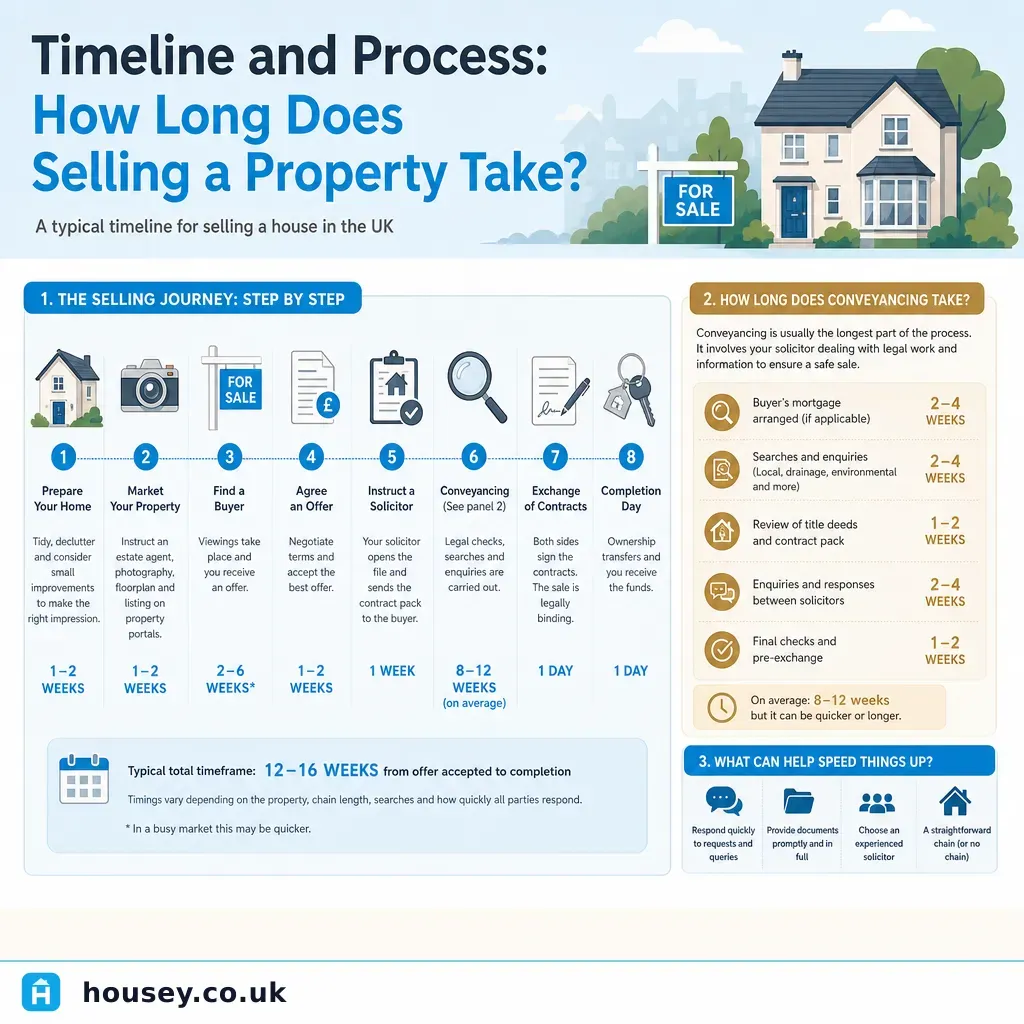
Timeline and Process: How Long Does Selling a Property Take?
Selling a property in England and Wales sits at the centre of most homeowners' biggest financial decisions, yet the timeline is one of the least predictable parts of the process. Whether you are planning a move, coordinating with a simultaneous purchase, or trying to minimise time in a chain, understanding the typical stages — and where delays most often cluster — helps you plan realistically and act quickly when it counts.
Key points
- The average time from listing a property to completion in England and Wales is approximately 4 to 6 months, though chain length, survey findings, and conveyancing complexity can extend this significantly.
- The period between an accepted offer and exchange of contracts — when the sale becomes legally binding — typically takes 8 to 12 weeks.
- Exchange of contracts to completion is usually 1 to 4 weeks, agreed between all parties in the chain.
- A valid Energy Performance Certificate (EPC) with a rating of A–G is a legal requirement before marketing your property; obtaining one typically takes 3 to 5 days from assessment to issue.
- Chain-free sales commonly complete in 10 to 14 weeks from offer accepted, versus 20 weeks or more in a multi-property chain.
How long does the full selling process take?
A typical sale in England and Wales moves through five broad stages, each with its own timeframe:
- Preparation and listing (1 to 4 weeks): Instructing an estate agent, commissioning a valuation, obtaining or renewing the EPC, and preparing marketing particulars including photography.
- Marketing and finding a buyer (variable): For well-priced properties in active markets, commonly 6 to 8 weeks; much longer in slower conditions or at the upper end of the market.
- Offer accepted to instructing solicitors (a few days to 2 weeks): Both seller and buyer instruct their conveyancers. Delays here are usually avoidable with prompt action.
- Conveyancing (8 to 16 weeks): Searches, enquiries, mortgage valuation, buyer's survey, and exchange of contracts. This is where most delays occur.
- Exchange to completion (1 to 4 weeks): Once contracts are exchanged, the completion date is fixed. In chains, all properties must agree on the same date.
Total from listing to completion: commonly 4 to 6 months. Properties with complications — leasehold titles, missing building regulations certificates, probate, or a long chain — can take 9 months or more.
What happens during conveyancing — and where delays cluster?
Once you accept an offer, your solicitor or licensed conveyancer begins the legal process of transferring ownership. On the seller's side, key tasks include:
- Drafting the contract and completing the TA6 Property Information Form and TA10 Fittings and Contents Form.
- Providing title deeds and evidence of any planning permissions, building regulations completion certificates, and guarantees such as FENSA window certificates or damp treatment guarantees.
- Responding to the buyer's solicitor's enquiries — often the single largest source of delay where documents are missing or queries are complex.
The buyer's solicitor simultaneously orders searches (local authority, drainage, environmental, and sometimes additional specialist searches) and must await a mortgage valuation before the lender issues a formal offer.
Common causes of delay:
- Missing certificates for extensions, loft conversions, or replacement windows installed since April 2002.
- Slow mortgage offers, particularly where the lender's valuation flags concerns.
- Long chains in which one party's problem stalls all others.
- Leasehold complications: missing service charge history, freeholder consent requirements, or absent ground rent schedules.
- Under-resourced conveyancing firms with high caseloads.
Chain-free vs. chain sale: a timeline comparison
Situation | Offer to exchange (typical) | Offer to completion (typical) | Key risk |
|---|---|---|---|
Chain-free (cash buyer, no onward purchase) | 6 to 10 weeks | 8 to 14 weeks | Buyer financing fall-through |
Chain-free (buyer with mortgage) | 8 to 12 weeks | 10 to 16 weeks | Lender delays |
Short chain (2 to 3 properties) | 10 to 14 weeks | 12 to 18 weeks | One weak link delays all |
Long chain (4 or more properties) | 14 to 20+ weeks | 18 to 30+ weeks | High fall-through risk |
Leasehold flat with complex title | 14 to 24+ weeks | 16 to 28+ weeks | Freeholder and managing agent delays |
Indicative UK timeframes, last reviewed 2026-05-24. Actual timelines vary by solicitor, lender, and market conditions.
Documents to prepare before you accept an offer
Gathering key paperwork early is one of the most effective ways to reduce post-offer delays. Aim to have these ready before or immediately after accepting:
- Title deeds or an official copy from HM Land Registry (available for £3 per document for registered properties).
- TA6 Property Information Form (completed with your solicitor).
- TA10 Fittings and Contents Form.
- Planning permission and building regulations completion certificate for any extensions, loft conversions, or structural alterations.
- FENSA or CERTASS certificate for replacement windows or doors installed since April 2002.
- Gas Safe certificate and boiler service history.
- Electrical installation certificates for any significant electrical work.
- Guarantees for damp proofing, underpinning, roof works, or specialist treatments.
- Leasehold documents (if applicable): lease, last 3 years' service charge accounts, building insurance details, and managing agent contact information.
Which sale scenario applies to you?
- Choose a chain-free sale strategy — for example, a buy-to-let exit or downsizing with a temporary rental between transactions — if speed is the priority and you can absorb bridging accommodation costs.
- Accept an offer from a cash or chain-free buyer if you receive multiple offers at similar prices; the reduction in timeline risk may outweigh a modest price difference.
- Ask your estate agent about your buyer's position early: chain-free, first-time buyer, and under-offer-on-their-current-property each carry materially different timeline implications.
- Speak to a solicitor before marketing if your property has had extensions, conversions, or title complications — preparing documents in advance shortens the post-offer conveyancing period considerably.
When to get professional help
Most timeline risks in a property sale are managed by your solicitor and estate agent. Seek additional specialist input if:
- Your solicitor identifies a title defect such as a missing indemnity, adverse entries on the register, or a boundary inconsistency.
- A buyer's survey flags structural movement, subsidence, damp, or other significant defects you had not anticipated.
- Your property is leasehold and the freeholder is unresponsive or demanding unreasonable fees for consent.
- A chain is at serious risk of collapse and you need advice on your legal position and options.
How Housey can help
If you are at the start of the selling process, Housey can connect you with qualified conveyancing solicitors who can advise on your specific title, timeline risks, and document requirements — ideally before you accept an offer. Housey also helps sellers find property valuation services to support a well-evidenced asking price before going to market.
Frequently asked questions
How long does conveyancing take when selling a property?
Conveyancing on the seller's side typically takes 8 to 16 weeks from offer accepted to exchange of contracts, depending on title complexity, the buyer's situation, and how quickly enquiries are resolved. Leasehold properties or those with missing planning or building regulations documents often take longer. Your solicitor can give a more accurate estimate once they have reviewed your title.
What is the biggest cause of delay in a property sale?
Missing or incomplete documents — particularly absent building regulations certificates, planning permission evidence, or FENSA certificates — are among the most common causes of avoidable delay. Long chains and slow mortgage applications are also frequent contributors. Instructing a conveyancer promptly and gathering paperwork early significantly reduces the risk.
Can I speed up the sale process?
You can reduce avoidable delays by instructing a solicitor before finding a buyer, gathering title documents and certificates in advance, and responding quickly to solicitor enquiries. Choosing a buyer with a strong financial position and no onward chain also reduces risk. Some stages — searches, mortgage offers, and lender valuations — have their own timescales and cannot always be accelerated.
What happens between exchange and completion?
Once contracts are exchanged, the sale becomes legally binding. Both parties agree a completion date — typically 1 to 4 weeks after exchange. At completion, the buyer's solicitor transfers funds and legal ownership passes. You must vacate and hand over keys by the agreed time on completion day.
Does selling a leasehold property take longer?
Yes. Leasehold sales commonly take longer than freehold, as the buyer's solicitor must review the lease, request service charge accounts and building insurance details from the managing agent, and in some cases seek freeholder consent. Managing agents vary considerably in response times, which can extend the process by several weeks or more.
Sources and further reading
- HM Land Registry: search the property register — GOV.UK
- Property Information Forms TA6 and TA10 — The Law Society
- Energy Performance Certificates when selling your home — GOV.UK
- RICS Home Surveys — RICS
Useful next reads
 Buying & Moving
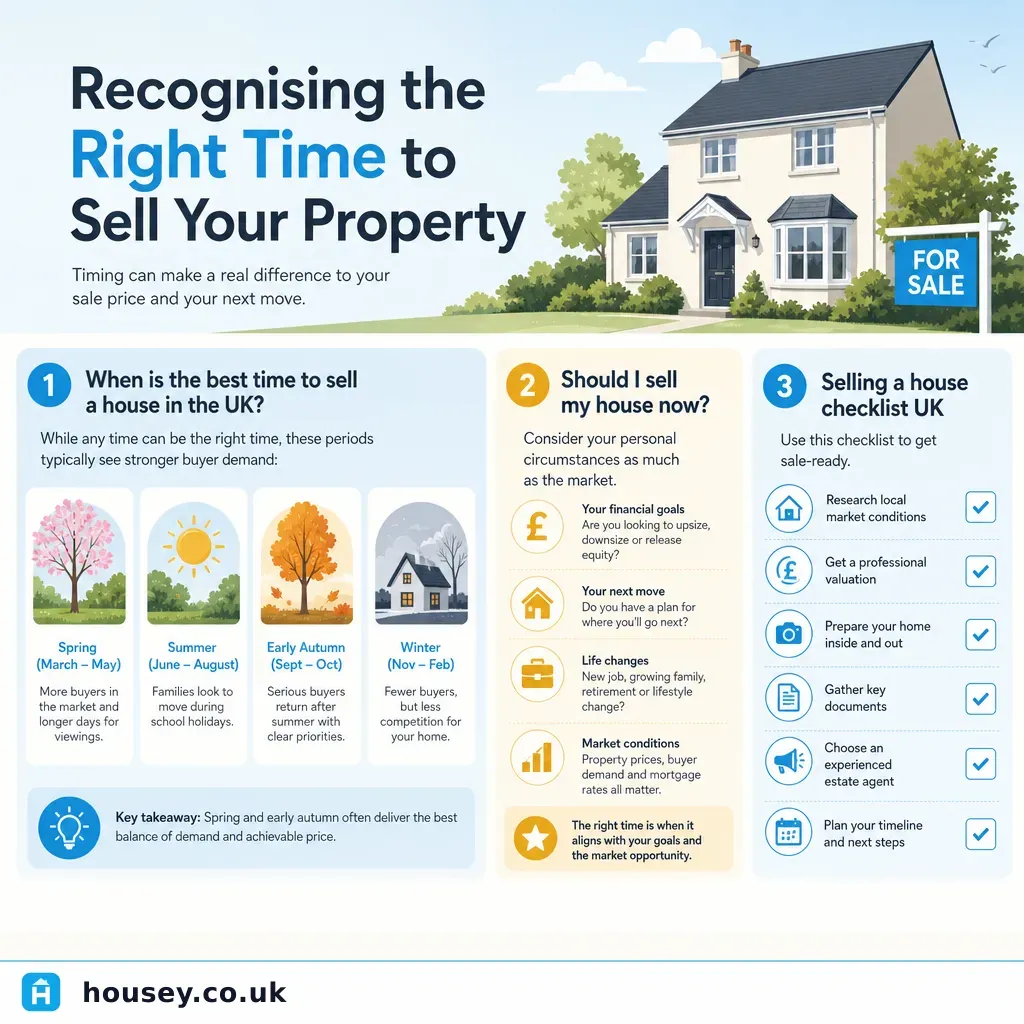
Recognising the Right Time to Sell Your Property
The right time to sell is shaped as much by your personal circumstances as by the property market.
 Buying & Moving
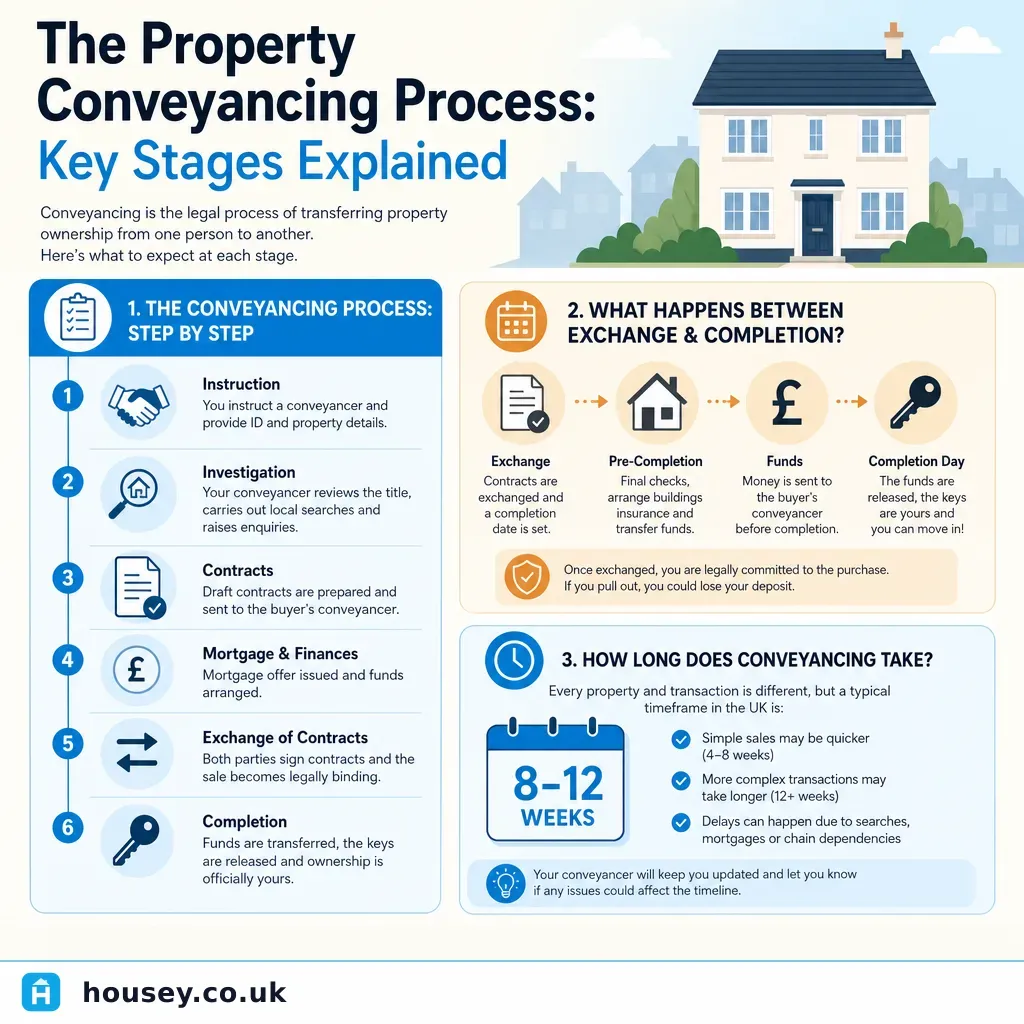
The Property Conveyancing Process: Key Stages Explained
The conveyancing process in England and Wales runs from instruction through to registration at HM Land Registry, typically in five stages: instruction, pre-contract searches and enquiries, exchange of contracts, completion, and post-completion.
 Buying & Moving
Valuing Your Property for Rapid Sale: Strategic Pricing Guidance
Pricing a UK home for a quick sale means setting an asking price supported by recent comparable sales evidence — not significantly above it.
 Buying & Moving
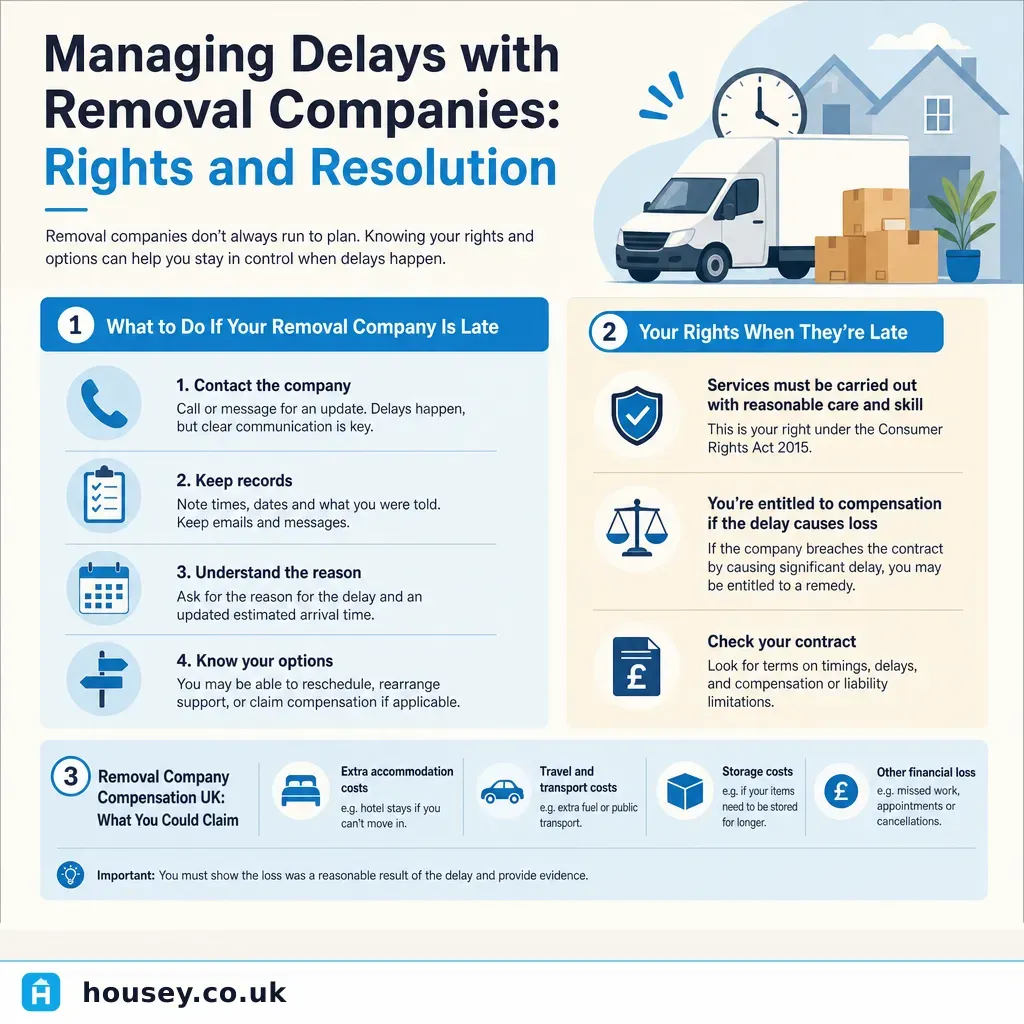
Managing Delays with Removal Companies: Rights and Resolution
If a removal company is late, your rights depend on your contract and whether the company is BAR-registered.
 Buying & Moving
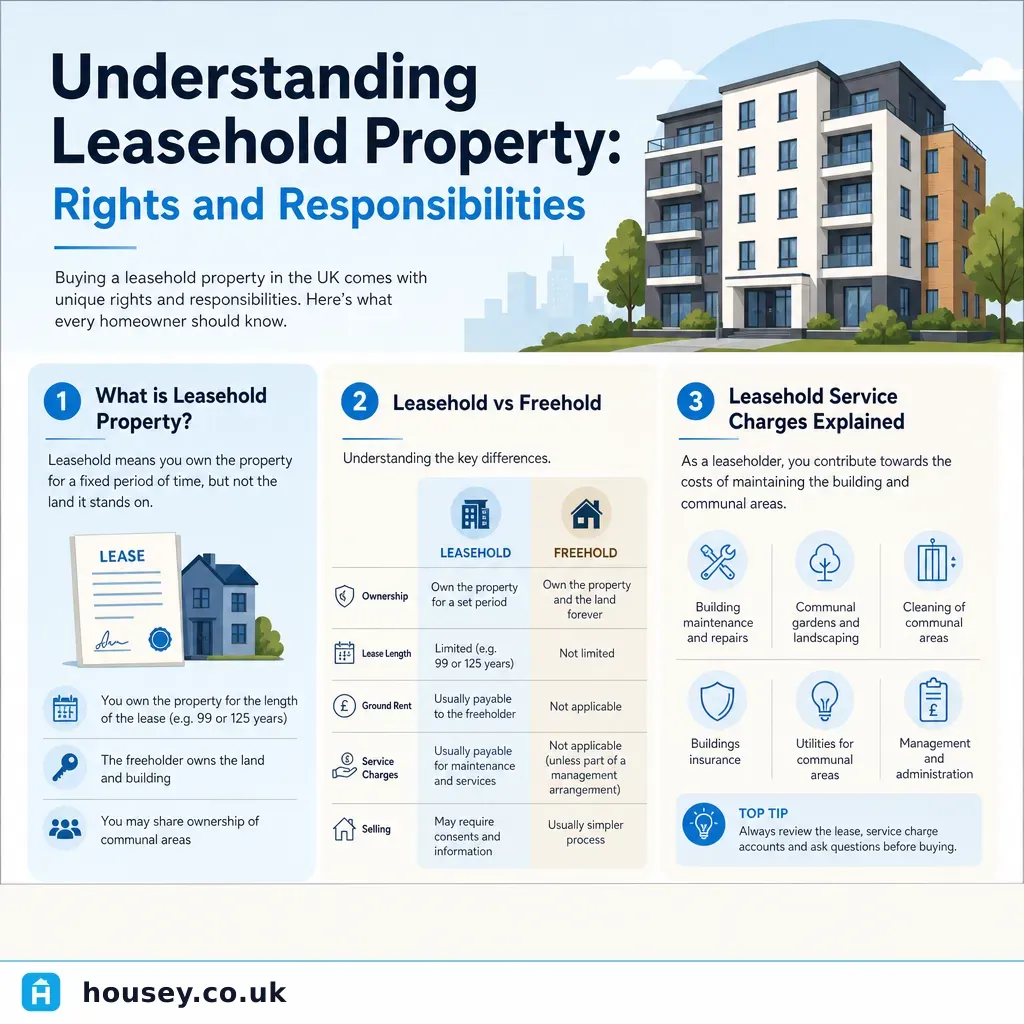
Understanding Leasehold Property: Rights and Responsibilities
Leasehold means you own a time-limited interest in a property while the freeholder owns the land and building.