How Recent Regulatory Changes Affect Home Buyers
By Housey · Last reviewed 19th of May 2026

How Recent Regulatory Changes Affect Home Buyers
The legal framework surrounding residential property purchase in England and Wales has undergone more change since 2022 than in the previous decade. For buyers, the practical consequences range from revised upfront tax costs and new disclosure obligations for sellers' agents to landmark reforms of leasehold law and ongoing implementation of building safety requirements. Understanding which changes apply to your purchase — and when to seek professional advice — can prevent expensive surprises at or after exchange.
Key points
- Stamp Duty Land Tax thresholds reverted to pre-2022 levels from 1 April 2025: the nil-rate band is £125,000 for standard buyers, and first-time buyer relief applies up to £300,000 on purchases of up to £500,000.
- The Leasehold Reform (Ground Rent) Act 2022 caps ground rents at a peppercorn (zero) for new qualifying residential leases granted from 30 June 2022 — existing leases are unaffected and may still carry escalation clauses that affect mortgage-ability.
- The Leasehold and Freehold Reform Act 2024, enacted 24 May 2024, introduces 990-year lease extensions and removes the two-year ownership requirement before extending — though many provisions still require secondary legislation to come into force.
- The Building Safety Act 2022 imposes new duties on those responsible for higher-risk residential buildings (over 18 metres or 7 storeys) and provides qualifying leaseholders with protections against certain historical safety remediation costs.
- National Trading Standards Material Information requirements now require estate agents to disclose tenure, council tax band, flood risk, and other key property facts upfront in listings before a buyer makes an offer.
Stamp Duty Land Tax: the 2025 reversion
The temporary SDLT relief introduced in September 2022 — which raised the nil-rate band from £125,000 to £250,000 and increased the first-time buyer relief threshold from £300,000 to £425,000 — ended on 31 March 2025. Standard thresholds in England and Northern Ireland were reinstated from 1 April 2025.
Buyer category | Nil-rate threshold | Upper limit for relief |
|---|---|---|
Standard residential buyer | £125,000 | N/A |
First-time buyer relief | £300,000 | Purchase price up to £500,000 |
Additional dwelling or buy-to-let | £0 (3% surcharge applies on full price) | N/A |
For a first-time buyer purchasing at £350,000: nil rate applies to the first £300,000, then 5% on the remaining £50,000 — an SDLT liability of £2,500. Use the GOV.UK SDLT calculator before exchange to confirm your exact figure.
These rates apply to England and Northern Ireland. Scotland uses Land and Buildings Transaction Tax (LBTT) and Wales uses Land Transaction Tax (LTT) — check the relevant government websites for current thresholds.
Leasehold reform: what buyers of flats need to know
Two Acts have reshaped leasehold law in recent years, with more implementation still to come.
Leasehold Reform (Ground Rent) Act 2022 (in force from 30 June 2022):
- Ground rents on new regulated residential leases must be zero (peppercorn). This applies to most new leases, including new-build flat purchases.
- The Act does not apply retrospectively to leases granted before 30 June 2022 — older leases may still carry ground rent escalation clauses that affect mortgage-ability and future resale value.
- Retirement housing leases were brought within scope from 1 April 2023.
Leasehold and Freehold Reform Act 2024 (enacted 24 May 2024):
- Standard lease extension term increased to 990 years (from 90 years for flats and 50 years for houses under the previous regime).
- Two-year ownership requirement removed — buyers can extend the lease or apply to acquire the freehold immediately on purchase.
- Restrictions introduced on certain service charge practices and administration charges.
- Many provisions require secondary legislation; check current GOV.UK guidance for the latest implementation status at the time of your transaction.
Before buying any leasehold property, ask your conveyancer for a full leasehold report covering the lease term, ground rent, service charges, any section 20 major works notices, and the current implementation status of the 2024 Act provisions relevant to your purchase.
Building Safety Act 2022: what flat buyers need to check
If you are buying a flat — particularly in a block over 11 metres — the Building Safety Act 2022 is likely to be relevant to your purchase.
Key points for buyers:
- Leaseholders in higher-risk buildings (over 18m or 7 storeys) have statutory protections against being required to pay for certain historical safety defects, including some cladding remediation costs. However, these protections are conditional and do not cover all defect categories or all buildings.
- Your conveyancer should confirm whether the building has a registered Principal Accountable Person and whether any Building Safety Cases are open with the Building Safety Regulator.
- EWS1 (External Wall System) forms may still be required by some mortgage lenders for certain blocks — check your lender's requirements early, as obtaining one can affect valuation timescales and mortgage offers.
- Ask the seller's solicitor for information about any planned major works and their estimated cost, as building safety remediation can generate substantial service charge demands after completion.
Material Information requirements for estate agents
Since 2023, National Trading Standards Estate and Letting Agents Team (NTSELAT) guidance has required estate agents to include Material Information in property listings in three parts:
- Part A (required from day one of listing): tenure, council tax band, asking price.
- Part B: building safety issues, restrictions and covenants, rights and easements, flood risk, coastal erosion risk, planning permissions and constraints.
- Part C: past or present building works, adaptation, accessibility features, parking, and utility connections.
As a buyer, you should expect to see more factual disclosure in listings before making an offer. If key information appears to be missing — for example, there is no mention of tenure, or an obvious building safety issue is not disclosed — raise this with your solicitor before proceeding.
Important limitations
This article provides general information about regulatory changes in England and Wales as of May 2026. The law in Scotland and Northern Ireland differs in important respects: Scotland uses a different property law system, tax regime (LBTT), and survey process (Home Report). The Leasehold and Freehold Reform Act 2024 is subject to ongoing phased implementation — specific provisions may not yet be in force at the time of your purchase. Nothing in this article constitutes legal advice. A qualified solicitor or licensed conveyancer should advise on how these changes apply to your specific transaction.
What to ask a qualified professional
Before exchanging contracts on a leasehold or flat purchase, ask your conveyancer:
- What SDLT is payable on this transaction, and do I qualify for first-time buyer relief?
- Is this property subject to the Leasehold Reform (Ground Rent) Act 2022? What is the current ground rent?
- What is the current lease term, and what will an extension cost under the Leasehold and Freehold Reform Act 2024 rules now in force?
- Has this building been registered with the Building Safety Regulator, and are there any open Building Safety Cases?
- Are there outstanding or planned major works that could result in service charge demands after completion?
- What Material Information has been provided in the listing, and has anything that you are aware of been omitted?
- Does my mortgage lender require an EWS1 form for this property?
When to get professional help
Seek specialist advice before exchange if:
- You are buying a leasehold property and have not received a full leasehold report covering the lease term, ground rent, service charges, and known building safety issues.
- Your mortgage lender requests an EWS1 form and the seller is unable to provide one — this can delay or prevent the mortgage being offered.
- The property is in a block with unresolved cladding, fire safety, or structural issues — do not proceed without understanding your liability for remediation costs.
- You are relying on first-time buyer SDLT relief and your circumstances are unusual, for example a joint purchase with someone who already owns property, shared ownership, or a complex gifted deposit structure.
- Material Information in the listing is absent or appears incomplete on a point that could affect your decision to buy or the price you offer.
How Housey can help
Housey can connect you with an experienced conveyancing service that understands the current regulatory landscape, including the 2025 SDLT thresholds, leasehold reform, and Building Safety Act requirements. Getting qualified legal advice early in the process is the most reliable way to avoid costly issues after exchange.
Frequently asked questions
Has Stamp Duty changed in 2025?
Yes. The temporary SDLT relief introduced in September 2022 — which raised the nil-rate band to £250,000 — expired on 31 March 2025. From 1 April 2025, the nil-rate threshold reverted to £125,000 for standard buyers. First-time buyer relief now applies up to £300,000 on purchases of up to £500,000. Use the GOV.UK SDLT calculator to confirm your exact liability before exchange.
Does the Leasehold and Freehold Reform Act 2024 help me as a buyer right now?
Some provisions are already in force, including removal of the two-year ownership requirement before extending a lease and the move to 990-year extensions. However, many other measures still await secondary legislation to come into effect. Ask your conveyancer which specific provisions apply to your purchase at the time of transaction, as the implementation timetable is ongoing.
What is an EWS1 form and do I need one?
An EWS1 (External Wall System) form is a fire safety assessment of a residential block's external walls and cladding, carried out by a qualified professional. Some mortgage lenders require one for certain blocks — particularly those with potentially combustible cladding or non-standard external construction. Ask your lender and conveyancer early in the process, as obtaining one can take time and affect your mortgage offer.
How does the Building Safety Act affect my service charges?
The Building Safety Act 2022 includes leaseholder protections that restrict the circumstances in which freeholders can pass certain historical safety remediation costs — including some cladding works — to qualifying leaseholders. However, the protections are conditional and do not cover all buildings or all categories of defect. Your conveyancer should review the lease and management pack to advise on your specific exposure before you commit to purchase.
Sources and further reading
- Stamp Duty Land Tax: residential property rates — GOV.UK
- Leasehold Reform (Ground Rent) Act 2022 — legislation.gov.uk
- Leasehold and Freehold Reform Act 2024 — legislation.gov.uk
- Building Safety Act 2022 — legislation.gov.uk
- Material information in property listings: guidance — National Trading Standards
- Land and Buildings Transaction Tax — mygov.scot
Useful next reads
 Buying & Moving
Safeguarding Your Property Purchase: Fraud Prevention Strategies
Property purchase fraud in the UK most commonly involves criminals intercepting emails to redirect completion funds to fraudulent bank accounts.
 Buying & Moving
Conveyancing Searches for New Build Properties: What to Know
New build properties require the same core conveyancing searches as any residential purchase: local authority, drainage and water, environmental, and chancel repair.
 Buying & Moving
Complete Homebuying Checklist and Essential Services for First-Time Buyers
First-time buyers in the UK should commission an independent RICS Home Survey before exchange — a mortgage lender's valuation does not protect you.
 Buying & Moving
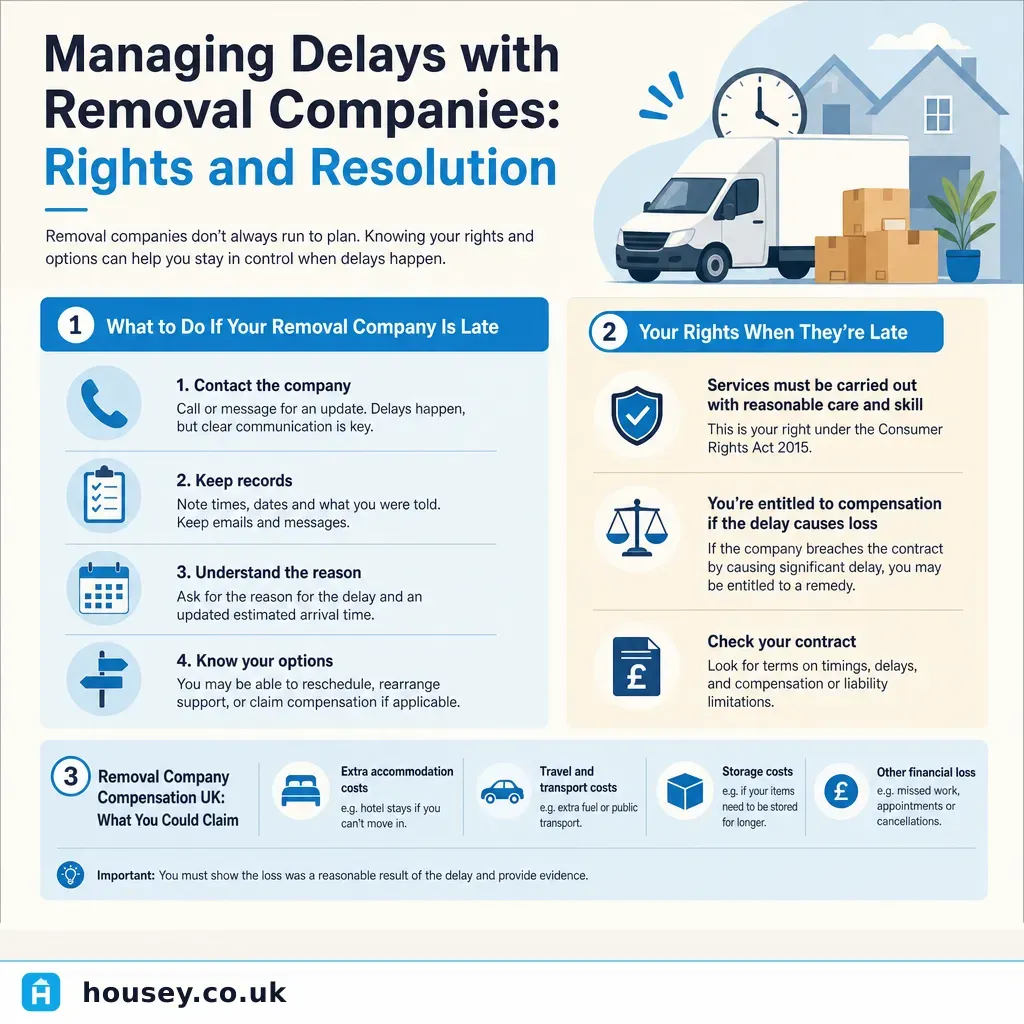
Managing Delays with Removal Companies: Rights and Resolution
If a removal company is late, your rights depend on your contract and whether the company is BAR-registered.
 Buying & Moving
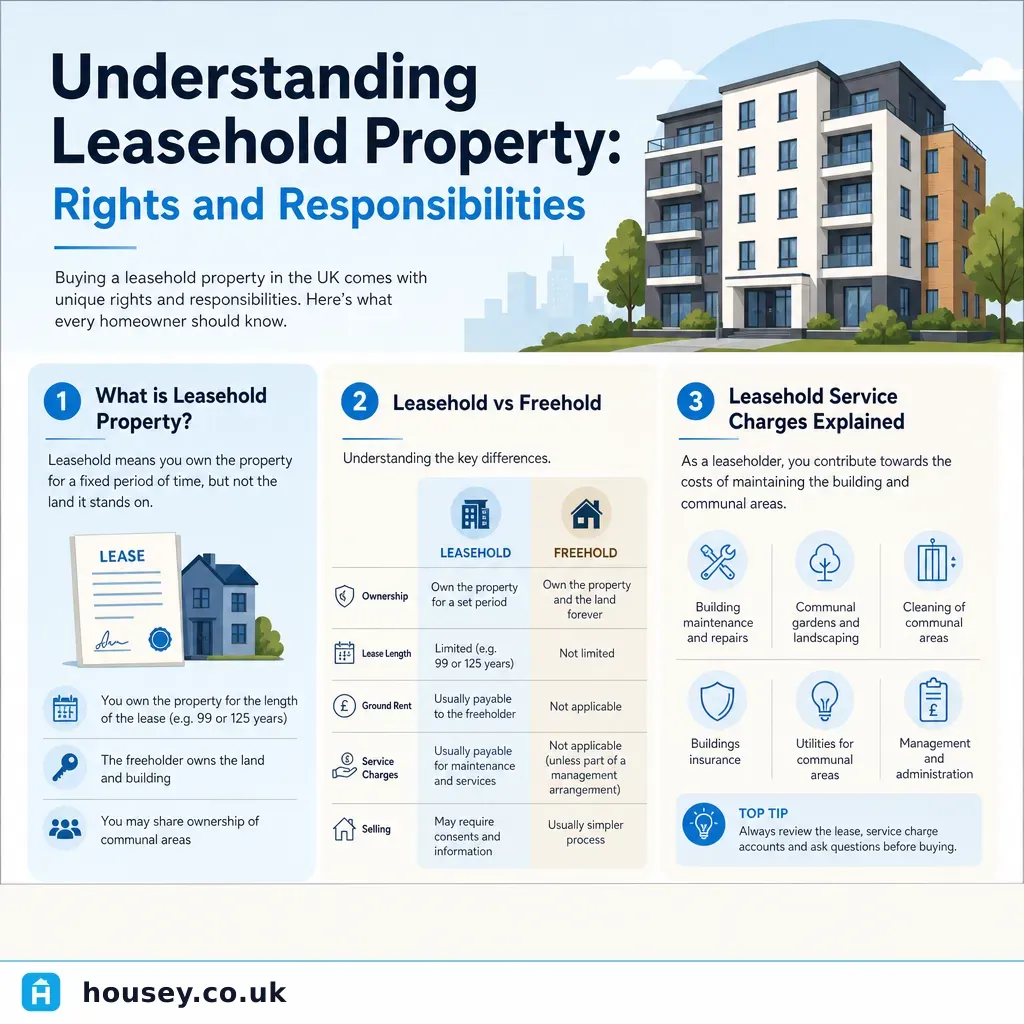
Understanding Leasehold Property: Rights and Responsibilities
Leasehold means you own a time-limited interest in a property while the freeholder owns the land and building.