Safeguarding Your Property Purchase: Fraud Prevention Strategies
By Housey · Last reviewed 24th of May 2026
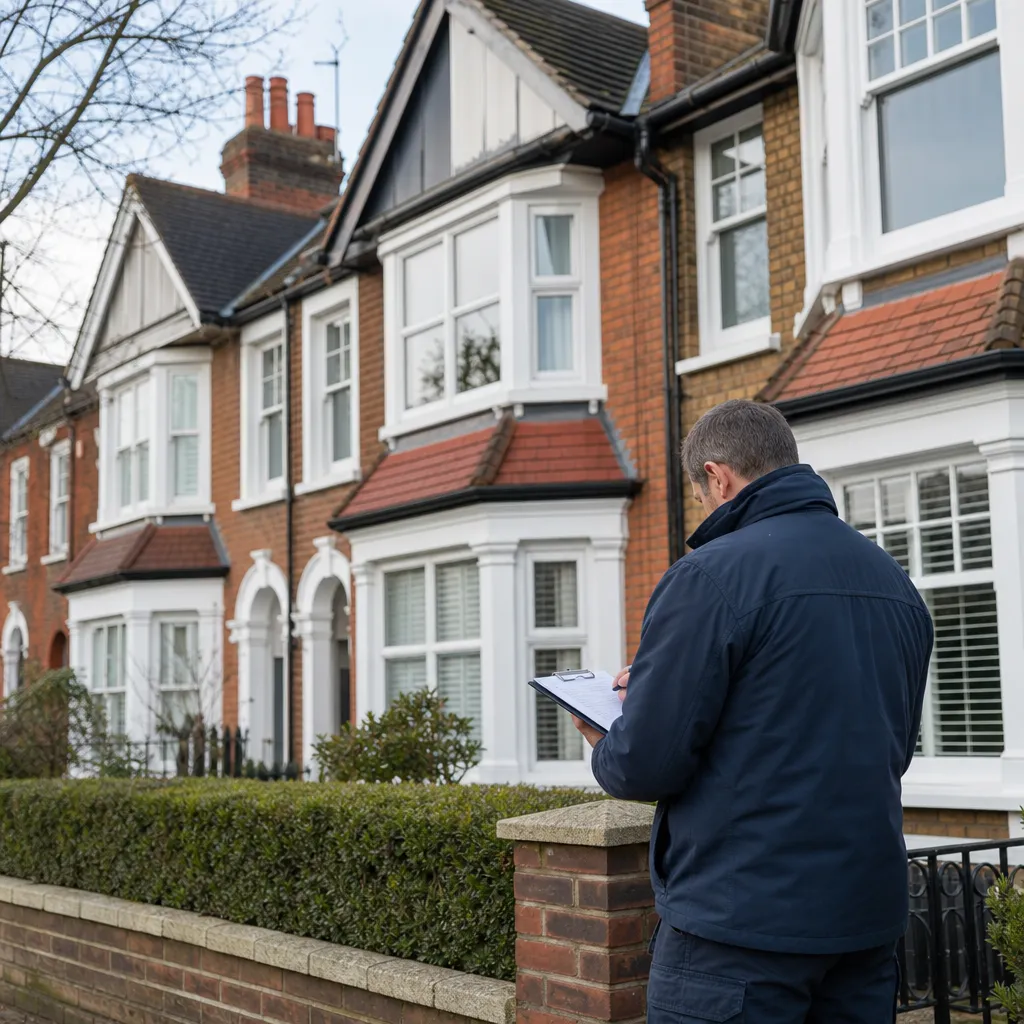
Safeguarding Your Property Purchase: Fraud Prevention Strategies
Property fraud is a serious and growing risk for buyers, sellers, and lenders across the UK. In the most damaging cases, criminals have successfully sold or remortgaged properties they did not own, leaving genuine owners facing prolonged legal battles. For buyers, the most immediate risk during a purchase is conveyancing fraud — particularly the interception or impersonation of solicitors to divert the large sums transferred at exchange or on completion day.
Key points
- Conveyancing fraud — where buyers receive fraudulent bank account details purportedly from their solicitor — can result in individual losses exceeding £200,000 in a single transaction and is one of the most financially devastating forms of cybercrime affecting UK property buyers.
- HM Land Registry's free Property Alert service allows owners to receive email notifications when certain applications are lodged against a registered title; registering even when you are not actively selling adds an early-warning layer of protection.
- Solicitors regulated by the Solicitors Regulation Authority (SRA) are legally required to carry out anti-money laundering (AML) checks and verify client identities; always confirm your firm's authorisation on the SRA register before transferring any funds.
- Never act on emailed instructions to change bank payment details mid-transaction; always verify account details by telephone using a contact number you obtained independently from the SRA register, not from any email you have received.
- Mortgage-free, tenanted, or landlord-owned properties are at higher risk of title fraud or owner-impersonation; registering a Form LL restriction at HM Land Registry provides an additional layer of protection.
Types of property fraud you should know about
Fraud type | Who is targeted | How it works | Warning signs |
|---|---|---|---|
Conveyancing / safe account fraud | Buyers transferring completion or deposit funds | Criminals intercept emails and send fake bank details | New account details arrive by email only; slight change in email address |
Title fraud / identity fraud | Owners of unencumbered or tenanted properties | Fraudster impersonates owner to sell or remortgage | Unexpected Land Registry correspondence; unexplained charges on title |
Deposit fraud | Buyers paying reservation or holding deposits | Fake agents or sellers collect deposits and disappear | Request to pay cash or transfer to unverified account |
Seller impersonation | Buyers and lenders | Fraudster poses as genuine owner, often at auction or private sale | Seller cannot be independently verified; reluctance to allow access or meet |
Mortgage fraud | Lenders (buyer may be unwittingly involved) | Inflated purchase price or false income documents submitted | N/A for most buyers, but check all figures stated in mortgage applications |
Protecting yourself against conveyancing fraud
Action Fraud and the Financial Ombudsman Service have both highlighted conveyancing fraud as a growing risk for UK buyers. The following steps substantially reduce your exposure:
- Verify your solicitor independently before transferring any money. Check the SRA register to confirm the firm and the individual solicitor are authorised. Use the contact details listed there — not those in any email you have received.
- Agree a security word with your solicitor at the start of the transaction. Use this word to authenticate any telephone call purportedly from their office.
- Never transfer funds based solely on an email instruction. If you receive new or changed bank account details by email, treat this as suspected fraud and call your solicitor using an independently verified number before taking any action.
- Confirm account details at the outset and again before completion. Obtain written confirmation of payment details early in the transaction; call to reconfirm them the working day before completion.
- Use your conveyancer's secure client portal where available. Encrypted portals are substantially more secure than standard email for sharing sensitive financial instructions.
- Check that funds were received as expected. If you have not received confirmation of receipt within a few hours of transfer, contact your solicitor without delay.
Protecting your property title from identity and title fraud
HM Land Registry's Property Alert service is free, allows you to monitor up to 10 registered titles, and sends email notifications when applications — such as a new charge, transfer, or restriction — are lodged. It does not block transactions but provides early notice to seek legal advice.
Additional safeguards:
- Form LL restriction: You can apply to register a restriction on your title requiring a conveyancer to certify that any transaction is being carried out by the genuine registered owner. This is particularly useful for unoccupied properties and those held by landlords who live elsewhere.
- Register unregistered land: Properties with unregistered title are more vulnerable because there is no central record to monitor. Voluntary first registration at HM Land Registry is available at roughly half the standard registration fee.
- Monitor mail at the property: Do not leave mail uncollected at a property you do not occupy. Utility bills and bank statements can be used by fraudsters to construct a false identity in the owner's name.
Decision tree: is your transaction at heightened fraud risk?
- Is the property unencumbered (mortgage-free)? → Higher risk of title fraud. Consider registering a Form LL restriction at HM Land Registry before any sale or letting.
- Is the property tenanted or unoccupied by the owner? → Higher risk of owner-impersonation fraud. Register for Property Alert and check the title register periodically.
- Have you received an email asking you to change bank details? → Treat as suspected fraud. Do not transfer any funds. Call your solicitor using a number sourced from the SRA register immediately.
- Are you buying at auction? → Instruct a conveyancer to review the legal pack before the sale. You are bound on the fall of the hammer — there is no cooling-off period.
- Is the asking price significantly below comparable properties? → This may indicate a title problem, undue urgency, or a fraudulent listing. Instruct a solicitor and carry out full due diligence before paying any deposit.
Red flags during a property purchase
Stop and seek advice from your solicitor or Action Fraud immediately if you encounter any of the following:
- You receive a request to transfer funds to a different bank account than previously confirmed.
- Your solicitor's email address has changed slightly mid-transaction — a letter substituted, a hyphen added, or a domain altered.
- A seller or agent requests a cash deposit or payment by cryptocurrency.
- You are told to skip standard conveyancing searches or to exchange immediately to avoid losing the property.
- The seller cannot provide verifiable identification or refuses to meet in person or via video call.
- The property appears to have been listed and withdrawn from the market several times in a short period.
What to ask your conveyancer about fraud prevention
Before instructing a firm, or at the start of your transaction, ask:
- What anti-fraud and anti-money laundering procedures does your firm operate?
- Will you confirm your bank account details to me in writing at the outset, and call me to reconfirm them before completion?
- Do you use a secure, encrypted client portal for communications and document sharing?
- How will I authenticate any change in payment instruction during this transaction?
- Are you SRA-regulated, and can I verify your authorisation on the SRA register?
- What identity documents do you require from me, and at what stage?
Important limitations
This article provides general information about property fraud risks in the UK. It does not constitute legal or financial advice. Fraud methods evolve rapidly; always check Action Fraud's current guidance and confirm your conveyancing firm's own fraud prevention procedures. If you believe you have been targeted or have fallen victim to property fraud, contact Action Fraud (0300 123 2040) and your bank's fraud team without delay. Notify your solicitor immediately.
What to ask a qualified professional
If you have concerns at any point during a transaction, ask your solicitor:
- Can you confirm your bank account details are unchanged, using a contact number I will call independently?
- Are there any unusual features in the title or the seller's ownership history I should be aware of?
- Has the seller provided satisfactory proof of identity under your AML procedures?
- Is there anything in the legal pack or searches that warrants further investigation before I transfer any funds?
When to get professional help
Contact your solicitor immediately if you suspect any irregularity in payment instructions, seller identity, or title documents. If funds have already been transferred in error, call your bank's fraud team without delay — immediate action substantially improves the chance of recovery. Report the incident to Action Fraud. Do not proceed with a transaction where you have unresolved fraud concerns.
How Housey can help
Choosing an SRA-regulated conveyancer with robust anti-fraud procedures is one of the most effective protections available to a UK property buyer. Housey can connect you with vetted conveyancing solicitors who follow current best practice for identity verification, secure client communications, and fraud prevention throughout your transaction.
Frequently asked questions
What is safe account fraud in a property purchase?
Safe account fraud — sometimes called conveyancing fraud or 'Friday afternoon fraud' — occurs when a criminal intercepts email communication between buyer and solicitor and sends a fraudulent instruction to transfer completion funds to a bank account they control. Losses are often irreversible. Always verify payment account details by telephone using a number sourced independently from the SRA register before transferring any money.
Can I get my money back if I am a victim of property fraud?
Recovering funds is difficult and not guaranteed. The Contingent Reimbursement Model Code, adopted by many major UK banks, provides some protection for authorised push payment fraud, but eligibility depends on whether the bank considers adequate warnings were given. Contact your bank's fraud team immediately — speed is critical. Report to Action Fraud on 0300 123 2040 and seek legal advice from your solicitor without delay.
Does the Land Registry Property Alert service prevent fraud?
No. Property Alert sends notifications after an application has already been received; it does not block a transaction from being processed. It provides early warning to seek legal advice and, if necessary, apply to court for an injunction to prevent registration. Despite this limitation, the service is free and strongly recommended for all registered property owners, particularly those who do not live at the property.
Is a seller always required to verify their identity?
Your conveyancer is legally required under the Money Laundering, Terrorist Financing and Transfer of Funds (Information on the Payer) Regulations 2017 to carry out client due diligence, including verifying the identity of sellers and buyers. If a seller resists providing identification documents without a clear explanation, treat this as a serious warning sign and seek advice from your solicitor before proceeding.
Sources and further reading
- Protect yourself from property fraud — HM Land Registry / GOV.UK
- Property Alert service — HM Land Registry
- Conveyancing fraud — Action Fraud
- Check a solicitor or firm on the SRA register — Solicitors Regulation Authority
- Anti-money laundering guidance for the legal sector — Solicitors Regulation Authority
Useful next reads
 Buying & Moving
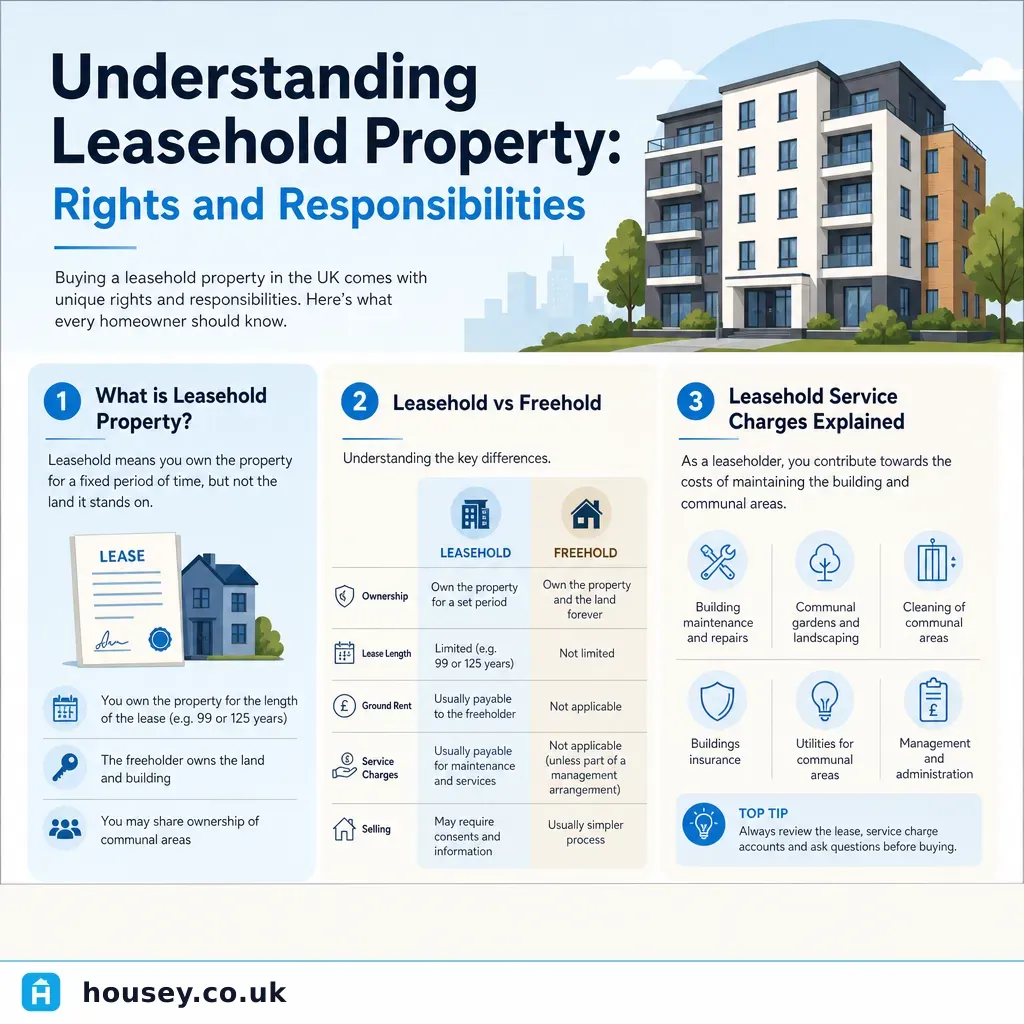
Understanding Leasehold Property: Rights and Responsibilities
Leasehold means you own a time-limited interest in a property while the freeholder owns the land and building.
 Buying & Moving
Navigating Simultaneous Purchase and Sale of Property
When buying and selling simultaneously in England and Wales, both sets of contracts are exchanged on the same day — this is called simultaneous exchange.
 Buying & Moving
Right to Buy: Costs, Discounts, and the Path to Home Ownership
Right to Buy lets eligible council tenants in England buy their home at a government-funded discount — between 35% and 70% of its value, depending on tenancy length and property type.
 Buying & Moving
Essential Steps to Selling Your Home Successfully
Selling your home successfully in the UK involves obtaining a valid EPC, choosing an estate agent or alternative method, instructing a solicitor or conveyancer early, and completing the Seller's Property Information Form accurately.
 Buying & Moving
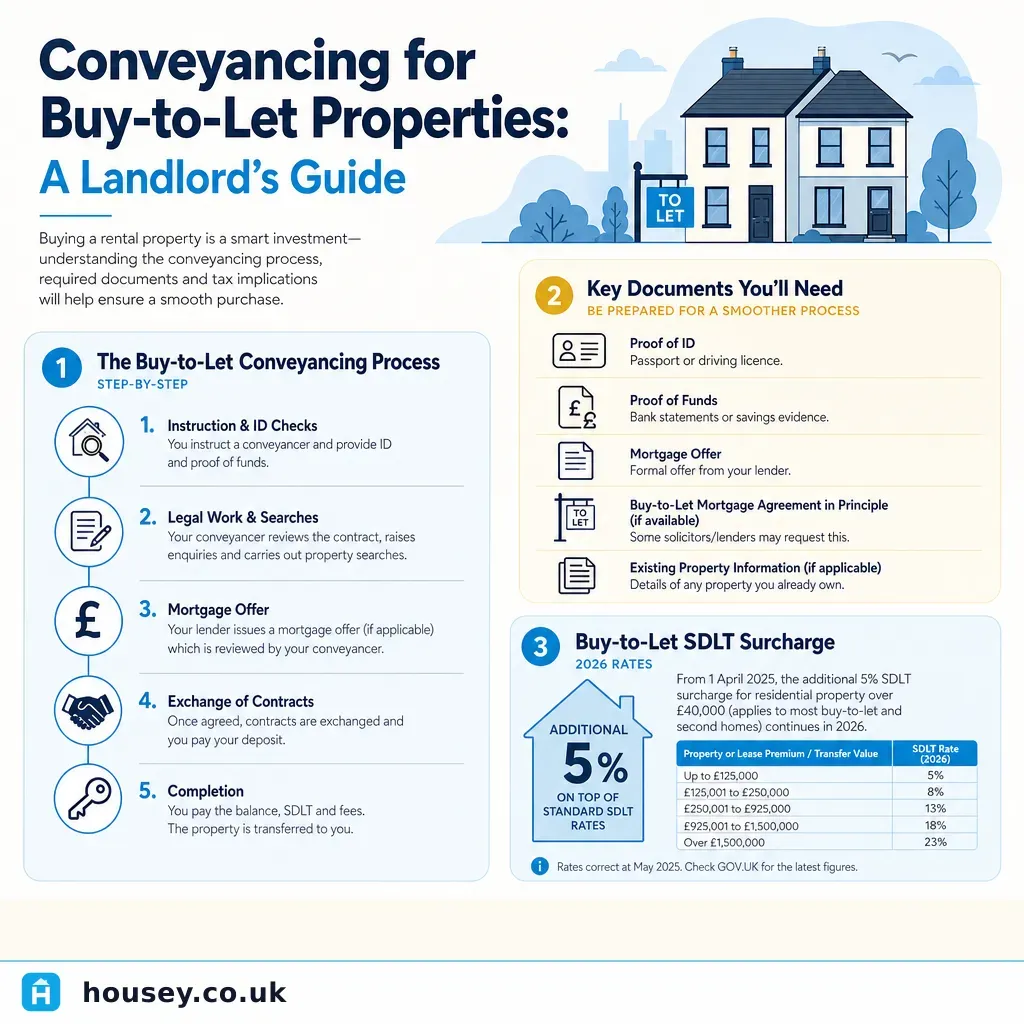
Conveyancing for Buy-to-Let Properties: A Landlord's Guide
Buy-to-let conveyancing follows the same legal process as any residential purchase but adds several layers: a 5% SDLT additional dwelling surcharge in England, review of any existing tenancy agreements, checking local authority licensing requirements, and ensuring buy-to-let mortgage conditions are correctly recorded.