How to Choose a Qualified Conveyancing Solicitor
By Housey · Last reviewed 25th of May 2026
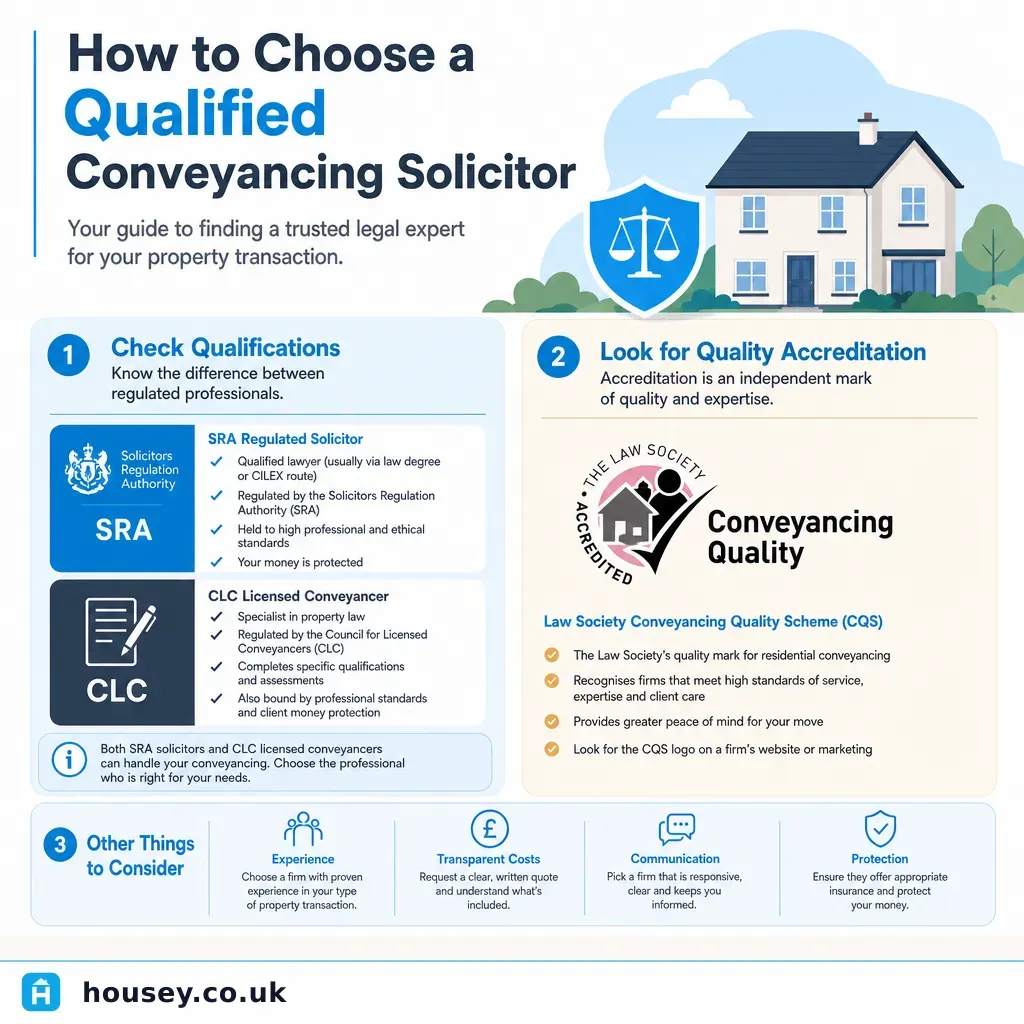
How to Choose a Qualified Conveyancing Solicitor
Choosing a conveyancing solicitor is one of the most consequential decisions in a property transaction. Conveyancing errors — missed title defects, overlooked planning breaches, or a delay in exchange — can cost thousands of pounds and, in serious cases, jeopardise a purchase entirely. Most buyers make the choice quickly under pressure from estate agents or at the last minute, but taking a few hours to compare credentials, transparency, and communication style can make a significant difference to how smoothly the transaction proceeds.
Key points
- Conveyancing solicitors must be regulated by the Solicitors Regulation Authority (SRA); licensed conveyancers are regulated by the Council for Licensed Conveyancers (CLC) — both are legally authorised to handle residential conveyancing in England and Wales.
- The Law Society's Conveyancing Quality Scheme (CQS) signals that a firm has met verified competency standards for residential conveyancing and is required by many major mortgage lenders before they will accept a solicitor on their panel.
- Most mortgage lenders publish an approved panel of solicitors; if your chosen firm is not on your lender's panel, the lender may appoint a separate solicitor at your expense.
- Fixed-fee quotes must be compared carefully: a low headline figure often excludes disbursements (Land Registry fee, local authority search fees, Stamp Duty Land Tax filing) and VAT.
- Under the SRA Code of Conduct, solicitors must communicate costs clearly and promptly — request a full itemised estimate in writing before instructing any firm.
Solicitor or licensed conveyancer: which should you use?
Both solicitors and licensed conveyancers are legally qualified to handle residential property transactions in England and Wales, but there are important differences to understand before choosing.
| Solicitor | Licensed Conveyancer |
|---|---|---|
Regulator | Solicitors Regulation Authority (SRA) | Council for Licensed Conveyancers (CLC) |
Training | Qualifying Law Degree or SQE route plus a training contract | Specialist conveyancing qualification via CLC examinations |
Scope of advice | Can advise on all areas of law | Specialist in property law only |
Best for | Complex transactions, leasehold complications, linked probate matters, boundary disputes | Straightforward freehold purchases and sales |
Compensation scheme | SRA Compensation Fund | CLC Compensation Fund |
Lender panel | Usually included — confirm with your lender | Usually included — confirm with your lender |
For most standard residential freehold purchases, a licensed conveyancer can handle the work competently. If your transaction involves a lease extension, shared ownership, a boundary dispute, or a matter linked to probate, a solicitor with broader legal expertise is usually preferable.
What qualifications and accreditations should you verify?
Before instructing any firm, check the following:
- SRA registration — verify via the SRA's online register. For licensed conveyancers, use the CLC's public register.
- Law Society Conveyancing Quality Scheme (CQS) — the CQS mark indicates a firm has met verified standards in residential conveyancing competency, client care, and risk management. Many major lenders require it.
- Lender panel membership — if you are buying with a mortgage, confirm the solicitor is on your specific lender's approved panel before instructing. Panels vary by lender and not all firms are on all panels.
- Who handles your file — ask whether a qualified solicitor or conveyancer, not a paralegal or case handler, will be personally responsible for your transaction throughout.
How to compare conveyancing quotes fairly
Conveyancing quotes vary widely in structure. A quote showing £599 may reach £1,800 once disbursements and VAT are added; another at £950 inclusive may represent better overall value. Never compare headline figures alone.
What to ask before accepting a quote
- What is included in the professional fee, and what is charged separately as a disbursement?
- Are Land Registry fees, local authority search fees, and Stamp Duty Land Tax filing included, or added separately?
- Is VAT included or excluded from the headline figure?
- Who specifically will handle my file — a qualified solicitor or conveyancer, or a paralegal or case handler?
- What is the firm's typical timescale for this type of transaction?
- How will you communicate updates — by phone, email, or an online portal?
- What is your abortive fee policy if the transaction does not proceed to completion?
- Are you on my lender's approved solicitor panel?
Quote comparison template
Use this template to compare quotes on a like-for-like basis before instructing.
Firm | Professional fee (ex VAT) | Search fees | Land Registry fee | SDLT filing fee | VAT | Estimated total | CQS accredited | On lender panel |
|---|---|---|---|---|---|---|---|---|
Firm A | £ | £ | £ | £ | £ | £ | Yes/No | Yes/No |
Firm B | £ | £ | £ | £ | £ | £ | Yes/No | Yes/No |
Firm C | £ | £ | £ | £ | £ | £ | Yes/No | Yes/No |
Indicative UK costs, last reviewed 2026-05-25. Professional fees for a standard freehold purchase typically range from £500 to £1,500 plus disbursements and VAT; leasehold and new-build transactions usually attract a premium. Costs vary significantly by region, firm, and transaction complexity. Always obtain at least three quotes.
Red flags when choosing a conveyancing solicitor
Be cautious if any of the following apply:
- The quote is significantly below market rates — unusually low fees can indicate high-volume, low-contact firms where your file receives insufficient attention.
- The firm cannot confirm who will be personally responsible for your file.
- The firm is not on your mortgage lender's approved panel, meaning the lender may appoint a second solicitor at your cost.
- The firm does not appear on the SRA or CLC register — do not instruct an unregulated provider.
- The firm lacks CQS accreditation and your transaction involves a leasehold property.
- The firm uses high-pressure tactics, or your estate agent insists you use their recommended solicitor without disclosing any referral arrangement.
Estate agents who receive referral fees from conveyancers must disclose this under the Consumer Protection from Unfair Trading Regulations 2008. You are under no legal obligation to use a recommended solicitor.
Important limitations
This guide provides general information only. Conveyancing is a regulated legal activity, and rules, fees, timescales, and lender requirements vary by transaction type, property, local authority, and lender. Nothing in this guide constitutes legal advice. Always instruct a regulated professional, read the client care letter before proceeding, and confirm all costs in writing before instructing.
What to ask a qualified professional
Before instructing a conveyancing solicitor or licensed conveyancer, ask:
- Are you, or is a qualified solicitor or conveyancer, personally handling my file throughout the transaction?
- Are you on my lender's approved solicitor panel?
- Do you hold Law Society CQS accreditation?
- What is your typical transaction timescale for this type of property?
- How do you communicate progress updates to clients?
- What is your abortive fee policy if the purchase does not proceed?
- Have you handled transactions involving leasehold, new-build, shared ownership, or auction properties before?
When to get professional help
Conveyancing always requires a regulated professional — you cannot legally complete a property purchase without one unless acting as your own conveyancer, which is impractical and inadvisable for most buyers. Seek specialist legal advice beyond standard conveyancing if:
- A title defect, restriction, or unusual covenant is identified on the title register.
- The property is leasehold with a short lease (below 80 years) or has a complex service charge history.
- The transaction involves shared ownership, Help to Buy, right-to-buy, or a new-build reservation agreement.
- A boundary dispute, adverse possession claim, or restrictive covenant issue arises.
- The property is subject to a probate or trust arrangement.
How Housey can help
Housey connects you with regulated conveyancing solicitors and licensed conveyancers active on major lender panels. Use our conveyancing service to receive comparable quotes from qualified, SRA- or CLC-regulated firms, so you can compare professional fees, accreditations, and communication approaches before making your decision.
Frequently asked questions
Do I have to use the conveyancing solicitor recommended by my estate agent?
No. You are free to instruct any SRA-regulated solicitor or CLC-regulated licensed conveyancer. Estate agents sometimes receive referral fees for recommendations and must disclose these under the Estate Agents Act 1979 and Consumer Protection from Unfair Trading Regulations 2008. Ask both the agent and the solicitor directly whether a referral arrangement exists. Choosing your own solicitor often saves money and gives you more control.
What is the difference between a conveyancing solicitor and a licensed conveyancer?
A solicitor is regulated by the SRA and can advise on all areas of law; a licensed conveyancer is regulated by the CLC and specialises in property transactions. Both are legally qualified for standard residential purchases. For complex matters — lease extensions, boundary disputes, shared ownership, or transactions linked to probate — a solicitor with broader legal expertise is usually more appropriate.
How long does conveyancing take in England and Wales?
A straightforward freehold purchase in a proactive chain may complete in 8 to 12 weeks from instruction. Leasehold transactions, new-build purchases, and complex chains typically take longer. Delays most often arise from slow local authority search returns, missing documents, or issues elsewhere in the chain rather than the solicitor's workload alone.
What disbursements should I expect on top of the professional fee?
Typical disbursements include Land Registry registration fees (a scale fee based on purchase price), local authority search fees (approximately £50 to £250 depending on the council), drainage and water search (around £30 to £60), and an environmental search (around £30 to £60). Stamp Duty Land Tax is a separate tax calculated and submitted by your solicitor. Always request a full itemised estimate before instructing. Confirm current Land Registry fees at GOV.UK.
Sources and further reading
- Solicitors Regulation Authority — verify a solicitor or firm — Solicitors Regulation Authority
- Council for Licensed Conveyancers — find a conveyancer — Council for Licensed Conveyancers
- Law Society Conveyancing Quality Scheme — Law Society
- GOV.UK — Land Registry fees — HM Land Registry
- GOV.UK — Stamp Duty Land Tax — HMRC
Useful next reads
 Buying & Moving
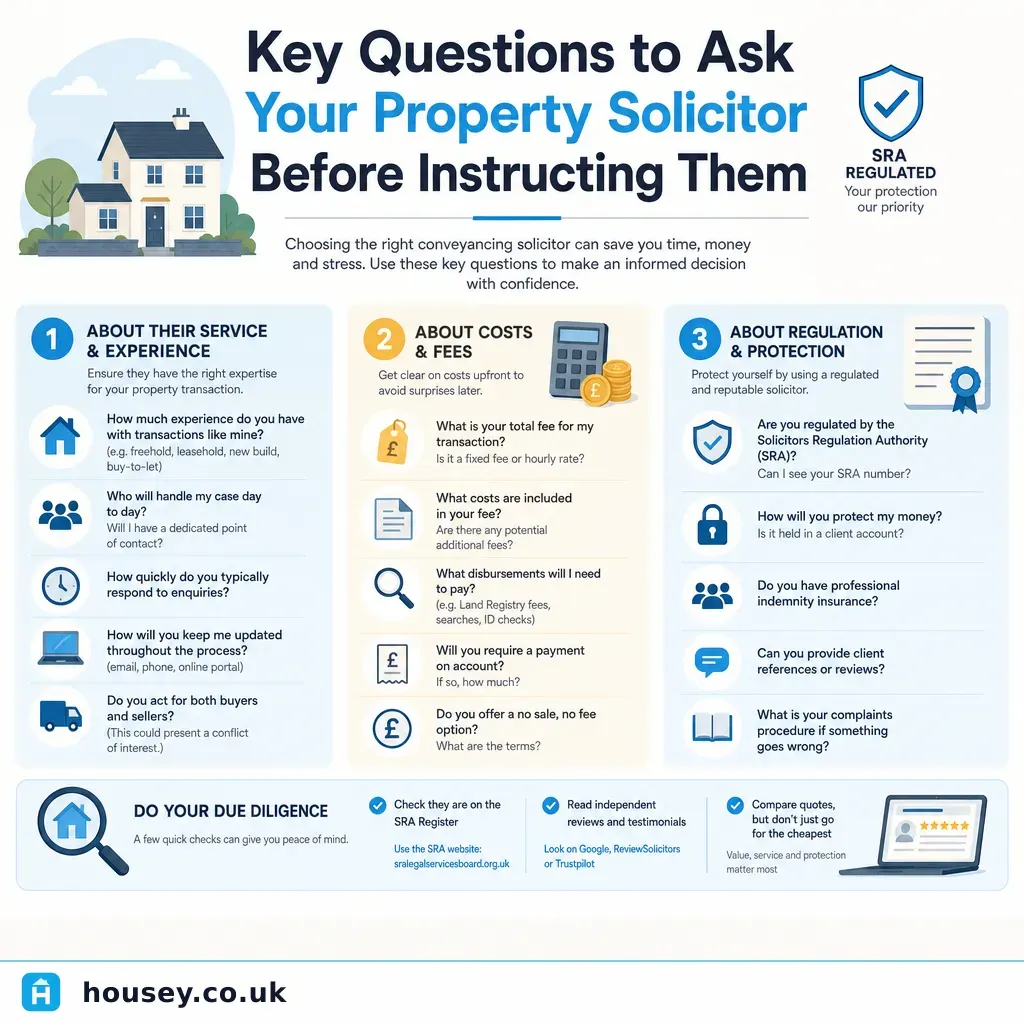
Key Questions to Ask Your Property Solicitor Before Instructing Them
Before instructing a property solicitor, ask whether they are on your mortgage lender's approved panel, whether their quote is fixed and includes VAT and all disbursements, who will personally handle your case, and what their abortive-fee policy is.
 Buying & Moving
Identifying and Resolving Delays in Property Transactions
Delays in UK property transactions most often arise from slow local authority searches, incomplete identity documents, mortgage hold-ups, leasehold complications, or a problem elsewhere in the chain.
 Buying & Moving
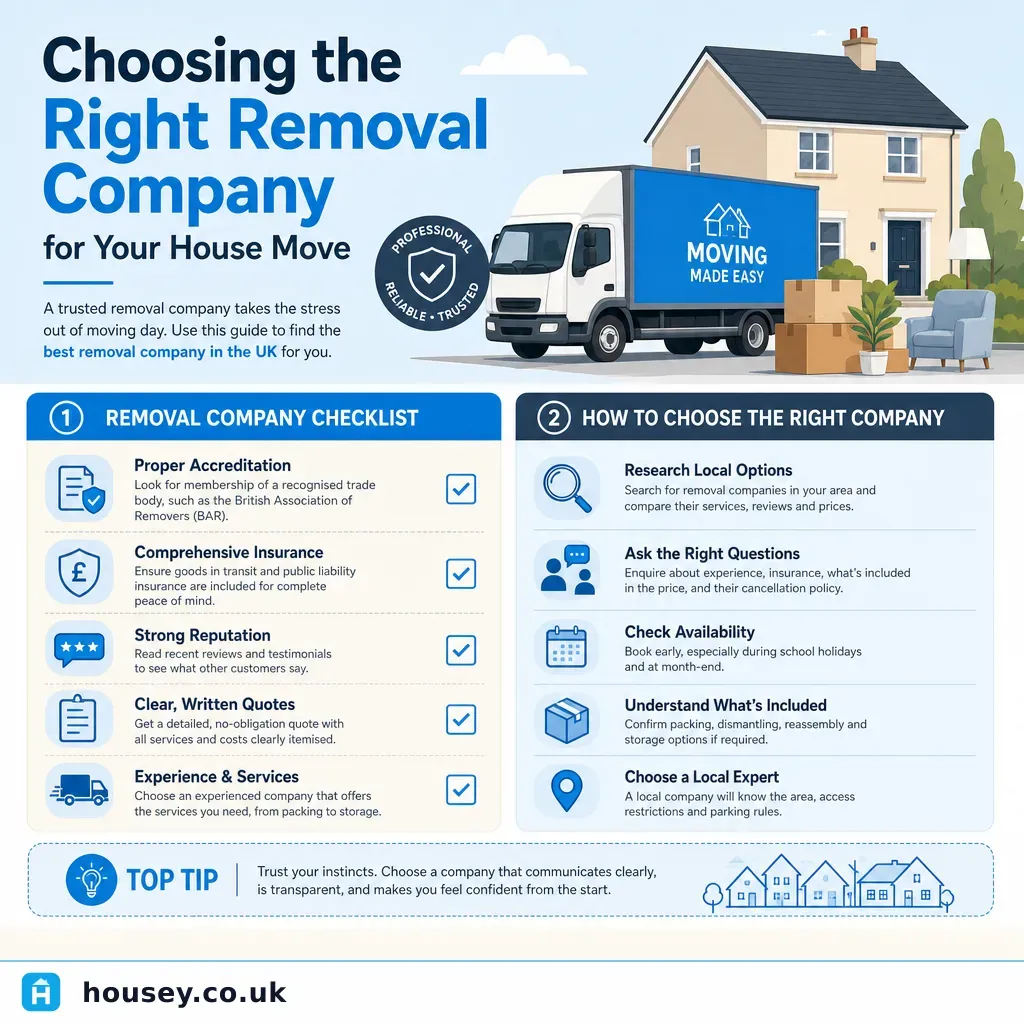
Choosing the Right Removal Company for Your House Move
To choose the right removal company, get three quotes from British Association of Removers (BAR) members or similarly accredited firms.
 Buying & Moving
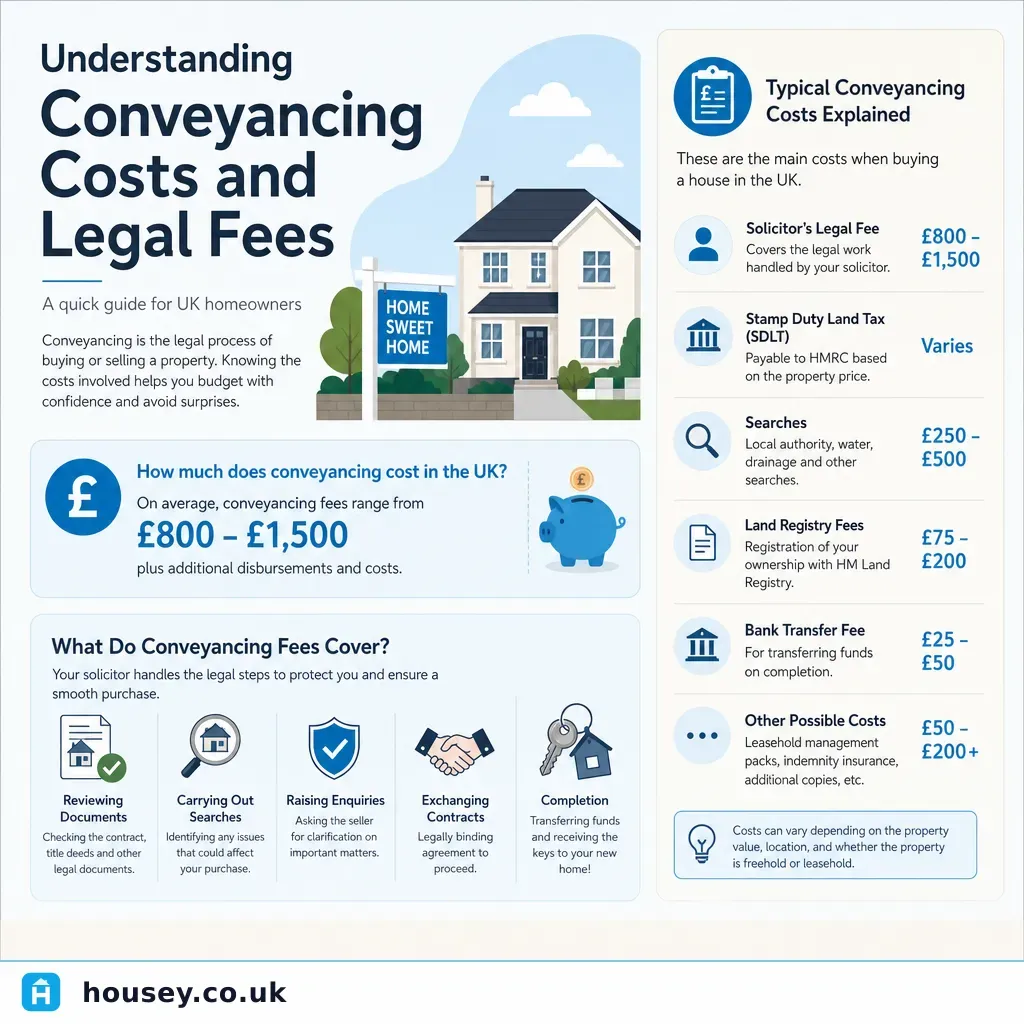
Understanding Conveyancing Costs and Legal Fees
Conveyancing costs in England and Wales include a solicitor's or licensed conveyancer's professional fee plus disbursements such as searches, Land Registry registration, and bank transfer charges.
 Buying & Moving
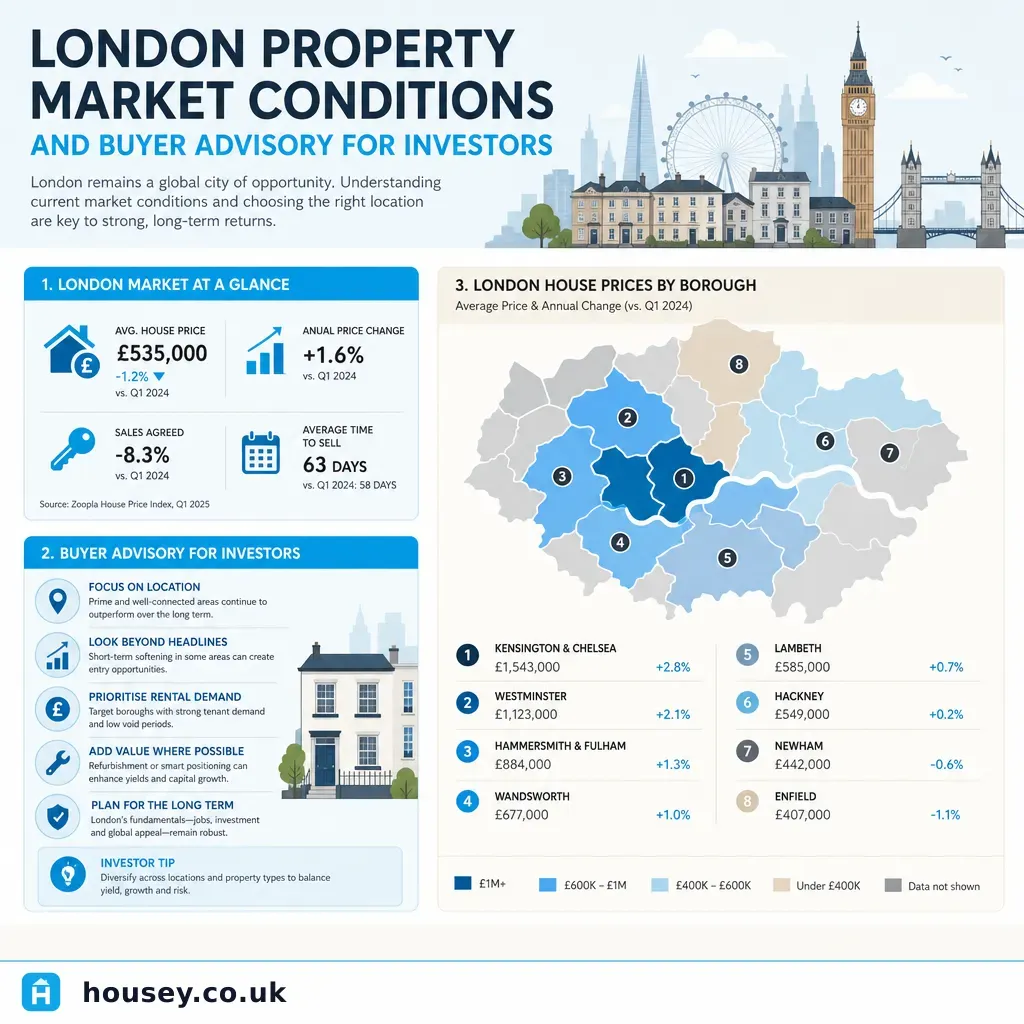
London Property Market Conditions And Buyer Advisory For Investors
London's property market varies enormously by borough, tenure, and property type.