How to Choose an Estate Agent for Your Property Sale
By Housey · Last reviewed 10th of May 2026
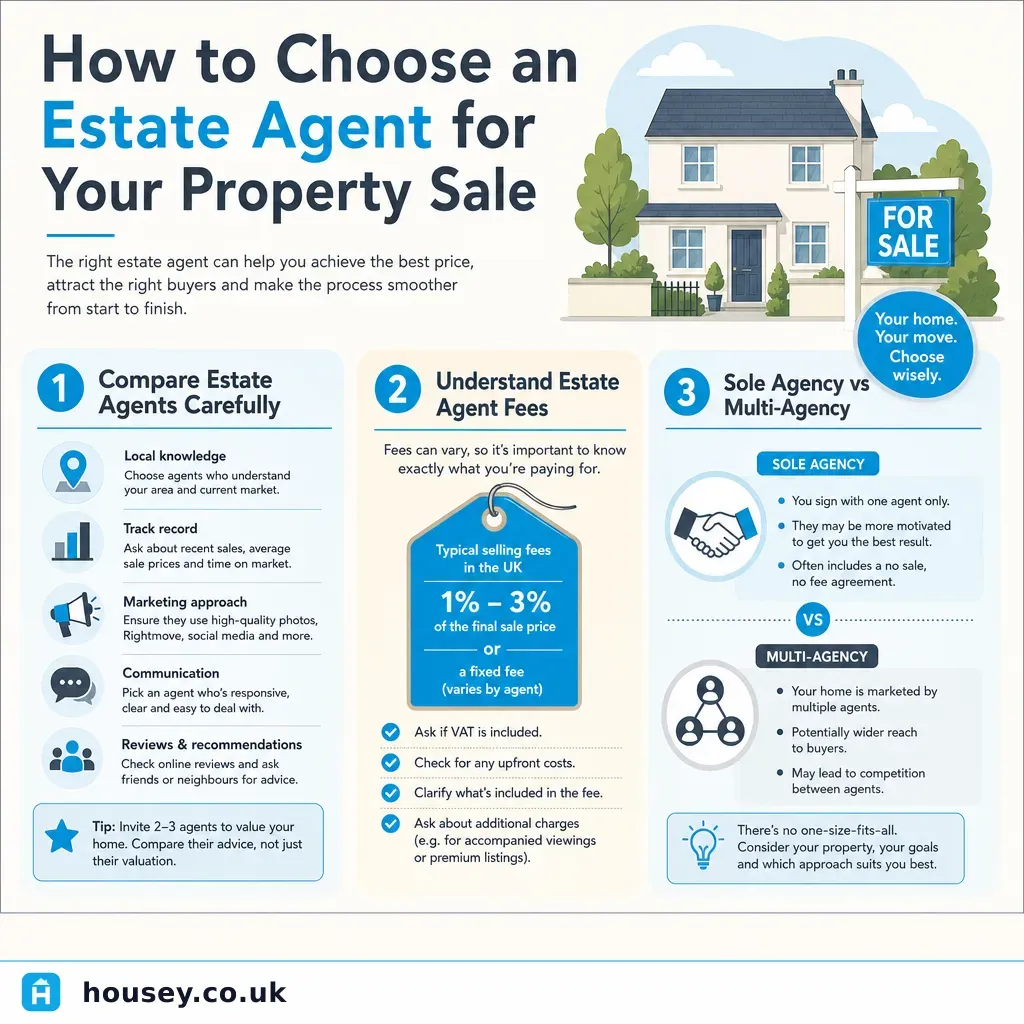
How to Choose an Estate Agent for Your Property Sale
Choosing the wrong estate agent can mean months on the market, unnecessary price reductions, and a final sale price below what the home is worth. In England and Wales, estate agents range from local high-street firms with deep neighbourhood knowledge to national online agencies offering flat-fee listings — each with different fee structures, contract terms, and approaches to negotiation. The decision is usually made quickly, often before sellers have had a chance to gather meaningful comparisons.
Key points
- Estate agents in England and Wales must be registered with a government-approved redress scheme — the Property Ombudsman or the Property Redress Scheme — under the Estate Agents Act 1979.
- Sole agency contracts typically run for 8–16 weeks with a mandatory notice period; check the tie-in clause carefully before signing.
- High-street agent fees in England generally range from 1%–3% of the agreed sale price plus VAT; online and hybrid agents often charge a flat fee of £500–£2,000, sometimes payable upfront and non-refundable whether or not the property sells.
- A valid Energy Performance Certificate (EPC) must be commissioned before a property is marketed — this is a legal requirement under the Energy Performance of Buildings Regulations 2012.
- An agent with a high initial valuation is not necessarily the best choice; overpriced properties often require price reductions after 4–8 weeks, which can signal distress to buyers.
Types of estate agent: knowing your options
Three main types of agent operate in the UK residential market, and the right choice depends on your property, your appetite for involvement, and how active the local market is.
High-street or local agents maintain a physical office in your area, conduct viewings, manage negotiations, and typically charge a percentage of the sale price on a no-sale-no-fee basis. They are often well embedded in the local market and may have existing buyer contacts ready to view.
Online or hybrid agents list your property on the major portals (Rightmove, Zoopla) at a flat fee. Some manage viewings and negotiations; others expect you to handle these yourself. Upfront payment models carry more financial risk if the sale falls through.
Multi-branch national agents operate similarly to local high-street firms but with broader reach, which may matter for properties likely to attract buyers relocating from other regions.
How to evaluate estate agents before you appoint
Check their local track record
Ask each agent to show you recent sales of comparable properties — similar size, type, condition, and location — within the past 6–12 months. Note asking price versus achieved price, and check average time to exchange. You can cross-reference this independently using the HM Land Registry Price Paid Data, which is publicly available via GOV.UK.
Assess their marketing approach
Review current listings from each agent. Are photos professionally taken? Are accurate floorplans included? Check whether agents use virtual tours or video walkthroughs. Properties marketed with high-quality imagery and detailed floorplans typically attract more enquiries and viewings than those with phone snapshots and sparse descriptions.
Evaluate valuations critically
Invite at least three agents to value your property. Note where valuations align and where they diverge significantly. If one is materially higher than the others, ask the agent to justify it with specific comparable sold prices — not general market optimism. Accepting an inflated valuation increases the risk of a slow sale and eventual price reduction.
Verify credentials and compliance
Confirm that any agent you consider is a member of a recognised redress scheme. You can check membership of the Property Ombudsman at tpos.co.uk. Membership of Propertymark (the trade body for estate agents) is a positive indicator of professional standards, though it is not a legal requirement.
Sole agency, multi-agency, and online: comparison
Agent type | Best for | Not ideal for | Typical fee | Key risk |
|---|---|---|---|---|
Sole agency (high-street) | Most standard residential sales; sellers who want full support | Sellers comfortable managing viewings independently | 1%–2% + VAT, no sale no fee | Tied to one agent for the contract period |
Multi-agency (high-street) | Slow-moving properties; sellers wanting maximum portal exposure | Cost-conscious sellers; properties likely to sell quickly | 2%–3.5% + VAT, no sale no fee | Higher fees; agents may prioritise their own sole-agency listings |
Online or hybrid (flat fee) | Confident sellers; active markets; buyers already searching portals | Complex properties; sellers needing full negotiation support | £500–£2,000, often upfront | Fee may be non-refundable; service levels vary widely between providers |
Indicative UK costs, last reviewed 2026-05-10. Fees vary by agent and region.
What to ask before signing with an estate agent
Use these questions when comparing agents at the valuation stage:
- How many comparable properties have you sold in this postcode in the last six months, and at what percentage of asking price?
- What is your average number of days from listing to exchange on current instructions?
- How will you market my property, and which portals will it appear on?
- Who will conduct viewings — someone who knows the property well, or whoever is available?
- What does the contract tie-in period look like, and how much notice do I need to give to switch agents?
- Are your fees inclusive of VAT, and are there any additional charges for photography, floorplans, or the EPC?
- How will you communicate progress with me, and how frequently?
- If we agree a sole agency arrangement, what happens if I find my own buyer independently?
Red flags to watch out for
Significantly inflated valuation: If one agent values your home 15% or more above the others without specific comparable evidence, treat this as a warning sign. Overvaluation at instruction is a common tactic to win listings and can harm your eventual sale by setting an unrealistic expectation with buyers.
Pressure to sign the same day: A reputable agent will allow you time to compare options. Urgency tactics — claiming a buyer is ready now or that the offer expires tonight — warrant scepticism.
Vague or one-sided contract terms: Watch for long tie-in periods (over 16 weeks), high break fees, and unclear definitions of what counts as a "ready, willing, and able buyer" — which can affect whether fees are owed even if a sale ultimately falls through.
Poor communication before instruction: If an agent is difficult to reach or poorly prepared at the valuation stage, this pattern is unlikely to improve once they have your listing on their books.
Unrealistic promises about timescales: The time from listing to completion varies considerably by market conditions and chain complexity. Be cautious of agents who guarantee specific timescales without caveats.
When to get professional help
Most sellers will handle agent selection independently, but there are situations where additional guidance is worthwhile:
- If your property is unusual, listed, or in a conservation area, seek an agent with demonstrable experience in that property type — not all agents are equally equipped.
- If a dispute arises with an agent over fees or conduct, the Property Ombudsman offers a free complaints and dispute resolution service. Citizens Advice can also advise on contract terms.
- If you are selling a leasehold property with a short lease, ground rent issues, or service charge disputes, ensure your conveyancer is instructed early — these can affect both marketability and the price a buyer is willing to pay.
How Housey can help
Housey connects homeowners with qualified professionals across the UK for a range of property services. Whether you need an Energy Performance Certificate before marketing, a conveyancer to manage the legal side of your sale, or a specialist survey to pre-empt buyer queries, you can compare quotes from relevant local professionals through the Housey platform.
Frequently asked questions
Do estate agents in England and Wales have to be regulated?
Estate agents must be registered with a government-approved redress scheme — either the Property Ombudsman or the Property Redress Scheme — under the Estate Agents Act 1979. Membership of bodies such as Propertymark is voluntary. Agents must also comply with anti-money laundering regulations and consumer protection rules.
Can I sell my home without an estate agent?
Yes. Private sales are legal in England and Wales, and some platforms cater specifically to private listings. You will still need a valid EPC before marketing begins, and you must instruct a conveyancer to manage the legal transfer. This approach suits confident sellers in active markets but may limit buyer reach in slower conditions.
What should I check in an estate agent's contract before signing?
Look closely at the tie-in period, the notice period required to end the arrangement, the definition of a "ready, willing, and able buyer", and whether fees are payable if you find your own buyer. Avoid signing for long initial tie-in periods without a clear exit route or adequate notice provisions.
How long does it take to sell a house in England and Wales?
Timescales vary by property type, location, and chain complexity. As a rough guide, the time from first listing to exchanging contracts is often 3–6 months, with completion usually following 1–4 weeks later. Market conditions, mortgage approvals, and survey findings all affect the overall timeline.
Should I choose the estate agent who gives the highest valuation?
Not necessarily. Agents sometimes inflate initial valuations to win instructions — a practice known as overvaluing. Properties priced above market value tend to sit unsold longer and often require price reductions, which can signal distress to buyers. Compare any valuation against HM Land Registry Price Paid Data for comparable properties before making a decision.
Sources and further reading
- Estate Agents Act 1979 — legislation.gov.uk
- The Property Ombudsman — The Property Ombudsman
- HM Land Registry Price Paid Data — GOV.UK
- Energy Performance of Buildings Regulations 2012 — legislation.gov.uk
- Choosing and using an estate agent — Citizens Advice
- Find a Propertymark member agent — Propertymark
Useful next reads
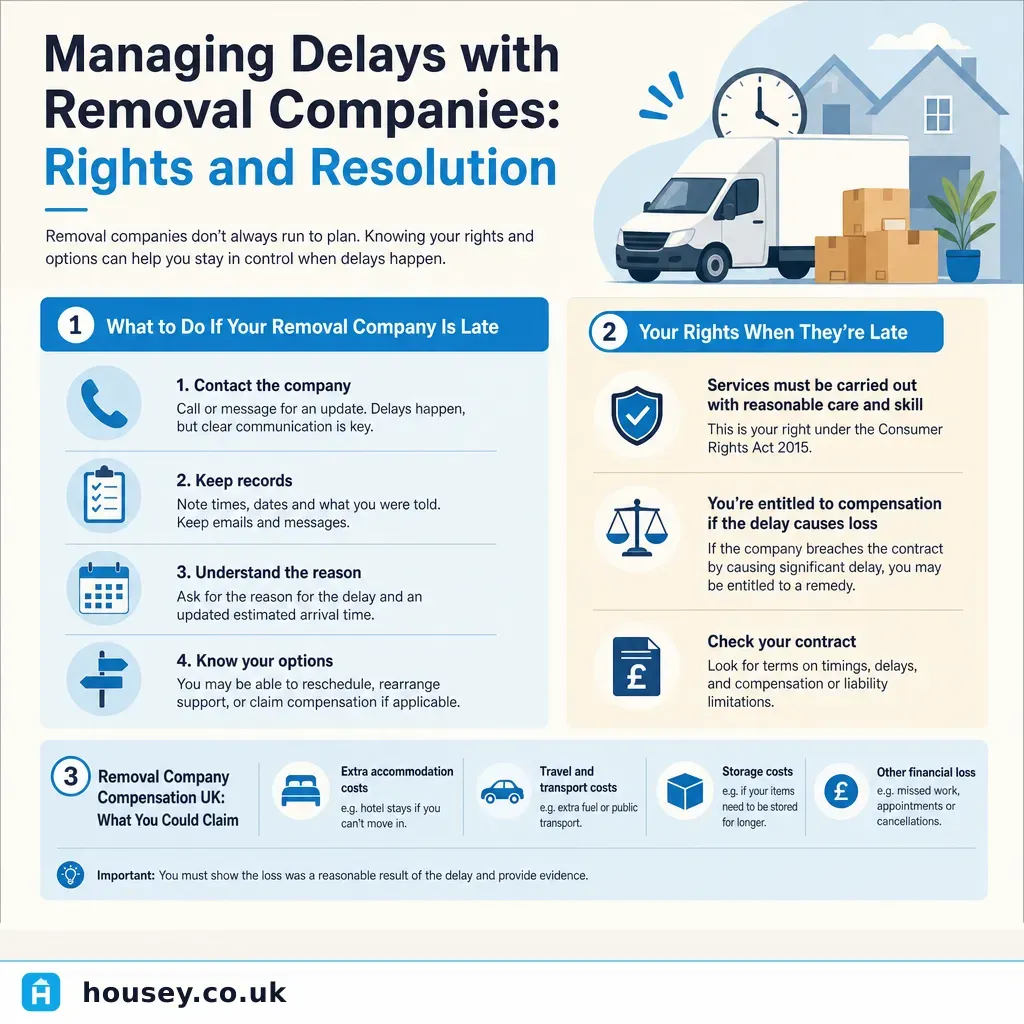 Buying & Moving
Managing Delays with Removal Companies: Rights and Resolution
If a removal company is late, your rights depend on your contract and whether the company is BAR-registered.
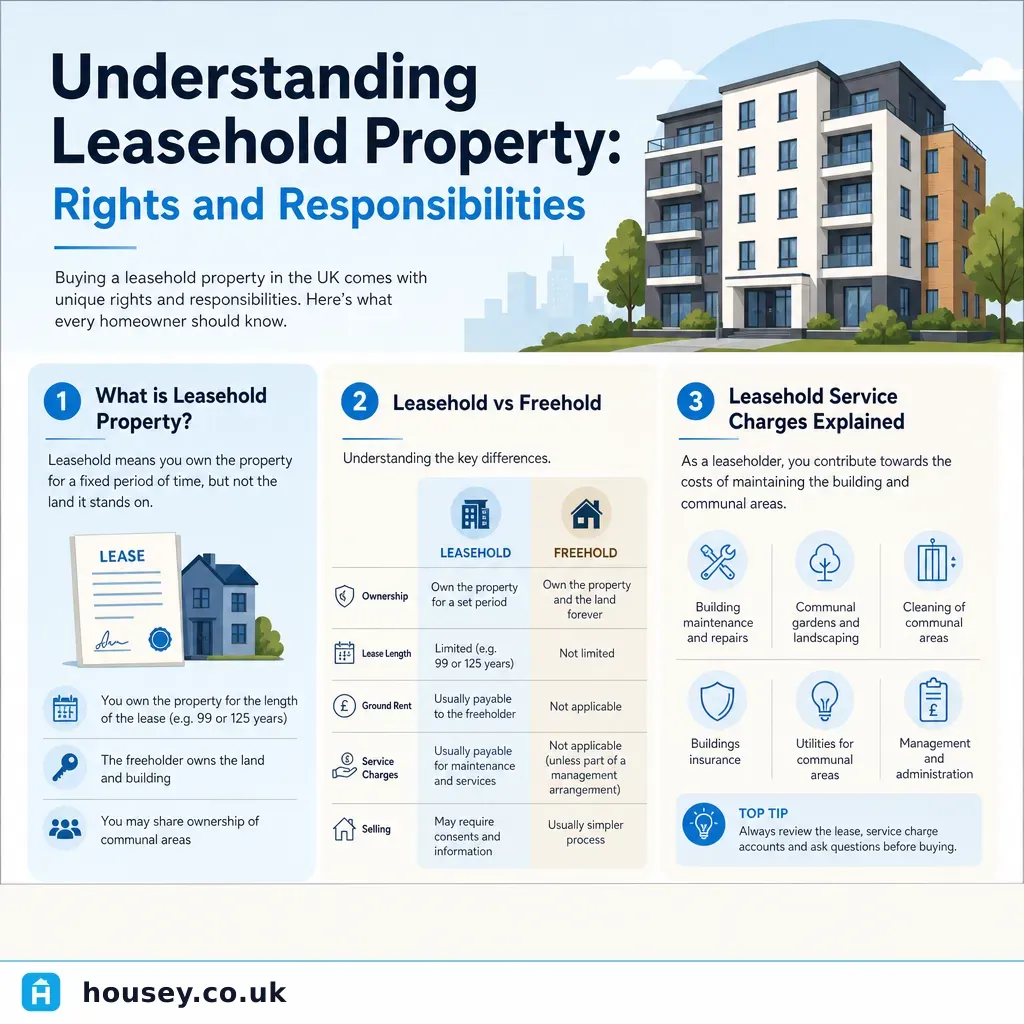 Buying & Moving
Understanding Leasehold Property: Rights and Responsibilities
Leasehold means you own a time-limited interest in a property while the freeholder owns the land and building.
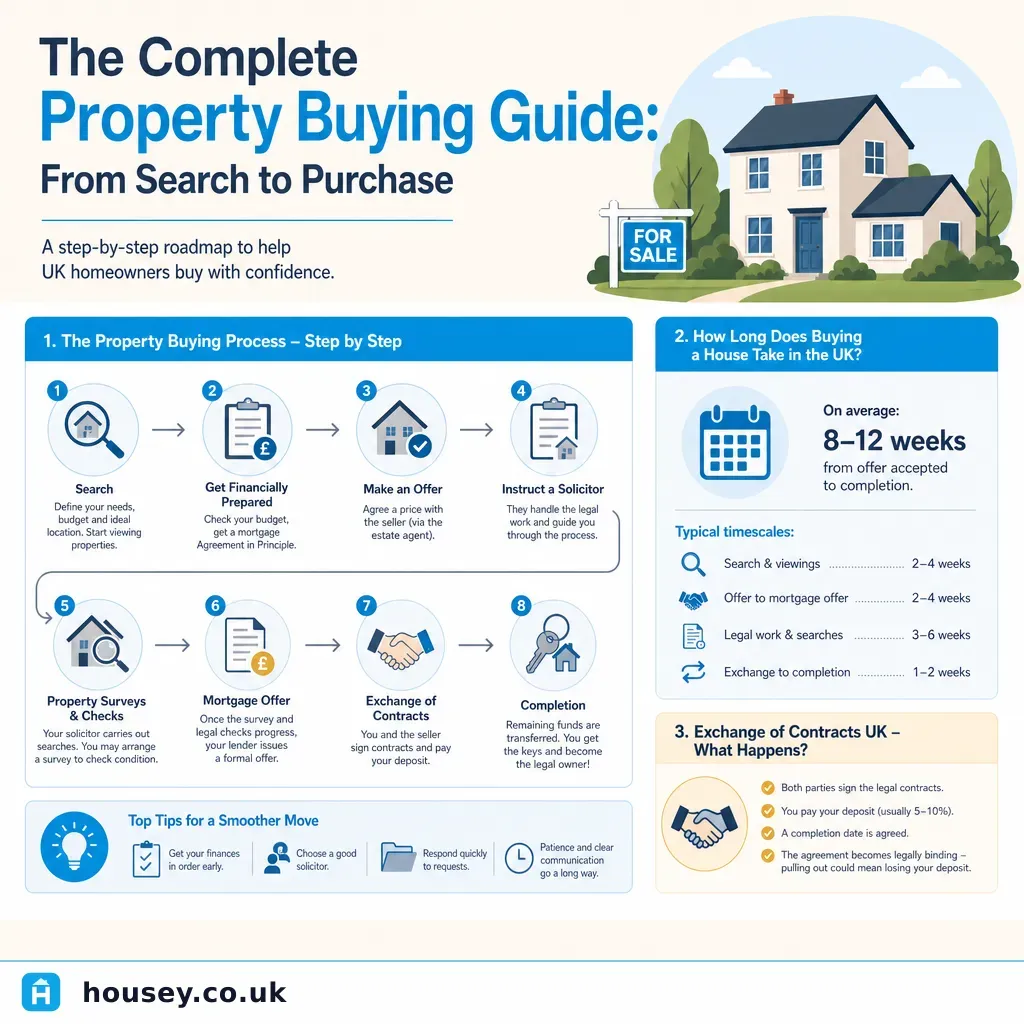 Buying & Moving
The Complete Property Buying Guide: From Search to Purchase
Buying a property in England and Wales typically takes 3–6 months from accepted offer to completion.
 Buying & Moving
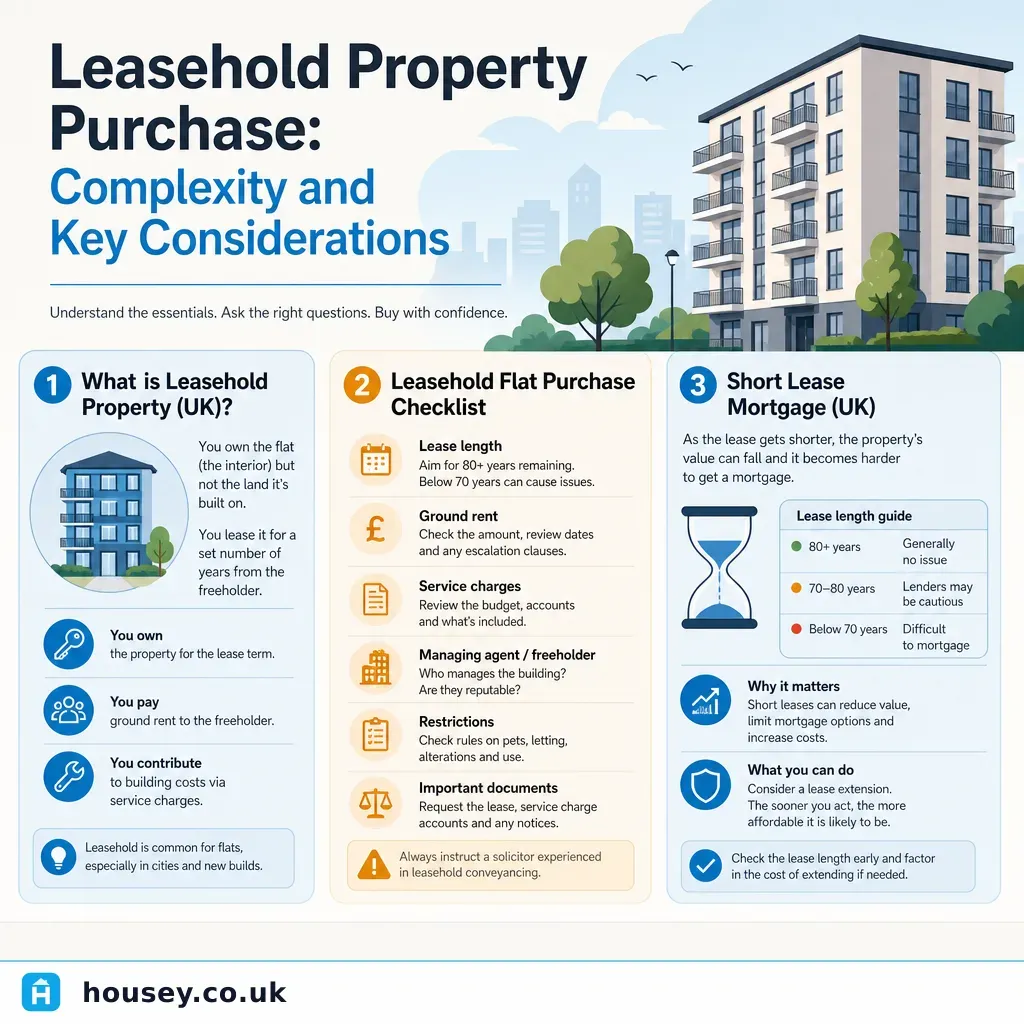
Leasehold Property Purchase: Complexity and Key Considerations
Buying a leasehold property means purchasing the right to occupy for a fixed term rather than owning the land outright.
 Buying & Moving
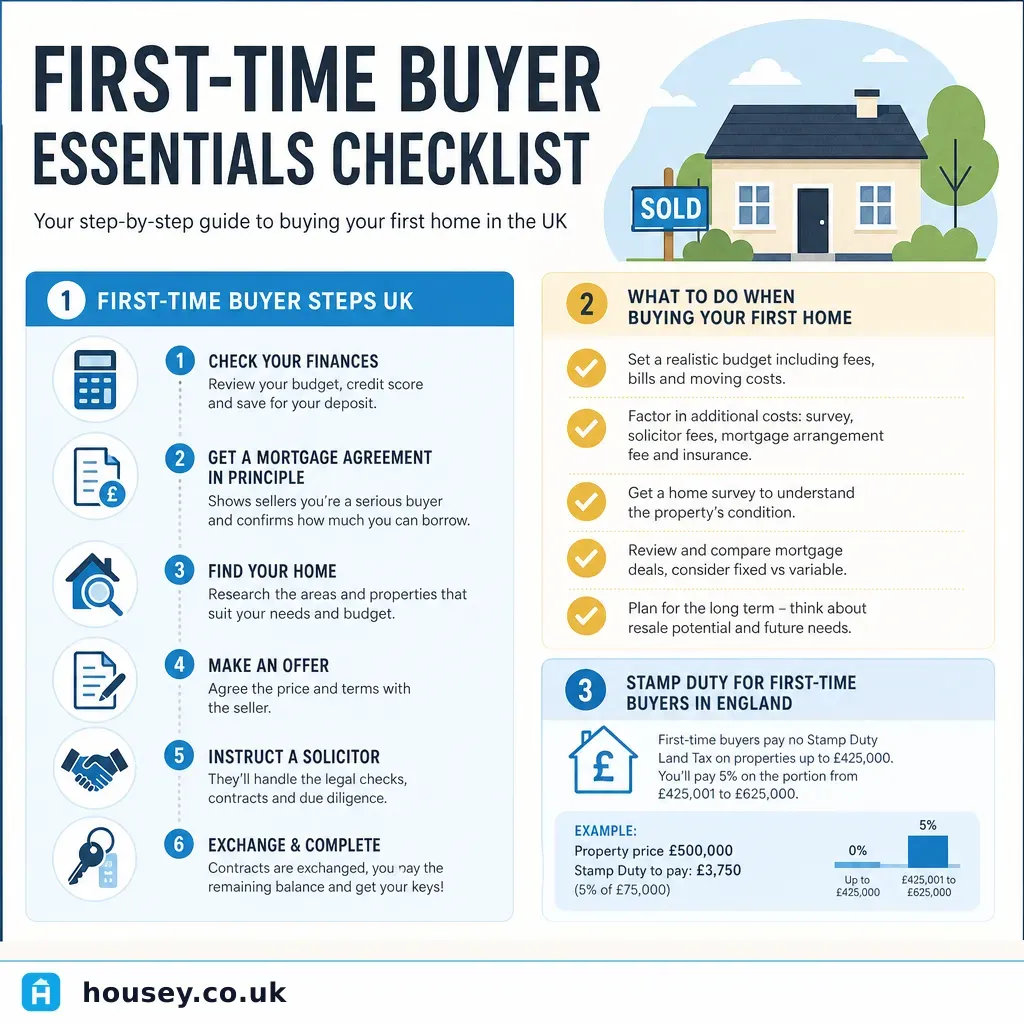
First-Time Buyer Essentials Checklist
Buying your first home involves obtaining a mortgage in principle, making an offer, instructing a solicitor, arranging a survey, and exchanging contracts before completion.