How to Find and Hire a Loft Conversion Company
By Housey · Last reviewed 18th of May 2026
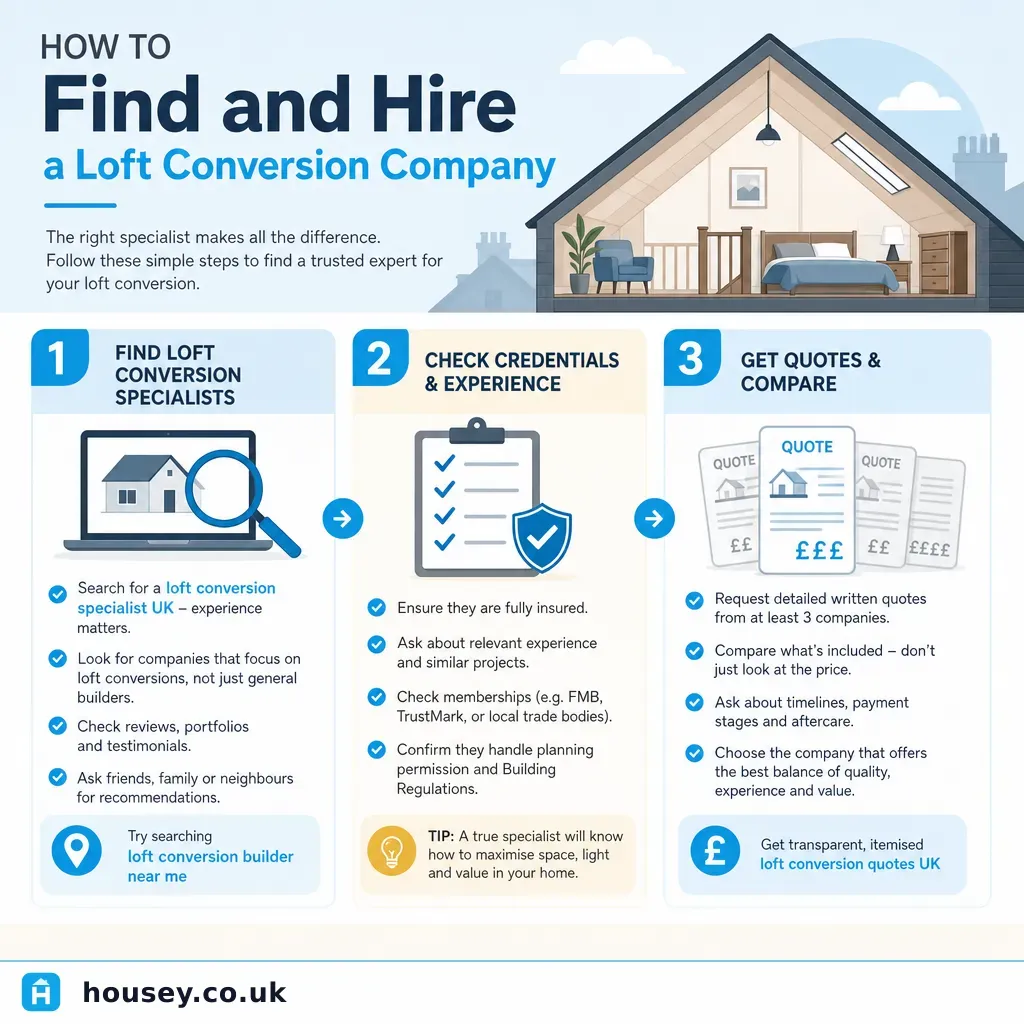
How to Find and Hire a Loft Conversion Company
Loft conversions rank among the most popular home improvements in the UK, adding usable floor space without sacrificing garden or footprint. The decision to convert typically arises when a growing household needs an extra bedroom, home office, or bathroom — and when a local estate agent has confirmed the works would add value in line with the area's house prices. Getting the right company matters because loft conversions involve structural alterations, fire safety requirements, building regulations approval, and sometimes planning permission — all of which hinge on the competence and experience of the firm you appoint.
Key points
- All loft conversions must obtain building regulations approval, covering structure, fire safety (Approved Document B), thermal performance (Approved Document L), ventilation, and a compliant staircase (Approved Document K).
- Most loft conversions qualify as permitted development under Class B of the Town and Country Planning (General Permitted Development) (England) Order 2015, but the additional roof volume is capped at 40 cubic metres for terraced houses and 50 cubic metres for detached and semi-detached homes.
- Mansard conversions and any works that alter the principal elevation almost always require a full planning application rather than permitted development.
- The Party Wall etc. Act 1996 applies whenever the conversion involves work on or near a shared wall — common in terraced and semi-detached properties.
- Look for companies registered with TrustMark (the Government-endorsed quality scheme) or members of the Federation of Master Builders (FMB), both of which require independent vetting to join.
Types of loft conversion company — and which suits your project
Not all companies offering loft conversions provide the same scope of service. Understanding the difference helps you match the right firm to your project from the outset.
Company type | What they provide | Best for | Watch out for |
|---|---|---|---|
Specialist loft conversion company | Design, structural calculations, planning applications, and build — all in-house | Most standard residential loft conversions | Confirm they use a qualified structural engineer, not just in-house draughtsmen |
General building contractor | Build only — you supply approved drawings | Straightforward Velux conversions where you already have building regulations drawings | You must separately appoint a structural engineer and submit building regulations applications |
Design-and-build firm | Architecture, structural design, and construction under one contract | Complex mansard or L-shaped dormer conversions | Verify planning and building control experience before signing |
Structural engineer plus separate builder | Engineer handles calculations and inspections; builder constructs | Unusual roof structures, listed buildings, conversions with complications | Requires managing two contracts and coordinating professionals yourself |
How to find reputable loft conversion companies
Start with scheme registrations rather than paid advertisements:
- TrustMark (trustmark.org.uk): Government-endorsed scheme; members are independently inspected for workmanship quality and financial probity.
- Federation of Master Builders (fmb.org.uk): Members agree to a code of practice and have access to an independent dispute-resolution service.
- Which? Trusted Traders: Carries out background checks and monitors consumer reviews.
Ask neighbours or local estate agents for recommendations — word of mouth remains a reliable signal on build quality. You can also search your local authority's planning portal for recent loft conversion applications; the contractor's name sometimes appears on submitted drawings, which you can cross-reference against scheme registrations.
What to ask before accepting a quote
Once you have a shortlist of at least three companies, use these questions when speaking to each:
- Can you provide contact details for two or three clients whose loft conversions you completed in the last 18 months?
- Who carries out the structural calculations — an in-house engineer or an external chartered structural engineer?
- Will you submit the building regulations application and liaise with the building control body throughout the project?
- Does the quote include Party Wall Act surveyor costs if my property is terraced or semi-detached?
- What structural warranty or latent defects insurance do you offer at completion — for example, an LABC Warranty, NHBC Buildmark, or Premier Guarantee?
- Is VAT included in the figure quoted, and what payment schedule are you proposing?
- What happens if hidden structural problems — for example, weak purlins or asbestos-containing roof felt — are discovered once work begins?
- What is the realistic programme duration, and what is your process if the build overruns?
Comparing quotes — what the price should include
Indicative UK costs, last reviewed 2026-05-18. Costs vary significantly by location, specification, and market conditions; always obtain multiple quotes.
Conversion type | Indicative cost range | What typically drives the price higher |
|---|---|---|
Velux (roof light) conversion | £15,000–£25,000 | Number of Velux units, insulation specification, en suite addition |
Dormer conversion (rear) | £35,000–£55,000 | Dormer width, en suite bathroom, structural steelwork required |
L-shaped dormer | £45,000–£65,000 | Two dormers, additional rooms, bespoke joinery |
Mansard conversion | £50,000–£80,000+ | Planning complexity, party wall works, full roof rebuild |
Hip-to-gable with dormer | £40,000–£60,000 | Gable wall construction, steel requirements |
A quote that appears significantly lower than these ranges should prompt questions. Low tenders sometimes exclude VAT, building control fees, structural engineer fees, scaffolding, or skip hire.
Red flags when evaluating loft conversion companies
Certain warning signs suggest a contractor may not deliver a compliant or high-quality result:
- Requests a large upfront cash deposit before work starts — more than 10–15% of the contract value is unusual for residential projects.
- Cannot name the building control body they use, or dismisses building regulations as optional.
- Provides a quote without visiting the property or inspecting the existing roof structure.
- Has no verifiable reviews or refuses to provide references from completed loft projects.
- Offers a verbal-only agreement with no written specification or contract.
- Cannot provide written evidence of public liability insurance — the minimum expectation for most residential projects is £1–2 million.
When to get professional help
A loft conversion involves structural changes that a general builder without specialist experience may not handle safely or compliantly. Seek additional professional input if:
- Your property is listed or in a conservation area — permitted development rights are likely not to apply, and additional heritage constraints will affect the design.
- The existing roof structure is formed of trussed rafters rather than cut-and-pitch construction — these conversions require a structural engineer's input beyond standard drawings.
- You have suspected asbestos in the roof space, which is common in homes built before 2000 — arrange a professional asbestos survey before any company begins work.
- Any quote does not mention building regulations compliance or structural calculations — this is a legal compliance issue, not merely a quality concern.
How Housey can help
Housey connects homeowners with vetted loft conversion companies across the UK. Submit a single request and receive up to four quotes from local specialists who have been assessed against Housey's quality criteria. Compare experience, accreditations, and pricing in one place before deciding who to appoint.
Frequently asked questions
Do I need planning permission for a loft conversion?
Most loft conversions in England qualify as permitted development and do not need a planning application, provided the added volume stays within 40 m³ for terraced houses or 50 m³ for other homes. Permitted development rights can be removed by the local authority, and conversions in conservation areas or on listed buildings usually require formal consent. Always verify with your local planning authority before any work begins.
How long does a loft conversion take?
A Velux conversion typically takes six to eight weeks on site. A rear dormer may take eight to twelve weeks. Mansard conversions can run to four to six months, partly because they almost always require planning permission. These estimates assume no hidden structural problems and that building regulations drawings are approved before work starts.
What building regulations approval do I need for a loft conversion?
Building regulations approval is required for all structural loft conversions, covering fire safety, structural adequacy, thermal performance, ventilation, and staircase compliance. You can choose a full plans application or a building notice; the former is lower risk as drawings are checked before work starts. At completion you will receive a completion certificate — retain this carefully as it is requested on every residential sale.
Can the loft conversion company handle the Party Wall Act?
Most specialist loft conversion companies can recommend a party wall surveyor, but that surveyor must be appointed independently of the contractor. You must serve notice on adjoining owners before work on or near a shared wall begins. Your contractor should not carry out wall works until the legal process under the Party Wall etc. Act 1996 is complete.
Sources and further reading
- Permitted development rights for householders: technical guidance — GOV.UK
- Party Wall etc. Act 1996: guidance — GOV.UK
- TrustMark: find a tradesperson — TrustMark (Government-endorsed quality scheme)
- Federation of Master Builders: find a builder — Federation of Master Builders
- Approved Document B: Fire Safety — HM Government
Useful next reads
 Improvement & Build
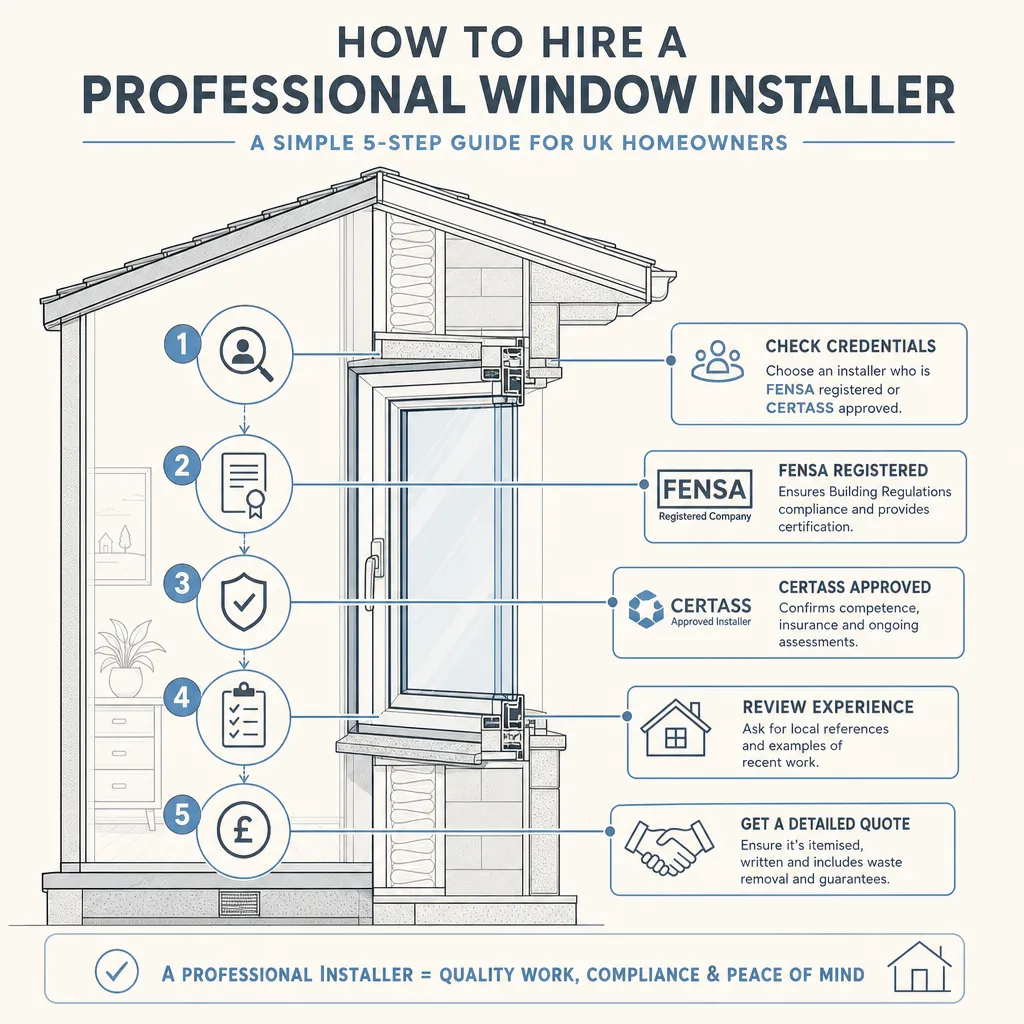
How to Hire a Professional Window Installer
Use a FENSA or CERTASS-registered installer so your window replacement complies with Building Regulations Part L and Part Q and you receive a certificate registered with your local authority.
 Improvement & Build
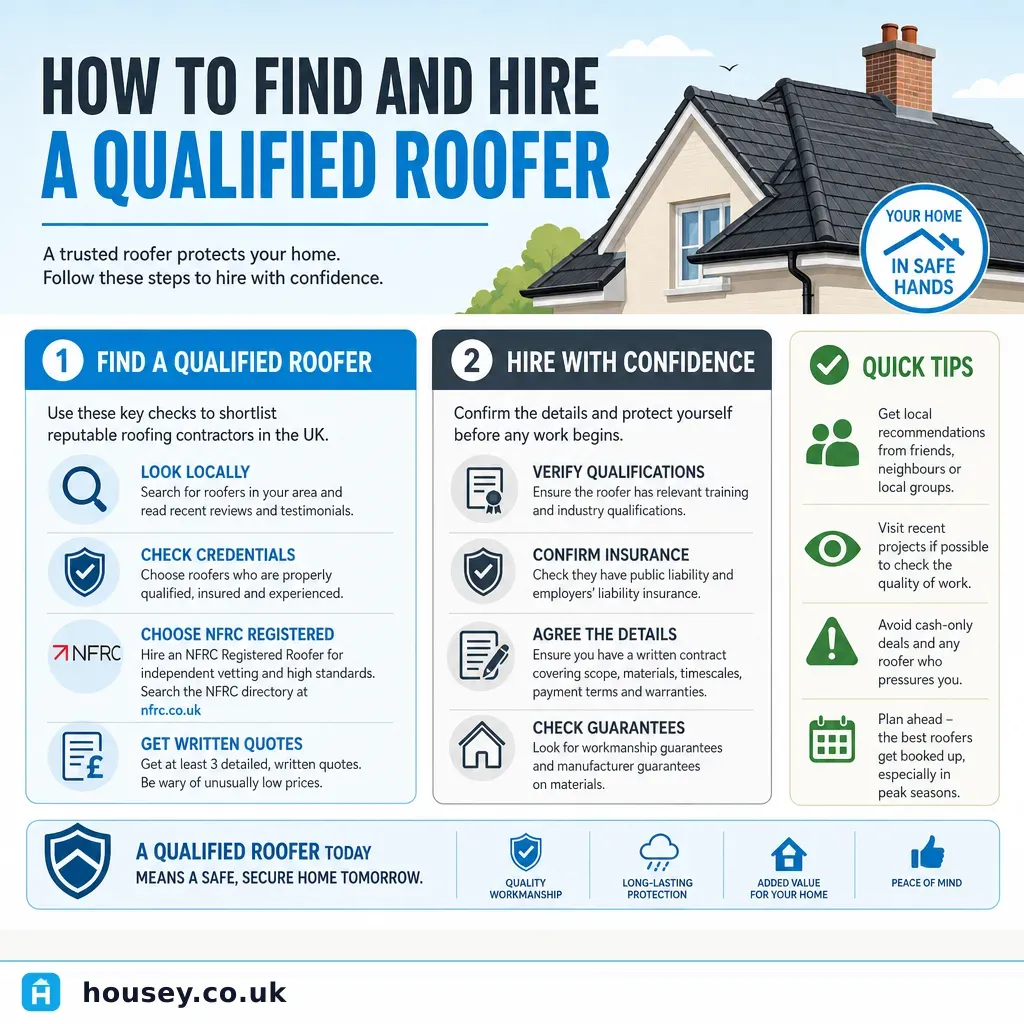
How to Find and Hire a Qualified Roofer
Look for NFRC-registered contractors or TrustMark-verified roofers and verify membership directly on each body's website rather than trusting a logo.
 Improvement & Build
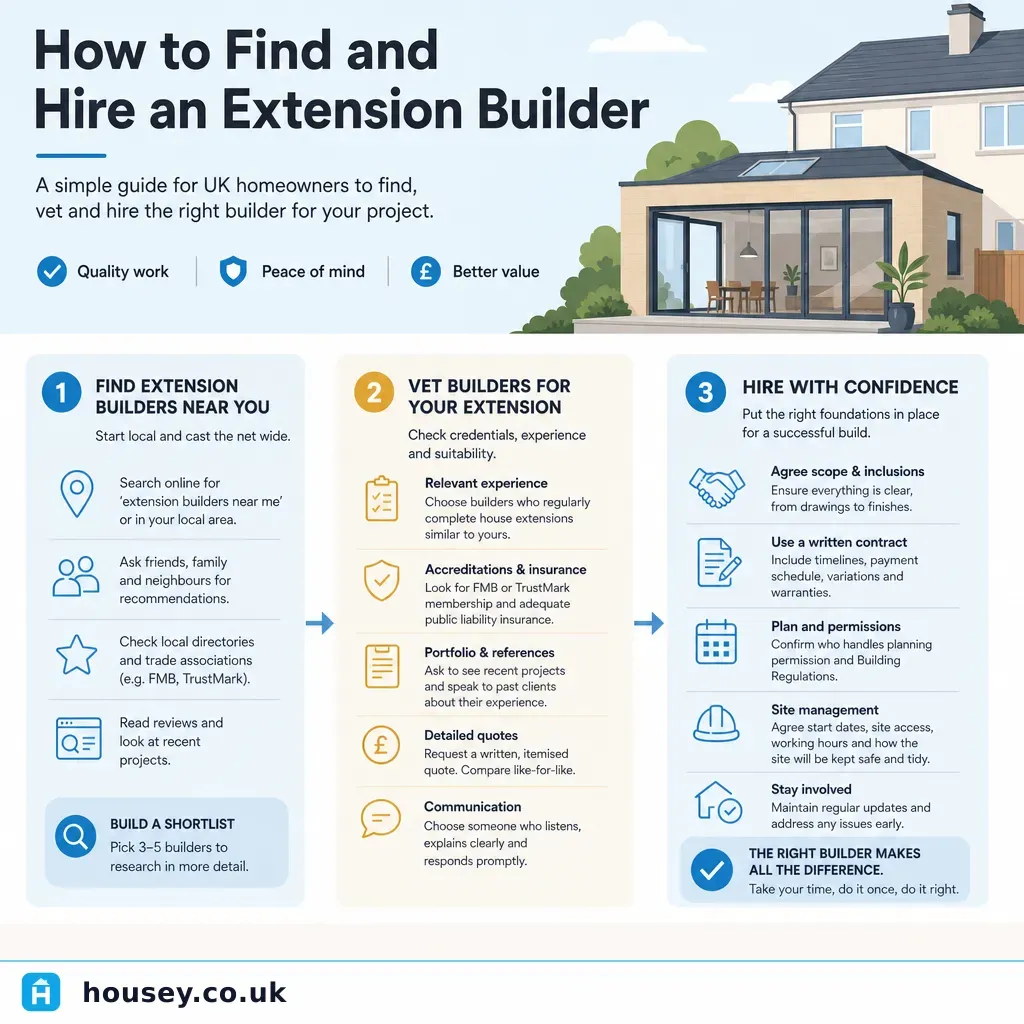
How to Find and Hire an Extension Builder
To hire a reliable extension builder, get at least three detailed written quotes from contractors with documented experience of similar projects.
 Improvement & Build
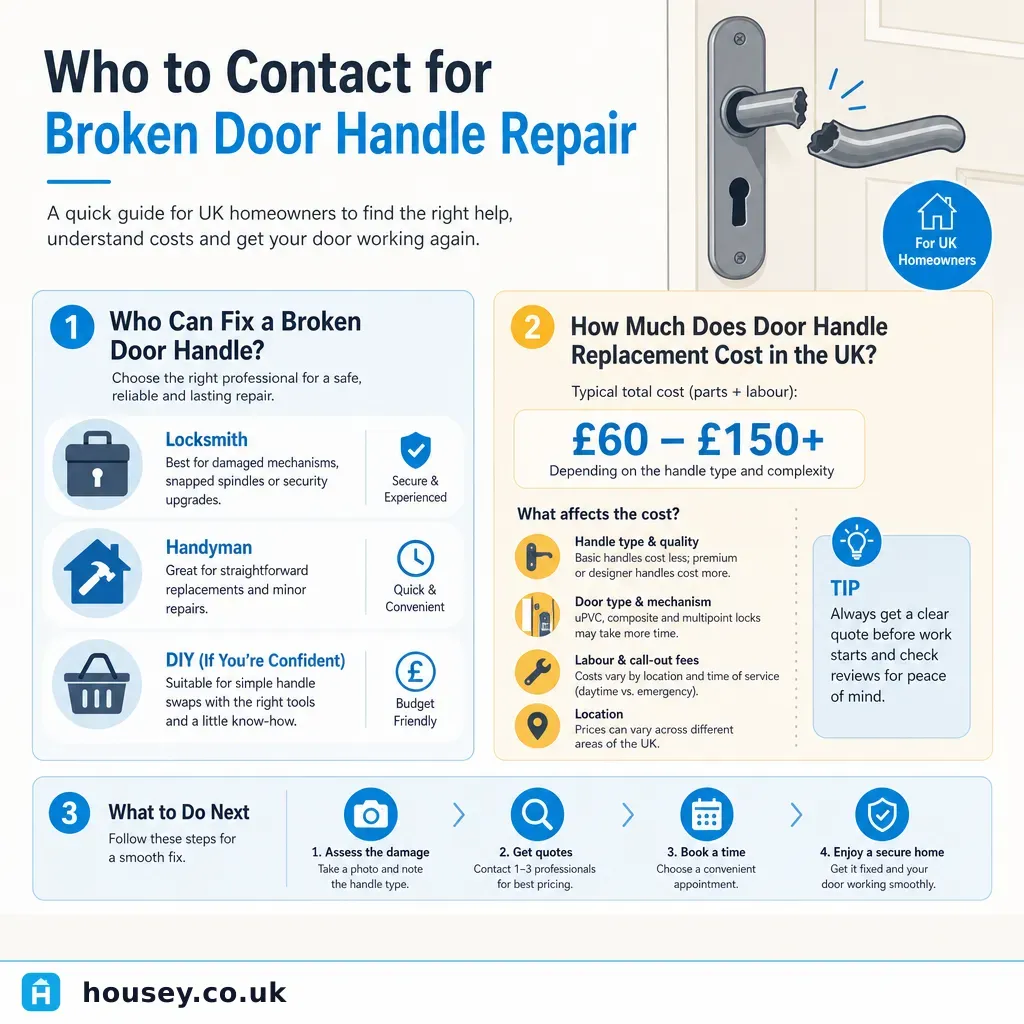
Who to Contact for Broken Door Handle Repair
For a broken door handle, a general handyperson can handle most internal timber door repairs, while a joiner or locksmith is better suited to external doors, particularly if the lock mechanism is affected.
 Improvement & Build
Selecting and Hiring a Remodelling Contractor
Hiring a remodelling contractor starts with a written scope of works and a shortlist of at least three companies registered with TrustMark or the Federation of Master Builders.