How to Hire a Professional Window Installer
By Housey · Last reviewed 18th of May 2026

How to Hire a Professional Window Installer
Window replacement affects your home's thermal performance, security, and character — and in England and Wales it also has a legal dimension that many homeowners overlook until they come to sell. Poorly installed windows can fail building regulations, void warranties, and cause problems during conveyancing. Most homeowners start thinking about this when an energy bill rises noticeably, a persistent draught develops, or condensation begins forming within a double-glazed unit.
Key points
- Replacing windows in England and Wales must comply with Building Regulations Part L (thermal performance, minimum whole-window U-value of 1.4 W/m²K for replacement windows in existing dwellings) and Part Q (security); most professional installers self-certify compliance through FENSA or CERTASS.
- FENSA (Fenestration Self-Assessment Scheme) and CERTASS are the two government-approved competent-person schemes for replacement windows and doors; using a registered installer means compliance is self-certified without a separate building control application.
- FENSA and CERTASS certificates are registered with the relevant local authority and linked to the property address; they must be handed over on sale and missing certificates can delay or complicate conveyancing.
- Listed buildings and properties in conservation areas may require planning permission or listed building consent even for like-for-like window replacements — always check with your local planning authority before ordering.
- Window energy ratings (WER) are assessed by the British Fenestration Rating Council (BFRC); a Band C rating is the minimum typically associated with Part L compliance, but higher-rated units (A or A+) reduce heat loss further.
What scheme membership should a window installer hold?
FENSA and CERTASS are the two competent-person schemes approved by the government for replacement windows and doors in England and Wales. Both allow registered installers to self-certify that their work meets building regulations, removing the need for the homeowner to submit a separate building control application.
FENSA (Fenestration Self-Assessment Scheme) is the larger and longer-established scheme. FENSA-registered companies are assessed annually against technical and customer service standards. Each installation is registered with the relevant local authority and a FENSA certificate is issued to the homeowner.
CERTASS is an alternative approved scheme with broadly equivalent requirements. Some installers hold membership of both.
In Scotland, equivalent self-certification schemes differ — check with your local council for approved routes.
TrustMark registration is an additional quality indicator, particularly useful for larger combined projects involving doors, conservatories, or composite cladding alongside window replacement.
FENSA versus CERTASS: what is the difference?
Scheme | Approved for England & Wales | Annual installer assessment | Certificate registered with local authority | Consumer dispute resolution |
|---|---|---|---|---|
FENSA | Yes | Yes | Yes | Yes (via FENSA complaints process) |
CERTASS | Yes | Yes | Yes | Yes (via CERTASS complaints process) |
For most homeowners, either scheme is acceptable. The more important check is whether the specific installer — not just the company — is currently registered, and whether each individual installation will be formally registered on completion.
How to vet and compare window installers
Verify registration independently. Search the FENSA installer register at fensa.org.uk or the CERTASS member directory at certass.co.uk before instructing any contractor. Registration can lapse, so confirm it is current at the time you are placing an order.
Get at least three written quotes. Window quotes should itemise: the number and specification of units (frame material, glazing type, gas fill, U-value, WER rating), hardware, installation labour, removal and disposal of old frames, and any making-good to internal reveals or external pointing.
Ask about U-values and energy ratings. Cheaper units may meet the minimum Part L threshold but perform no better. Ask each installer to confirm the whole-window U-value and WER Band of the units they are quoting, not just the centre-pane glass U-value.
Check the workmanship warranty. Many manufacturers offer product warranties of 10–20 years on sealed units and frames. The installer's workmanship warranty is separate and typically runs 2–10 years; confirm what it covers and who to contact if problems arise after completion.
Ask who carries out the installation. Some window companies manage the contract but subcontract the physical fit. If subcontractors are used, ask whether they are covered by the same FENSA or CERTASS registration and insurance arrangements.
Homeowner checklist before window installation
What to ask before accepting a quote
- What is the exact whole-window U-value and WER Band for these units?
- Are you currently registered with FENSA or CERTASS, and will this installation be formally registered at completion?
- Will I receive a certificate for each property address covered by the work?
- Who physically carries out the installation — your own employed fitters or subcontractors?
- What product warranty does the manufacturer offer, and what is your separate installer workmanship warranty?
- Does the price include disposal of old frames and full making-good of reveals?
- Is scaffolding or specialist access equipment required for any openings, and if so is it included?
- Is VAT included in the quoted price?
When to get professional help
If your property is listed or in a conservation area, consult your local planning authority or a conservation-accredited architect before ordering, as even an exact like-for-like replacement may require listed building consent. If an installer has completed work you believe does not meet building regulations, contact your local building control authority or the relevant competent-person scheme (FENSA or CERTASS) to raise a formal complaint.
If condensation is forming between the panes of an existing double-glazed unit, this indicates a failed sealed unit rather than a ventilation problem within the room, and may be covered under the product warranty — contact the original installer or manufacturer in the first instance.
How Housey can help
Housey connects homeowners with vetted window and door installers who are registered with FENSA or CERTASS and carry appropriate insurance, helping you obtain comparable quotes and make a confident, informed choice.
Frequently asked questions
Do I need planning permission to replace windows in the UK?
In most cases, replacing windows in England and Wales does not require planning permission and is treated as permitted development. However, if your property is listed, in a conservation area, or subject to an Article 4 direction removing permitted development rights, you may need consent even for like-for-like replacements. Always check with your local planning authority if you are unsure before ordering.
What is the minimum U-value for replacement windows under UK building regulations?
Under Approved Document L (2021 edition) for England, replacement windows in existing dwellings must achieve a whole-window U-value of no more than 1.4 W/m²K. This is the minimum threshold — many modern double-glazed and triple-glazed units perform significantly better. Your installer should confirm the rated whole-window U-value of the units they are supplying before you commit.
What is a FENSA certificate and why does it matter?
A FENSA certificate confirms that a window or door replacement has been installed to building regulations standards by a FENSA-registered contractor and has been registered with the local authority. It is linked to the property address. When you sell, your conveyancer will typically ask for FENSA certificates for window or door work done since 1 April 2002; missing certificates can delay conveyancing or require an indemnity policy.
Can I install my own windows without a registered installer?
You may replace your own windows, but you must either apply for building control approval through your local authority or use a FENSA or CERTASS-registered installer who can self-certify compliance. Self-installing without either route means the installation is not building-regulations compliant, which can affect your property's insurability and cause complications when you come to sell.
Sources and further reading
- FENSA: find a registered installer — FENSA
- CERTASS: find a member — CERTASS
- Approved Document L: Conservation of Fuel and Power — GOV.UK
- Approved Document Q: Security — GOV.UK
- Planning Portal: windows guidance — Planning Portal
Useful next reads
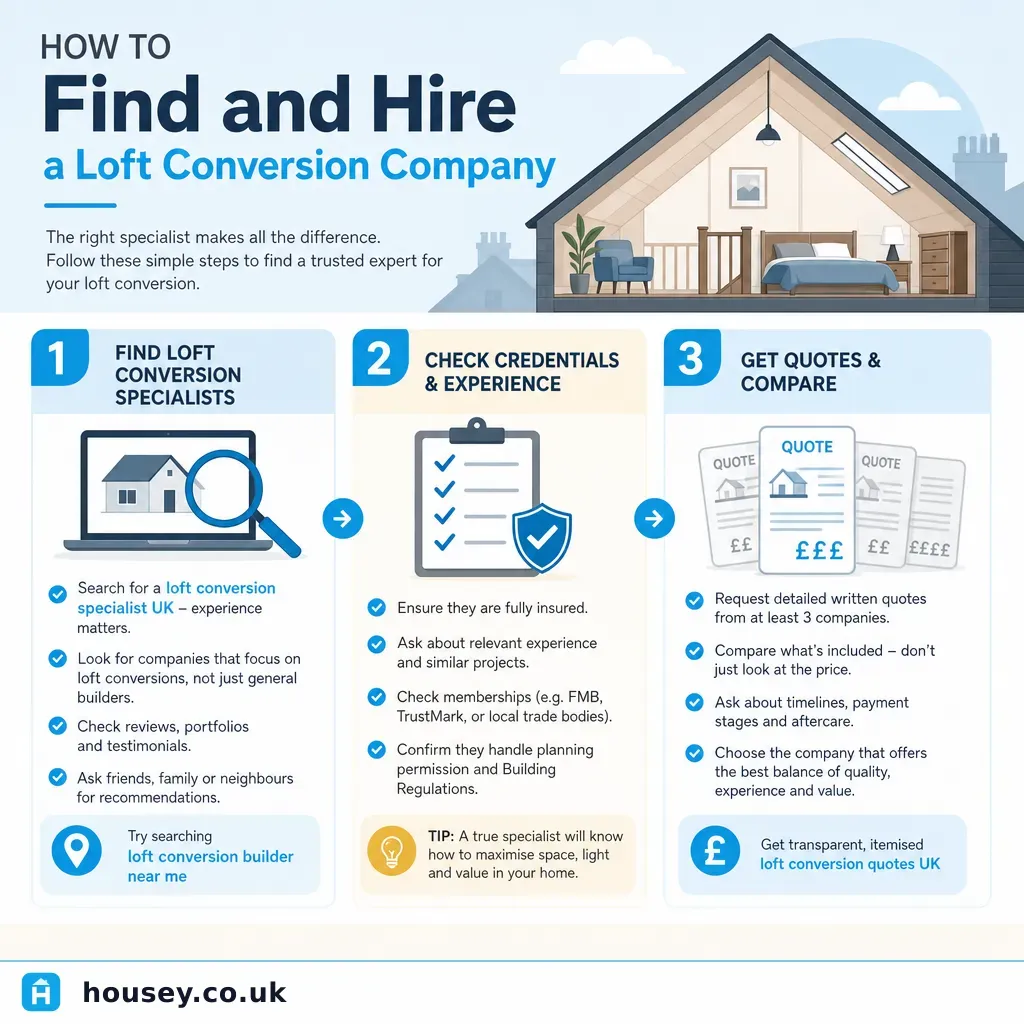 Improvement & Build
How to Find and Hire a Loft Conversion Company
To hire a loft conversion company, get at least three quotes from TrustMark-registered or FMB-member firms.
 Improvement & Build
How to Find and Hire a Qualified Roofer
Look for NFRC-registered contractors or TrustMark-verified roofers and verify membership directly on each body's website rather than trusting a logo.
 Improvement & Build
Selecting and Hiring a Remodelling Contractor
Hiring a remodelling contractor starts with a written scope of works and a shortlist of at least three companies registered with TrustMark or the Federation of Master Builders.
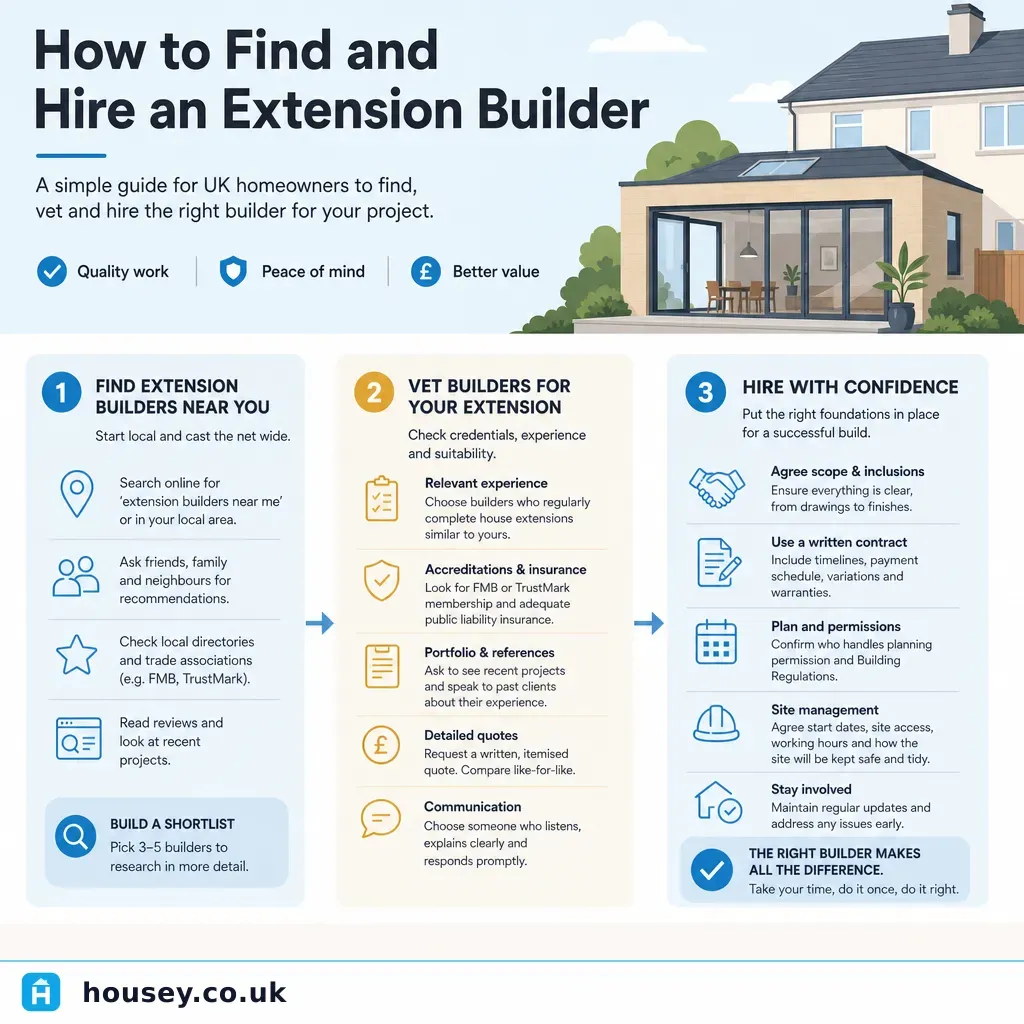 Improvement & Build
How to Find and Hire an Extension Builder
To hire a reliable extension builder, get at least three detailed written quotes from contractors with documented experience of similar projects.
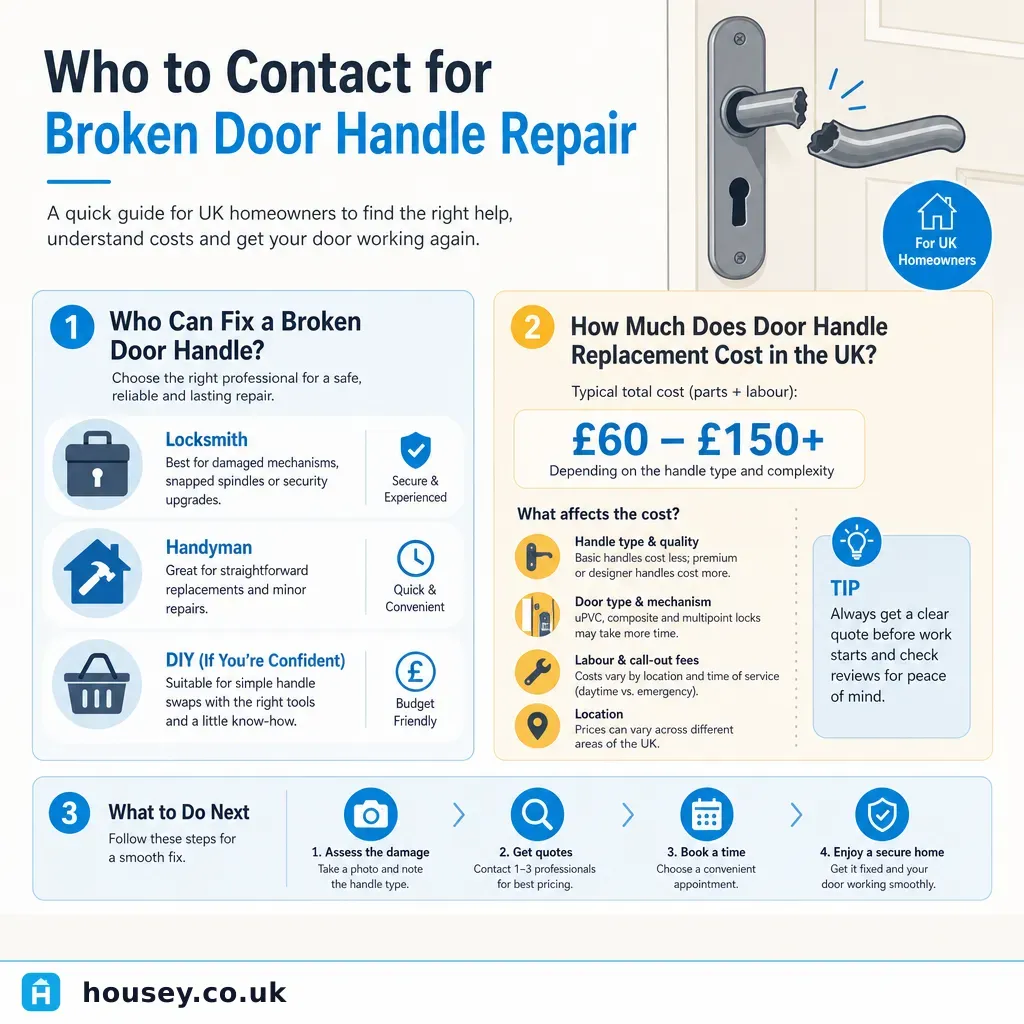 Improvement & Build
Who to Contact for Broken Door Handle Repair
For a broken door handle, a general handyperson can handle most internal timber door repairs, while a joiner or locksmith is better suited to external doors, particularly if the lock mechanism is affected.