Hybrid Heat Pump System Installation Costs in the UK
By Housey · Last reviewed 7th of May 2026
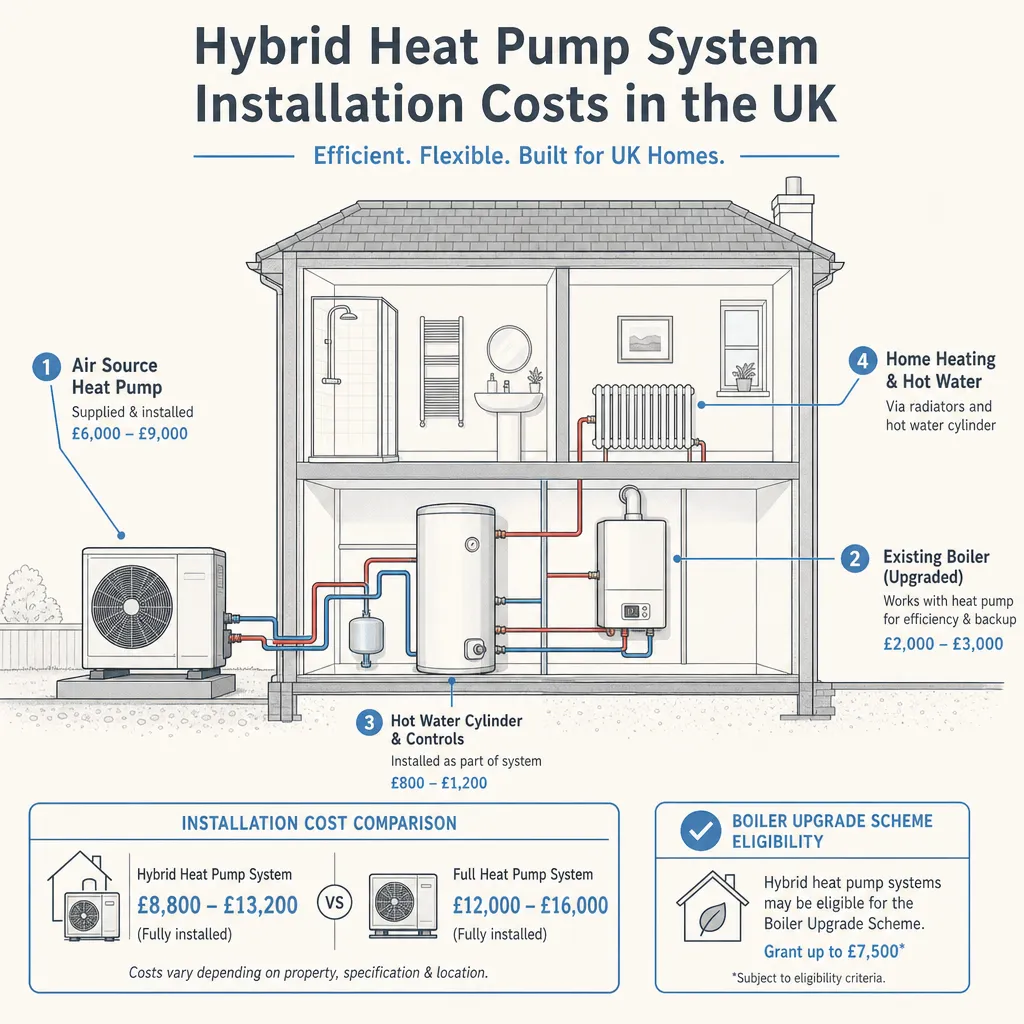
Hybrid Heat Pump System Installation Costs in the UK
Hybrid heat pumps — systems that pair an air source heat pump with an existing gas boiler — are attracting growing interest from UK homeowners seeking to reduce gas consumption without committing to a full heat-pump-only system. Because hybrid installations sit at the intersection of MCS certification requirements, potential grant funding, heat pump sizing calculations, and building regulations, the cost picture involves more variables than a straightforward boiler replacement. Understanding what drives the price — and what questions to ask before signing a contract — is essential before committing to any installer.
Key points
- A hybrid heat pump system typically costs £4,000–£10,000 installed, depending on property size, existing radiator compatibility, and whether a new hot water cylinder is required (indicative UK costs, last reviewed 2026-05-07).
- The Boiler Upgrade Scheme (BUS), administered by Ofgem, offers a £7,500 grant toward eligible air source heat pump installations in England and Wales; confirm current hybrid eligibility directly with your MCS-certified installer and via GOV.UK, as scheme rules are subject to change.
- All heat pump installations claiming BUS grant funding must be carried out by an MCS-certified installer registered with the scheme.
- Heat pump output must be calculated using a room-by-room heat loss assessment — under- or over-sizing affects both efficiency and comfort, and a reputable installer will always provide this in writing.
- PAS 2035:2023 is the UK standard for domestic retrofit; it may apply to your project depending on the funding route, and a qualified retrofit coordinator can advise whether it is required in your case.
What is a hybrid heat pump system?
A hybrid heat pump pairs an air source heat pump (ASHP) with your existing gas boiler. The two systems share the heating load: the heat pump handles most space heating and hot water at moderate outdoor temperatures, while the gas boiler provides top-up heat during colder periods or peak demand. A smart controller switches between the two based on outdoor temperature, efficiency, and energy costs.
This approach suits homes that are not yet fully optimised for a heat-pump-only system — for example, properties with radiators sized for higher boiler flow temperatures, or households in areas where current electricity tariffs make full electrification less economical. It is often described as a stepping-stone approach to decarbonising home heating.
What affects hybrid heat pump installation costs?
Several property-specific factors determine the final installed price. A site survey by a qualified installer is necessary before any accurate quote can be given.
Cost factor | Lower cost scenario | Higher cost scenario |
|---|---|---|
Property size | Small terrace or flat (under 80 m²) | Larger detached home (over 150 m²) |
Radiator compatibility | Modern radiators adequate at lower flow temps | Multiple radiator upgrades required |
Hot water cylinder | Existing compatible cylinder in place | New unvented cylinder required |
Pipework and controls | Minimal new runs needed | Extensive pipework changes or rewiring |
Heat pump unit size | 5–7 kW for a small property | 10–14 kW for a larger property |
Outdoor unit positioning | Straightforward wall or ground mount | Restricted access or long refrigerant line runs |
Indicative UK cost factors, last reviewed 2026-05-07. Always obtain at least three quotes from MCS-certified installers.
Indicative cost breakdown
The following ranges are indicative only. Your actual costs will be determined by a site-specific heat loss assessment and written quotes from qualified installers.
- Air source heat pump unit (5–12 kW): £1,500–£3,500
- Installation labour: £1,500–£4,000
- Hot water cylinder, if required: £500–£1,200
- Radiator upgrades, if required: £150–£400 per radiator
- Smart controls and thermostat: £200–£600
- Typical total range: £4,000–£10,000+, before any BUS grant deductions
Source: Energy Saving Trust indicative cost ranges. Costs vary by location, installer, and property. Indicative UK costs, last reviewed 2026-05-07.
The Boiler Upgrade Scheme and hybrid systems
The Boiler Upgrade Scheme (BUS), administered by Ofgem, provides grants to homeowners in England and Wales replacing fossil fuel heating with low-carbon alternatives. As of early 2026, the grant for air source heat pumps stands at £7,500. Eligibility for hybrid configurations — where the gas boiler is retained — depends on the specific system design and current scheme rules.
Before proceeding, confirm your eligibility directly with your MCS-certified installer and check the current GOV.UK guidance. Scheme rules and grant amounts have changed previously and may change again. Key conditions that typically apply:
- The installer must be MCS-certified and registered with the BUS scheme.
- Your property must have a valid EPC (Energy Performance Certificate).
- Outstanding recommendations for loft or cavity wall insulation on the EPC must generally be addressed before a grant can be claimed.
- The property must not have received a BUS grant previously.
Is your home ready for a hybrid heat pump?
Before specifying a system, work through this checklist with an independent professional:
Homeowner readiness checklist
- Has a room-by-room heat loss calculation been carried out for your property?
- Are your radiators large enough to deliver adequate heat at the lower flow temperatures (typically 45–55°C) that heat pumps prefer?
- Is there a suitable location for an outdoor unit with adequate airflow clearance on sides and rear?
- Does your property have a hot water cylinder, or is there space to install one?
- Has an independent retrofit assessment identified insulation improvements that should be completed first?
- Is your electrical supply adequate — some installations require an upgraded consumer unit or dedicated circuit?
- Have you confirmed your tenure allows external unit installation (particularly important for leaseholders)?
A "yes" to every item above does not guarantee suitability — a qualified installer must assess your specific property before any system is specified.
Important limitations
This article is general information only and does not constitute technical, financial, or regulatory advice. Heat pump sizing, grant eligibility, and system design depend on property-specific factors that cannot be assessed from a guide. The Boiler Upgrade Scheme rules, grant amounts, and qualifying criteria are determined by the government and Ofgem and are subject to change. Always consult an MCS-certified installer and verify current scheme conditions via GOV.UK before entering any contract.
Whether PAS 2035:2023 applies to your retrofit project depends on the funding route and scope of works. A qualified retrofit coordinator or energy consultant can advise on whether a full PAS 2035 assessment is required in your case.
What to ask a qualified professional
Before instructing any installer, ask:
- What is your MCS certification number, and can I verify it on the MCS database?
- How was the recommended heat pump size calculated — can I see the written heat loss assessment?
- Which radiators, if any, will need upgrading, and what is the cost and reason for each?
- Is my property eligible for the Boiler Upgrade Scheme grant, and will you manage the application on my behalf?
- At what flow temperature will the system operate, and what are the projected running costs at current energy tariffs?
- What manufacturer warranty applies to the heat pump unit, and what does your workmanship guarantee cover?
- How will the hybrid controller decide when to use the heat pump versus the gas boiler?
- If the heat pump develops a fault, will my boiler continue to provide heating independently?
- Is VAT included in your quote, and are there any costs that could change after installation begins?
When to get professional help
Seek independent advice — separate from any installer with a commercial interest in selling you a system — if:
- You have been quoted a heat pump size without receiving a written heat loss calculation.
- You are uncertain whether insulation improvements should come before or alongside a heat pump installation.
- You have received widely varying quotes and are unsure which specification is correct.
- Your property is in a conservation area or is a listed building, where external unit placement may require planning permission or listed building consent.
- You are a leaseholder and have not yet confirmed that your lease and freeholder permit external alterations.
How Housey can help
Housey can connect you with qualified professionals for both independent assessment and installation. A heat pump survey will assess your property's suitability, calculate the correct system size, and identify any preparatory works needed before installation. An energy-efficiency consultant can advise on how a hybrid heat pump fits within a whole-house retrofit plan and whether other measures — insulation, solar PV, battery storage — should be prioritised first.
Frequently asked questions
Does a hybrid heat pump reduce my gas bill?
In most cases, yes — the heat pump handles the majority of heating load, reducing gas consumption. The actual saving depends on your electricity and gas tariffs, how well the system is sized and configured, and your home's insulation level. An MCS-certified installer should be able to model indicative savings for your specific property based on a heat loss assessment.
Do I need to replace my radiators for a hybrid heat pump system?
Not always. Because the gas boiler provides top-up heat at higher flow temperatures when needed, hybrid systems are generally more tolerant of existing radiators than heat-pump-only installations. However, upgrading undersized radiators increases the proportion of heat the pump delivers, improving overall efficiency. Your installer should assess each room's heat emitters as part of the design process.
How long does hybrid heat pump installation take?
Most hybrid heat pump installations take one to three days, depending on complexity. If additional works such as radiator upgrades or a new hot water cylinder are needed, allow longer. Discuss phasing with your installer and confirm the full scope in writing before work begins.
Is a hybrid heat pump suitable for a flat?
Hybrid systems require an outdoor unit mounted externally. In a flat, this may require consent from the freeholder or management company, and planning permission may be needed in some cases — particularly in conservation areas or on listed buildings. Check your lease, consult your freeholder, and contact your local planning authority before proceeding.
Sources and further reading
- Boiler Upgrade Scheme: check if you're eligible — GOV.UK
- Boiler Upgrade Scheme guidance — Ofgem
- Air source heat pumps — Energy Saving Trust
- Find an MCS certified installer — MCS Certified
- PAS 2035:2023 Retrofitting dwellings for improved energy efficiency — BSI Group
Useful next reads
 Energy & Retrofit
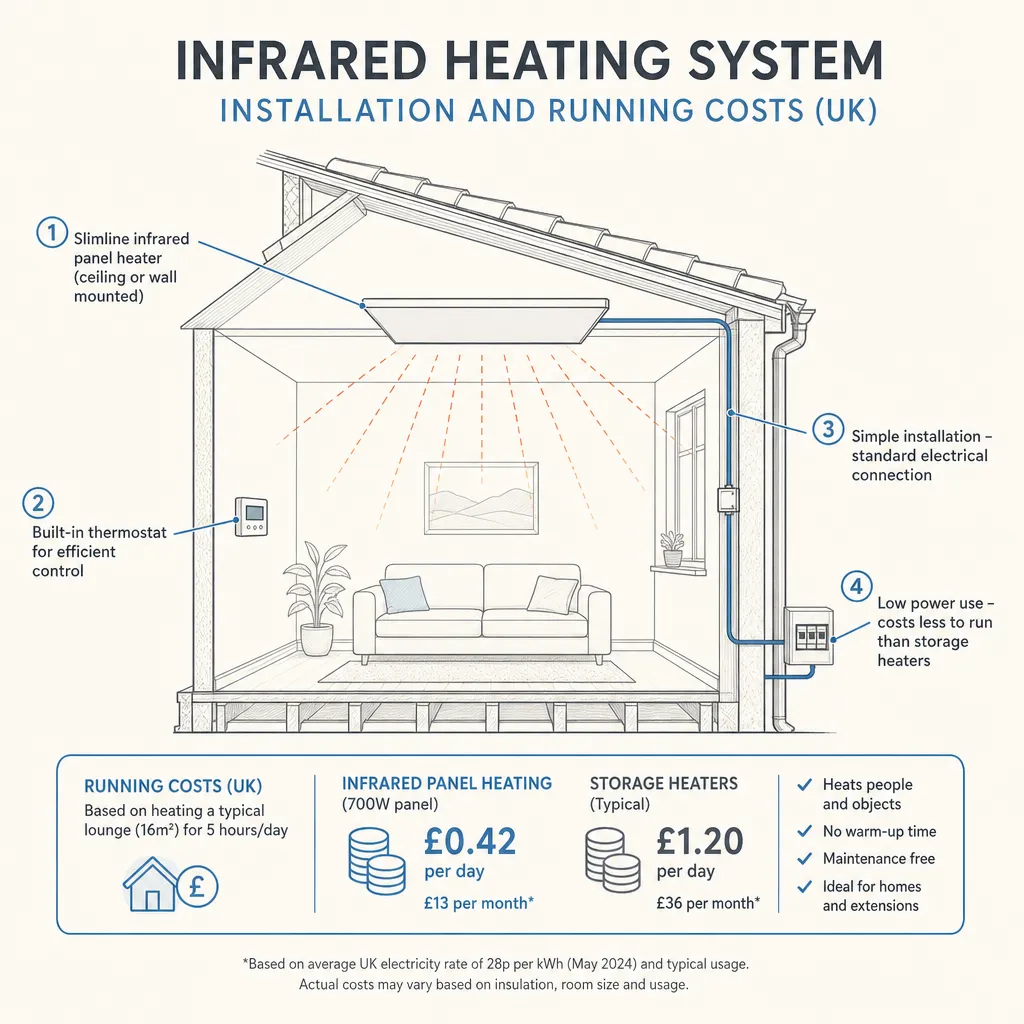
Infrared Heating System Installation and Running Costs
Infrared heating panels supply heat through radiant energy rather than warming air, making them efficient in well-insulated spaces.
 Energy & Retrofit
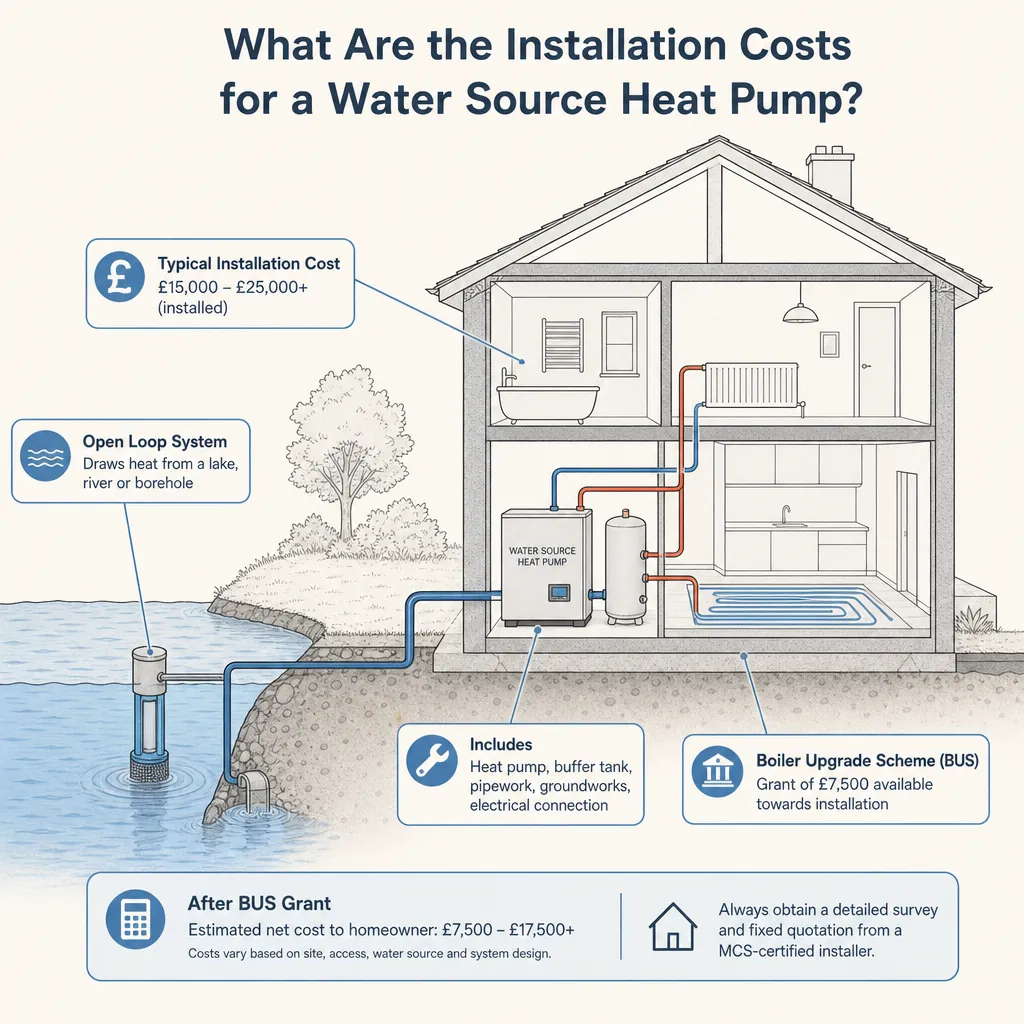
What Are the Installation Costs for a Water Source Heat Pump?
Water source heat pump installation in the UK typically costs £15,000–£45,000, depending on system type (open-loop or closed-loop), required heat output, and site complexity.
 Energy & Retrofit
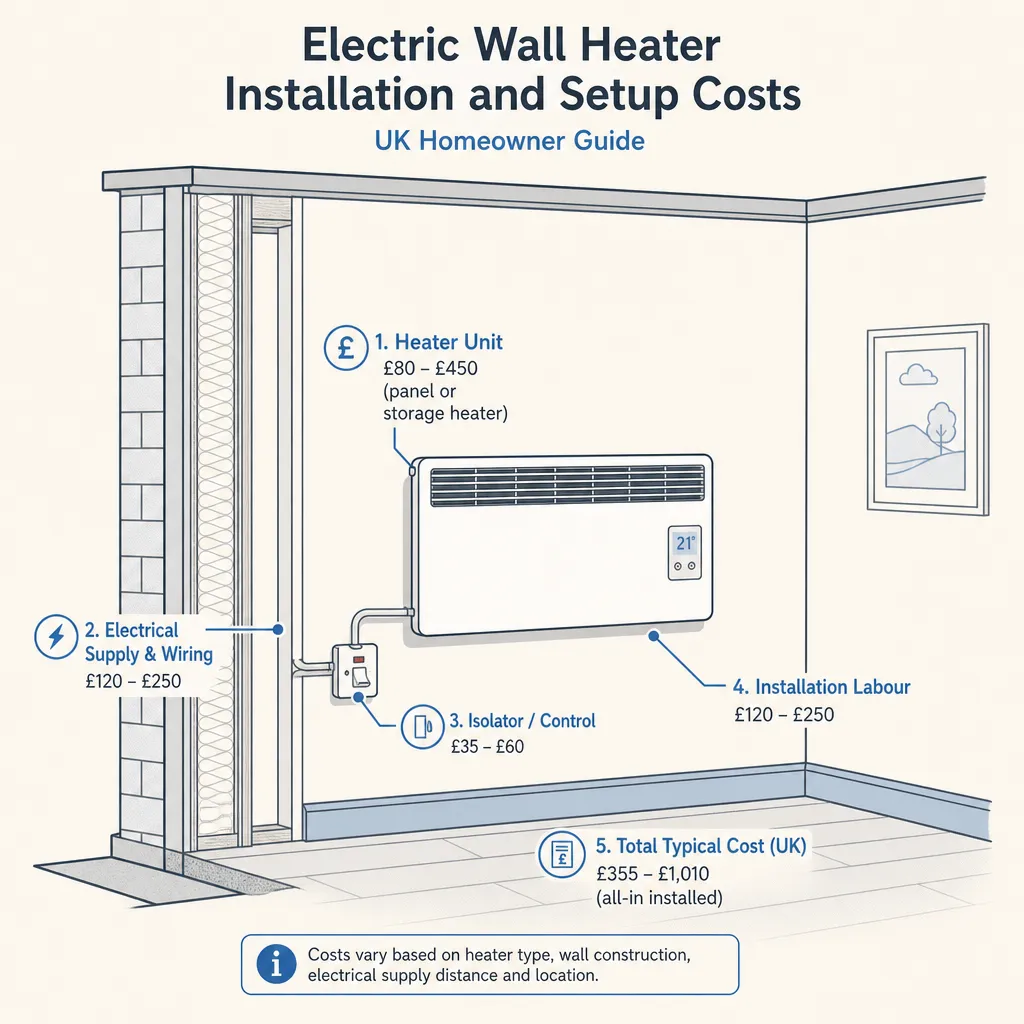
Electric Wall Heater Installation and Setup Costs
Electric wall heater installation in the UK typically costs £150–£350 per unit for a panel heater, plus £100–£250 if a new spur or circuit is needed.
 Energy & Retrofit
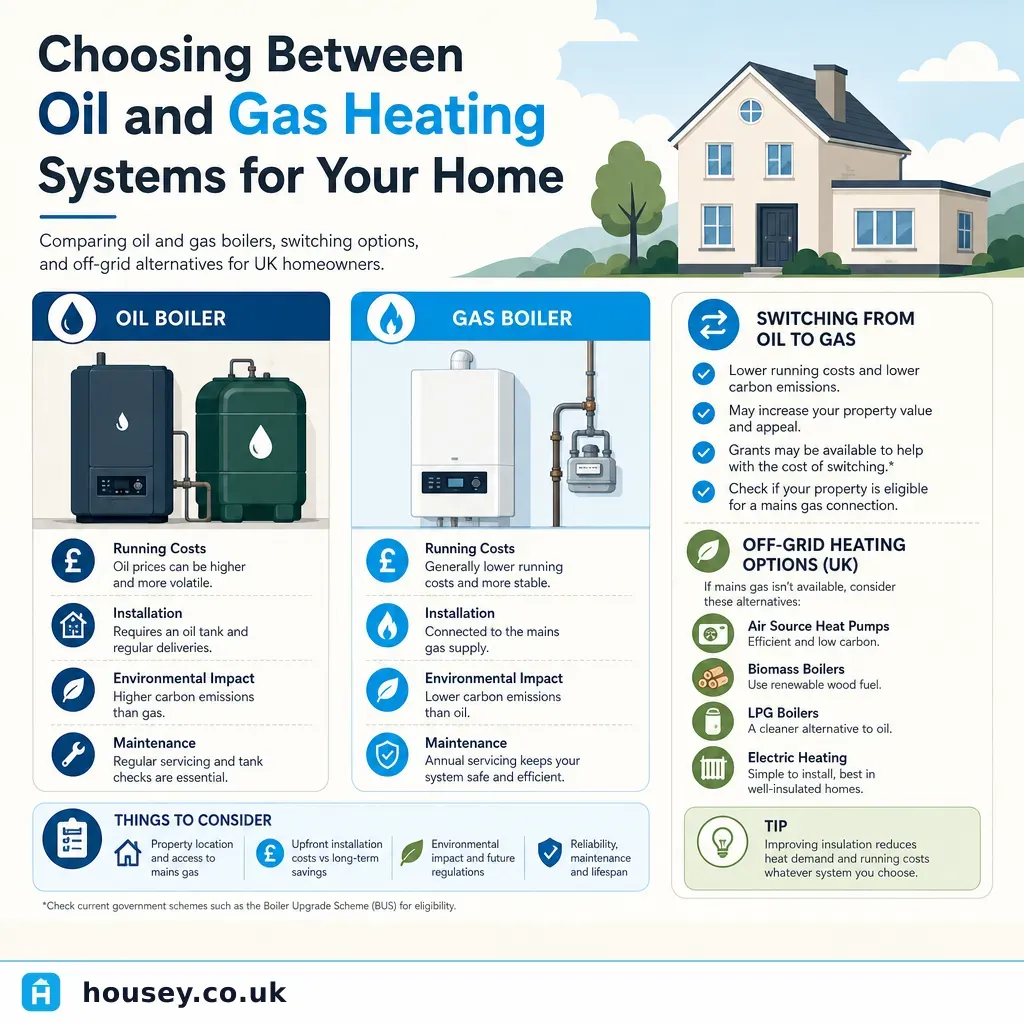
Choosing Between Oil and Gas Heating Systems for Your Home
Oil central heating suits rural UK properties without mains gas access, while gas remains the default for connected homes.
 Energy & Retrofit
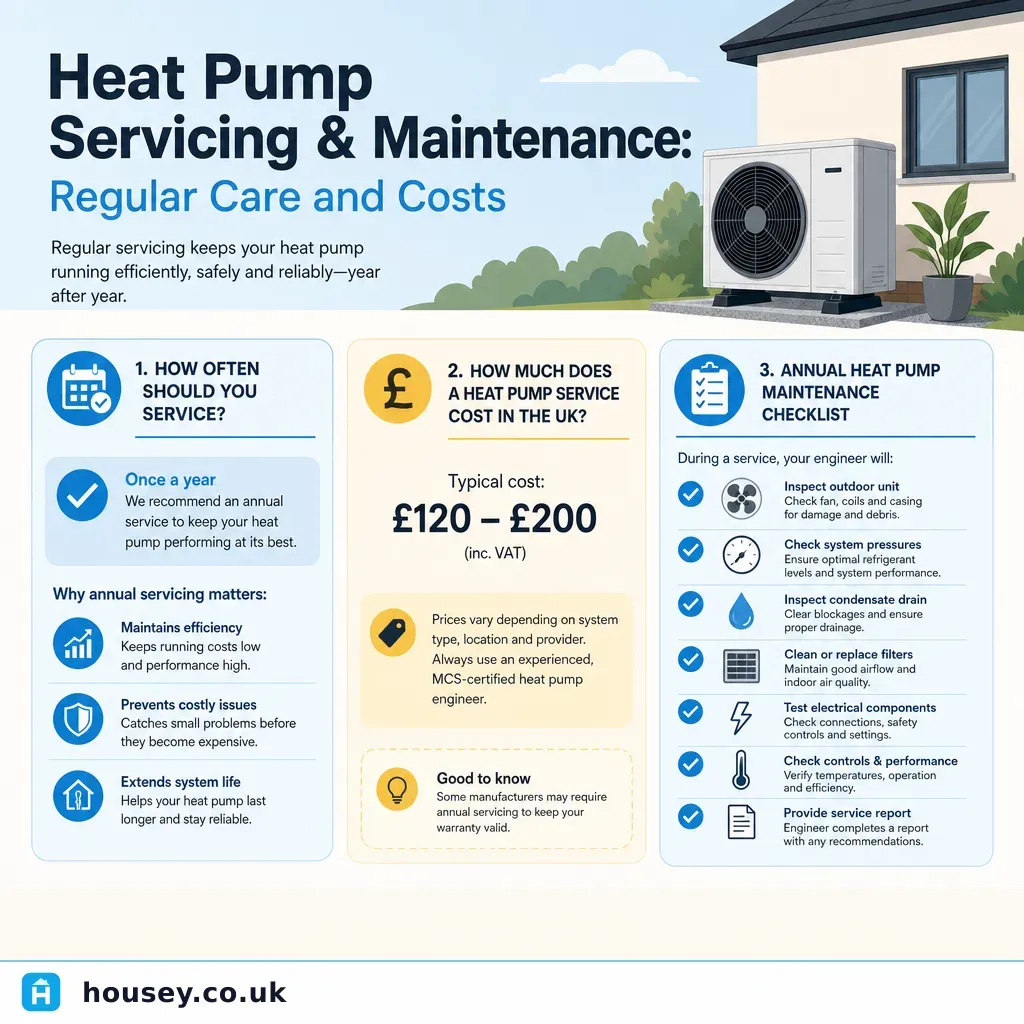
Heat Pump Servicing and Maintenance: Regular Care and Costs
Heat pumps should be serviced by a qualified engineer once a year; most manufacturers require this to keep the warranty valid.