Infrared Heating System Installation and Running Costs
By Housey · Last reviewed 7th of May 2026
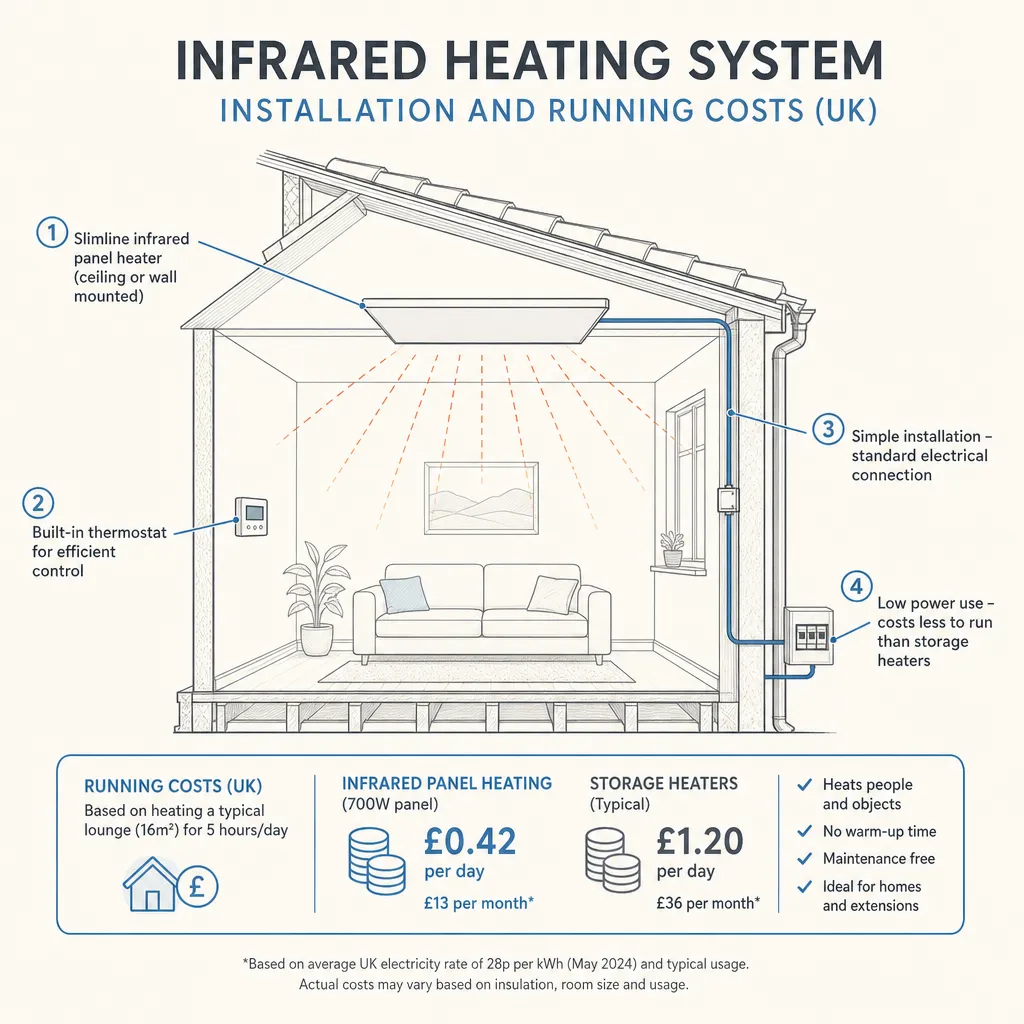
Infrared Heating System Installation and Running Costs
Infrared heating is increasingly promoted as an alternative to gas central heating for UK homeowners who cannot install a heat pump or want to avoid full boiler replacement. The question typically arises when a boiler reaches end of life, when a property has no gas supply, or during a retrofit where the building fabric has already been well insulated. Realistic cost figures — both to install and to run — look very different from the headlines on supplier websites.
Key points
- Infrared panels run entirely on electricity; there is no gas supply, flue, or boiler involved, and plug-in models require no formal installation.
- Hardwired infrared panels must be installed by a qualified electrician registered with NICEIC, NAPIT, or a similar competent-person scheme under Part P of the Building Regulations.
- At an indicative electricity unit rate of approximately 24p/kWh, a 600W panel running eight hours a day costs around £1.15 per day — roughly £35 per month; check Ofgem for the current price cap unit rate.
- Infrared panels do not qualify for the Boiler Upgrade Scheme (BUS); that grant covers air source heat pumps, ground source heat pumps, and biomass boilers only.
- A whole-house system for a typical three-bedroom semi-detached home may require 3,000–5,000W of total panel capacity, typically costing £2,000–£6,000 installed.
How infrared heating works
Infrared panels emit long-wave radiant heat that warms solid objects — walls, floors, furniture, and people — directly, rather than heating the air in a convective loop. Because radiant warmth is perceived at lower air temperatures than convective heating, proponents argue infrared can feel comfortable at a lower thermostat setting.
Whether this reduces bills depends heavily on insulation quality, electricity tariff, and zoning discipline. In a poorly insulated property, any electric heating system will cost more to run than gas central heating.
Installation costs
Indicative UK costs, last reviewed 2026-05-07.
Installation type | Typical cost range |
|---|---|
Single plug-in panel (DIY) | £100–£350 (panel only) |
Single hardwired panel (panel + electrician) | £200–£750 per panel |
Whole-house system, 3-bed semi | £2,000–£6,000 |
Smart thermostat per zone (optional) | £50–£150 per zone |
Key cost drivers:
- Panel wattage and quantity: Installers often cite 60–80W per square metre for a well-insulated room, though ceiling height, glazing, and fabric quality all affect the figure.
- Electrical circuit upgrades: A consumer unit with no spare ways may need additional circuits before installation, adding cost.
- Property age and access: Solid-wall properties or those with limited ceiling void access increase cable-run labour.
Hardwired installations must be notified under Part P. A registered competent-person electrician self-certifies; using an unregistered contractor means a separate building control notification and inspection fee.
Running costs compared
Electricity costs roughly three times more per unit of heat delivered than gas through a modern boiler at approximately 90% efficiency. The table below uses indicative rates — always check the Ofgem website for the current price cap figures.
Heating system | Approximate cost per kWh of heat | Notes |
|---|---|---|
Gas boiler (90% efficient) | ~7.8p | Based on ~7p/kWh gas unit rate |
Air source heat pump (COP 2.5–3) | ~8–10p | Based on ~24p/kWh electricity |
Infrared panel (100% efficient) | ~24p | Direct electric conversion |
Storage heater (Economy 7 off-peak) | ~11–14p | Depends on off-peak tariff |
Indicative UK costs, last reviewed 2026-05-07. Verify current unit rates at Ofgem before making comparisons.
Infrared is competitive in running cost only where electricity tariffs are unusually low, panels are used sparingly in well-controlled zones, or insulation quality is exceptional.
When infrared heating may make sense
- Choose infrared panels if: the property has no gas supply, is well insulated (EPC Band B or above), you need supplementary heat in one or two rooms, or you are heating an outbuilding or extension where running pipework is impractical.
- Consider a heat pump instead if: you need whole-house heating and the property is well insulated — heat pumps deliver 2.5–4 units of heat per unit of electricity consumed.
- Stick with gas central heating if: the property is on the gas grid and the boiler is serviceable — gas remains cheaper per unit of heat at current UK tariffs.
- Ask an energy-efficiency consultant if: you are unsure which system matches your insulation level, building fabric, or budget, especially if wider retrofit works are planned.
What to ask before buying an infrared system
- What total wattage does the supplier recommend per room, and what calculation method underlies that figure?
- Are panels third-party tested for safety (CE or UKCA marking)?
- What thermostat and zone control is included, and does it integrate with a smart home system?
- What is the warranty period — panels often carry 5–10 year manufacturer warranties?
- Will your consumer unit support additional hardwired circuits without an upgrade?
- Does the installer hold NICEIC, NAPIT, or equivalent registration for Part P work?
When to get professional help
- Electrical capacity: An electrician should assess the consumer unit before you purchase a whole-house system.
- Heat loss calculation: A supplier's rule of thumb is not a substitute for a proper heat loss assessment; an energy-efficiency consultant or retrofit assessor can size the system accurately.
- Listed buildings or conservation areas: Discuss heating system changes with your local planning authority or a heritage consultant before work starts.
- Rented properties: Landlords must meet Minimum Energy Efficiency Standards (MEES) obligations; an energy-efficiency professional can confirm compliance.
How Housey can help
If you want independent advice on whether infrared heating is right for your home, Housey can connect you with energy-efficiency consultants who can assess your property's insulation, heat demand, and tariff options. For broader retrofit compliance questions, energy and sustainability compliance specialists can advise on MEES, EPC ratings, and grant eligibility.
Frequently asked questions
Is infrared heating cheaper to run than storage heaters?
At standard electricity tariffs, both storage heaters and infrared panels cost the same per unit of heat. Storage heaters on an Economy 7 tariff can be cheaper overnight, but the saving depends on how much of your heating falls during off-peak hours. Infrared panels offer more precise zone control, which can reduce waste if used carefully.
Do infrared panels need planning permission or building regulations approval?
Plug-in infrared panels require neither planning permission nor building regulations approval. Hardwired panels fall under Part P of the Building Regulations; you need either a registered competent-person electrician who self-certifies, or a building control notification. Planning permission is not generally required for internal heating changes unless the property is listed.
Can infrared heating replace a boiler entirely?
It can in theory, but it is rarely cost-effective as a like-for-like boiler replacement in a typical UK gas-connected home. Electricity costs significantly more per unit of heat than gas at current UK tariffs. Infrared works best as supplementary heating, for rooms without radiators, or in properties with no gas connection and very good insulation.
How long do infrared panels last?
Most quality infrared panels carry manufacturer warranties of 5–10 years. The panels have few moving parts and often last 20 or more years if not physically damaged. Thermostats and control units are more likely to require replacement over time. Check warranty terms before purchasing, as they vary between manufacturers.
Does infrared heating affect indoor air quality?
Infrared does not circulate air, so it does not redistribute dust in the same way as convective heating or fan heaters. Proponents suggest this benefits allergy sufferers, though independent clinical evidence is limited. Proper ventilation remains important for moisture control regardless of heating type.
Sources and further reading
- Ofgem energy price cap — Ofgem
- Boiler Upgrade Scheme (BUS) — GOV.UK
- Approved Document P: Electrical safety in dwellings — GOV.UK
- Energy Saving Trust: Air source heat pumps — Energy Saving Trust
- MEES landlord guidance — GOV.UK
Useful next reads
 Energy & Retrofit
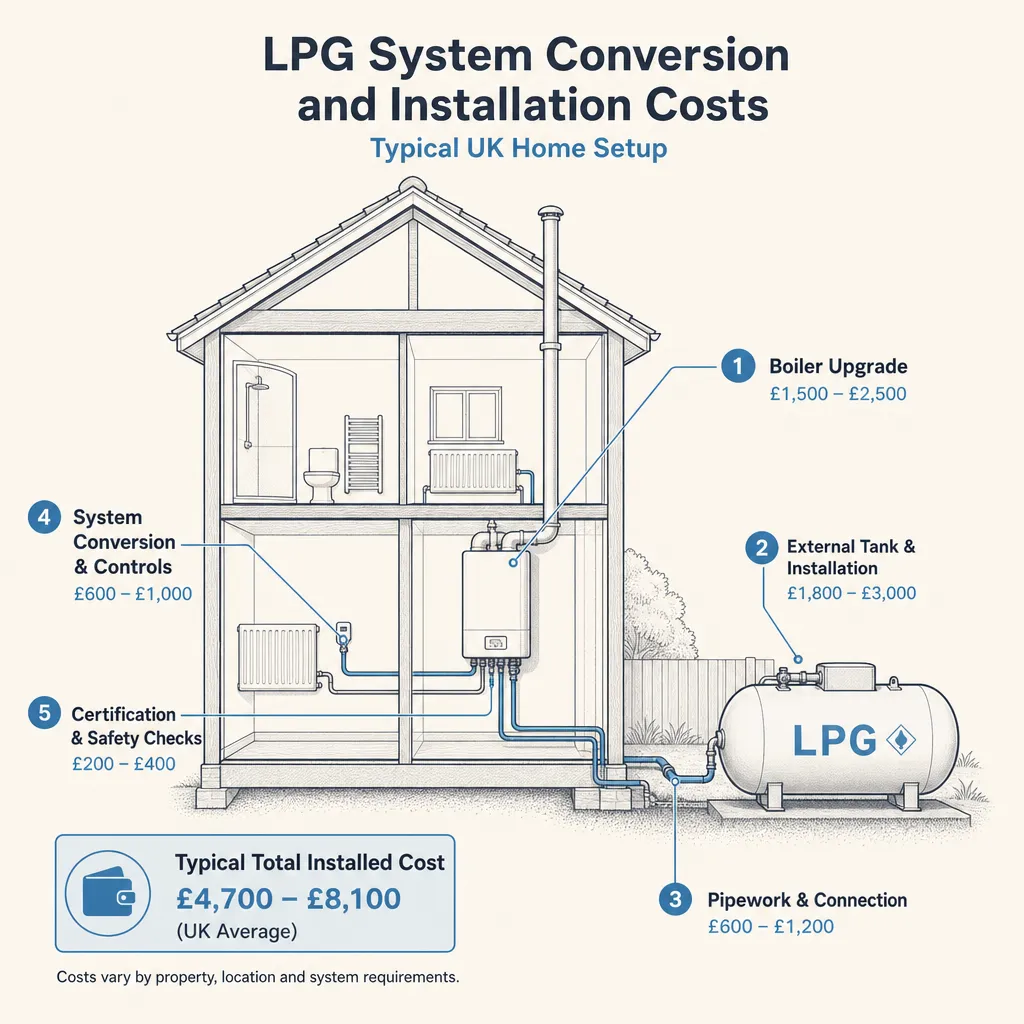
LPG System Conversion and Installation Costs
Converting a UK property to LPG typically costs £3,500–£10,000, covering a new LPG-compatible boiler, pipework, and tank installation.
 Energy & Retrofit
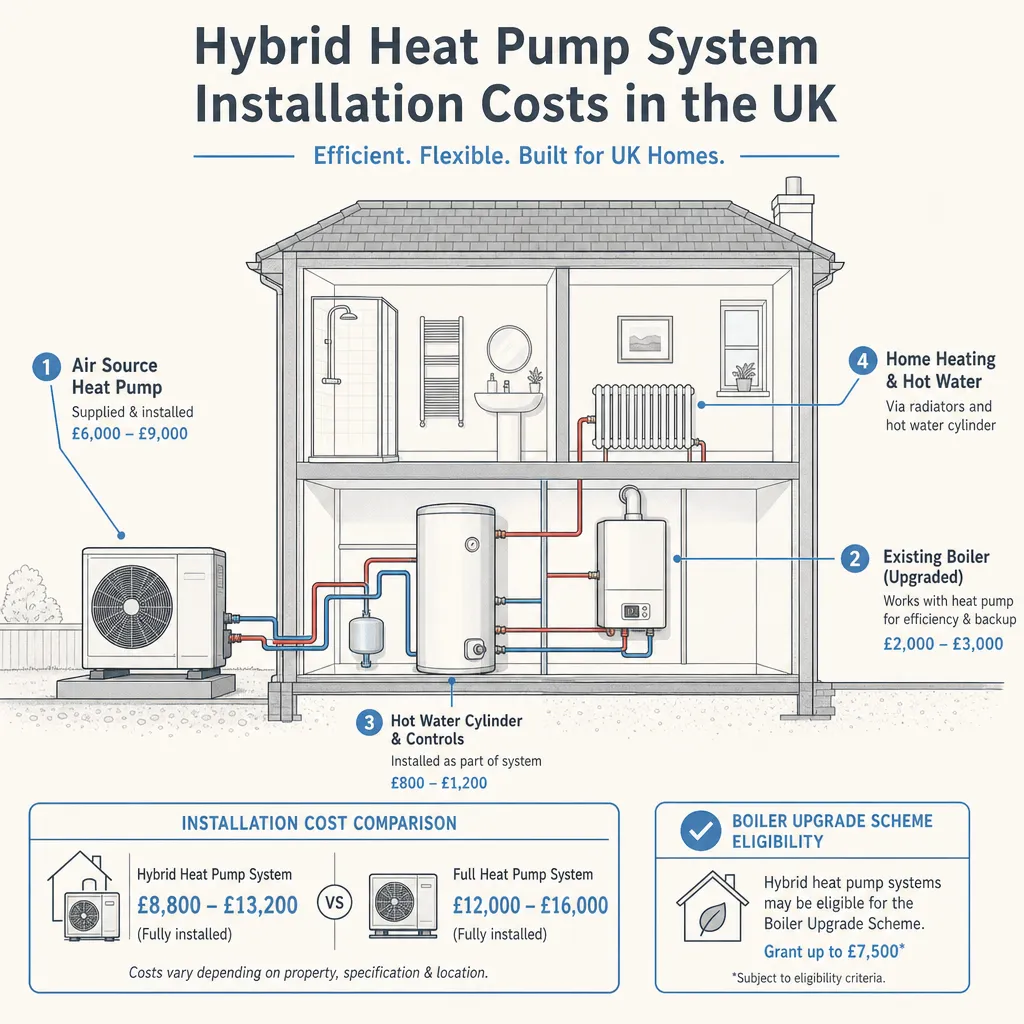
Hybrid Heat Pump System Installation Costs in the UK
A hybrid heat pump — pairing an air source heat pump with an existing gas boiler — typically costs £4,000–£10,000 installed in the UK before any grant deductions.
 Energy & Retrofit
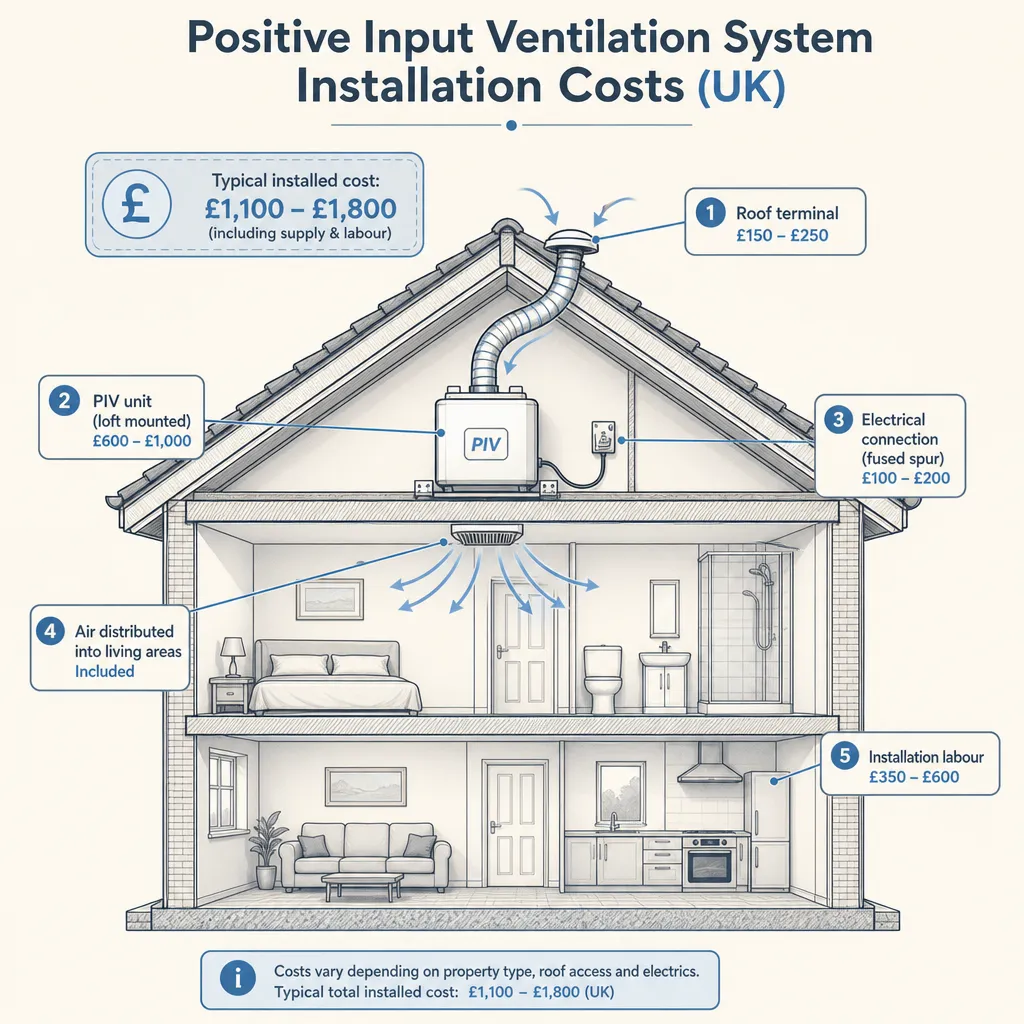
Positive Input Ventilation System Installation Costs
A positive input ventilation (PIV) system typically costs £400–£800 fully installed in the UK, including the unit and labour.
 Energy & Retrofit
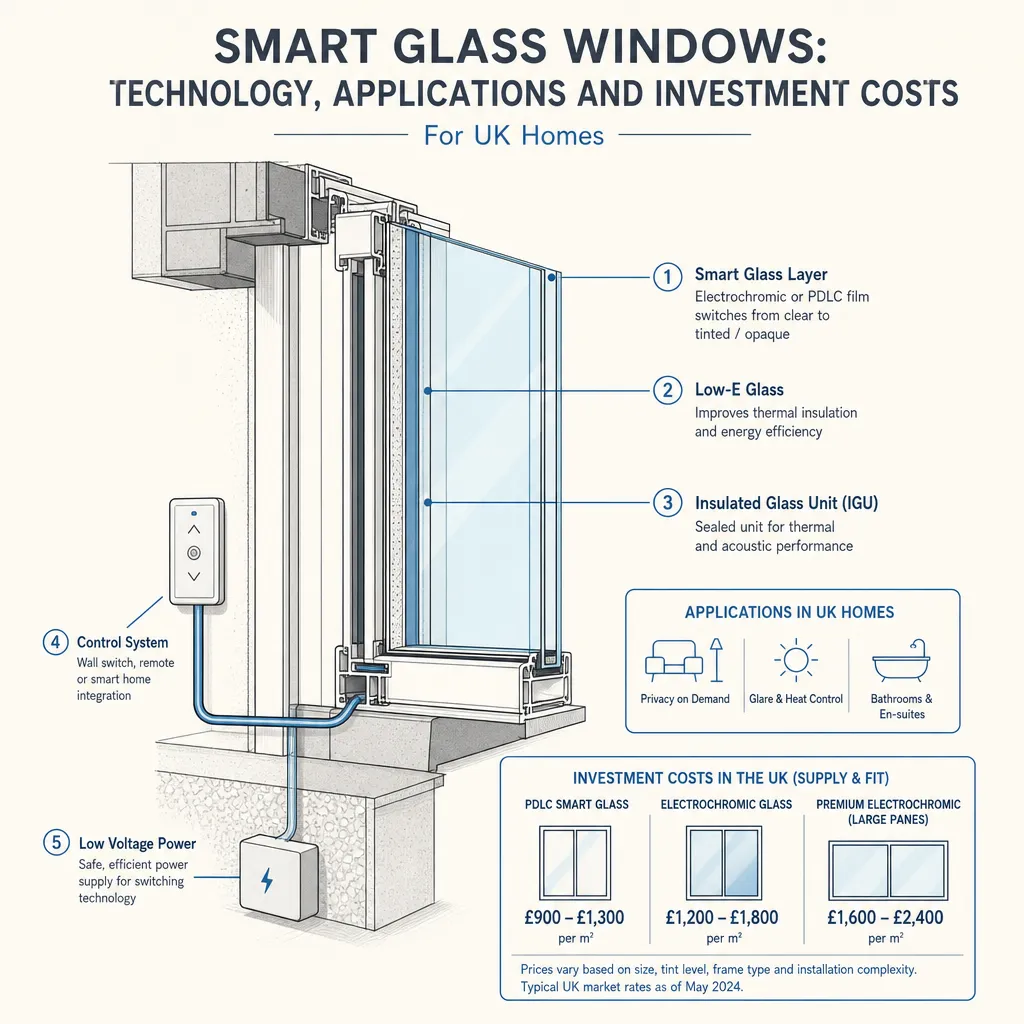
Smart Glass Windows: Technology, Applications and Investment Costs
Smart glass windows switch between transparent, tinted, or opaque states using electrical signals or heat.
 Energy & Retrofit
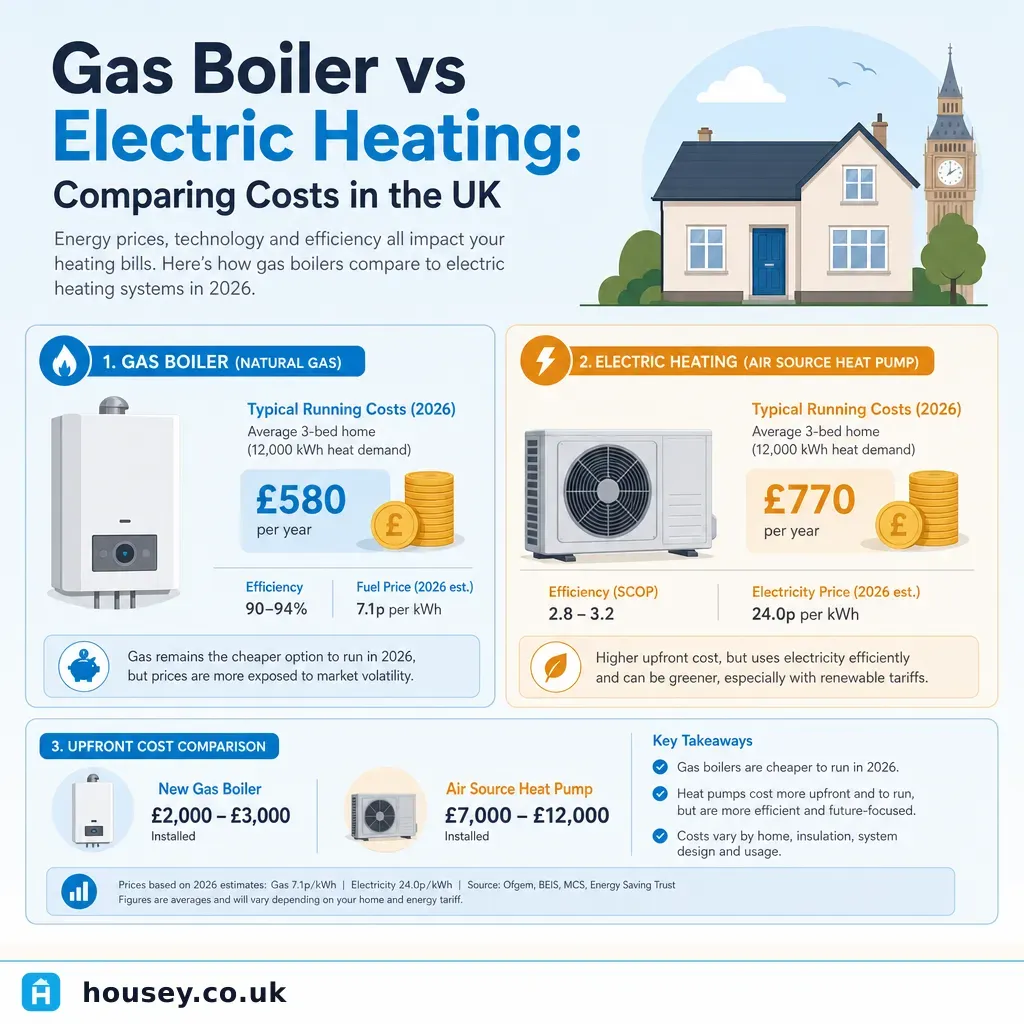
Gas Boiler vs Electric Heating: Comparing Costs in the UK
Gas boilers currently cost around 6.