Ice Dam Removal and Roof Protection Services
By Housey · Last reviewed 31st of May 2026
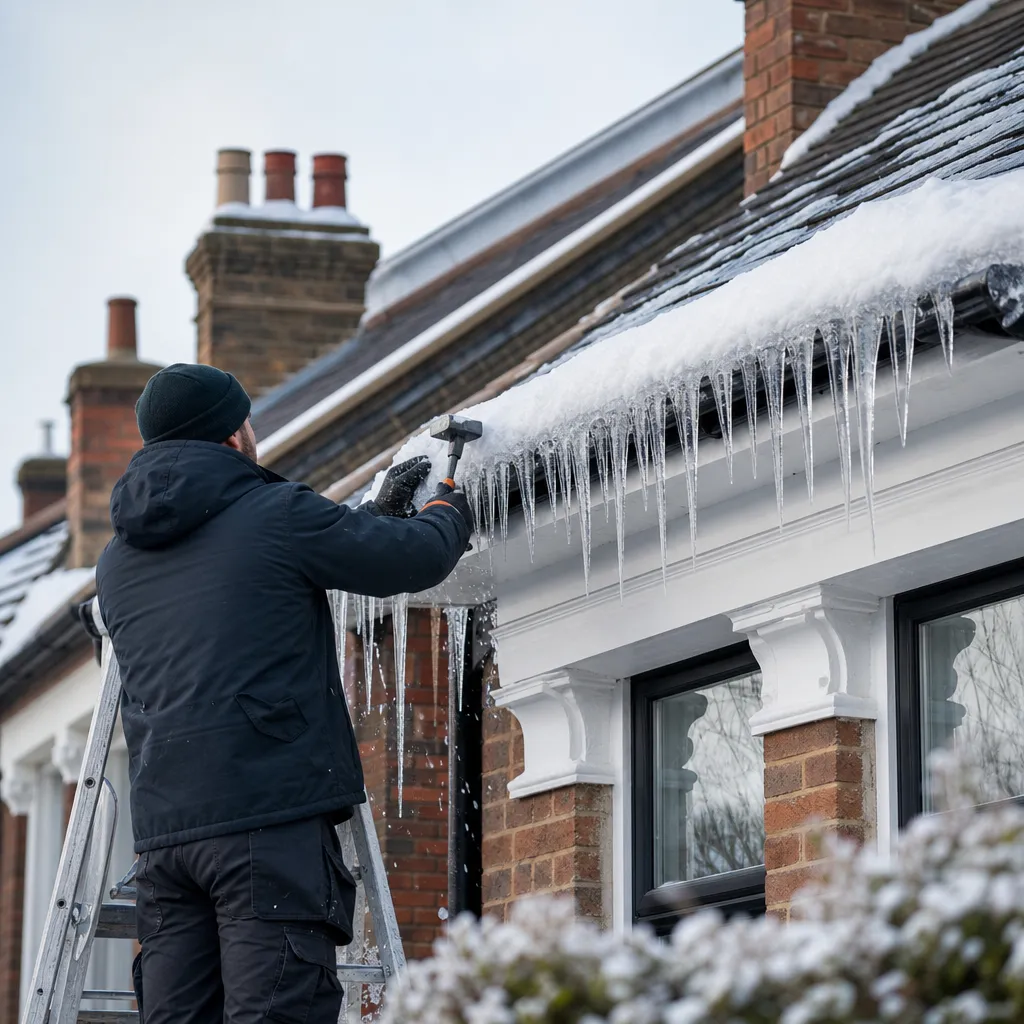
Ice Dam Removal and Roof Protection Services
Ice dams rarely make headlines in the UK, but during prolonged cold snaps — the kind that arrive every few winters and last long enough to load roofs with snow — they can cause genuine water damage to ceilings, walls, and roof timbers. Older properties with minimal loft insulation are the most exposed, particularly Victorian terraces and pre-1960s semis where heat loss through the roof is substantial and eaves detailing was never designed for sustained freeze-thaw cycling.
Key points
- Ice dams form when roof heat loss melts overlying snow, which refreezes at the colder eaves, blocking drainage and forcing meltwater under tiles or slates.
- Removing ice dams from height above 2 m is not safe DIY work — a qualified roofer with fall-arrest equipment must carry out the removal.
- Building Regulations Approved Document Part L recommends 270 mm of mineral wool loft insulation for accessible pitched roofs; most pre-1980s properties have 100 mm or less, creating the conditions that produce ice dams.
- Roof access in icy conditions significantly increases accident risk and the likelihood of further tile or slate damage — always use a roofer with appropriate insurance and access equipment.
- Most buildings insurance policies cover resulting water ingress, but check your policy wording and notify your insurer before instructing a contractor.
What causes ice dams and why UK roofs are at risk
An ice dam forms through a straightforward chain of events. Warm air escapes through a poorly insulated or unventilated roof space, heats the roof covering from below, and melts any overlying snow. That meltwater runs down the slope until it reaches the eaves — which sit outside the building envelope and remain at ambient temperature — where it refreezes. Over several freeze-thaw cycles, a ridge of ice builds up at the eaves. Subsequent meltwater pools behind the dam and begins to work its way under the lapping of tiles or slates, eventually penetrating the roof underlay and entering the property.
UK housing stock is particularly susceptible because:
- Pre-1980s properties were built before modern insulation standards and often have 100 mm or less of loft insulation.
- Many pitched roofs were laid without breathable (vapour-permeable) underlays, meaning any water ingress reaches the roof structure quickly.
- Eaves detailing on Victorian and Edwardian terraces was rarely designed with guttering adequate for sustained freeze-thaw cycling.
- The UK's episodic cold weather means properties are rarely upgraded for cold-weather resilience in the way homes in colder climates routinely are.
How to identify an ice dam on your property
Visual signs from ground level include:
- A visible ridge or shelf of ice at the eaves or along the lower edge of the roof slope.
- Icicles hanging from guttering or soffits — not dangerous in themselves but often indicating a dam has formed above.
- Staining, bulging, or damp patches on ceilings or the tops of internal walls directly below the roof slope.
- Guttering pulling away from the fascia under the weight of accumulated ice.
If you notice any of these signs, do not attempt to inspect from the roof or use a ladder in icy conditions. Assessment and removal should be carried out by a qualified roofer.
Which professional should you call?
Situation | Who to instruct | Why |
|---|---|---|
Active ice dam with visible water ingress | Emergency roofer | Immediate water damage risk; specialist access equipment needed |
Ice dam present, no current leaking | Qualified roofer (non-emergency) | Safe removal before further freeze-thaw cycles worsen the situation |
Recurring dams every winter | Roofer plus insulation contractor | Root cause is almost always inadequate loft insulation or ventilation |
Guttering damaged by ice weight | Roofer or guttering specialist | May not require full roof access but should be professionally assessed |
Suspected water damage to roof timbers | Roofer with structural inspection | Prolonged ingress can cause rot in rafters and wall plates |
Ice dam prevention: what actually works
Removing a dam addresses the symptom; adequate loft insulation addresses the cause. The following measures, in combination, substantially reduce the risk.
Loft insulation
Building Regulations Approved Document Part L recommends 270 mm of mineral wool insulation between and over joists for accessible pitched roofs. Many pre-1980s properties have 100 mm or less. Upgrading to the recommended depth eliminates the uneven roof warming that triggers ice dam formation, and also reduces heating bills year-round.
Loft ventilation
Adequate cross-ventilation — typically achieved through soffit vents and a ridge vent — keeps the roof deck closer to ambient temperature, reducing the melt-refreeze cycle. A roofer or insulation installer can assess whether existing ventilation meets current standards.
Breathable roof underlay
If the roof is re-covered, installing a breathable (vapour-permeable) membrane beneath the tiles or slates means any incidental water ingress is managed rather than trapped against the deck.
Gutter maintenance
Clearing guttering in autumn removes blockages that allow ice to build up at the eaves before a dam has even formed.
Decision tree: what should you do?
- Ice dam visible, water actively coming in → Call an emergency roofer immediately; photograph the damage for your insurer.
- Ice dam visible, no active leak yet → Instruct a roofer within 24–48 hours to remove the dam before the next freeze cycle.
- Icicles present but no visible dam → Monitor closely; do not use a ladder on icy ground; arrange a roofer inspection during the next dry period.
- Recurring dams every winter → Address the root cause — instruct a loft insulation assessment and upgrade to Part L standard.
- Uncertain whether a dam has formed → Photograph from ground level and send images to a roofer for a remote assessment before any site visit.
Red flags: when the situation is more serious
Contact a roofer urgently — do not wait — if:
- Ceiling plasterboard is bulging or sagging, suggesting pooled water above.
- Water is dripping near electrical fittings or light fixtures.
- You can see daylight through the roof covering from inside the loft space.
- The guttering or fascia has partially detached from the building.
- The dam has been present for more than 48 hours during a sustained cold spell.
When to get professional help
Ice dam removal is not appropriate DIY work. Roofs are slippery in winter conditions, and working above 2 m without fall-arrest equipment carries a serious injury risk — the Health and Safety Executive identifies falls from roofs as among the most common causes of fatal workplace injuries. A qualified roofer will have personal protective equipment, roof ladders or scaffolding, and public liability insurance. For significant water ingress, contact your buildings insurer promptly; they may have a preferred contractor or emergency helpline and may require you to use them for the claim to be valid.
How Housey can help
Housey connects homeowners with vetted qualified local roofers who cover emergency and seasonal roof work across the UK. Enter your postcode to compare quotes from contractors in your area.
Frequently asked questions
Are ice dams common in UK homes?
They occur less often than in colder climates but do form during prolonged cold snaps when roofs carry snow. Properties most at risk are older homes — Victorian and Edwardian terraces and pre-1960s semis — with minimal loft insulation, where heat escaping through the roof deck is sufficient to melt snow before it reaches the colder eaves, where it refreezes.
Can I remove an ice dam myself?
Working on an icy roof above 2 m without proper fall-arrest equipment is extremely dangerous. DIY removal also risks cracking tiles, slates, or the underlying membrane. A qualified roofer with appropriate access equipment, personal protective equipment, and public liability insurance should carry out the work.
How do I prevent ice dams forming again?
The most effective prevention is upgrading loft insulation to Building Regulations Part L standards — typically 270 mm of mineral wool in an accessible pitched roof — and ensuring adequate roof space ventilation. This reduces heat escaping through the roof deck that causes uneven snow melt and refreeze at the eaves.
Will my home insurance cover ice dam damage?
Most standard buildings insurance covers sudden and accidental water damage, but policy wording varies. Check for exclusions relating to gradual deterioration or maintenance failures. Photograph the damage and contact your insurer before instructing contractors if possible, to confirm cover and whether they require you to use an approved contractor.
How much does professional ice dam removal cost?
Costs vary by property size, roof pitch, access difficulty, and urgency. Emergency call-outs attract a premium. Indicative UK costs, last reviewed 2026-05-31: expect a call-out fee plus a half-day or day rate. Obtain at least two quotes where the situation allows, and confirm whether the price includes post-removal inspection of guttering and flashings.
Sources and further reading
- Building Regulations Approved Document Part L: Conservation of fuel and power — GOV.UK
- Roof and loft insulation — Energy Saving Trust
- Working at height: a brief guide (INDG401) — Health and Safety Executive
Useful next reads
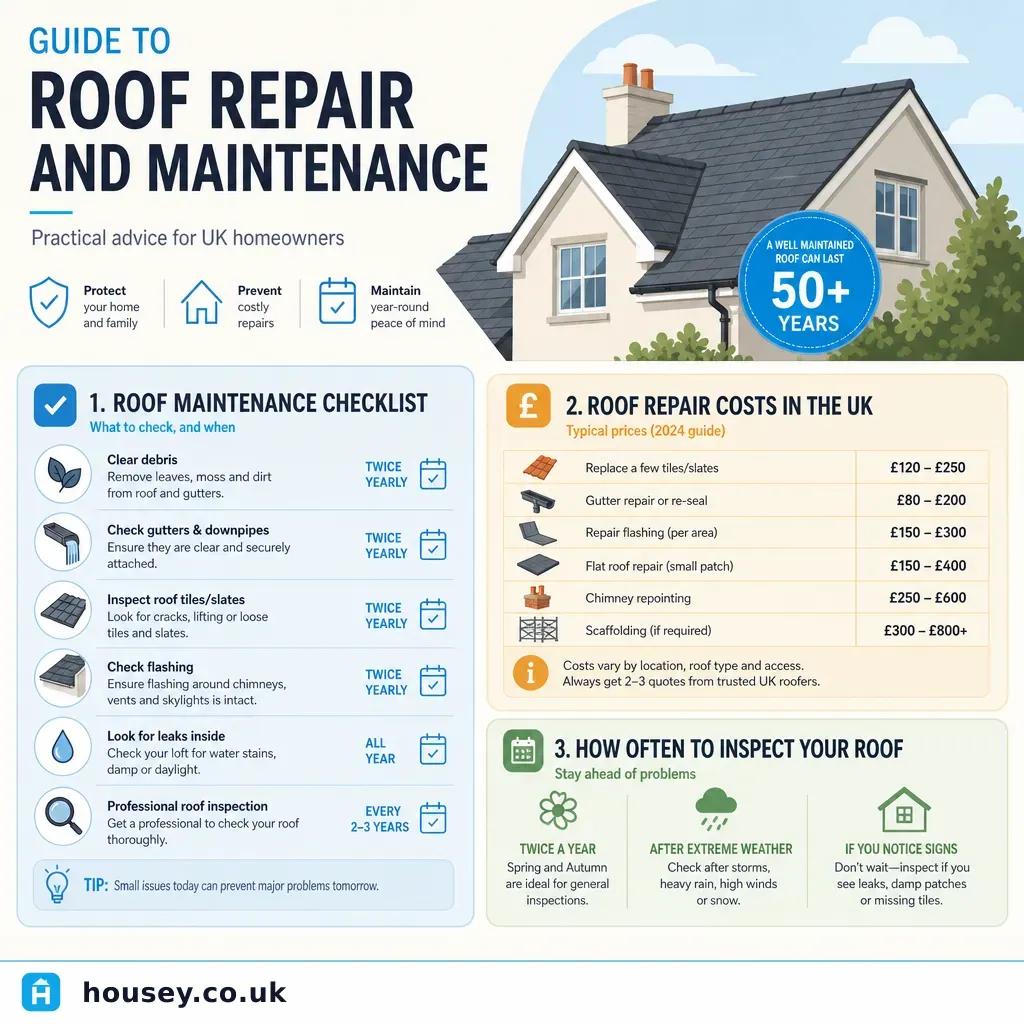 Improvement & Build
Guide to Roof Repair and Maintenance
Regular roof inspections every 3–5 years, prompt repair of damaged tiles and failed flashings, and annual gutter clearance are the core of effective UK roof maintenance.
 Improvement & Build
Who to Contact for Broken Door Handle Repair
For a broken door handle, a general handyperson can handle most internal timber door repairs, while a joiner or locksmith is better suited to external doors, particularly if the lock mechanism is affected.
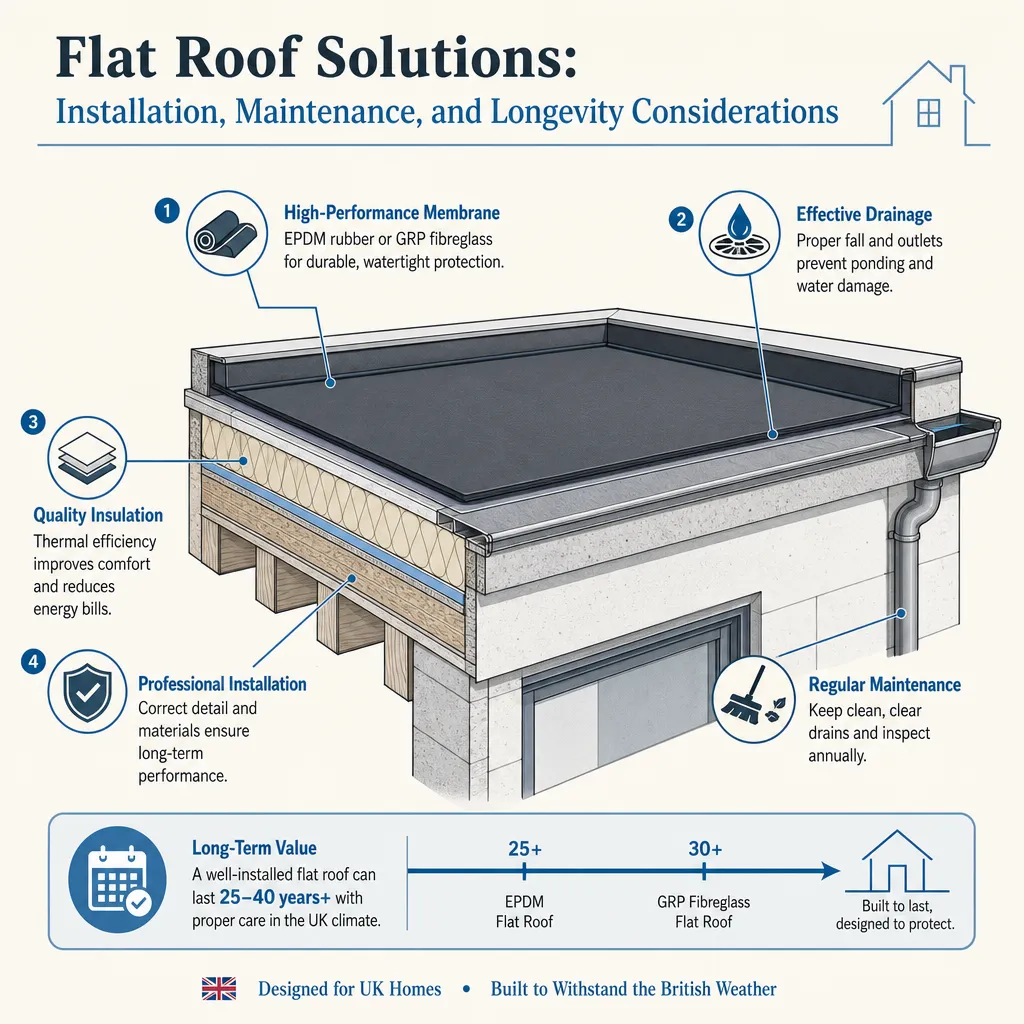 Improvement & Build
Flat Roof Solutions: Installation, Maintenance, and Longevity Considerations
Flat roofs use several waterproofing systems — EPDM rubber, GRP fibreglass, liquid-applied coatings, modified bitumen felt, lead, and zinc — each with different lifespans and installation requirements.
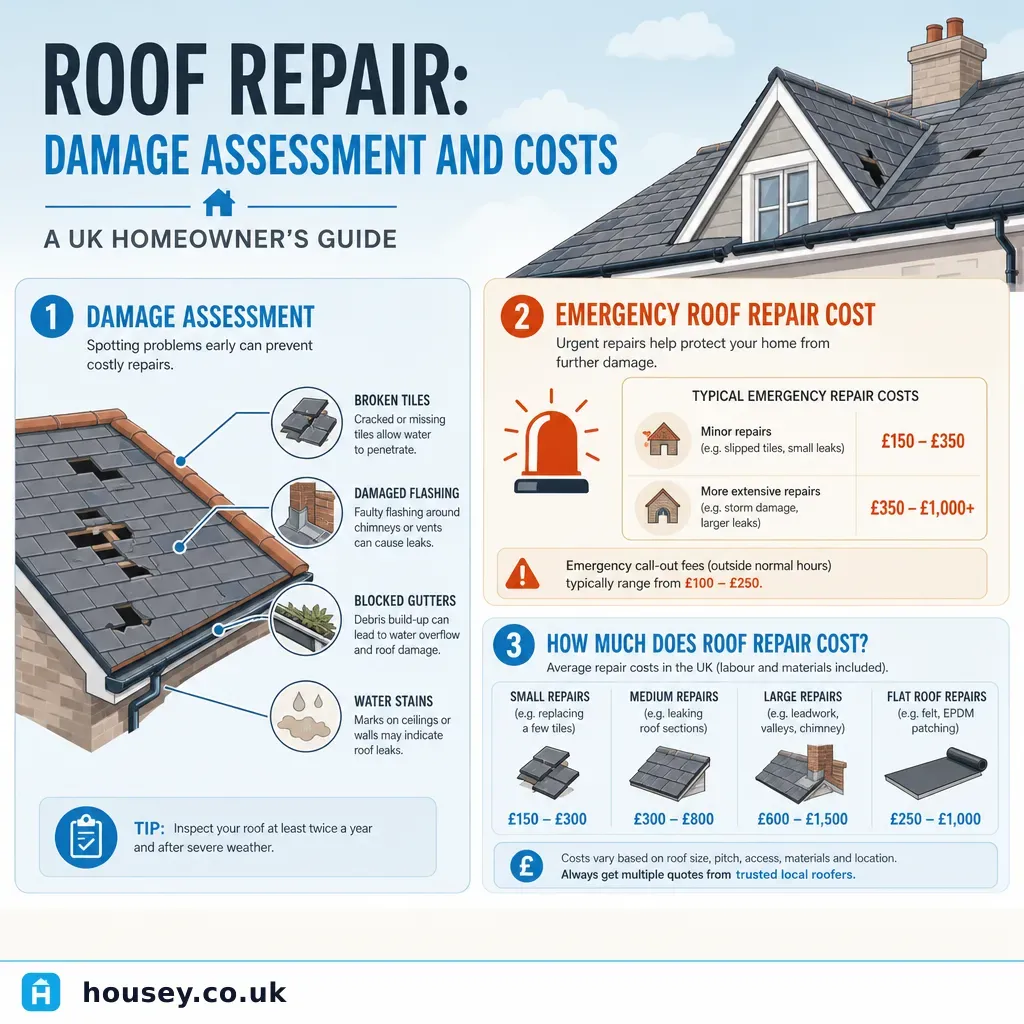 Improvement & Build
Roof Repair: Damage Assessment and Costs
Most roof repairs — replacing slipped tiles, re-bedding ridge tiles, or patching flashing — are straightforward maintenance jobs that do not require planning permission.
 Improvement & Build
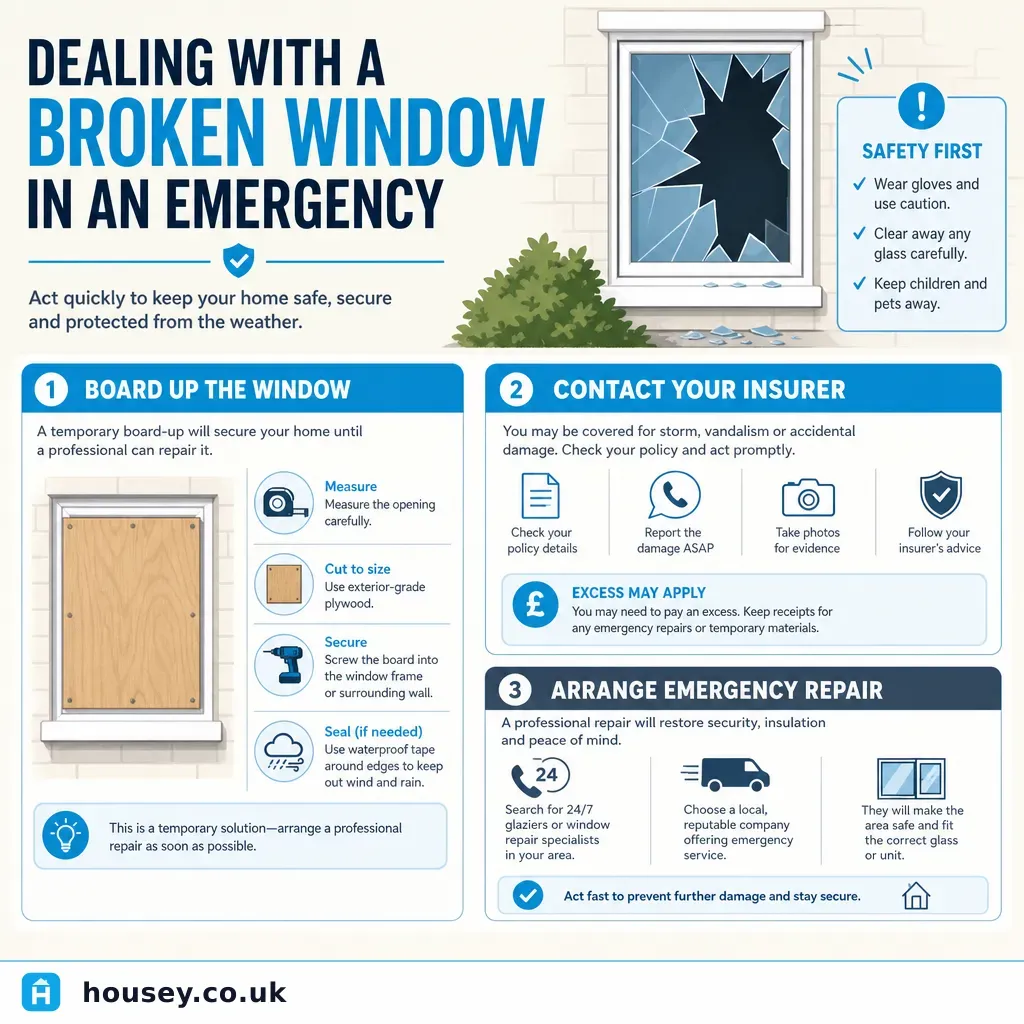
Dealing with a broken window in an emergency
If a window breaks, your priority is clearing loose glass safely while wearing thick gloves, then sealing the opening with heavy-duty polythene or plywood before contacting your insurer.