Guide to Roof Repair and Maintenance
By Housey · Last reviewed 19th of May 2026
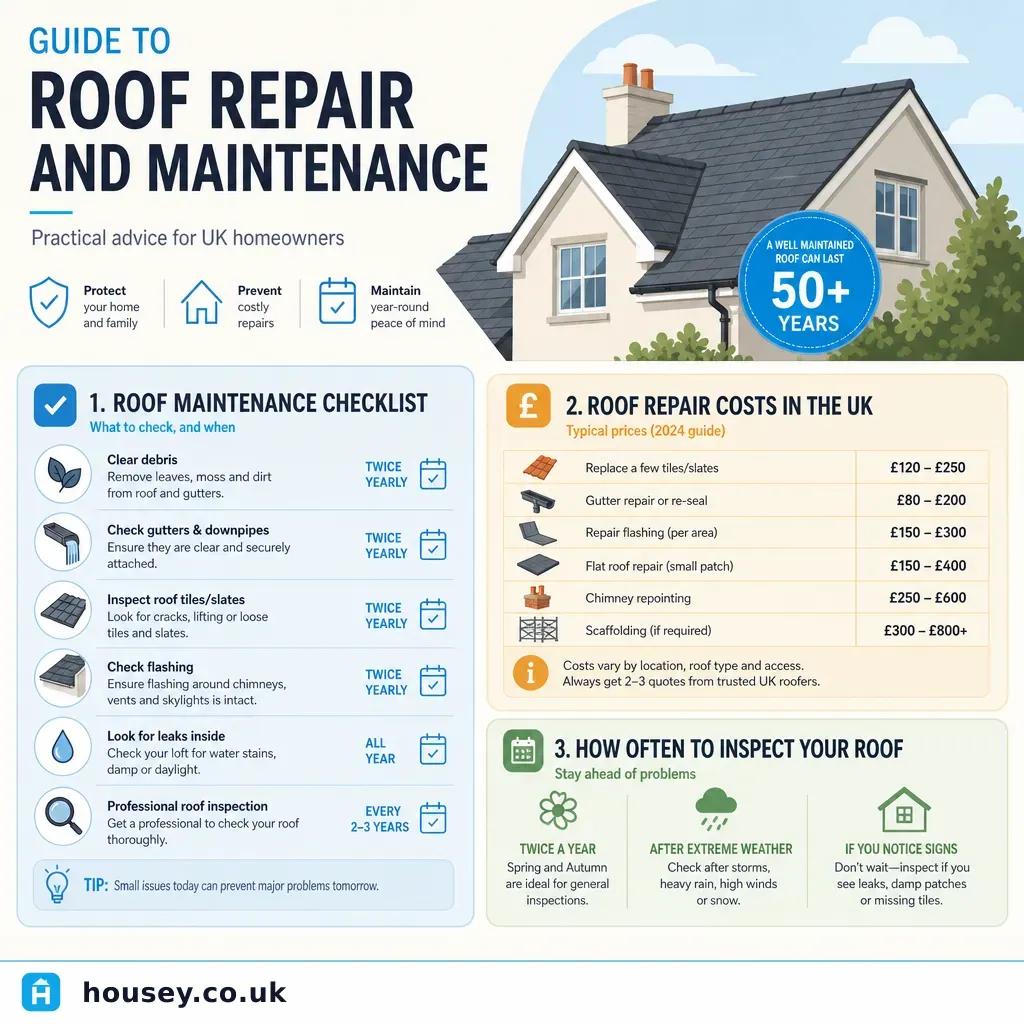
Guide to Roof Repair and Maintenance
A UK roof takes the full force of wind, rain, frost, and summer heat year-round. Small defects — a slipped tile, a hairline crack in a lead flashing, a blocked valley — rarely announce themselves loudly, but left unaddressed they allow water to reach the roof timbers, ceilings, and walls beneath. For most homeowners, the question is not whether maintenance is worth doing but how to prioritise what to address and when.
Key points
- A professional roof inspection is typically recommended every 3–5 years, and always after severe storm or hail events.
- Replacing up to 10% of individual tiles is generally a minor repair; if 20% or more need replacing, or if the sarking felt has failed, a full re-roof is often more cost-effective than repeated patching.
- Flat roofs (felt, GRP, or EPDM) typically have a lifespan of 10–25 years; pitched roofs with clay or concrete tiles can last 50–100+ years if the structure and flashings are maintained.
- Building Regulations notification is required if more than 25% of a roof's surface area is replaced, as thermal performance standards under Approved Document L must be met.
- Moss and lichen treatment should use a biocidal wash applied in dry weather — pressure-washing strips tile coatings and can void manufacturer warranties.
Roof types and their typical maintenance needs
UK residential roofs fall into two broad categories — pitched and flat — each with distinct maintenance requirements.
Pitched roofs
Pitched roofs (typically 22.5° or above) use overlapping clay or concrete tiles, or natural or fibre-cement slates. Maintenance priorities include:
- Tiles and slates: Check for cracks, slippage caused by corroding fixing nails, or missing units after high winds.
- Flashings: Lead, zinc, or mortar flashings at chimneys, dormers, and valleys are a common leak point. Inspect for cracking, lifting, or failed pointing.
- Ridge and hip tiles: Traditionally bedded in mortar, these dry out and crack over 20–30 years. Modern dry-fix systems are more durable.
- Verge mortar: The cement fillet along gable ends erodes and allows water and wind ingress.
- Sarking felt: The underlay beneath tiles degrades after 30–40 years; when it fails, even minor tile damage causes internal leaks.
Flat roofs
Flat roofs are more vulnerable to ponding water and ultraviolet degradation. The main systems and their maintenance needs are:
System | Typical lifespan | Common failure modes | Key maintenance task |
|---|---|---|---|
Traditional felt (3-layer) | 10–15 years | Blistering, splits, failed joints | Annual inspection; patch small splits; renew at life end |
GRP (fibreglass) | 20–30 years | Edge cracking; failed outlet seals | Inspect upstand seals; re-coat top layer every 10–15 years |
EPDM rubber | 20–50 years | Adhesive failure at seams; UV cracking | Check seam adhesion; apply UV sealant periodically |
Single-ply (TPO, PVC) | 20–40 years | Weld failures; punctures | Inspect welds and penetrations annually |
Indicative lifespans. Actual performance depends on installation quality, exposure, and maintenance history. Indicative UK costs, last reviewed 2026-05-19.
Annual roof maintenance checklist
Use this checklist each autumn before the wet season — most checks can be carried out from the ground with binoculars, or by a roofer on a ladder:
Red flags: when to call a roofer immediately
Some defects need prompt professional attention rather than monitoring. Act quickly if you notice:
- Active dripping or wet patches on ceilings — water has reached the structure; delay increases timber damage risk significantly
- Daylight visible through the roof when inspecting the loft — tiles, slates, or underlay have failed
- Sagging or deflection in the roof line — potential structural failure of rafters or purlins; do not delay
- A large section of ridge or hip tiles has displaced after a storm — the roof deck is exposed to weather
- Dark staining to chimney breast plasterwork inside the house — flashing has failed or the chimney stack is defective
- Widespread blistering across a flat roof surface — the membrane has likely reached the end of its serviceable life
Repair or replace? A decision guide
Situation | Likely recommendation |
|---|---|
Fewer than 10% of tiles cracked or slipped; structure and felt sound | Spot repair — replace individual units only |
15–25% of tiles failing; felt degraded but structure sound | Consider partial re-roof or full re-tile |
Felt or underlay over 30 years old; multiple leaks in different areas | Full re-roof, including new underlay and battens |
Flat roof with isolated blisters or small splits under 15 years old | Patch repair |
Flat roof with widespread cracking, ponding, or over 20 years old | Full flat-roof renewal |
Structural timber damage (rotten rafters, failed purlins) | Structural repair first, then re-roof |
Ridge and hip tiles loose but main tiles in good condition | Repoint or dry-fix ridges and hips only |
Moss and lichen treatment
Moss holds moisture against tile surfaces and can lift tiles at the edges over time. The recommended process:
- Apply a proprietary biocidal moss treatment in dry weather — available from builders' merchants and roofing suppliers.
- Allow 4–8 weeks for the treatment to work; moss will die and loosen naturally.
- Remove dead moss with a soft brush, working down the slope — never use a pressure washer.
- Consider a zinc or lead strip at the ridge, which releases ions in rainfall to inhibit re-growth over several years.
Working on a pitched roof above 2 m requires appropriate access equipment. For most UK homes, a qualified roofer with safe access is the practical approach — this is not DIY-safe territory.
When to get professional help
Routine gutter clearing from ground level or a step ladder is within most homeowners' abilities, but almost all roof-level work requires a competent roofing contractor. Seek professional advice if:
- You suspect internal water damage to joists or rafters
- A chimney or parapet wall appears cracked or leaning
- The roof line has visibly deflected or sagged
- Repairs affect more than a handful of tiles — safe access, correct materials, and building control compliance all matter
How Housey can help
Housey connects you with vetted roofers who carry out inspections, minor repairs, and full re-roofing work across the UK. Describing the symptoms when you request a quote — leaking after rain, slipped tiles, moss overgrowth, or a sagging ridge — helps roofers advise on the most cost-effective fix before they visit.
Frequently asked questions
How often should I have my roof inspected?
A professional inspection every 3–5 years is a reasonable baseline for a standard pitched roof in good condition. After a severe storm, hail event, or if you notice internal damp, arrange an inspection sooner. Flat roofs benefit from a visual check every year given their shorter typical lifespan.
How much does roof repair cost in the UK?
Minor repairs such as replacing a handful of slipped or cracked tiles typically cost £150–£400, including call-out and access. Repointing a chimney or re-bedding ridge tiles might cost £300–£800. Larger repairs involving underlay renewal, flashing replacement, or structural timber work cost considerably more. Indicative UK costs, last reviewed 2026-05-19. Always obtain at least three quotes.
Should I repair or replace my roof?
If the timber structure is sound and fewer than 15–20% of tiles need attention, repair is usually more cost-effective. When the sarking felt has failed, large areas of tiles are in poor condition, or the roof is over 50 years old and showing widespread deterioration, a full re-roof is often the better long-term investment.
Can I remove moss from my roof myself?
Chemical biocidal treatment followed by gentle brushing is a reasonable approach for accessible single-storey roofs, but working at height on a pitched roof above 2 m is not safe without scaffold or a working platform. For most UK homes, instructing a roofer with safe access equipment is the practical choice.
Sources and further reading
- Building Regulations Approved Document L: Conservation of Fuel and Power — GOV.UK
- Working at height — HSE guidance — Health and Safety Executive
- Planning Portal — roof repairs and maintenance — Planning Portal
- Roof and loft insulation advice — Energy Saving Trust
Useful next reads
 Improvement & Build
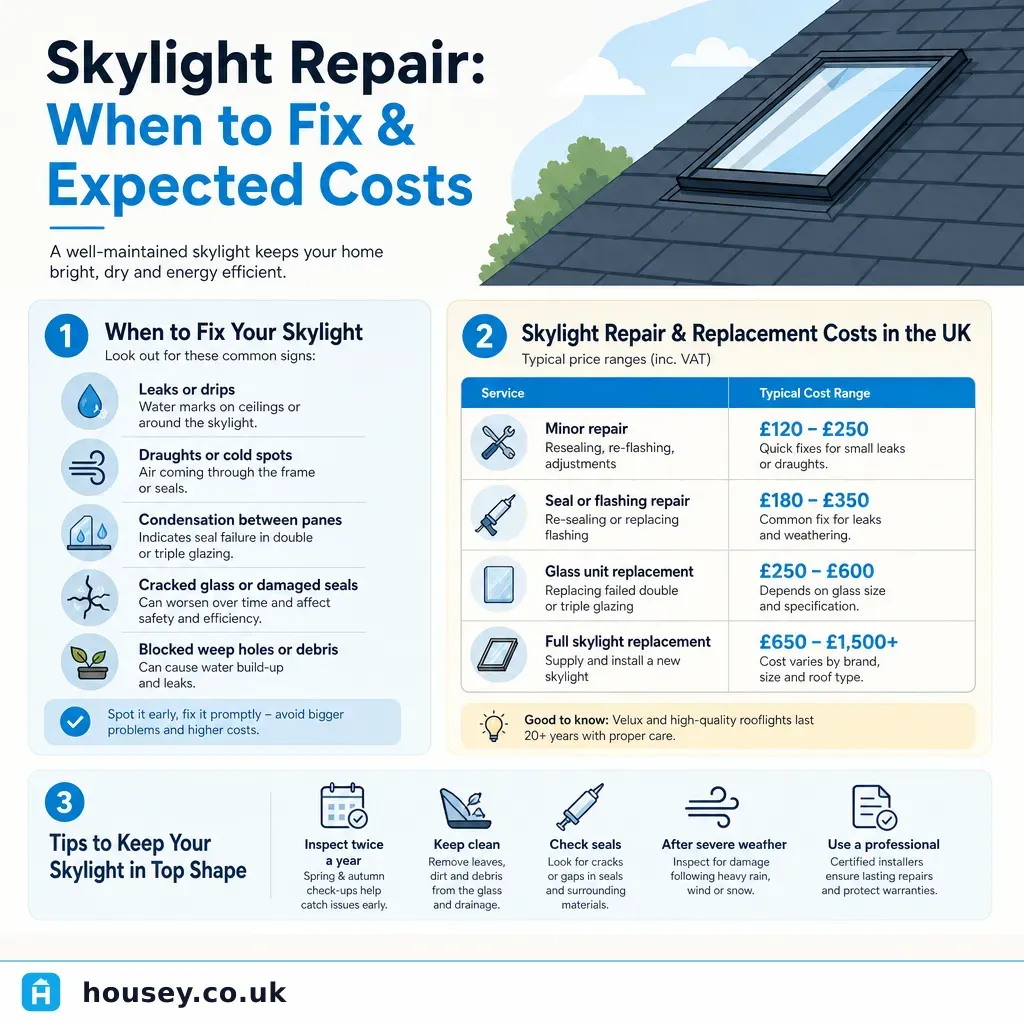
Skylight repair: when to fix and expected costs
Skylight repairs in the UK typically cost £150–£800 depending on the fault, while full replacement usually runs £500–£2,500.
 Improvement & Build
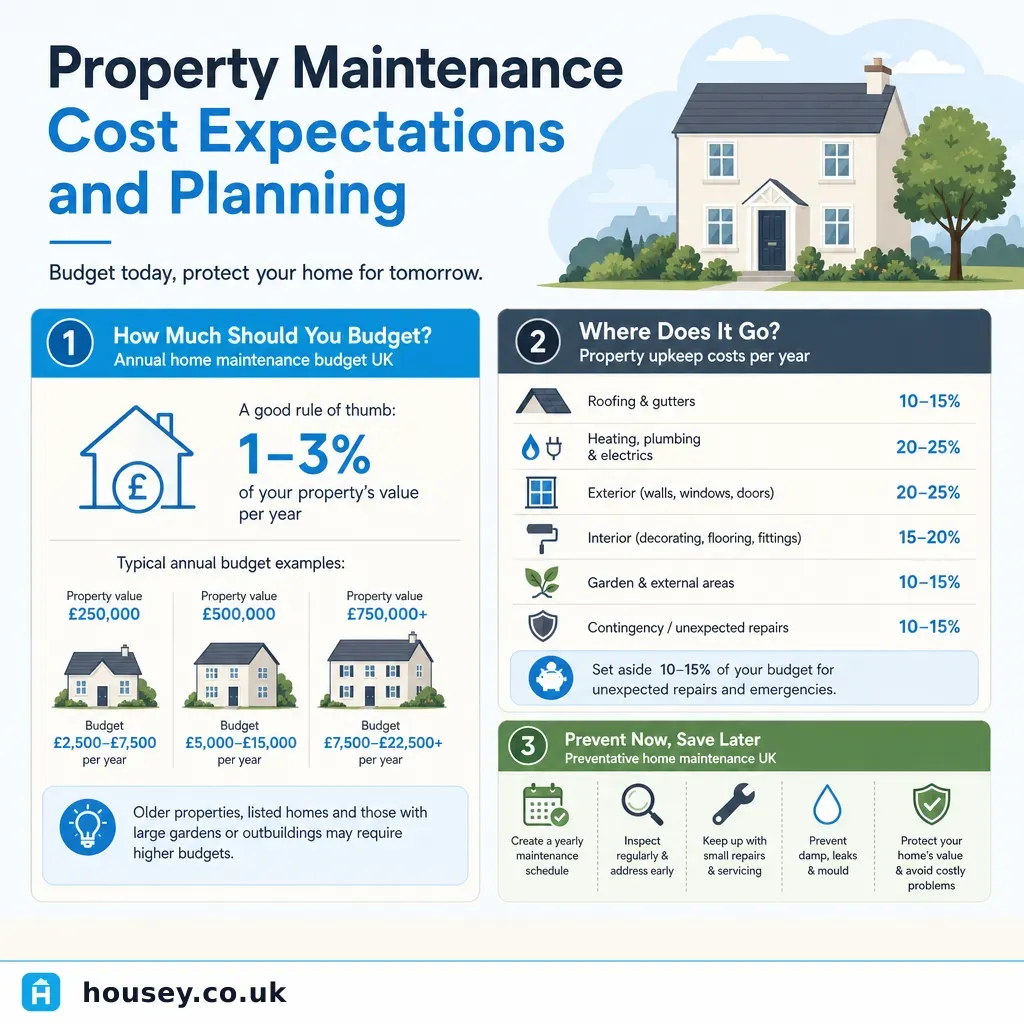
Property Maintenance Cost Expectations and Planning
UK homeowners typically budget between 1% and 3% of their property's value annually for maintenance and repairs.
 Improvement & Build
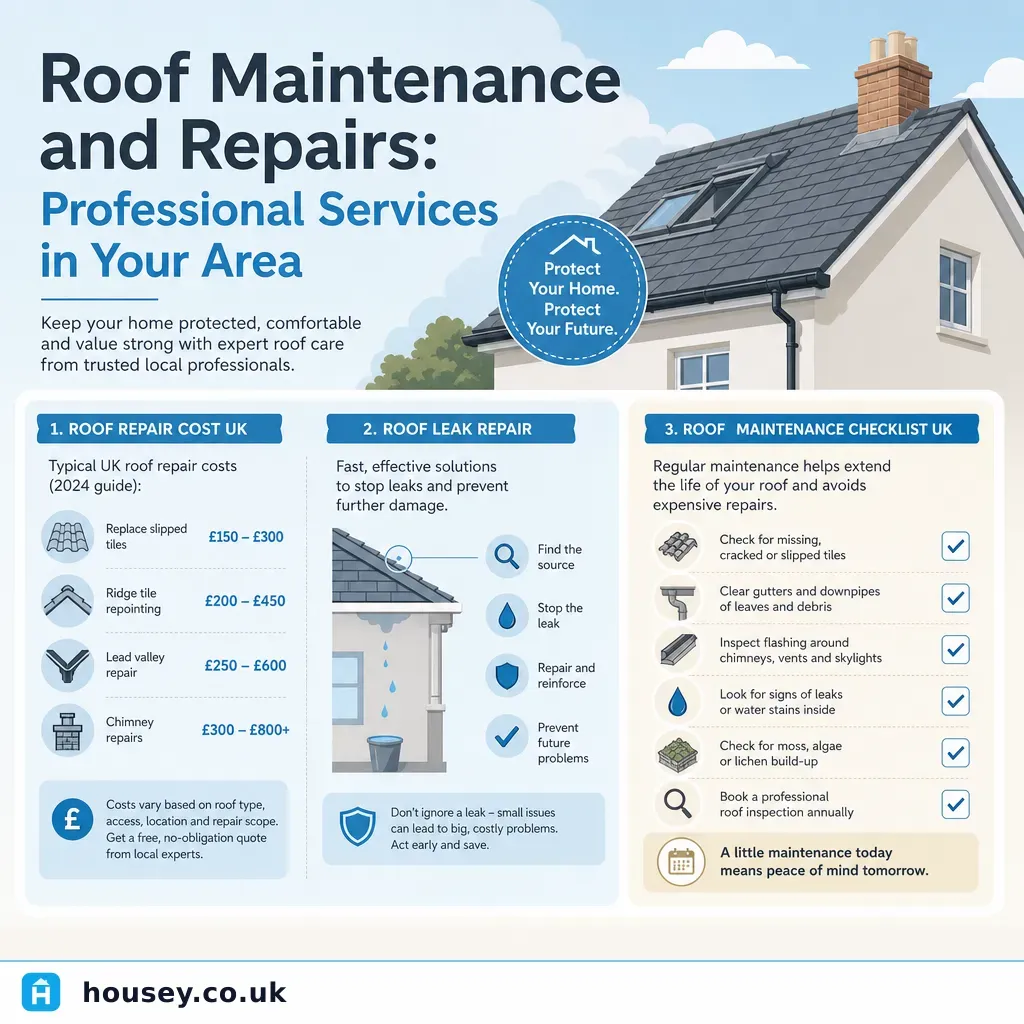
Roof Maintenance and Repairs: Professional Services in Your Area
Roof maintenance in the UK involves regular inspection of tiles or slates, flashings, gutters, and mortar work.
 Improvement & Build
Impact of Weather Damage on Roof Longevity and Safety
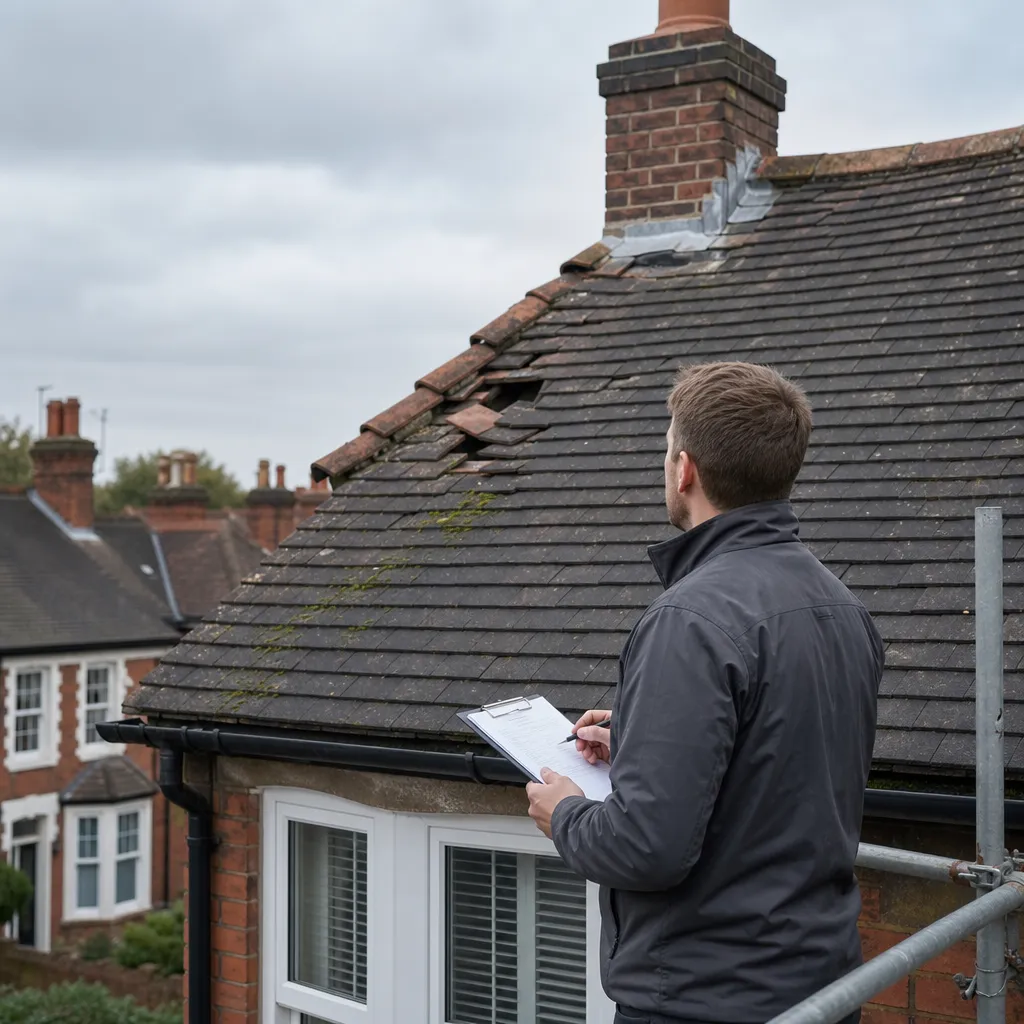
UK weather — driving rain, freeze-thaw cycles, high winds, and occasional hail — progressively weakens roofing materials, accelerating deterioration beyond the designed lifespan.
 Improvement & Build
Metal Roof Repairs: When to Fix vs. Replace
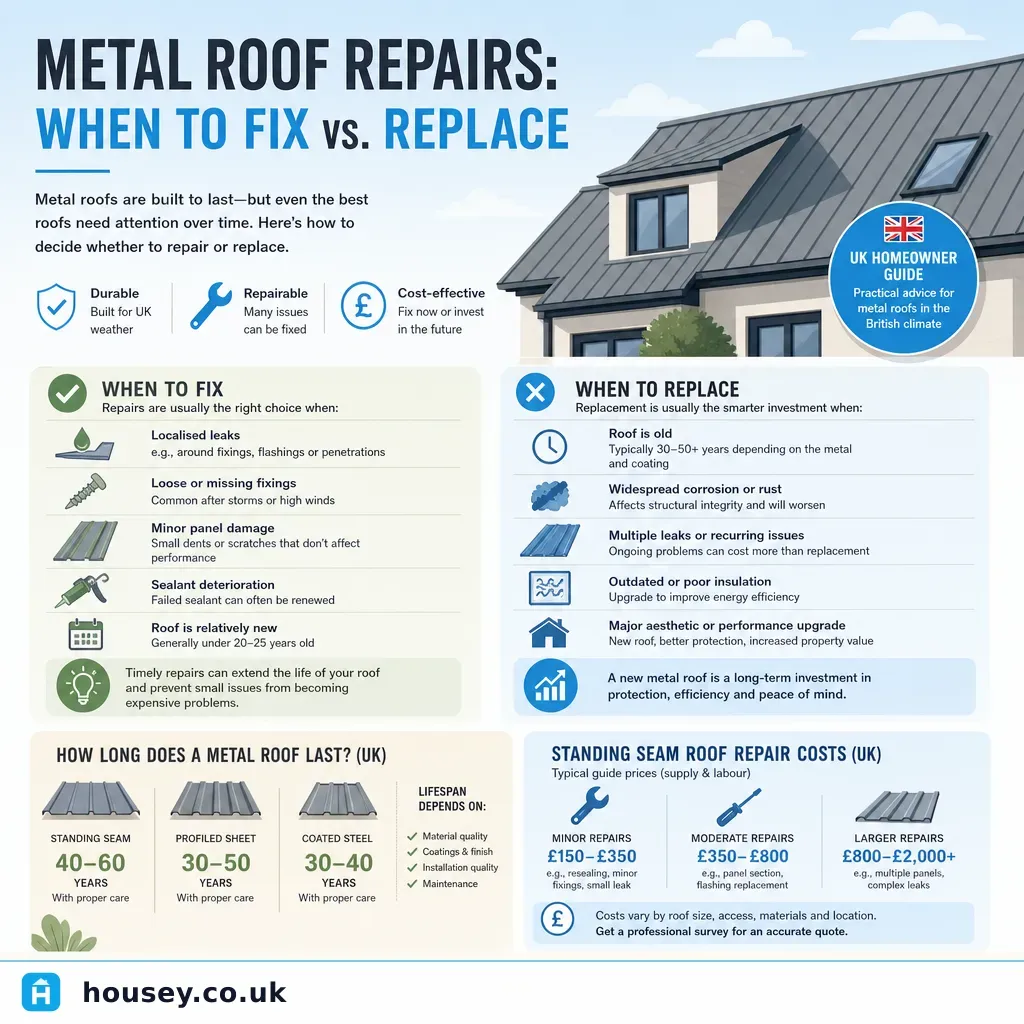
For a metal roof, repair is usually right when damage is localised — a failed flashing, isolated corrosion, or one or two damaged panels.