Flat Roof Solutions: Installation, Maintenance, and Longevity Considerations
By Housey · Last reviewed 19th of May 2026
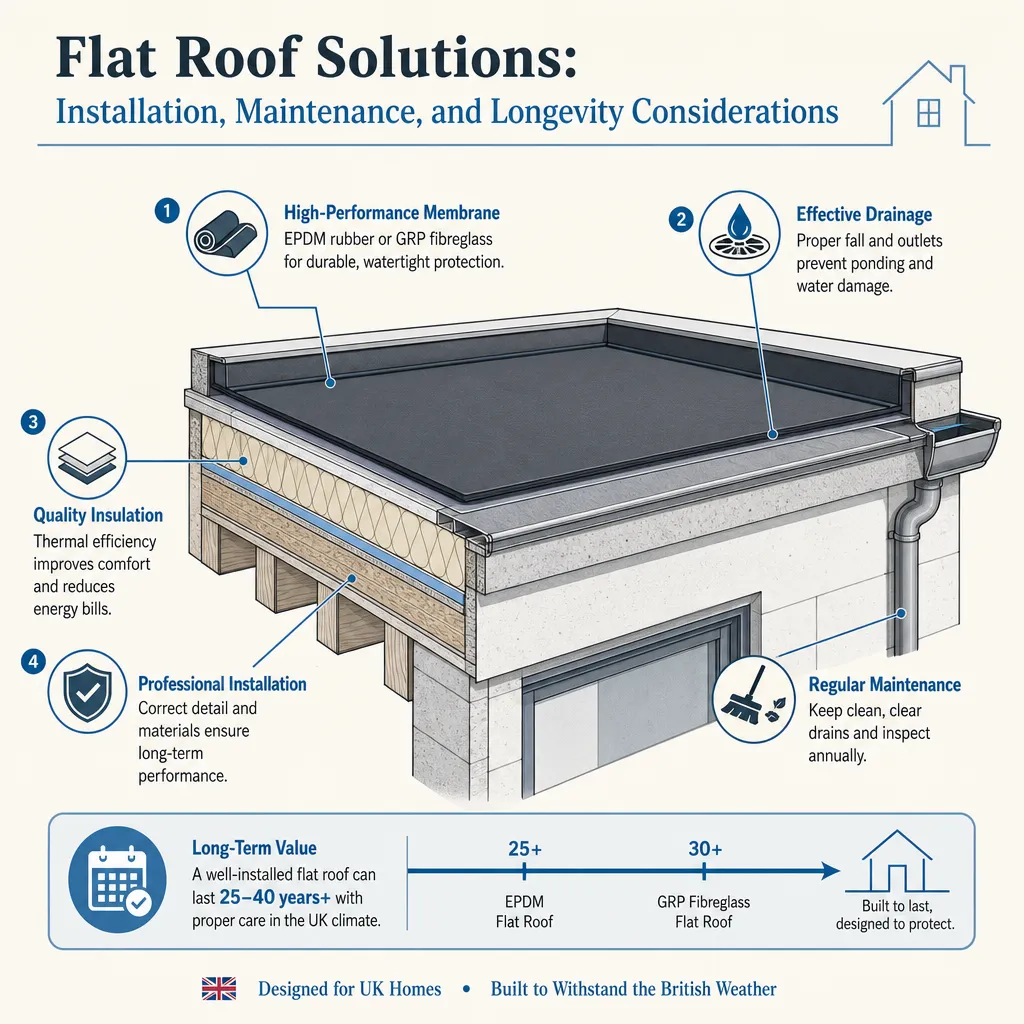
Flat Roof Solutions: Installation, Maintenance, and Longevity Considerations
Flat roofs appear on extensions, outbuildings, bay tops, and increasingly on contemporary new-build homes across the UK. Whether you are planning a kitchen extension and comparing roofing systems, maintaining an existing flat roof that is approaching the end of its life, or investigating a recent leak, understanding the main systems, their realistic lifespans, and the relevant building regulations helps you choose wisely and hold contractors to account.
Key points
- BS 6229:2018 is the British Standard code of practice for flat roofs with continuously supported flexible waterproof coverings; responsible UK contractors should design and install to this standard.
- Part L of the Building Regulations requires all new flat roof constructions in England to achieve a U-value of no worse than 0.18 W/m²K, making adequate insulation a regulatory requirement rather than an optional upgrade.
- Finished falls must be no less than 1:80 under BS 6229:2018 to prevent ponding water, which is one of the leading causes of premature membrane failure on domestic flat roofs.
- Modern EPDM rubber and GRP fibreglass systems typically carry manufacturer guarantees of 20–30 years; lead-covered flat roofs, correctly installed to BS EN 12588, have a lifespan well in excess of 60 years.
- Any new flat roof on an extension or outbuilding requires Building Regulations approval in England — primarily Parts A (structure), C (moisture resistance), and L (thermal performance).
Flat roof systems: the main options
Built-up felt (modified bitumen)
Traditional built-up felt uses multiple bonded layers of bitumen-impregnated felt. Modern versions using SBS or APP-modified bitumen membranes are more durable than the older mineral-surfaced felt common on UK homes built before 1990, with typical lifespans of 15–25 years achievable with correct installation. Built-up felt is familiar to most UK roofing contractors and carries the lowest capital cost, though whole-life costs may exceed those of longer-lived single-ply systems.
GRP (fibreglass) flat roofing
Glass-reinforced polyester (GRP) roofing is laminated on-site from resin and chopped strand mat, curing to form a seamless, rigid waterproof surface. Particularly popular for domestic extensions, dormers, and bay tops, GRP requires a stable solid deck — typically 18 mm marine-grade or WBP plywood — and should generally be installed above approximately 5°C for the resin to cure correctly. Most systems carry manufacturer guarantees of 20–25 years; properly installed GRP typically achieves 30–40 years in service.
EPDM (rubber membrane roofing)
Ethylene propylene diene monomer (EPDM) is a synthetic rubber membrane now widely used in UK domestic flat roofing. Supplied in large factory-manufactured sheets, it reduces the number of seams compared with felt systems, lowering leak risk. EPDM remains flexible at low temperatures — relevant for northern UK climates — and manufacturer guarantees of 20 years or more are common. Realistically installed, EPDM can last 30–50 years. Installation is quicker and less weather-sensitive than GRP.
Liquid-applied waterproofing
Liquid roofing systems — including polyurethane (PU), polymethyl methacrylate (PMMA), and cold-applied bitumen emulsions — are applied as liquids that cure in place to form a seamless membrane. They are particularly suited to roofs with multiple penetrations (rooflights, pipes, drainage outlets) where cutting and detailing sheet membranes would be complex. Quality liquid systems typically carry 20–25 year guarantees and are commonly used for refurbishment, applied directly over existing surfaces to extend roof life without full replacement.
Lead flat roofing
Lead is the traditional material for UK flat roofs, bay tops, dormers, and parapet gutters. Correctly installed to BS EN 12588 and Lead Sheet Association (LSA) code of practice guidance, lead has a lifespan exceeding 60 years and is often a planning requirement in conservation areas and on listed buildings. Lead is heavy — structural confirmation of the deck and joists is needed — and requires specialist installation. Poor workmanship (incorrect drips, overlong bays) causes thermal cracking and early failure.
Zinc
Zinc is lighter than lead and offers a lifespan of 40–60 years or more with correct installation. It suits both contemporary extensions and traditional properties and requires specialist installers familiar with the material's thermal movement behaviour. Zinc is generally more expensive per square metre than EPDM or GRP.
Flat roof systems comparison table
System | Typical lifespan | Manufacturer guarantee | Best for | Key limitation | Relative cost |
|---|---|---|---|---|---|
Built-up felt (modified bitumen) | 15–25 years | 10–15 years | Re-cover, budget projects | More seams; shorter lifespan | Low |
GRP fibreglass | 30–40 years | 20–25 years | Extensions, solid decks | Temperature-sensitive to install | Medium |
EPDM rubber | 30–50 years | 20–30 years | Most domestic flat roofs | Requires experienced installer | Medium |
Liquid-applied | 20–30+ years | 20–25 years | Complex geometry; refurbishment | Product and contractor quality varies | Medium–high |
Lead | 60+ years | N/A (inherent durability) | Listed or conservation properties; gutters | Heavy; specialist only; high cost | High |
Zinc | 40–60+ years | 25–30 years | Contemporary and heritage roofs | Specialist installer required | High |
Indicative lifespans and relative costs, last reviewed 2026-05-19. Guarantees depend on the specific product and installer accreditation scheme.
Choosing the right system
- Choose GRP if your extension has a solid plywood deck, a straightforward roof plan, and work will take place in mild, dry conditions.
- Choose EPDM if you want a long-life single-ply system, particularly on a larger or more complex roof, or in a colder northern location.
- Choose liquid-applied if the roof has multiple penetrations, unusual geometry, or if you are refurbishing rather than replacing.
- Choose lead or zinc if the property is listed, in a conservation area, or if a very long service life and period appearance are priorities.
- Choose built-up felt only if budget is the overriding constraint and the roof is small and simple — factor in the likelihood of earlier re-roofing.
- Ask a structural engineer before specifying any system if the roof span exceeds around 3 m, if there are concerns about the existing deck or joist condition, or if the roof will carry regular foot traffic or imposed loads.
Building Regulations for flat roofs
Any new flat roof requires Building Regulations approval in England. The three primary applicable parts are:
Part L (Conservation of Fuel and Power): Requires a minimum U-value of 0.18 W/m²K for new flat roofs. In practice this demands substantial insulation depth in a warm roof or inverted roof build-up. Cold roof configurations (insulation between joists below the deck) carry higher condensation risk and are generally discouraged for new construction under current guidance.
Part A (Structure): The roof must be designed to carry dead loads (the roofing system and insulation) and imposed loads (snow, maintenance access). For spans above approximately 2.5–3 m, a structural engineer should specify joist sizes and deck thickness.
Part C (Resistance to Contaminants and Moisture): The roof must resist rain penetration and manage condensation risk. Warm roof build-ups address this by placing insulation above the vapour-permeable deck, keeping the structural elements warm and largely condensation-free.
A Building Regulations application (full plans or building notice) must be submitted before work begins. The installing contractor will typically manage this submission; confirm this is included in any quote.
Flat roof maintenance checklist
Flat roofs require more active maintenance than pitched roofs to reach their expected lifespan.
When to get professional help
Seek professional advice from a qualified roofer or roofing surveyor when:
- You notice interior ceiling staining or damp patches beneath a flat roof.
- The membrane shows visible blistering, splitting, or areas of exposed substrate.
- Standing water persists for more than 48 hours after rain.
- The roof is more than 15–20 years old and has not been independently inspected.
- You are planning any construction adjacent to or beneath the existing flat roof.
Red flags that require urgent attention:
- Visible sagging, deflection, or structural movement in the roof deck — cease using the surface and arrange a structural assessment.
- Mould or significant damp inside the property indicating longstanding water ingress affecting insulation and structural timbers.
- A contractor who cannot register the installation with a manufacturer guarantee scheme or will not provide written workmanship guarantees.
How Housey can help
Housey connects UK homeowners with vetted local roofers for flat roof installations, refurbishments, and repairs. If you are unsure whether your existing flat roof needs a localised repair or full replacement, Housey can also match you with professionals offering roof surveys to provide an independent condition assessment before you commit to a contractor.
Frequently asked questions
Do I need planning permission for a flat-roofed extension?
In most cases, a flat-roofed single-storey rear extension falls within permitted development under the Town and Country Planning (General Permitted Development) (England) Order 2015, subject to size and height limits. However, permitted development rights may be restricted in conservation areas, and some new-build estates have had those rights removed by planning condition. Always check with your local planning authority before building.
Why does my flat roof leak even though it was recently installed?
The most common causes of early failure are inadequate falls leading to ponding, poor detailing at upstands and flashings, installation in unsuitable weather (particularly for GRP resin), and adhesion failure at seams. Contact the installer under their workmanship guarantee first. If unresponsive, contact the membrane manufacturer directly — quality systems often carry manufacturer-backed guarantees that can be honoured independently of the original installer.
Can I walk on my flat roof?
It depends on the system and deck specification. GRP and some EPDM systems can withstand occasional maintenance foot traffic. Lead can be walked on carefully using soft footwear. Old or degraded felt roofs should not be walked on without a deck condition assessment. If the roof requires regular access, specify slip-resistant walkway pads when commissioning the installation.
What is the difference between a warm roof and a cold roof?
A warm roof places insulation above the structural deck, keeping the deck at a higher temperature and significantly reducing interstitial condensation risk. A cold roof insulates between the joists below the deck, which is cheaper but carries greater condensation risk. Building Regulations guidance and BS 6229:2018 strongly favour warm roof construction for all new flat roofs in England.
Sources and further reading
- Approved Document L: Conservation of Fuel and Power (2021 edition) — GOV.UK / MHCLG
- Approved Document A: Structure — GOV.UK / MHCLG
- BS 6229:2018: Flat Roofs with Continuously Supported Flexible Waterproof Coverings — BSI British Standards
- NFRC: National Federation of Roofing Contractors technical guidance — NFRC
- Energy Saving Trust: Roof insulation guidance — Energy Saving Trust
Useful next reads
 Improvement & Build
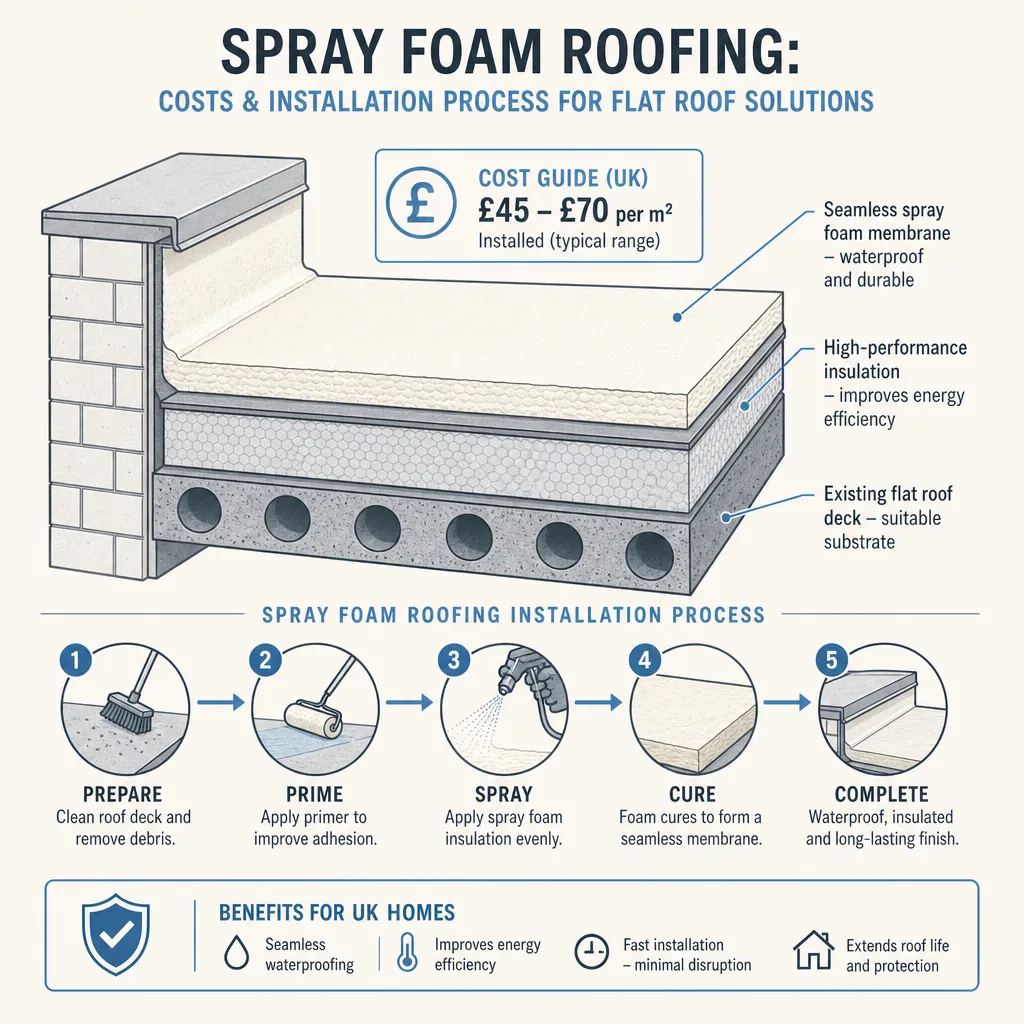
Spray foam roofing: costs and installation process for flat roof solutions
Spray foam roofing for a domestic flat roof in the UK typically costs between £70 and £120 per square metre including preparation, foam application, and UV-protective topcoat, though prices vary with roof size, access, existing substrate condition, and region.
 Improvement & Build
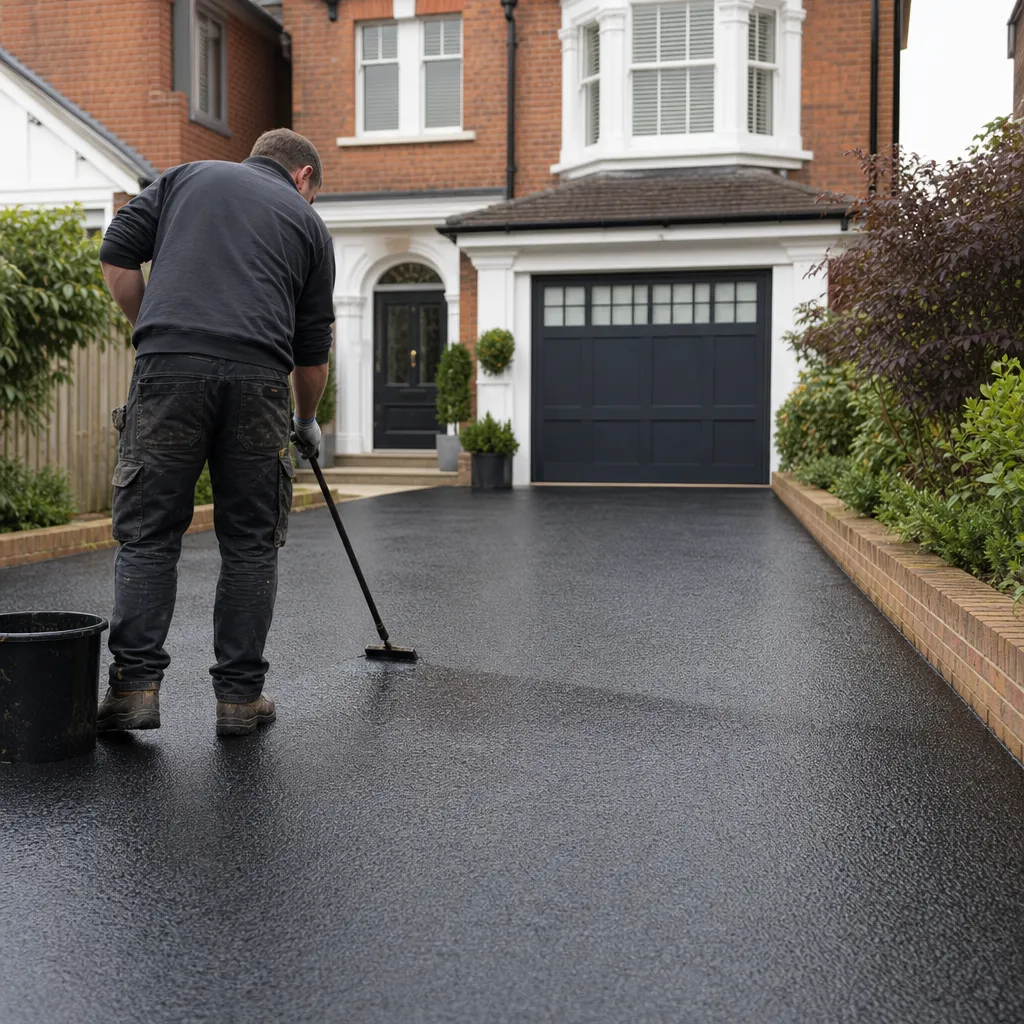
Driveway Sealers: Protection, Maintenance, and Longevity
Driveway sealers fall into two main categories: penetrating types absorbed into the substrate that leave no surface film, and film-forming types that coat and protect the surface.
 Improvement & Build
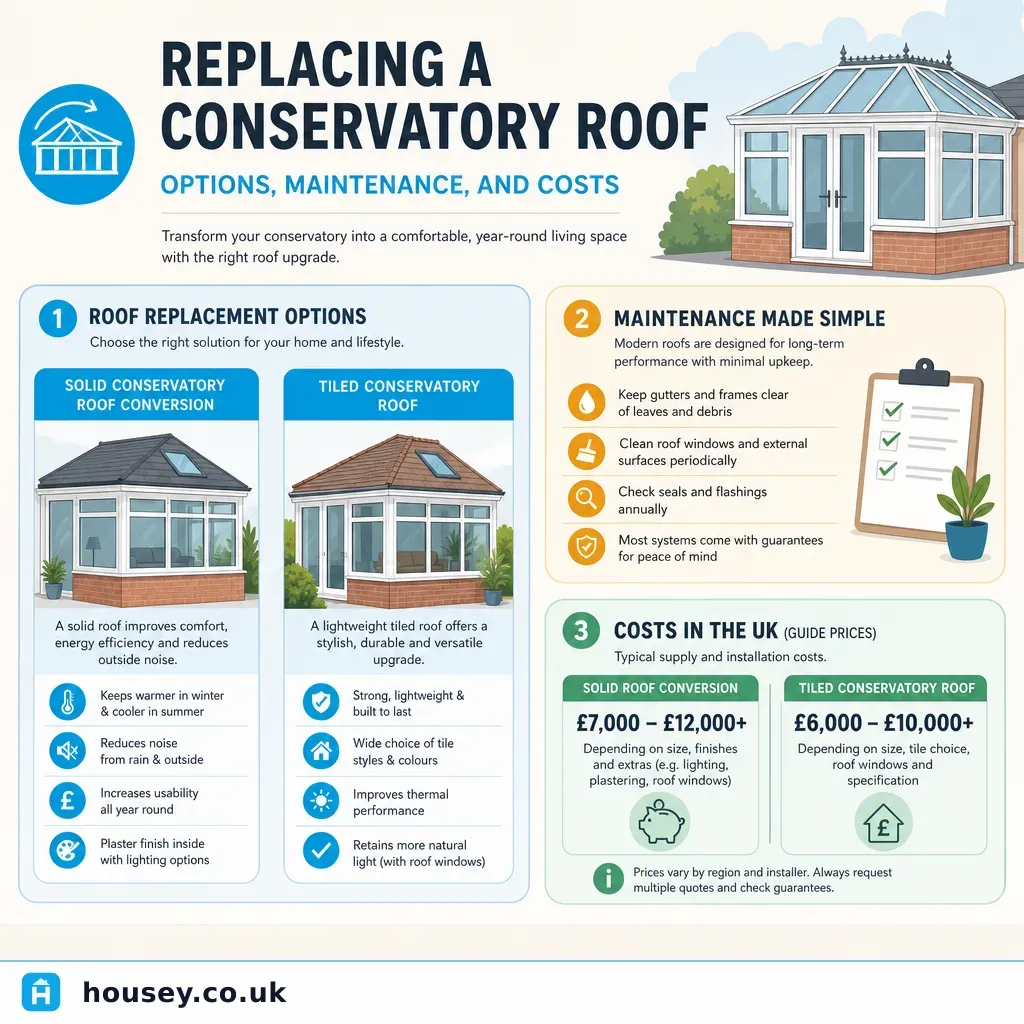
Replacing a Conservatory Roof: Options, Maintenance, and Costs
Conservatory roofs can be replaced with polycarbonate, glass, or solid tiled systems.
 Improvement & Build
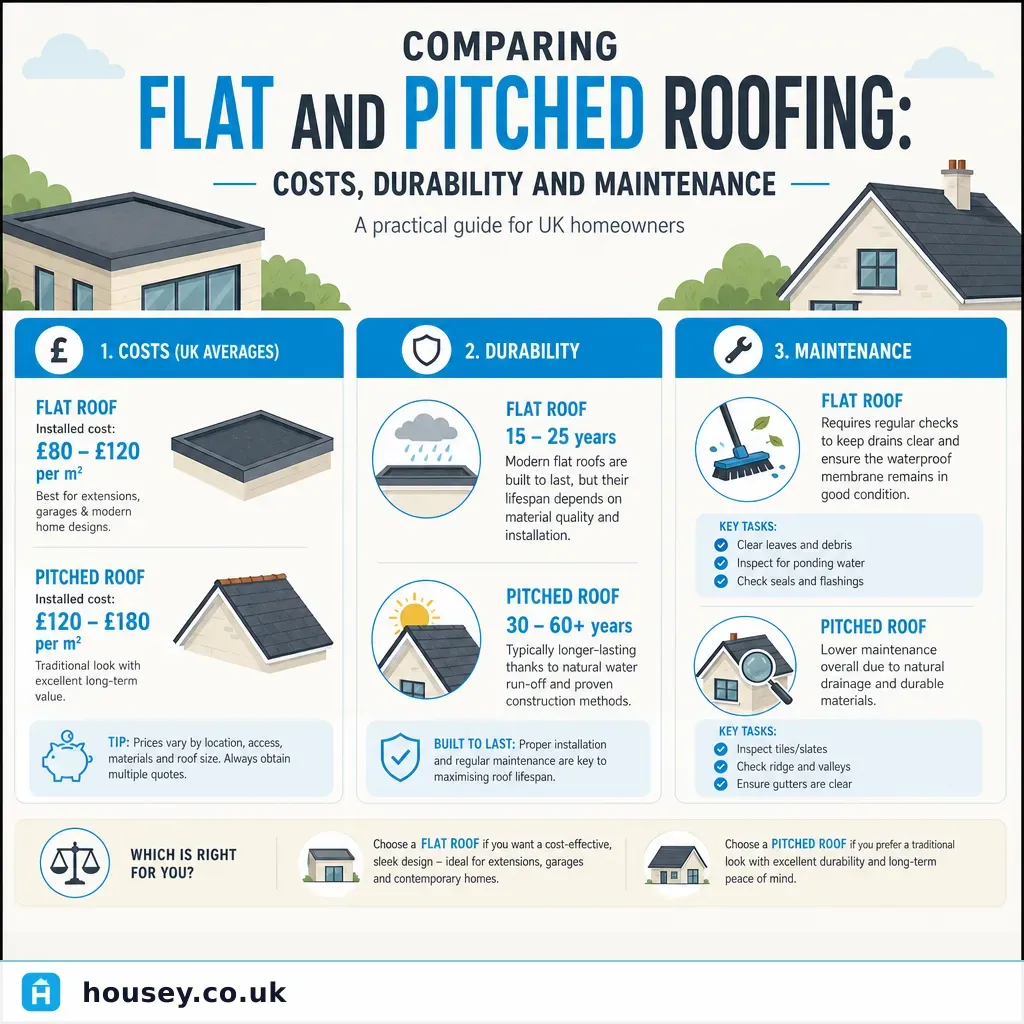
Comparing Flat and Pitched Roofing: Costs, Durability and Maintenance
Flat roofs typically cost less to install per square metre but require more maintenance and have a shorter lifespan than pitched roofs.
 Improvement & Build
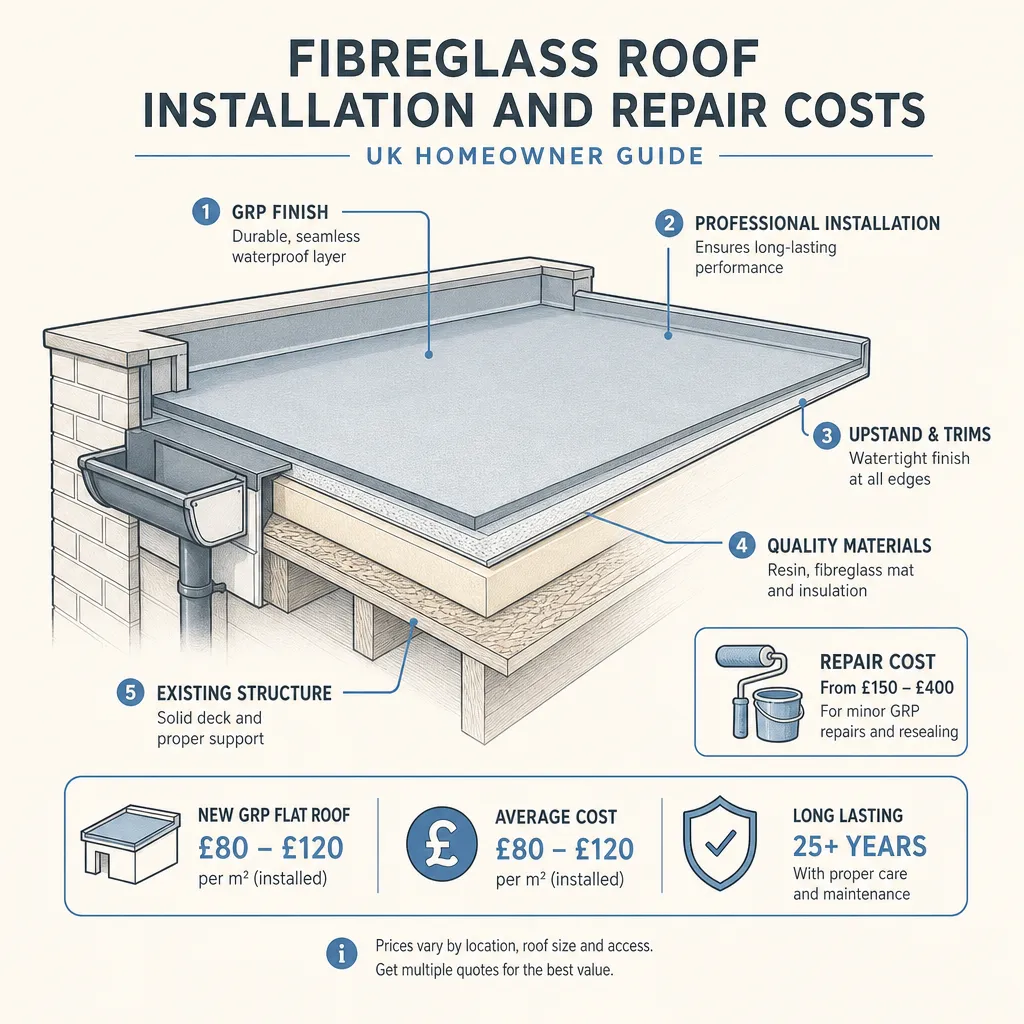
Fibreglass Roof Installation and Repair Costs
A fibreglass (GRP) flat roof costs approximately £70–£110 per square metre installed in the UK, with a typical 15 m² garage roof costing £1,200–£2,000.