Roof Repair: Damage Assessment and Costs
By Housey · Last reviewed 10th of May 2026
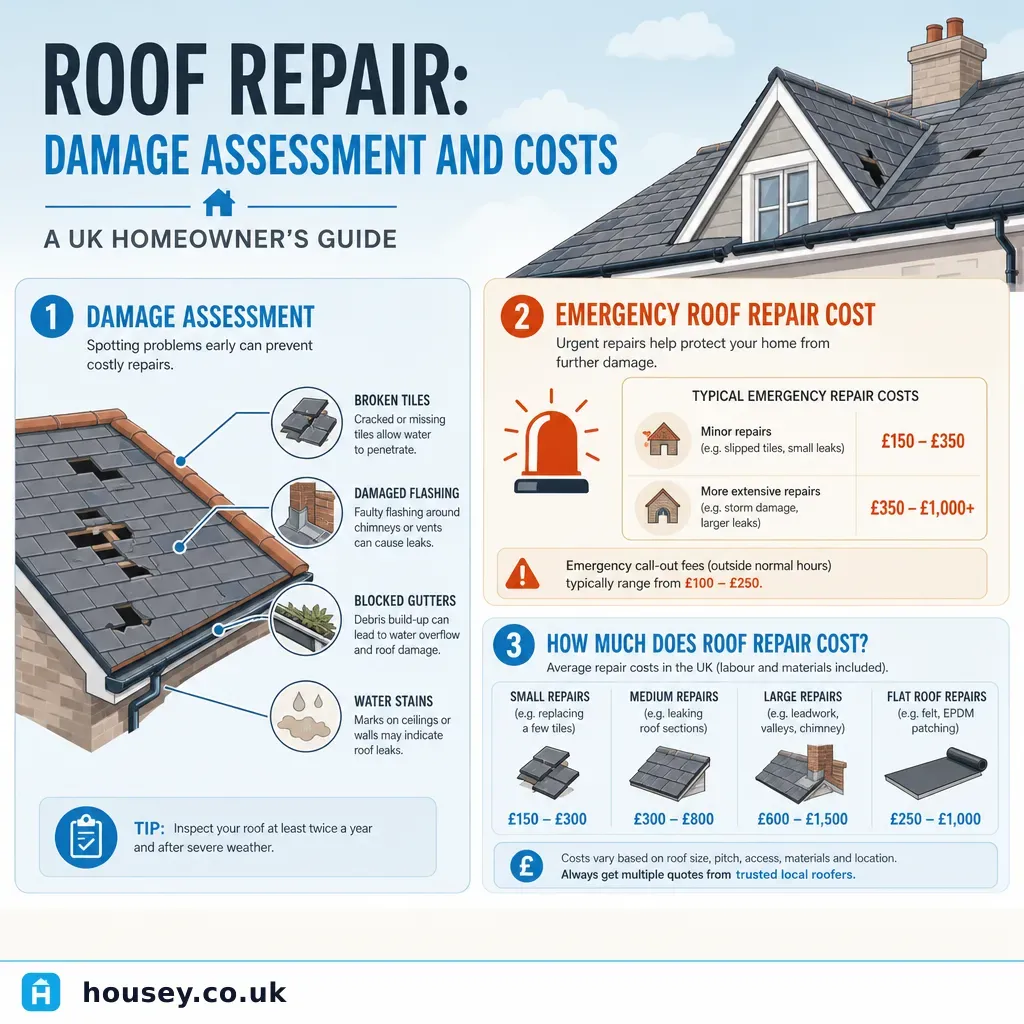
Roof Repair: Damage Assessment and Costs
A leaking or damaged roof rarely announces itself at a convenient time — storm-blown tiles, a spreading damp patch on an upstairs ceiling, or a roofer's warning during a routine inspection are the most common triggers for homeowners to act. Getting the scope of the problem right before committing to repair work can mean the difference between a targeted, cost-effective fix and spending money on repairs that only defer a more fundamental problem.
Key points
- Like-for-like maintenance repairs — replacing individual slates or tiles, re-pointing ridge tiles, re-bedding verge mortar — fall under permitted development and do not require planning permission or building regulations notification in most circumstances.
- Replacing 25% or more of the roof covering is a threshold that triggers a Building Regulations Part L notification for insulation compliance; check with your local authority building control team before instructing work of this scale.
- Emergency temporary weatherproofing should be arranged within 24–48 hours of significant storm damage to limit secondary water damage to ceilings, insulation, and roof timbers.
- Indicative UK costs for common repairs range from £150–£400 for a single tile or slate replacement up to £2,000–£5,000+ for significant ridge work, lead flashing replacement, or partial re-roofing of a section (Indicative UK costs, last reviewed 2026-05-10).
- Always confirm that a roofing contractor holds public liability insurance of at least £2m; TrustMark- or Competent Roofer-registered tradespeople offer additional assurance on quality and insurance.
How to assess roof damage before calling a contractor
A careful visual assessment from ground level — using binoculars if needed, without attempting roof access yourself — can help you describe the problem clearly, reduce assessment time, and avoid being quoted for work that is not needed.
Signs visible from the ground:
- Missing, slipped, cracked, or broken tiles or slates.
- Sagging or uneven roof plane — a potential structural issue covered in the red-flags section below.
- Visible mortar loss on ridge tiles or verges.
- Staining, moss, or lichen concentrated on specific roof sections.
- Lead flashing that appears lifted, buckled, or separated from an adjoining wall or chimney stack.
Signs visible from inside the loft:
- Daylight visible through the roof covering.
- Water staining or wet timber on rafters or sarking boards.
- Dark or brittle underfelt, suggesting it has perished.
- Evidence of earlier temporary repairs or patches.
Which type of repair do you need?
Use the decision tree below to identify the right scope of work before requesting quotes.
- Single tile or slate missing or cracked → Like-for-like replacement; no planning permission or building regulations required.
- Ridge tiles loose, cracked, or missing → Re-bedding with mortar or a dry-fix system; usually requires scaffolding for safe access.
- Flat roof membrane blistered, cracked, or showing ponding water → Patch repair or section replacement; extent depends on membrane age and overall condition.
- Lead flashing pulled away from chimney or abutment wall → Re-flashing; check pointing and chimney condition at the same time.
- Large area of slipped or missing tiles → Partial strip and re-tile; structural inspection of battens and underfelt is advisable.
- Roof plane sagging or rafters showing distress → Do not delay — ask a structural engineer or RICS Level 3 surveyor to inspect before any covering work proceeds.
- Multiple simultaneous failures across the whole roof → Commission an independent condition survey before spending on repairs that may only defer a full replacement.
How much does roof repair cost in the UK?
Indicative UK costs, last reviewed 2026-05-10. Regional rates, access difficulty, and material specification all affect prices. Obtain at least three written quotes before instructing work.
Repair type | Indicative cost range |
|---|---|
Single tile or slate replacement | £150 – £400 |
Ridge tile re-bedding (per linear section) | £300 – £800 |
Verge re-pointing or dry-fix | £200 – £600 |
Lead flashing replacement (chimney) | £400 – £1,200 |
Flat roof patch repair | £200 – £600 |
Flat roof section replacement (per m²) | £60 – £120 per m² |
Scaffolding (small house, standard access) | £600 – £1,200 |
Emergency call-out and temporary repair | £300 – £800 |
Partial re-tile (per m²) | £40 – £80 per m² |
Scaffolding is often the largest variable cost on a small repair job. Some contractors use cherry-pickers or rope access for isolated repairs, which may reduce total cost but is not always appropriate for every location or repair type.
Red flags: when a repair may not be enough
Repair is the right approach when the overall roof is in sound condition and failure is localised. The following signs suggest a more extensive assessment — or full replacement — is the more appropriate course:
- Age: Most concrete interlocking tiles have a lifespan of 40–60 years; natural slates can last 80–150 years. A roof at or near end of life may not repay targeted patch repairs.
- Perished underfelt: On older roofs, the sarking felt can become brittle and fail. Once the underfelt is no longer watertight, replacing individual tiles above it will not resolve water ingress.
- Widespread slippage: If 10% or more of tiles or slates are slipped, loose, or cracked, individual replacement typically becomes uneconomic and a partial or full re-roof is usually more cost-effective.
- Timber decay: Rot or insect attack in rafters, ridge boards, or wall plates needs structural remediation before new coverings are applied.
- Recurring leaks in the same location: Often indicates the root cause has not been correctly identified — an independent roof survey may be needed to diagnose the problem properly before further money is spent on repairs.
What to ask before accepting a quote
- What is the exact scope of work — which tiles, sections, or elements are included and excluded?
- What access method is proposed, and what does scaffolding or alternative access cost as a separate line item?
- Will the underfelt, battens, or substrate be inspected during the repair, and what happens if further defects are found?
- What materials are specified, and are they a like-for-like match to the existing covering in profile and colour?
- What guarantee is offered on the workmanship (separate from any manufacturer material guarantee), and for how long?
- Is VAT included in the quoted price?
- Do you hold public liability insurance, and at what level of cover?
- Are you registered with TrustMark, Competent Roofer, or another recognised industry scheme?
When to get professional help
Most roof repairs should be carried out by a qualified roofing contractor with appropriate insurance. Seek additional professional input if:
- The roof plane is sagging, there is visible structural distortion, or rafters appear damaged — ask a structural engineer for structural engineering advice before any covering work is specified.
- You are buying a property and need an independent assessment of roof condition separate from the vendor's assurances — an independent roof survey is the appropriate step.
- You have had multiple repairs that have not resolved the problem and need an independent diagnosis before spending further.
- The roof is on a listed building — you may need Listed Building Consent and specialist materials matched to the original.
- Storm damage is significant enough to support an insurance claim — document the damage with an independent assessment before instructing repairs.
How Housey can help
Housey connects you with vetted local roofers who can provide written, itemised quotes for repair work, and specialists offering an independent roof survey to assess whether targeted repairs or a broader programme of work is the right approach. Where structural concerns are identified, we can also connect you with structural engineering advice.
Frequently asked questions
Do I need planning permission for roof repairs?
Like-for-like maintenance repairs — replacing individual tiles or slates with the same material and profile — do not require planning permission. If the property is listed or in a conservation area, even routine repairs may require Listed Building Consent or conservation area consent, so always check with your local planning authority before instructing a contractor.
Does roof repair require building regulations approval?
Routine maintenance repairs such as replacing tiles, re-pointing ridges, or patching a flat roof generally do not require Building Regulations notification. If the work involves replacing 25% or more of the roof covering, or substantially altering a thermal element, Part L may apply and you should notify your local authority building control or a Registered Building Control Approver.
How long does a roof repair take?
Most minor repairs — tile replacement, ridge re-bedding, small flashing repairs — can be completed in one to two working days once access is arranged. Larger partial re-tiles or flat roof section replacements may take three to five days. Scaffolding erection and removal typically adds one to two days at the start and end of the programme.
Can I claim roof repairs on home insurance?
Damage caused by a sudden event such as a storm or fallen tree is usually covered by buildings insurance, subject to your excess and policy terms. Gradual wear and tear and pre-existing defects are generally excluded. Contact your insurer before instructing work, as some policies require prior approval before repairs proceed.
Sources and further reading
- Planning permission: when you need it — GOV.UK
- RICS Home Survey Standard — RICS
- TrustMark: find a registered tradesperson — TrustMark
- Competent Roofer scheme — Competent Roofer
- Working at Height Regulations 2005 — HSE
Useful next reads
 Improvement & Build
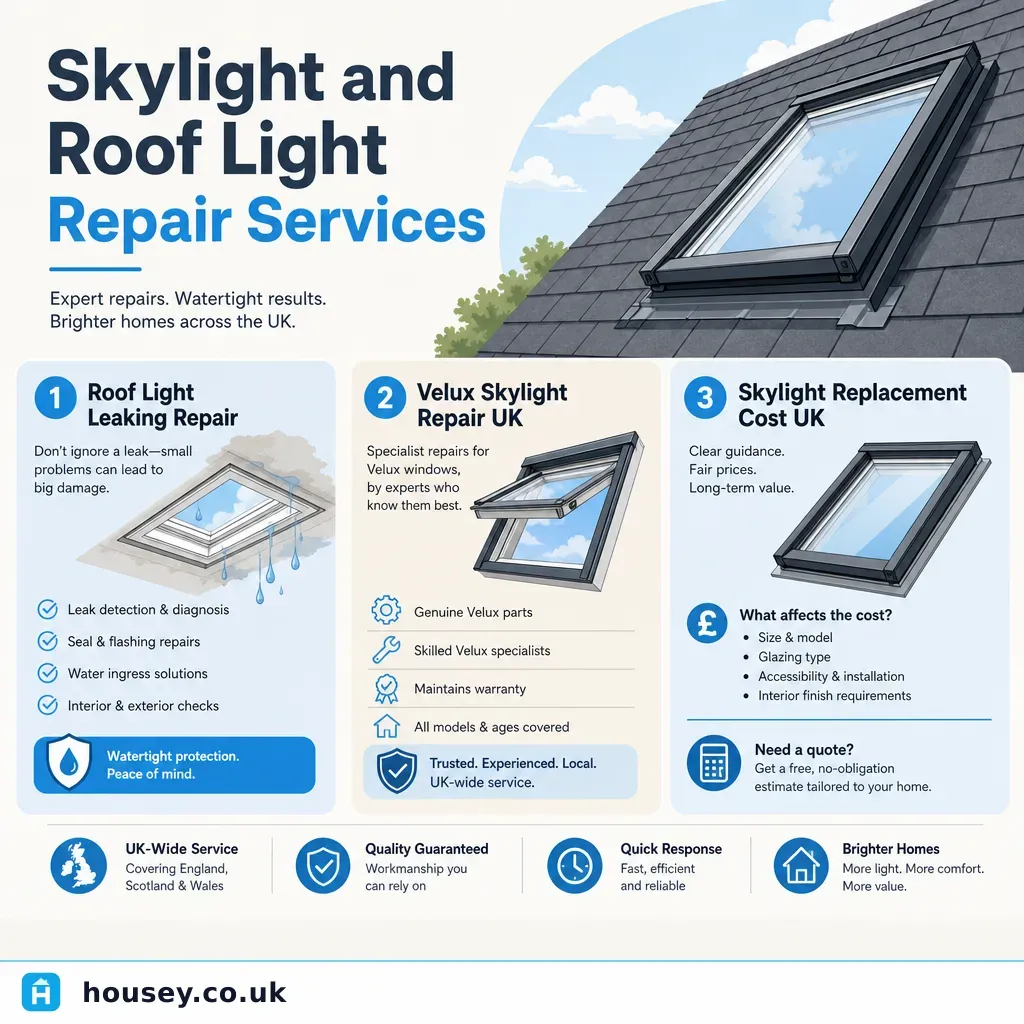
Skylight and Roof Light Repair Services
Skylight and roof light repairs typically cover resealing, glass replacement, frame repairs, or flashing fixes.
 Improvement & Build
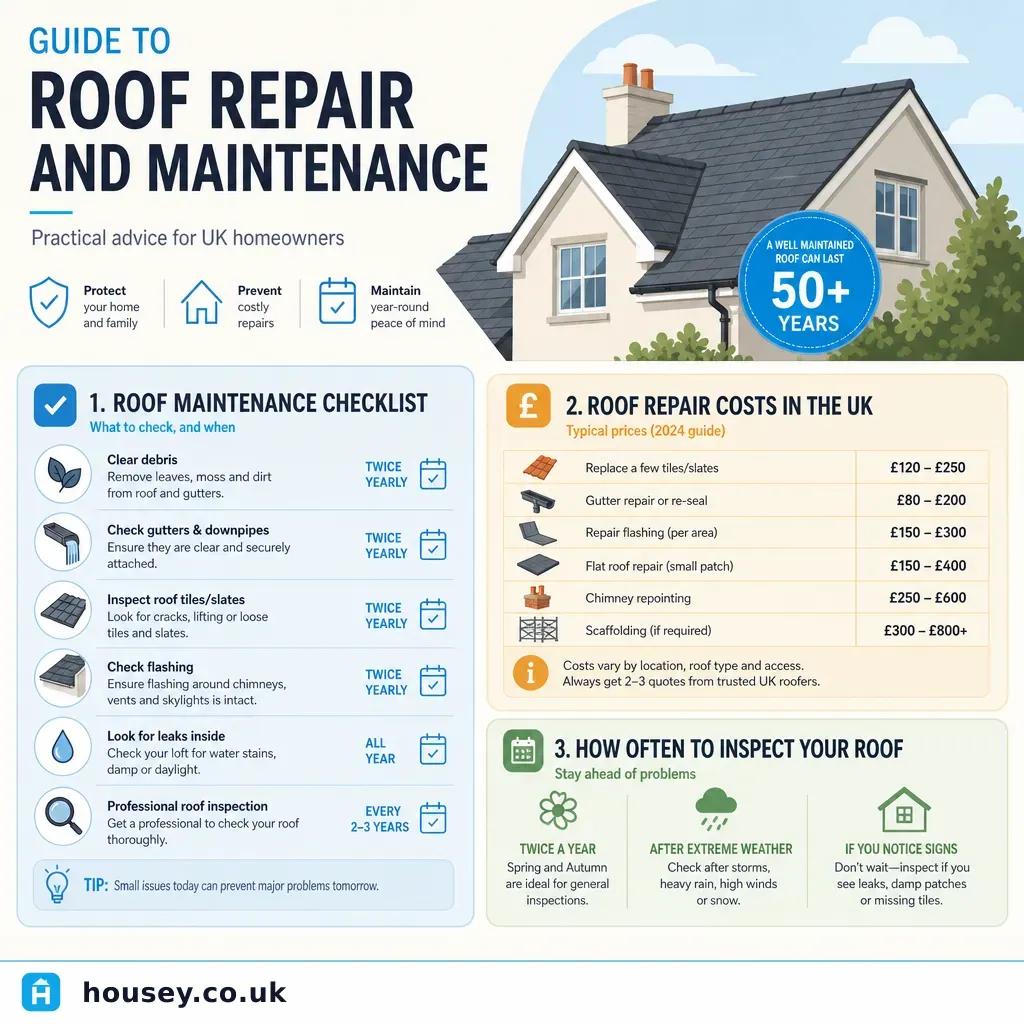
Guide to Roof Repair and Maintenance
Regular roof inspections every 3–5 years, prompt repair of damaged tiles and failed flashings, and annual gutter clearance are the core of effective UK roof maintenance.
 Improvement & Build
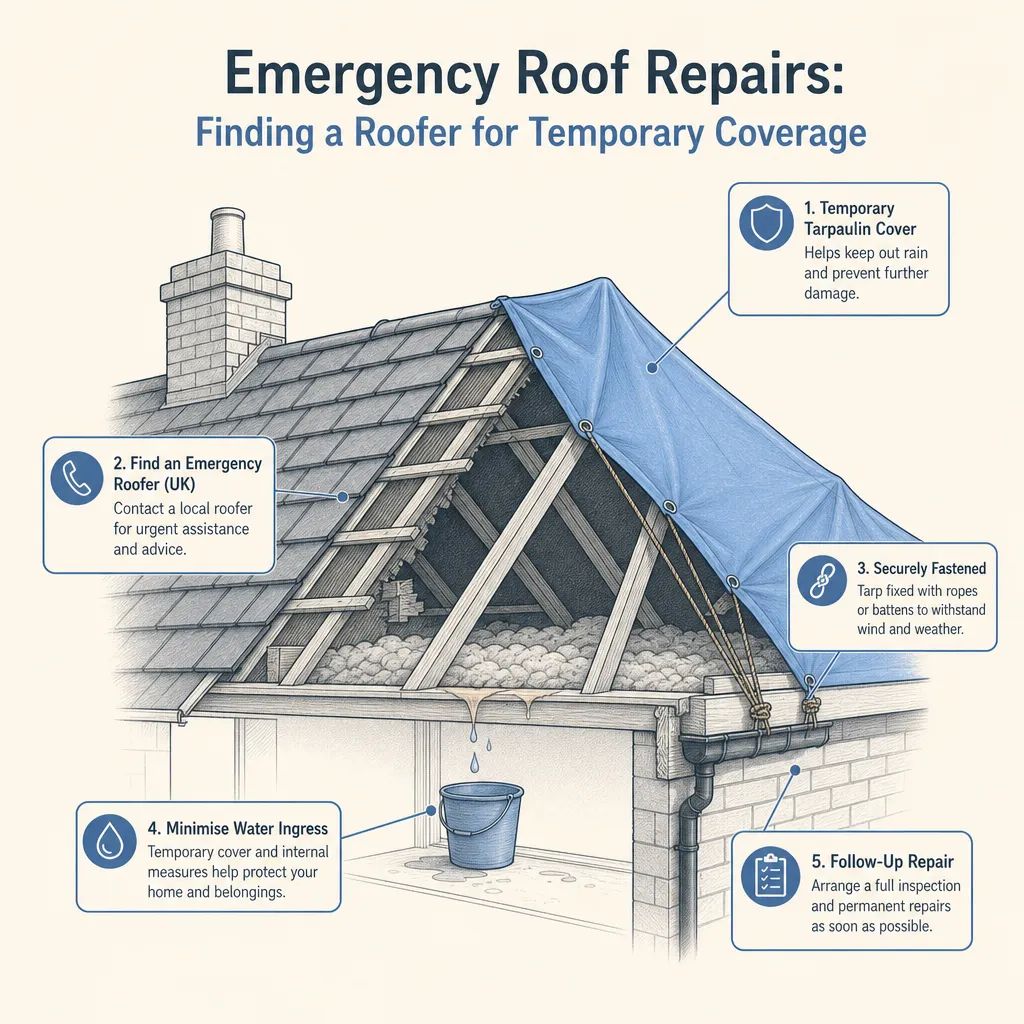
Emergency Roof Repairs: Finding a Roofer for Temporary Coverage
After storm or impact damage, the immediate priority is weatherproofing, not a permanent repair.
 Improvement & Build
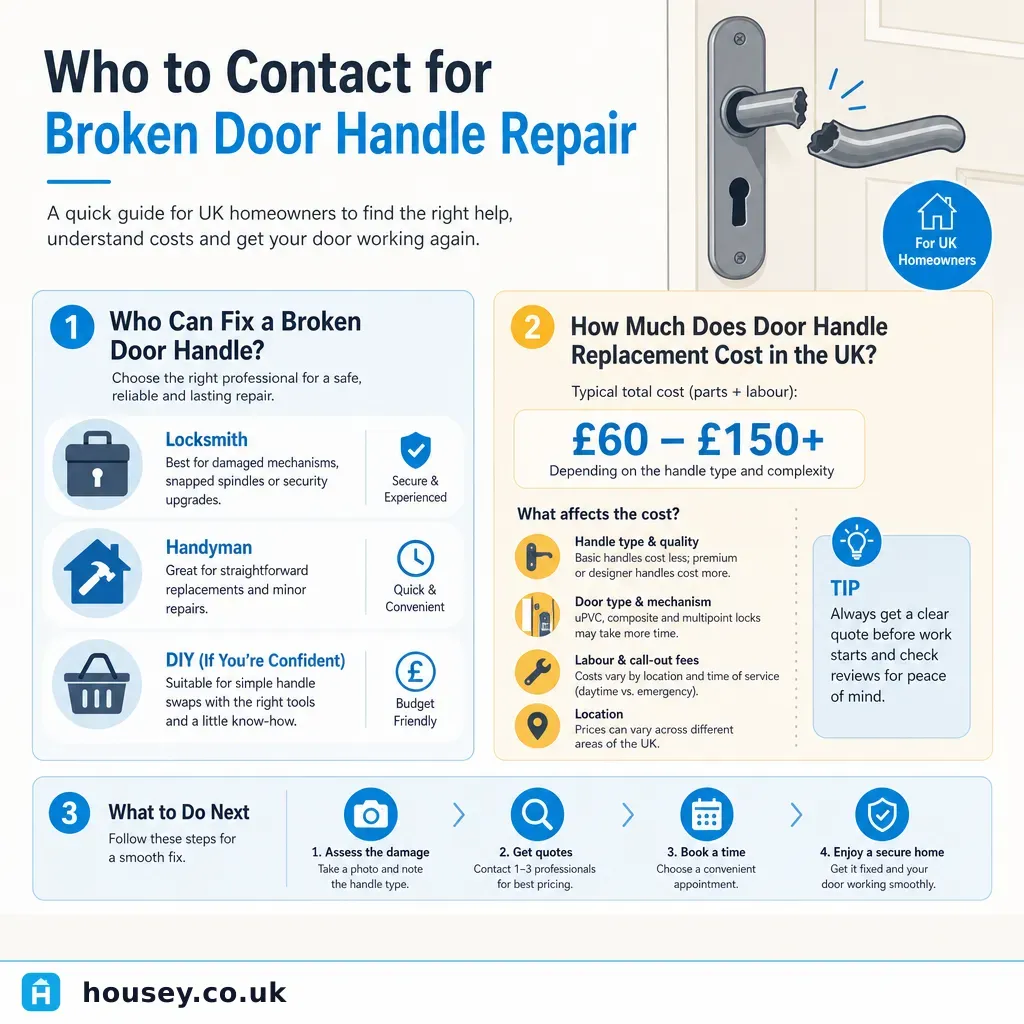
Who to Contact for Broken Door Handle Repair
For a broken door handle, a general handyperson can handle most internal timber door repairs, while a joiner or locksmith is better suited to external doors, particularly if the lock mechanism is affected.
 Improvement & Build
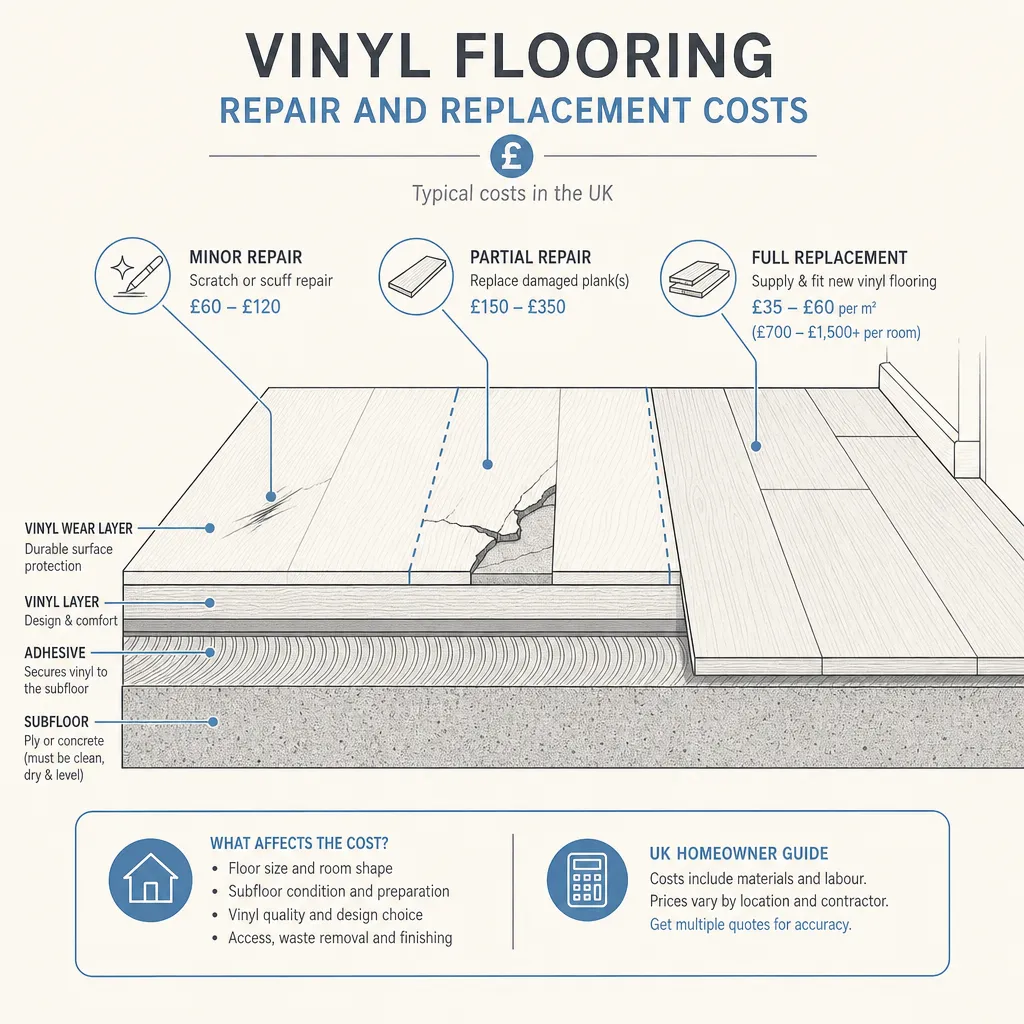
Vinyl Flooring Repair and Replacement Costs
Repairing a small area of vinyl flooring typically costs £50–£200 in the UK, while full replacement runs from £15–£35 per m² for luxury vinyl tile (LVT) plus labour of £10–£25 per m².