Inherited Property: Legal Process and Next Steps
By Housey · Last reviewed 25th of May 2026
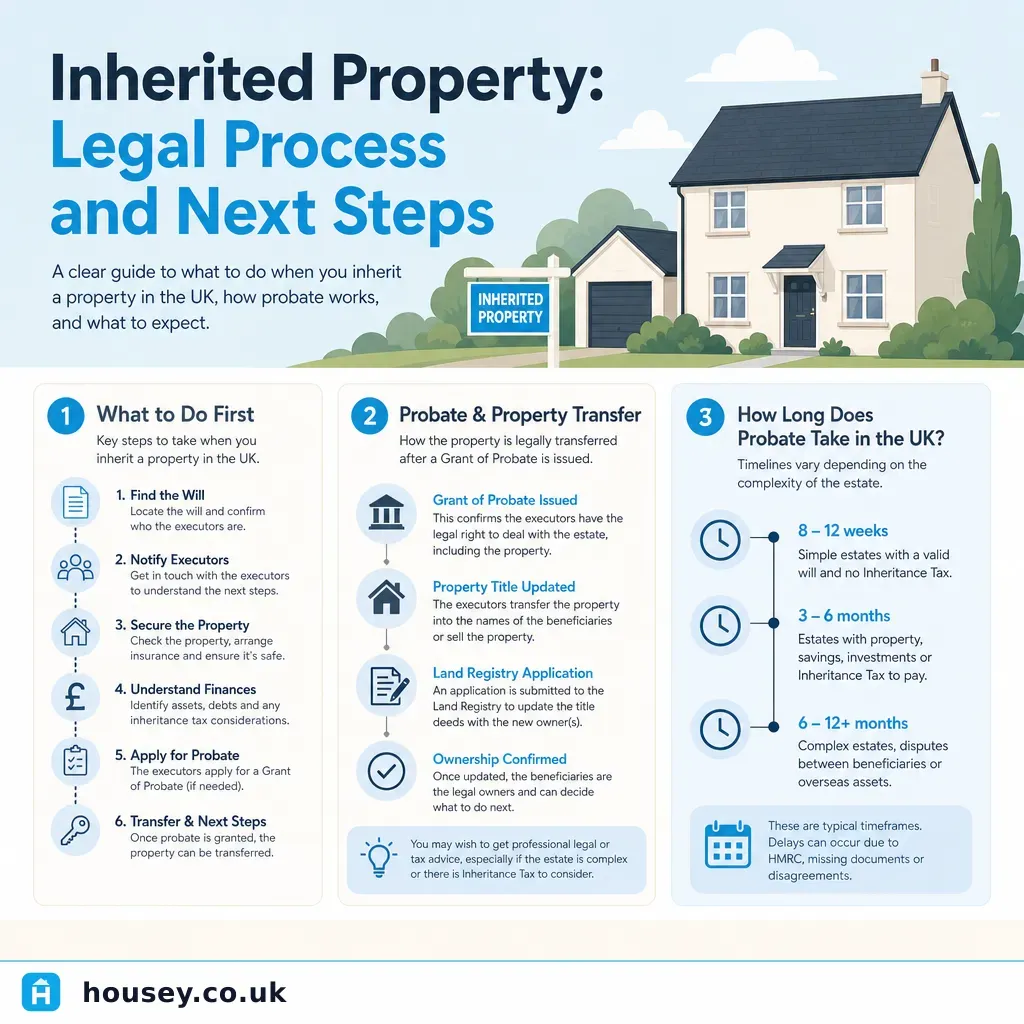
Inherited Property: Legal Process and Next Steps
Inheriting a property in the UK often arrives alongside grief and time pressure, at a moment when complex legal and financial decisions are unavoidable. Whether you are a sole beneficiary, sharing the inheritance with siblings, or acting as executor for the estate, the formal legal steps that must be completed before anything can be done with the property are precise — and mistakes can cause significant delays, disputes, or unexpected tax liabilities. Understanding the process early gives you the best chance of managing the estate efficiently.
Key points
- Probate (or letters of administration where there is no valid will) must normally be obtained before an inherited property can be transferred, sold, or remortgaged — this is a legal requirement enforced through HM Land Registry.
- The inheritance tax (IHT) nil-rate band is £325,000 per person; an additional residence nil-rate band of up to £175,000 applies when a family home passes to direct descendants — figures as of 2026-05-25 and subject to future change by HMRC.
- IHT must be paid within six months of the end of the month in which the person died; HMRC charges interest on late payments under section 234 of the Inheritance Tax Act 1984.
- If the property was owned as "joint tenants", it passes automatically to the surviving co-owner by right of survivorship — probate is not required to transfer that property, though it may still be needed for the rest of the estate.
- Capital gains tax (CGT) may be payable if the property is sold for more than its value at the date of death — the probate valuation sets the CGT base cost for the beneficiaries.
Probate vs letters of administration: what is the difference?
| Grant of Probate | Letters of Administration |
|---|---|---|
When required | When there is a valid will with a named executor who is willing and able to act | When there is no will, or no living or willing executor is named |
Who applies | The executor named in the will | An administrator — usually the closest next of kin under a set legal priority order |
Application route | GOV.UK Probate Service (online or by post), or via a probate solicitor | GOV.UK Probate Service or a probate solicitor |
Typical timescale | Approximately 8 to 16 weeks from application, though complex estates take longer | Similar, but can take longer if the estate is disputed or involves overseas assets |
Court fee | A court fee applies for estates over £5,000 — confirm the current amount at GOV.UK | As above |
Both documents give the holder legal authority to deal with the deceased's assets, including property. Neither is required for jointly owned property that passes by survivorship.
Step-by-step: the legal process after inheriting a property
- Register the death — a death certificate must be obtained from the local register office. Obtain several certified copies, as banks, solicitors, and HM Land Registry each require their own.
- Locate the will — check at home, with any solicitors the deceased used, and at the Principal Registry of the Family Division. If no will is found, the estate passes under the rules of intestacy.
- Value the estate — a formal probate valuation of the property is required, based on its open market value at the date of death. An RICS-registered valuer can provide a written valuation report for this purpose.
- Assess any inheritance tax liability — a solicitor or accountant can calculate whether IHT is due, taking into account the nil-rate band, residence nil-rate band, and any allowances transferable from a deceased spouse or civil partner.
- Apply for probate or letters of administration — either through the GOV.UK Probate Service or via a solicitor, after any IHT due has been settled or arrangements made with HMRC.
- Transfer or sell the property — once probate is granted, a conveyancing solicitor handles the legal transfer (an "assent") to the beneficiaries, or manages the conveyancing if the estate is selling.
- Register the change at HM Land Registry — the new ownership must be registered and the title updated to reflect the new proprietor or, if sold, the new buyer.
Decision tree: what should you do with an inherited property?
- Keep and live in the property if you intend to occupy it — instruct a conveyancing solicitor to complete the assent, and address any outstanding mortgage, insurance, or maintenance obligations promptly.
- Let the property if you want to retain the asset as a rental investment — take legal advice on landlord obligations, arrange an Electrical Installation Condition Report (EICR) and a gas safety check, and confirm whether any existing mortgage permits letting.
- Sell the property if you want to realise the value of the estate — instruct a conveyancing solicitor for the sale. CGT may be payable on any increase in value between the date of death and the date of sale; seek tax advice before proceeding.
- Transfer to co-beneficiaries if the will divides the property between multiple people — a solicitor can advise on an assent, a deed of variation, or the formal division of sale proceeds between beneficiaries.
- Check for an existing mortgage — if the deceased had a mortgage on the property, notify the lender immediately. Most residential mortgages fall due on the borrower's death unless it transfers to a surviving joint borrower.
- Seek specialist advice if beneficiaries cannot agree — disputes about inherited property can require mediation or, in contested cases, court proceedings.
Homeowner checklist: documents to gather
Collect the following as early as possible to avoid delays during probate and conveyancing:
- Certified copies of the death certificate (at least four to six copies recommended)
- The original will and any codicils (supplementary additions to the will)
- Official copies of the title register and title plan from HM Land Registry (obtainable online for a small fee)
- A written probate valuation from an RICS-registered surveyor, based on open market value at the date of death
- Mortgage statements and lender contact details for any secured lending on the property
- Buildings insurance certificate — the property must remain insured throughout the estate administration period
- Evidence of any existing tenancies or occupiers in the property
- Council tax correspondence — the local authority should be notified of the death promptly
- Any planning permissions, building regulations completion certificates, FENSA window certificates, or gas and electrical safety certificates relating to the property
Important limitations
This guide provides general information about the legal process for inherited property in England and Wales. Probate law, inheritance tax, and capital gains tax rules are complex and subject to change. Scotland uses a different process ("confirmation" rather than probate, handled through the sheriff court) and Northern Ireland has separate procedures. Nothing in this guide constitutes legal or tax advice. Always instruct a qualified solicitor, and where inheritance tax or capital gains tax may be due, consult a tax adviser or contact HMRC directly.
What to ask a qualified professional
Before instructing a solicitor or property valuer after inheriting a property, ask:
- Does the estate require formal probate, or does the property pass automatically by right of survivorship?
- Is inheritance tax payable on the estate, and by when must it be settled with HMRC?
- What is the appropriate probate valuation for the property, and how is it determined for IHT and CGT purposes?
- Will capital gains tax apply if the beneficiaries sell the property rather than retain it?
- Are there any existing mortgages, legal charges, or restrictions registered against the title?
- What is the process and estimated cost for assenting the property to the beneficiaries?
- If beneficiaries disagree about what to do with the property, what options are available?
When to get professional help
A conveyancing solicitor is required to register any change of ownership at HM Land Registry. Professional legal advice is strongly recommended for all but the simplest estates. Seek specialist advice if:
- The estate may be liable for inheritance tax.
- There is no will and intestacy rules may produce unexpected outcomes for the family.
- There are multiple beneficiaries with conflicting wishes about the property.
- The property is leasehold, has an existing mortgage, or has tenants in place.
- The deceased owned property in more than one country or lived abroad at the time of death.
- A beneficiary disputes the will or the valuation of the estate.
- You have concerns about the condition, history, or title of the property.
How Housey can help
Housey connects you with regulated conveyancing solicitors experienced in probate property transfers and estate sales, as well as RICS-qualified valuers for probate valuations. Use our conveyancing service to find a regulated solicitor for the legal transfer or sale, and our valuation surveys service to arrange a formal RICS probate valuation based on the property's open market value at the date of death.
Frequently asked questions
Do I always need probate to deal with an inherited property?
Not always. If the property was jointly owned as "joint tenants", it passes automatically to the surviving owner by right of survivorship, and probate is not required for that property alone (though probate may still be needed for the rest of the estate). If the property was owned solely by the deceased, or as "tenants in common", probate will normally be required before it can be transferred or sold.
How long does probate take in England and Wales?
The GOV.UK Probate Service typically processes straightforward applications in approximately 8 to 16 weeks. Complex estates — involving foreign assets, business interests, disputes, or substantial inheritance tax calculations — can take significantly longer. A probate solicitor can advise on realistic timescales for your specific estate and help avoid common causes of delay.
Is inheritance tax payable on an inherited property?
Inheritance tax may be due if the total estate exceeds the nil-rate band of £325,000. An additional residence nil-rate band of up to £175,000 can apply when a family home passes to direct descendants. Spouses and civil partners can transfer unused allowances, potentially doubling these thresholds. The IHT rate on amounts above the thresholds is currently 40%. Always seek professional tax advice to confirm your specific position.
Can we market an inherited property before probate is granted?
You can instruct an estate agent and accept an offer before probate is granted, but exchange of contracts and legal completion cannot take place until the grant of probate or letters of administration is received. Starting early — instructing an agent, obtaining valuations, and instructing a solicitor — can reduce overall timescales once probate is confirmed.
Sources and further reading
- GOV.UK — Wills, probate and inheritance — GOV.UK
- GOV.UK — Inheritance Tax — HMRC
- GOV.UK — Capital Gains Tax on property — HMRC
- HM Land Registry — official copies of the register — HM Land Registry
- Citizens Advice — what to do after a death — Citizens Advice
Useful next reads
 Buying & Moving
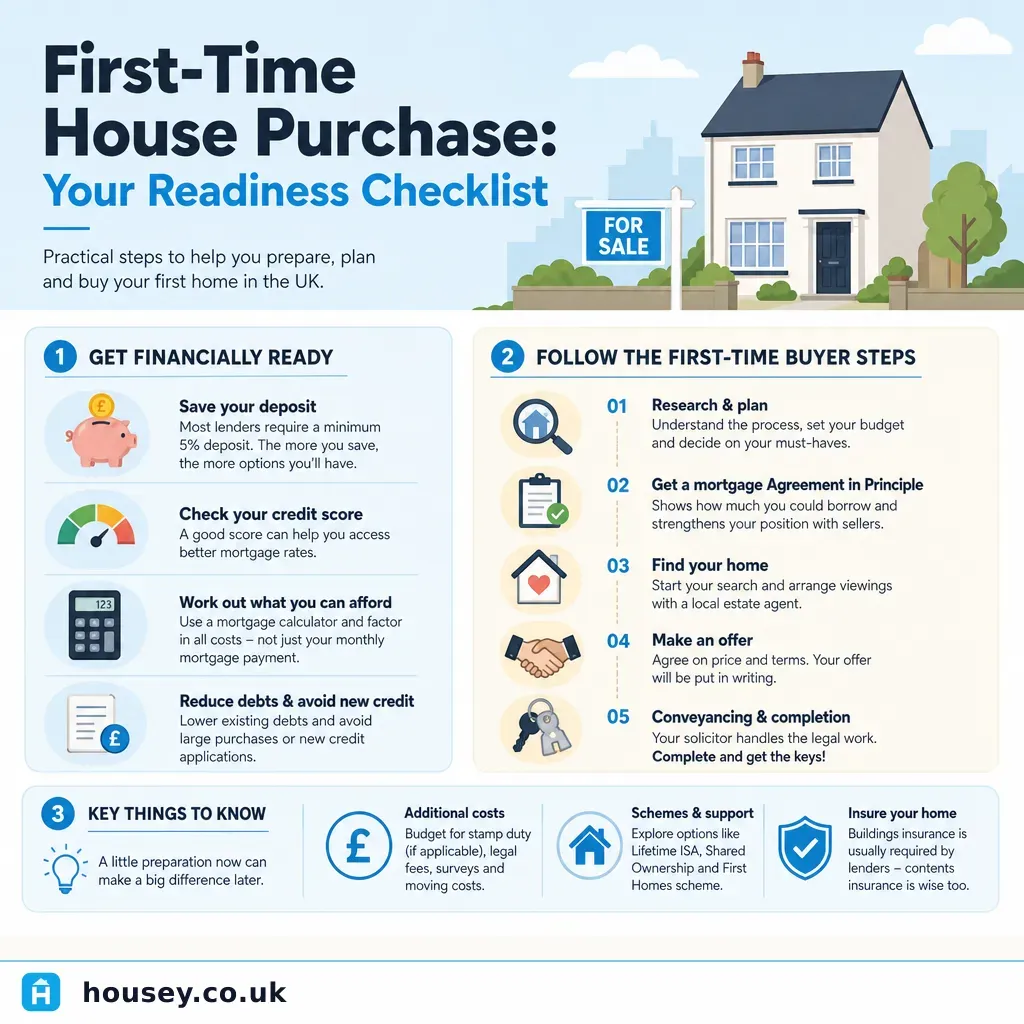
First-Time House Purchase: Your Readiness Checklist
Before making your first offer, have a mortgage agreement in principle, a deposit plus buying costs saved (allow 2–3% of the purchase price beyond the deposit itself), and a conveyancer ready to instruct.
 Buying & Moving
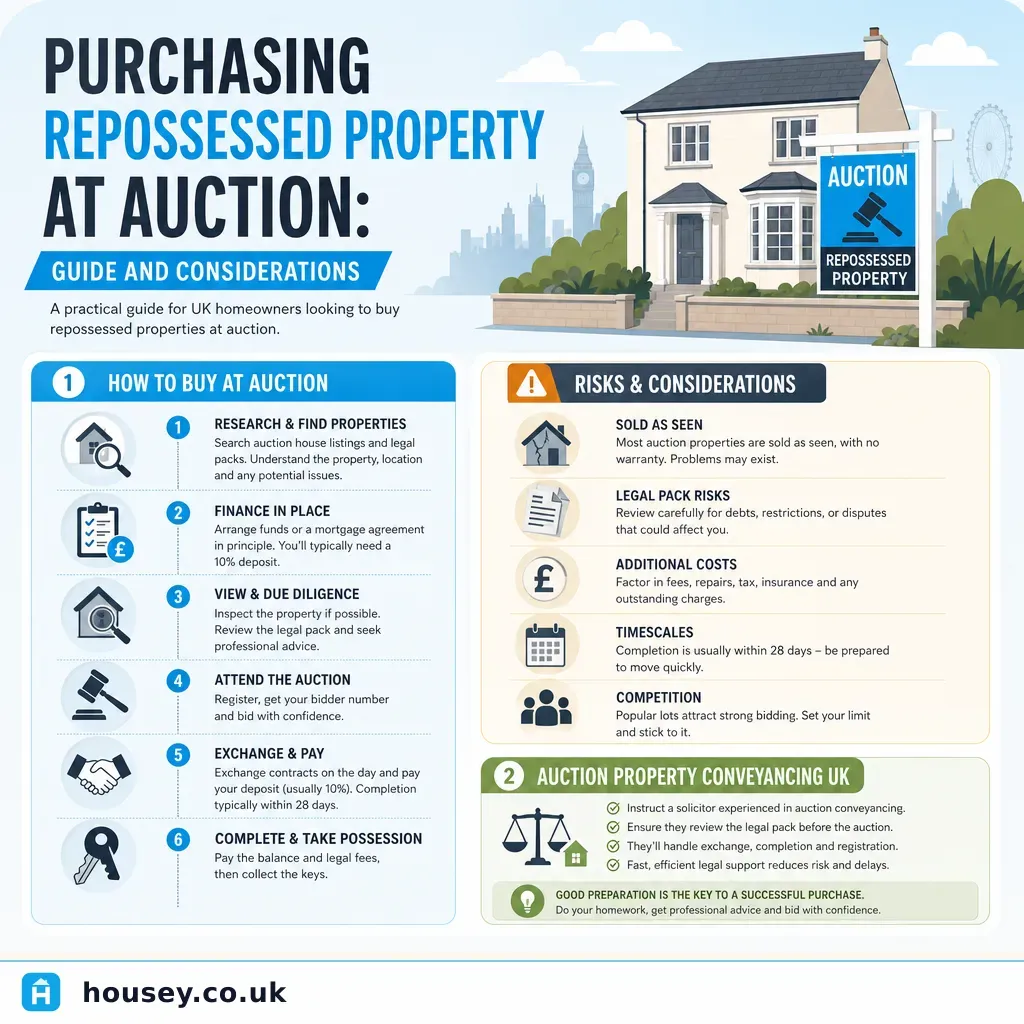
Purchasing Repossessed Property at Auction: Guide and Considerations
Repossessed properties sold at auction in the UK are legally binding from the fall of the hammer, with completion typically required within 28 days.
 Buying & Moving
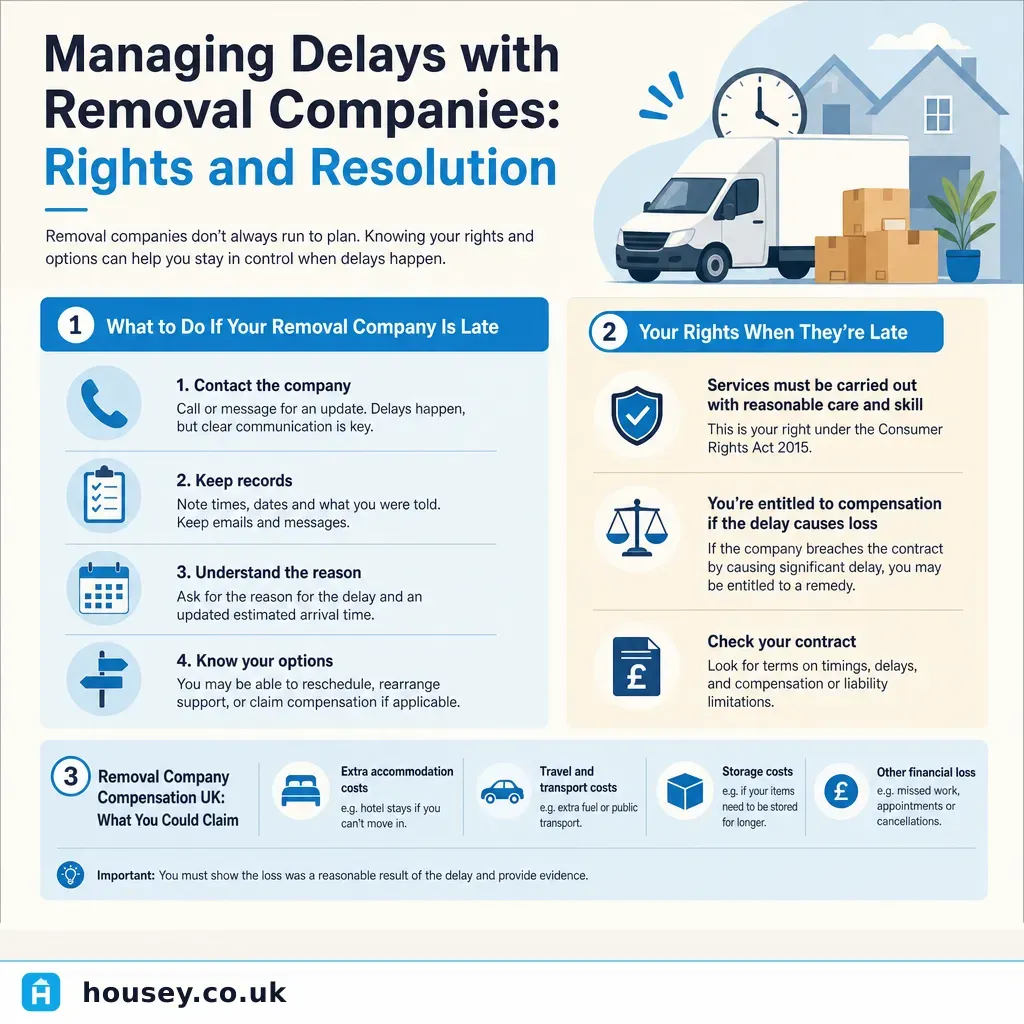
Managing Delays with Removal Companies: Rights and Resolution
If a removal company is late, your rights depend on your contract and whether the company is BAR-registered.
 Buying & Moving
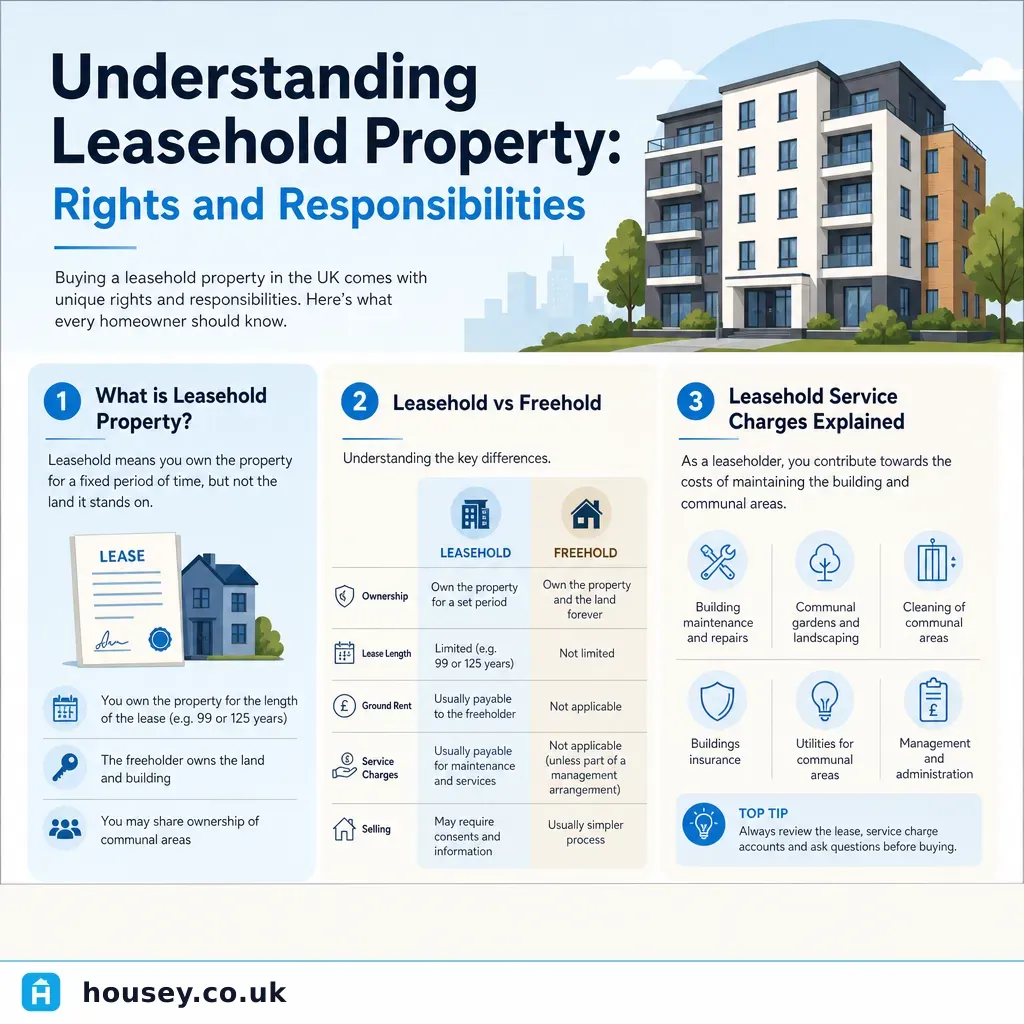
Understanding Leasehold Property: Rights and Responsibilities
Leasehold means you own a time-limited interest in a property while the freeholder owns the land and building.
 Buying & Moving
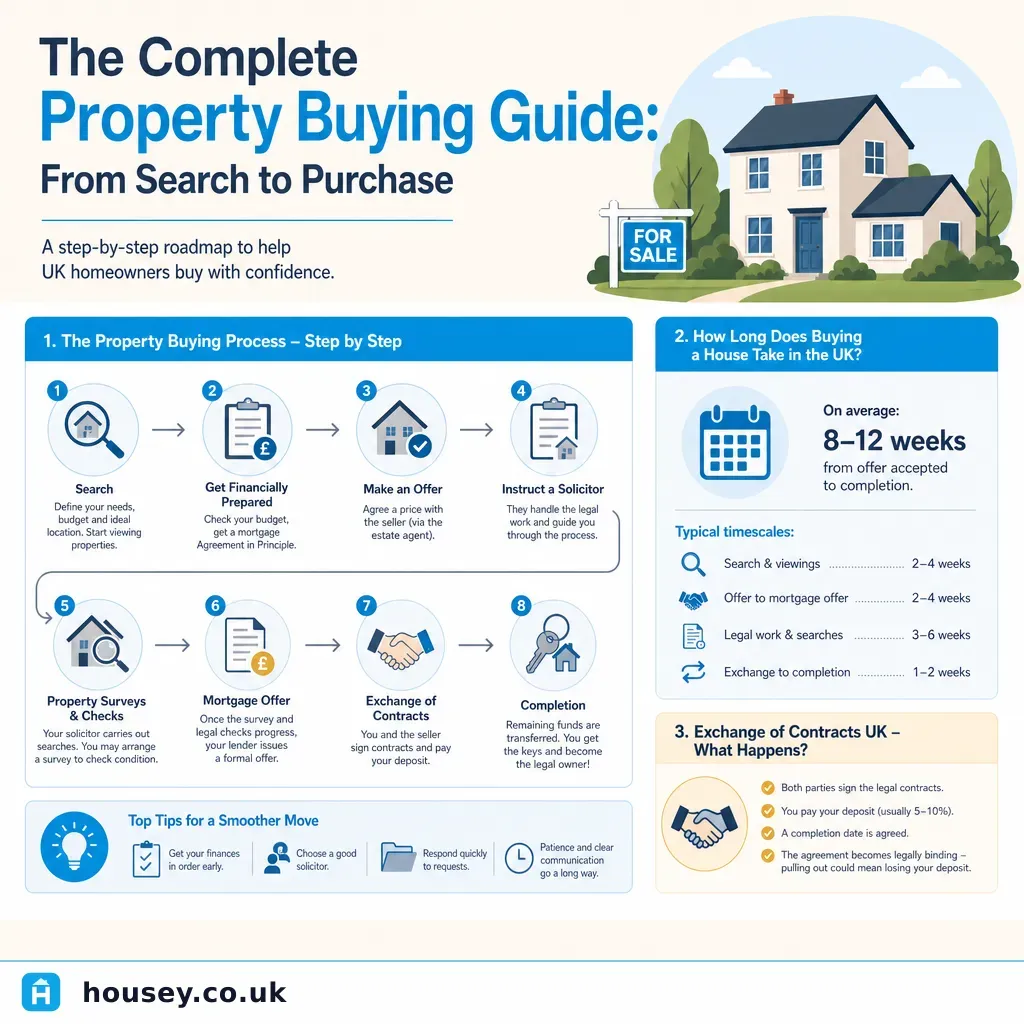
The Complete Property Buying Guide: From Search to Purchase
Buying a property in England and Wales typically takes 3–6 months from accepted offer to completion.