Purchasing Repossessed Property at Auction: Guide and Considerations
By Housey · Last reviewed 30th of May 2026
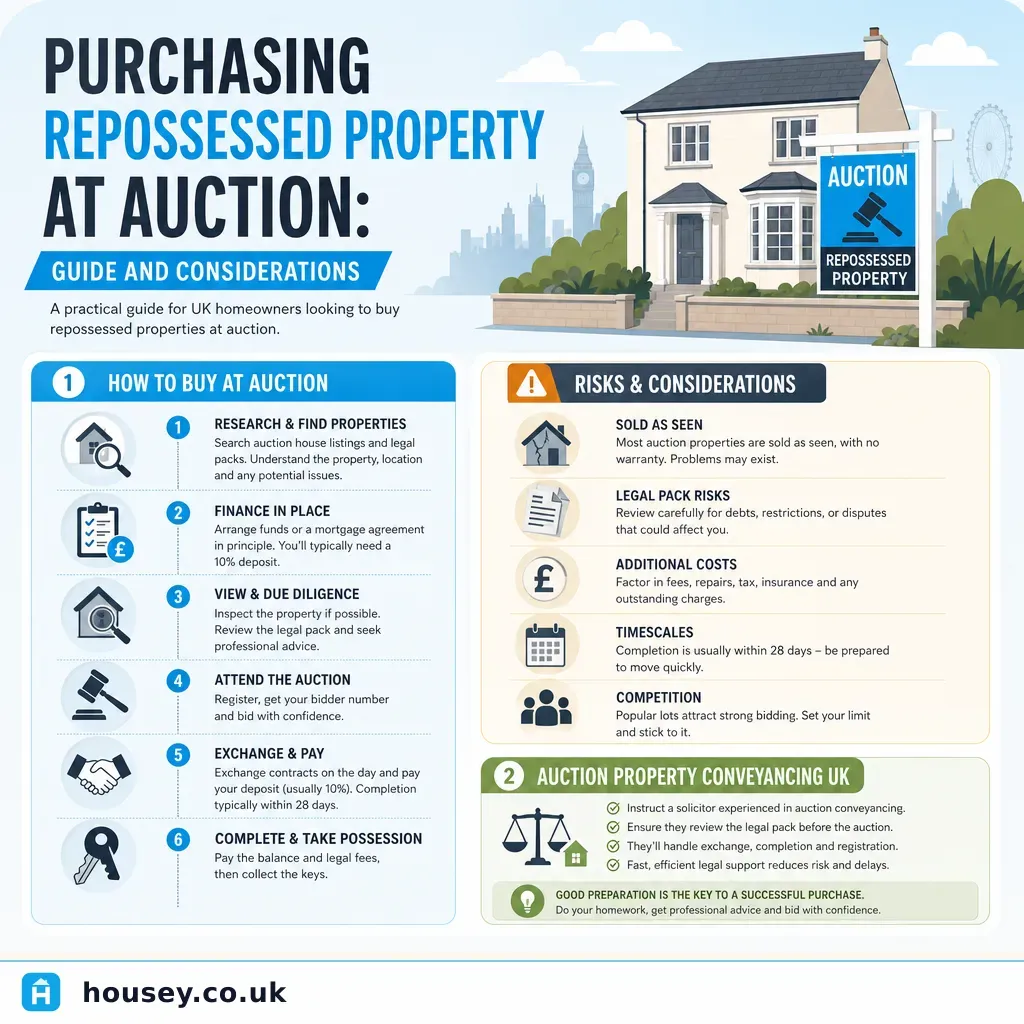
Purchasing Repossessed Property at Auction: Guide and Considerations
Repossessed homes appear at UK property auctions with some regularity, often listed at guide prices below open-market levels. For buyers prepared to move quickly and accept a higher degree of uncertainty, they can represent genuine value — but the auction process operates under strict legal rules that are fundamentally different from a conventional estate agency sale. The consequences of bidding without adequate preparation can be severe and largely irreversible.
Key points
- At a traditional unconditional auction, a successful bid is legally binding from the fall of the hammer; the buyer pays a 10% deposit on the day and must complete — usually within 28 calendar days — regardless of subsequent survey findings or changes in personal circumstance.
- Repossessed properties are sold by a mortgagee in possession, who has a duty to seek the best reasonably obtainable price but is not obliged to carry out repairs, disclose defect histories, or provide building control approvals for past works.
- Every auctioned property should have a legal pack containing the title register, searches, and special conditions of sale; buyers must read this — and ideally have a solicitor review it — before the auction, not after.
- Standard residential mortgage offers cannot usually be drawn down within a 28-day completion window; bridging finance or specialist auction mortgage products are the most common funding route.
- Repossessed homes may have been vacant for weeks or months, increasing the risk of frost damage, damp, mould, and stripped pipework — all of which a pre-auction inspection can help identify.
How the auction process works for repossessed properties
When a borrower defaults on their mortgage and a lender obtains a possession order through the courts, the property passes into the lender's control as mortgagee in possession. Lenders commonly use auction to achieve a sale quickly and to demonstrate publicly that they have sought a fair market price. Properties are listed with a guide price (typically at or below the expected sale price) and often an undisclosed reserve.
At a traditional unconditional auction:
- The winning bidder signs the memorandum of sale immediately after the auction.
- A deposit — usually 10% of the purchase price — is paid on the day.
- Legal completion must occur within 28 calendar days.
There is no cooling-off period. A buyer who cannot complete loses their 10% deposit and may be liable for the seller's additional costs, including any shortfall if the property has to be resold at a lower price.
Modern method of auction (MMoA) — sometimes called conditional auction — operates differently. The winning bidder pays a non-refundable reservation fee and typically has up to 56 days to exchange and complete. MMoA is common on platforms such as iamsold and SDL Property Auctions. The legal obligations and timescales differ materially from traditional auction — read the specific terms of each auction house carefully before bidding.
Legal pack: what it contains and why it matters
Every auctioned property should have a legal pack, prepared by the seller's solicitors, available before the sale date. For a repossessed property, the pack typically includes:
- Office copy entries (title register and title plan from HM Land Registry)
- Local authority, drainage, and environmental searches
- Special conditions of sale, which may impose additional costs or obligations on the buyer
- Any tenancy agreements or notices of occupation
- Planning history and any outstanding enforcement notices
What it may not include. A repossessing lender often has limited knowledge of the property's history, past alterations, building control approvals, or the condition of services. If building regulations approval or planning permission for past works cannot be evidenced, that risk passes to the buyer at the point of purchase.
Always ask a solicitor to review the legal pack several days before the auction, and raise any questions with the seller's solicitors while there is still time to withdraw without cost.
Surveys and inspections before bidding
Most auction houses offer pre-auction viewing slots, and arranging a professional survey before the sale date is strongly advisable for any repossessed property.
A RICS Level 3 Building Survey is usually most appropriate for:
- Properties of significant age, unusual construction, or visible disrepair
- Any repossessed home that has been vacant for more than a few weeks
- Homes where you have any concerns about the structure, roof, services, or dampness
A valuation survey can help you establish whether your intended bid price is realistic relative to current market value and the likely cost of necessary repairs.
If a full survey cannot be arranged before the auction, use the viewing appointments carefully: look at the roof covering, check for damp staining on walls and ceilings, assess the state of pipework and the heating system, and note any signs of structural movement at corners of windows, doors, and external walls.
Red flags to watch for before bidding
Treat any of the following as a prompt for further investigation — or a reason not to bid — before the sale date:
- Extensive damp or mould, particularly in a property vacant over winter, which may indicate a drainage failure, rising damp, or chronic condensation problem.
- Missing or damaged pipework, radiators, or boiler — stripped properties are a known risk in repossessions; check for signs of copper pipe removal from service runs.
- Structural cracks — stepped or diagonal cracks through brickwork, or cracks at corners of windows and door frames, warrant an independent structural assessment before bidding.
- Legal pack anomalies — missing searches, unexplained restrictions on the title, or special conditions that transfer unexpected costs or obligations to the buyer.
- Unusual occupancy — tenants in situ, informal occupiers, or unresolved occupancy rights can complicate or delay completion beyond the 28-day window.
- Environmental search flags — flood risk zones, proximity to contaminated land, or historic industrial use indicated in search results.
- Altered property with no building control approval — garage conversions, loft conversions, or extensions without documented sign-off present legal and mortgage risks that are difficult to resolve post-purchase.
Financing an auction purchase
Standard residential mortgages are usually too slow for the 28-day completion window at a traditional unconditional auction. Common funding routes are:
- Bridging finance — short-term secured lending that can be arranged quickly, then refinanced onto a residential mortgage after completion. Bridging rates are significantly higher than residential mortgage rates and typically include arrangement fees.
- Specialist auction mortgage products — some lenders offer mortgage-in-principle products designed for auction timescales, though availability depends on the property's condition, tenure, and location.
- Cash purchase — the most straightforward option if funds are available, and removes the risk of a lender declining the property in its current condition.
Arrange your finance in principle before auction day. If you intend to refinance from bridging to a residential mortgage, confirm in advance that the property in its current condition will be acceptable to a mainstream residential lender.
Important limitations
This article provides general information about buying repossessed property at auction in England and Wales. It does not constitute legal, financial, or structural advice. Every auction property, legal pack, and financing arrangement is different. Rules and obligations vary depending on the auction format (unconditional or conditional), the tenure of the property, the local authority area, and the specific special conditions set by the seller. Always seek qualified professional advice before bidding.
When to get professional help
Auction purchases move fast, and professional advice is not optional — it must be in place before the sale date, not after the hammer falls. Do not bid if:
- You have not had the legal pack reviewed by an independent solicitor.
- You have not arranged or confirmed your funding in principle with a lender or bridging provider.
- You have unresolved concerns about the structure, legal title, or occupancy of the property.
- The property shows signs of serious defects — structural movement, major damp, or stripped services — that you have not had independently assessed.
If you are new to property auctions, consider attending one as an observer before committing your own money at a live sale.
What to ask a qualified professional
Before bidding on a repossessed auction property, ask:
Solicitor:
- Are there any restrictions, covenants, or charges on the title that would affect my use of the property or my ability to resell it?
- Do the special conditions of sale impose costs or obligations on the buyer beyond the purchase price?
- Are there any adverse entries in the searches — flood risk, contaminated land, planning enforcement — that I should factor into my decision?
- Is the title fully registered, and is there any missing documentation for past works or alterations?
Surveyor:
- What is the condition of the roof, external walls, and foundations?
- Is there evidence of structural movement, and is it likely to be historic and stable, or ongoing?
- Are there signs of damp that suggest a drainage failure, rising damp, or a condensation problem?
- In your view, would this property be mortgageable in its current condition on standard residential terms?
Finance broker:
- Can bridging finance be arranged in time for this auction date and this specific property?
- Are there any factors — tenure, property condition, or occupancy — that might prevent refinancing onto a residential mortgage after completion?
How Housey can help
Housey connects buyers with specialists who understand the pace and complexity of auction purchases. Compare quotes from RICS Level 3 building surveyors who carry out pre-auction inspections, request a valuation survey to sense-check your bid price against current market value, or find an experienced conveyancing solicitor to review the legal pack before the sale date.
Frequently asked questions
What is a legal pack and why do I need to read it before bidding?
A legal pack contains the title documents, searches, and special conditions of sale for an auctioned property. Once you win a bid at a traditional unconditional auction, you are legally bound to complete on the terms in that pack — there is no right to renegotiate. A solicitor reviewing the pack before the auction can identify risks, missing documents, or unusual conditions that should affect your bid price or your decision to bid at all.
Can I get a mortgage to buy a property at auction?
Standard residential mortgages are usually too slow for the 28-day completion window at a traditional unconditional auction. Bridging finance or specialist auction mortgage products are more commonly used. If you plan to refinance onto a residential mortgage after completion, confirm in advance that the lender will accept the property in its current condition — repossessed properties in poor repair may not meet mainstream lender requirements.
What happens if I cannot complete within 28 days?
Failure to complete on time at a traditional auction means you forfeit your 10% deposit and may be liable for the seller's additional costs, including any shortfall if the property is subsequently resold at a lower price. The 28-day contractual deadline is very difficult to extend once a sale is agreed, which is why financing arrangements must be in place before auction day.
Is a survey possible before an auction?
Yes, in most cases. Auction houses typically offer pre-auction viewing slots, and you can arrange for an independent surveyor to attend and carry out an inspection before the sale date. This is strongly advisable before bidding on any repossessed property. You will have no recourse for structural or condition issues discovered after the hammer falls.
What does "sold as seen" mean for repossessed properties?
Repossessing lenders sell with limited knowledge of the property's history and carry out no repairs or improvements before sale. Buying at auction means accepting the property in whatever condition it is in on completion day. Any defects discovered after the auction — whether structural, relating to services, or arising from the legal title — become the buyer's responsibility to address and fund.
Sources and further reading
- Search for property information at HM Land Registry — GOV.UK
- RICS Home Surveys Standard — RICS
- FCA guidance on mortgages — Financial Conduct Authority
- Citizens Advice: Mortgage repossession — Citizens Advice
Useful next reads
 Buying & Moving
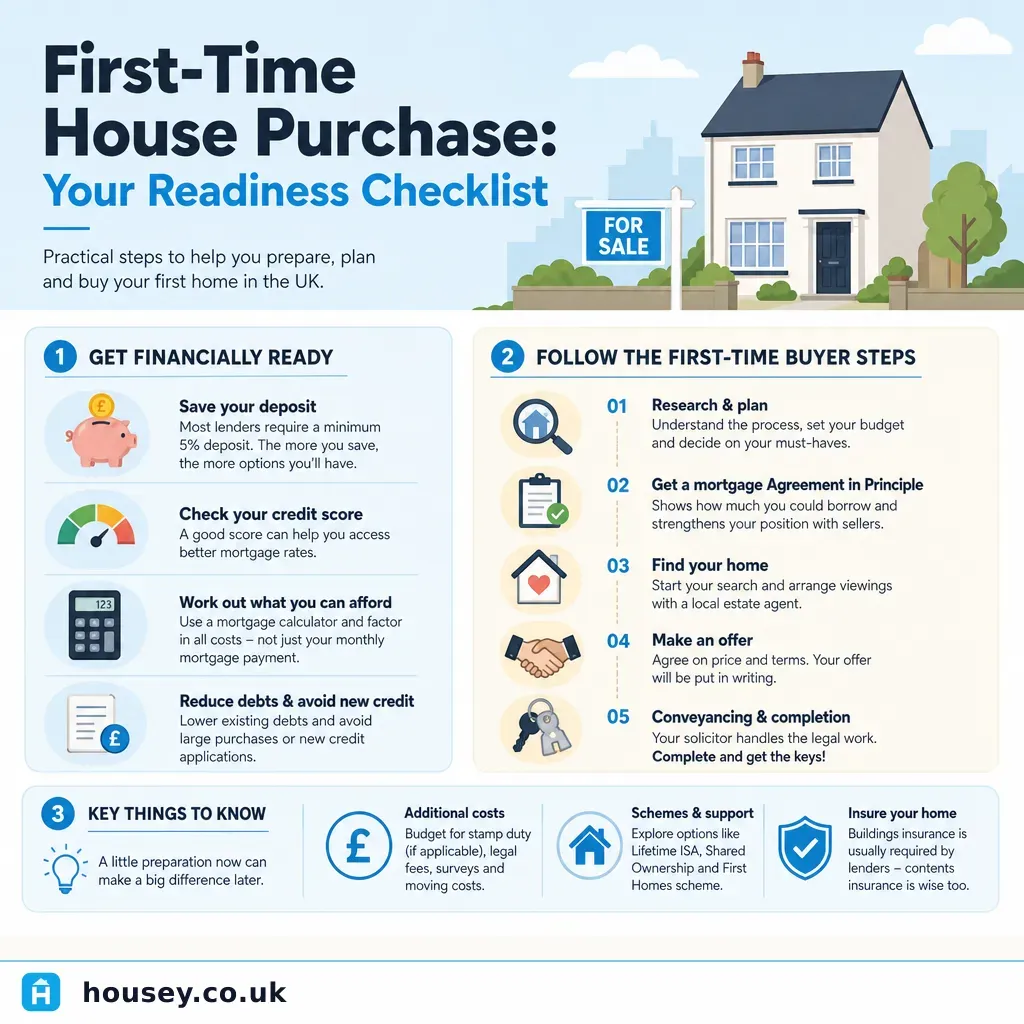
First-Time House Purchase: Your Readiness Checklist
Before making your first offer, have a mortgage agreement in principle, a deposit plus buying costs saved (allow 2–3% of the purchase price beyond the deposit itself), and a conveyancer ready to instruct.
 Buying & Moving
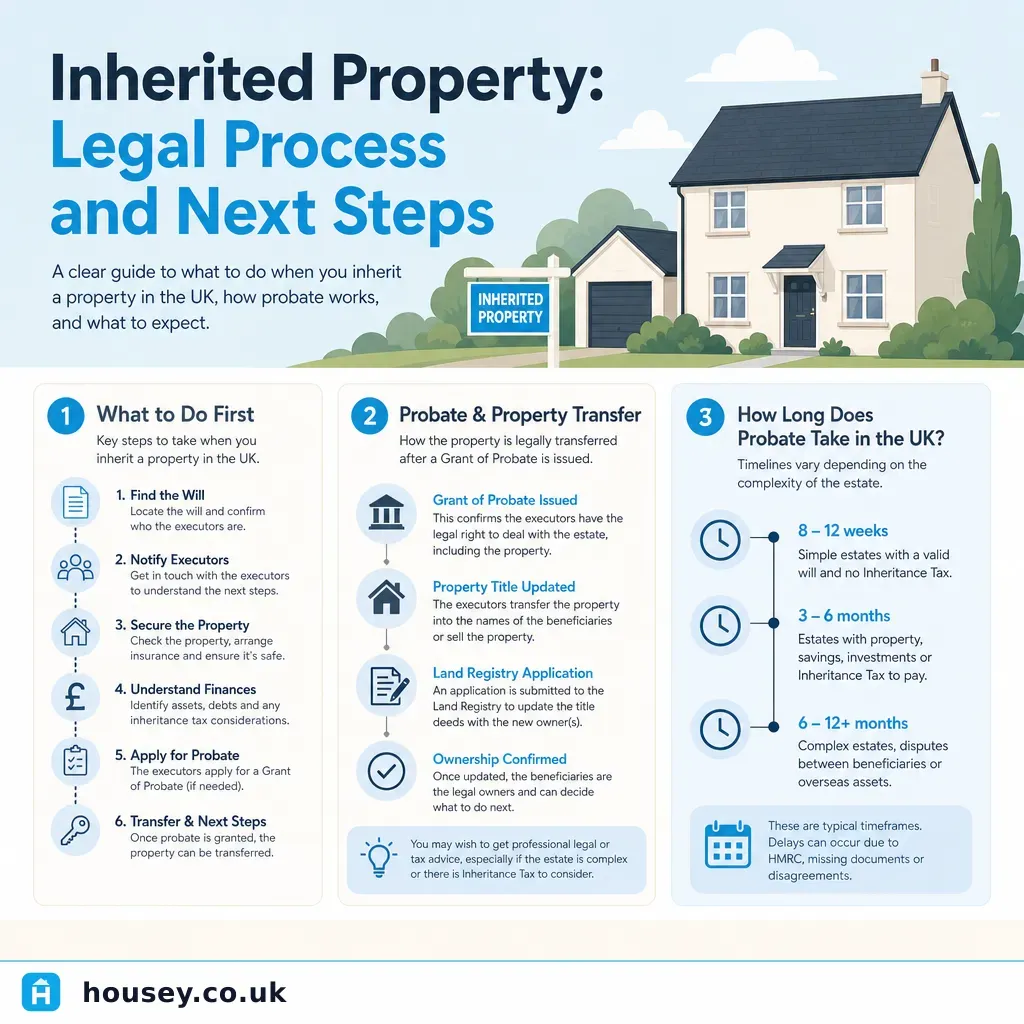
Inherited Property: Legal Process and Next Steps
When you inherit a property in the UK, the estate's executor must obtain probate — or letters of administration if there is no will — before the property can be transferred or sold.
 Buying & Moving
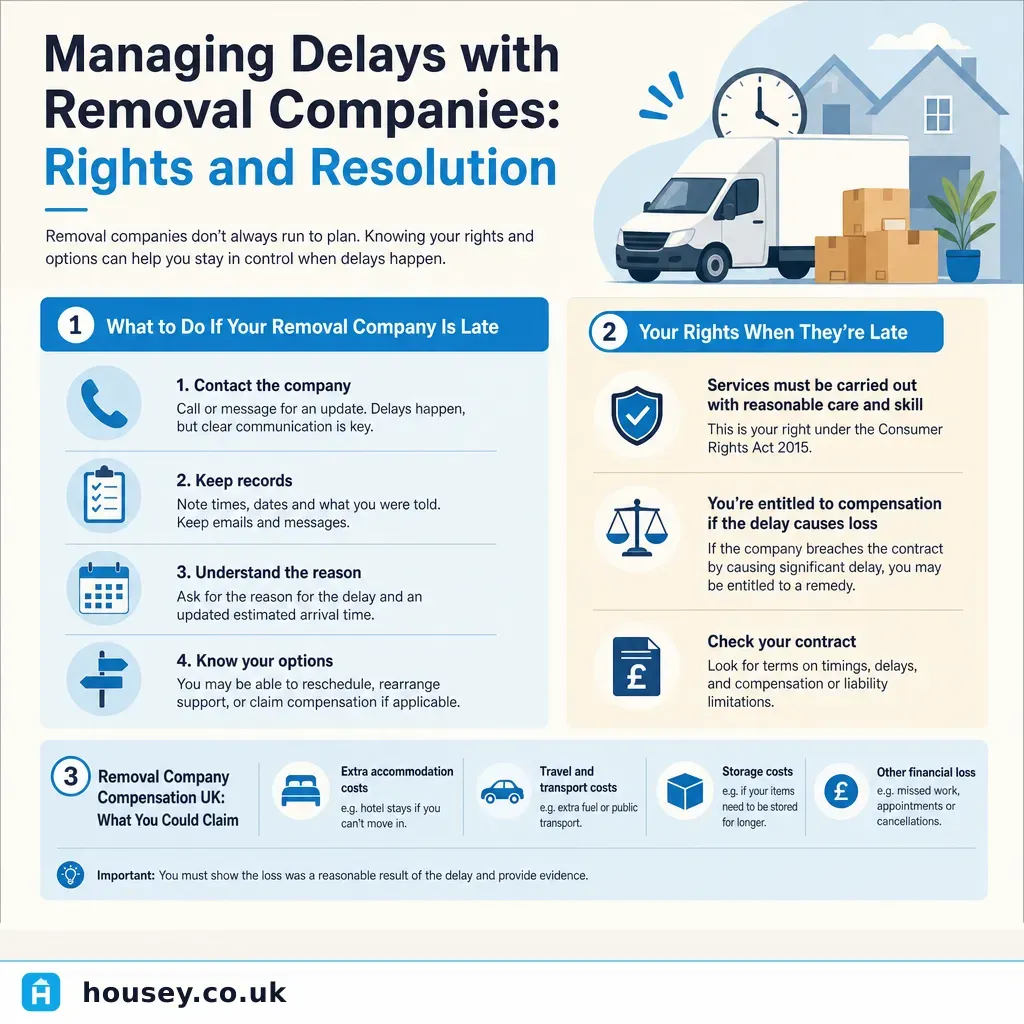
Managing Delays with Removal Companies: Rights and Resolution
If a removal company is late, your rights depend on your contract and whether the company is BAR-registered.
 Buying & Moving
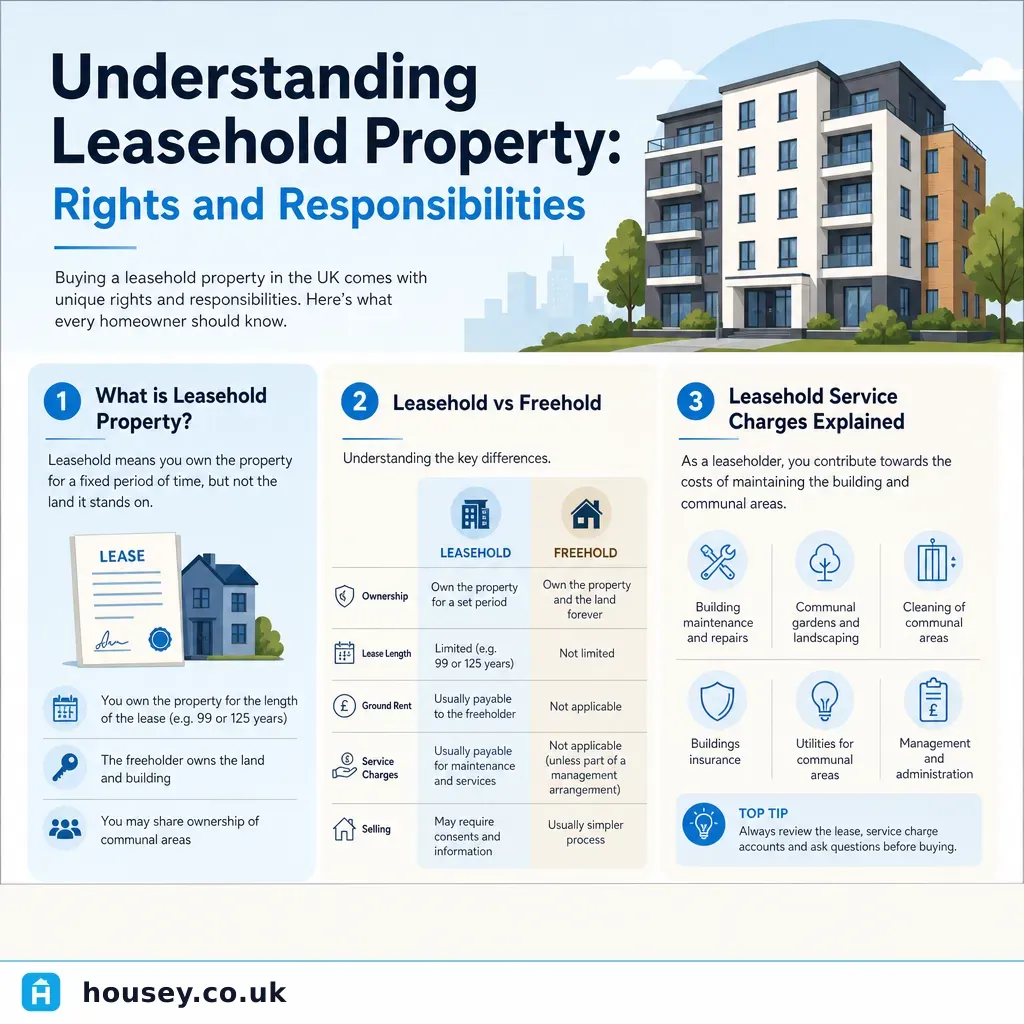
Understanding Leasehold Property: Rights and Responsibilities
Leasehold means you own a time-limited interest in a property while the freeholder owns the land and building.
 Buying & Moving
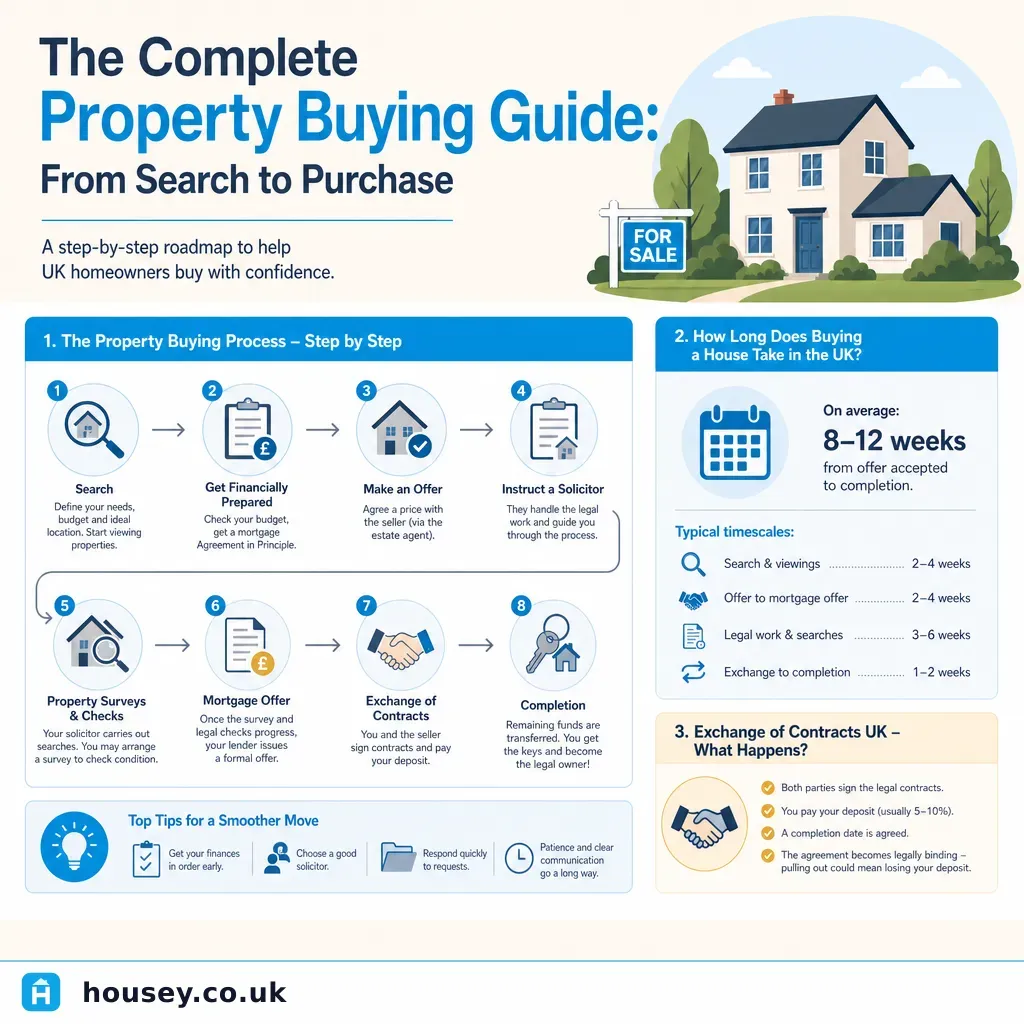
The Complete Property Buying Guide: From Search to Purchase
Buying a property in England and Wales typically takes 3–6 months from accepted offer to completion.