Garden Design and Landscaping Inspiration
By Housey · Last reviewed 30th of May 2026
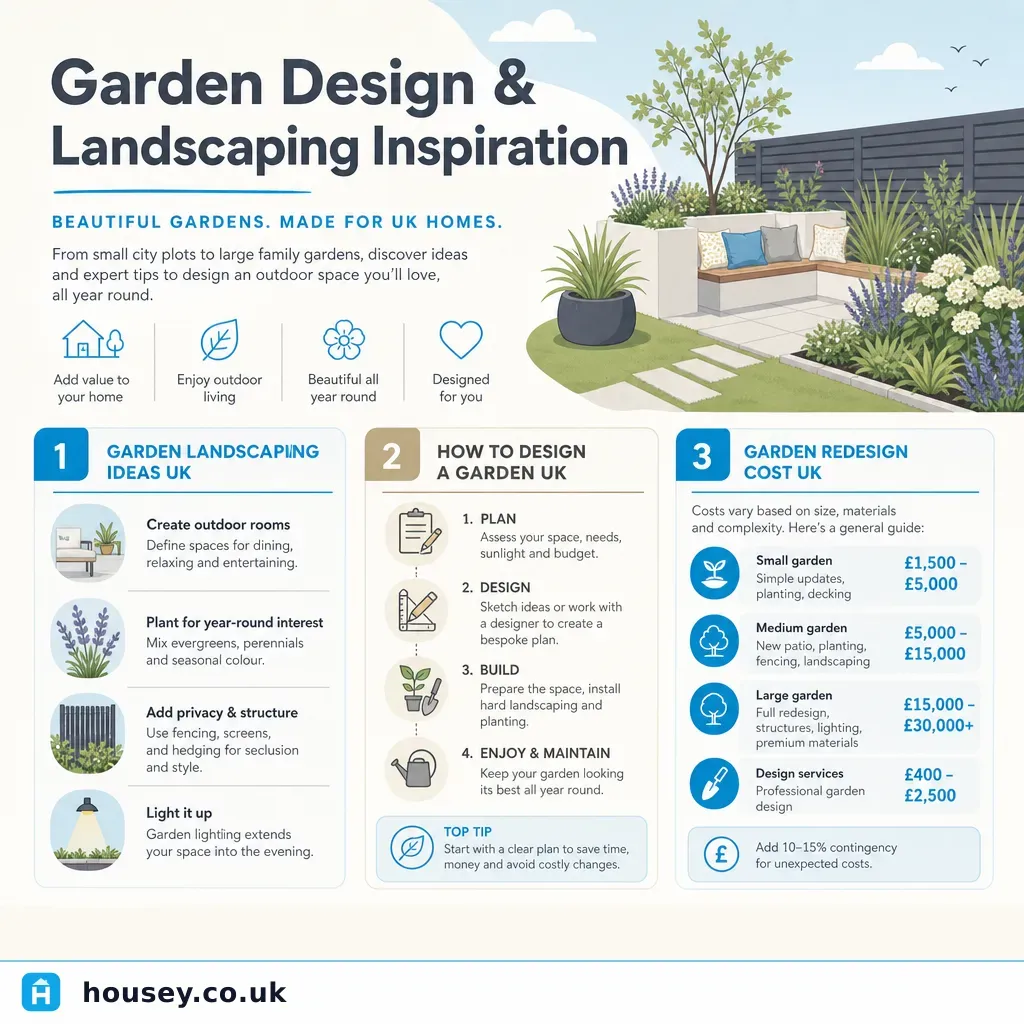
Garden Design and Landscaping Inspiration
Gardens and outdoor spaces are increasingly central to how UK homeowners use and value their properties. Whether you have just moved into a blank-canvas new build in the East Midlands or inherited a neglected Victorian terrace plot in South London, a considered design approach can transform how the space feels and functions. With outdoor living extending the useful months of a garden and good landscaping measurably contributing to kerb-side appeal, it pays to plan before you plant or pave.
Key points
- Front gardens with hard surfacing over 5 m² require either a permeable surface or planning permission under the Town and Country Planning (General Permitted Development) Order 2015.
- The Royal Horticultural Society recommends assessing aspect (north, south, east, or west-facing) and soil type before specifying any planting, as these fundamentals determine what will actually thrive.
- A landscape architect registered with the Landscape Institute is the appropriate professional for projects involving significant level changes, drainage engineering, or new retaining walls above 600 mm.
- Mature trees protected by Tree Preservation Orders (TPOs) or within Conservation Areas cannot be removed or substantially pruned without Local Planning Authority consent — fines can reach £20,000.
- Hard landscaping (patios, paths, walls) typically accounts for 60–70% of total garden project cost; professional design fees range from roughly £500 for a concept plan to £3,000+ for full working drawings (Indicative UK costs, last reviewed 2026-05-30).
Which professional do you need?
Garden projects range from a weekend self-planting session to a multi-month landscaping contract. The right professional depends on the scale and complexity of the work.
Situation | Appropriate professional | What they deliver |
|---|---|---|
Large plot, significant level changes, or drainage issues | Landscape architect (Landscape Institute member) | Full design drawings, specifications, contractor oversight |
Planting-led redesign or courtyard makeover | Garden designer (Society of Garden Designers member) | Planting plans, mood boards, plant schedule |
Ground works, patios, fencing, turf installation | Landscaper / landscape contractor | Construction and installation to a brief or existing plan |
Small garden refresh or plant selection | Garden designer or RHS-qualified consultant | Planting plan and practical advice |
For most residential projects — a new patio, raised beds, replanted borders — a garden designer working alongside a landscaper is the most practical pairing.
Garden design styles suited to UK property types
British garden design has developed several distinct idioms, each suited to different house types and plot proportions.
Naturalistic / wildlife garden: informal planting, native species, log piles, and a water feature. Well-suited to older semi-detached houses with irregular plots. The RHS Plants for Pollinators guidance supports species selection here.
Formal / geometric: clipped hedges, symmetrical beds, gravel, and natural stone. Works well with Victorian or Georgian townhouses where the architecture has strong symmetry.
Contemporary minimalist: clean lines, a limited plant palette, structural planting (ornamental grasses, clipped evergreens), and engineered surfaces. Often chosen for new-build plots with regular, clearly bounded geometry.
Cottage garden: mixed borders, climbing roses, and herbaceous perennials. Most at home with older rural or semi-rural properties.
Low-maintenance / hard-landscaping led: gravel mulching, drought-tolerant species, and reduced lawn area. Increasingly popular as water restrictions and labour costs make high-maintenance gardens less practical for many households.
Planning your garden project: a homeowner checklist
Work through this before instructing any designer or contractor:
- Assess aspect and shade. Note which parts of the garden receive full sun, partial shade, and deep shade at different times of day and across different seasons.
- Test soil type and pH. A basic pH and drainage test (from around £5–£10 at garden centres) guides planting and drainage decisions.
- Identify existing features to retain. Mature trees, established hedges, and original boundary walls can be assets — check for TPOs via your LPA's planning portal before doing anything.
- Map buried services. Request a utility trace before any excavation — buried cables, gas pipes, and drainage runs are common in domestic gardens.
- Confirm planning constraints. Check whether the property sits in a Conservation Area or is listed, and confirm permitted development limits for any fences, walls, or structures you plan to add.
- Set a realistic budget split. Decide how much to allocate to hard landscaping (patios, paths, walls, drainage) versus soft landscaping (planting, turf, soil improvement).
Which design approach is right for you?
- Design it yourself if the project is limited to planting, small raised beds, or minor path repairs with no structural work, drainage, or wall-building involved.
- Hire a garden designer if you want a whole-garden redesign, professional planting plans, or the property is period or listed.
- Hire a landscape architect if there are significant level changes, drainage challenges, retaining walls above 600 mm, or the project involves adjacent public realm.
- Check with your LPA if the front garden has or will have impermeable surfacing over 5 m² — permitted development rights may not apply.
- Consult an arborist if any mature trees are affected — do not prune or remove before confirming TPO status.
- Seek specialist advice if you identify what may be Japanese knotweed — a controlled waste under the Wildlife and Countryside Act 1981 requiring specialist removal.
Typical project stages for a garden redesign
- Survey and assessment — topographic levels, soil and drainage tests, utility checks, photography.
- Concept design — layout options, mood boards, outline materials palette.
- Detailed design — working drawings, plant schedule, materials specification.
- Contractor quotes — obtain at least three quotes; compare scope, materials quality, and programme.
- Hard landscaping — groundworks, drainage, paving, walls, fencing, irrigation.
- Soft landscaping — turf or seeding, planting, mulching, edging.
- Aftercare period — most reputable contractors provide a 12-month defects period for hard landscaping.
When to get professional help
Most garden projects can be managed by an engaged homeowner working with good suppliers. Seek professional input when:
- You are altering levels or building retaining walls above 600 mm — Building Regulations may apply.
- Drainage will connect to a public sewer — building control sign-off is required.
- The garden adjoins a watercourse — Environment Agency consent may be required for certain works within 8 metres of a main river or 16 metres of a tidal waterway.
- Japanese knotweed may be present — do not excavate without specialist advice.
- Mature trees or hedgerows may be protected — check TPO status before any pruning or removal.
How Housey can help
Housey connects you with vetted garden designers and landscapers across the UK. Describe your project, receive up to four quotes, and compare professional credentials and pricing before committing to any work.
Frequently asked questions
Do I need planning permission to redesign my garden?
Most rear and side garden works — patios, ponds, raised beds, planting — fall within permitted development rights and do not require planning permission. However, front garden hard surfacing over 5 m² must use a permeable material or planning permission is required. Conservation areas and listed buildings impose further restrictions on all exterior works.
How much does a garden redesign cost in the UK?
Costs vary widely. A simple patio and replanting project might cost £3,000–£8,000; a full redesign with professional design fees, hard landscaping, and planting on a larger plot could reach £20,000–£50,000. Indicative UK costs, last reviewed 2026-05-30. Always obtain at least three quotes and confirm whether VAT is included.
What is the difference between a garden designer and a landscaper?
A garden designer produces the design — planting plans, layout drawings, materials specifications. A landscaper or landscape contractor builds and installs it. Many projects need both: the designer provides the brief, the landscaper prices and delivers it. Some firms offer a combined design-and-build service.
Can I remove a tree in my garden without permission?
You can remove most trees on your property unless they are protected by a Tree Preservation Order or the property is in a Conservation Area, in which case you must notify or obtain consent from the Local Planning Authority. Check your council's planning portal before any work begins.
Sources and further reading
- Planning Portal — hard surfaces in front gardens — Planning Portal
- RHS — understanding your soil — Royal Horticultural Society
- Landscape Institute — find a landscape professional — Landscape Institute
- GOV.UK — Tree Preservation Orders and trees in conservation areas — GOV.UK
- Invasive non-native plants — Japanese knotweed guidance — GOV.UK / Environment Agency
Useful next reads
 Improvement & Build
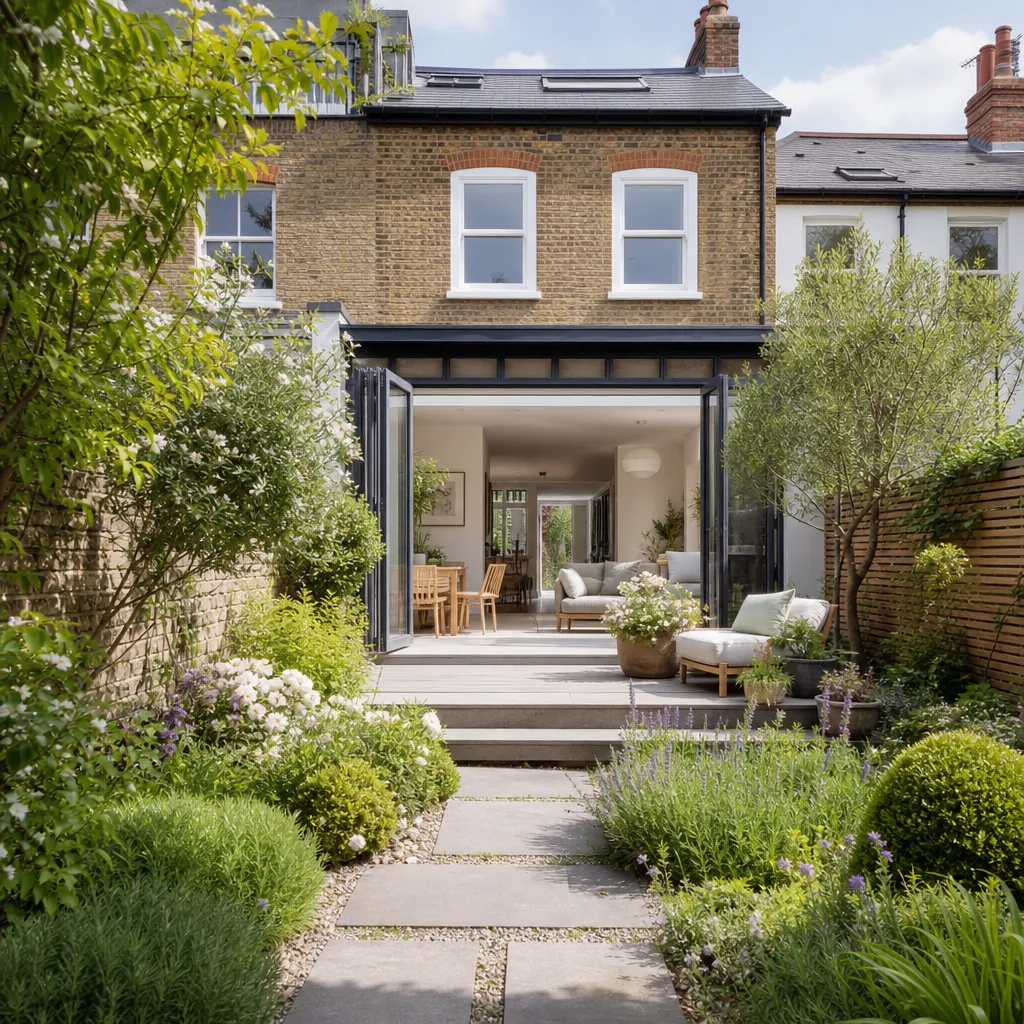
Spring Garden Transformations: Design Ideas to Enhance Your UK Property
Spring is the best time to transform a UK garden, with mild temperatures and longer days ideal for planting and landscaping.
 Improvement & Build
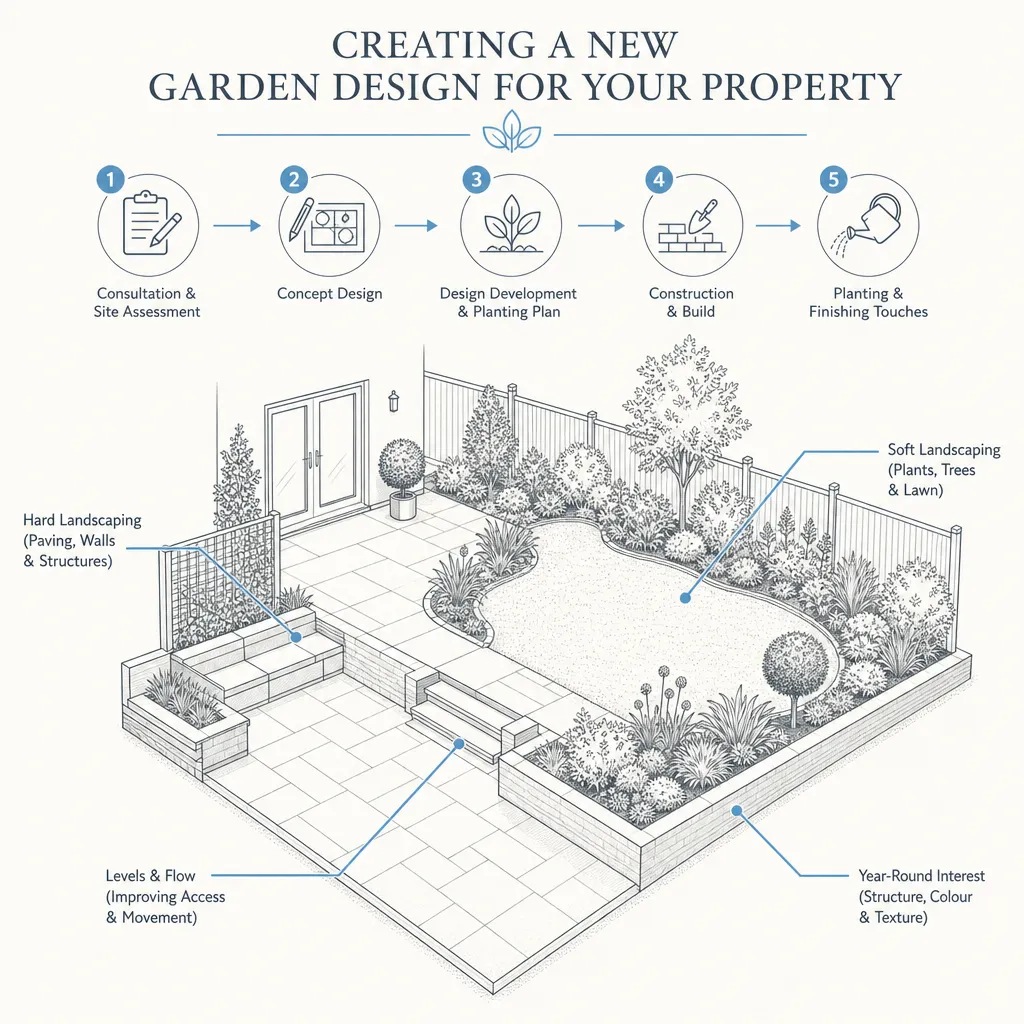
Creating a New Garden Design for Your Property
Creating a new garden design involves assessing your space, setting a realistic budget, deciding on hard and soft landscaping, and choosing a planting scheme suited to your soil and aspect.
 Improvement & Build
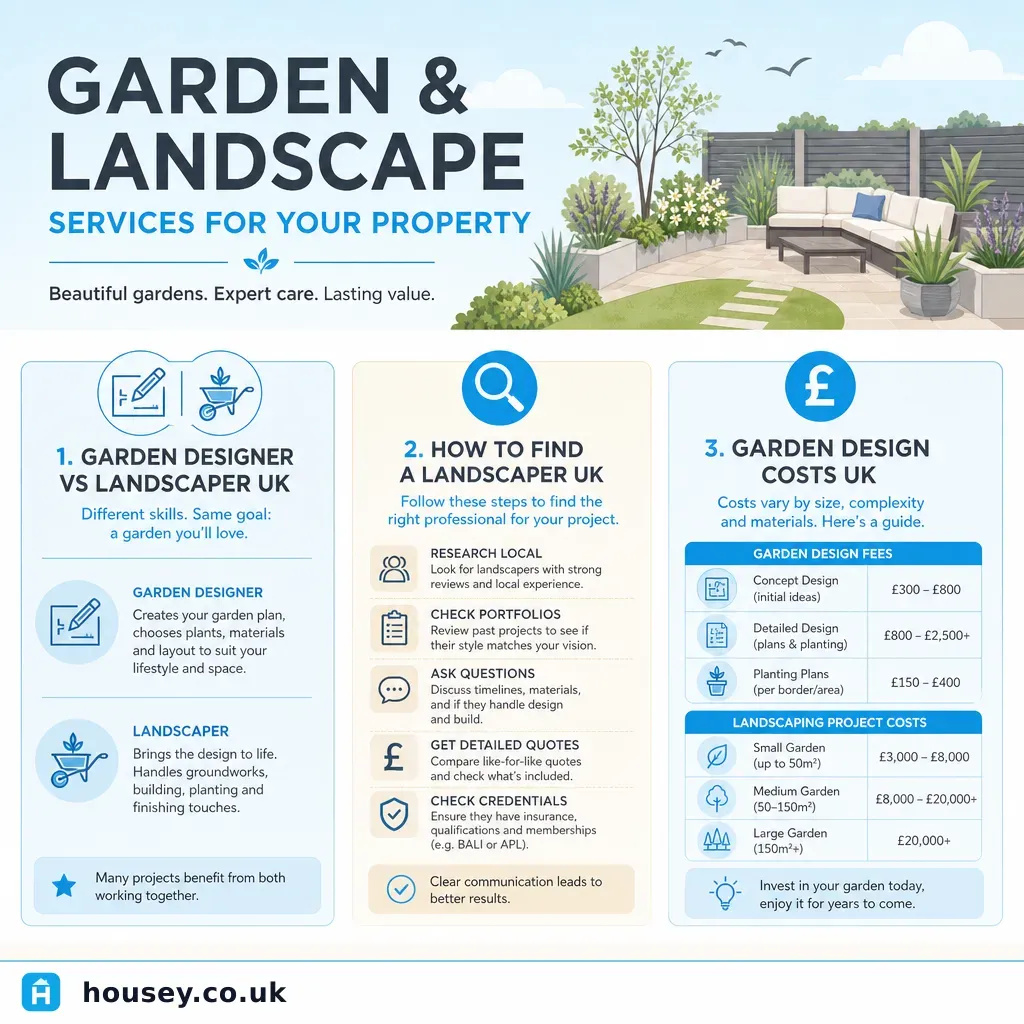
Garden and Landscape Services for Your Property
Garden designers and landscapers both improve outdoor spaces but offer different services.
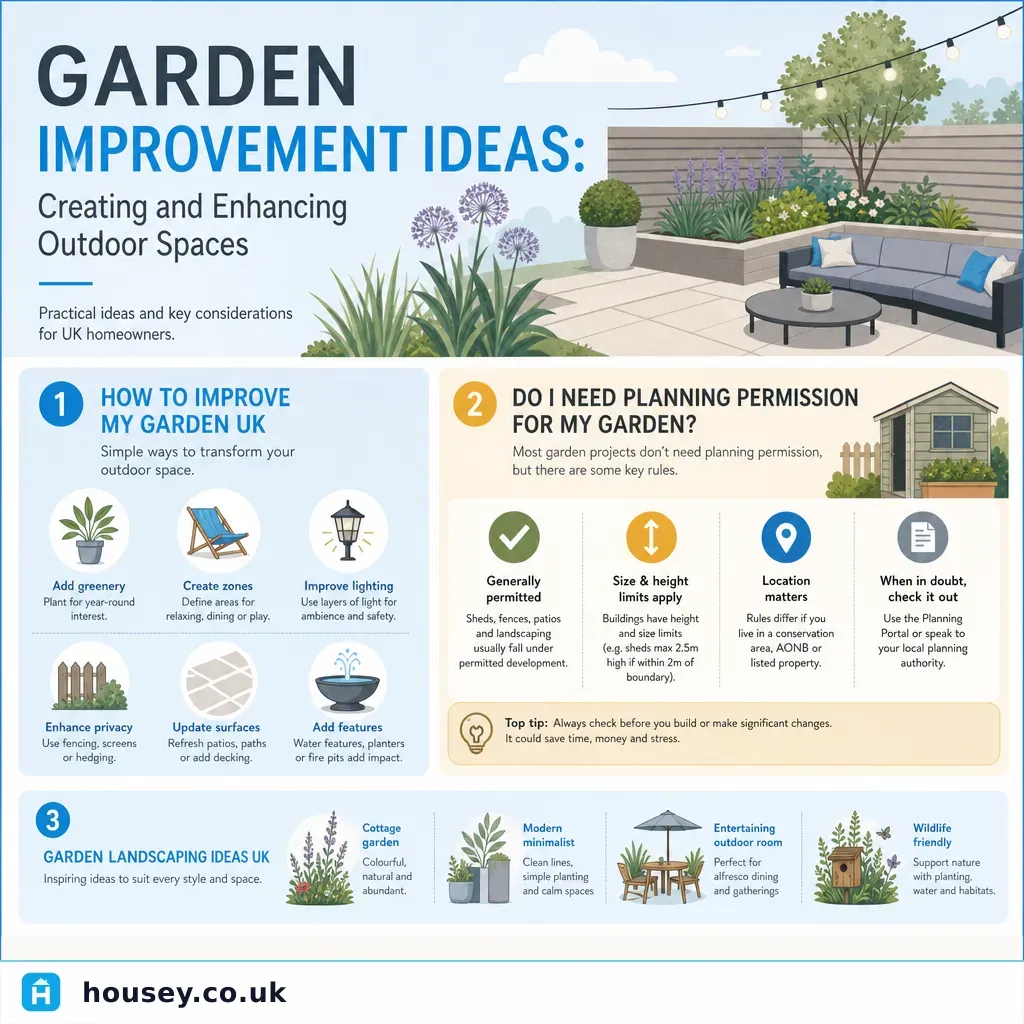 Improvement & Build
Garden Improvement Ideas: Creating and Enhancing Outdoor Spaces
Improving your garden in the UK usually starts with a clear plan covering hard landscaping, soft planting, and any structural elements.
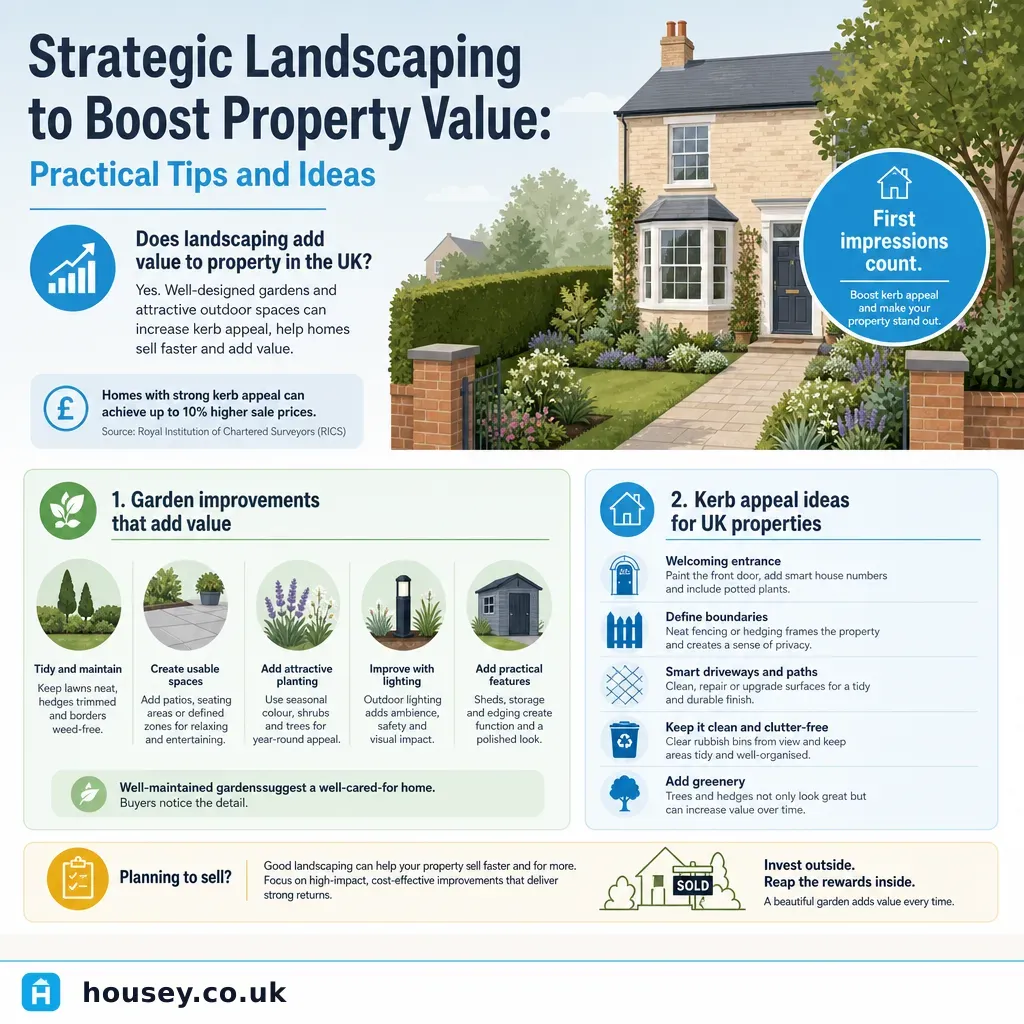 Improvement & Build
Strategic Landscaping to Boost Property Value: Practical Tips and Ideas
Landscaping can add 5–15% to a UK property's perceived value, though the return varies by improvement type.