Installing an Artificial Putting Green: Installation and Upkeep
By Housey · Last reviewed 5th of May 2026
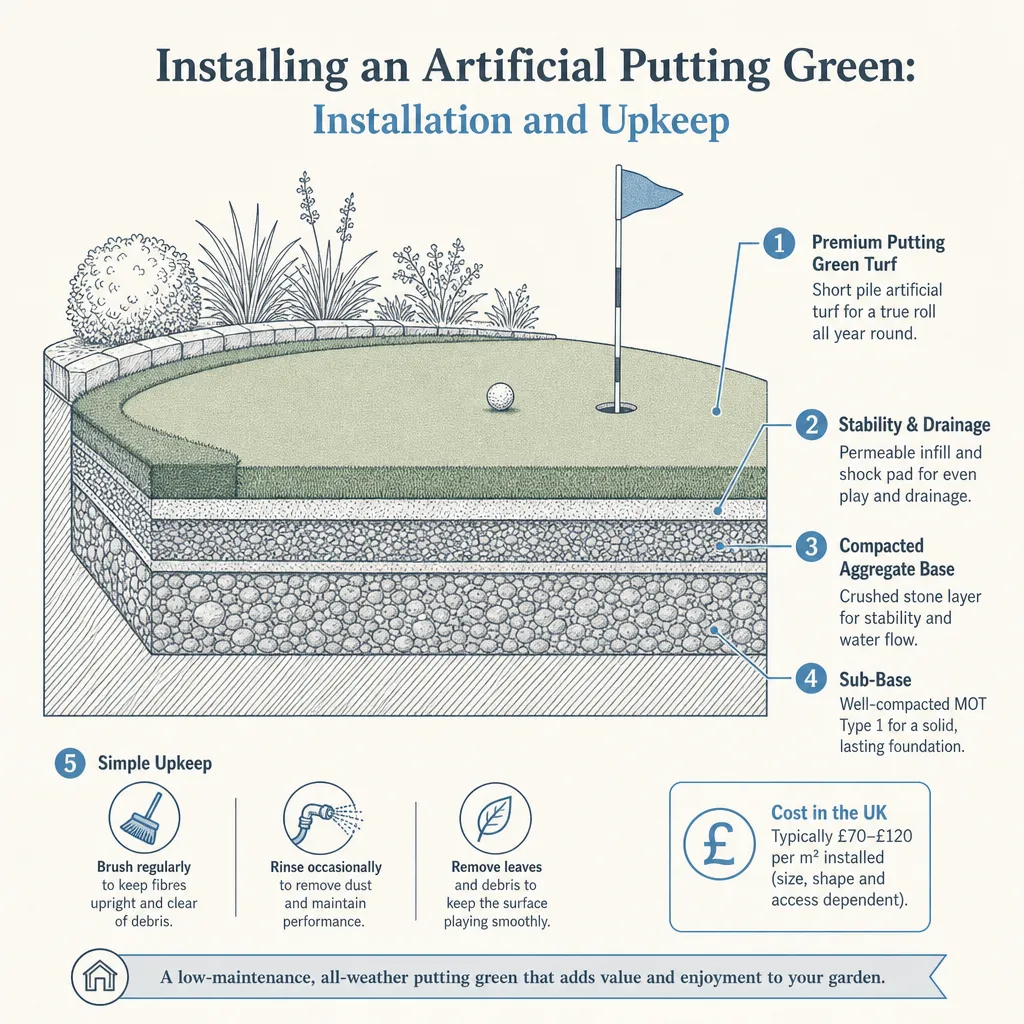
Installing an Artificial Putting Green: Installation and Upkeep
Homeowners with a passion for golf — or simply looking for a distinctive, usable garden feature — increasingly consider artificial putting greens as a long-lasting alternative to natural grass. The decision typically arises during a wider landscaping project or garden redesign, and it involves choices about turf specification, ground preparation, size, and long-term upkeep that will affect playing quality for years to come.
Key points
- Artificial putting green turf is typically 10–15mm pile height, engineered for a consistent, low-pace roll; standard decorative artificial grass (25–40mm pile) is not suitable for putting.
- A stable sub-base of 100–150mm compacted Type 1 MOT aggregate topped with a levelled layer of sharp sand is essential for drainage and surface trueness.
- Planning permission is not normally required for a domestic garden putting green in England and Wales under permitted development rights; listed buildings and conservation areas are exceptions.
- Indicative professional installation costs range from approximately £150 to £300+ per m², including groundworks, edging, and turf (Indicative UK costs, last reviewed 2026-05-05).
- A well-maintained artificial putting green typically lasts 10–15 years; regular brushing and annual silica sand infill top-ups are the main ongoing tasks.
Choosing the right turf for a putting green
Specialist putting green artificial turf differs significantly from standard garden lawn grass. The key specifications to compare when selecting a product:
- Pile height: 10–15mm creates the short, tight surface needed for a realistic roll. A pile of 10–12mm produces a faster, firmer surface; 14–15mm is slightly more forgiving and suits casual garden use.
- Stitch rate: Higher stitch rates — typically 18–22 stitches per 10cm — produce a denser, more consistent playing surface.
- Weave construction: Cross-stitched or non-directional weaves reduce grain bias, which causes putts to break unexpectedly on directionally tufted turf.
- Backing: A perforated or drainage-hole backing allows rainwater to pass through freely — essential for any outdoor installation.
Standard decorative artificial grass with long, soft fibres (25–40mm pile) deflects ball roll unpredictably and is not suitable for a putting green.
Ground preparation: the most critical stage
Sub-base preparation is the most important factor in a well-performing, durable putting green. Small errors in the level of the sand layer translate directly into surface irregularities that affect every putt.
Typical professional installation sequence:
- Mark out the green and excavate to approximately 150–200mm depth, accounting for sub-base depth and turf thickness.
- Install edging boards (treated timber, aluminium, or composite) to define the perimeter and contain the sub-base.
- Lay a geotextile membrane across the excavated base to suppress weed growth and separate soil from aggregate.
- Compact 100–150mm of Type 1 MOT crushed limestone aggregate using a plate compactor to create a stable, free-draining foundation.
- Apply and level a 10–20mm sharp sand or decomposed granite layer — accuracy here is critical; aim for variation of no more than a few millimetres across the surface.
- Lay and secure the putting green turf, cutting carefully to shape, joining seams with specialist adhesive tape and adhesive, and fixing the perimeter to edging boards.
- Apply kiln-dried silica sand infill (typically 1–2kg per m²) and brush into fibres using a stiff-bristle brush or power brush.
- Install cup holes, flags, and any other features.
Insufficient sub-base depth and under-compaction are the most common causes of surface irregularities and premature turf failure.
DIY vs professional installation
Factor | DIY installation | Professional installation |
|---|---|---|
Upfront cost | Lower material cost; plate compactor hire roughly £60–£120 per day | Higher all-in cost (£150–£300+/m²) but includes labour, materials, and workmanship warranty |
Sub-base quality | Risk of under-compaction or inaccurate levels without specialist equipment | Contractor brings experience, equipment, and level-checking tools as standard |
Seam quality | Joins may be visible or lift over time without correct adhesive technique | Professional seaming is typically seamless on greens up to around 40m² |
Drainage | May be inconsistent if falls are not accurately set | Graded to drain correctly from the outset |
Best for | Confident DIYers with previous landscaping experience; small, flat sites under approximately 15m² | Most homeowners; larger greens; sloped or waterlogged ground; complex shapes |
Risk if wrong | Uneven playing surface, waterlogging, turf lifting at edges | Low, provided a reputable, experienced installer is used |
For most homeowners, professional installation delivers a noticeably better playing surface, particularly on sites over 15–20m² or where ground conditions are not perfectly flat.
How much does an artificial putting green cost in the UK?
Costs vary based on size, site conditions, required groundworks, and the specification of turf selected.
Indicative UK cost guide (last reviewed 2026-05-05):
Element | Indicative cost range |
|---|---|
Putting green turf (supply only) | £25–£60 per m² |
Type 1 MOT aggregate sub-base (installed) | £30–£60 per m² |
Full professional installation (all-in) | £150–£300+ per m² |
Cup holes and flags | £20–£60 per hole |
Edging (per linear metre) | £15–£40 |
A 20m² putting green might cost roughly £3,000–£6,000 professionally installed, depending on groundworks complexity and location. London and the South East typically sit at the higher end of these ranges. Always request itemised, written quotes so you can compare on a like-for-like basis.
Ongoing maintenance: homeowner checklist
Artificial putting greens require less upkeep than natural turf, but are not maintenance-free. Consistent attention significantly extends surface life and playing quality.
- Weekly or fortnightly: Brush the surface with a stiff-bristle brush or leaf blower to remove debris and keep fibres upright.
- After heavy use: Lightly brush to redistribute infill and restore fibre orientation.
- Annually: Top up silica sand infill — infill migrates over time, and a depleted layer produces a slower, less consistent roll.
- Seasonally: Inspect seams and perimeter edges for lifting; re-glue early to prevent further peeling.
- As needed: Rinse with water to remove dust, pollen, and organic debris. For households with pets, use an enzyme-based cleaner to prevent odour build-up.
- Weed control: Pull occasional weeds that grow through drainage holes by hand; use a herbicide confirmed safe for artificial turf where necessary.
A well-maintained green typically lasts 10–15 years before fibre degradation becomes noticeable at the playing surface.
Does a garden putting green need planning permission?
In most circumstances, no. A domestic garden putting green is a garden surface feature and does not normally constitute development in the planning sense, so planning permission is not usually required.
However, always check whether your property is:
- A listed building — any material change to the grounds may need listed building consent; consult your local planning authority.
- In a conservation area — below-ground surface changes are usually unaffected, but check with your local planning authority if uncertain.
- Subject to planning conditions attached to previous permissions — review these via your local authority's online planning portal.
- Covered by a restrictive covenant in the title deeds — a conveyancer can advise on whether any covenant restricts external changes.
Scotland and Northern Ireland operate separate planning frameworks — always check with your local planning authority if in any doubt.
When to get professional help
Most homeowners benefit from using an experienced landscaper or artificial turf specialist for a putting green installation, particularly where:
- The site is larger than approximately 20m²
- The ground is uneven, sloped, or prone to standing water
- The green will adjoin permanent structures such as walls or patios
- A complex shape or multi-tier layout is planned
Red flags when reviewing quotes:
- No mention of sub-base depth, aggregate specification, or compaction method
- No sand or levelling layer included in the scope of works
- Edging type and depth not specified
- No written warranty on materials or workmanship
- No drainage plan or reference to falls direction
How Housey can help
If you are planning a garden putting green or a wider landscaping project, Housey can connect you with experienced landscapers who can assess your site, advise on the right turf specification, and provide itemised quotes covering groundworks through to finished installation.
Frequently asked questions
How long does installation of an artificial putting green take?
Most domestic putting greens up to approximately 30m² take one to two days to install professionally, depending on the extent of groundworks. Larger or more complex projects with shaping, multiple levels, or significant excavation may take three to five days. Confirm the programme with your installer before work begins.
Can artificial putting turf be installed over an existing patio or concrete base?
In some cases, yes. Specialist adhesive or fixing systems allow turf to be bonded to a sound, level, and well-drained concrete base, which can reduce groundworks costs significantly. The concrete must be structurally sound, free of significant cracks, and have adequate drainage falls. An installer should assess suitability before proceeding.
Does an artificial putting green play differently in cold weather?
Artificial turf can become slightly firmer in cold temperatures, which typically increases ball speed. In icy or frosty conditions the surface may be temporarily slippery and unusable. The turf itself is not damaged by frost, and normal playing conditions return once temperatures rise above freezing.
What infill is best for a putting green — silica sand or rubber crumb?
Kiln-dried silica sand is generally preferred over rubber crumb for putting greens. It produces a cleaner, more consistent playing surface and does not risk interfering with ball roll. Some specialist putting green turf constructions are designed for use with no infill — always check the manufacturer's guidance for the product selected.
Can I install a putting green on a sloped garden?
A gentle gradient of up to approximately 1–2% can add interest and simulate undulating course conditions. Steeper slopes are not usually recommended, as they create strongly directional putts and may increase drainage and compaction challenges. A landscaper can advise on maximum practical gradients for your specific site.
Sources and further reading
- Planning Portal: Householder permitted development guidance — Planning Portal
- GOV.UK: Historic environment — listed buildings and conservation areas — Historic England via GOV.UK
- GOV.UK: Planning permission overview — GOV.UK
Useful next reads
 Improvement & Build
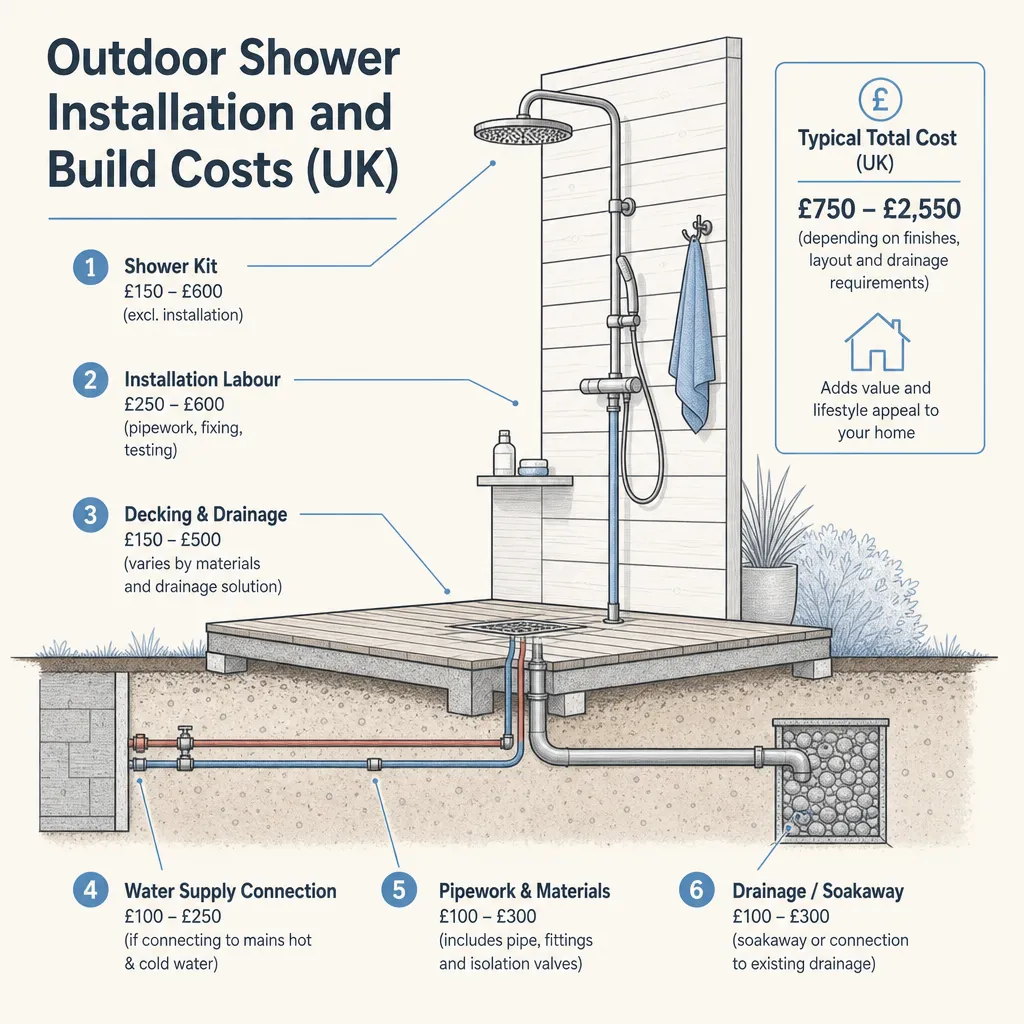
Outdoor Shower Installation and Build Costs
An outdoor shower in the UK costs from around £600 for a simple cold-water tap-fed kit to £15,000+ for a bespoke plumbed enclosure.
 Improvement & Build
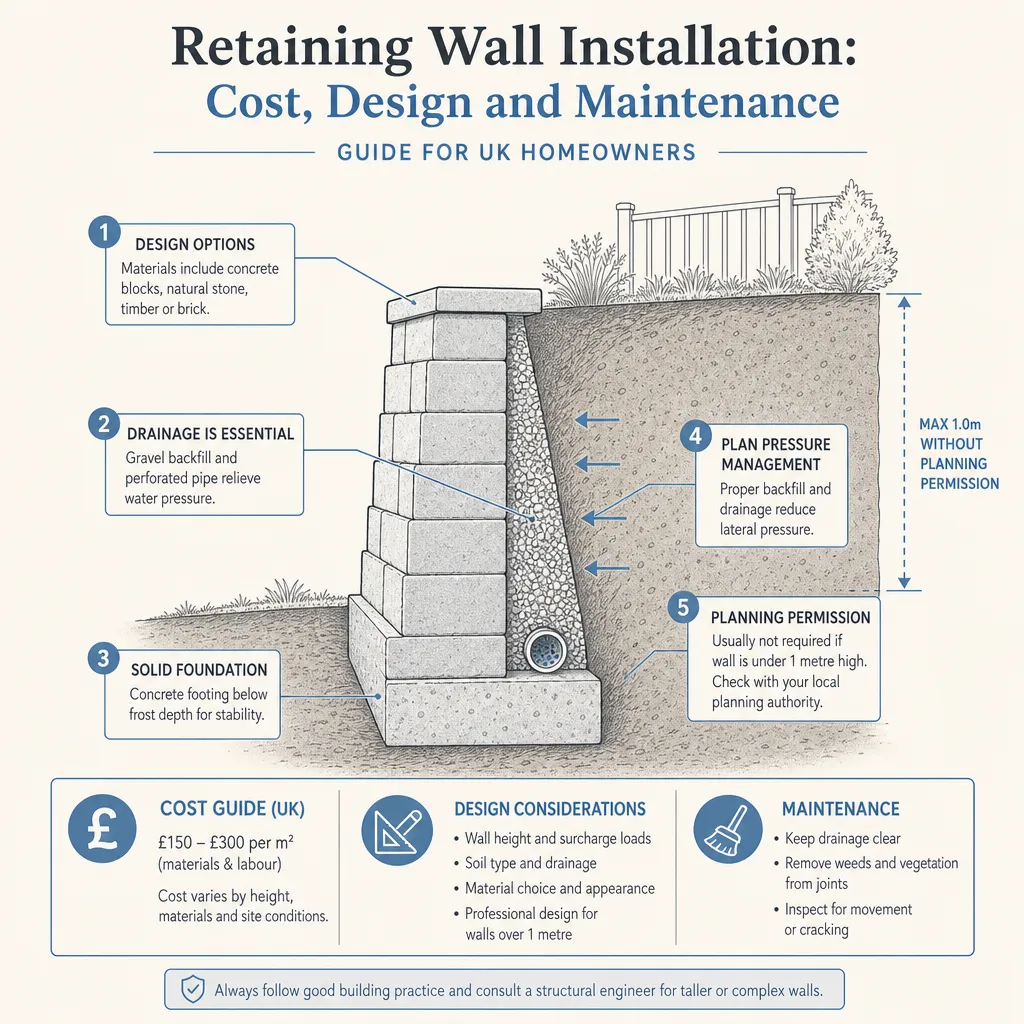
Retaining Wall Installation: Cost, Design and Maintenance
A retaining wall holds back soil on a sloped or banked site.
 Improvement & Build
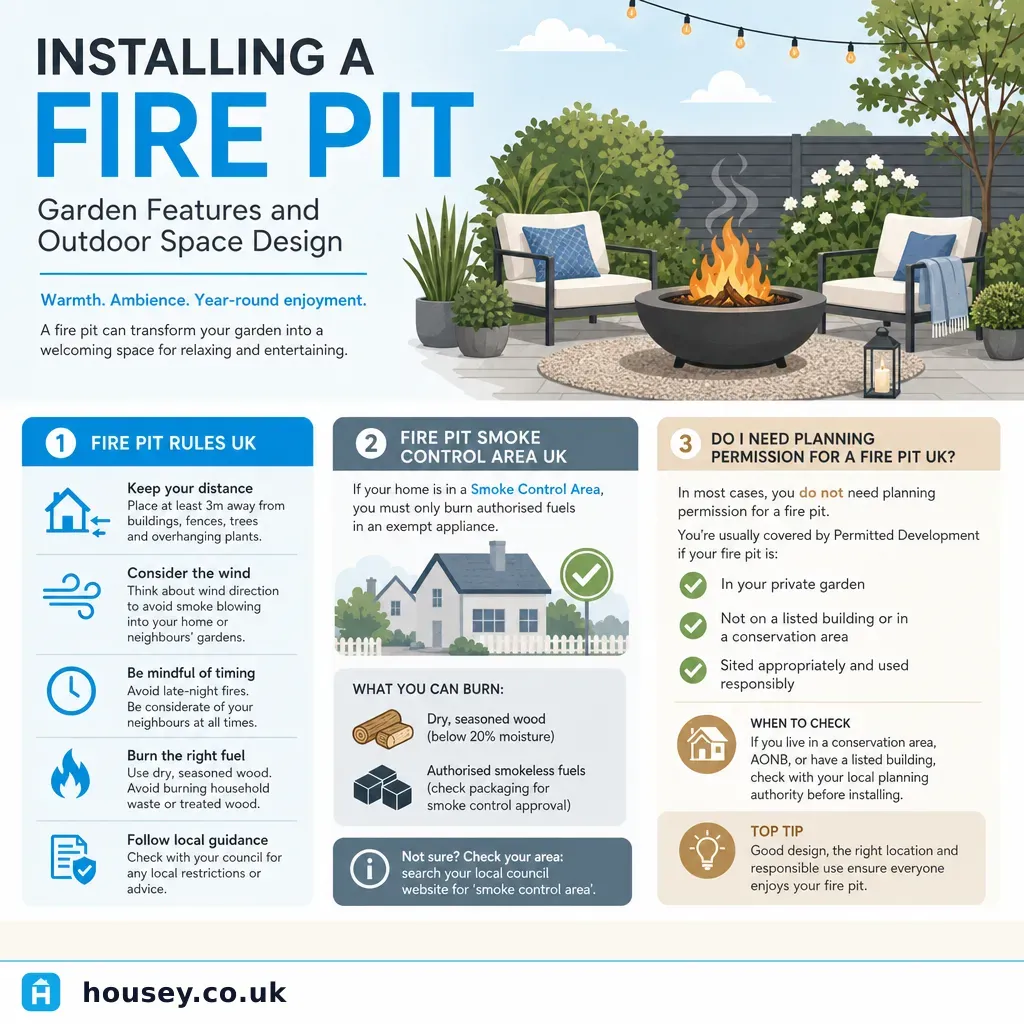
Installing a Fire Pit: Garden Features and Outdoor Space Design
Installing a garden fire pit in the UK is generally permitted, but Smoke Control Area rules prohibit open wood-burning in most towns and cities.
 Improvement & Build
Seasonal Garden Transformations and Outdoor Design Ideas
A successful garden transformation in the UK works with the seasons rather than against them — establishing structure and hard landscaping in autumn or winter, planting in spring, and enjoying the results through summer.
 Improvement & Build
Designing Garden Irrigation Around Trees and Landscaping Elements
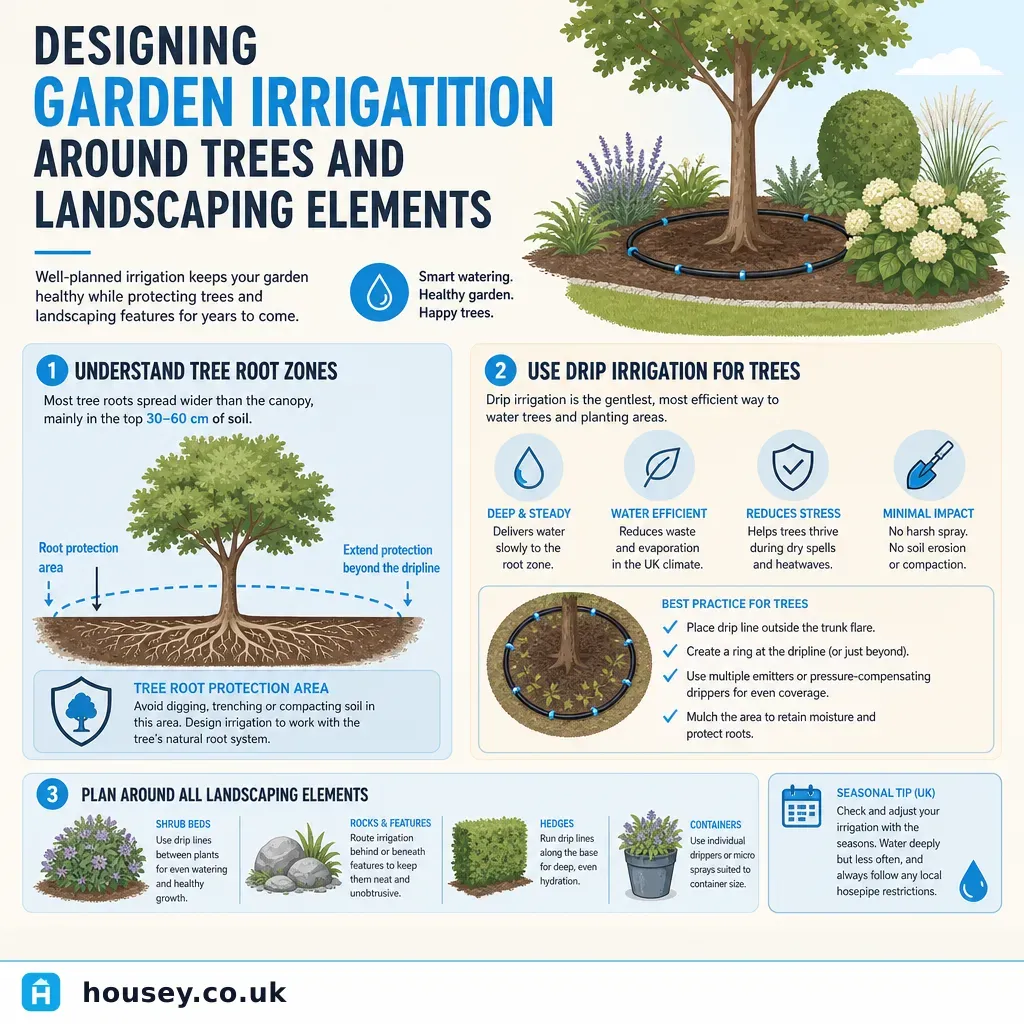
Design irrigation around trees by respecting the root protection area defined under BS 5837:2012, using drip or leaky pipe delivery rather than spray heads, and putting the tree zone on its own circuit.