Seasonal Garden Transformations and Outdoor Design Ideas
By Housey · Last reviewed 30th of May 2026
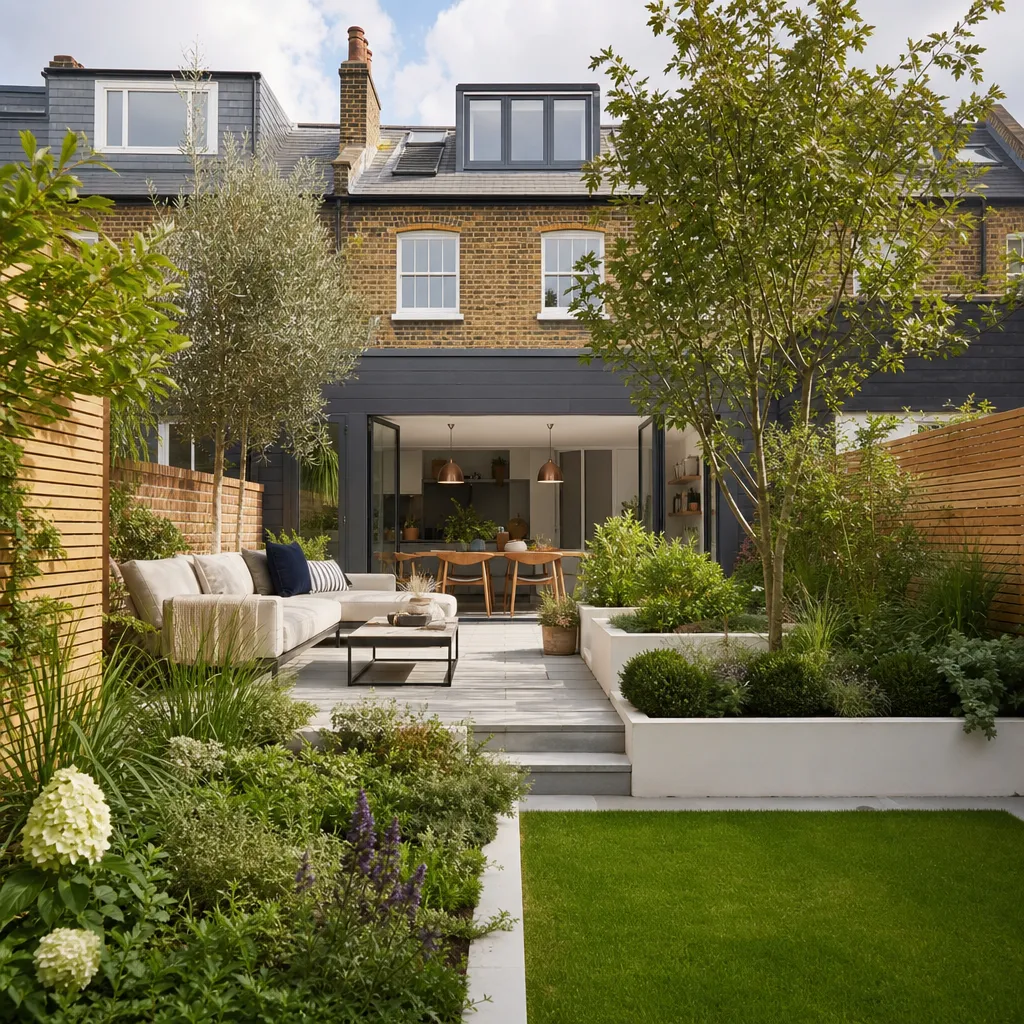
Seasonal Garden Transformations and Outdoor Design Ideas
A garden that performs well across all four seasons rarely happens by accident. In the UK's temperate, variable climate — with late frosts into May in northern regions, wet summers along the western coast, and hard winters across Scotland and the Midlands — outdoor space needs deliberate design to provide year-round interest, usability, and structure. Whether you are starting from scratch on a new-build plot, reworking an overgrown suburban garden, or adding a specific feature such as a patio, raised beds, or a garden room, understanding how different elements look and perform across the seasons is essential to making the most of your investment.
Key points
- Hard landscaping (paving, decking, raised walls, drainage) is best installed in drier conditions, typically late spring through early autumn, when ground conditions allow for accurate laying and setting.
- Most deciduous trees, shrubs, and herbaceous perennials establish best during dormancy (mid-autumn to early spring), reducing transplant shock and watering requirements significantly.
- The Royal Horticultural Society (RHS) classifies plants by hardiness ratings H1–H7; for most UK gardens, choose plants rated H4 (surviving down to −10°C) or above.
- Garden buildings, outbuildings, and fences above 2 m may require planning permission; permitted development rules for garden structures are set out in the Town and Country Planning (General Permitted Development) (England) Order 2015.
- New hard surfaces over 5 m² fronting a highway require permeable paving or drainage to a soakaway under Householder Permitted Development rules, to avoid increasing surface run-off.
Designing around the seasons
Effective garden design in the UK plans for how the space will look and function in each quarter of the year, not only at the height of summer.
Spring: establishing and planting
Spring is when garden potential becomes visible and the growing season begins in earnest. It is the ideal time to plant summer-flowering bulbs, herbaceous perennials, and tender bedding — but also to complete any hard landscaping works begun over winter before summer growth makes site access harder. Key spring design priorities include:
- Early colour and structure: tulips, alliums, and pulmonarias provide colour from March; early-flowering shrubs such as forsythia and Daphne odora extend interest from late winter into spring.
- Soil preparation: apply well-rotted compost or organic matter to planting beds in late winter or early spring before planting begins.
- Lawn care: scarifying, overseeding, and applying a spring lawn fertiliser in March or April sets the lawn up for the rest of the growing season.
Summer: usability and entertainment
Summer is peak usability season. Design should ensure the garden functions as an outdoor room: defined seating areas with appropriate shade, containers for seasonal colour, and clear sightlines between zones. Key considerations include:
- Position seating areas to capture evening sun rather than midday glare — in most of England, a south-west or westerly orientation typically works best for evening use.
- Establish reliable watering routines for containers; UK summers alternate unpredictably between periods of drought and heavy rainfall.
- Plan for late-summer colour gaps: dahlias, rudbeckias, and sedums carry interest into September, a period frequently overlooked in planting schemes.
Autumn: structure and future investment
Autumn is often the best season for significant landscaping works. Ground conditions are usually better than in winter, plants can be moved or divided while still actively growing roots, and certain landscaping contractors may be more available than in the peak summer period. Autumn priorities include:
- Planting structural trees and shrubs while the soil retains warmth from summer, giving roots time to establish before the cold.
- Installing raised beds, paths, and fencing before the ground freezes or waterlogging begins.
- Cutting back herbaceous perennials and mulching beds to protect roots and suppress weeds through winter.
Winter: bones and hard landscaping
A well-designed garden retains visible structure in winter: the silhouettes of specimen trees, the geometry of clipped hedges, the texture of bark and berries. Winter is also the optimum time for major hard landscaping works, particularly those requiring excavation or significant groundwork:
- Bare-root trees and shrubs are available from specialist nurseries between November and March and are the most economical way to establish new structural planting.
- New paving, paths, raised retaining walls, and garden room construction are well suited to winter scheduling.
- Drainage improvements are best undertaken before the spring wet period arrives.
Seasonal planting and design comparison
Season | Best for installing | Best for planting | Design priority | Common mistake |
|---|---|---|---|---|
Spring | Fencing, decking, pergolas | Summer bulbs, perennials, annuals | Colour and emerging structure | Planting too early before the last frost |
Summer | Minor features and furniture | Pot plants, hanging baskets | Usability and entertainment | Neglecting late-summer colour gaps |
Autumn | Major groundwork, raised beds | Trees, shrubs, spring bulbs | Structure and future-proofing | Leaving tender plants unprotected |
Winter | Hard landscaping and drainage | Bare-root trees and hedging | Skeleton and form | Neglecting mulching and frost protection |
Choosing a design approach
- Choose a naturalistic or wildlife-friendly scheme if you have a larger plot, want low ongoing maintenance, and value biodiversity; use native species, grass paths, and minimal hard landscaping.
- Choose a formal or structured design if you have a smaller urban garden, want year-round definition, and prefer clipped hedges, topiary, and geometric paving layouts.
- Choose a courtyard or paved scheme if outdoor living, container gardening, and low maintenance are priorities; this suits urban rear gardens, north-facing plots, or areas with poor or shallow soil.
- Consult a garden designer if the plot is sloping, has persistent drainage problems, faces planning constraints, or you want a professionally coordinated planting plan rather than incremental improvement.
- Consult a professional landscaper if you need significant groundwork, retaining walls, drainage works, or hard landscaping beyond straightforward DIY capability.
Garden transformation checklist
Before commissioning any garden works:
Materials and sustainability considerations
Material choices for hard landscaping affect both the visual character and the long-term maintenance demands of the garden:
- Natural stone (sandstone, limestone, granite): durable and aesthetically versatile; higher upfront cost; check country of origin for ethical sourcing practices.
- Porcelain paving: increasingly popular for its low maintenance and frost resistance; performs reliably in the UK's wet climate with minimal maintenance.
- Timber decking: lower initial cost, but requires annual cleaning and preservative treatment; typical lifespan without consistent maintenance is 10–15 years.
- Permeable gravel or resin-bound aggregate: suitable for drives and paths where surface water drainage is a concern; permeable surfaces can remove the need for planning permission in front garden areas.
- Reclaimed materials: salvaged brick, stone setts, and railway sleepers reduce embodied carbon and can often be sourced locally through architectural salvage yards.
When to get professional help
Most garden owners can manage seasonal planting, maintenance, and small-scale improvements themselves. Bring in professional help when:
- The project involves significant groundwork, levels changes, retaining walls, or drainage — these require proper specification and may need building regulation or planning consideration.
- You want a cohesive design scheme rather than incremental change — a garden designer produces a coordinated planting plan and hard landscape scheme that works as a coherent whole.
- Trees on or near the site may carry TPO protection or are close to buildings (root zones typically extend 1–1.5 times the crown spread) — a qualified arboriculturist should advise before any tree work begins.
- You intend to add a garden room, substantial outbuilding, or large pergola — check permitted development rules with your local planning authority first.
How Housey can help
A successful garden transformation starts with the right professional for the scope of work. Housey connects you with vetted professional landscapers for groundwork, paving, and planting, and experienced garden designers who can produce a coordinated design scheme tailored to your plot, climate zone, and style preferences.
Frequently asked questions
Do I need planning permission to transform my garden?
Most garden alterations — planting, new lawns, patios, and sheds under 2.5 m at the eaves — fall within permitted development and require no planning permission. Exceptions include outbuildings covering more than 50% of the garden, structures in conservation areas or listed building curtilages, front garden hard landscaping over 5 m² unless permeable, and structures over 4 m at ridge height. Always check with your local planning authority if uncertain.
When is the best time to start a garden transformation in the UK?
Autumn, from September to November, is often the best season for a major transformation: ground conditions are still workable, trees and shrubs establish well while the soil retains warmth, and contractors may be more available than in peak summer. For purely hard landscaping works, late spring through early autumn is generally preferable. Spring is ideal if your main priority is an immediate planting scheme aimed at summer colour.
How much does a full garden transformation cost in the UK?
Costs vary widely by plot size, design complexity, and materials. Indicative UK costs, last reviewed 2026-05-30: a basic rear garden landscaping project for an average suburban plot typically ranges from £5,000 to £15,000; more complex schemes with levels changes, retaining walls, or premium materials can reach £30,000 or more. Garden design fees are usually charged separately. Always obtain at least two itemised quotes before committing.
What plants work well year-round in a UK garden?
For year-round interest, combine structural evergreens such as box, yew, or pittosporum with deciduous shrubs offering winter stem colour (cornus, willows), and seasonal herbaceous perennials for summer and autumn. Ornamental grasses such as Calamagrostis and Stipa provide movement and winter structure. The RHS Plant Finder and visits to local RHS partner gardens are reliable guides to plants suited to your region and hardiness zone.
Sources and further reading
- RHS plant hardiness ratings — Royal Horticultural Society
- Permitted development rights for householders: technical guidance — GOV.UK
- Tree Preservation Orders and trees in conservation areas — GOV.UK
- Sustainable drainage systems — GOV.UK
- RHS front garden advice — Royal Horticultural Society
Useful next reads
 Improvement & Build
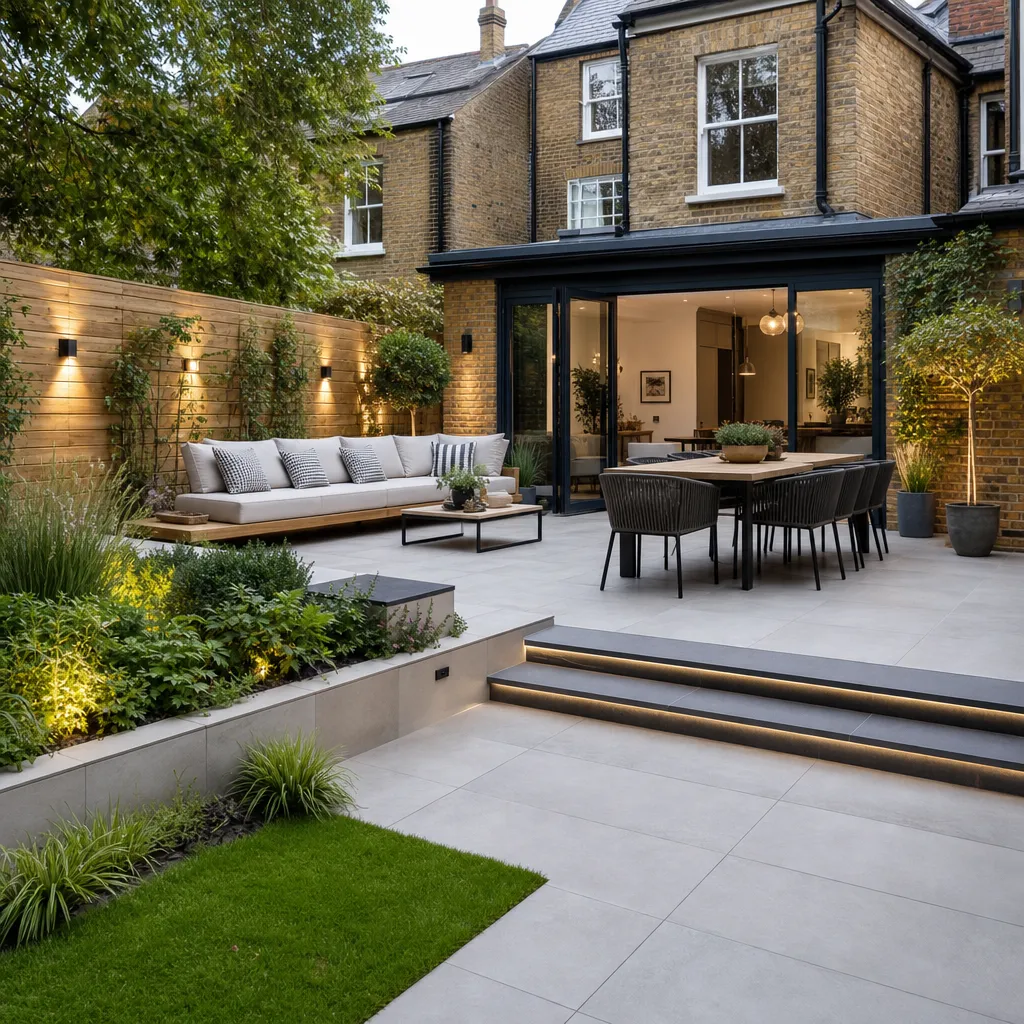
Creating Functional and Attractive Outdoor Entertainment Areas
A well-planned outdoor entertainment area combines a level surface — patio, decking, or gravel — shelter or shade, appropriate lighting, and power access if needed.
 Improvement & Build
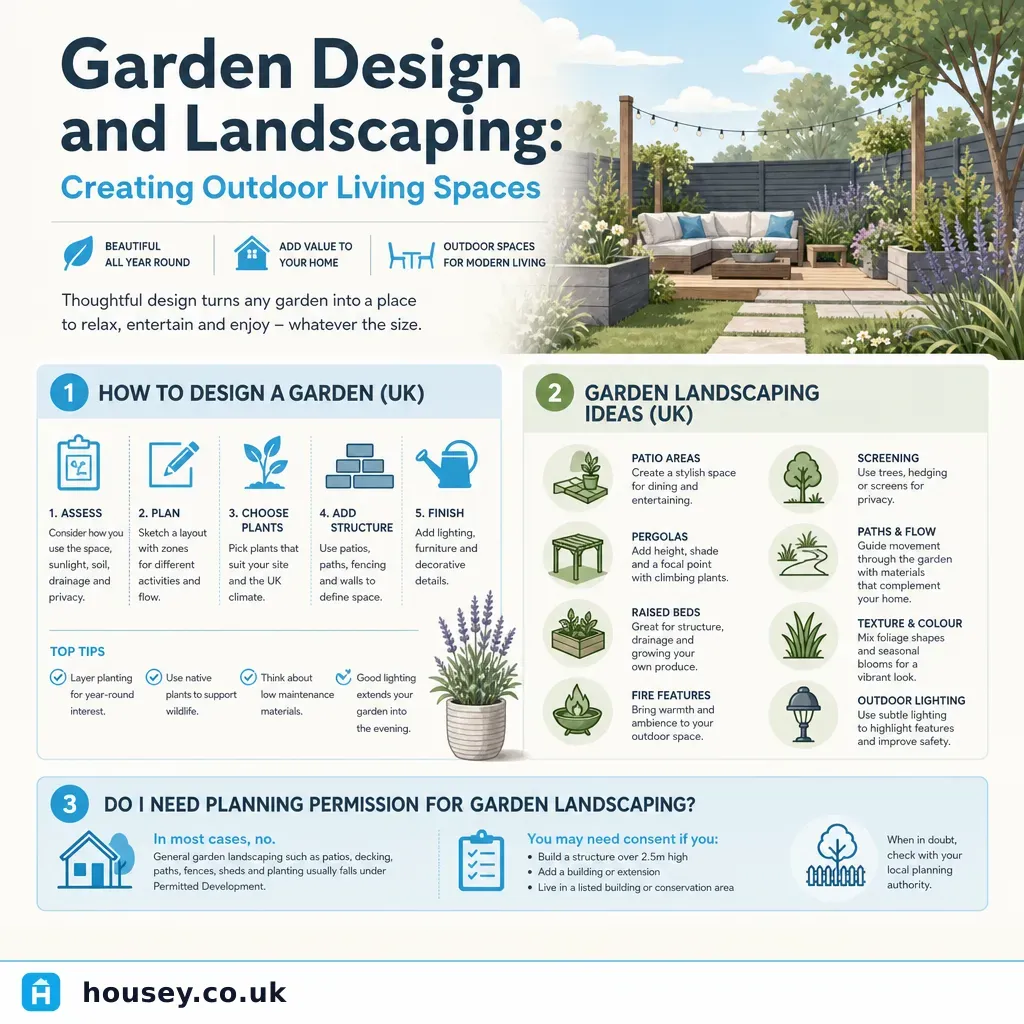
Garden Design and Landscaping: Creating Outdoor Living Spaces
Garden design creates functional outdoor living spaces through a combination of hard landscaping such as paving and decking, soft landscaping including planting and lawns, and structures such as pergolas or raised beds.
 Improvement & Build
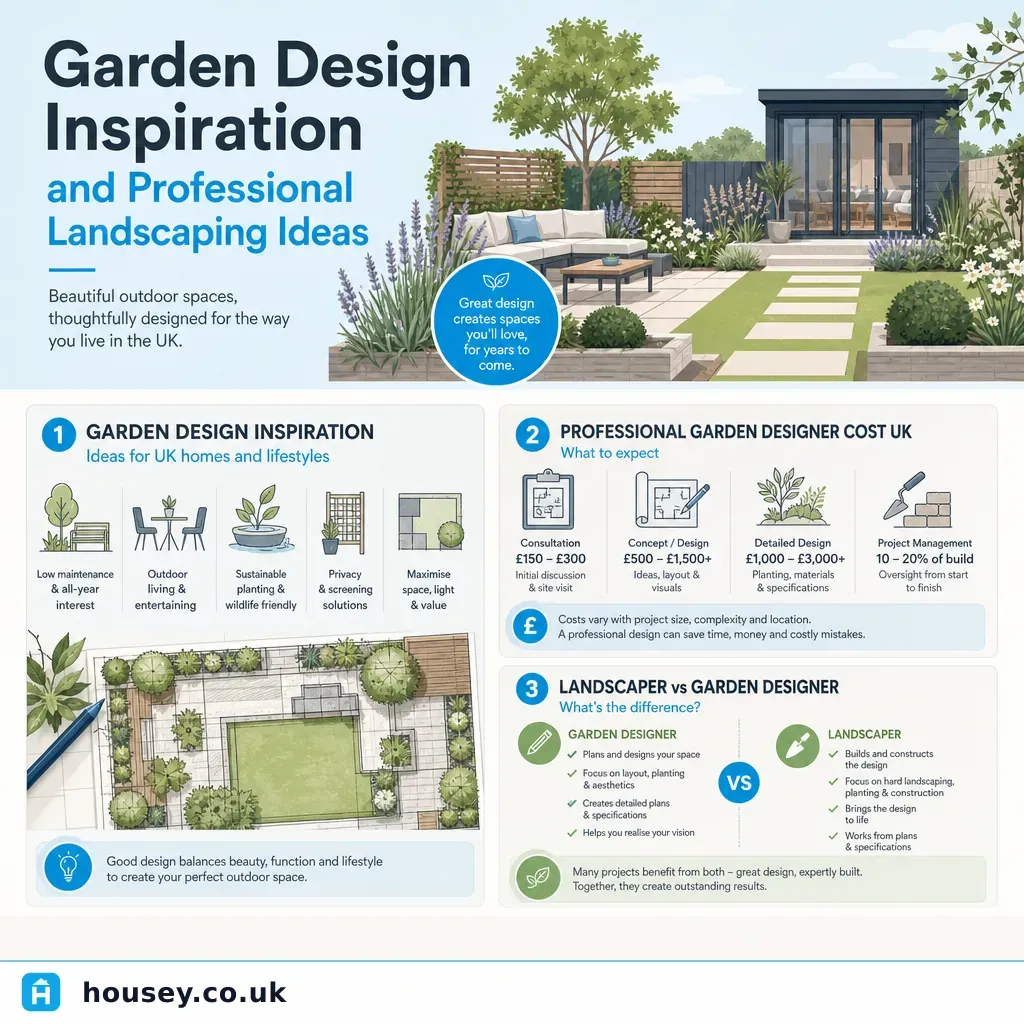
Garden Design Inspiration and Professional Landscaping Ideas
A professional garden designer creates layouts, planting plans, and material palettes, while a landscaper carries out the physical build.
 Improvement & Build
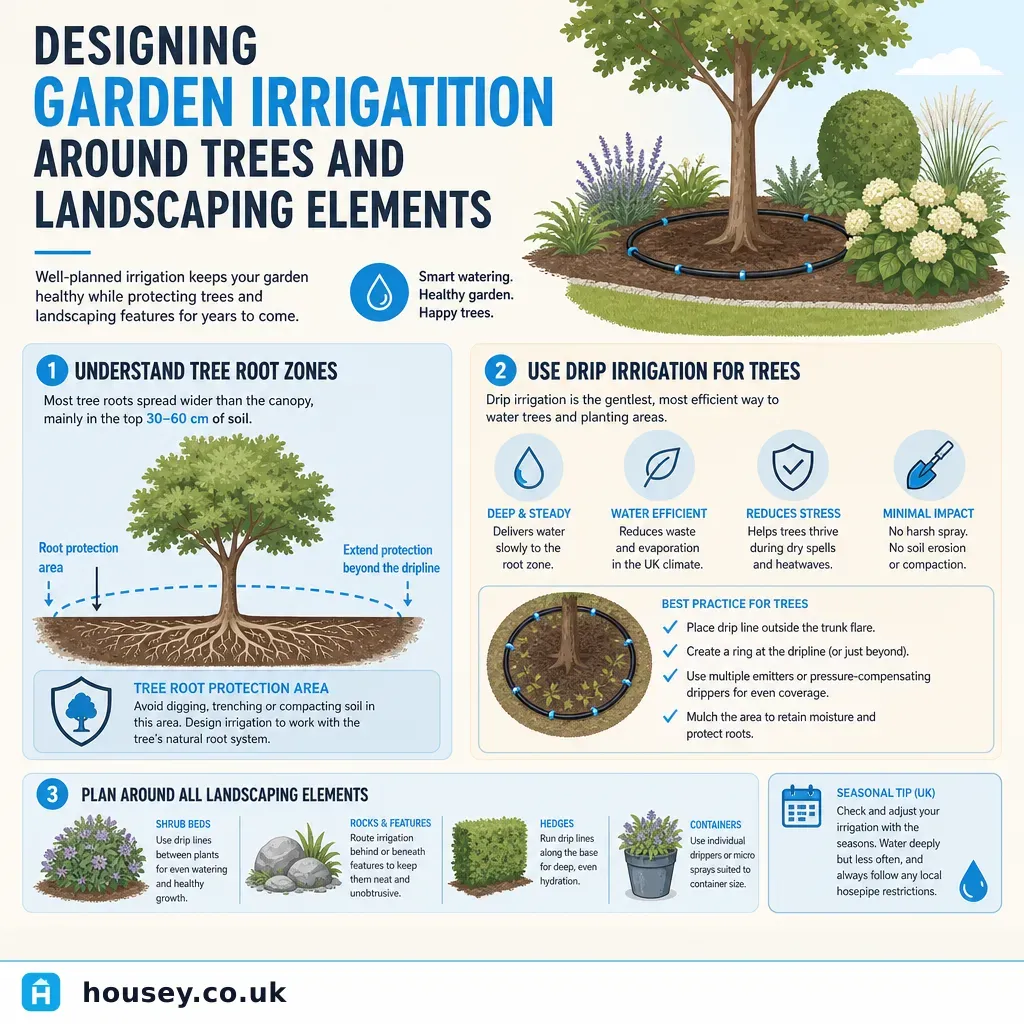
Designing Garden Irrigation Around Trees and Landscaping Elements
Design irrigation around trees by respecting the root protection area defined under BS 5837:2012, using drip or leaky pipe delivery rather than spray heads, and putting the tree zone on its own circuit.
 Improvement & Build
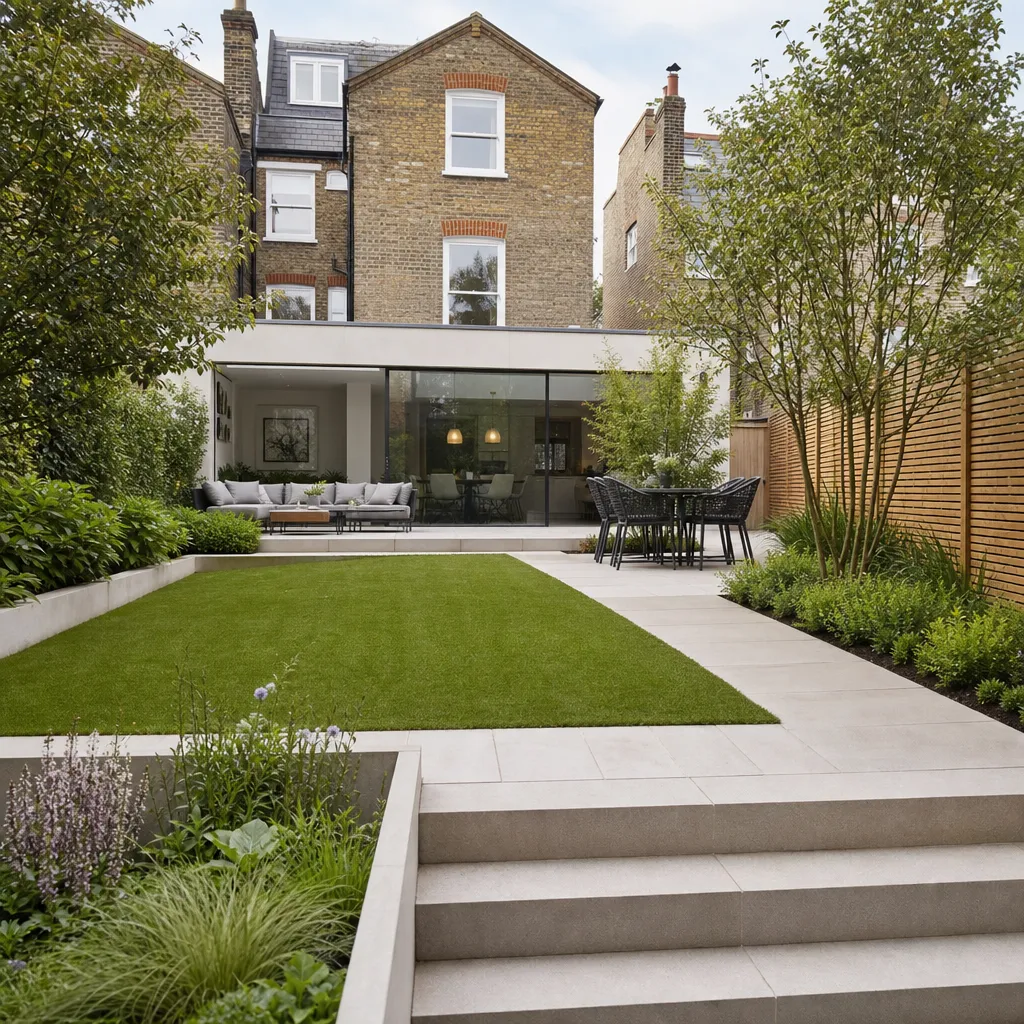
Garden Design Trends and Contemporary Landscaping Ideas
Contemporary UK garden design centres on low-maintenance naturalistic planting, multi-functional outdoor spaces, sustainable hard landscaping materials, and wildlife-friendly rewilded areas.